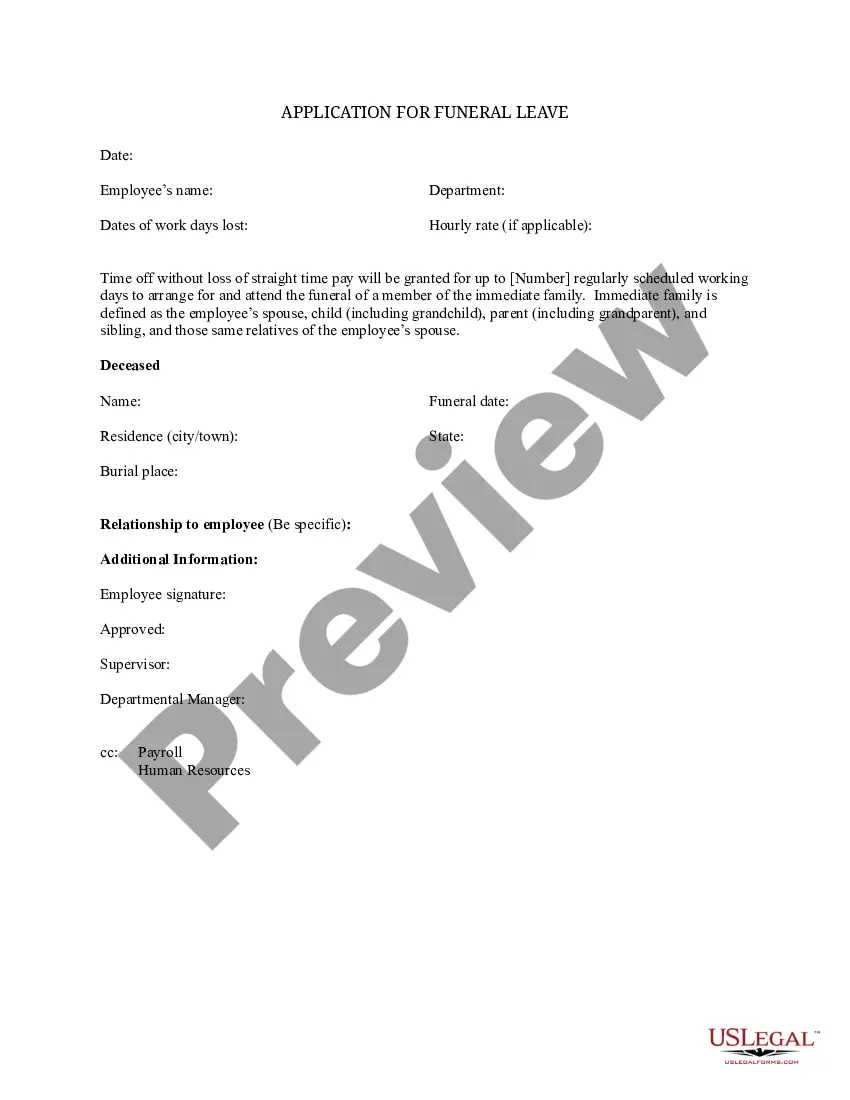
Funeral Leave Policy For Employees
Description
Get your form ready online
Our built-in tools help you complete, sign, share, and store your documents in one place.
Make edits, fill in missing information, and update formatting in US Legal Forms—just like you would in MS Word.
Download a copy, print it, send it by email, or mail it via USPS—whatever works best for your next step.
Sign and collect signatures with our SignNow integration. Send to multiple recipients, set reminders, and more. Go Premium to unlock E-Sign.
If this form requires notarization, complete it online through a secure video call—no need to meet a notary in person or wait for an appointment.
We protect your documents and personal data by following strict security and privacy standards.

Make edits, fill in missing information, and update formatting in US Legal Forms—just like you would in MS Word.

Download a copy, print it, send it by email, or mail it via USPS—whatever works best for your next step.

Sign and collect signatures with our SignNow integration. Send to multiple recipients, set reminders, and more. Go Premium to unlock E-Sign.

If this form requires notarization, complete it online through a secure video call—no need to meet a notary in person or wait for an appointment.

We protect your documents and personal data by following strict security and privacy standards.
Looking for another form?




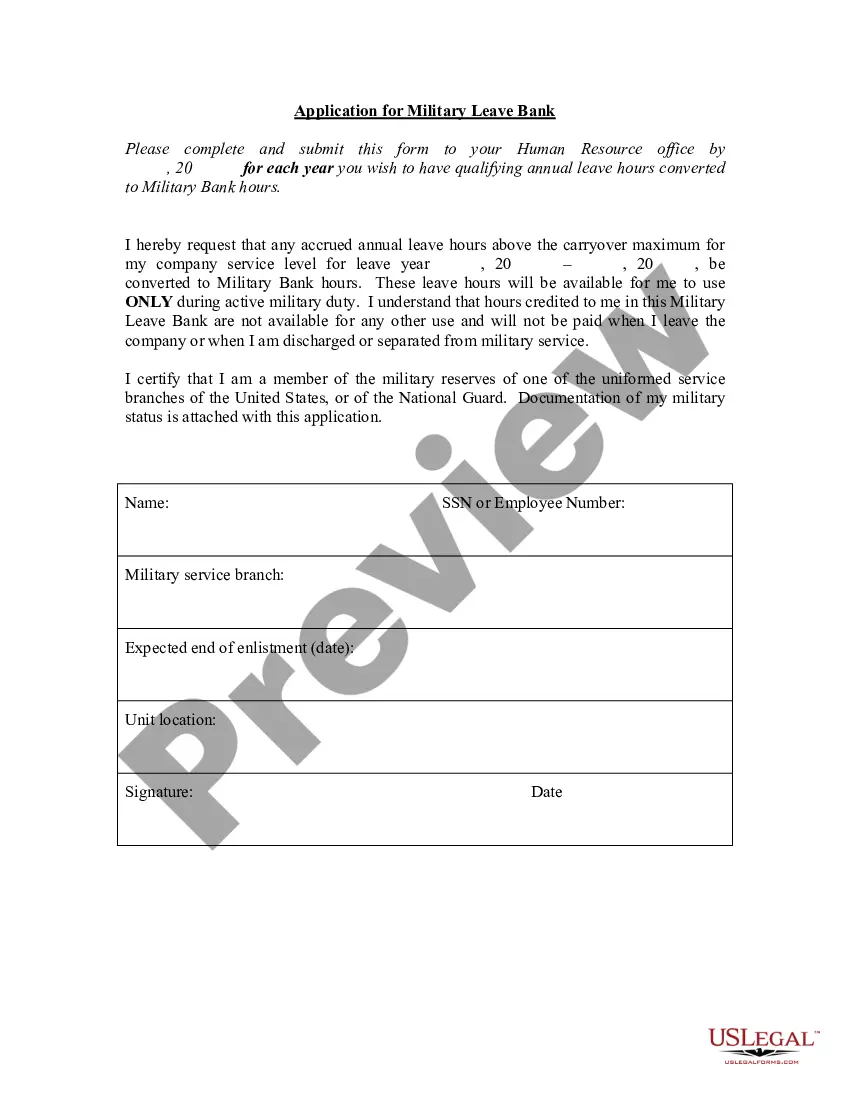
How to fill out Application For Funeral Leave?
- If you're an existing user, log into your account and click the Download button for the funeral leave policy form you need. Ensure your subscription is active; if not, renew it as per your payment plan.
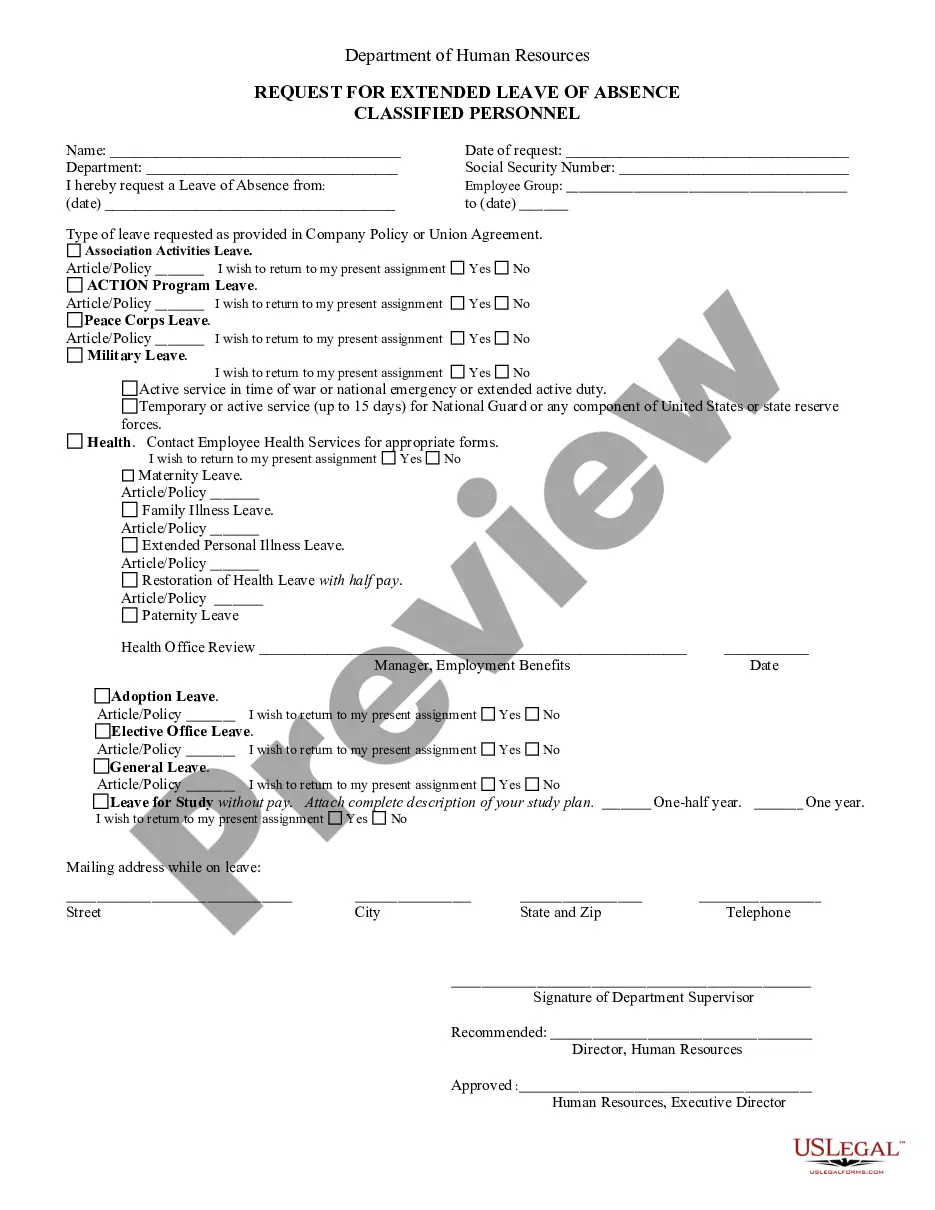
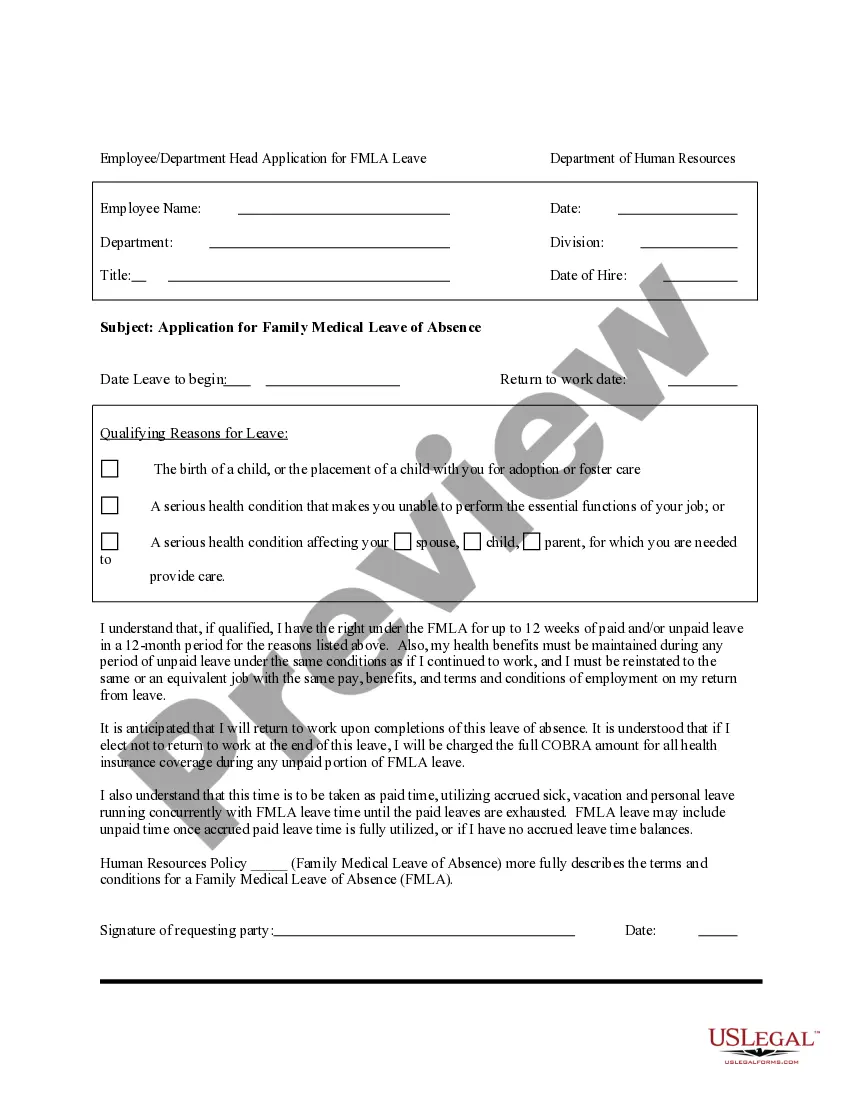
- For first-time users, start by reviewing the available forms in the Preview mode. Confirm that the selected document aligns with your requirements and jurisdiction.
- If you do not find what you need, utilize the Search tab to locate the right template. Once you identify a suitable form, proceed to the next step.
- Purchase the required document by clicking the Buy Now button and choosing the appropriate subscription plan. You will need to create an account for full access.
- Complete your purchase by entering your credit card information or opting for PayPal. Upon transaction confirmation, you will gain access to your forms.
- Finally, download your tailored form to your device. You can retrieve it later from the My Forms section of your profile.
In conclusion, US Legal Forms streamlines the process of obtaining legally sound funeral leave policy forms, offering a comprehensive library of templates and expert assistance to ensure you have everything you need.
Start your journey towards effective document preparation today by exploring US Legal Forms!
Form popularity
FAQ
Documenting bereavement leave generally involves submitting a formal request to your HR department, accompanied by any required documentation, such as a death certificate or funeral announcement. Each employer may have different requirements, so it is vital to familiarize yourself with your workplace's funeral leave policy for employees. Proper documentation ensures compliance and facilitates a smoother processing of your leave.
Most companies grant about three to five bereavement days for the loss of family members, although this can vary based on company policy. Some businesses may provide additional days for more extensive issues or family arrangements. Understanding the funeral leave policy for employees helps set realistic expectations and provides necessary support during difficult times.
Typically, employees receive between three to five days off if a family member passes away, but this can depend on the company's specific funeral leave policy for employees. Some employers may offer additional days for more significant relationships or to allow ample time for grieving. Therefore, it's always advisable to check with your HR department for precise guidelines.
The industry standard for bereavement leave varies across sectors, but many organizations follow similar protocols, offering anywhere from three to seven days off. It is essential for employers to stay informed about trends in their industry and to develop their funeral leave policy for employees accordingly. A competitive policy can help foster employee loyalty and satisfaction.
To put bereavement leave into action, employees should notify their HR department or direct supervisor as soon as possible. Providing documentation, such as a death certificate or funeral notice, may be required according to the company's funeral leave policy for employees. Clear steps and guidelines help ensure that requests for bereavement leave are processed smoothly.
In situations where no formal funeral leave policy exists, your boss may refuse time off for a funeral. However, many employers recognize the importance of allowing employees to attend funerals and may offer some flexibility. Discussing the situation openly can encourage understanding and hopefully lead to a solution. If your workplace lacks clear policies, consider advocating for a formal funeral leave policy for employees to ensure everyone has the support they need in such times.
Whether your boss must grant you leave for a funeral depends on the company’s funeral leave policy for employees. Many companies provide bereavement leave as a benefit, but the specifics may vary. If your company has policies in place, your employer typically has an obligation to accommodate your request for time off. Familiarizing yourself with these policies can help you understand your rights.
Yes, you can typically take off work for a funeral, especially if your company has a funeral leave policy for employees. Many employers recognize the importance of allowing employees to grieve and support their loved ones. Be sure to communicate with your supervisor about your need for leave, and provide any required documentation to ensure you receive the necessary time off without any issues.
In most cases, attending a funeral does not count as a sick day. Employers often have specific funeral leave policies for employees that allow time off for mourning and attending memorial services without impacting sick leave. It is important to consult your company’s policy or human resources for clarification on your entitlements. Understanding your rights can help ensure you access the leave you need during such a difficult time.
To ask for time off for a funeral, communicate with your supervisor as soon as possible. Explain the situation, and provide the details clearly, including the duration of your absence. Following the established funeral leave policy for employees will guide you in making an appropriate and respectful request.