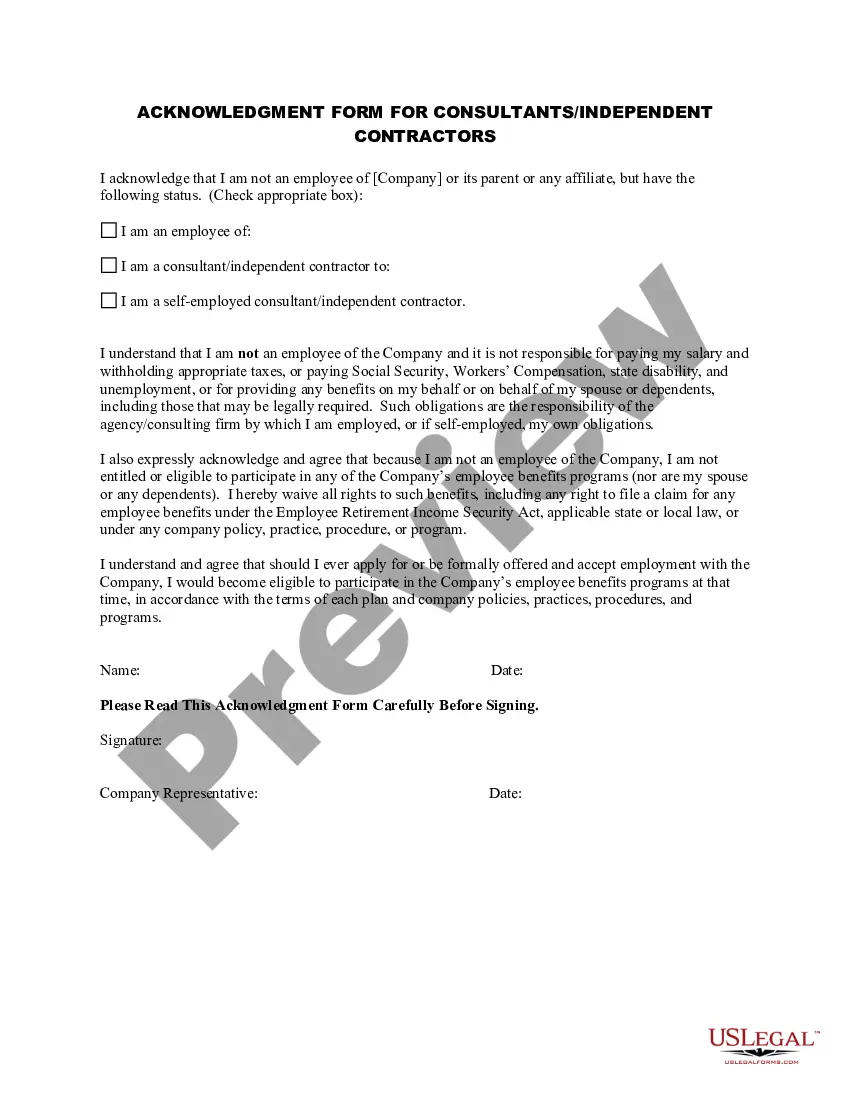
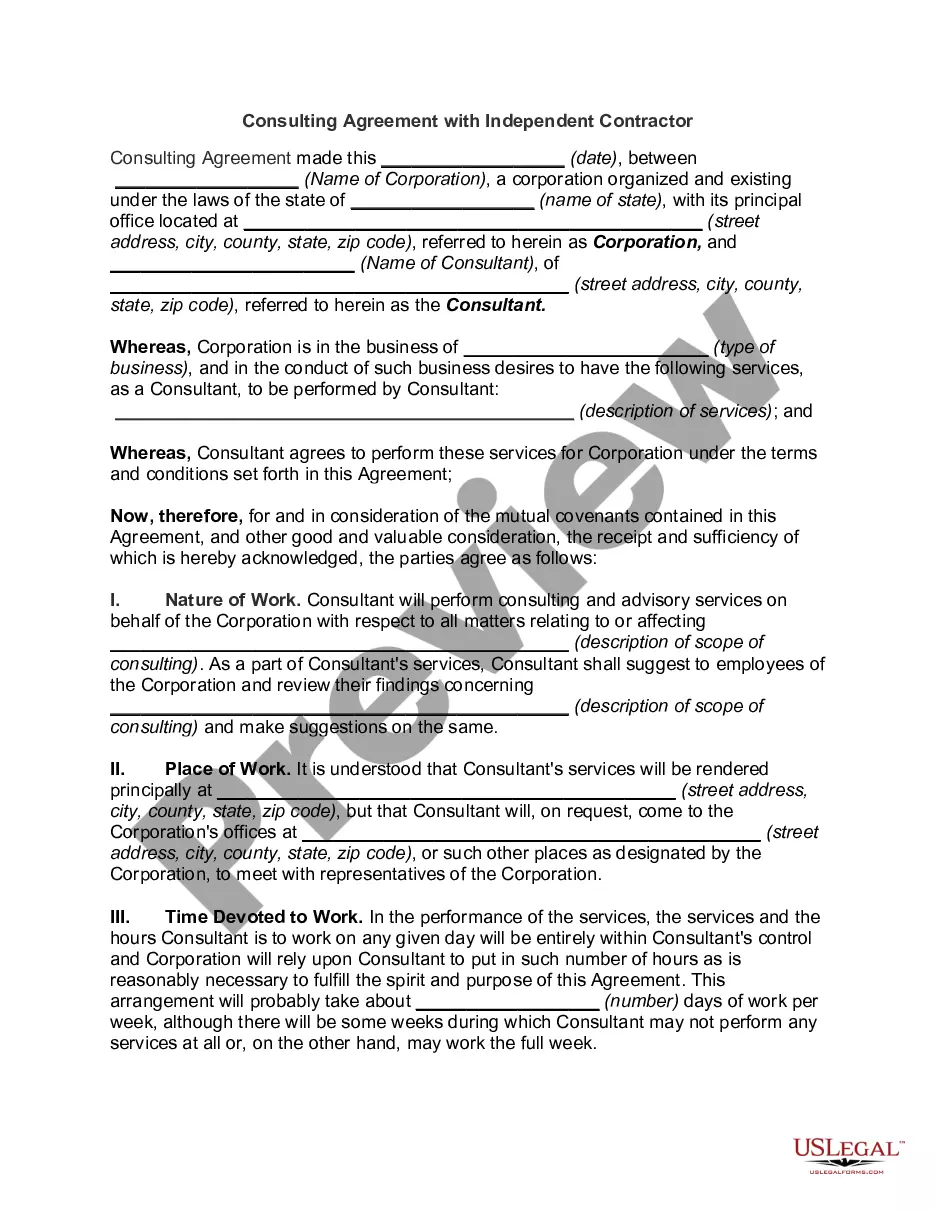
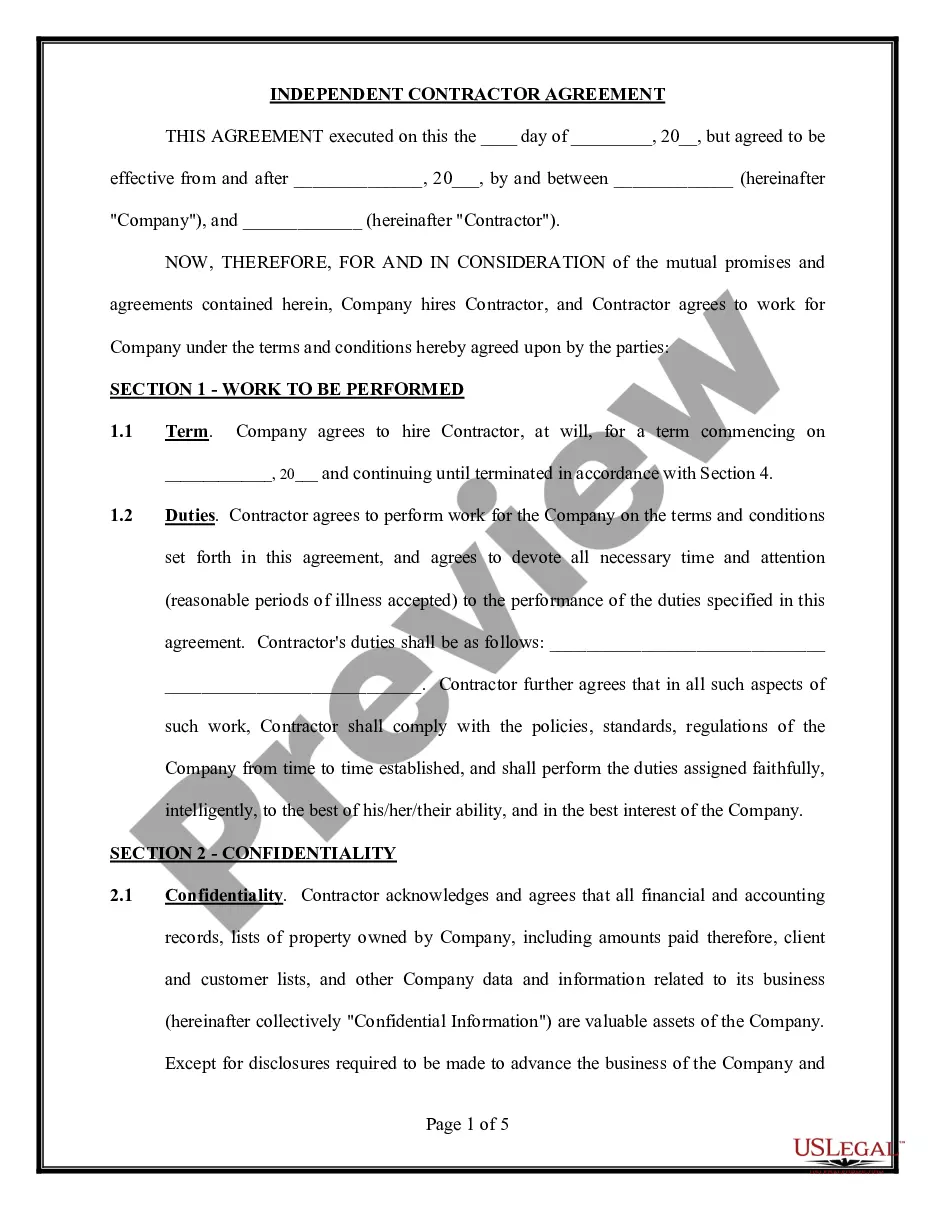
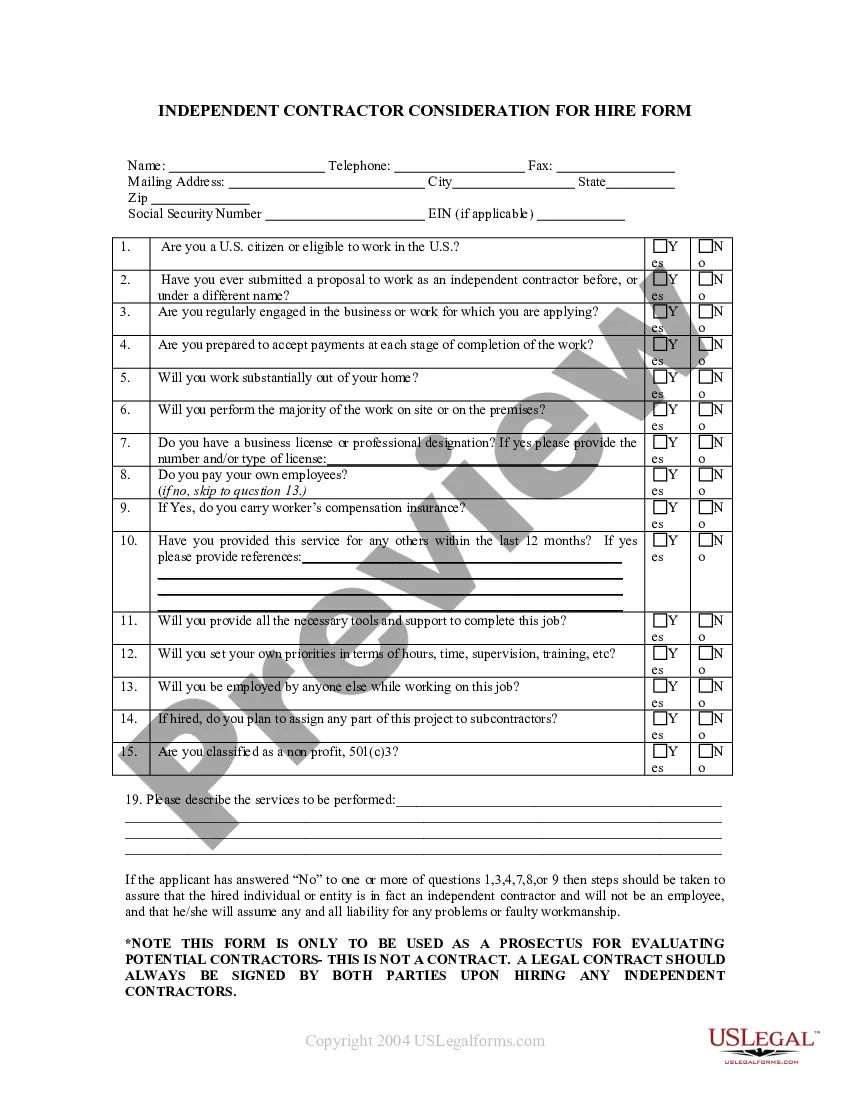
Consulting Contractors Agreement With Former Employer
Description
Get your form ready online
Our built-in tools help you complete, sign, share, and store your documents in one place.
Make edits, fill in missing information, and update formatting in US Legal Forms—just like you would in MS Word.
Download a copy, print it, send it by email, or mail it via USPS—whatever works best for your next step.
Sign and collect signatures with our SignNow integration. Send to multiple recipients, set reminders, and more. Go Premium to unlock E-Sign.
If this form requires notarization, complete it online through a secure video call—no need to meet a notary in person or wait for an appointment.
We protect your documents and personal data by following strict security and privacy standards.

Make edits, fill in missing information, and update formatting in US Legal Forms—just like you would in MS Word.

Download a copy, print it, send it by email, or mail it via USPS—whatever works best for your next step.

Sign and collect signatures with our SignNow integration. Send to multiple recipients, set reminders, and more. Go Premium to unlock E-Sign.

If this form requires notarization, complete it online through a secure video call—no need to meet a notary in person or wait for an appointment.

We protect your documents and personal data by following strict security and privacy standards.
Looking for another form?

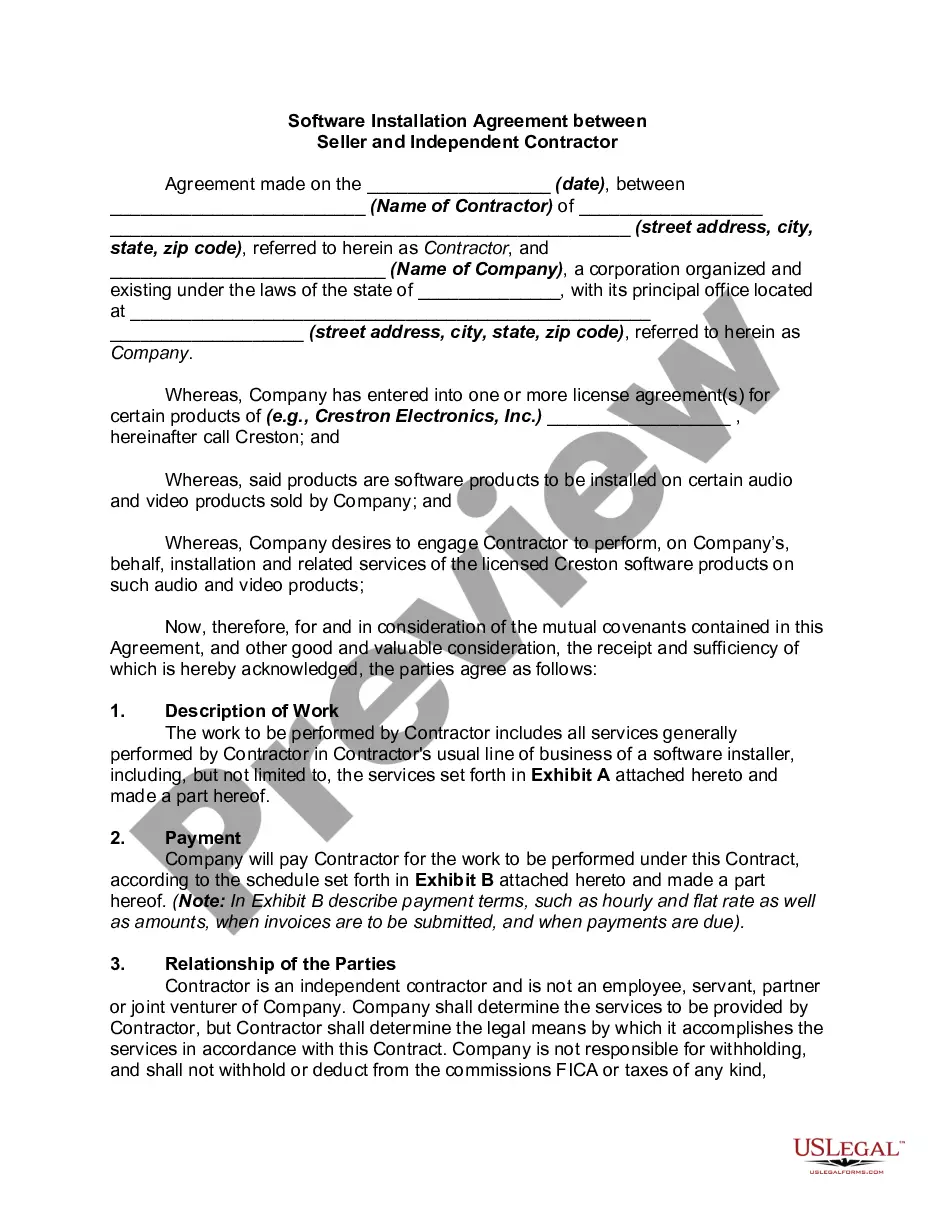



How to fill out Acknowledgment Form For Consultants Or Self-Employed Independent Contractors?
Whether for commercial reasons or personal affairs, everyone must confront legal matters at some point in their life.
Completing legal documents requires meticulous care, starting with choosing the correct form template.
Choose the document format you desire and download the Consulting Contractors Agreement With Former Employer. Once it has been downloaded, you can fill out the form using editing applications or print it out and complete it manually. With a vast library of US Legal Forms available, you don't have to waste time hunting for the suitable template online. Use the library’s easy navigation to locate the right template for any situation.
- For example, if you select an incorrect version of the Consulting Contractors Agreement With Former Employer, it will be denied upon submission.
- Thus, it is crucial to obtain a trustworthy source of legal forms like US Legal Forms.
- If you need to acquire a Consulting Contractors Agreement With Former Employer template, follow these straightforward steps.
- Locate the template you require by using the search box or catalog navigation.
- Review the form’s details to confirm it matches your situation, state, and locale.
- Click on the form’s preview to inspect it.
- If it is not the correct document, return to the search function to find the Consulting Contractors Agreement With Former Employer sample you are looking for.
- Obtain the template if it fulfills your requirements.
- If you already possess a US Legal Forms account, click Log in to access previously saved templates in My documents.
- If you do not yet have an account, you can get the form by clicking Buy now.
- Choose the suitable pricing option.
- Complete the account registration form.
- Select your payment method: you can utilize a credit card or PayPal account.
Form popularity
FAQ
The termination clause in a consulting agreement outlines the conditions under which either party may end the agreement. This clause should detail notice periods and any obligations that must be fulfilled before concluding the relationship. Having a clear termination clause protects both parties and fosters a professional transition. It's essential to include this in your consulting contractors agreement with former employer.
Updated on March 8th, 2022. A Maryland small estate affidavit is used to bypass the standard probate process and expedite the distribution of one's assets after death.
Children in Maryland Inheritance Law If you have children who are minors, your spouse will inherit half of the intestate property and your children will inherit the other half. If you have no minor children, your spouse will inherit $15,000 of the intestate property and then half of the remaining property.
An affidavit of heirship is a document that can be used in some states to transfer ownership of property left by a deceased person to their family. This allows for property to be inherited without a will or a court proceeding.
Generally, the Intestacy statutes provide for property to be distributed to a decedent's closest living relatives, i.e., to a surviving spouse and children, if there are any; to children in equal shares if there is no surviving spouse; to parents if there are no spouse and children; and so on to more distant relatives.
The Maryland intestacy laws are based on the lineal bloodlines of the decedent. For example, heirs of an estate include spouses and children. In the event that there are no spouses or children then the heirs would be the decedent's surviving parents.
If the decedent has a spouse and children who are minors (under 18): Spouse inherits ½ of intestate property; and. Children inherit everything else.
Small Estate - property of the decedent subject to administration in Maryland is established to have a value of $50,000 or less ($100,000 or less if the spouse is the sole heir).
Each spouse owns an undivided interest in the real property, and there is a right of survivorship. Maryland has a presumption that property held by a married couple is held as tenants by the entireties. The presumption applies to property acquired by the married couple.