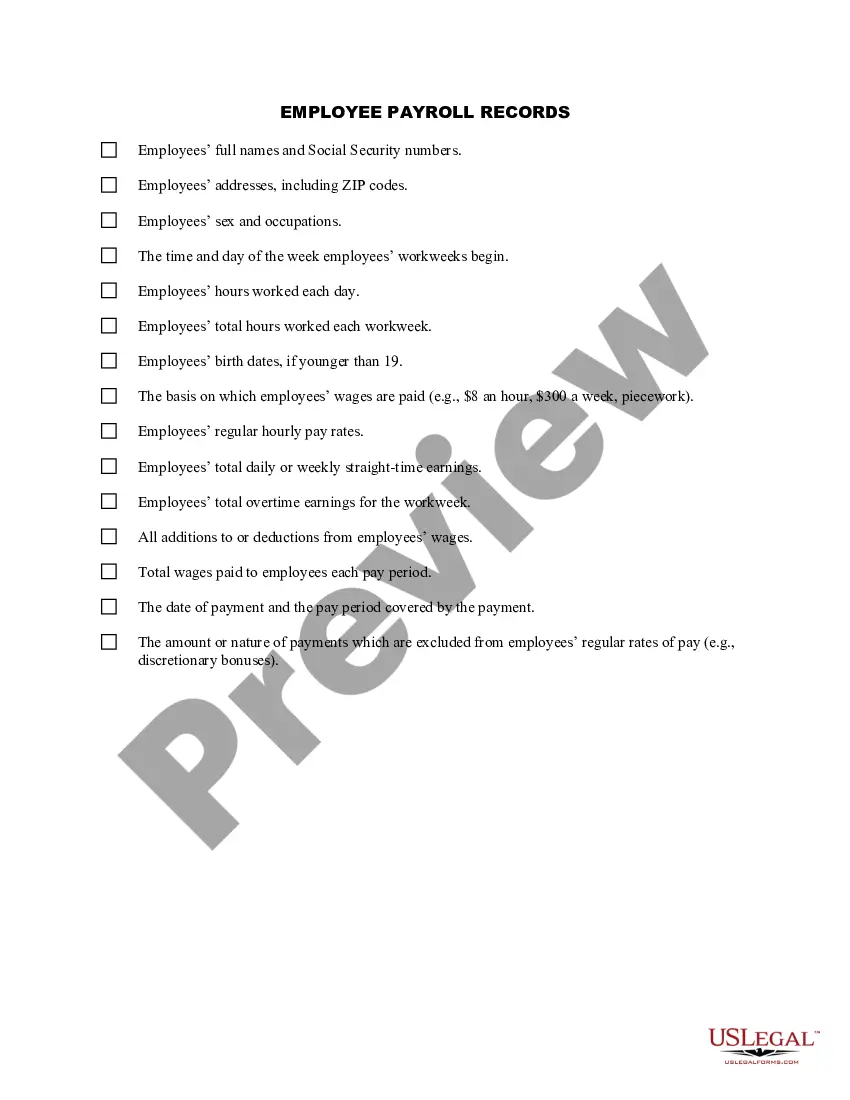
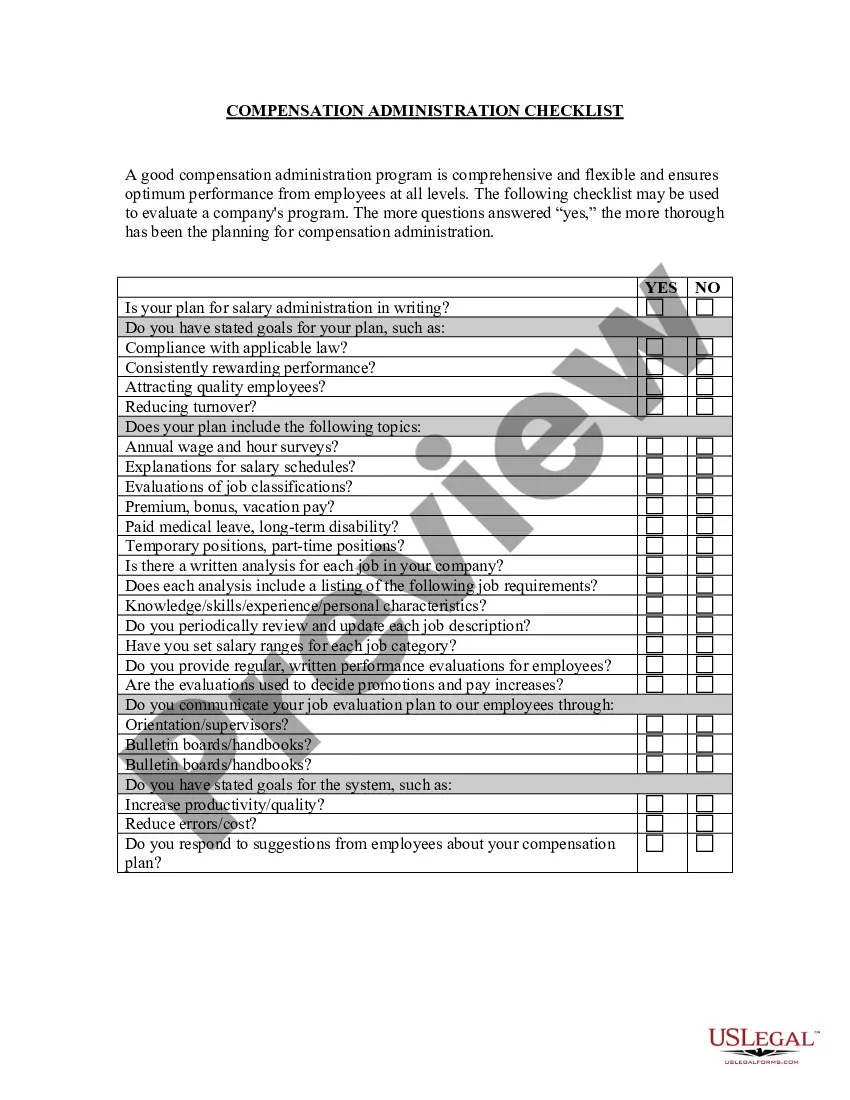
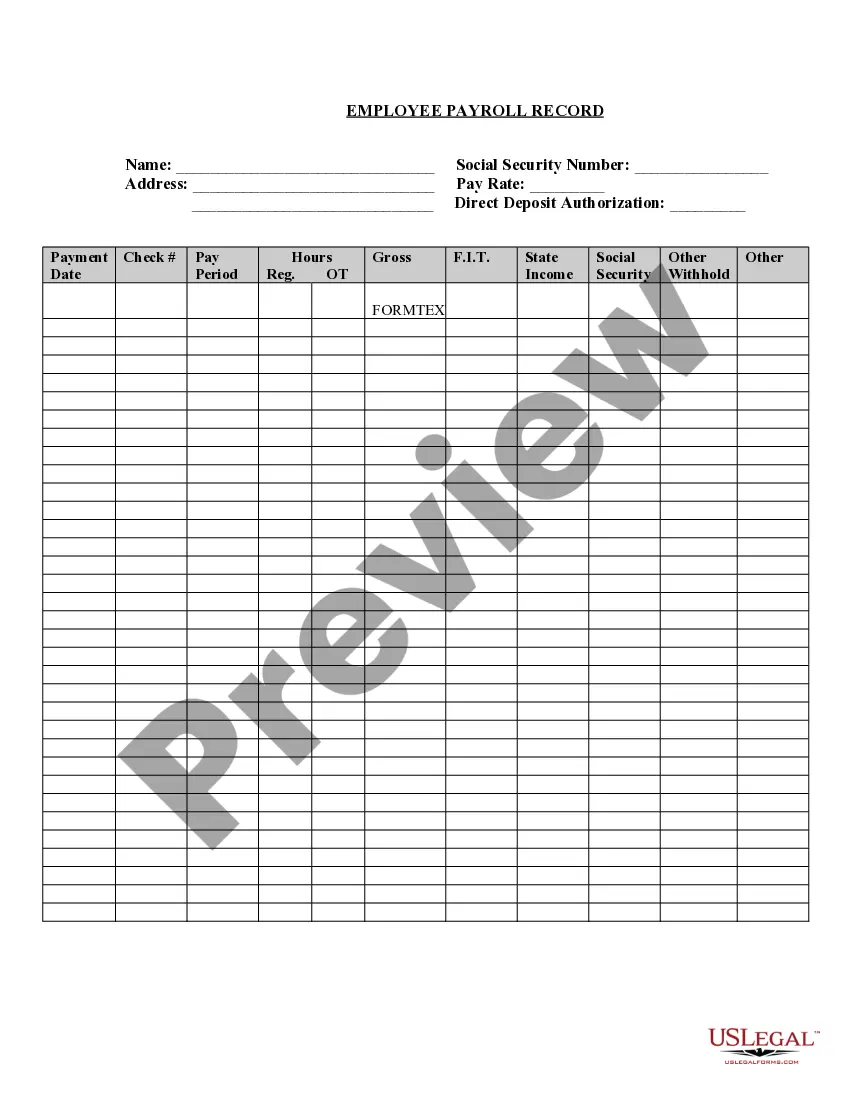
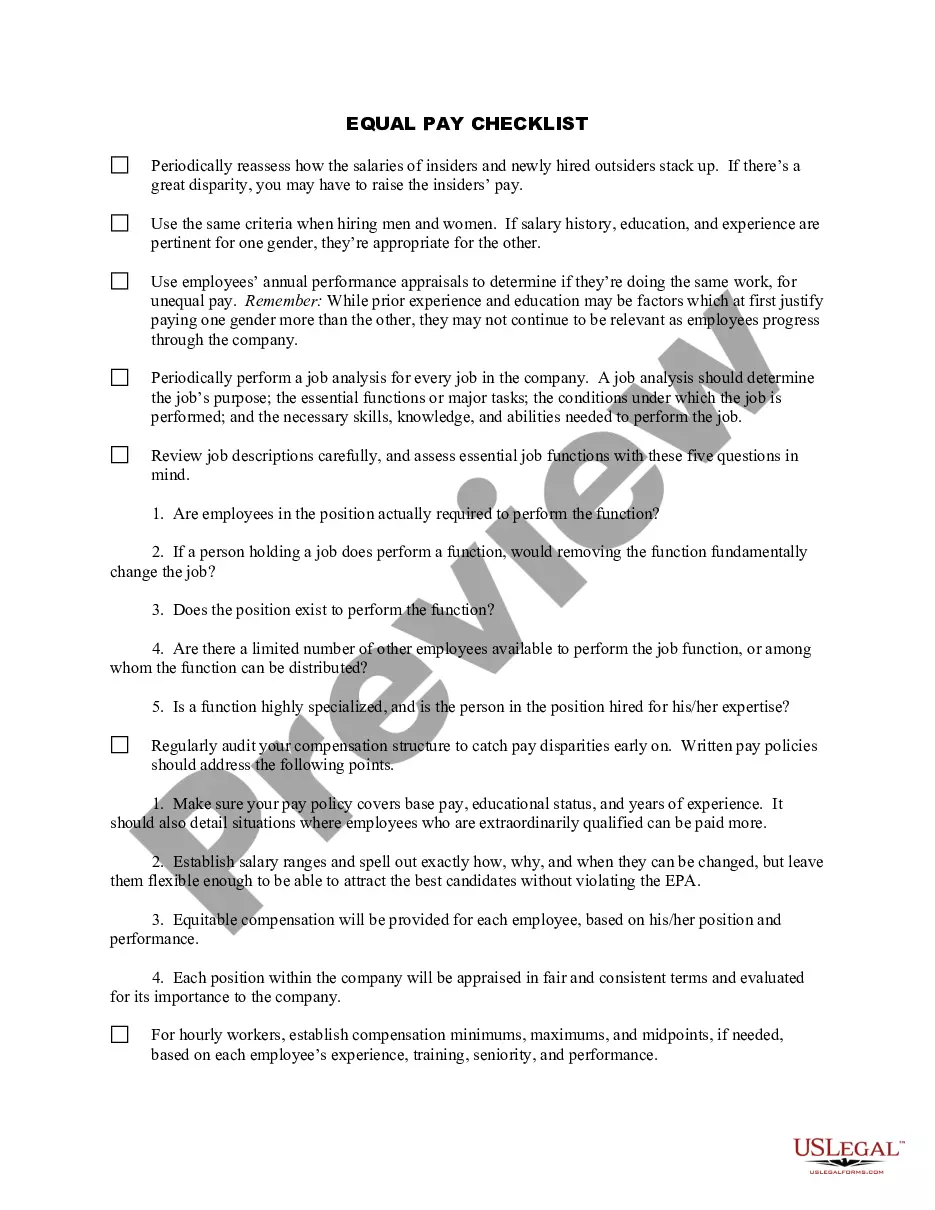
Payroll Records Checklist With Toddler
Description
Get your form ready online
Our built-in tools help you complete, sign, share, and store your documents in one place.
Make edits, fill in missing information, and update formatting in US Legal Forms—just like you would in MS Word.
Download a copy, print it, send it by email, or mail it via USPS—whatever works best for your next step.
Sign and collect signatures with our SignNow integration. Send to multiple recipients, set reminders, and more. Go Premium to unlock E-Sign.
If this form requires notarization, complete it online through a secure video call—no need to meet a notary in person or wait for an appointment.
We protect your documents and personal data by following strict security and privacy standards.

Make edits, fill in missing information, and update formatting in US Legal Forms—just like you would in MS Word.

Download a copy, print it, send it by email, or mail it via USPS—whatever works best for your next step.

Sign and collect signatures with our SignNow integration. Send to multiple recipients, set reminders, and more. Go Premium to unlock E-Sign.

If this form requires notarization, complete it online through a secure video call—no need to meet a notary in person or wait for an appointment.

We protect your documents and personal data by following strict security and privacy standards.
Looking for another form?






How to fill out Employee Payroll Records Checklist?
The Payroll Records Checklist Featuring Toddler displayed on this website is a versatile legal template created by expert attorneys in accordance with federal and local laws.
For over 25 years, US Legal Forms has supplied individuals, businesses, and legal experts with more than 85,000 authenticated, state-specific documents for any corporate and personal needs. It's the fastest, easiest, and most reliable method to acquire the paperwork you require, as the service ensures bank-grade data protection and anti-malware safeguards.
Re-download your documents as needed. Access the My documents tab in your profile to retrieve any previously saved forms.
- Search for the document you require and verify it.
- Browse the sample you are looking for and preview it or review the form details to confirm it meets your requirements. If it doesn't, utilize the search option to find the suitable one. Hit Buy Now once you have identified the template you need.
- Register and Log Into your account.
- Choose the pricing plan that works best for you and set up an account. Utilize PayPal or a credit card for a swift transaction. If you're already registered, Log In and check your membership to proceed.
- Obtain the fillable document.
- Select the format you desire for your Payroll Records Checklist Featuring Toddler (PDF, Word, RTF) and download the document to your device.
- Fill out and sign the document.
- Print the template to complete it manually. Alternatively, employ an online multifunctional PDF editor to swiftly and accurately complete and sign your form with a valid signature.
Form popularity
FAQ
Change orders typically consist of three parts: the project information, the changes to the contract, and the change in cost and time for performance. Project information includes the project name and the owner's and contractor's information.
Classic examples of change orders include the owner's desire to move the location of a wall to accommodate some other design element, adding a window where there was none in the original plans, or changing the finish of the floors from tile to terrazzo.
CCDs are provisional instructions issued for immediate implementation, allowing work to proceed while final costs and details are determined. Change Orders, on the other hand, involve a formal process that includes evaluation, negotiation, and contractual modifications.
A change order is a written amendment to an existing contract after the effective date that alters the work, the contract sum, or the contract time. While contracts are intended to be the final word for projects, sometimes things need to change.
The four most common types of change orders in construction are: lump sum (when the change can be quantified in price); zero cost (no change in price); time and material (cost cannot be estimated); and unitary cost (a change in scope that can be defined by measurement units).
The main difference lies in who isemploying the person. If a worker is employed by a company directly, they are an independent contractor. If the worker is hired to perform a specific task for a general contractor, they are a subcontractor.
A change order form is used in construction projects to track any modifications to the original contract. Our construction change order form example is available in a variety of formats, including PDF and Word, and can be downloaded for free.
Some of the most common reasons for change orders include: Inaccurate specifications in the original designs or contract. Ambiguous or inaccurate drawings. Unforeseen conditions at the job site, such as obstructions that could not be planned for.