Motion For Summary Judgment In Florida
Description
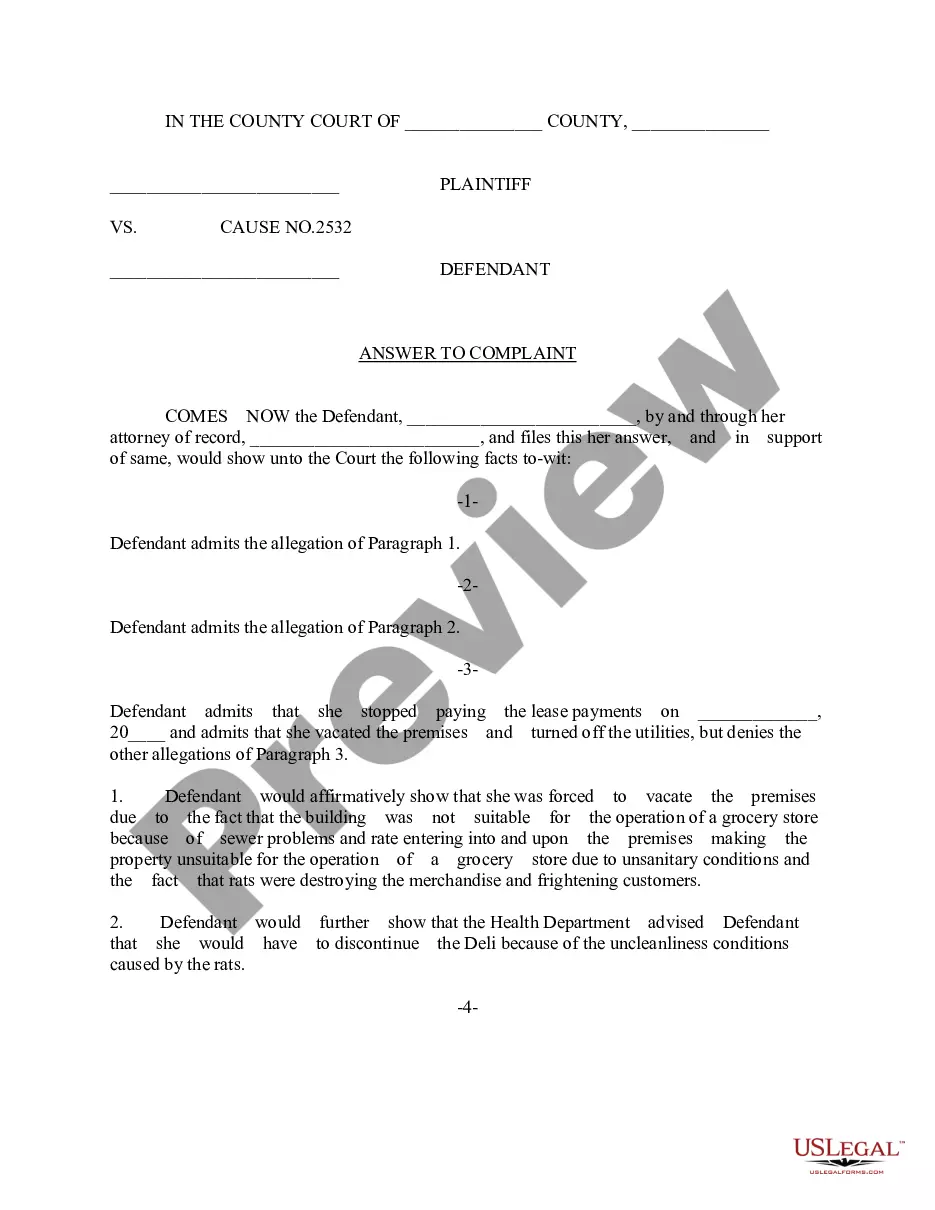
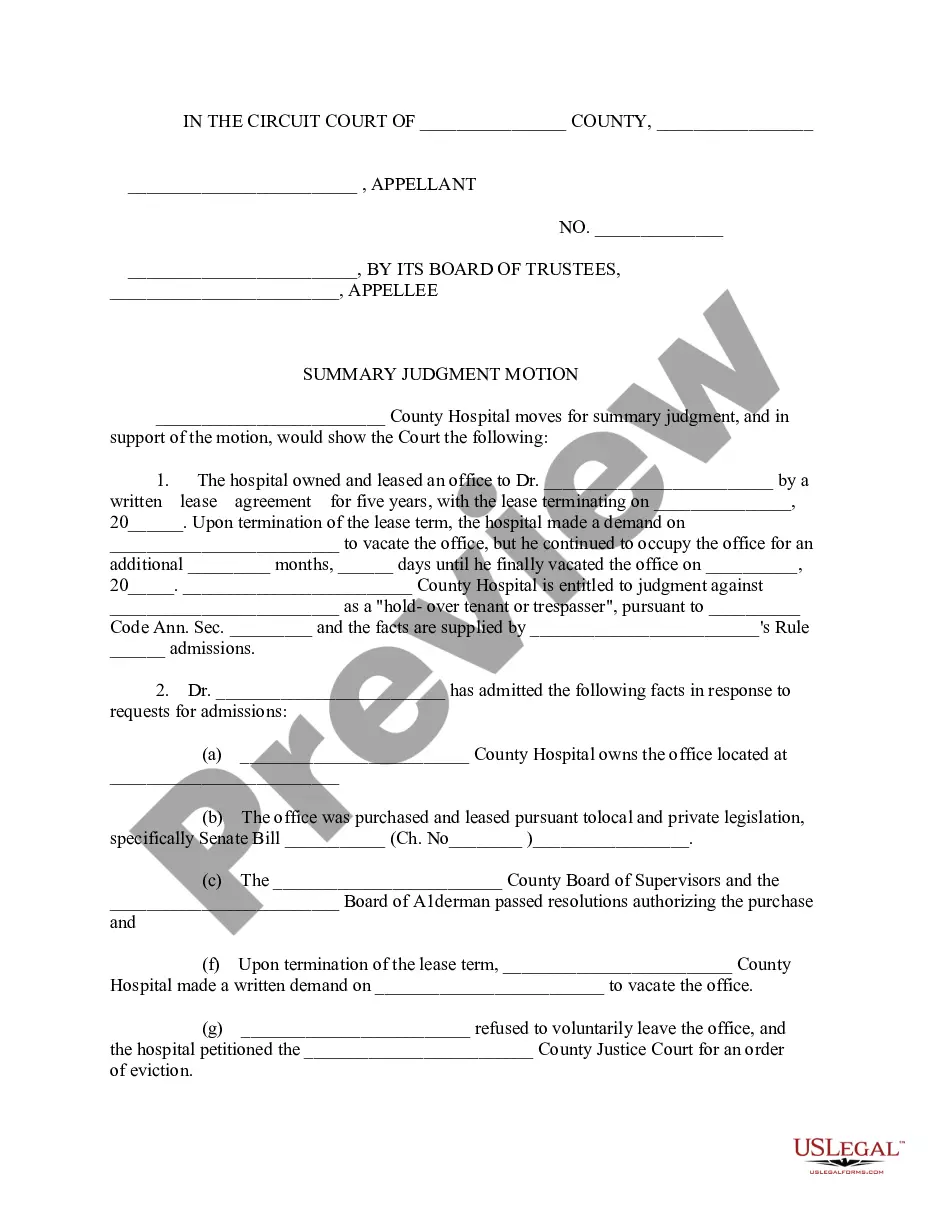
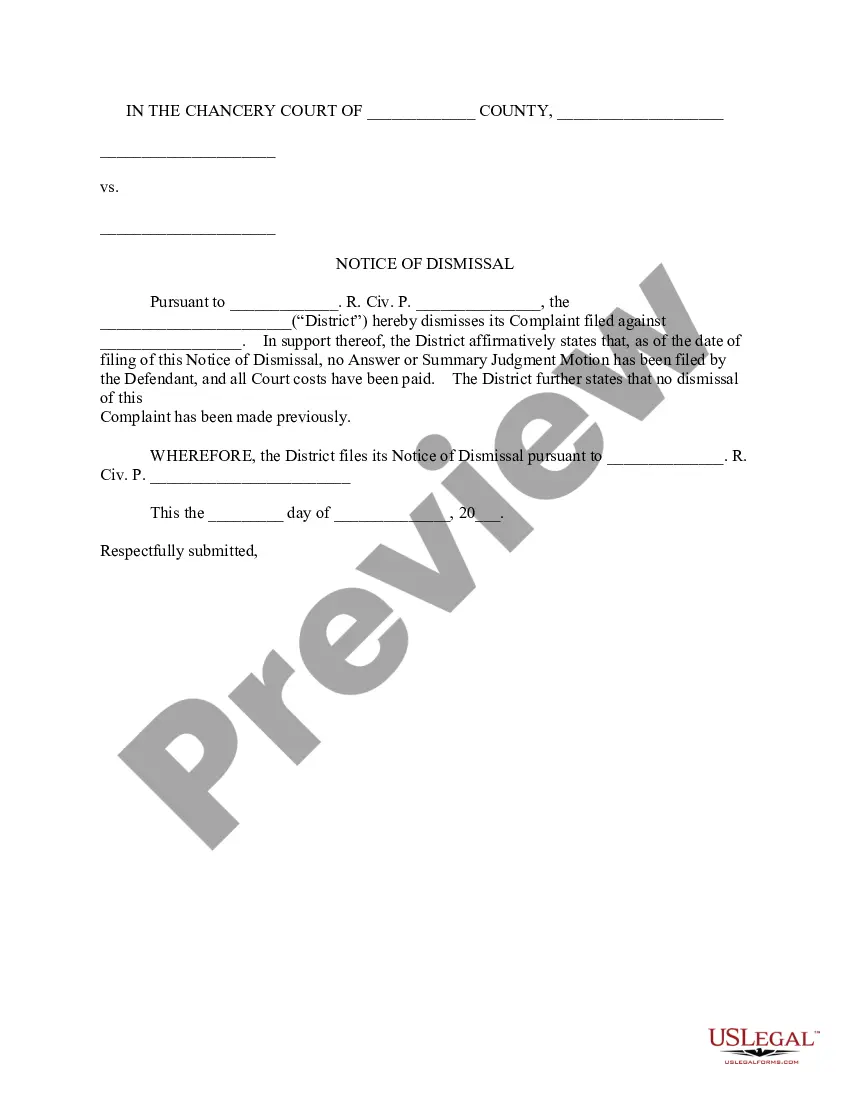
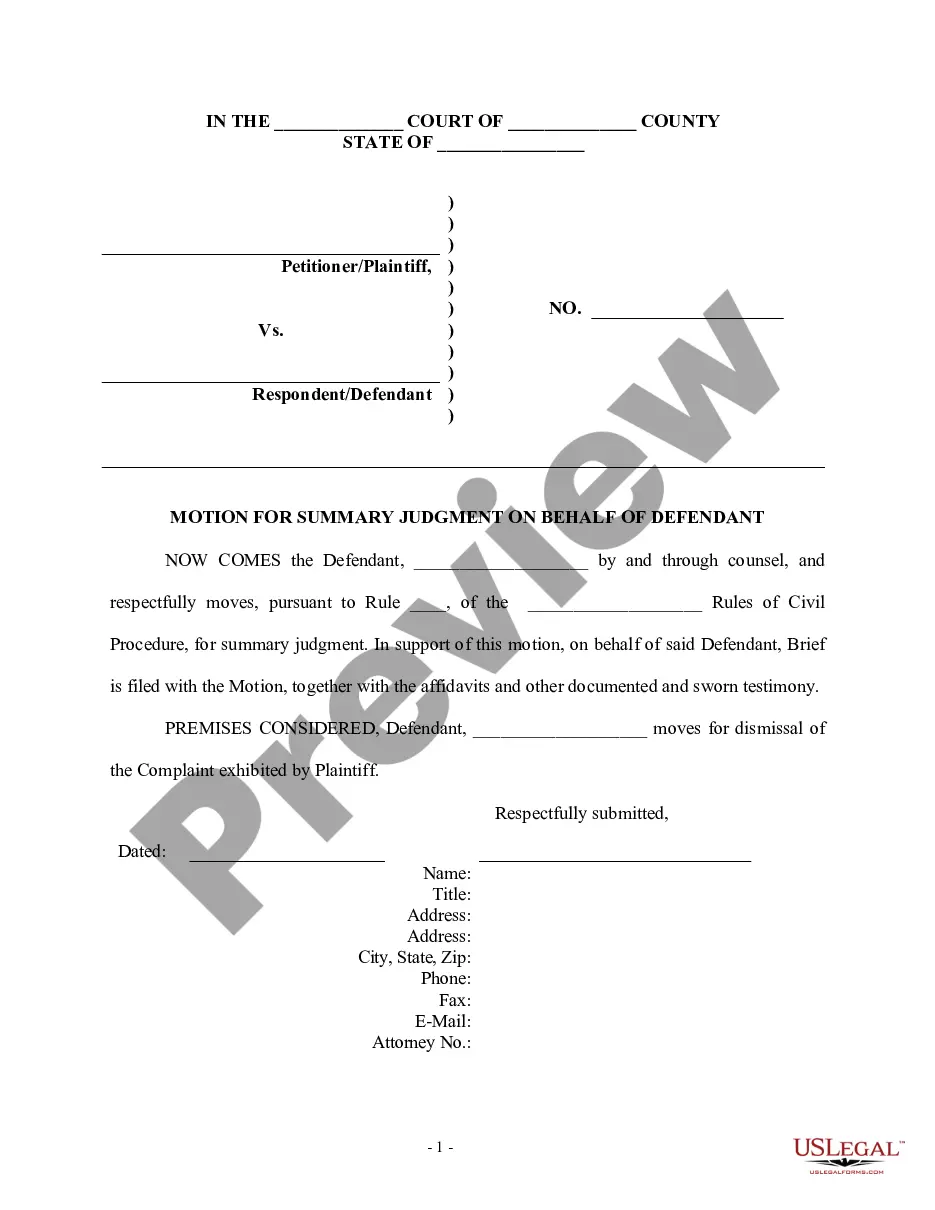
Get your form ready online
Our built-in tools help you complete, sign, share, and store your documents in one place.
Make edits, fill in missing information, and update formatting in US Legal Forms—just like you would in MS Word.
Download a copy, print it, send it by email, or mail it via USPS—whatever works best for your next step.
Sign and collect signatures with our SignNow integration. Send to multiple recipients, set reminders, and more. Go Premium to unlock E-Sign.
If this form requires notarization, complete it online through a secure video call—no need to meet a notary in person or wait for an appointment.
We protect your documents and personal data by following strict security and privacy standards.

Make edits, fill in missing information, and update formatting in US Legal Forms—just like you would in MS Word.

Download a copy, print it, send it by email, or mail it via USPS—whatever works best for your next step.

Sign and collect signatures with our SignNow integration. Send to multiple recipients, set reminders, and more. Go Premium to unlock E-Sign.

If this form requires notarization, complete it online through a secure video call—no need to meet a notary in person or wait for an appointment.

We protect your documents and personal data by following strict security and privacy standards.
Looking for another form?






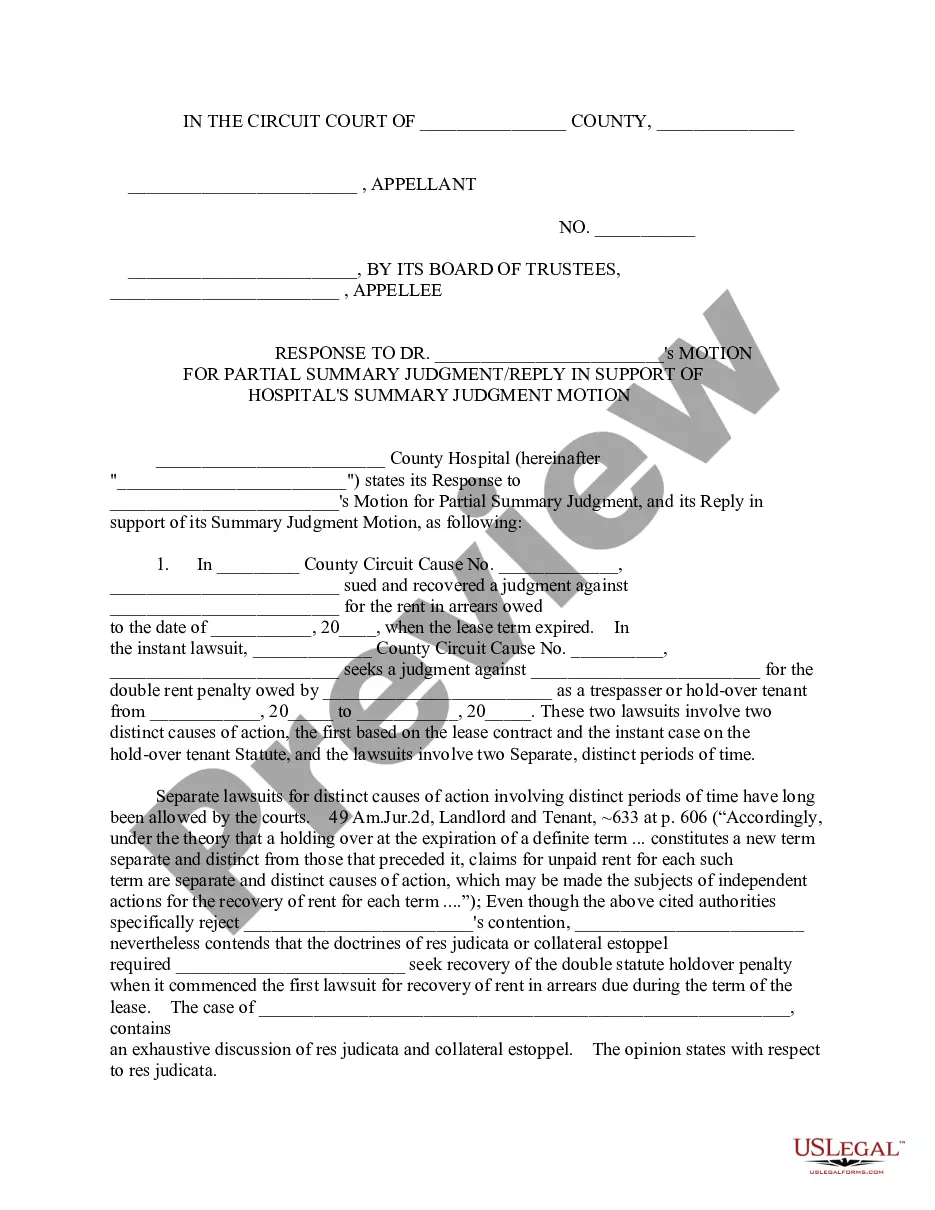
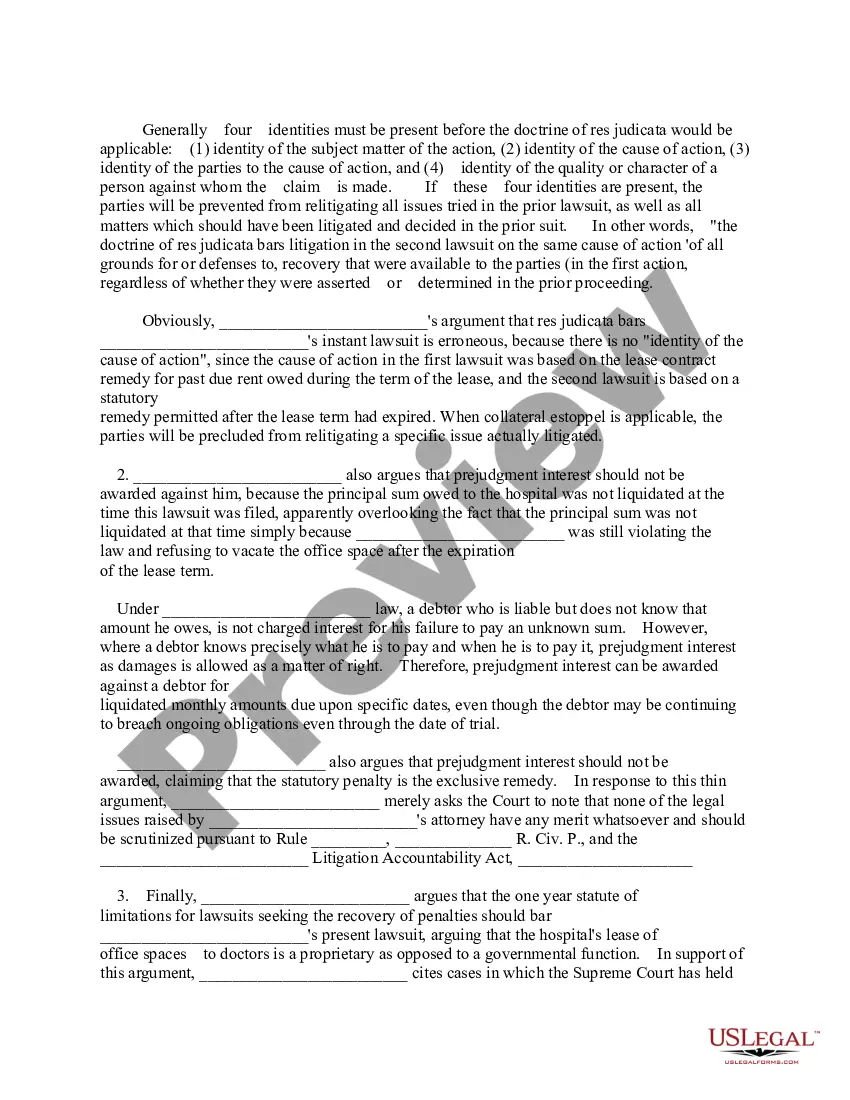
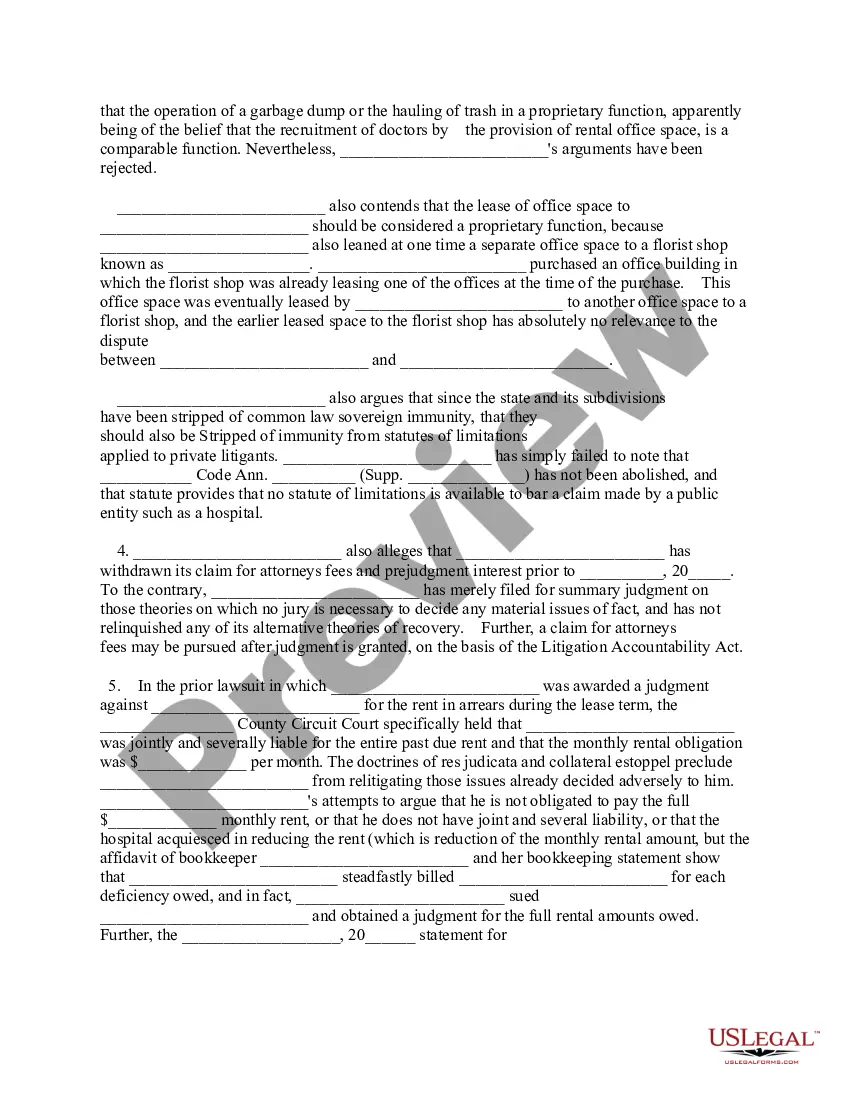
How to fill out Response To Motion For Partial Summary Judgment In Support Of Hospital's Summary Judgment Motion?
It’s clear that you cannot become a legal expert instantly, nor can you learn how to swiftly prepare a Motion For Summary Judgment In Florida without possessing a specific skill set.
Compiling legal documents is a lengthy process necessitating specialized education and abilities. So why not entrust the assembly of the Motion For Summary Judgment In Florida to the experts.
With US Legal Forms, one of the most extensive legal document collections, you can access everything from court filings to templates for internal business communications. We understand the significance of compliance and adherence to both federal and state regulations.
You can revisit your forms from the My documents section at any time. If you’re an existing customer, you can simply Log In and locate and download the template from the same section.
Regardless of the reason for your documents—whether they are financial, legal, or personal—our website has you covered. Try US Legal Forms today!
- Locate the document you require using the search bar at the top of the page.
- View it (if this function is available) and examine the supporting details to ascertain whether Motion For Summary Judgment In Florida is what you’re looking for.
- Initiate your search again if you require a different template.
- Create a free account and select a subscription plan to acquire the template.
- Select Buy now. Once the payment has been processed, you can obtain the Motion For Summary Judgment In Florida, fill it out, print it, and send or deliver it to the appropriate individuals or organizations.
Form popularity
FAQ
In Florida, you typically have 20 days to respond to a motion for summary judgment after it has been served. This timeframe allows you to gather evidence and develop a strong argument against the motion. Failing to comply with this deadline can have serious consequences for your case, possibly leading to judgment against you. Therefore, timely and effective responses are critical to achieving the best outcome.
In Virginia, landlords are required to provide tenants with 24 hours' notice before entering the premises to make repairs, show the unit to prospective buyers, and more. The only exception to this is if there is an emergency, such as a fire or severe leakage.
HB 1542 (Security Deposits) increases the length of time that landlords have to provide tenants with an itemization of damages to the premises and the cost of repair when damages exceed the amount of the security deposit. This time period is increased from 15 to 30 days under Virginia Code §55.1-1126.
A Lease Amendment, also known as a lease amending agreement or lease addendum, is: A formal agreement between a landlord and tenant to modify one or more terms of a Lease Agreement. A written record of the changes or additions made to the original lease.
The Virginia Residential Landlord and Tenant Act (VRLTA), Sections 55-248.2 through 55-248.40 of the Code of Virginia, establishes the rights and obligations of landlords and tenants in the Commonwealth. Only the courts can enforce those rights and responsibilities.
The tenant shall not unreasonably withhold consent to the landlord to enter into the dwelling unit in order to inspect the premises; make necessary or agreed-upon repairs, decorations, alterations, or improvements; supply necessary or agreed-upon services; or exhibit the dwelling unit to prospective or actual ...
The landlord may enter the dwelling unit without consent of the tenant in case of emergency. The landlord shall not abuse the right of access or use it to harass the tenant.
In Virginia, landlord harassment is considered to be any action taken by a landlord that is intended to interfere with a tenant's right to quiet enjoyment of their rental property. Some examples of landlord harassment include: Entering the tenant's property without proper notice or permission.
Tenants and landlords have legal protections under the Virginia Residential Landlord and Tenant Act (VRLTA). The VRLTA applies to most residential rental properties in Virginia. As a renter, there are certain rights and responsibilities that come with renting a home in Virginia.