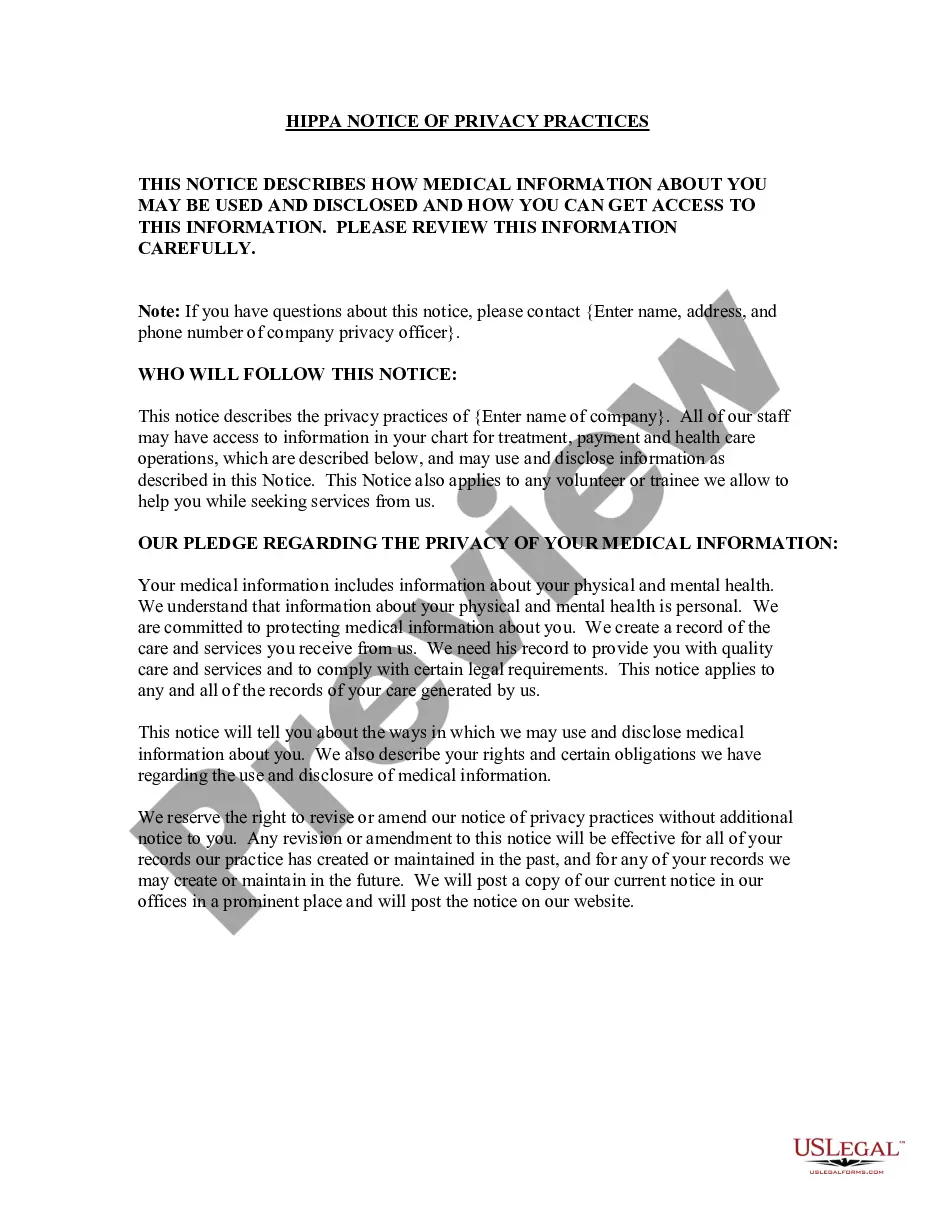
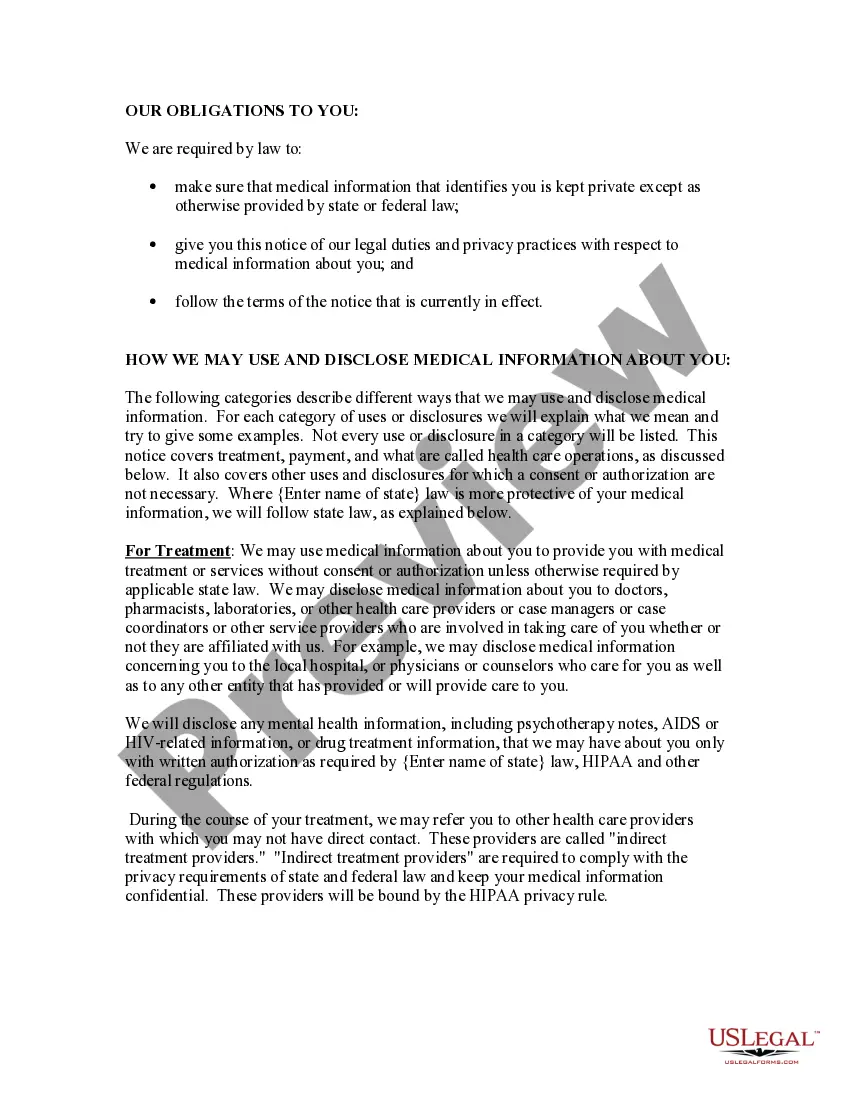
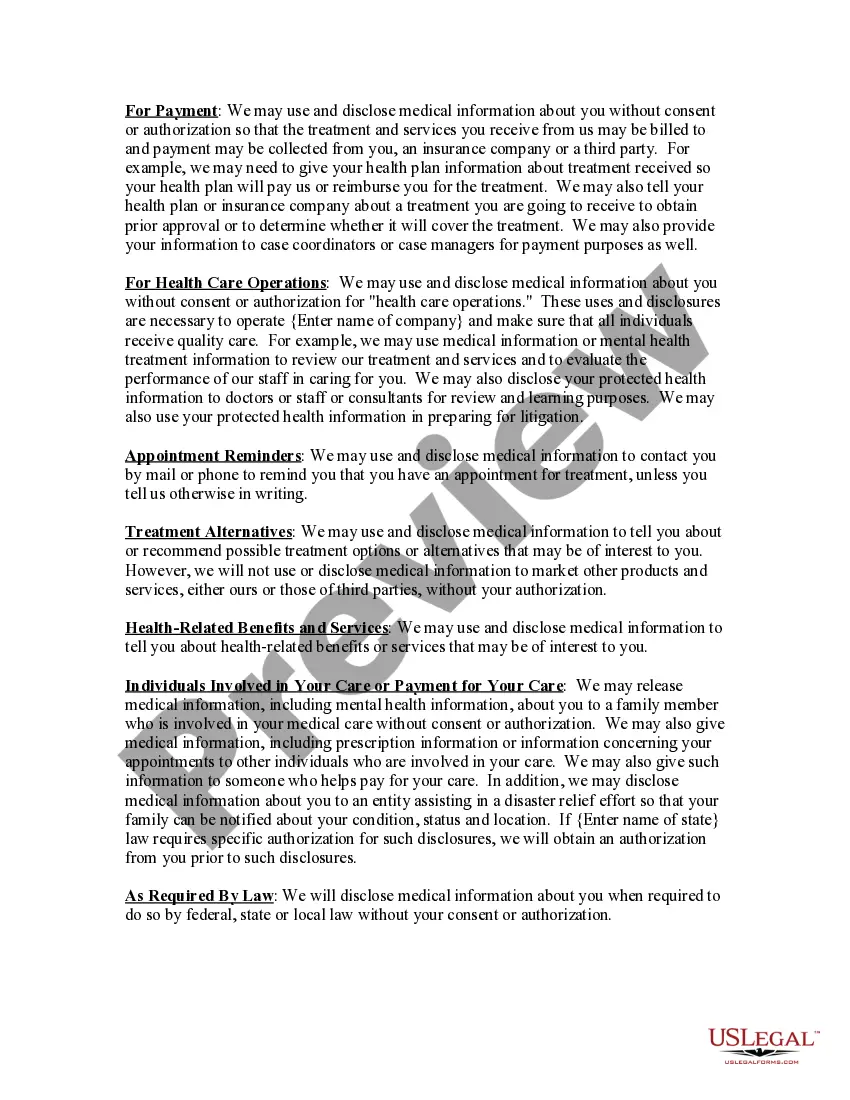
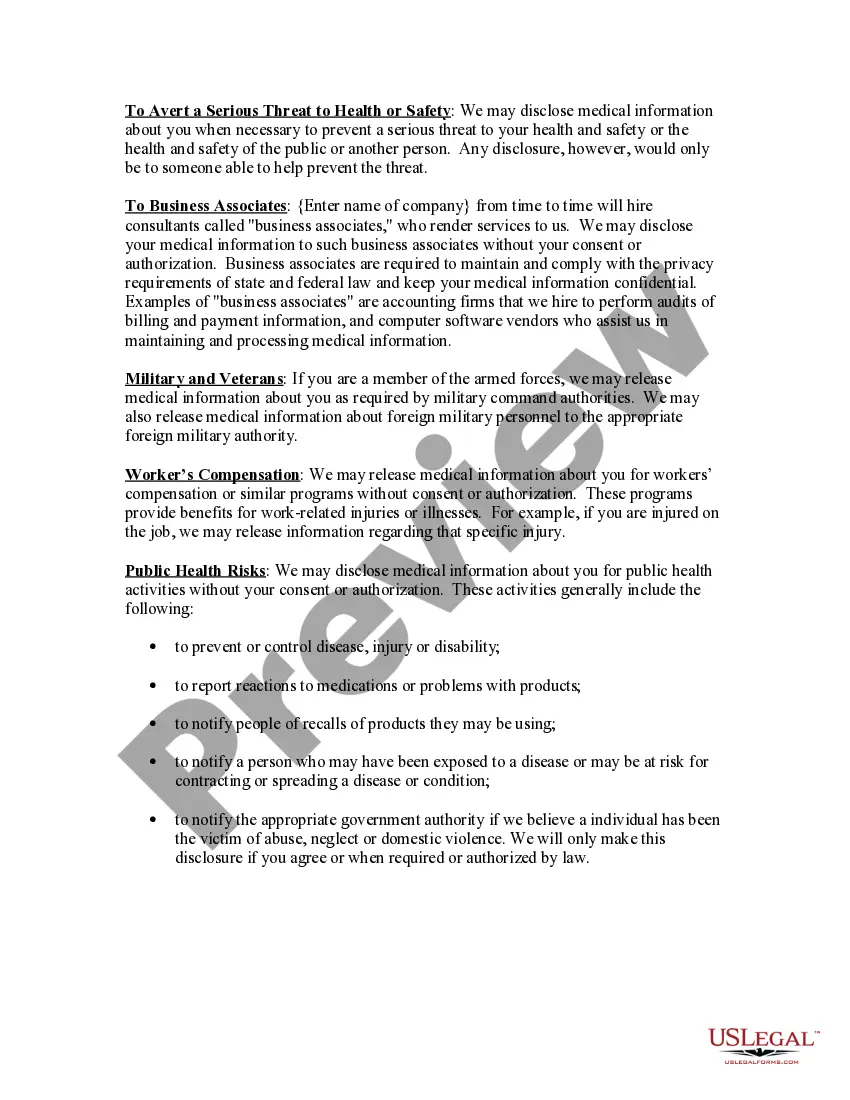
Hipaa Compliance Form For Volunteers
Description
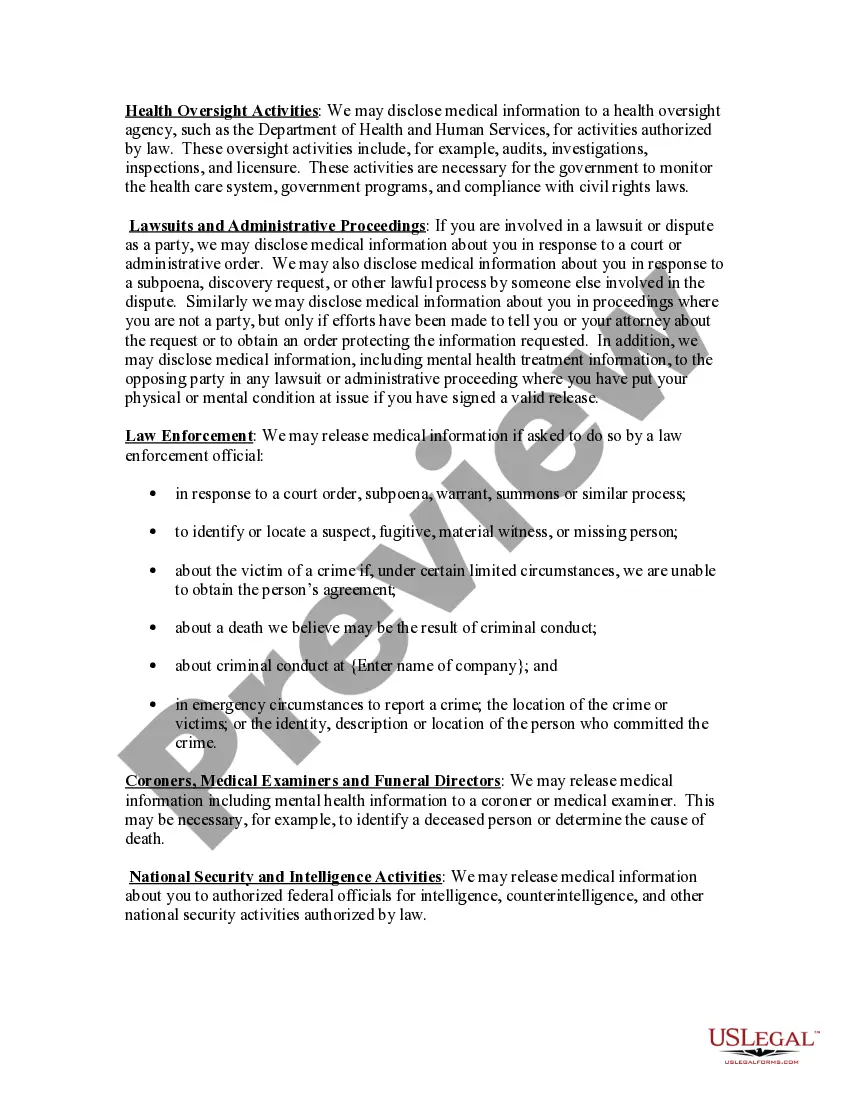
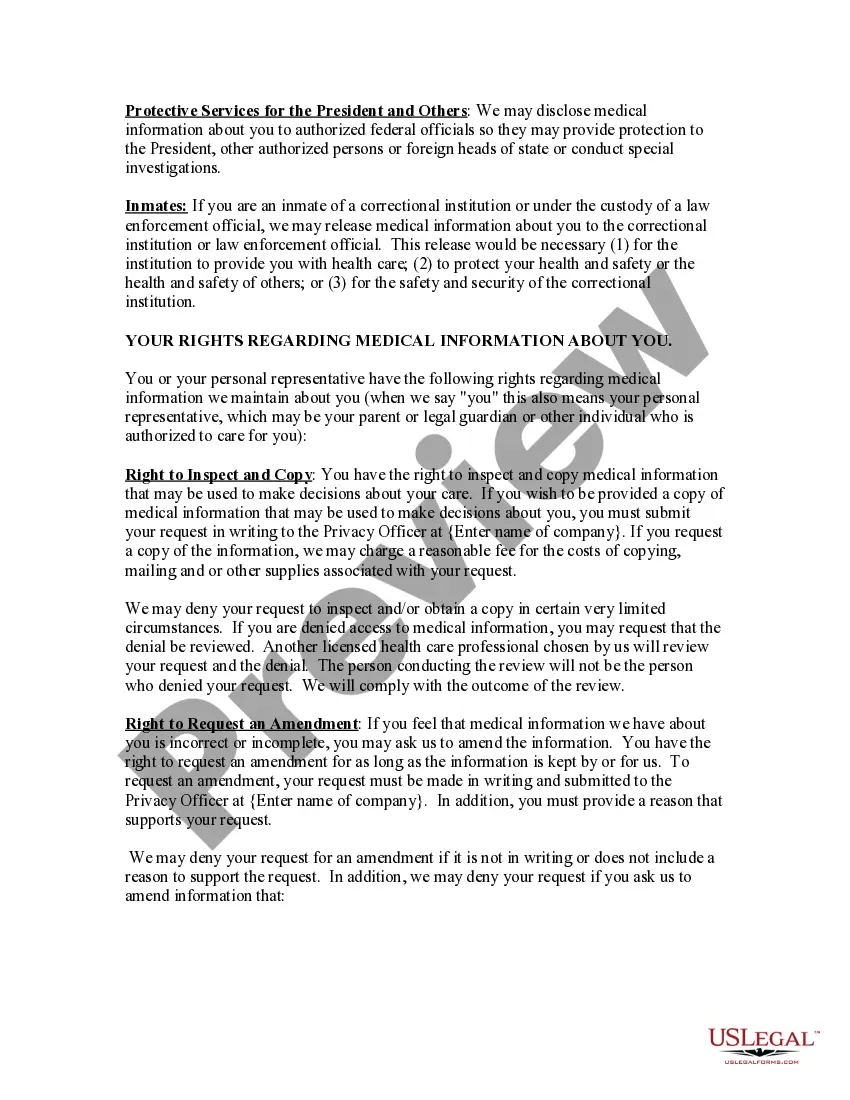
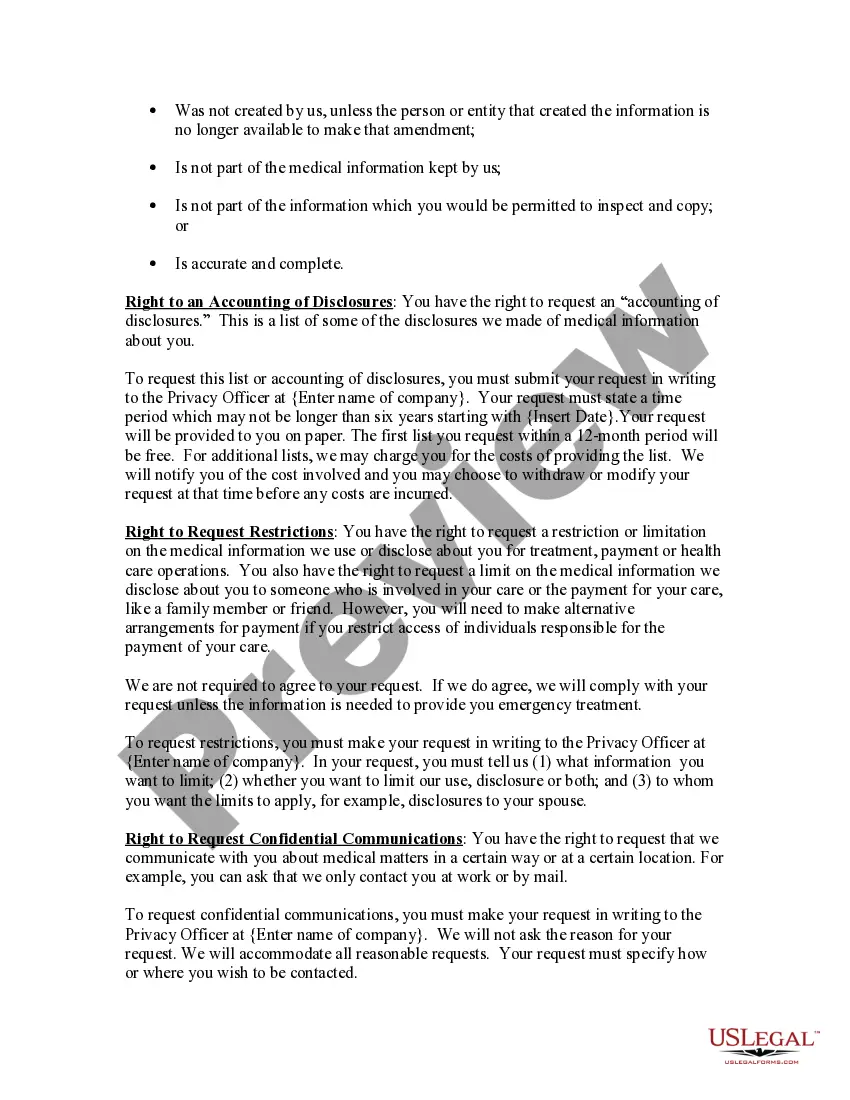
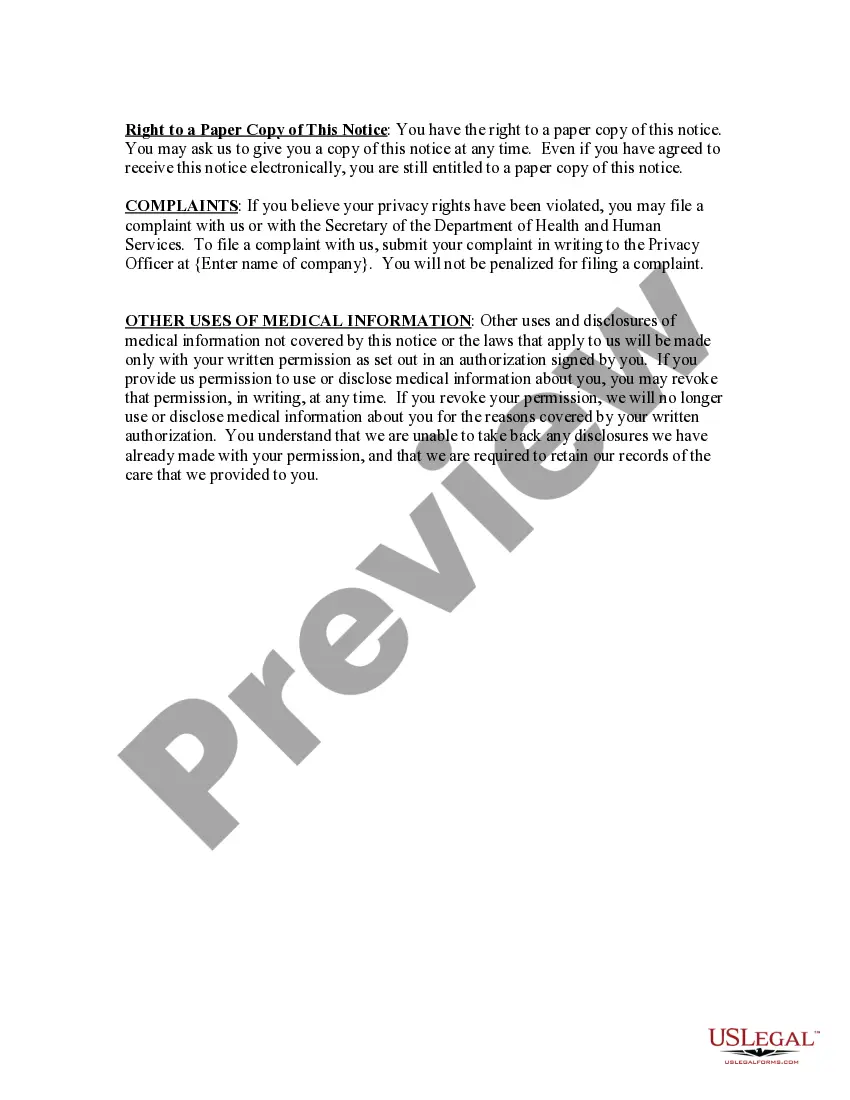

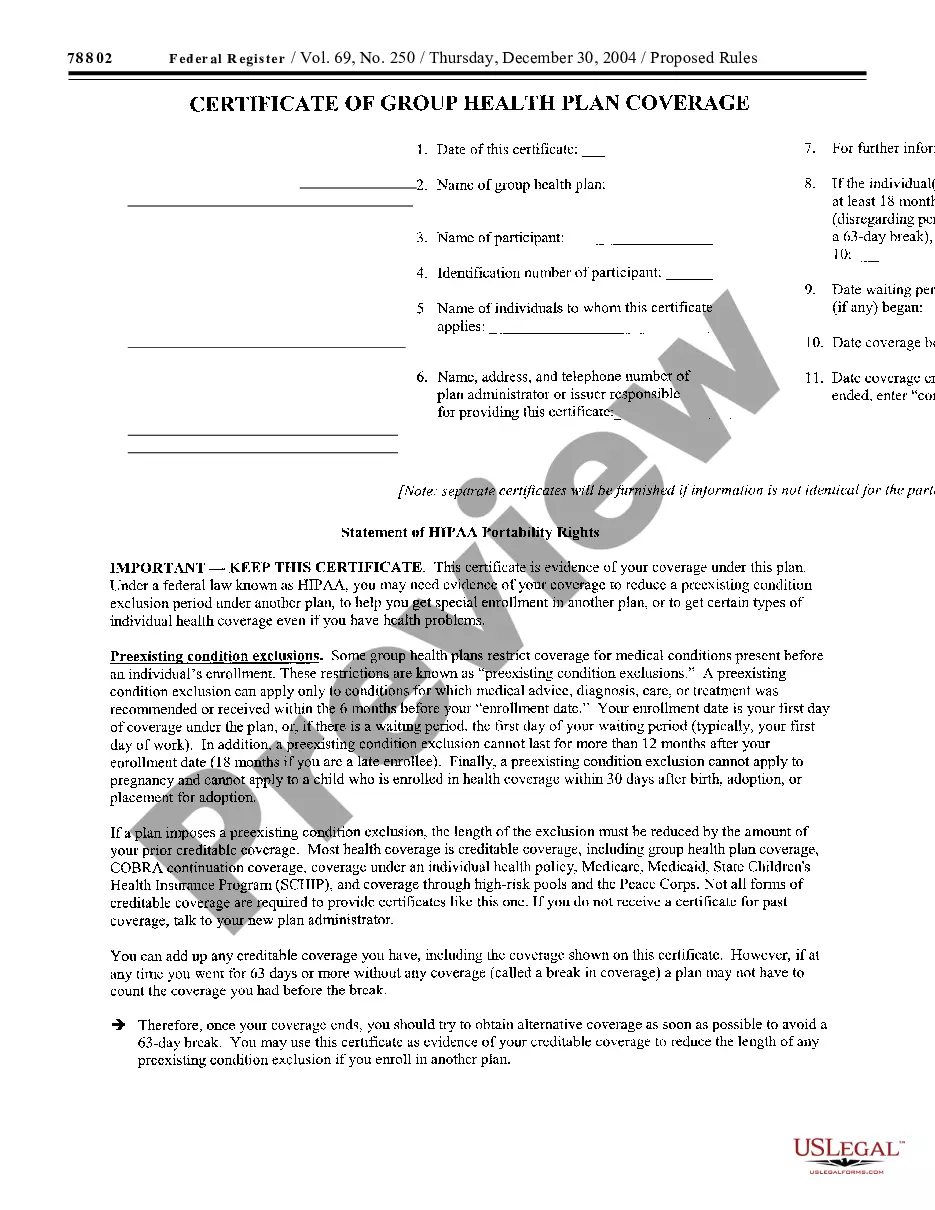
Get your form ready online
Our built-in tools help you complete, sign, share, and store your documents in one place.
Make edits, fill in missing information, and update formatting in US Legal Forms—just like you would in MS Word.
Download a copy, print it, send it by email, or mail it via USPS—whatever works best for your next step.
Sign and collect signatures with our SignNow integration. Send to multiple recipients, set reminders, and more. Go Premium to unlock E-Sign.
If this form requires notarization, complete it online through a secure video call—no need to meet a notary in person or wait for an appointment.
We protect your documents and personal data by following strict security and privacy standards.

Make edits, fill in missing information, and update formatting in US Legal Forms—just like you would in MS Word.

Download a copy, print it, send it by email, or mail it via USPS—whatever works best for your next step.

Sign and collect signatures with our SignNow integration. Send to multiple recipients, set reminders, and more. Go Premium to unlock E-Sign.

If this form requires notarization, complete it online through a secure video call—no need to meet a notary in person or wait for an appointment.

We protect your documents and personal data by following strict security and privacy standards.
Looking for another form?

How to fill out HIPAA Notice Of Privacy Practices?
Whether for commercial objectives or personal matters, everyone must manage legal situations at some stage in their lives.
Filling out legal documents requires precise attention, starting with selecting the appropriate form template. For example, if you choose an incorrect variant of a Hipaa Compliance Form For Volunteers, it will be rejected upon submission.
With a comprehensive US Legal Forms catalog available, you never have to waste time searching for the right sample online. Use the library's easy navigation to find the right template for any occasion.
- Locate the sample you require by using the search bar or browsing the catalog.
- Review the description of the form to ensure it fits your circumstances, state, and county.
- Click on the form's preview to examine it.
- If it is not the correct document, return to the search feature to find the Hipaa Compliance Form For Volunteers sample you need.
- Download the file if it aligns with your specifications.
- If you have a US Legal Forms account, simply click Log in to access previously stored files in My documents.
- If you do not yet have an account, you can acquire the form by clicking Buy now.
- Select the appropriate pricing option.
- Complete the registration form for your account.
- Choose your payment method: either a credit card or PayPal account.
- Select the desired file format and download the Hipaa Compliance Form For Volunteers.
- Once saved, you can fill out the form using editing software or print it and complete it by hand.
Form popularity
FAQ
Certain individuals are exempt from HIPAA, including those who do not work in a healthcare or related role, such as general business staff. Additionally, volunteers who do not access or handle PHI do not fall under HIPAA guidelines. To avoid confusion, organizations should use a HIPAA compliance form for volunteers. This form can help clarify who is exempt and set guidelines to protect sensitive information.
HIPAA training is often required for volunteers who access PHI in a healthcare setting. Such training helps establish a clear understanding of privacy laws and the importance of safeguarding sensitive information. As a best practice, organizations should provide this training and include a HIPAA compliance form for volunteers to document their understanding and commitment to complying with HIPAA guidelines.
Individuals not covered under HIPAA include workers in non-healthcare settings, such as administrative staff at schools or businesses. Additionally, friends and family members providing personal care are typically not subject to HIPAA regulations. However, it's crucial to evaluate each situation, as volunteers may fall under different rules. Implementing a HIPAA compliance form for volunteers can clarify their status and obligations.
Yes, volunteers can be bound by HIPAA if they have access to protected health information (PHI) while working for a covered entity, such as a healthcare provider. This means that they must follow the same strict privacy and security rules as employees. To ensure compliance, using a HIPAA compliance form for volunteers is essential. This form helps clarify each volunteer's responsibilities regarding PHI.
To achieve HIPAA compliance, start by conducting a thorough assessment of your current practices related to health information. Develop and implement policies that address the handling of sensitive patient data, ensuring your volunteers are trained in these procedures. Additionally, utilize a HIPAA compliance form for volunteers to formalize their understanding and adherence to these guidelines. Remember, maintaining compliance is an ongoing process, so regularly review and update your practices as necessary.
Filling out a HIPAA authorization form requires you to gather some basic information first. Include the volunteer’s name, the specific information to be shared, and the recipient’s name. Be sure to state the purpose for the information requested and mark an expiration date. Finally, ensure that all parties involved understand the significance of this HIPAA compliance form for volunteers to promote transparency.
Deciding whether to accept or decline a HIPAA authorization request depends on your understanding of the request. If the request aligns with the volunteer’s interests and complies with the HIPAA regulations, it is generally advisable to accept it. However, if there are concerns about the scope or purpose of the request, you might consider declining it for the volunteer's protection. Always ensure you follow proper procedures while making your decision.
To give someone a HIPAA authorization, first, make sure you have properly filled out the HIPAA compliance form for volunteers. Provide a signed copy to the individual, and keep a record for your own files. This form allows the specified person to access the necessary health information, ensuring transparency and trust. Always explain the purpose of the authorization clearly to the recipient.
To fill out the HIPAA compliance form for volunteers, start by entering the individual's name and the specific entity involved. Next, clearly outline the information you wish to disclose and state the purpose of the disclosure. Make sure you include the expiration date or event for the authorization, then sign and date the form. A well-completed form ensures compliance while protecting volunteer privacy.
Yes, receptionists, nursing assistants, and other employees can face disciplinary actions, including dismissal, for sharing confidential information. HIPAA emphasizes the importance of protecting patient information, and violations can have serious consequences. Volunteers too should recognize the importance of using a HIPAA compliance form for volunteers to understand their confidentiality duties.