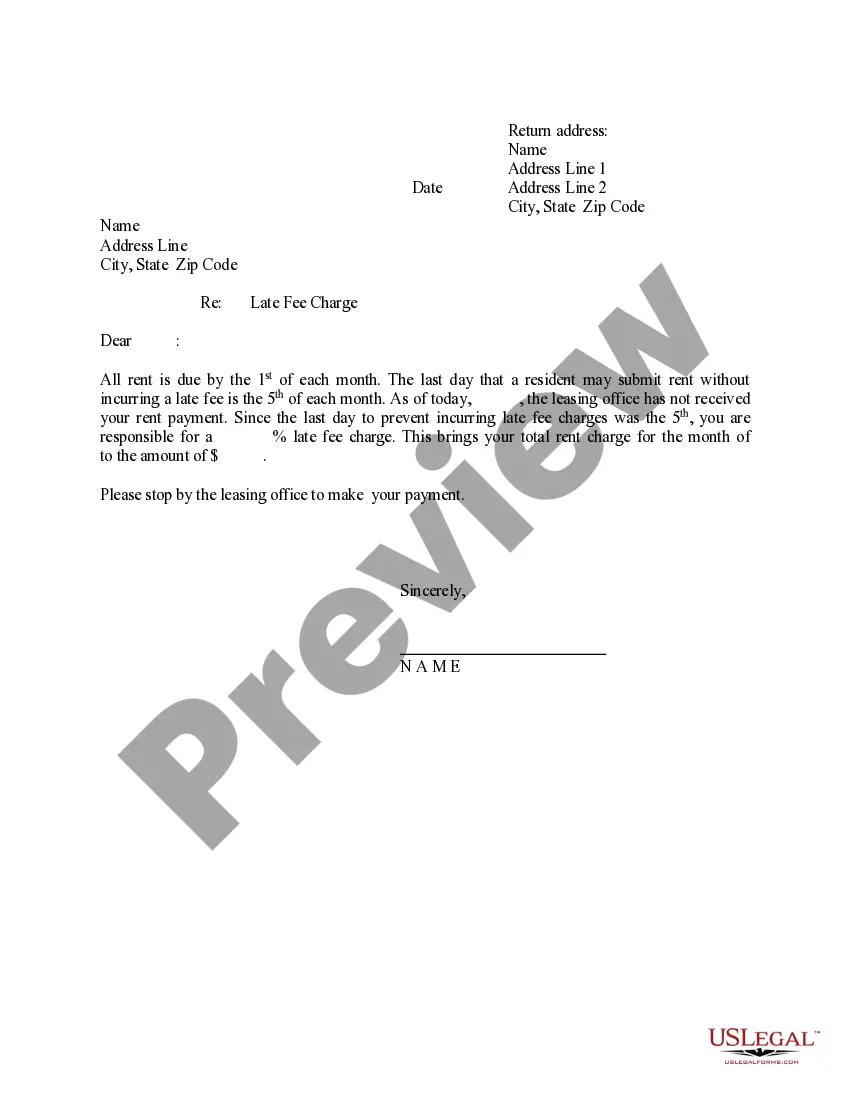
Late On Rent Help
Description
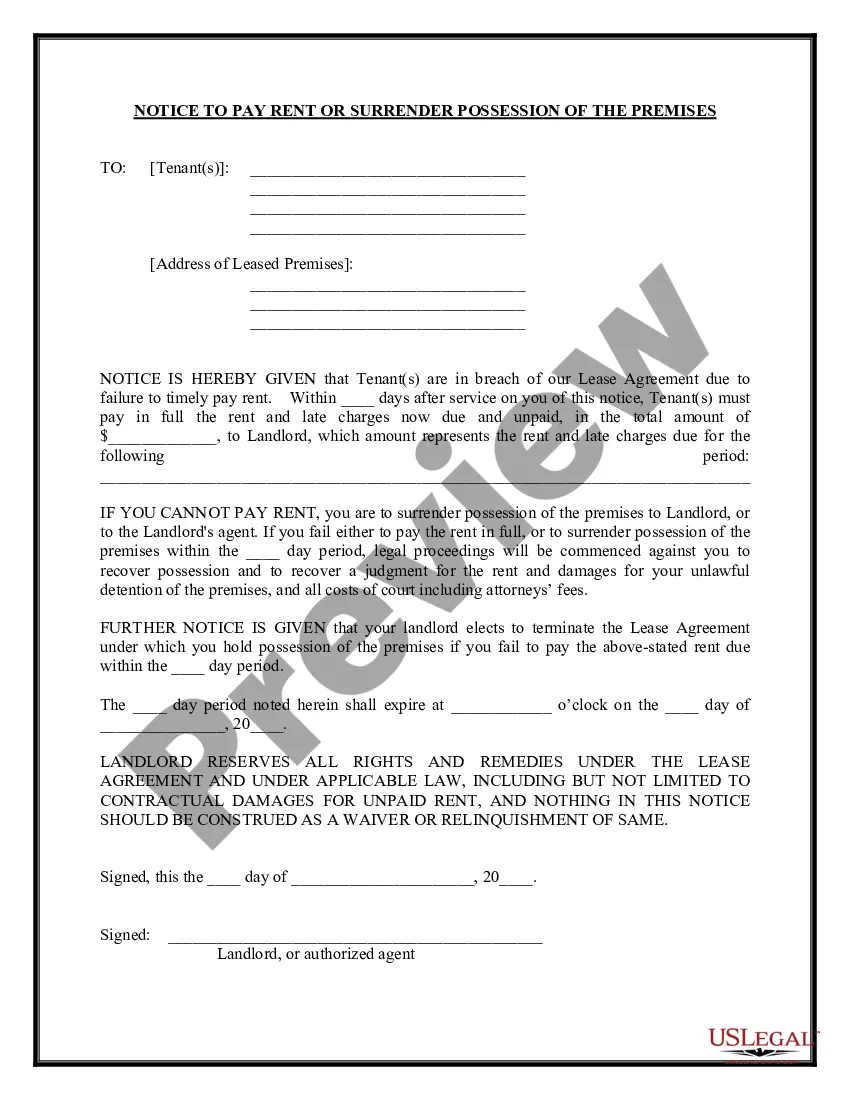
Get your form ready online
Our built-in tools help you complete, sign, share, and store your documents in one place.
Make edits, fill in missing information, and update formatting in US Legal Forms—just like you would in MS Word.
Download a copy, print it, send it by email, or mail it via USPS—whatever works best for your next step.
Sign and collect signatures with our SignNow integration. Send to multiple recipients, set reminders, and more. Go Premium to unlock E-Sign.
If this form requires notarization, complete it online through a secure video call—no need to meet a notary in person or wait for an appointment.
We protect your documents and personal data by following strict security and privacy standards.

Make edits, fill in missing information, and update formatting in US Legal Forms—just like you would in MS Word.

Download a copy, print it, send it by email, or mail it via USPS—whatever works best for your next step.

Sign and collect signatures with our SignNow integration. Send to multiple recipients, set reminders, and more. Go Premium to unlock E-Sign.

If this form requires notarization, complete it online through a secure video call—no need to meet a notary in person or wait for an appointment.

We protect your documents and personal data by following strict security and privacy standards.
Looking for another form?
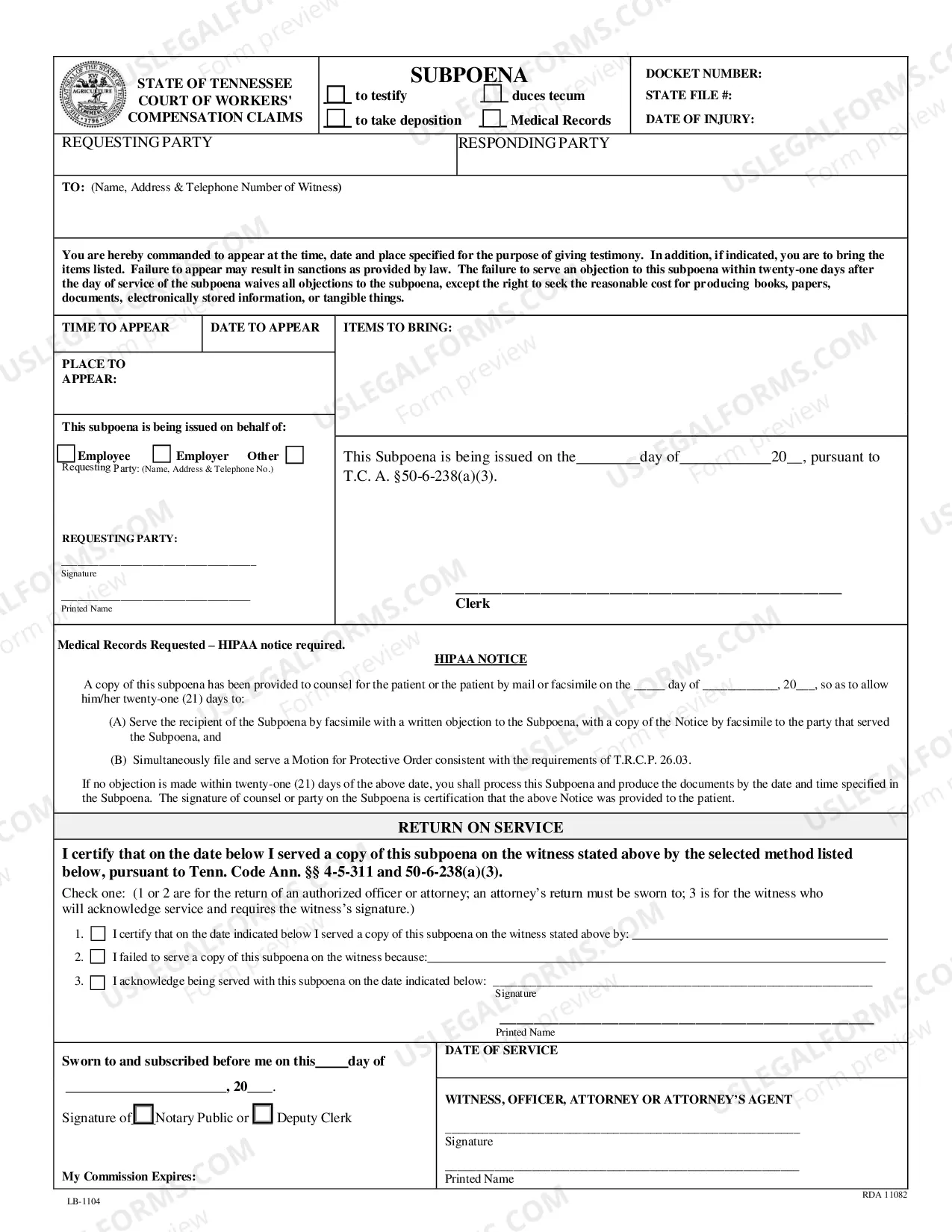


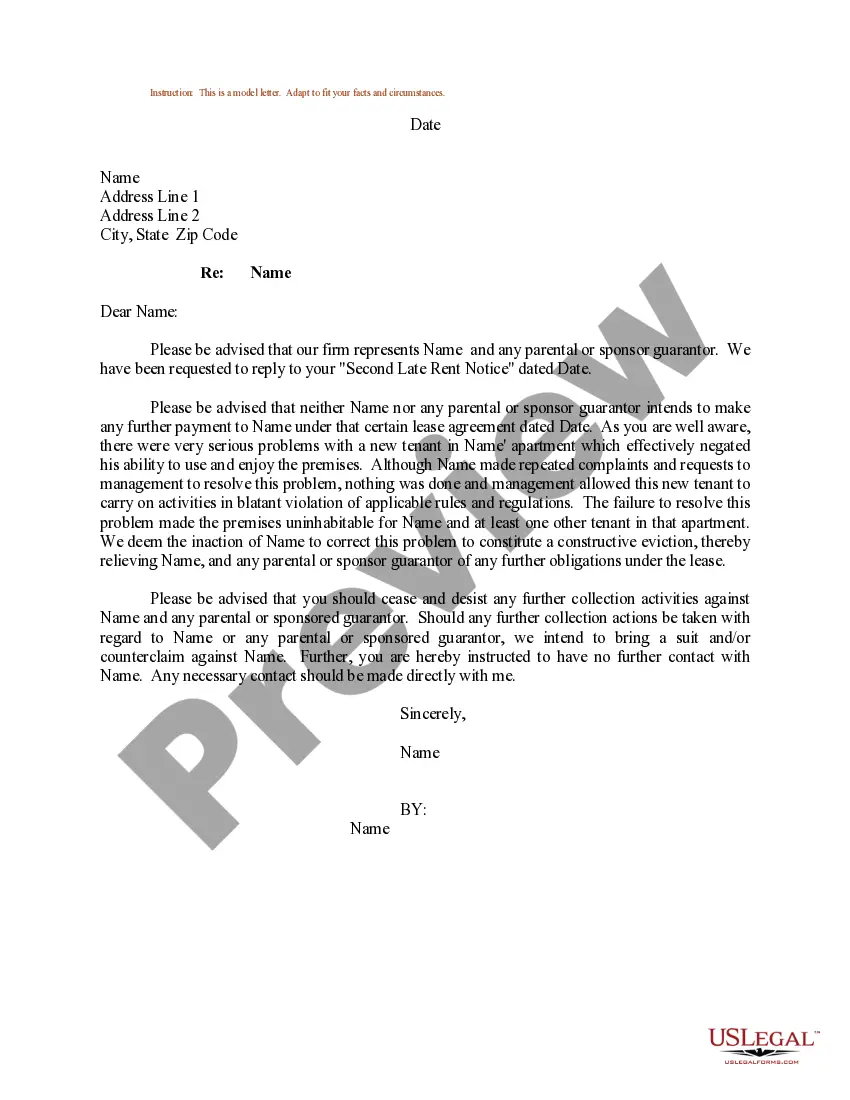
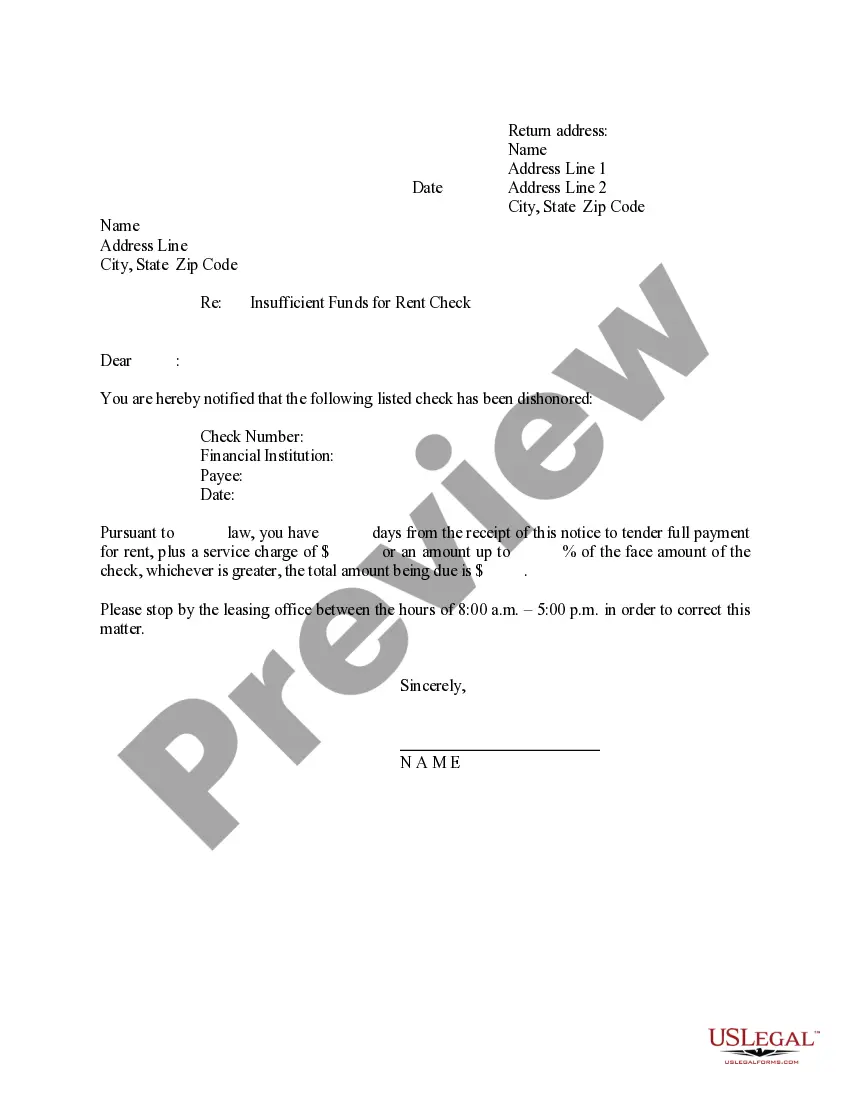
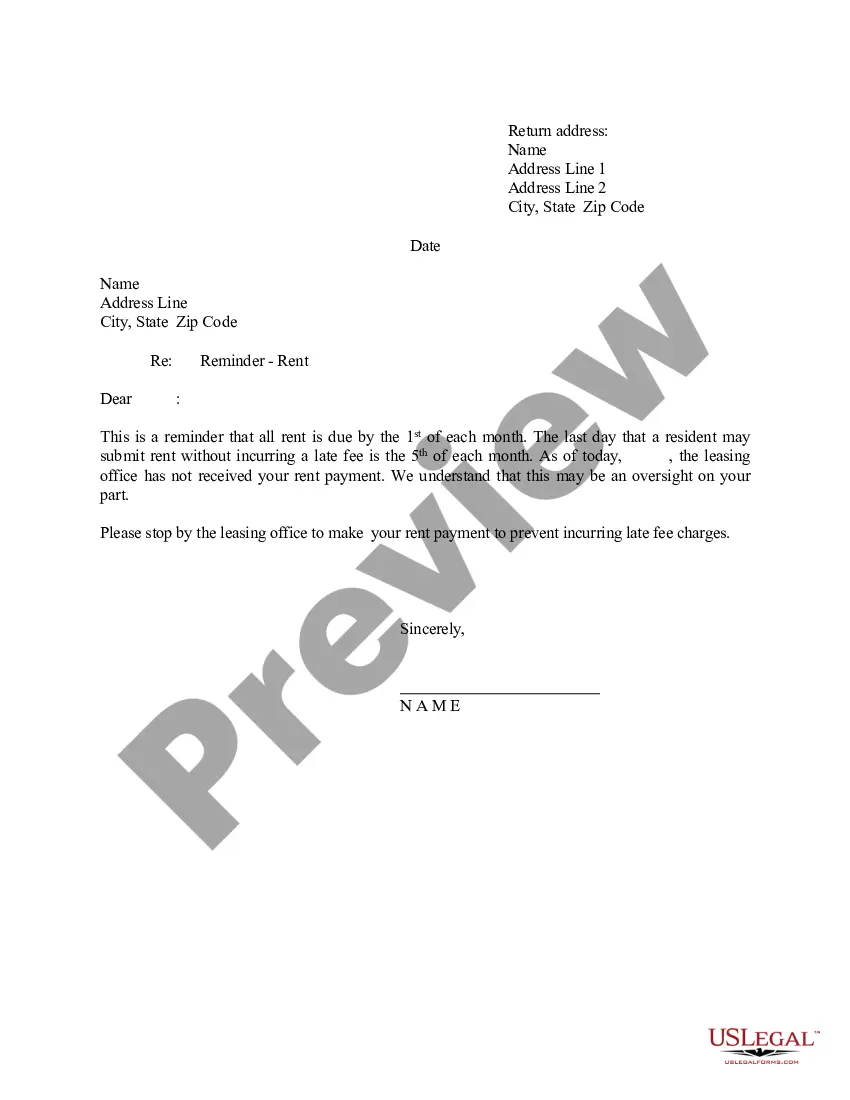
How to fill out Letter - Notification To Renter Of Late Rent Payment And Late Charge?
Whether for commercial reasons or personal matters, everyone must address legal situations at some stage in their lives. Completing legal documentation requires meticulous attention, starting with choosing the appropriate form example.
For example, if you choose an incorrect version of a Late On Rent Assistance form, it will be denied upon submission. Thus, it is vital to have a reliable source of legal documents such as US Legal Forms.
With a comprehensive US Legal Forms catalog available, you don’t need to waste time searching for the correct sample online. Utilize the library’s intuitive navigation to find the right template for any circumstance.
- Locate the sample you require by using the search bar or catalog navigation.
- Review the description of the form to confirm it aligns with your situation, state, and area.
- Click on the preview of the form to examine it.
- If it is the incorrect document, return to the search feature to identify the Late On Rent Assistance form you need.
- Download the template when it fulfills your needs.
- If you have an existing US Legal Forms account, simply click Log in to access previously saved documents in My documents.
- If you don’t have an account yet, you can download the form by clicking Buy now.
- Select the appropriate pricing option.
- Fill out the account registration form.
- Choose your payment method: you can use a credit card or PayPal account.
- Select the desired file format and download the Late On Rent Assistance.
- Once downloaded, you can complete the form using editing software or print it and fill it out manually.
Form popularity
FAQ
Yes, a landlord can refuse a late rent payment, especially if the lease agreement states strict deadlines. However, many landlords are willing to negotiate payment plans or extensions for those seeking late on rent help. It's crucial to discuss your situation and explore potential solutions together.
If you're behind on rent, assess your financial situation and explore options. You might want to create a repayment plan with your landlord. Platforms like US Legal Forms can provide resources and templates to help you communicate effectively and seek late on rent help.
To tell your landlord you will be late for rent, send a message or email that outlines your reasons and proposed timeline for payment. Be clear about the date you expect to make the payment. This way, you keep the lines of communication open, which is crucial to obtaining late on rent help.
It's best to notify your landlord as soon as you realize you'll be late on rent. Use a polite and clear approach, explaining your situation briefly. This proactive communication can foster understanding and open doors for late on rent help options.
When explaining being late on rent, it's important to be honest and direct with your landlord. Openly discuss your situation, whether it's due to unexpected expenses or income delays. By being transparent, you demonstrate your willingness to communicate and seek late on rent help.
Rent can go unpaid for various lengths of time depending on the lease and state laws. In many jurisdictions, landlords can initiate eviction proceedings after one month of non-payment. If you find yourself in this situation, consider utilizing late on rent help resources to explore solutions before facing eviction.
The duration you can be late on rent differs based on your lease and local regulations. Typically, landlords may start eviction procedures after the grace period expires, which can be anywhere from a few days to a month. If you're facing challenges, seeking late on rent help can provide the necessary support to manage your payments and maintain your housing.
Yes, you can get evicted for being two weeks late on rent, though this can depend on your lease agreement and local laws. Many landlords have specific policies regarding late payments. It's advisable to seek late on rent help if you anticipate any difficulties, as organizations can offer valuable resources to resolve the issue before it escalates.
The longest you can be late on rent largely depends on your lease terms and state laws. In many cases, landlords can initiate eviction proceedings after a month of non-payment. To avoid being in this situation, consider exploring late on rent help options available in your area.
In New York, the grace period for paying rent can vary depending on your lease agreement. Generally, landlords may begin eviction proceedings after a tenant is 5 days late on rent. If you’re struggling, seeking late on rent help can prevent complications and provide options for addressing the issue effectively.