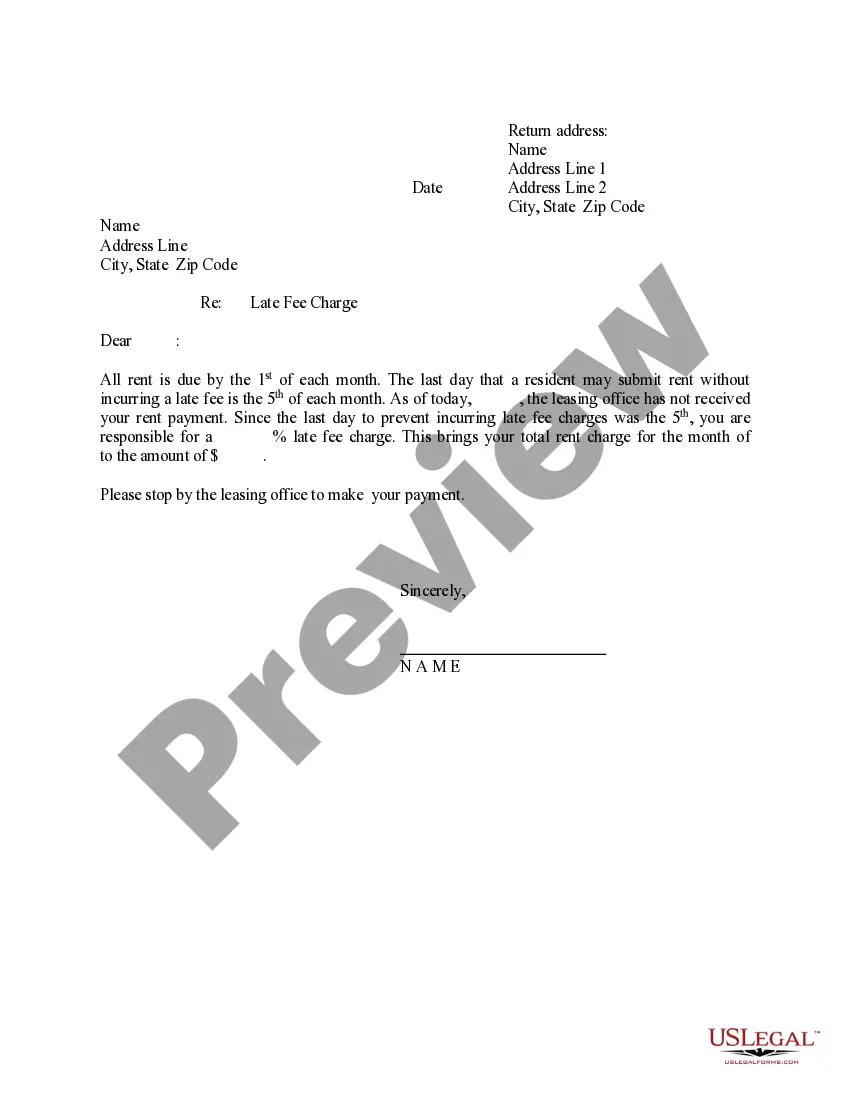
Late Charge For Rent
Description
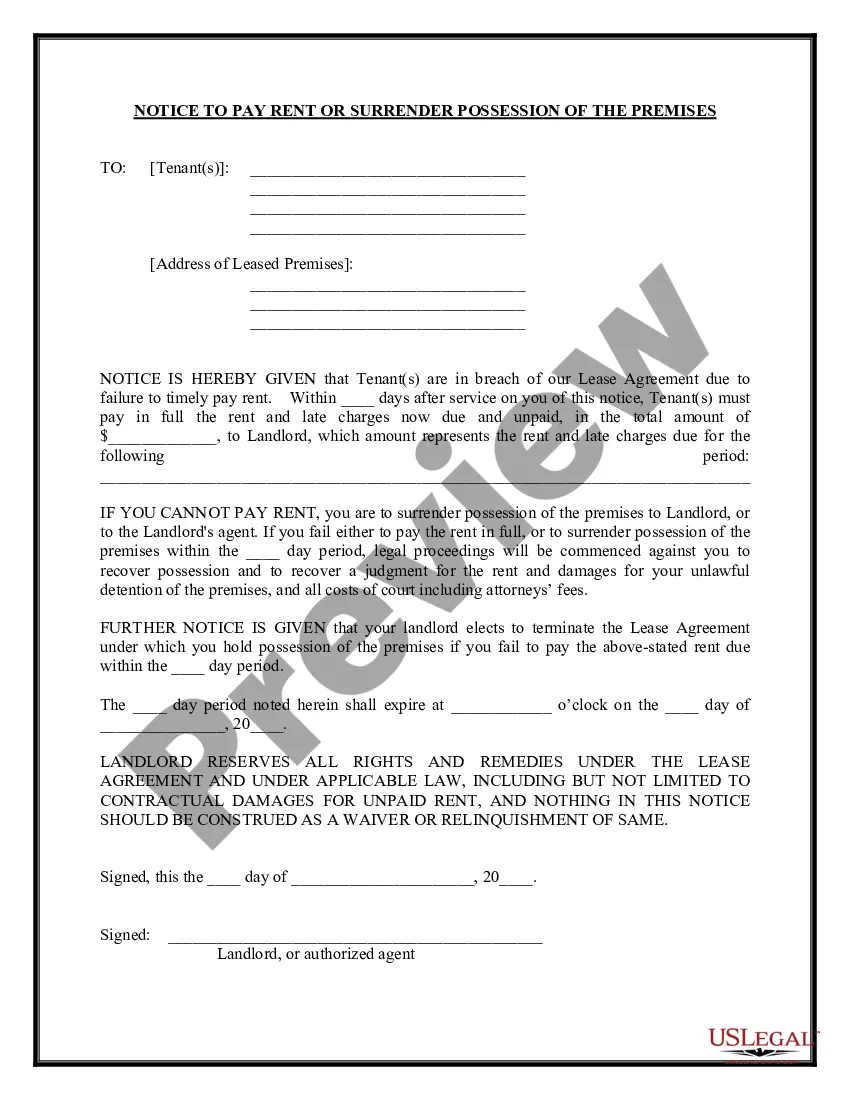
Get your form ready online
Our built-in tools help you complete, sign, share, and store your documents in one place.
Make edits, fill in missing information, and update formatting in US Legal Forms—just like you would in MS Word.
Download a copy, print it, send it by email, or mail it via USPS—whatever works best for your next step.
Sign and collect signatures with our SignNow integration. Send to multiple recipients, set reminders, and more. Go Premium to unlock E-Sign.
If this form requires notarization, complete it online through a secure video call—no need to meet a notary in person or wait for an appointment.
We protect your documents and personal data by following strict security and privacy standards.

Make edits, fill in missing information, and update formatting in US Legal Forms—just like you would in MS Word.

Download a copy, print it, send it by email, or mail it via USPS—whatever works best for your next step.

Sign and collect signatures with our SignNow integration. Send to multiple recipients, set reminders, and more. Go Premium to unlock E-Sign.

If this form requires notarization, complete it online through a secure video call—no need to meet a notary in person or wait for an appointment.

We protect your documents and personal data by following strict security and privacy standards.
Looking for another form?
How to fill out Letter - Notification To Renter Of Late Rent Payment And Late Charge?
It’s clear that you cannot become an expert in law instantly, nor can you swiftly learn how to prepare a Late Charge For Rent without possessing a specialized skill set.
Drafting legal documents is a labor-intensive endeavor that demands specific training and expertise.
So why not entrust the creation of the Late Charge For Rent to professionals.
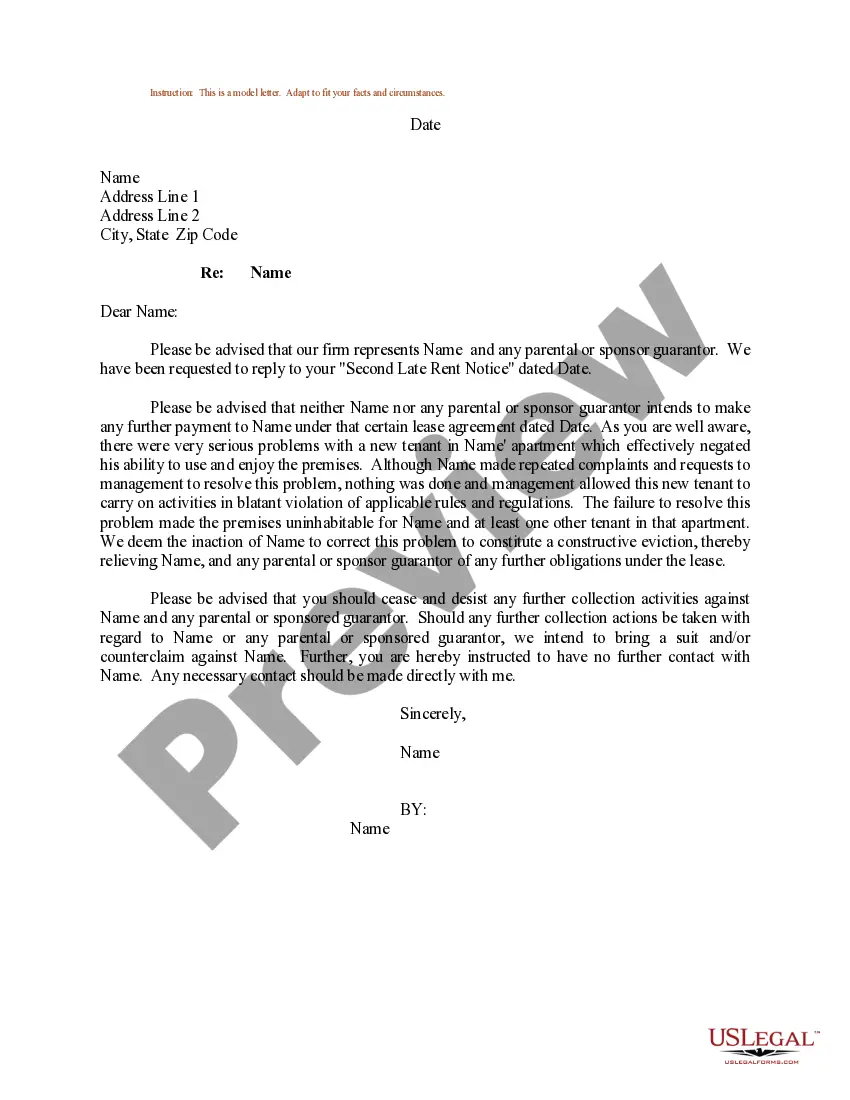
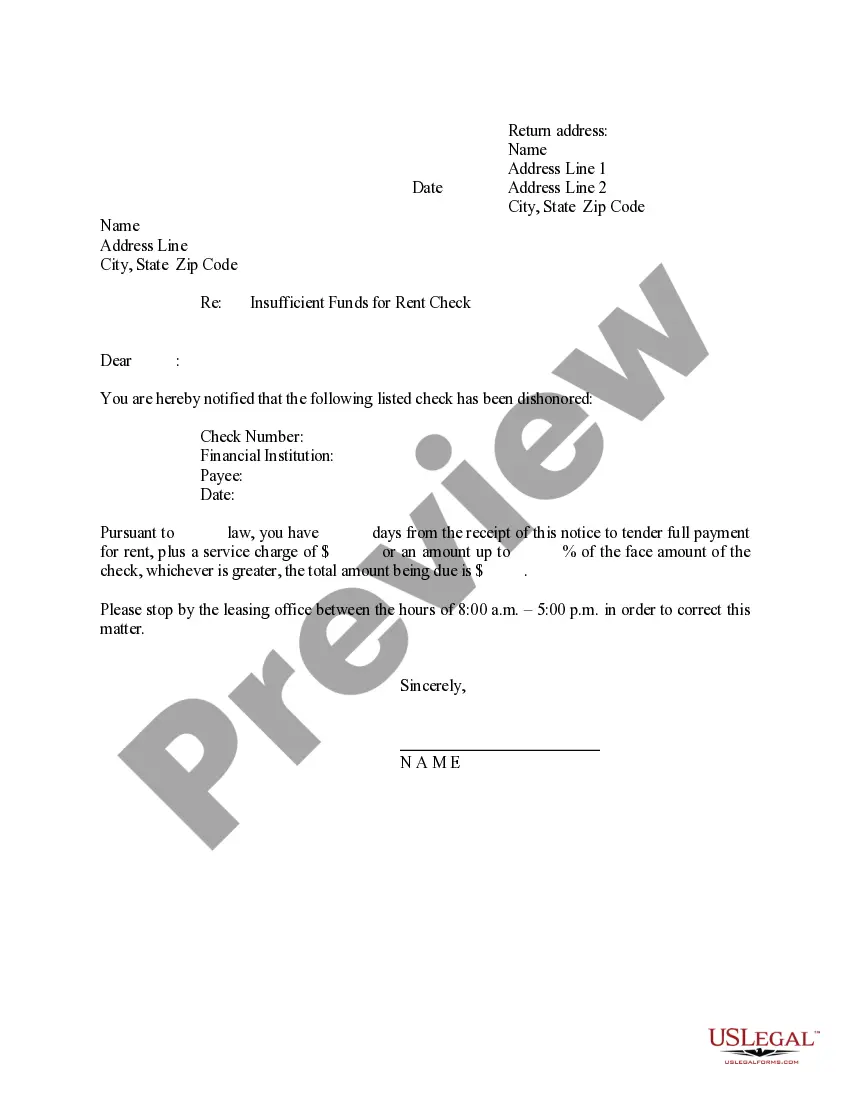
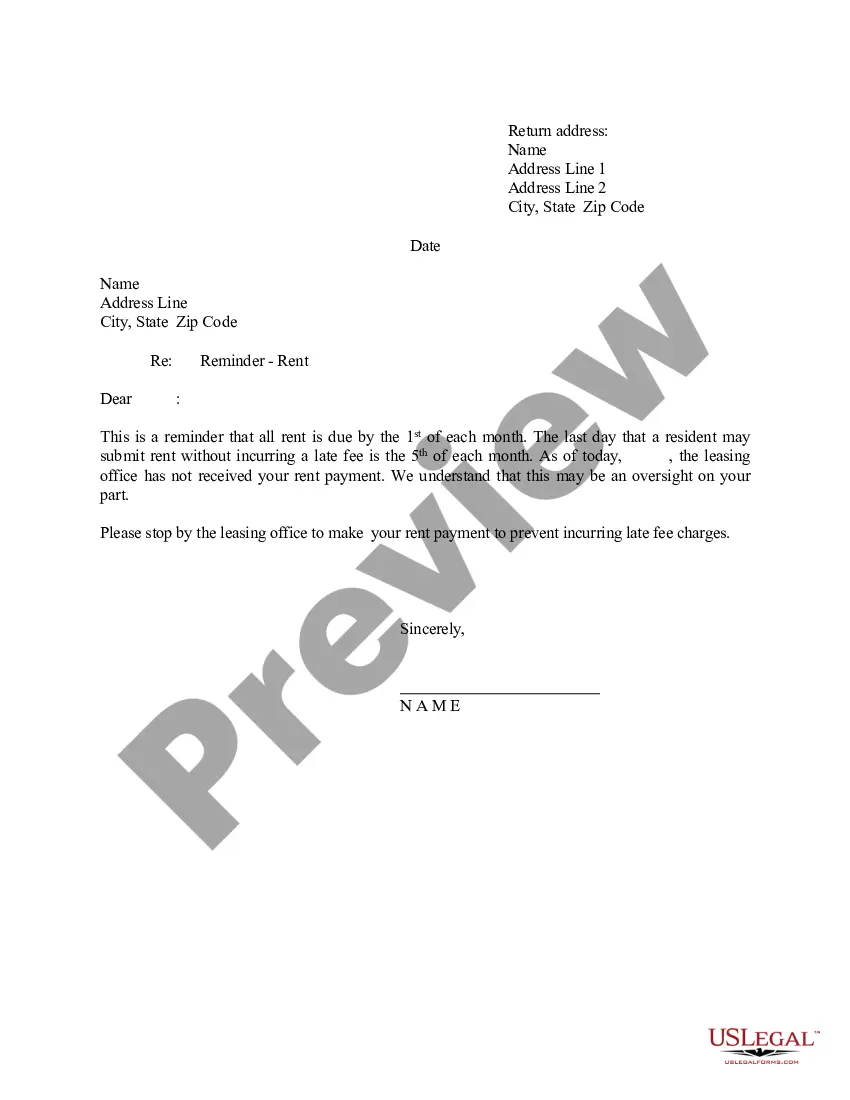
Preview it (if this option is available) and review the accompanying description to determine if Late Charge For Rent is what you need.
If you require a different template, restart your search.
- With US Legal Forms, one of the most comprehensive libraries of legal documents, you can obtain everything from court papers to templates for internal corporate communication.
- We understand the importance of compliance and following both federal and local laws and regulations.
- That’s why all templates on our website are tailored to specific locations and regularly updated.
- Here’s how you can begin using our platform and acquire the form you need in just a few minutes.
- Locate the document you require using the search bar located at the top of the page.
Form popularity
FAQ
A standard late fee for invoices that are overdue is between 1% and 2% monthly. Flat rate fees should depend on how much you typically charge customers. You can charge late invoice payments either as an interest rate, a flat fee, or both.
If a renter can't pay rent the day it is due (usually the 1st of the month), landlords have to wait at least 7 calendar days before they charge a late fee. (Calendar days means weekends and holidays count toward that 7-day minimum.) If the renter pays their rent in those 7 days, no late fee should be charged.
Landlords must now wait seven calendar days after rent is due to charge a late fee. Landlords can no longer initiate eviction proceedings against a tenant solely due to a tenant not paying late fees.
In Missouri, there is no statutory requirement specifying a minimum delinquency period for filing an eviction action due to nonpayment of rent. Landlords can technically file an eviction when the tenant is even a day late and a dollar short.
A late rent notice should generally include the following details: The rental property address. The name of your tenant. The issue date of the notice. The date the rent is due as stipulated in the lease. The current balance due. Any penalties such as late fees that are or will be owed should the tenant continue to not pay.