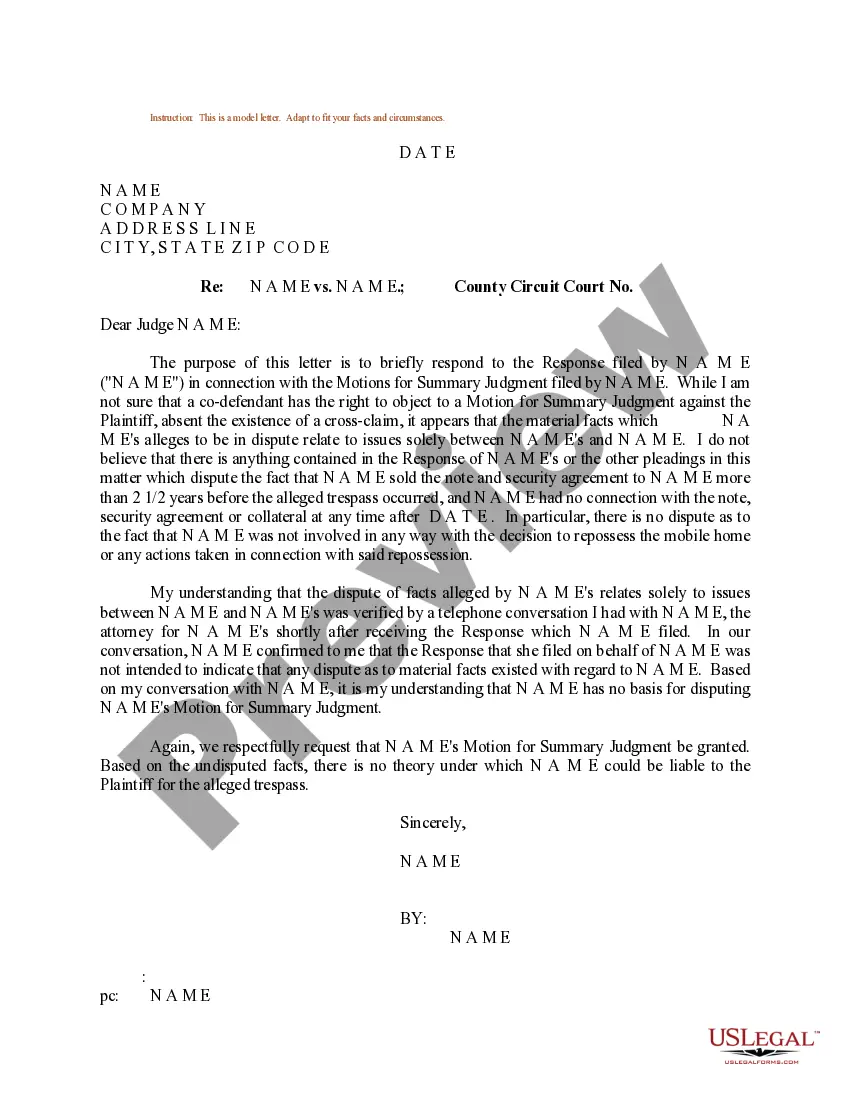
Sample Response Motion To Dismiss With The Accused
Description
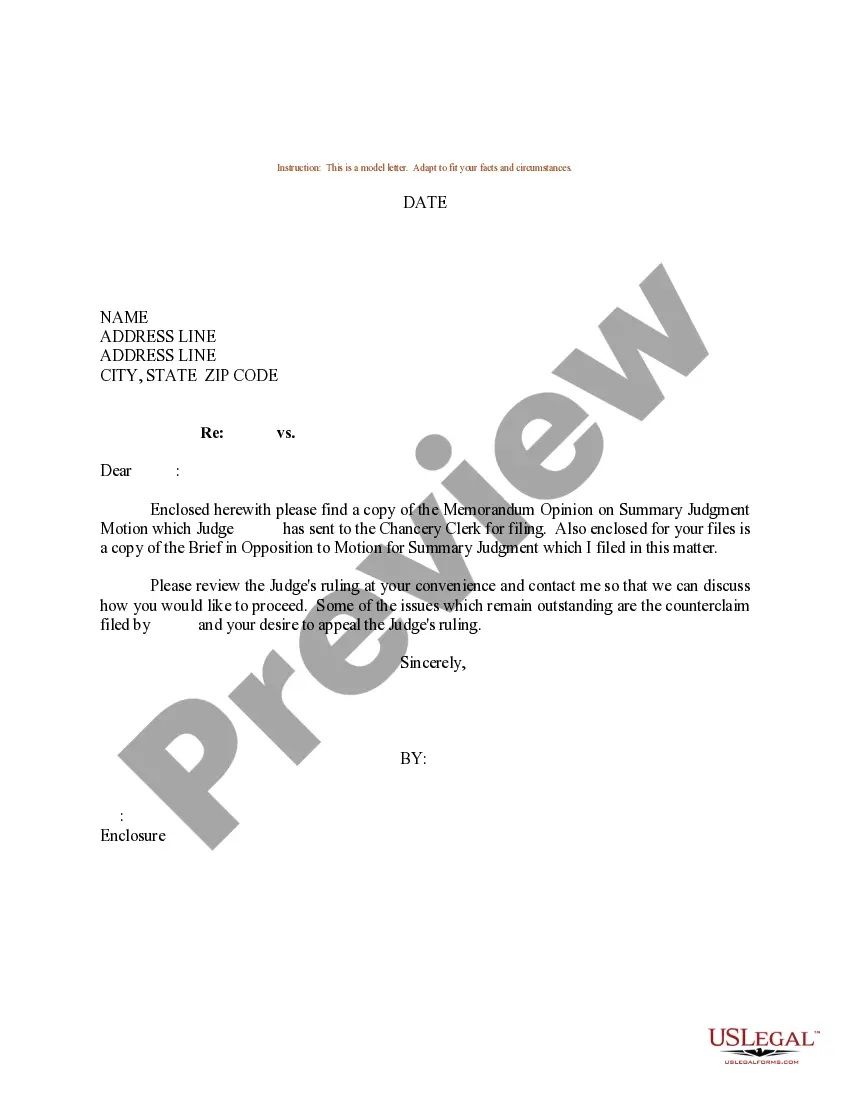
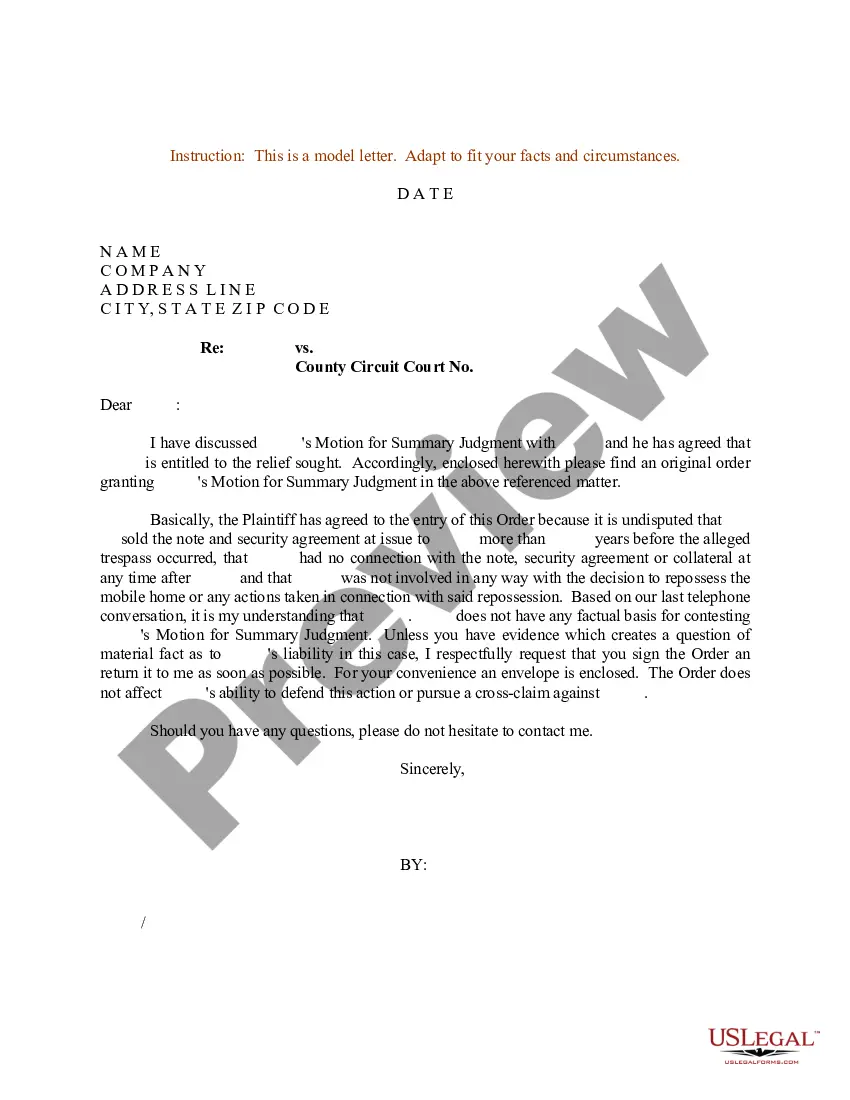
Get your form ready online
Our built-in tools help you complete, sign, share, and store your documents in one place.
Make edits, fill in missing information, and update formatting in US Legal Forms—just like you would in MS Word.
Download a copy, print it, send it by email, or mail it via USPS—whatever works best for your next step.
Sign and collect signatures with our SignNow integration. Send to multiple recipients, set reminders, and more. Go Premium to unlock E-Sign.
If this form requires notarization, complete it online through a secure video call—no need to meet a notary in person or wait for an appointment.
We protect your documents and personal data by following strict security and privacy standards.

Make edits, fill in missing information, and update formatting in US Legal Forms—just like you would in MS Word.

Download a copy, print it, send it by email, or mail it via USPS—whatever works best for your next step.

Sign and collect signatures with our SignNow integration. Send to multiple recipients, set reminders, and more. Go Premium to unlock E-Sign.

If this form requires notarization, complete it online through a secure video call—no need to meet a notary in person or wait for an appointment.

We protect your documents and personal data by following strict security and privacy standards.
Looking for another form?
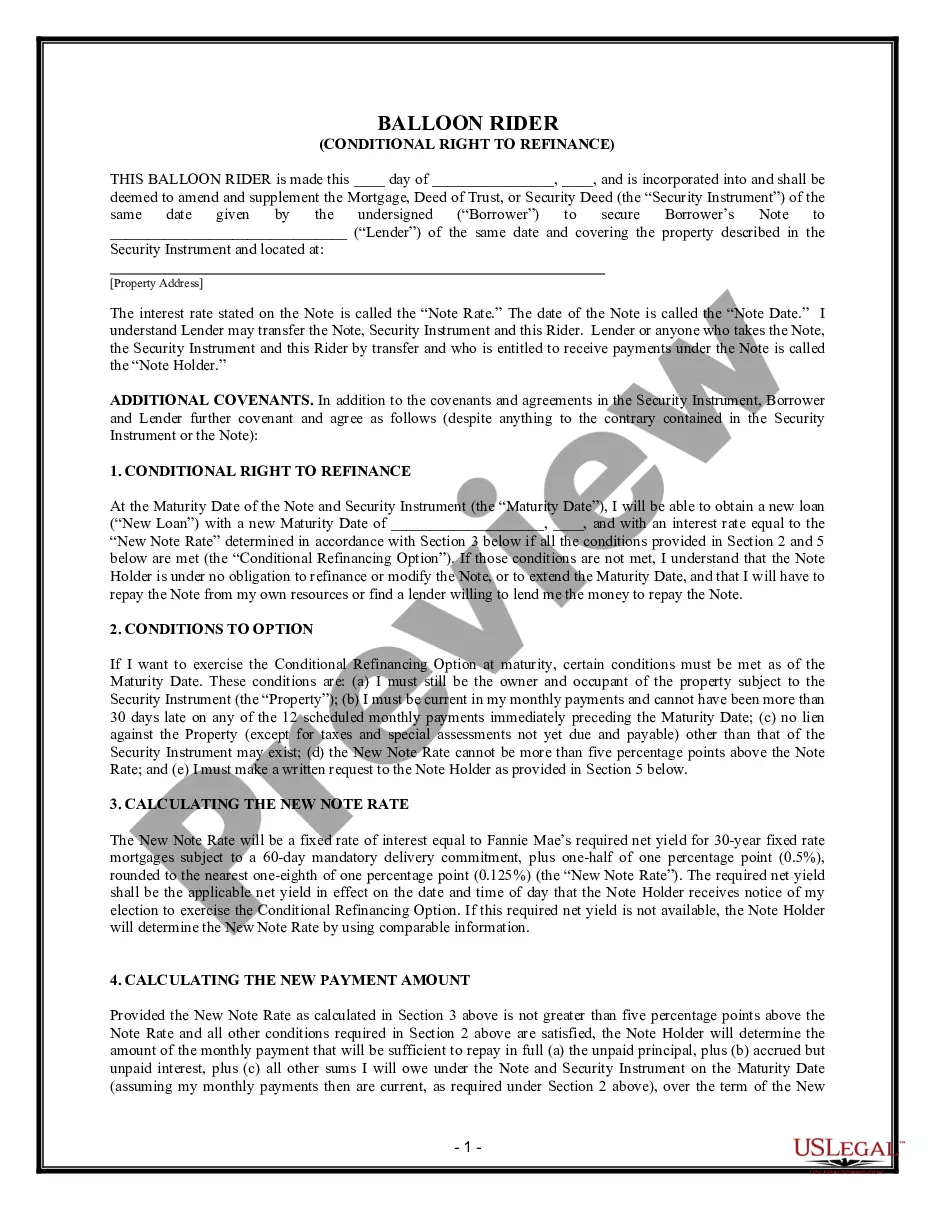

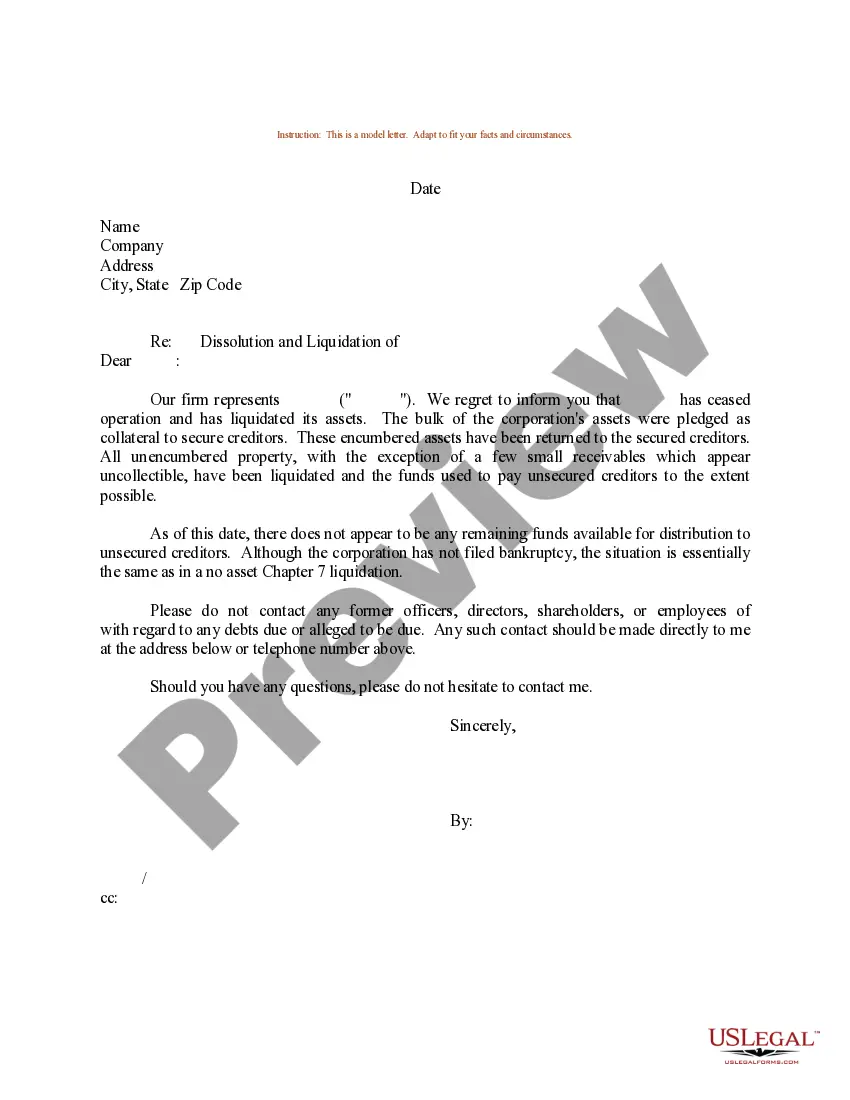
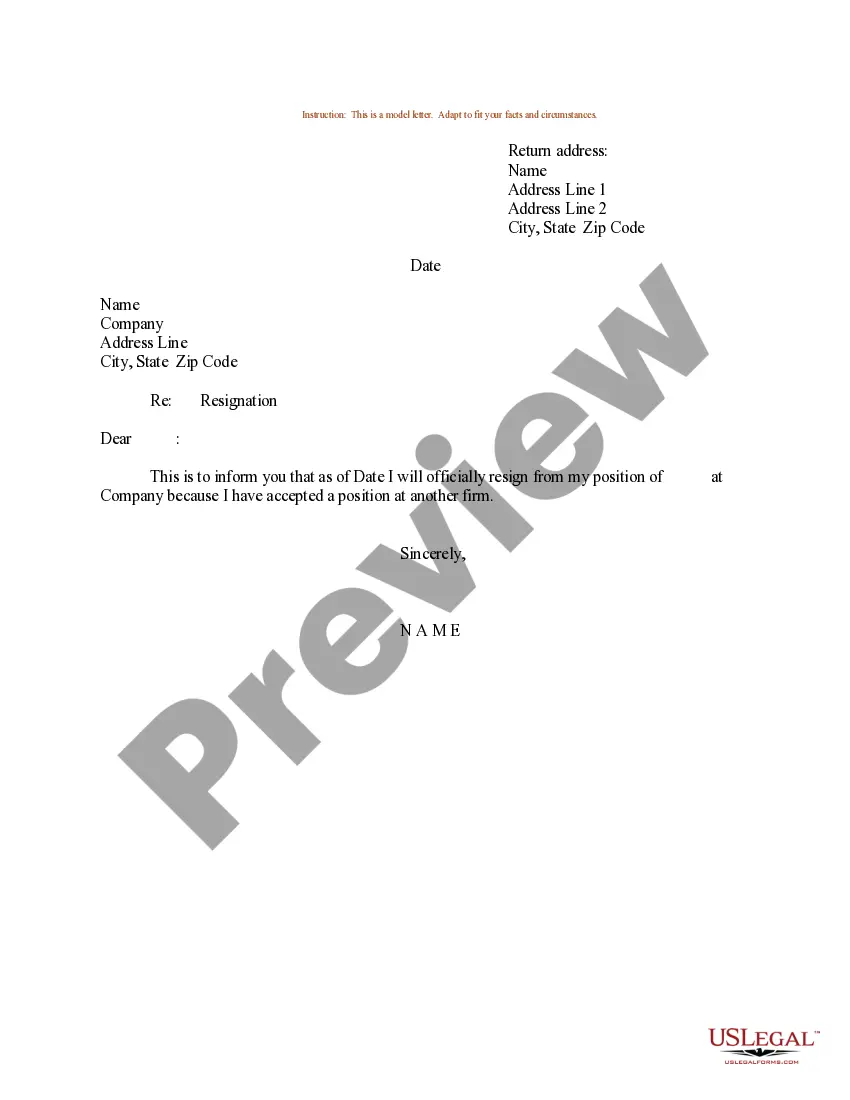




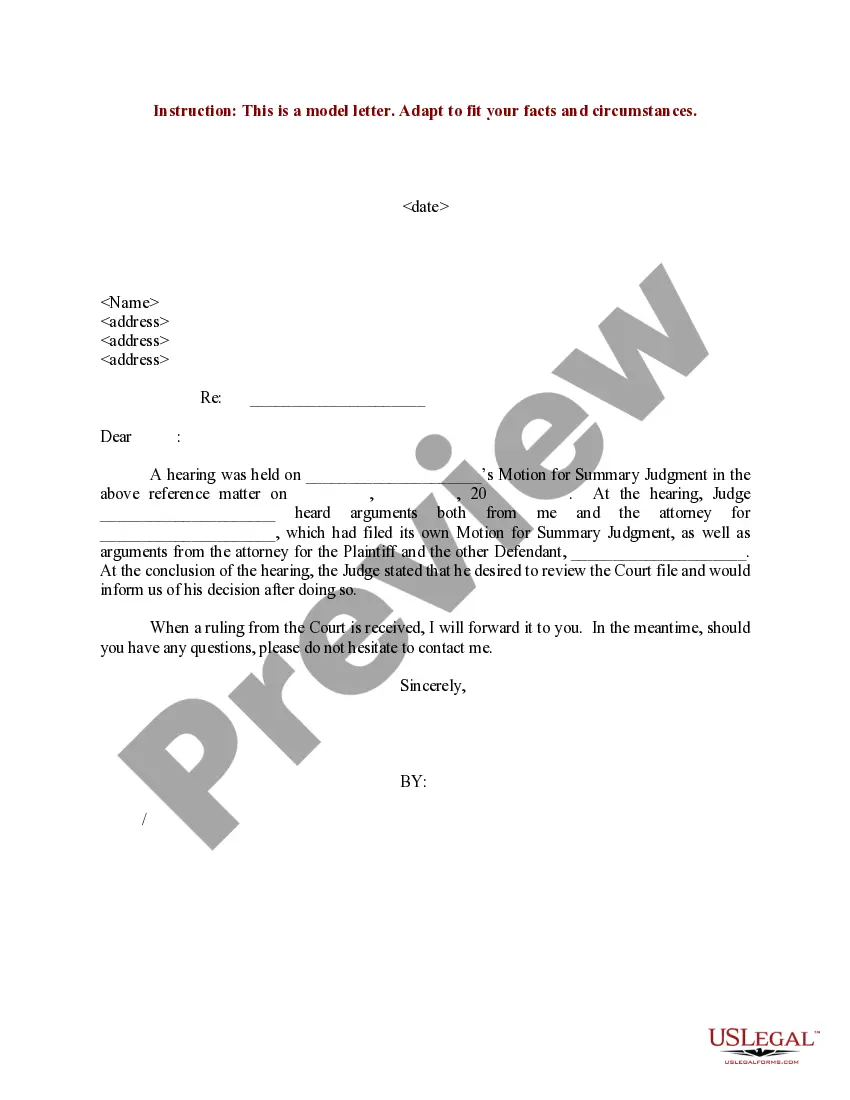
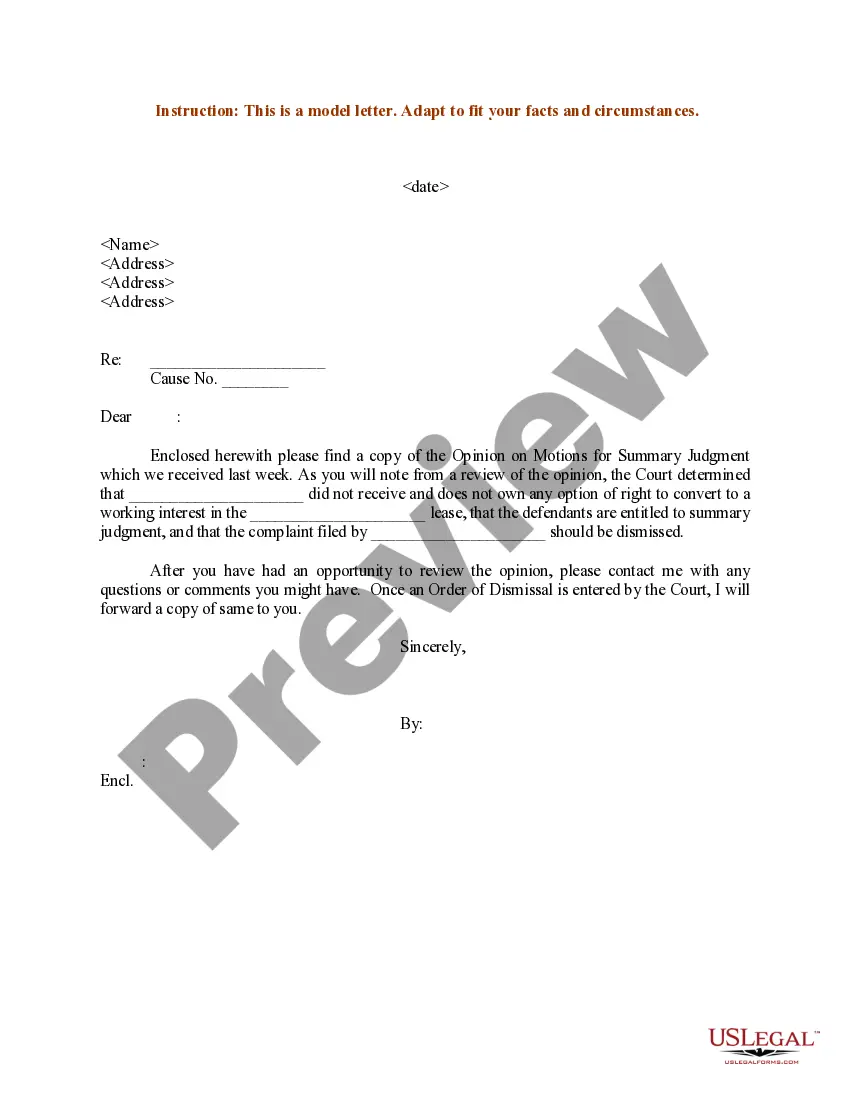
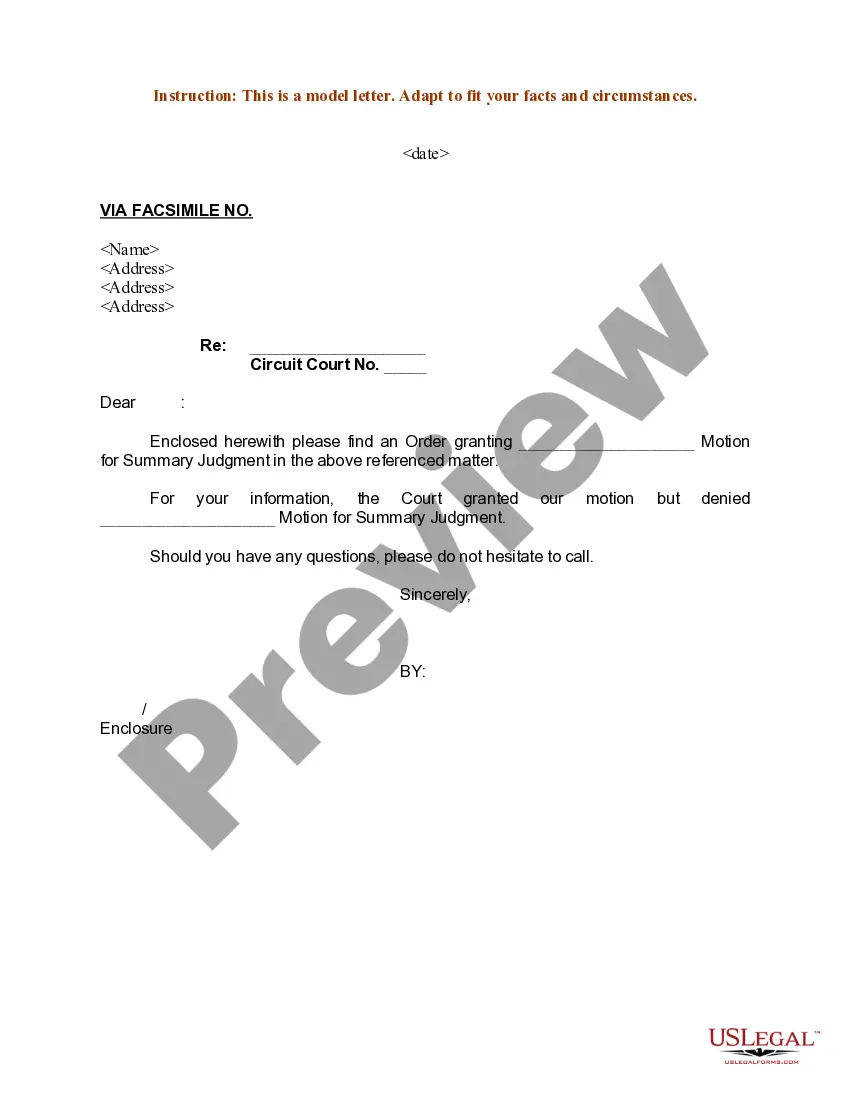
How to fill out Sample Letter For Response In Connection With Motions For Summary Judgment?
- If you’re a returning user, log in to your account and download the required form by clicking the Download button. Ensure your subscription is active; renew it if necessary.
- For new users, start by reviewing the Preview mode and form description. Confirm that you’ve selected the correct document that aligns with your local jurisdiction's requirements.
- If needed, use the Search tab to find alternative templates. Look for inconsistencies and ensure your selection meets your requirements before proceeding.
- Once you’ve chosen the right document, click the Buy Now button and select your preferred subscription plan. You will need to create an account for full library access.
- Provide your payment information to complete the purchase. You can pay using a credit card or your PayPal account.
- Lastly, download your completed form and save it on your device. You can also access it anytime through the My Forms section in your profile.
In conclusion, using US Legal Forms simplifies the creation of essential legal documents like a sample response motion to dismiss with the accused. With an extensive collection of editable forms and expert assistance, you're never alone in navigating the legal landscape.
Start your legal journey today and explore the vast resources available at US Legal Forms!
Form popularity
FAQ
Yes, you can reply to a response to a motion, but rules vary by jurisdiction. Typically, a reply is a chance to address points raised in the response, reinforcing your initial argument. Ensure that your reply is concise and stays within any prescribed limits set by court rules. Accessing tools on the US Legal platform can help you formulate a strong reply, including guidance on a sample response motion to dismiss with the accused.
To reject a motion, you must file an opposition with the court, articulating your reasons for the rejection. Your argument should be clear, logical, and supported by evidence or legal standards. It’s crucial to meet the deadlines set by the court and adhere to proper filing procedures. Resources on the US Legal platform can assist you in creating an effective response or rejection, including a sample response motion to dismiss with the accused.
To write a motion response, begin by thoroughly reviewing the motion you are responding to. Clearly state your position and provide a structured argument supported by facts and precedents. Be sure to reference relevant laws and include a well-organized format. If you need guidance, consider using the US Legal platform, which offers templates, including a sample response motion to dismiss with the accused.
Writing an effective motion requires clarity, organization, and persuasive language. Begin with a solid understanding of your audience and the key issues at hand. Use concise statements to present your argument, and support each claim with relevant evidence. By reviewing sample response motions to dismiss with the accused, you'll gain insights into crafting a compelling motion that draws attention and resonates with the court.
To write a strong motion to dismiss, focus on substantiating your argument with factual evidence and legal examples. Use clear language to articulate your reasons for dismissal, avoiding unnecessary complexity. Structure the motion logically, with each section pulling the reader toward your main points. Utilizing the U.S. Legal Forms platform can help you access useful templates and examples for writing effective motions.
The opening paragraph of a motion to dismiss sets the tone for your argument. Typically, you should begin by addressing the court and citing the relevant case details, including the parties and the case number. Clearly state your request for dismissal and the grounds for this motion. Exploring various sample response motions to dismiss with the accused can help you create a compelling opening.
Writing a letter to dismiss a case involves a formal structure. Begin with your contact information, followed by the court's details. Then, clearly state your request for dismissal and provide supporting reasons. Be respectful and concise, and if you have the option, explore sample response motions to dismiss with the accused to gain insight into effective language and format.
Filling out a motion to dismiss form requires clear and precise information. Start by including your name, contact details, and case number at the top. Next, state the specific grounds for dismissal clearly. Ensure you follow the form's instructions and include relevant facts to support your argument. For further guidance, consider using the resources available on the U.S. Legal Forms platform, which provides comprehensive templates.
Typically, you do not file a standard answer if you are responding to a motion to dismiss. Instead, your response addresses the motion itself, focusing on why the case should proceed. It is essential, however, to check the local court rules, as some jurisdictions may allow or require additional documentation alongside your response. Exploring resources like uslegalforms can provide templates and guidance on how to structure your response effectively.
To write a response to a motion to dismiss, you need to address the specific points raised by the accused. Start by reviewing the motion thoroughly, identifying the arguments that you believe are incorrect or misleading. Then, present your counterarguments clearly and succinctly. Using a template for a sample response motion to dismiss with the accused can help streamline this process and ensure you do not miss any critical details.