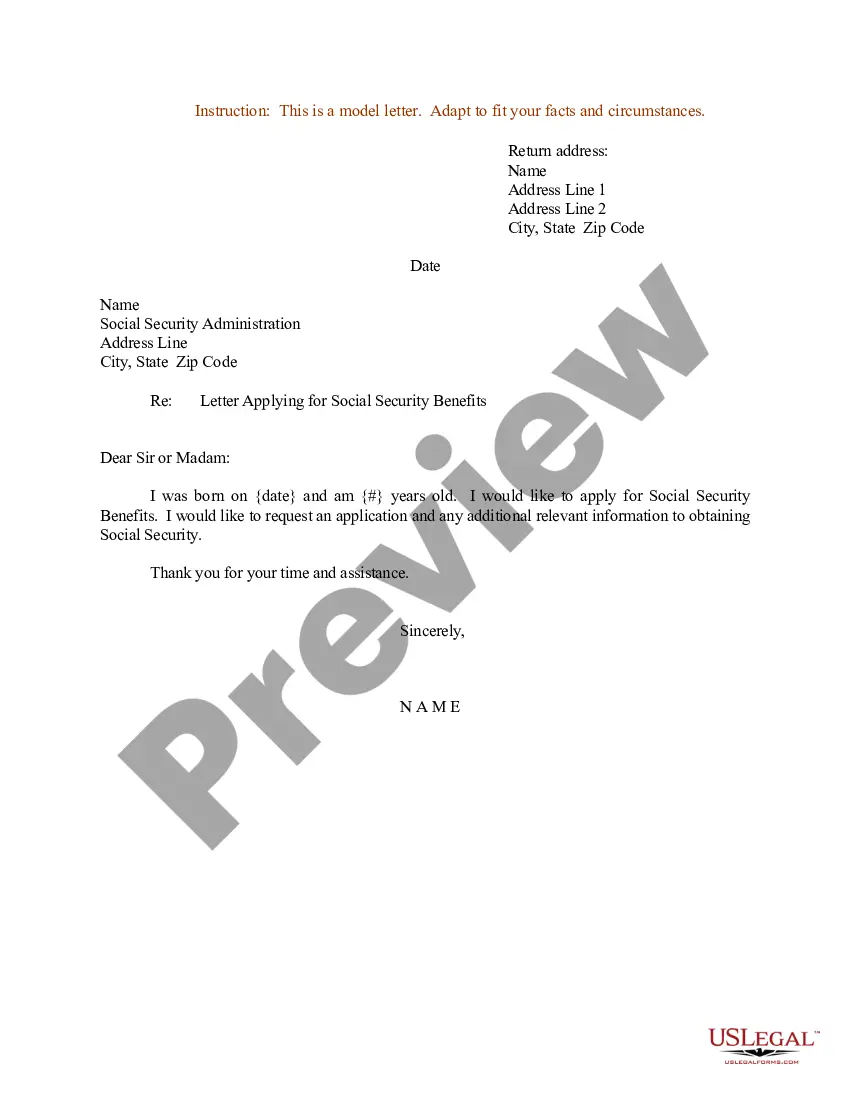
Applying Security Benefits With Minor Child
Description
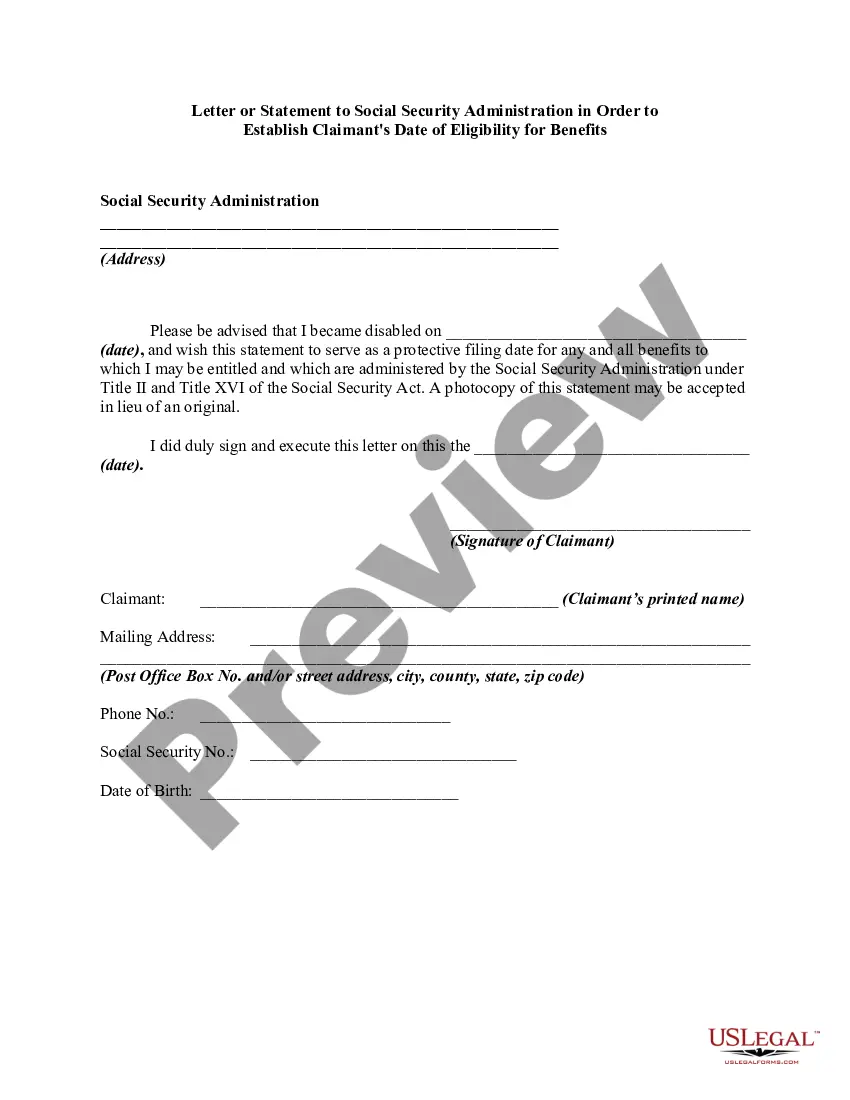
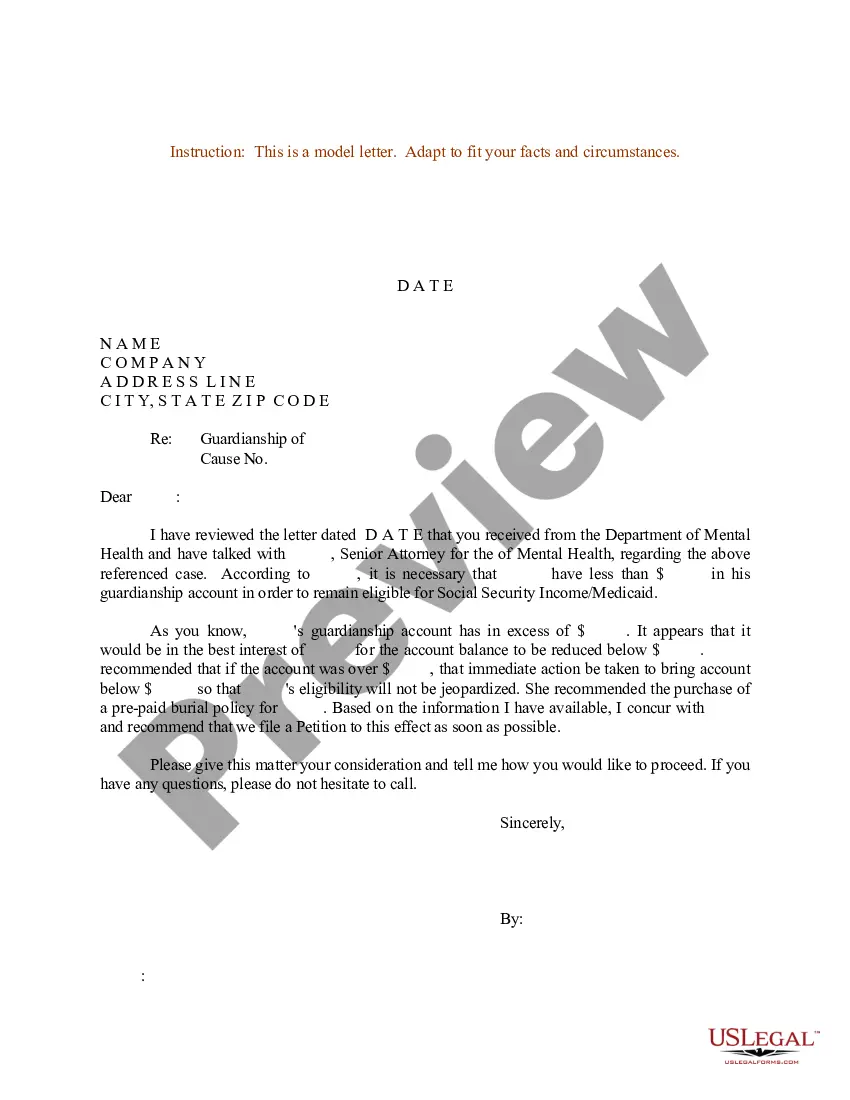
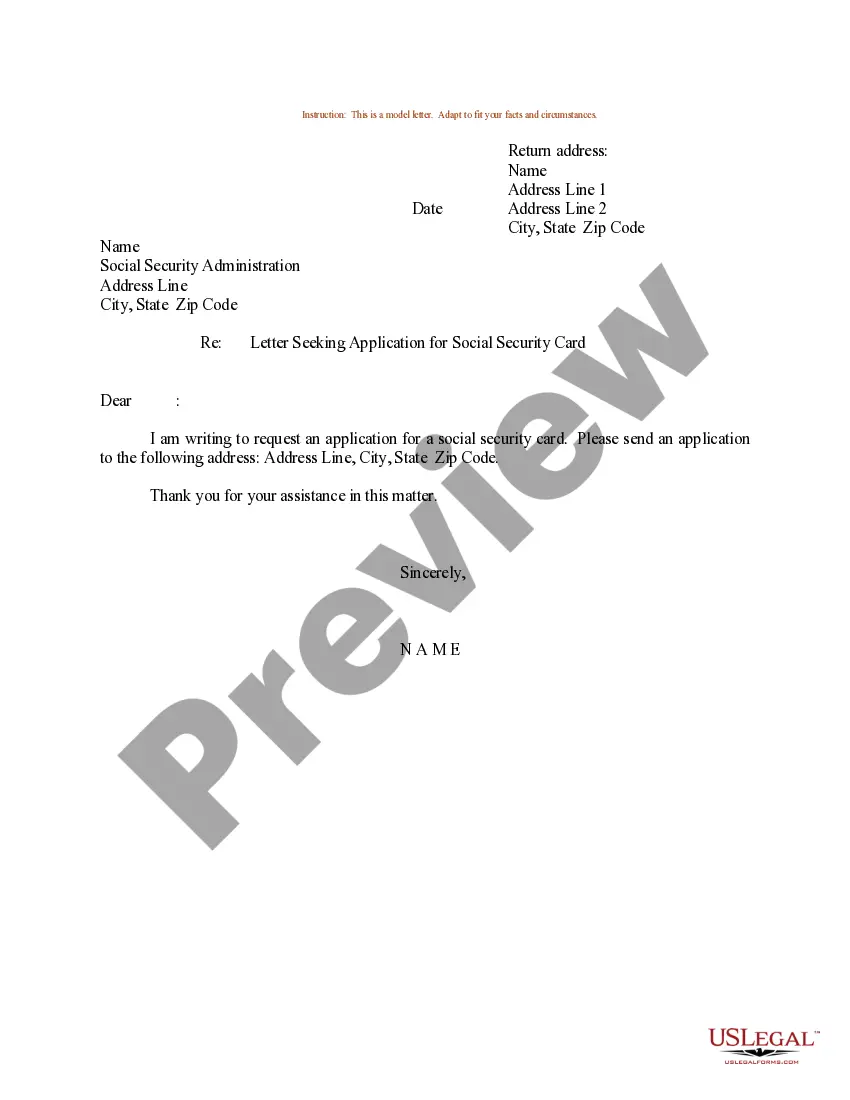
Get your form ready online
Our built-in tools help you complete, sign, share, and store your documents in one place.
Make edits, fill in missing information, and update formatting in US Legal Forms—just like you would in MS Word.
Download a copy, print it, send it by email, or mail it via USPS—whatever works best for your next step.
Sign and collect signatures with our SignNow integration. Send to multiple recipients, set reminders, and more. Go Premium to unlock E-Sign.
If this form requires notarization, complete it online through a secure video call—no need to meet a notary in person or wait for an appointment.
We protect your documents and personal data by following strict security and privacy standards.

Make edits, fill in missing information, and update formatting in US Legal Forms—just like you would in MS Word.

Download a copy, print it, send it by email, or mail it via USPS—whatever works best for your next step.

Sign and collect signatures with our SignNow integration. Send to multiple recipients, set reminders, and more. Go Premium to unlock E-Sign.

If this form requires notarization, complete it online through a secure video call—no need to meet a notary in person or wait for an appointment.

We protect your documents and personal data by following strict security and privacy standards.
Looking for another form?



How to fill out Sample Letter Applying For Social Security Benefits?
Handling legal documents can be exasperating, even for the most seasoned professionals.
When you seek an Applying Security Benefits With Minor Child and find yourself unable to dedicate time to locate the correct and updated edition, the process can be challenging.
Tap into a comprehensive resource database of articles, tutorials, guides, and materials pertinent to your situation and needs.
Conserve time and effort in searching for the documents you require, and make use of US Legal Forms’ sophisticated search and Preview feature to locate Applying Security Benefits With Minor Child and obtain it.
Take advantage of the US Legal Forms online library, supported by 25 years of expertise and reliability. Transform your routine document management into a streamlined and user-friendly experience today.
- If you have a subscription, Log In to your US Legal Forms account, search for the form, and retrieve it.
- Check the My documents section to review the documents you previously saved and manage your files as necessary.
- If this is your first encounter with US Legal Forms, create a free account and enjoy unlimited access to all the benefits of the library.
- Here are the steps to follow after downloading the document you need.
- Confirm it is the correct form by previewing it and reviewing its details.
- Access region- or locality-specific legal and organizational forms.
- US Legal Forms addresses any requirements you may have, from personal to business paperwork, all in one location.
- Utilize cutting-edge tools to complete and manage your Applying Security Benefits With Minor Child.
Form popularity
FAQ
When applying security benefits with a minor child, the income limit for parents is crucial. Generally, the total income of the household should not exceed a certain threshold to qualify for Supplemental Security Income (SSI). This threshold can vary based on living arrangements and the number of family members. For accurate calculations and support, consider using resources like USLegalForms to help navigate these requirements.
When a dependent child receives Social Security benefits, it can significantly benefit your family's financial situation. These benefits assist in meeting the child's everyday needs, such as health care and education. Additionally, applying security benefits with a minor child can enhance the overall support available to your family. If you are unsure how to navigate these benefits, uslegalforms offers resources and solutions to help you manage this process effectively.
No, you do not have to report your minor child's Social Security benefits on your taxes, as these benefits are not taxable income. However, if your child receives other types of income alongside their Social Security benefits, you may need to report that income. When applying security benefits with a minor child, understanding which benefits are taxable helps you stay compliant with tax regulations. Always consider reaching out to a tax expert for detailed guidance.
If a minor child receives social security benefits, these benefits provide financial support for their needs. This can help cover expenses such as food, clothing, and school supplies. Additionally, applying security benefits with a minor child can open doors for future financial aid opportunities, which may assist in their education. Understanding these benefits ensures you make informed decisions regarding their financial future.
When applying security benefits with a minor child, you do not claim your child's Supplemental Security Income (SSI) on your taxes. SSI is not considered taxable income, so it does not need to be reported on your tax return. However, keep in mind that other types of Social Security benefits might have different tax implications. It is always a good idea to consult a tax professional for personalized advice.
The average disability check for autism spectrum disorders is $803.52. The maximum possible disability benefit for autism in 2023 is $914 per month for SSI and about $3,600 per month for SSDI. These maximums apply regardless of what condition you have or whether you apply with one condition or multiple.
Twelve states (Colorado, Kentucky, Maine, Minnesota, New Hampshire, New Jersey, North Dakota, Oregon, Texas, Utah, Vermont, and Wisconsin) allow these state-funded programs to pay any relatives, including spouses, parents of minor children, and other legally responsible relatives.
Greater appreciation of life. Pleasure in the child's accomplishments. Increased faith/spirituality. More meaningful relationship.
Cash Payments Supplemental Security Income (SSI) ... Social Security Survivor Benefits/Social Security Disability Benefits. ... Temporary Assistance for Needy Families (TANF) ... Supplemental Nutrition Assistance Program (SNAP) ... Medicaid.
Because you are providing for the care of the child, you will most likely be appointed to be the represen- tative payee. The Social Security Administration prefers pay- ees who are either the natural or adoptive parents who have custody of the child or the child's guardian.