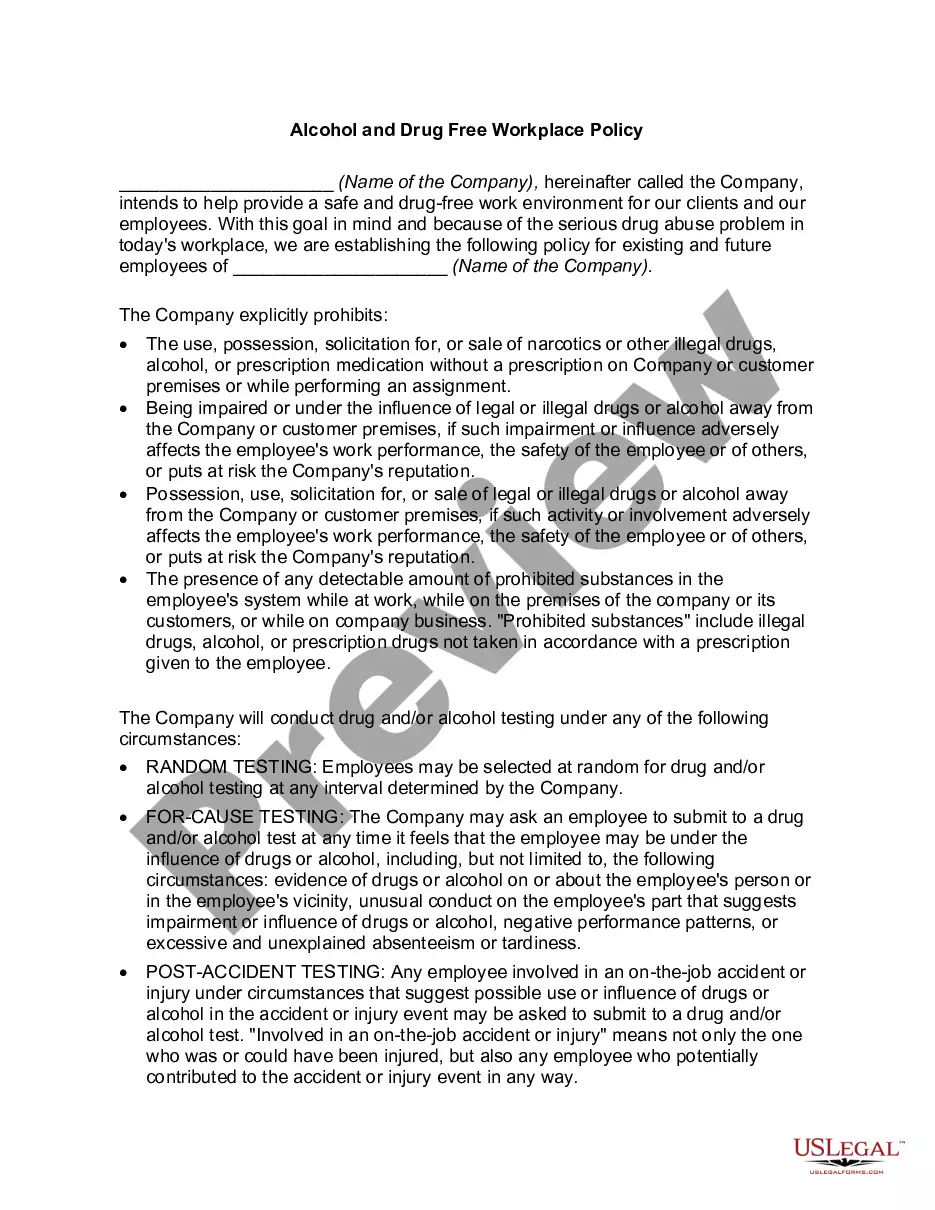
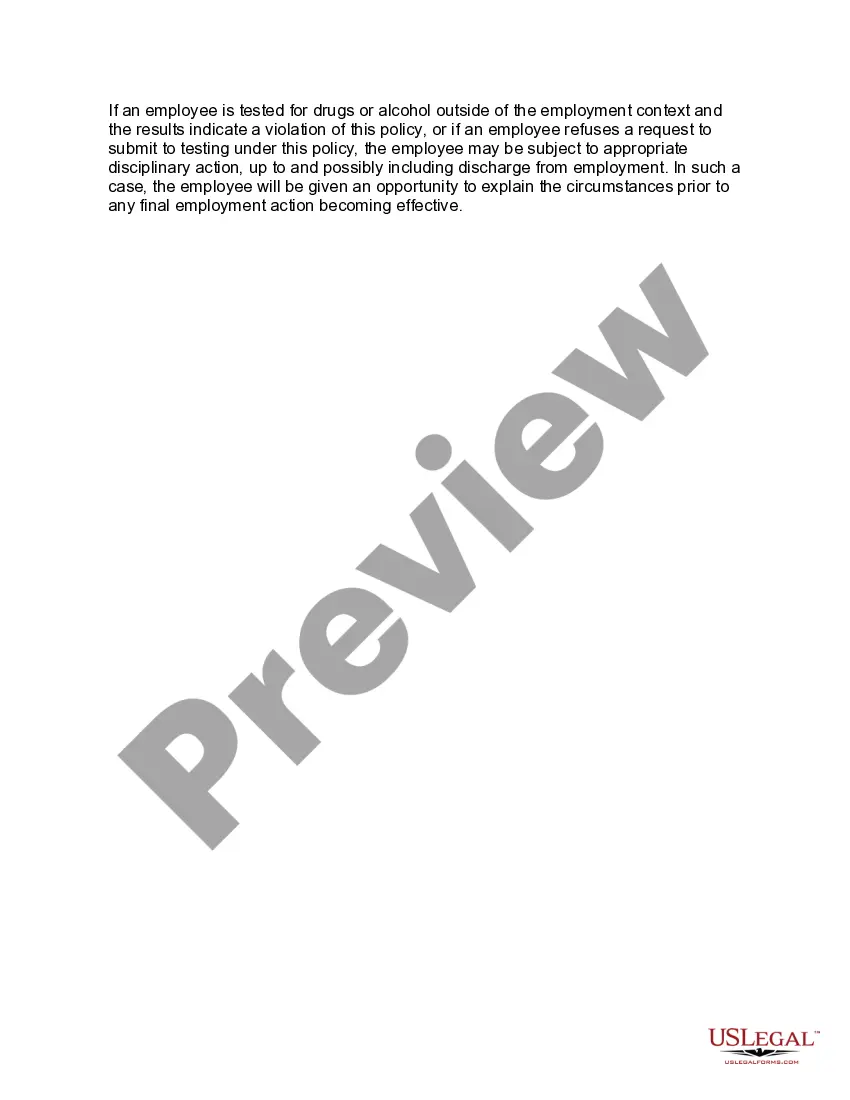
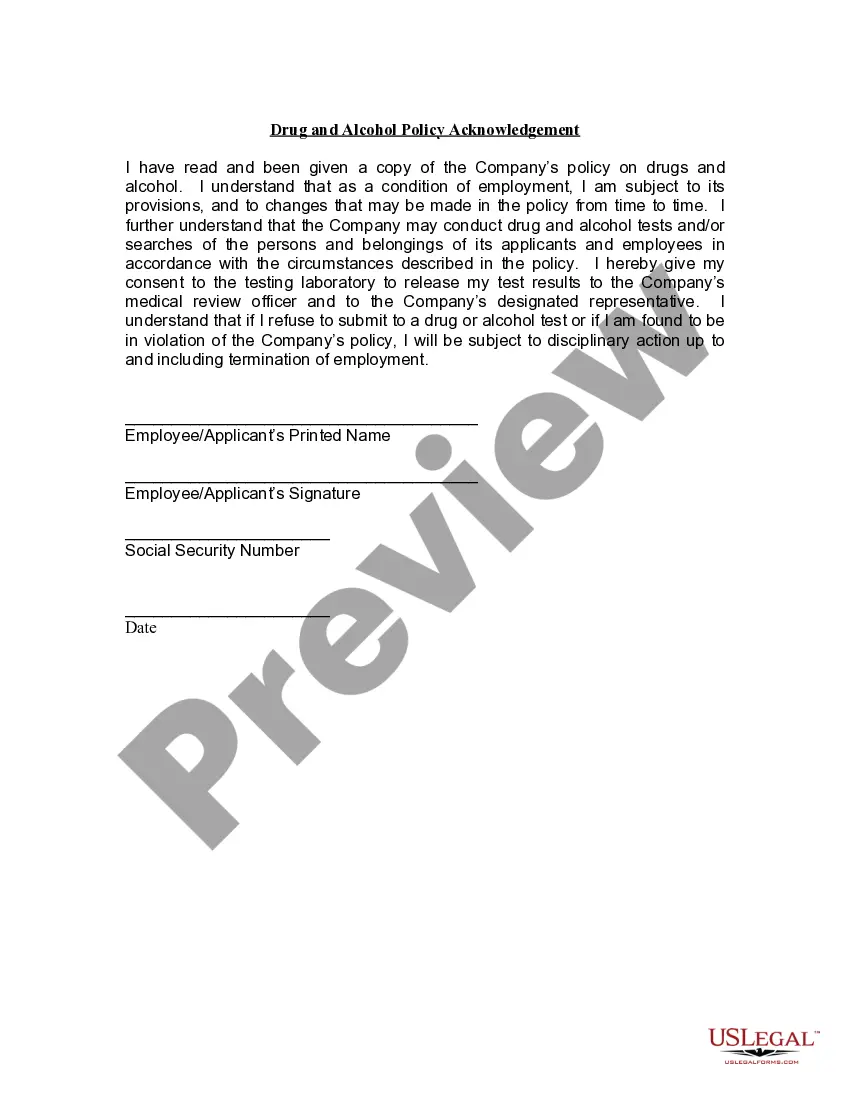
Workplace Policy Form Template With Employee Name
Description
Get your form ready online
Our built-in tools help you complete, sign, share, and store your documents in one place.
Make edits, fill in missing information, and update formatting in US Legal Forms—just like you would in MS Word.
Download a copy, print it, send it by email, or mail it via USPS—whatever works best for your next step.
Sign and collect signatures with our SignNow integration. Send to multiple recipients, set reminders, and more. Go Premium to unlock E-Sign.
If this form requires notarization, complete it online through a secure video call—no need to meet a notary in person or wait for an appointment.
We protect your documents and personal data by following strict security and privacy standards.

Make edits, fill in missing information, and update formatting in US Legal Forms—just like you would in MS Word.

Download a copy, print it, send it by email, or mail it via USPS—whatever works best for your next step.

Sign and collect signatures with our SignNow integration. Send to multiple recipients, set reminders, and more. Go Premium to unlock E-Sign.

If this form requires notarization, complete it online through a secure video call—no need to meet a notary in person or wait for an appointment.

We protect your documents and personal data by following strict security and privacy standards.
Looking for another form?









How to fill out Alcohol And Drug Free Workplace Policy?
Managing legal documents can be exasperating, even for experienced professionals. When you're searching for a Workplace Policy Form Template With Employee Name and lack the time to dedicate to finding the correct and current version, the process can be challenging.
An extensive online form collection could revolutionize the experience for anyone aiming to navigate these circumstances effectively. US Legal Forms stands as a frontrunner in online legal documents, offering over 85,000 state-specific legal forms available to you at any time.
Save time and energy searching for the documents you require, and utilize US Legal Forms’ enhanced search and Review tool to find and acquire the Workplace Policy Form Template With Employee Name. If you have a membership, Log In to your US Legal Forms account, search for the form, and obtain it. Check the My documents section to view the documents you've previously saved and to manage your folders as needed.
If this is your first time using US Legal Forms, create an account and gain unlimited access to all the features of the library. Below are the steps to follow after downloading the form you require.
Enjoy the US Legal Forms online library, supported by 25 years of experience and reliability. Transform your routine document management into a seamless and user-friendly process today.
- Ensure it is the right form by previewing it and reviewing its details.
- Confirm that the template is recognized in your state or county.
- Click Buy Now when you're ready.
- Choose a monthly subscription option.
- Select the format you need, and Download, complete, sign, print, and submit your document.
- Obtain state- or county-specific legal and business forms. US Legal Forms accommodates any needs you may have, from personal to business documentation, all in one place.
- Employ sophisticated tools to fill out and oversee your Workplace Policy Form Template With Employee Name.
- Access a repository of articles, guides, and resources related to your situation and requirements.
Form popularity
FAQ
Writing up an employee for misconduct requires a formal approach. Start by documenting the incident clearly, including dates and specific behaviors. Use a workplace policy form template with employee name to ensure that the write-up is personalized and professional. Platforms like uslegalforms provide templates that help you maintain consistency and legal compliance in your documentation.
To create an employee handbook template, first identify the policies and procedures you want to include. A well-organized handbook should cover topics like workplace conduct, benefits, and safety protocols. Utilize a workplace policy form template with employee name to ensure that each section is personalized for your employees. Uslegalforms offers a range of templates that can help you craft an effective handbook.
Creating an employee information form is straightforward. Begin by outlining the essential details you need, such as name, address, and contact information. Incorporate the workplace policy form template with employee name to ensure clarity in collecting this data. You can use platforms like uslegalforms to access customizable templates that simplify this process.
To announce a new policy to employees, start by drafting a clear and concise communication. Use a structured format to present the key points of the policy. Ensure that the policy includes the workplace policy form template with employee name, making it easy for employees to understand their responsibilities. Consider holding a meeting to discuss the policy and answer any questions.
An Employee Policy Handbook is a book given to the employees by the employer. The employee usually contains information about company culture, policies, and procedures. The Employee Policy Handbook Template is generally used to provide employment and job-related information that an employee needs to know.
It includes the employee's job role or position, designated department, employee ID (as provided by the company), manager or supervisor, professional work email ID, job location, joining date, and salary.
How to Write an Employment Policy Step 1: Determine the Purpose and Intention of the Policy. ... Step 2: Assemble All Prior Writings and Practices on the Same or Similar Topics. ... Step 3: Obtain Information and Input from Relevant Stakeholders. ... Step 4: Determine Status of the Law and Identify Trends.
How to write a company policy Organise your policies. Before creating policies for your organisation, create a list of all the relevant laws and regulations. ... Use reliable and trusted reference materials. ... Decide on a policy structure. ... Send the policy out for feedback. ... Distribute the revised policy to employees.
Nine Tips for Writing an Employee Handbook Keep It Simple & Engaging. Use Your Handbook As A Communication Tool. Pay Attention to Format and Visuals. Clearly Mention Work Hours, Compensations, and Benefits. Mention Your Company Culture & How Employees Can Maintain The Same. Mention Legal Issues. Mention Employee Appreciation.