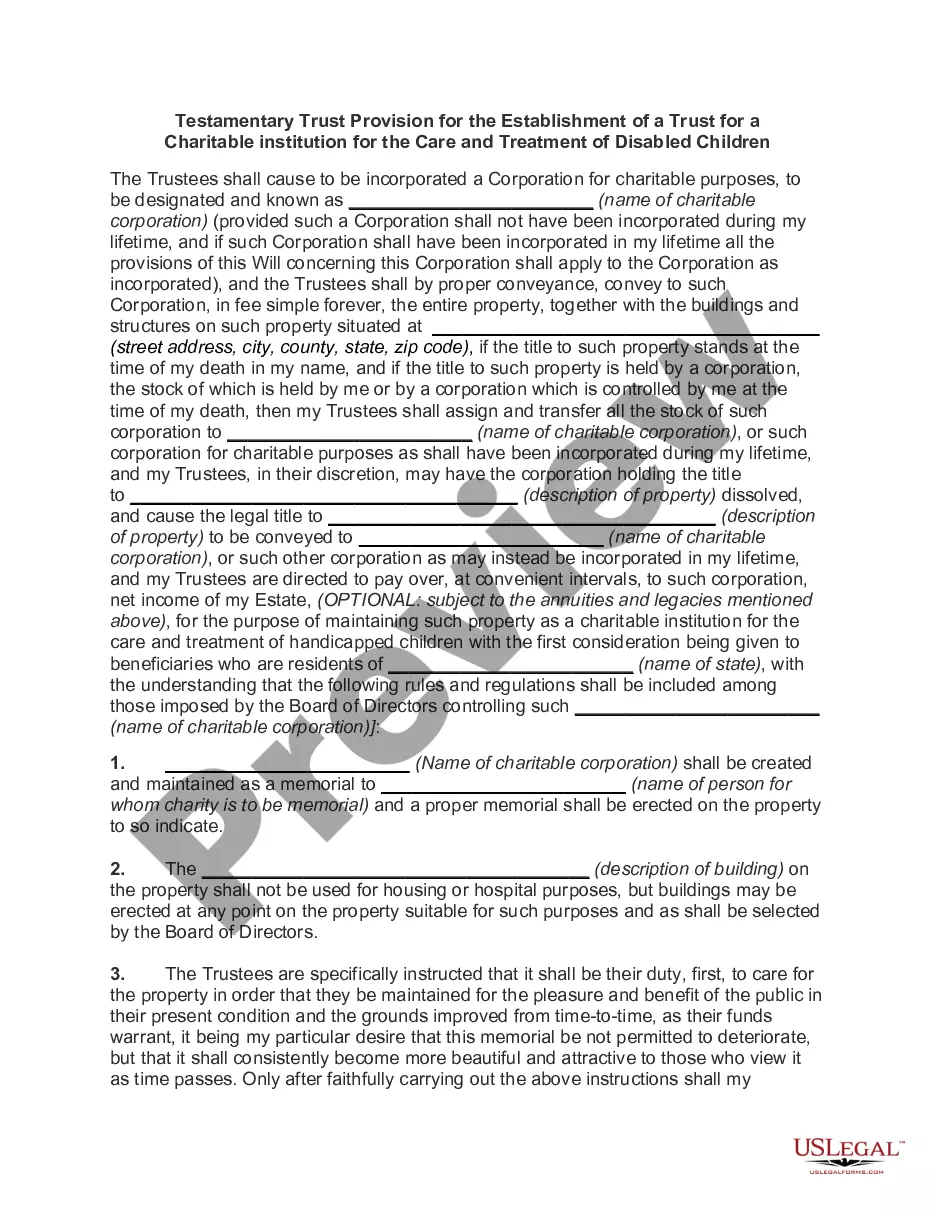
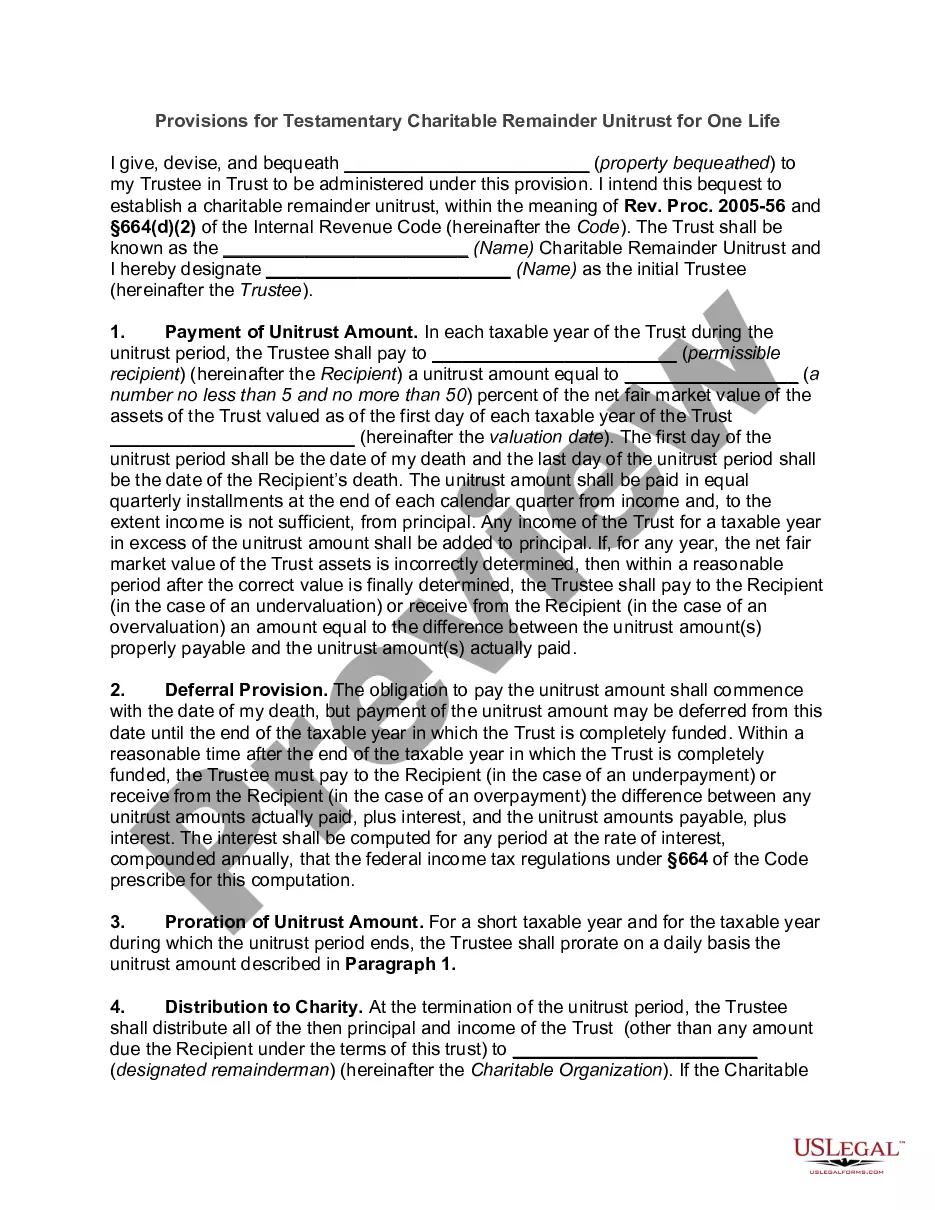
Testamentary Trust Explained Without A Will
Description


Get your form ready online
Our built-in tools help you complete, sign, share, and store your documents in one place.
Make edits, fill in missing information, and update formatting in US Legal Forms—just like you would in MS Word.
Download a copy, print it, send it by email, or mail it via USPS—whatever works best for your next step.
Sign and collect signatures with our SignNow integration. Send to multiple recipients, set reminders, and more. Go Premium to unlock E-Sign.
If this form requires notarization, complete it online through a secure video call—no need to meet a notary in person or wait for an appointment.
We protect your documents and personal data by following strict security and privacy standards.

Make edits, fill in missing information, and update formatting in US Legal Forms—just like you would in MS Word.

Download a copy, print it, send it by email, or mail it via USPS—whatever works best for your next step.

Sign and collect signatures with our SignNow integration. Send to multiple recipients, set reminders, and more. Go Premium to unlock E-Sign.

If this form requires notarization, complete it online through a secure video call—no need to meet a notary in person or wait for an appointment.

We protect your documents and personal data by following strict security and privacy standards.
Looking for another form?

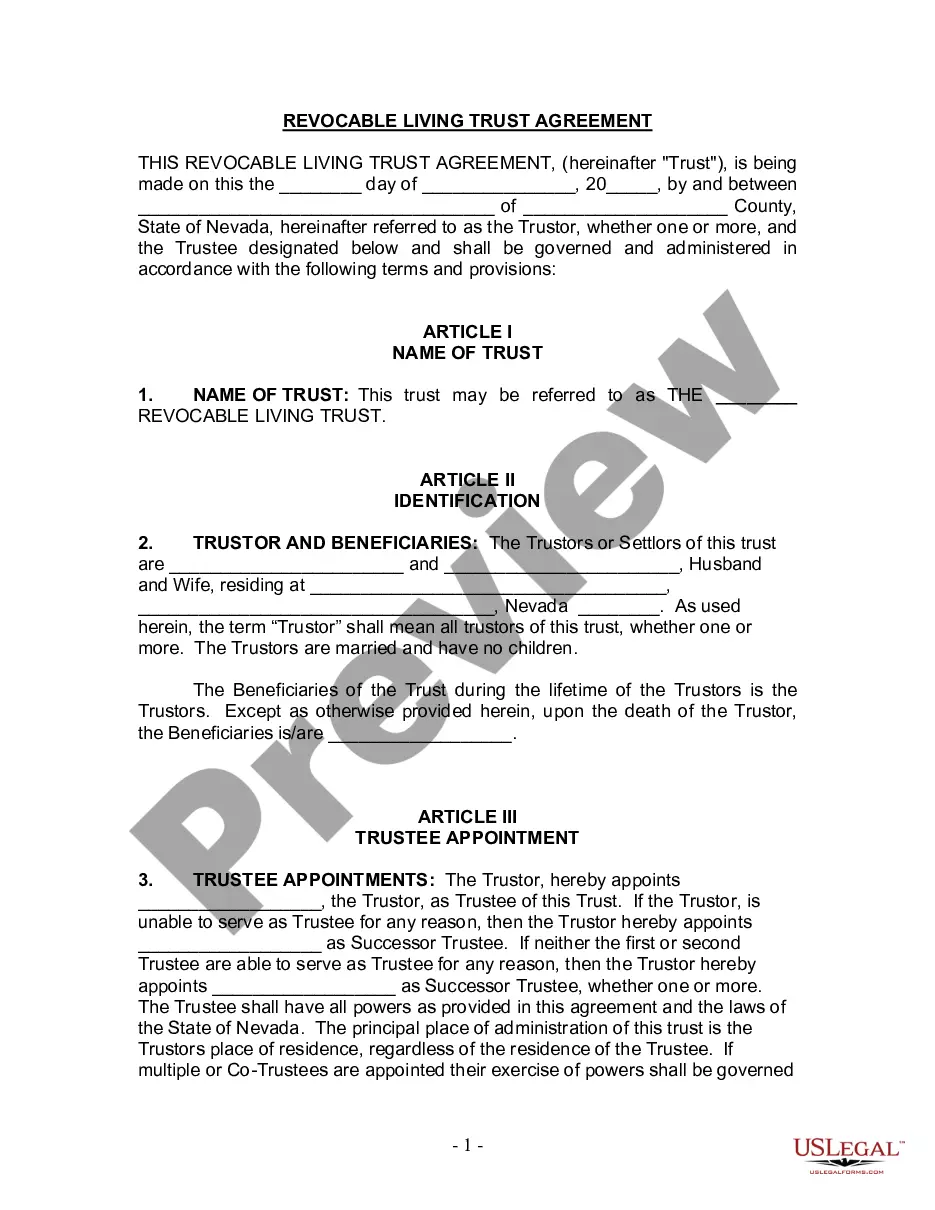

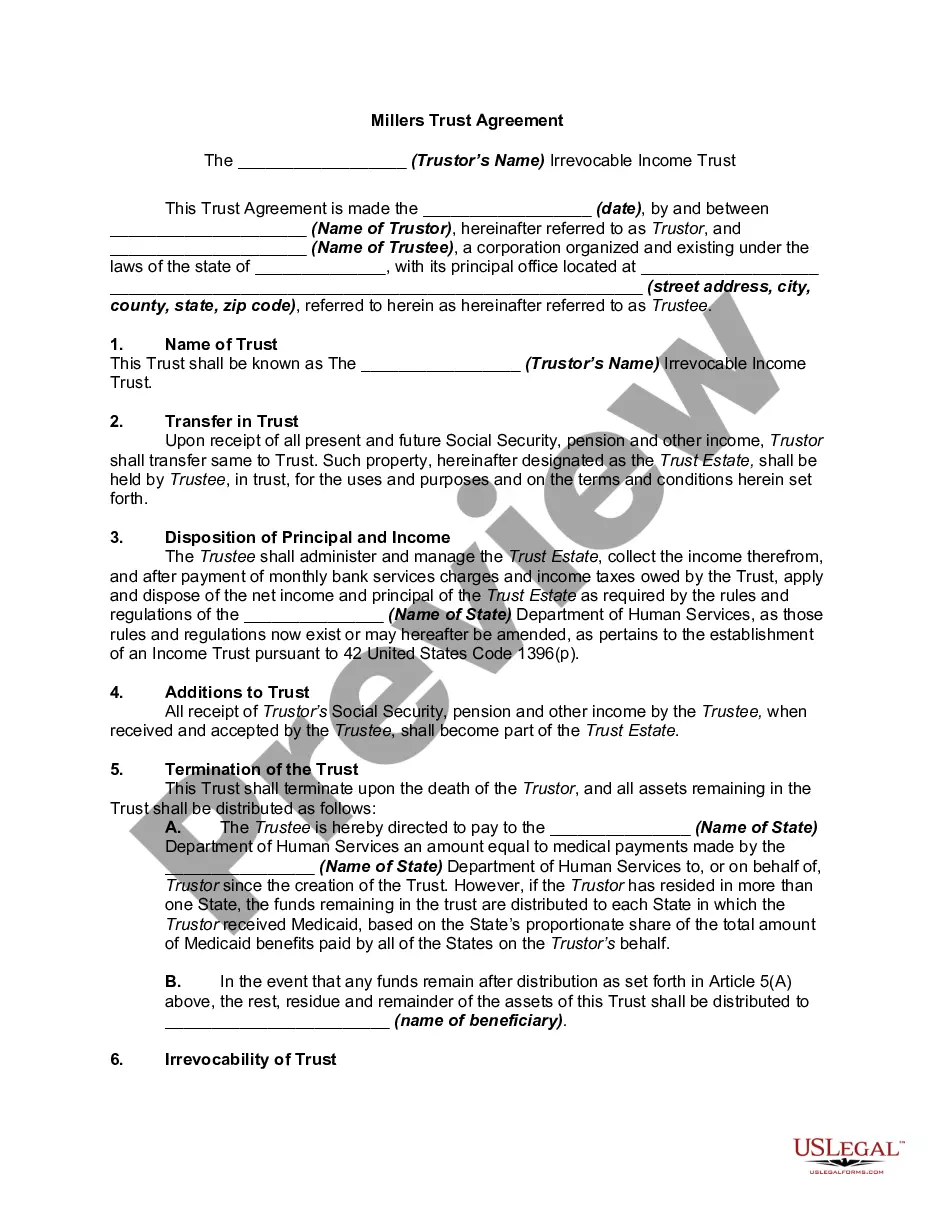



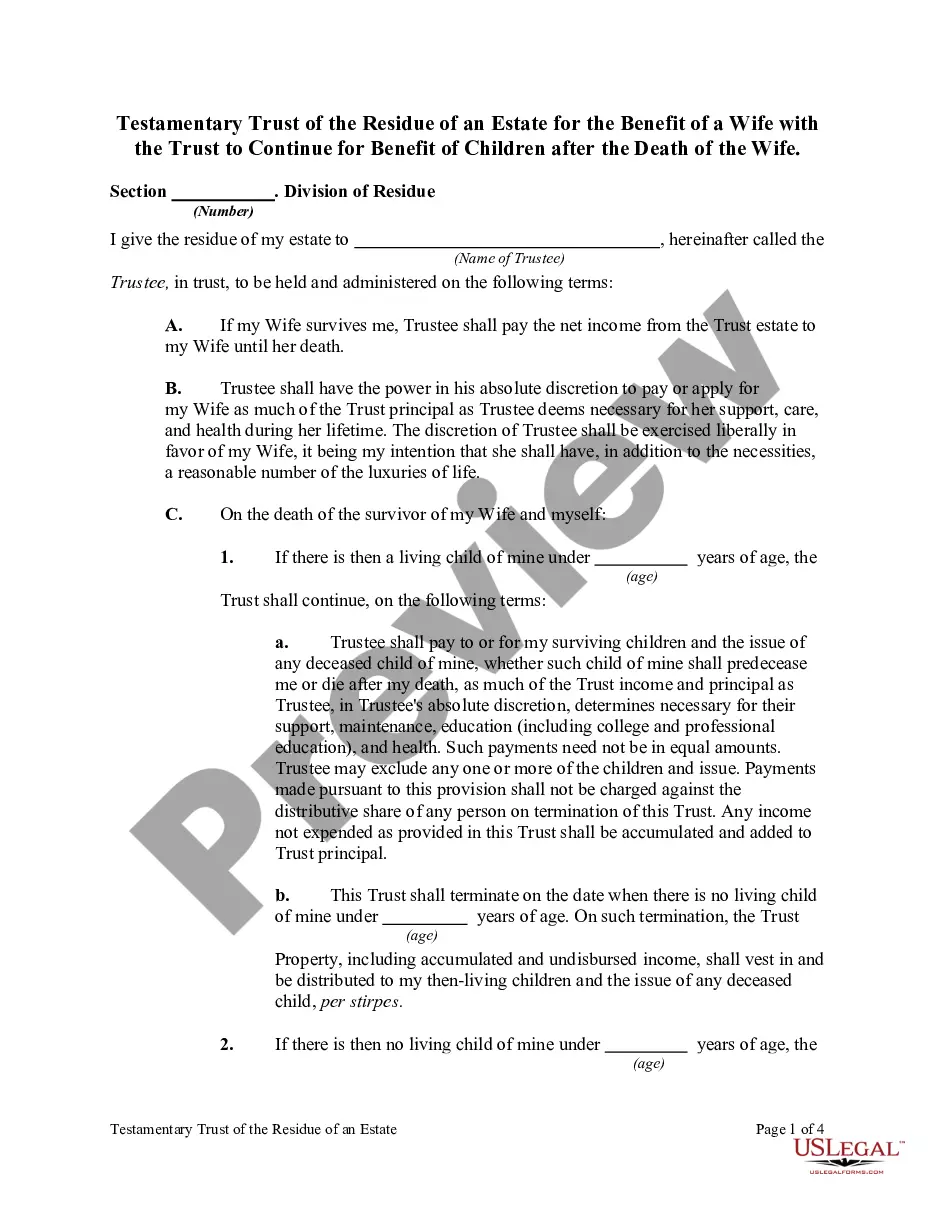
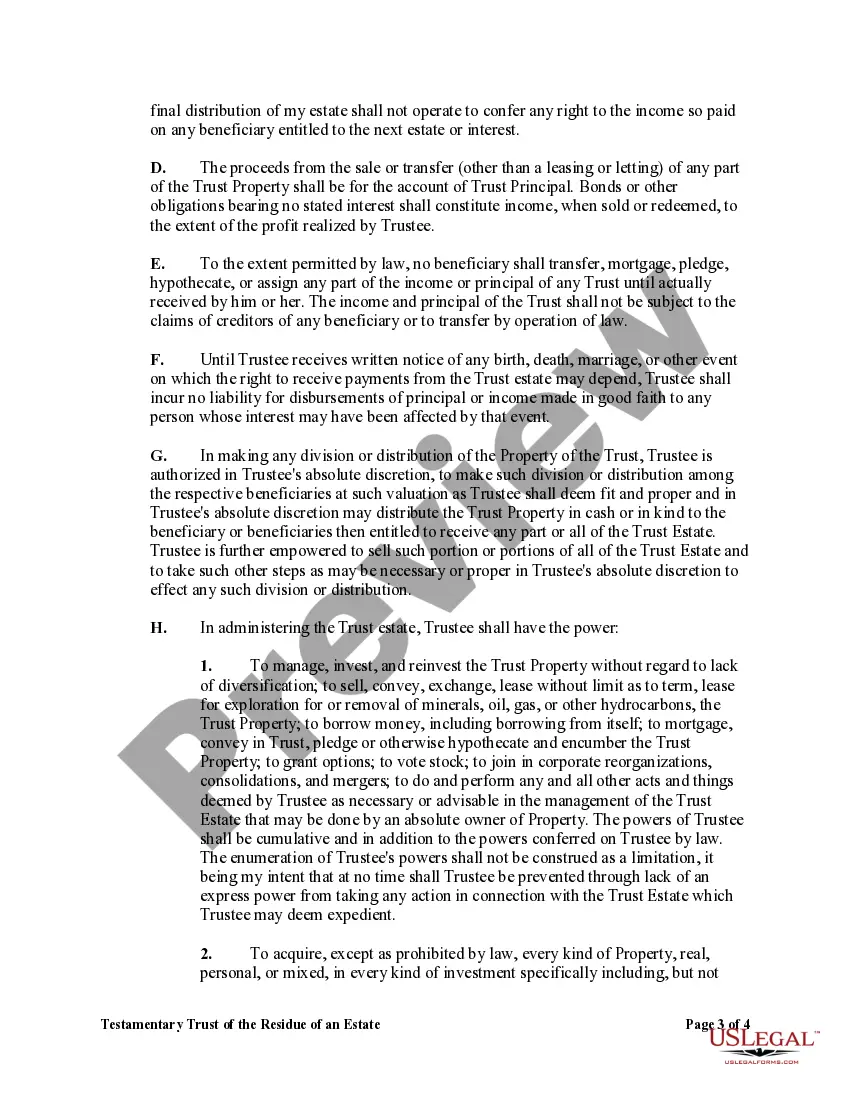
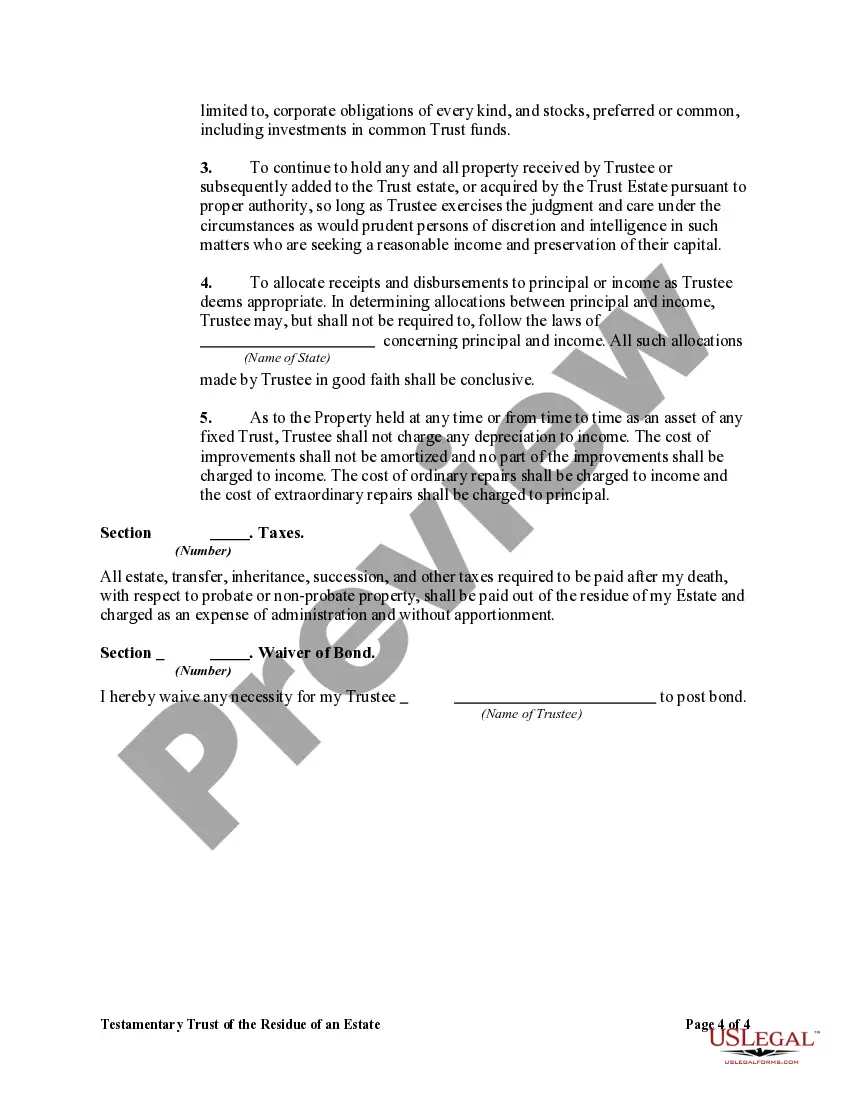
How to fill out Testamentary Trust Of The Residue Of An Estate For The Benefit Of A Wife With The Trust To Continue For Benefit Of Children After The Death Of The Wife?
Securing a reliable source for the latest and pertinent legal templates is a significant part of navigating bureaucracy.
Identifying the correct legal documents requires precision and meticulousness, which is why it is crucial to obtain samples of Testamentary Trust Explained Without A Will exclusively from trustworthy sources, such as US Legal Forms. An inappropriate template can squander your time and hinder your progress. With US Legal Forms, you have minimal concerns.
Eliminate the hassles associated with your legal paperwork. Explore the vast US Legal Forms catalog where you can find legal templates, evaluate their pertinence to your situation, and download them immediately.
- Utilize the catalog navigation or search function to locate your sample.
- Review the form's description to determine if it meets the stipulations of your state and locality.
- If accessible, view the form preview to confirm that the form is the one you need.
- Return to the search to find the suitable template if the Testamentary Trust Explained Without A Will does not fulfill your requirements.
- If you are confident in the form's applicability, download it.
- If you are a registered user, click Log in to verify and access your chosen templates in My documents.
- If you lack a profile, click Buy now to acquire the form.
- Choose the pricing plan that aligns with your needs.
- Continue to registration to finalize your purchase.
- Complete your transaction by selecting a payment method (credit card or PayPal).
- Choose the document format for downloading Testamentary Trust Explained Without A Will.
- After saving the form on your device, you can edit it with the editor or print it and fill it out manually.
Form popularity
FAQ
(b) A person, whether or not licensed to practice law, must have completed a minimum of forty classroom hours of training in mediation in a course conducted by an organization or individual approved by the MCLE Committee or the ADR Section, and must have mediated more than twenty-five disputes or must have engaged in ...
(3) "Cost of mediation" includes the mediator's fee, administrative fees, and expenses. (4) "Mediation" is a procedure in which a mediator facilitates communication between the parties concerning the matters in dispute and explores possible solutions to promote reconciliation, understanding, and settlement.
When you represent yourself, you are referred to as a "self-represented litigant" or "pro-se litigant." Even if you don't have a lawyer, judges and court employees are not allowed to provide you with legal advice and may not be able to speak with you at all about your case outside of the courtroom.
To do so, you need to file a form called an ?In Forma Pauperis? form, or ?IFP? for short. Do I Need Witnesses? Witnesses can testify about facts to help tell your story. They should know the case and have seen or heard the evidence themselves.
About Self-Representation "In Pro Per" means that you are acting as your own attorney. You are not required to hire an attorney, but before taking any legal action, it is highly advisable to consult with a lawyer who can inform you about important legal rights.
Litigants or parties representing themselves in court without the assistance of an attorney are known as pro se litigants.
Some defendants choose to represent themselves because they have lost confidence in defense lawyers following a previous negative experience, although this may not have been the lawyer's fault. Other defendants distrust the system and feel that going outside it makes a statement of resistance.
People who represent themselves in court without an attorney are Self-Represented Litigants (SRLs), also sometimes called pro se litigants. Under the law, an SRL is held to the same standards and duties as an attorney admitted to the practice of law in the state of Louisiana.