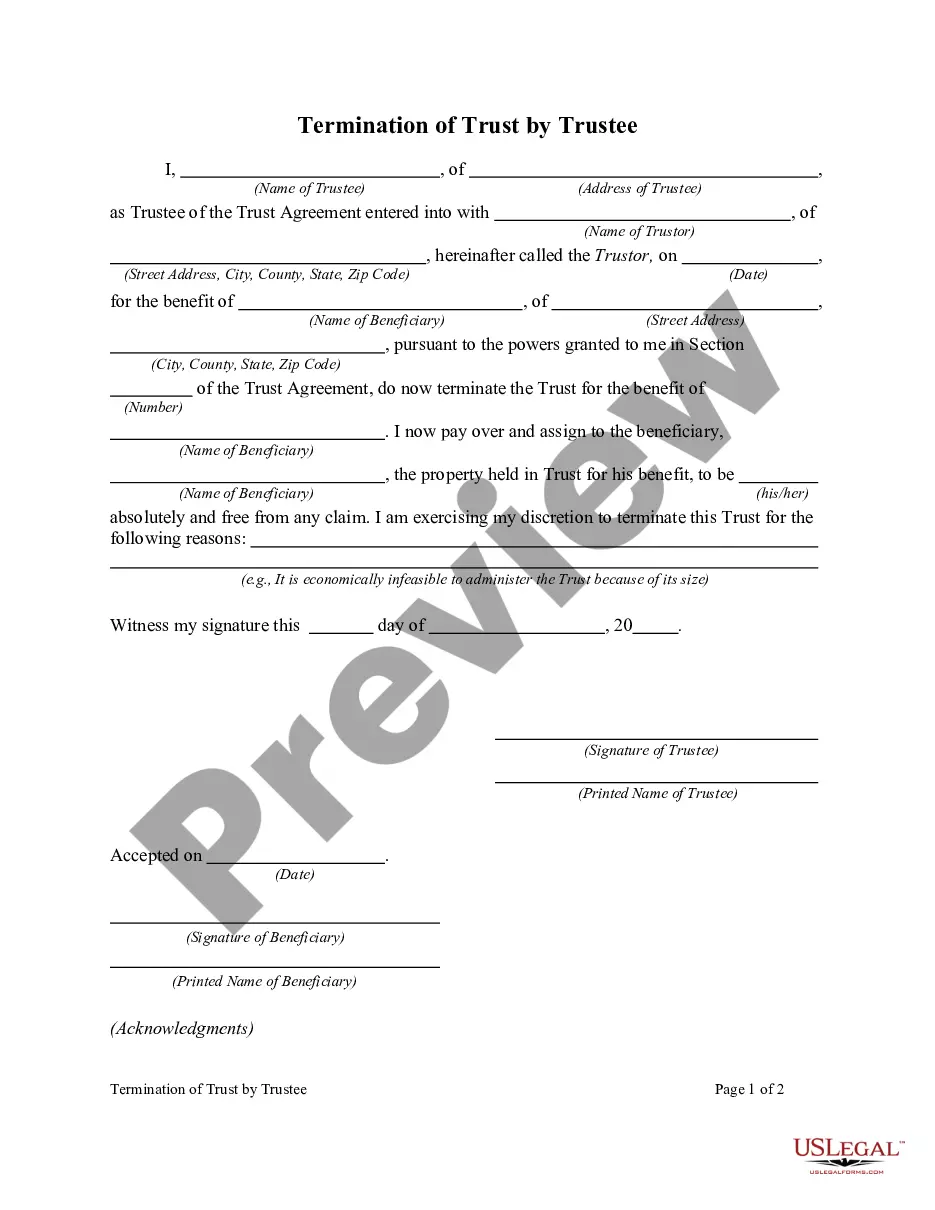
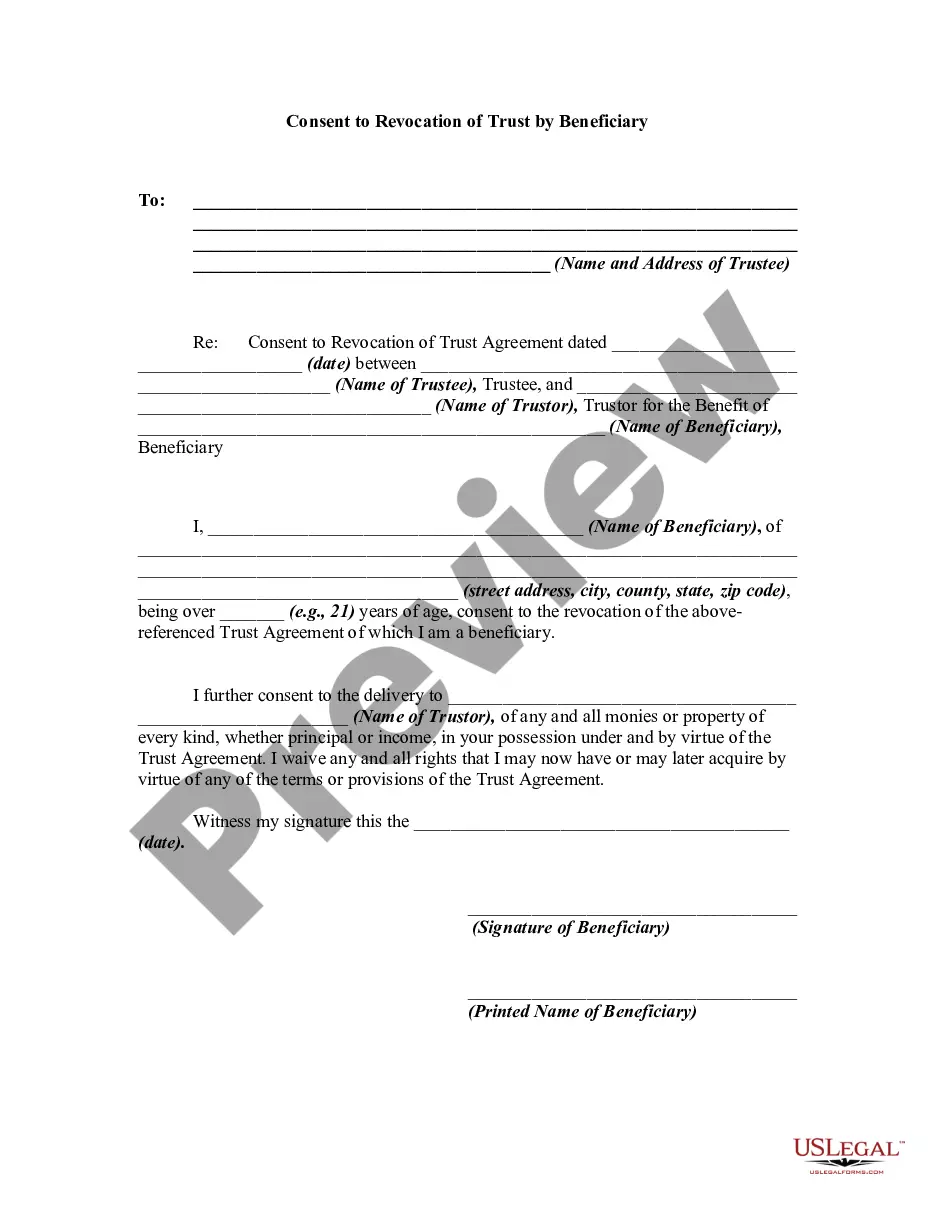
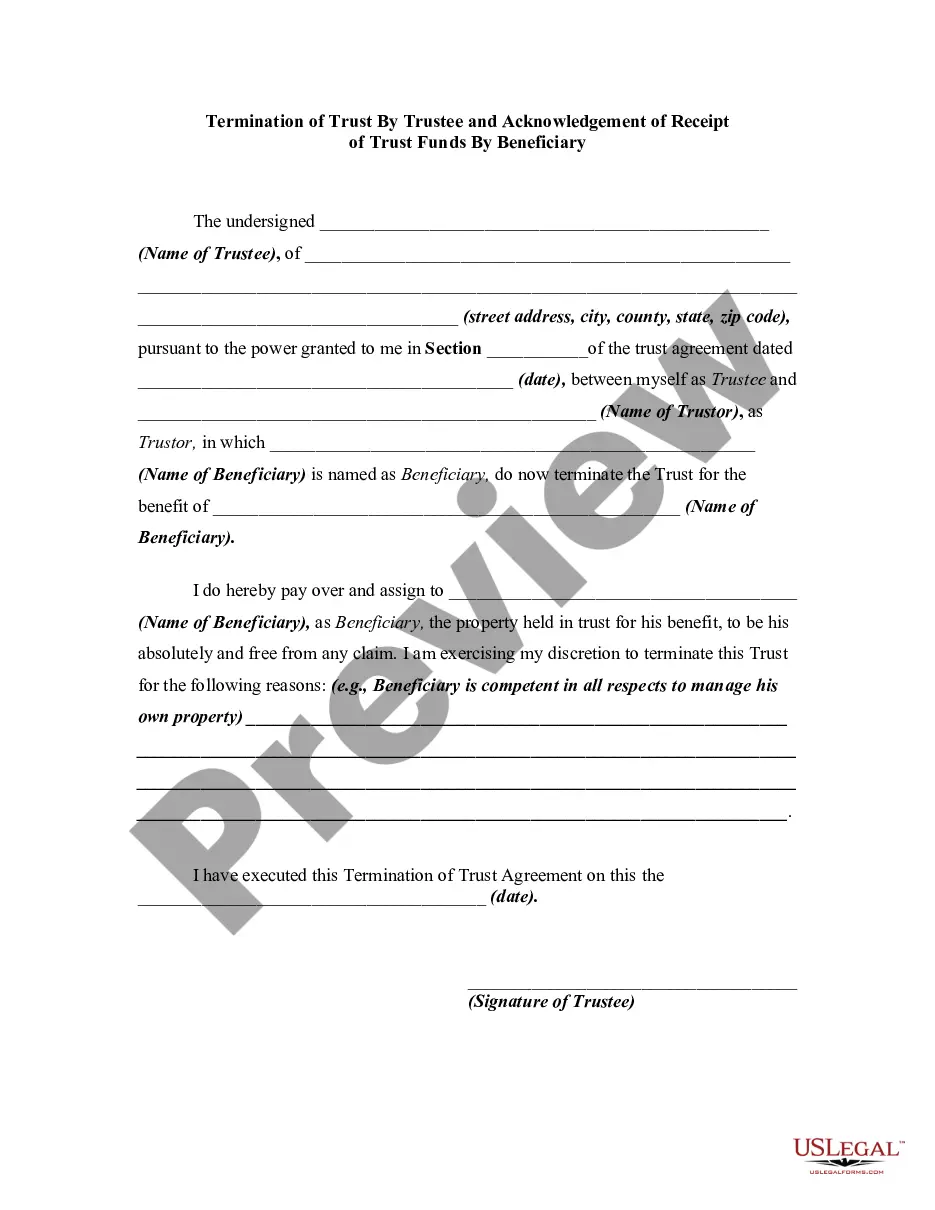
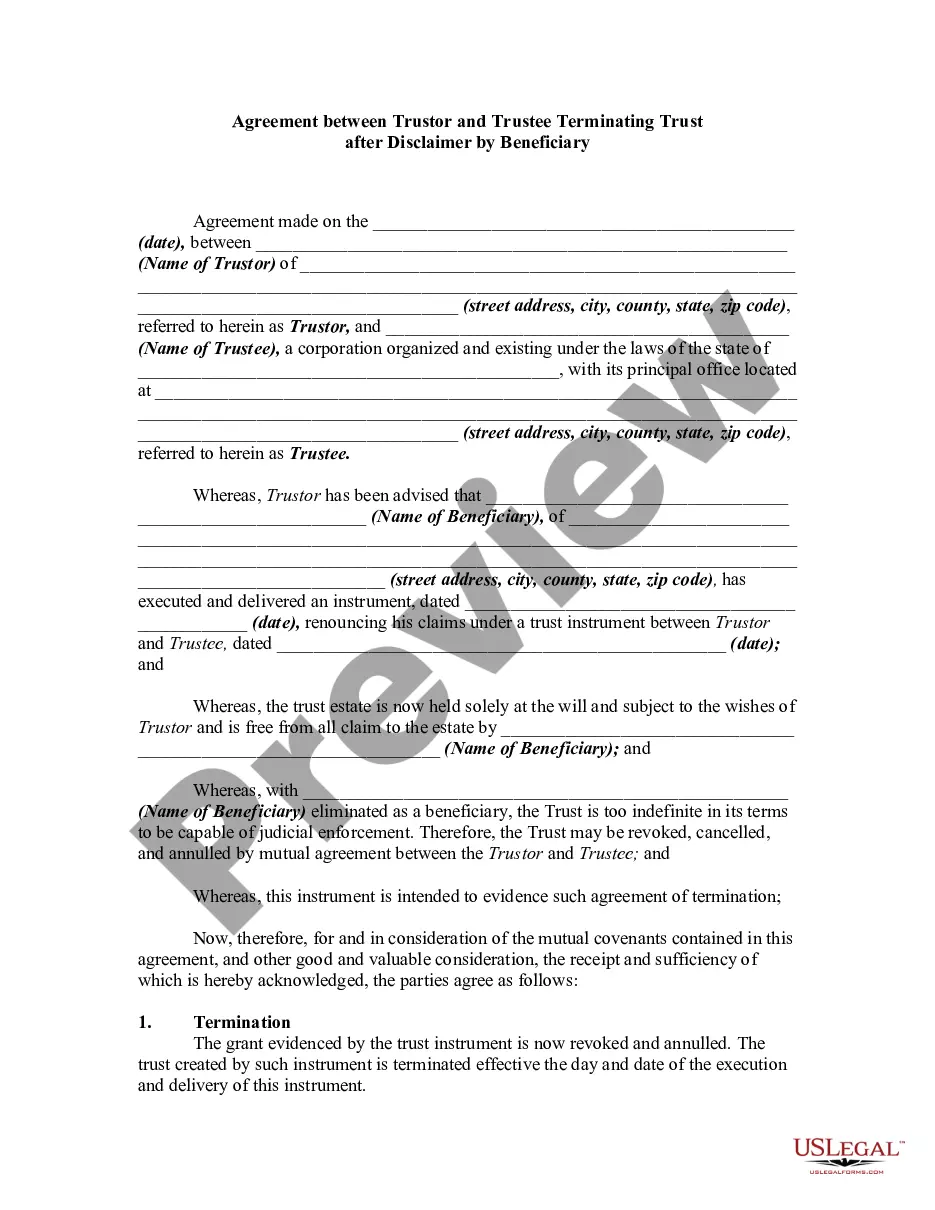
Termination Trust Trustee For Family
Description

Get your form ready online
Our built-in tools help you complete, sign, share, and store your documents in one place.
Make edits, fill in missing information, and update formatting in US Legal Forms—just like you would in MS Word.
Download a copy, print it, send it by email, or mail it via USPS—whatever works best for your next step.
Sign and collect signatures with our SignNow integration. Send to multiple recipients, set reminders, and more. Go Premium to unlock E-Sign.
If this form requires notarization, complete it online through a secure video call—no need to meet a notary in person or wait for an appointment.
We protect your documents and personal data by following strict security and privacy standards.

Make edits, fill in missing information, and update formatting in US Legal Forms—just like you would in MS Word.

Download a copy, print it, send it by email, or mail it via USPS—whatever works best for your next step.

Sign and collect signatures with our SignNow integration. Send to multiple recipients, set reminders, and more. Go Premium to unlock E-Sign.

If this form requires notarization, complete it online through a secure video call—no need to meet a notary in person or wait for an appointment.

We protect your documents and personal data by following strict security and privacy standards.
Looking for another form?








How to fill out Termination Of Trust By Trustee?
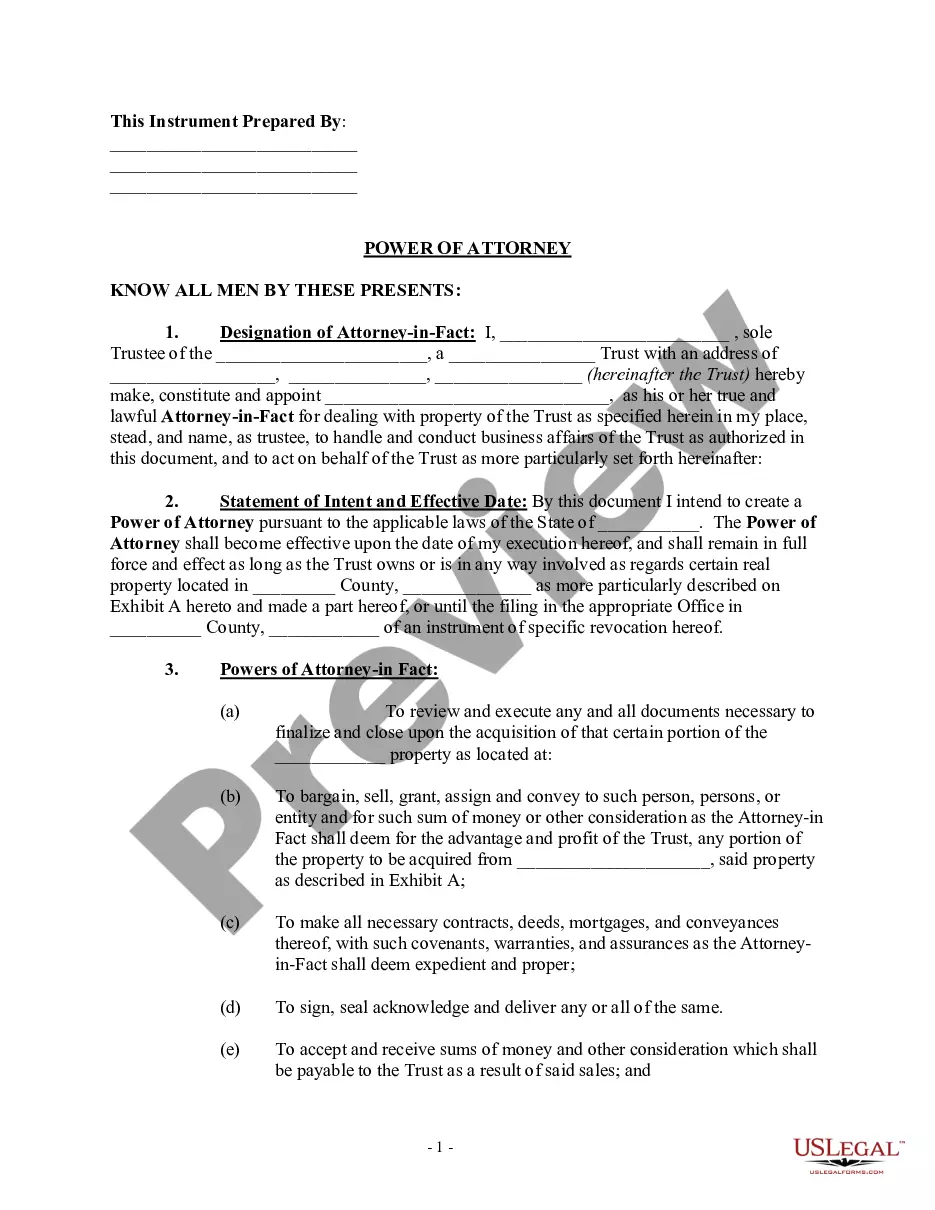
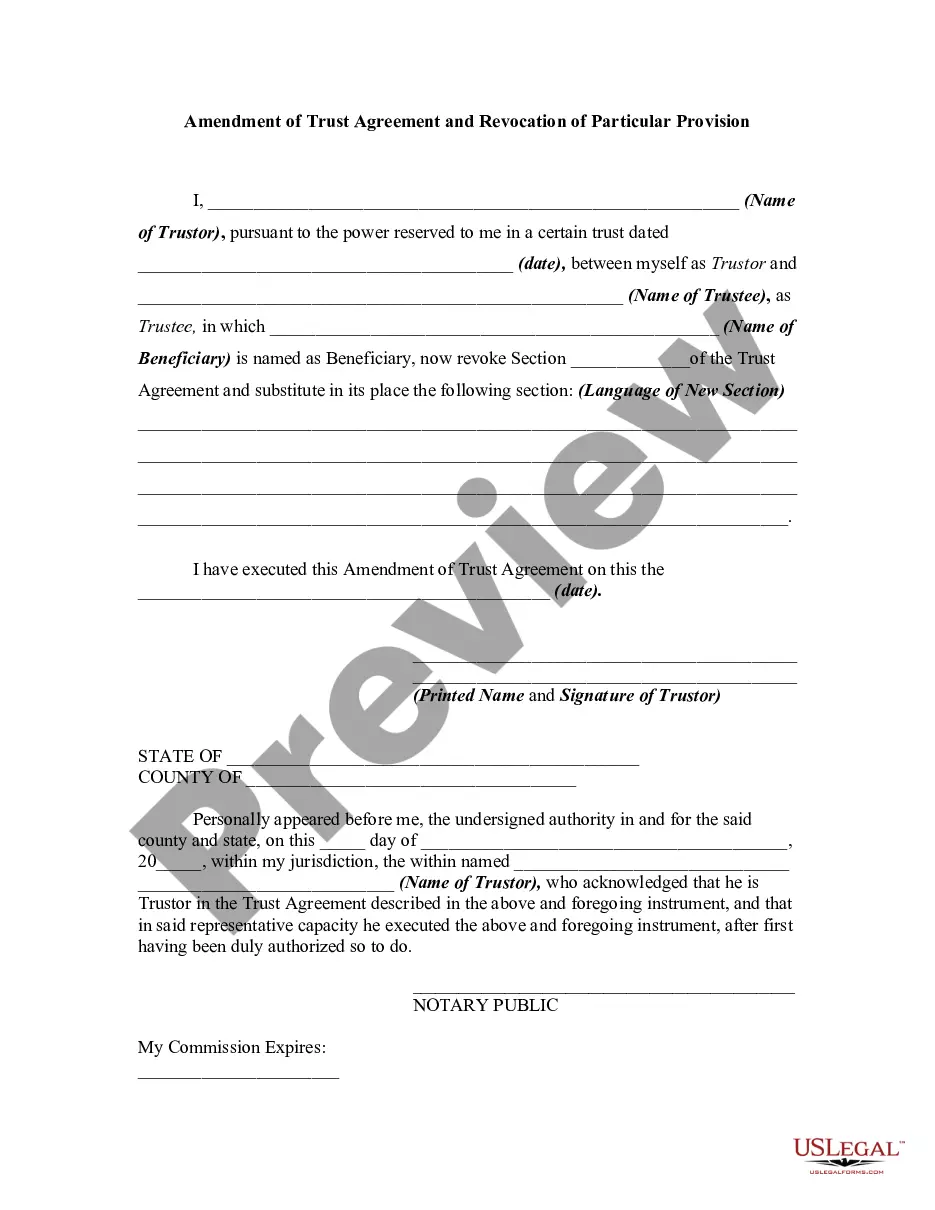
The Termination Trust Trustee For Family that you see on this page is a versatile legal template crafted by experienced attorneys in accordance with federal and local regulations.
For over 25 years, US Legal Forms has supplied individuals, companies, and lawyers with more than 85,000 authenticated, state-specific documents for any business and personal event. It’s the quickest, simplest, and most dependable method to acquire the documentation you require, as the service ensures bank-grade data security and anti-virus protection.
Subscribe to US Legal Forms to have authenticated legal templates for all of life's circumstances at your fingertips.
- Search for the document you require and examine it.
- Browse the sample you found and preview it or review the form description to confirm it meets your requirements. If it doesn't, utilize the search feature to locate the appropriate one. Click Buy Now when you have found the template you need.
- Choose and Log In.
- Select the pricing plan that best fits you and create an account. Use PayPal or a credit card for a swift payment. If you already have an account, Log In and check your subscription to proceed.
- Obtain the editable template.
- Pick the format you prefer for your Termination Trust Trustee For Family (PDF, DOCX, RTF) and download the document to your device.
- Fill out and sign the documentation.
- Print the template to complete it by hand. Alternatively, use an online multifunctional PDF editor to quickly and accurately fill in and sign your form with a legally-binding electronic signature.
- Download your documentation again.
- Access the same document whenever needed. Open the My documents tab in your profile to redownload any previously obtained forms.
Form popularity
FAQ
Firing a trustee of a trust can vary in difficulty based on the trust terms and the relationship with the trustee. If the trust document allows for removal, it can be straightforward; however, if the trustee contests the decision, it may require legal intervention. Engaging a termination trust trustee for family can help navigate these complexities and provide support throughout the process.
Removing a trustee from a family trust requires a thorough review of the trust agreement. Most agreements outline the process for removal, which often involves obtaining consent from the beneficiaries or a court order. A termination trust trustee for family can help facilitate this process, ensuring that it is handled legally and smoothly.
A trust can be terminated in three primary ways: by the terms outlined in the trust document, by the agreement of all beneficiaries, or by court order. Each method has specific requirements and implications. Consulting a termination trust trustee for family can provide clarity on the best approach for your situation.
To officially close a trust, you must first settle any outstanding debts and distribute the remaining assets to beneficiaries. After completing these steps, you should file any necessary paperwork with the appropriate legal or financial institutions. Engaging a termination trust trustee for family can help ensure that you follow the proper legal procedures and avoid potential pitfalls.
Terminating a family trust involves several steps, including reviewing the trust document for termination provisions. You may need to gather consent from all beneficiaries and formally document the termination. A termination trust trustee for family can assist by providing guidance and ensuring that all legal obligations are met, making the process smoother.
To close a family trust, you must follow the terms outlined in the trust document. Typically, you will need to distribute the remaining assets to the beneficiaries as specified. Additionally, ensure that all debts and taxes are settled. Using a termination trust trustee for family can help simplify this process, ensuring everything complies with legal requirements.
A trustee who has resigned or is removed has the powers reasonably necessary under the circumstances to preserve the trust property until it is delivered to the successor trustee and to perform actions necessary to complete the resigning or removed trustee's administration of the trust.
Most trusts include a provision that outlines how a trustee may resign. Usually, this procedure includes signing a Resignation to Serve as Trustee and also sending written notice and a report and account of their actions as Trustee to the trust beneficiaries.
If a trustee does not uphold these responsibilities and breaches their duty, the beneficiaries can take legal action. They may petition the court to terminate the trust and distribute its assets. The court then decides whether the trustee has indeed acted improperly and if so, may order the dissolution of the trust.
Usually there are two ways in which a beneficiary can be removed; The beneficiary can sign a legal document renouncing their interest in the Trust assets. The Trustee can use their discretionary power to remove an individual as a beneficiary by following the instructions in the Trust Deed.