Built To Suit Contrato
Description
Get your form ready online
Our built-in tools help you complete, sign, share, and store your documents in one place.
Make edits, fill in missing information, and update formatting in US Legal Forms—just like you would in MS Word.
Download a copy, print it, send it by email, or mail it via USPS—whatever works best for your next step.
Sign and collect signatures with our SignNow integration. Send to multiple recipients, set reminders, and more. Go Premium to unlock E-Sign.
If this form requires notarization, complete it online through a secure video call—no need to meet a notary in person or wait for an appointment.
We protect your documents and personal data by following strict security and privacy standards.

Make edits, fill in missing information, and update formatting in US Legal Forms—just like you would in MS Word.

Download a copy, print it, send it by email, or mail it via USPS—whatever works best for your next step.

Sign and collect signatures with our SignNow integration. Send to multiple recipients, set reminders, and more. Go Premium to unlock E-Sign.

If this form requires notarization, complete it online through a secure video call—no need to meet a notary in person or wait for an appointment.

We protect your documents and personal data by following strict security and privacy standards.
Looking for another form?





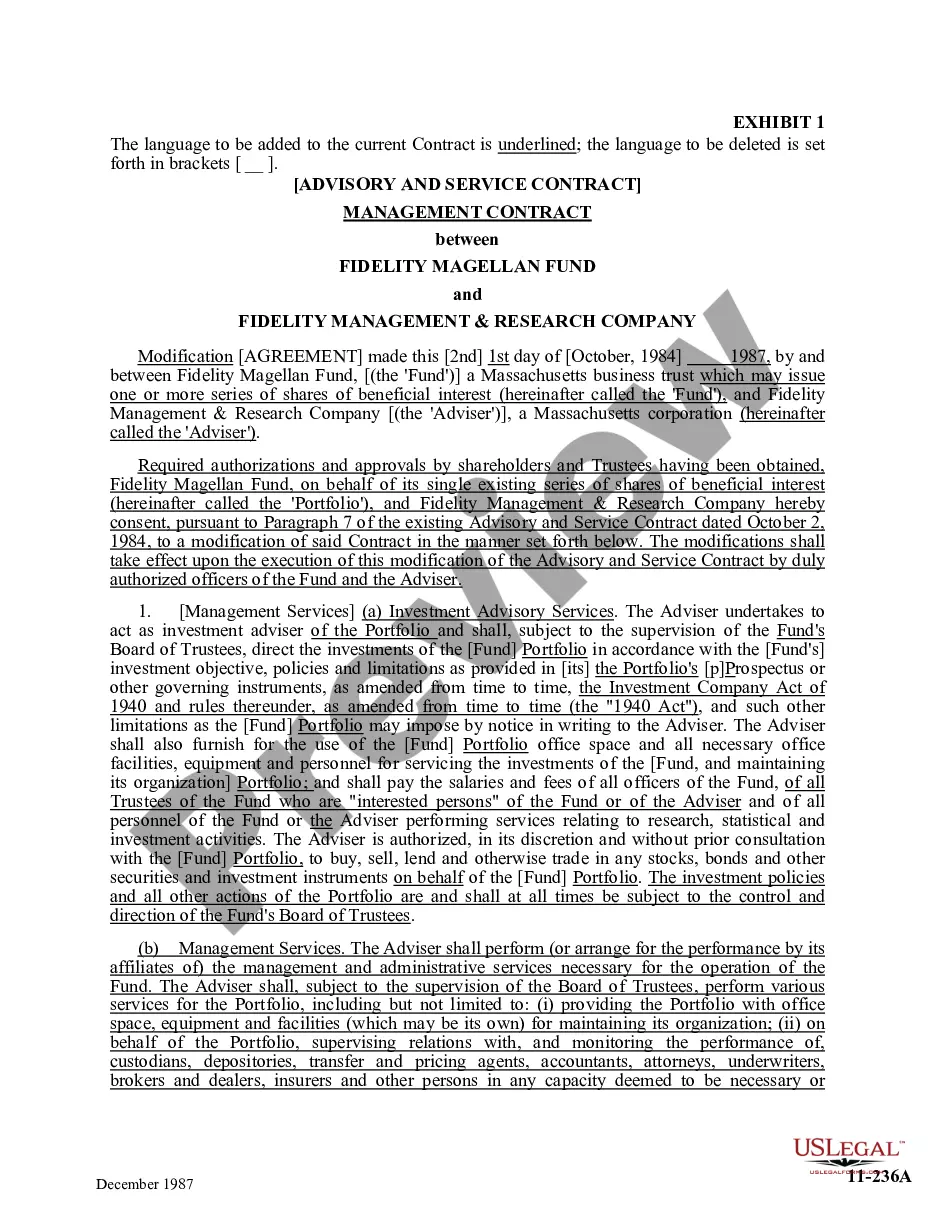
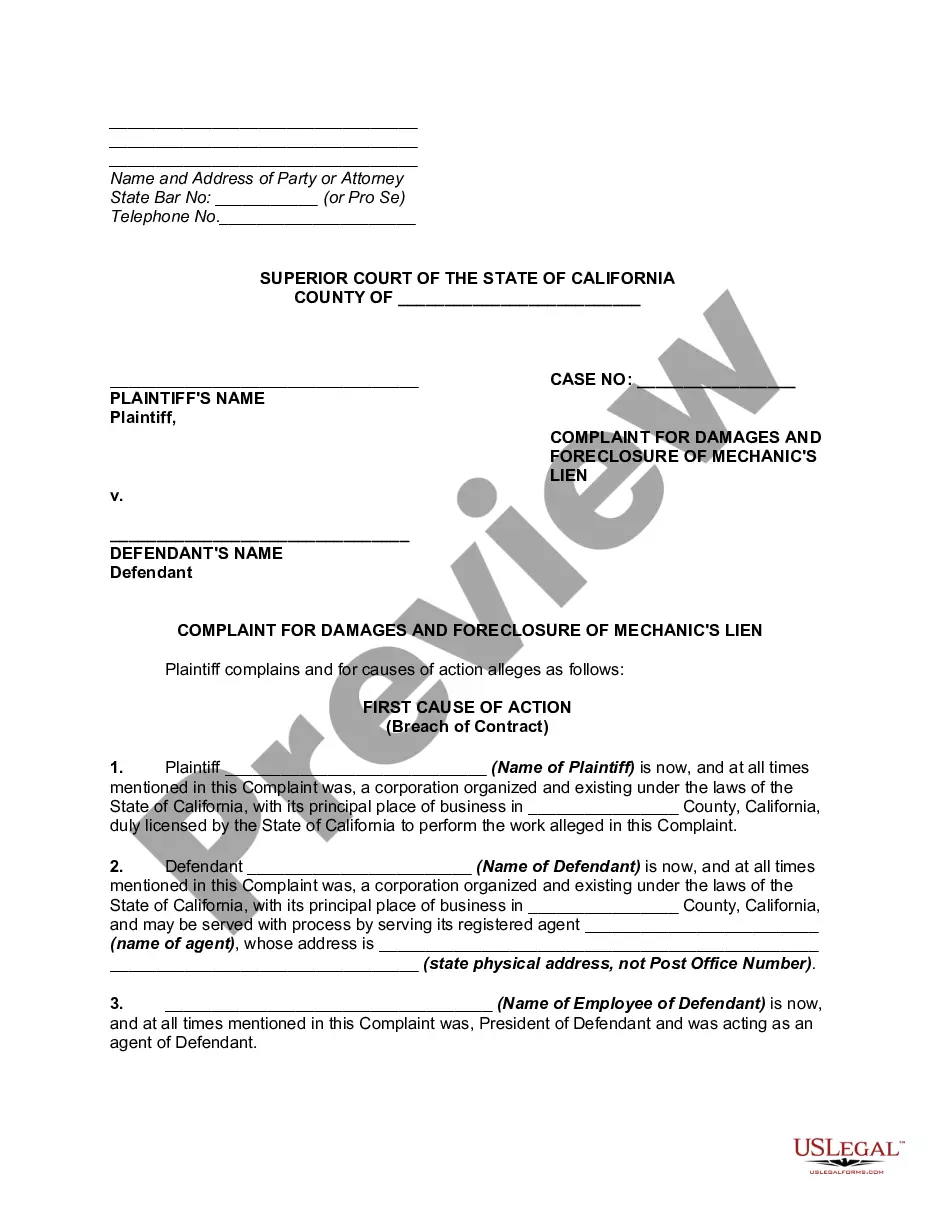
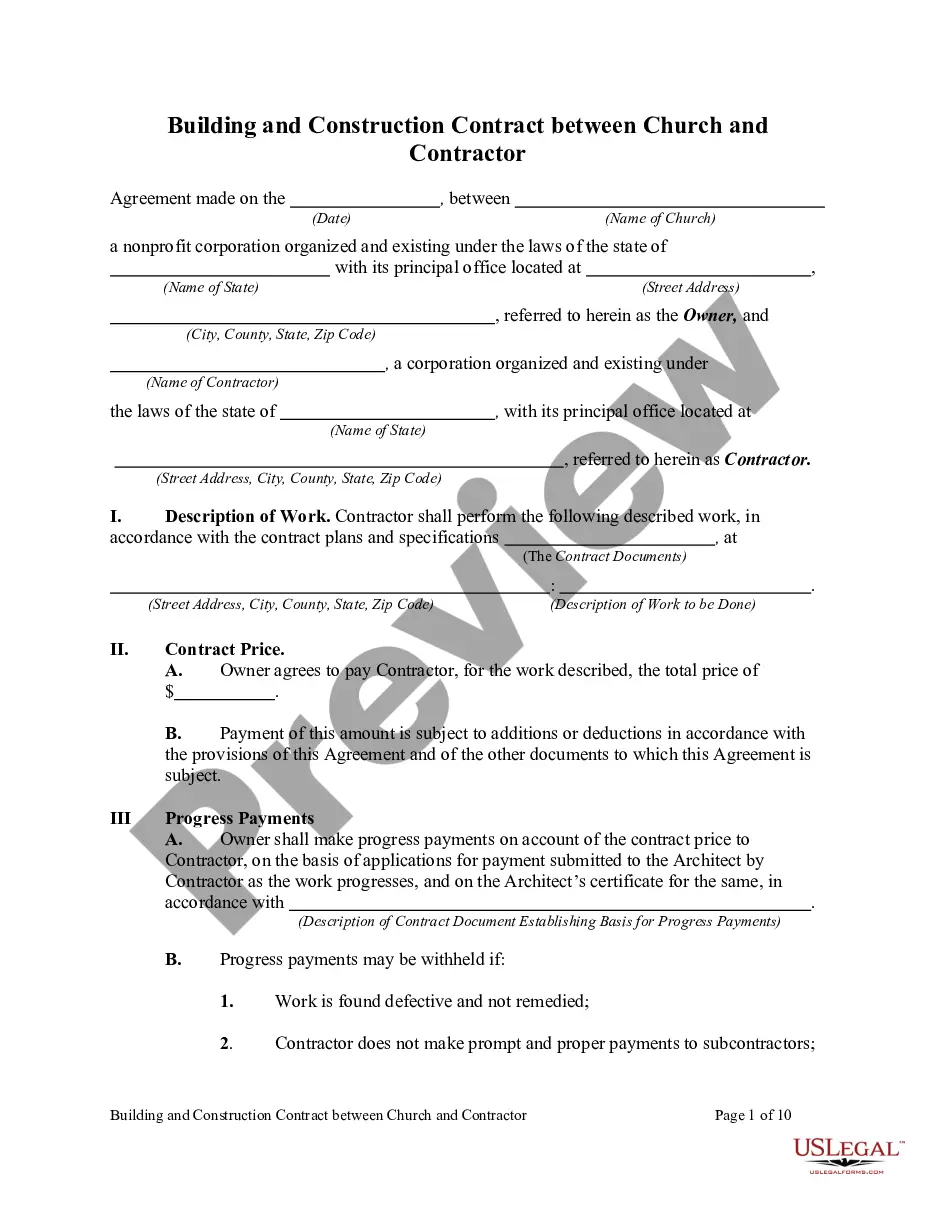
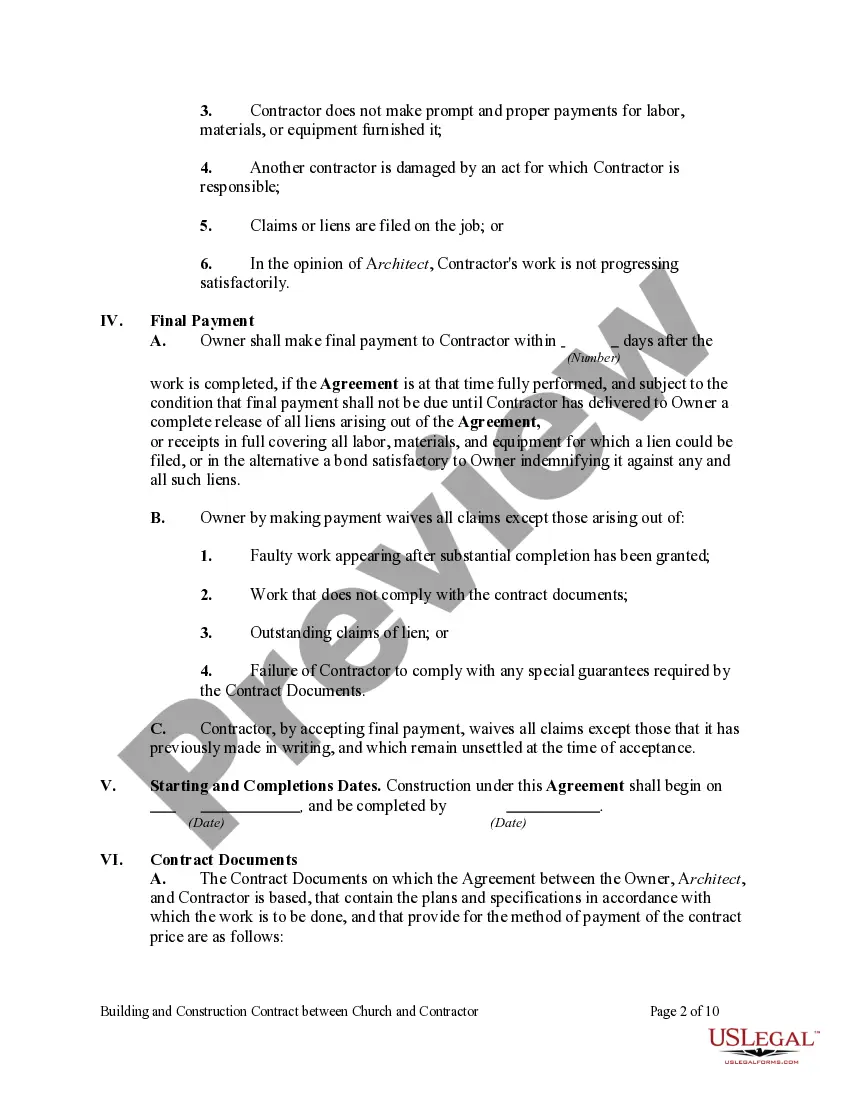
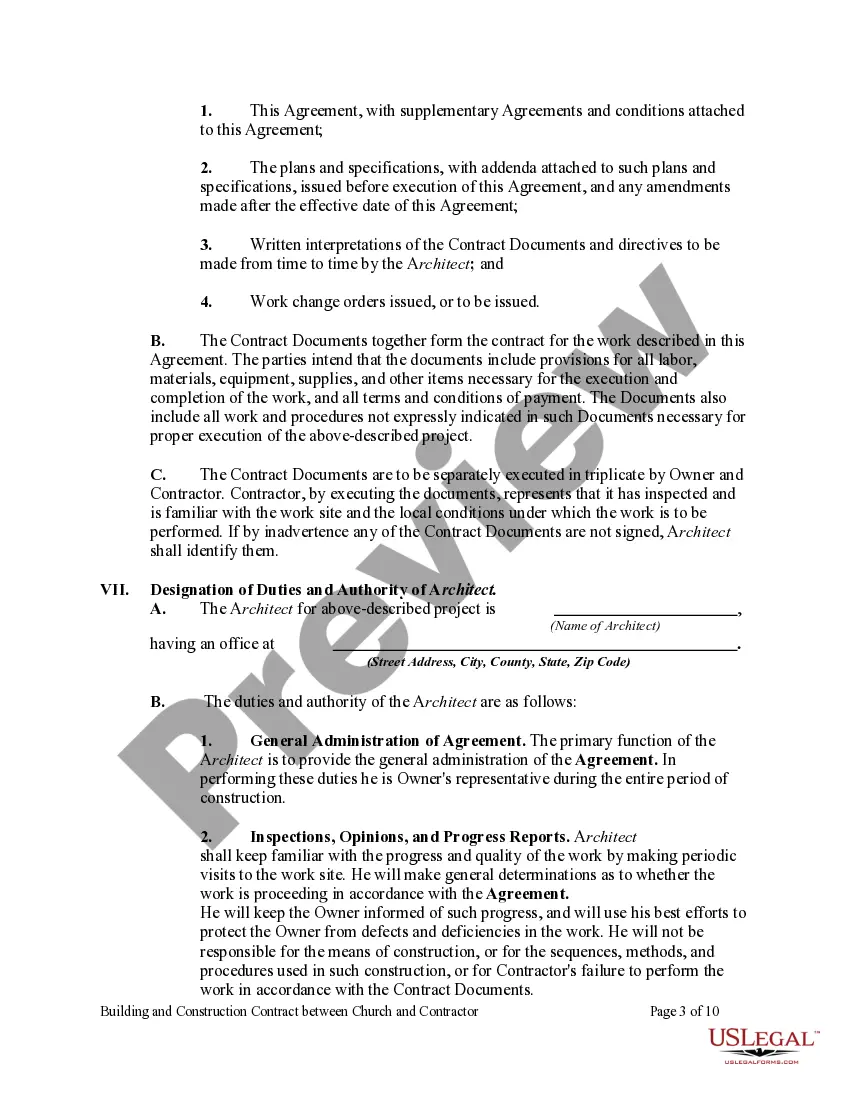
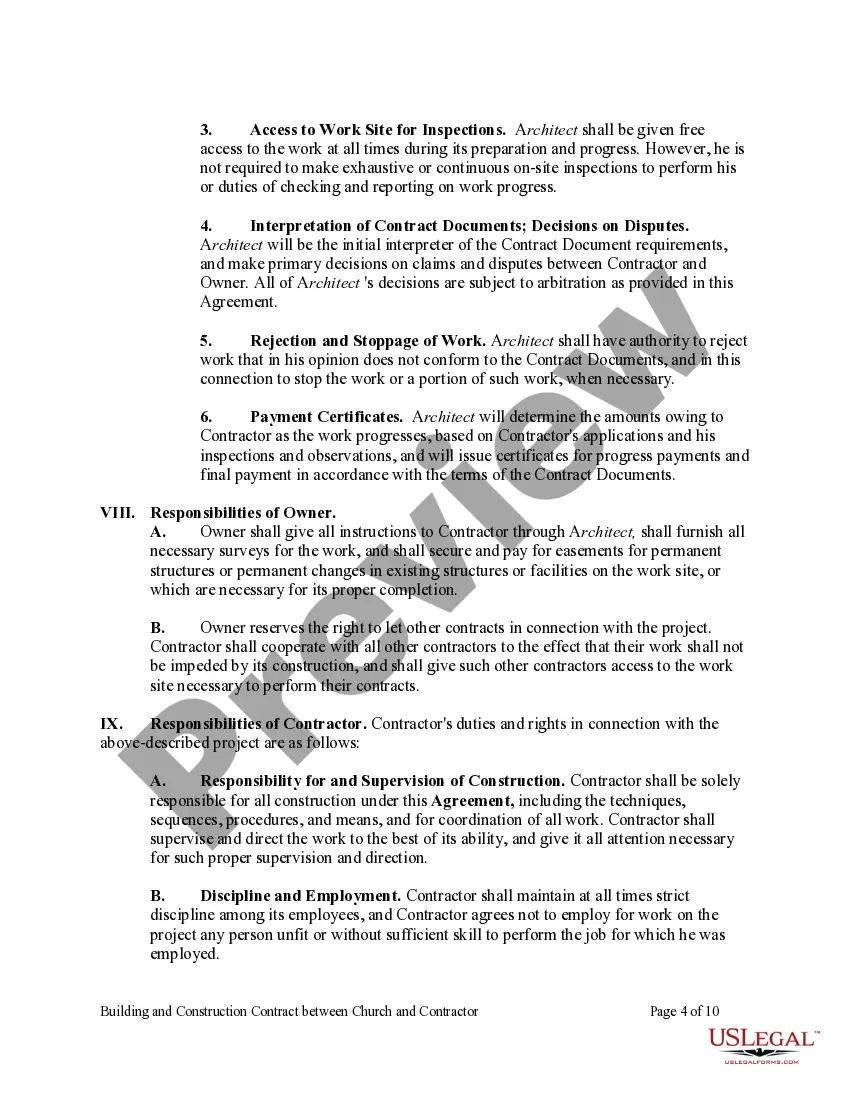
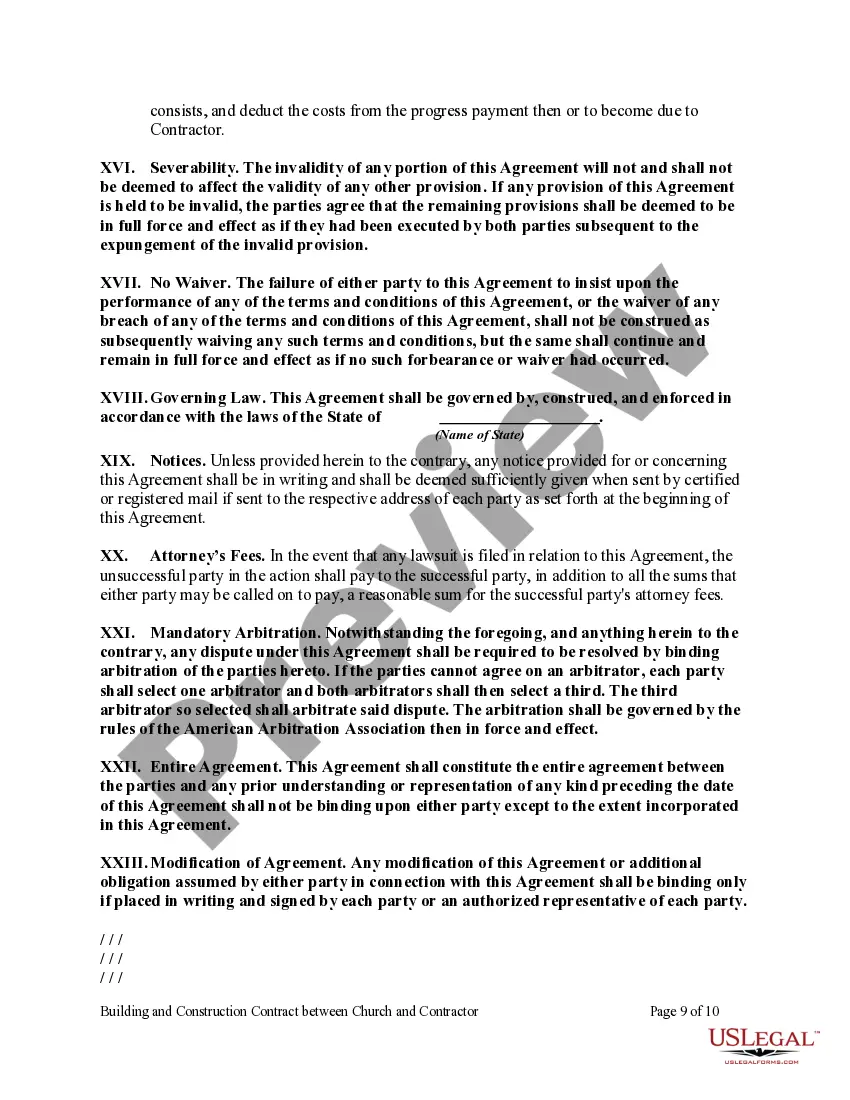
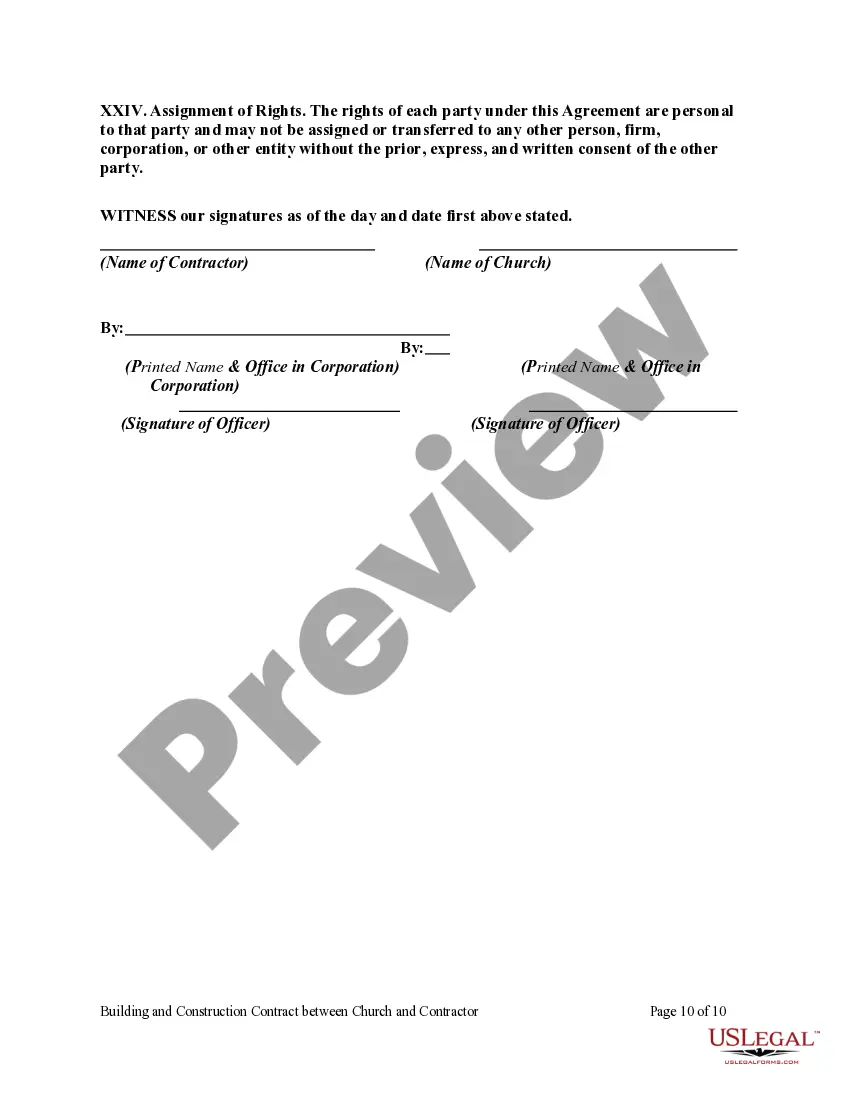
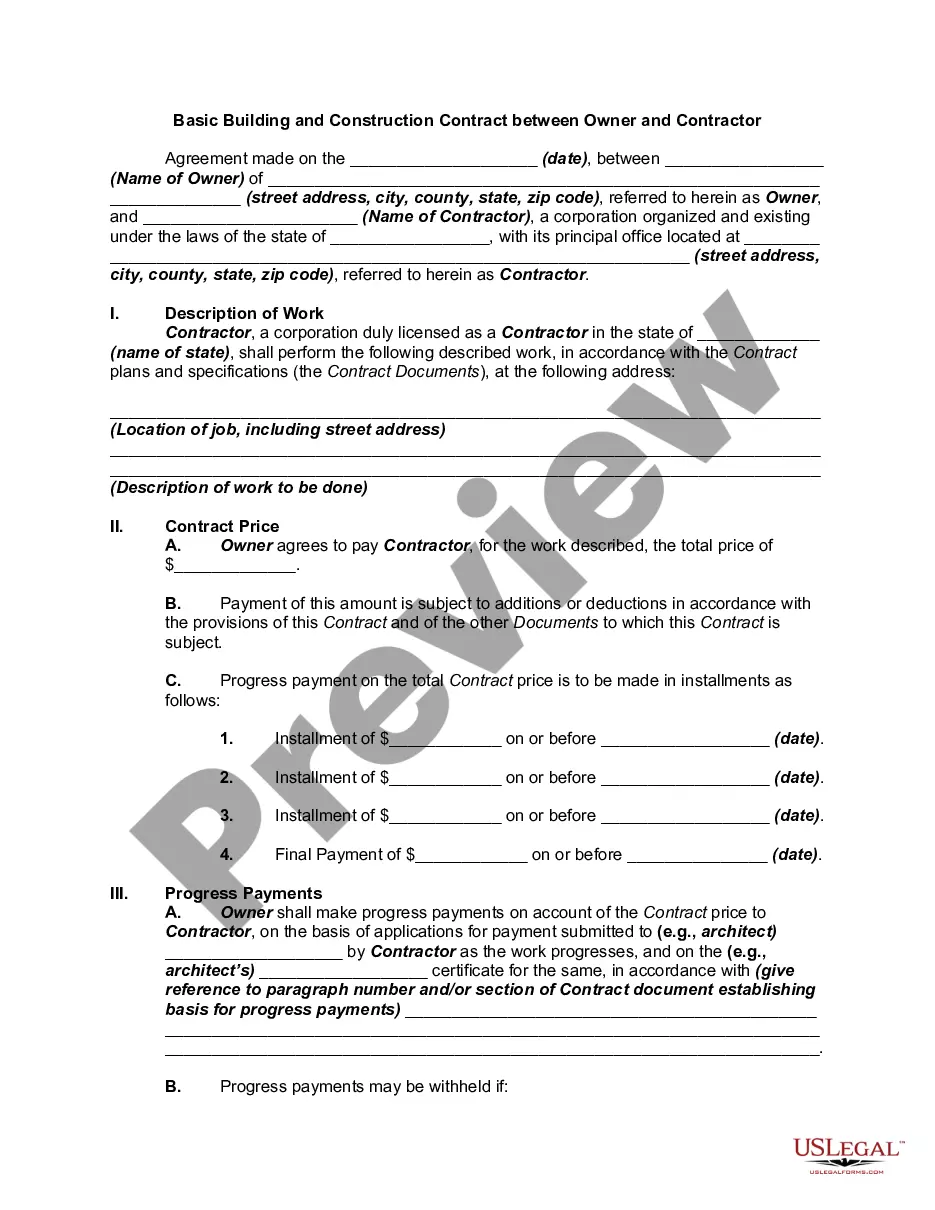
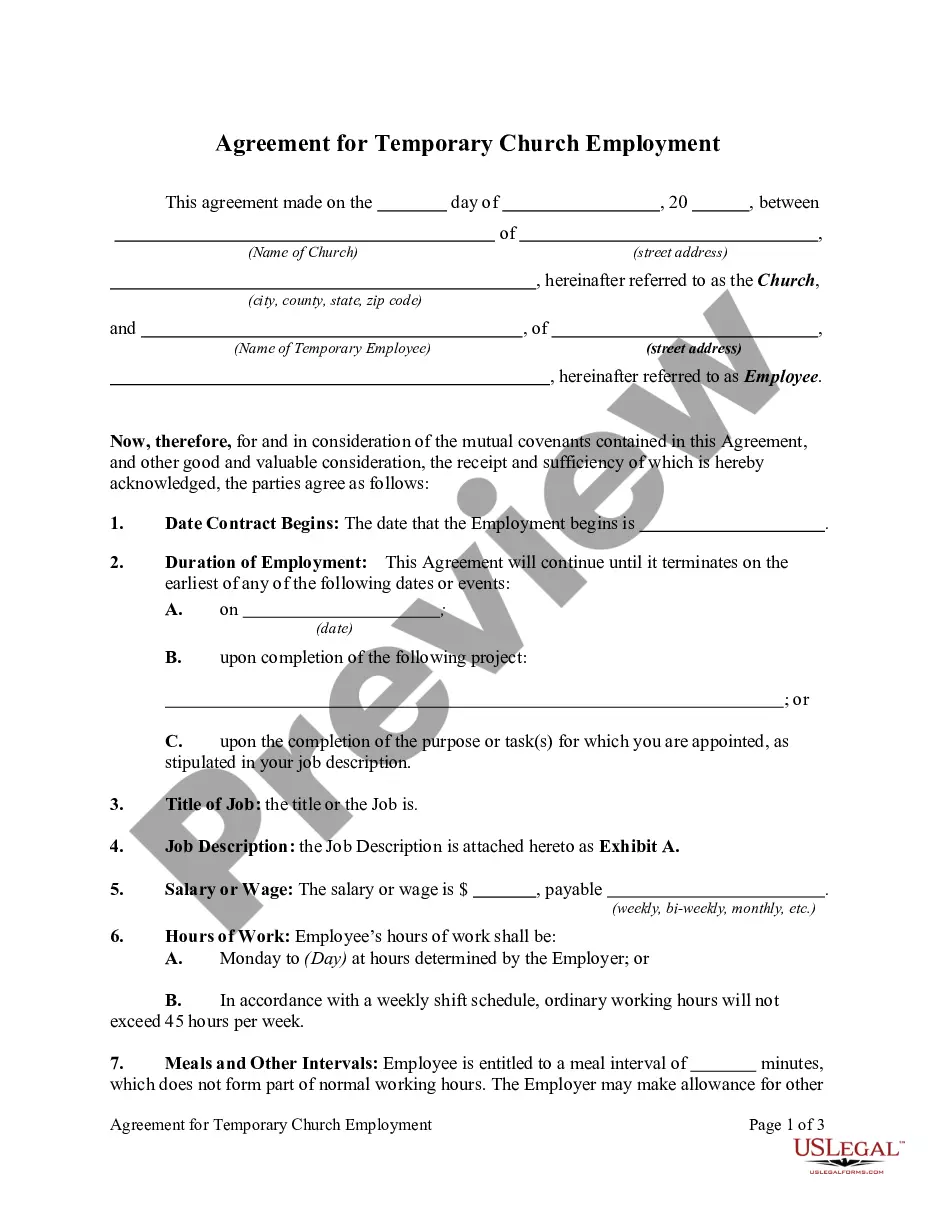
How to fill out Building And Construction Contract Between Church And Contractor?
- Log into your US Legal Forms account and ensure your subscription is current. If it has expired, renew it through your payment plan.
- Browse the Preview mode and read the form description to confirm you're selecting the correct Built to Suit Contrato that aligns with your local jurisdiction.
- If you require a different template, use the Search feature to find the appropriate form. Ensure it meets your legal requirements and move on to the next step.
- Click the Purchase button and choose the subscription plan that best fits your needs. Create an account to gain access to the entire library.
- Complete your purchase by entering your payment details, either via credit card or PayPal, to activate your subscription.
- Download the form to your device and fill it out. Access your documents anytime through the My Forms section of your profile.
By utilizing US Legal Forms, you gain access to one of the most robust legal form collections available, ensuring your documents are both precise and legally sound.
Take the first step towards effortlessly securing your legal documents today. Explore the vast resources that US Legal Forms offers!
Form popularity
FAQ
The key difference between build to spec and build-to-suit lies in customization. Build-to-suit projects are tailored to the tenant's needs, while build-to-spec refers to properties built to general market specifications without customization. Understanding this distinction can help businesses choose the right arrangement for their requirements, often leading to a more effective build-to-suit contrato.
An example of a build-to-suit is when a restaurant wants a location specifically designed with a kitchen layout that meets health regulations and customer flow preferences. The developer will construct the building based on these requirements, as stipulated in the build-to-suit contrato. Such projects allow businesses to optimize their functions and create a welcoming environment for patrons.
In most cases, the tenant is responsible for the costs associated with a build-out, especially for improvements specific to their needs. This can include changes to the layout or adding specialized equipment. A detailed contract should clarify these obligations, ensuring both the tenant and landlord have a mutual understanding of financial responsibilities.
Build-to-suit projects begin when a tenant identifies specific space requirements which the developer then uses to create a tailored building plan. After reaching an agreement, the developer constructs the building, and the tenant occupies it upon completion. This arrangement is beneficial because it aligns the property with the tenant’s operational needs, facilitated through a detailed build-to-suit contrato.
A tenant build-to-suit is a customized lease agreement where a property is constructed according to the specific needs of a tenant. This type of arrangement offers businesses the opportunity to design spaces that enhance their operations. Essentially, the build-to-suit contrato ensures that the property meets the exact specifications required by the tenant, making it a highly attractive option.
The build to suit clause is a specific provision within a leasing agreement outlining the responsibilities and expectations for the design and construction of a new property. This clause defines the scope of the work, who is responsible for financing, and timelines for completion. It ensures clarity between landlords and tenants during the development phase. Incorporating a well-drafted build to suit clause can prevent misunderstandings and foster a positive working relationship, making platforms like US Legal Forms invaluable for crafting effective agreements.
An example of a build to suit is when a company needs a warehouse designed for its logistics operations. In this scenario, the company collaborates with a developer to create a facility that includes specific loading docks, office space, and storage solutions. This customized approach ensures that the property meets all operational needs effectively. By opting for a build to suit contrato, the company maximizes its efficiency and enhances its competitive edge.
A tenant build to suit, or 'built to suit contrato,' is an arrangement where a space is tailored to meet the specific needs of a tenant. This can include the design and construction of the property based on the tenant's requirements. The goal is to create an efficient, functional environment that supports the tenant's business activities. By customizing the space, tenants can enhance their workflow and overall satisfaction.
A ground lease typically involves leasing land while the tenant constructs a building on that land, often giving them ownership of the improvement. In contrast, a build to suit lease encompasses a contract where the property is developed specifically for the tenant's use, often at the request of the tenant, reflecting their distinct requirements. Understanding these differences is vital when considering a built to suit contrato, as they significantly influence lease terms and responsibilities.
The correct terminology is 'built to suit.' This phrase highlights the completed nature of the construction tailored for a specific tenant’s needs. When entering a built to suit contrato, it is essential to ensure that all parties understand this definition to prevent confusion in the development process.