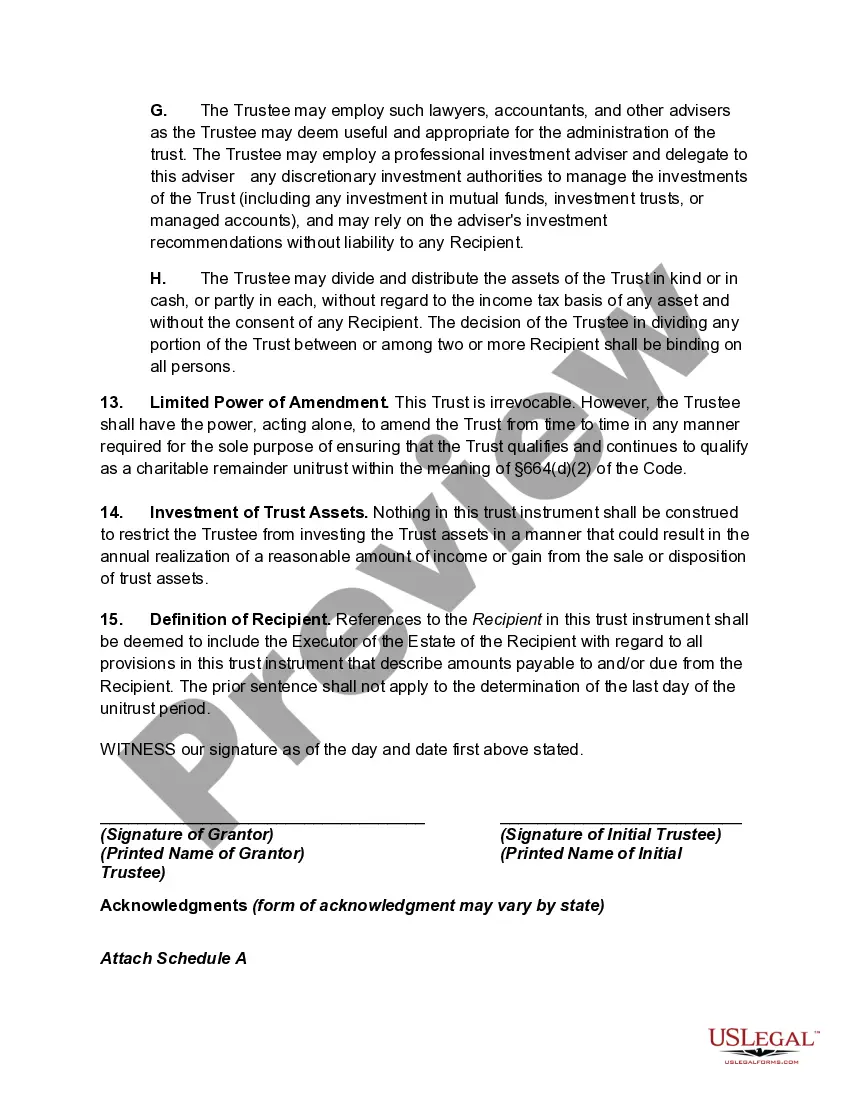
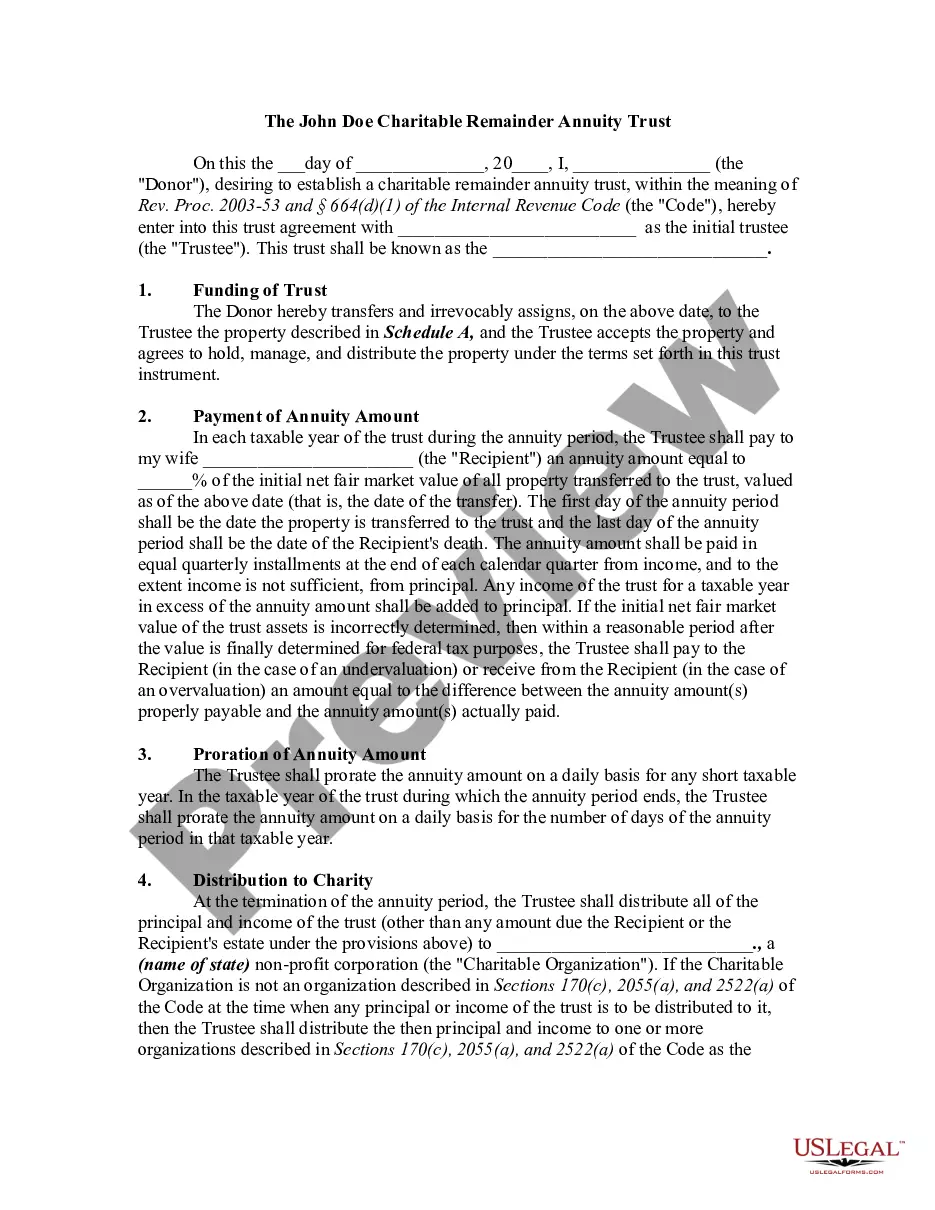
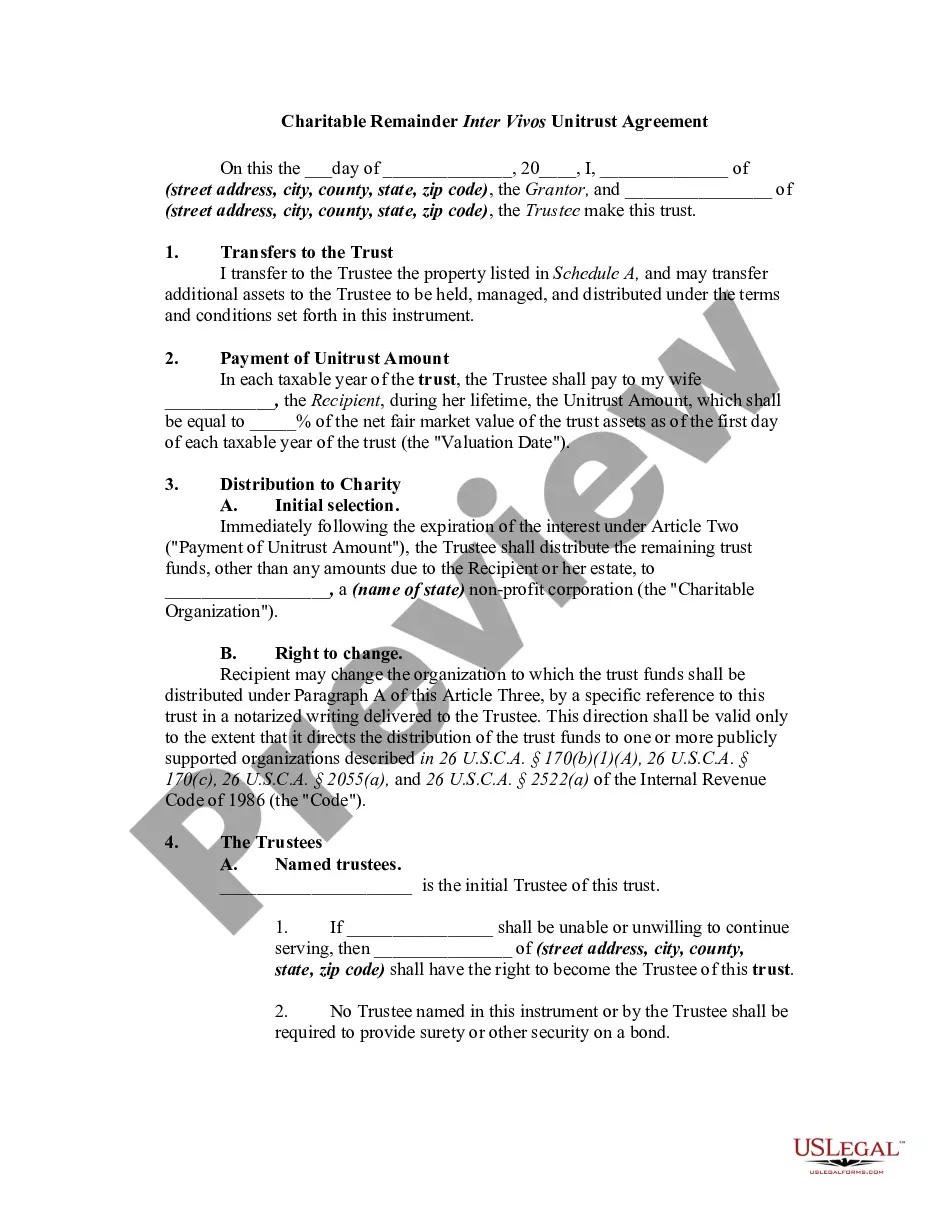
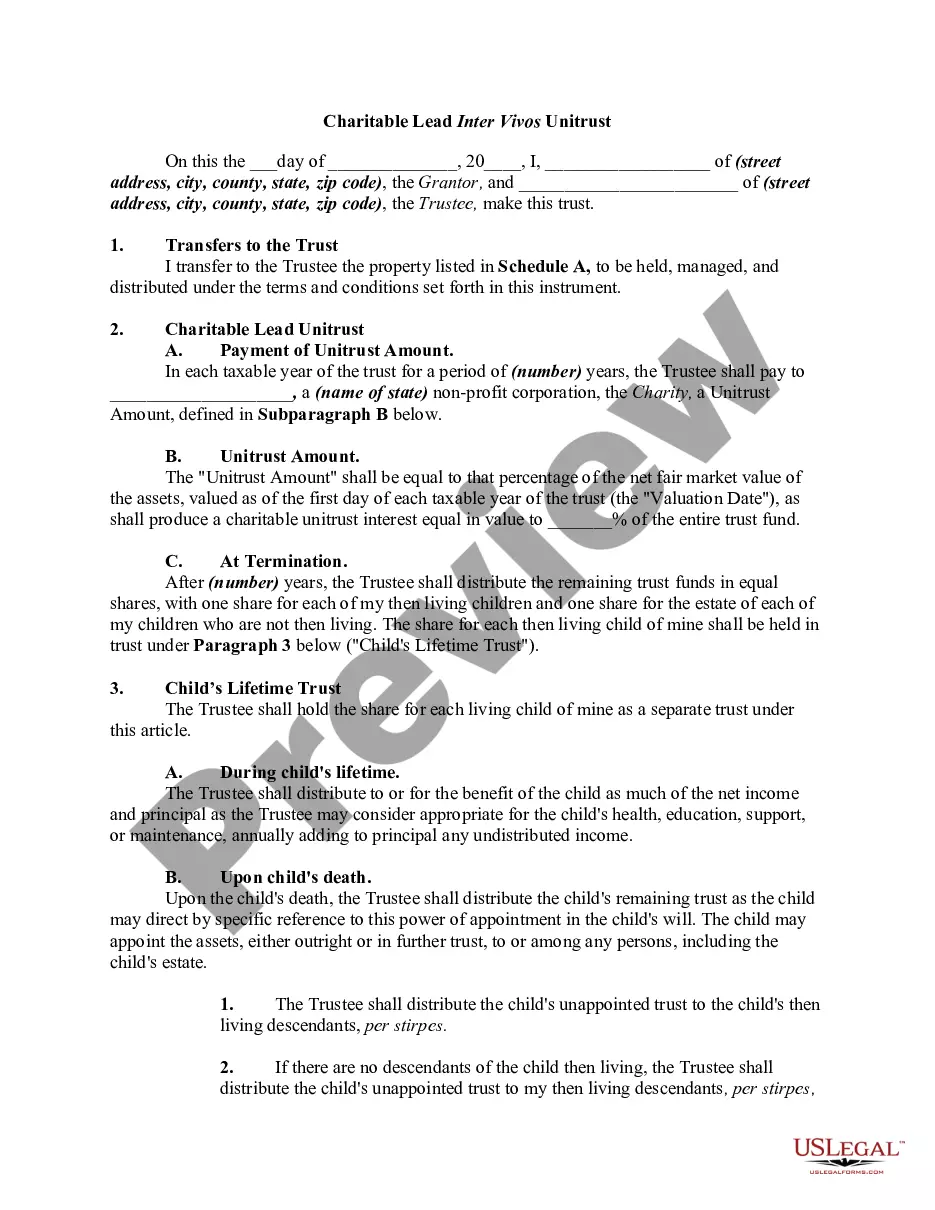
Charitable Remainder Trust With Life Estate
Description

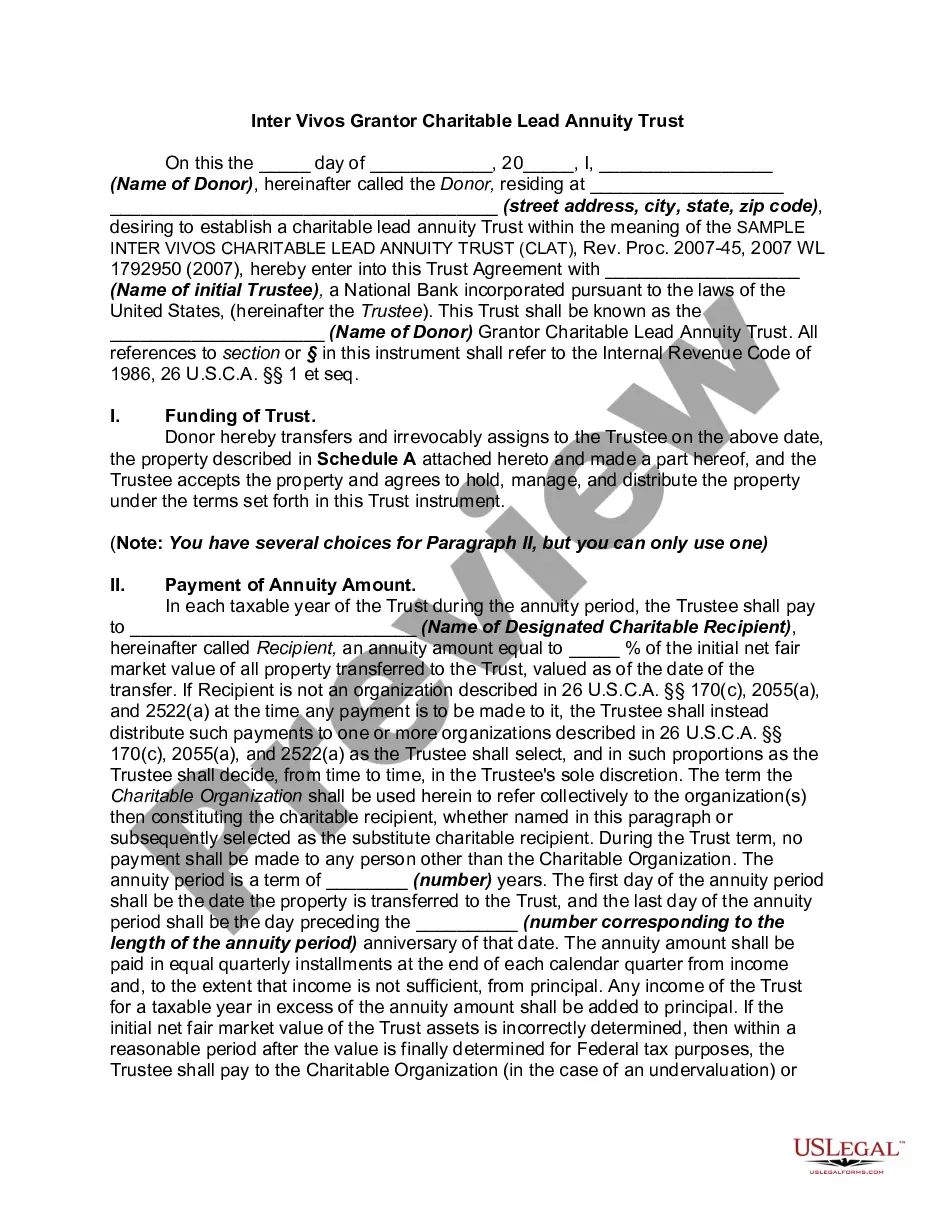
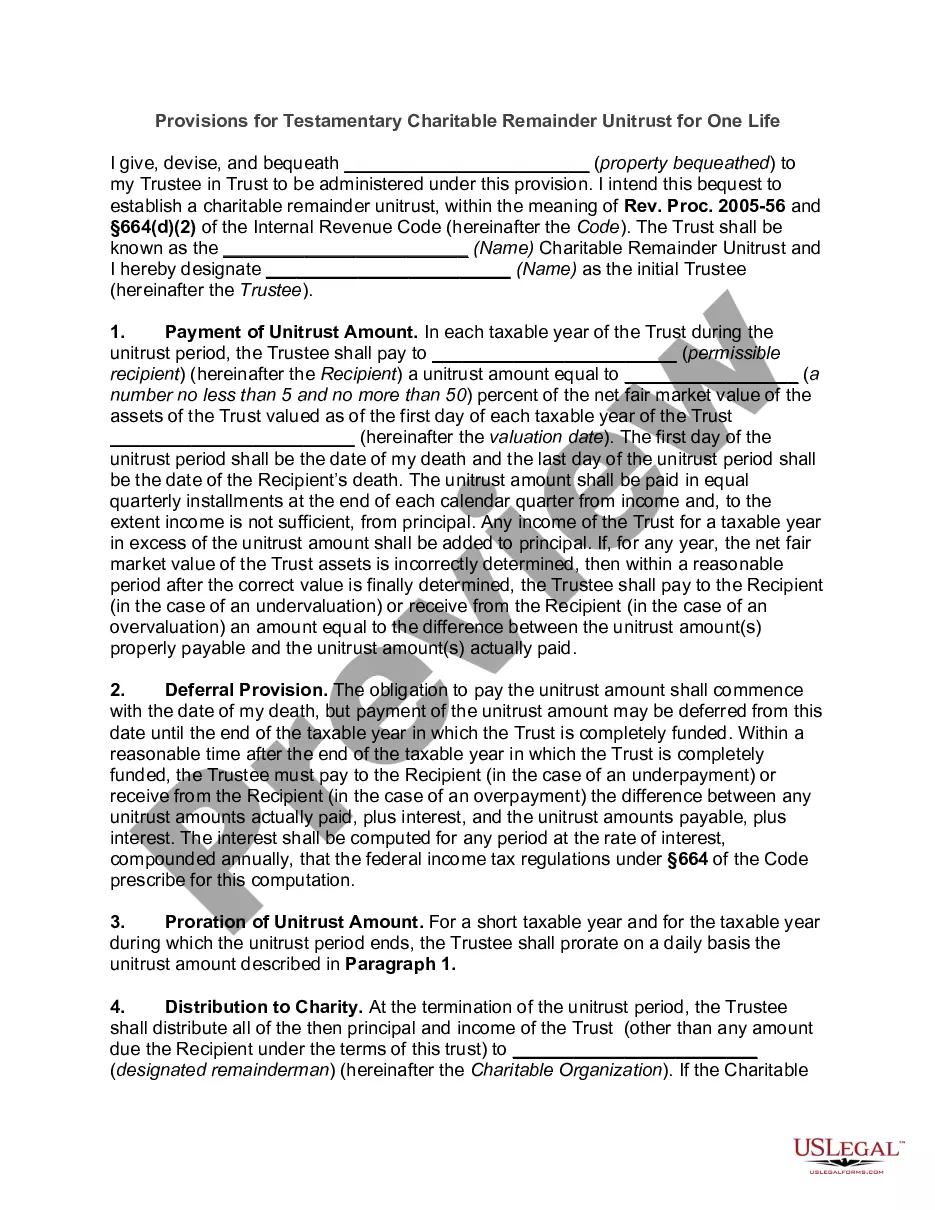
Get your form ready online
Our built-in tools help you complete, sign, share, and store your documents in one place.
Make edits, fill in missing information, and update formatting in US Legal Forms—just like you would in MS Word.
Download a copy, print it, send it by email, or mail it via USPS—whatever works best for your next step.
Sign and collect signatures with our SignNow integration. Send to multiple recipients, set reminders, and more. Go Premium to unlock E-Sign.
If this form requires notarization, complete it online through a secure video call—no need to meet a notary in person or wait for an appointment.
We protect your documents and personal data by following strict security and privacy standards.

Make edits, fill in missing information, and update formatting in US Legal Forms—just like you would in MS Word.

Download a copy, print it, send it by email, or mail it via USPS—whatever works best for your next step.

Sign and collect signatures with our SignNow integration. Send to multiple recipients, set reminders, and more. Go Premium to unlock E-Sign.

If this form requires notarization, complete it online through a secure video call—no need to meet a notary in person or wait for an appointment.

We protect your documents and personal data by following strict security and privacy standards.
Looking for another form?



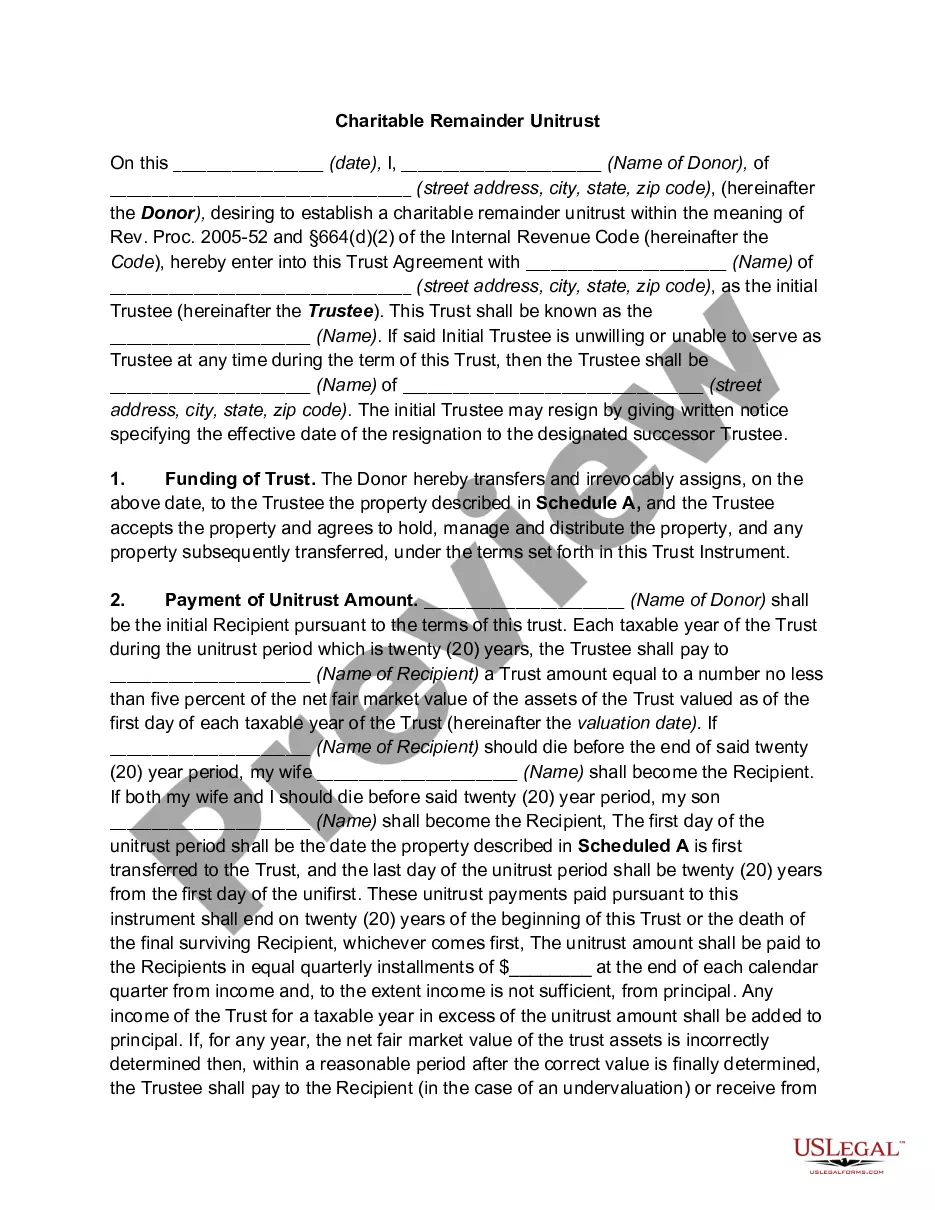
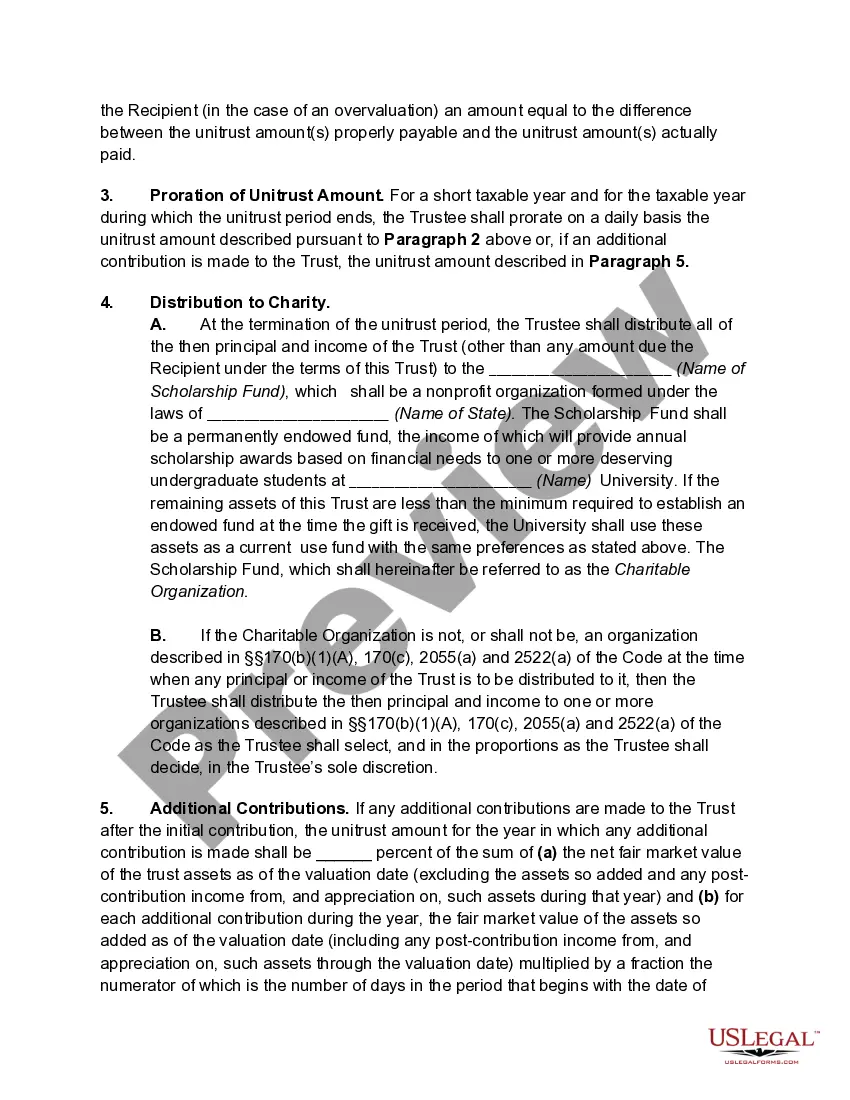
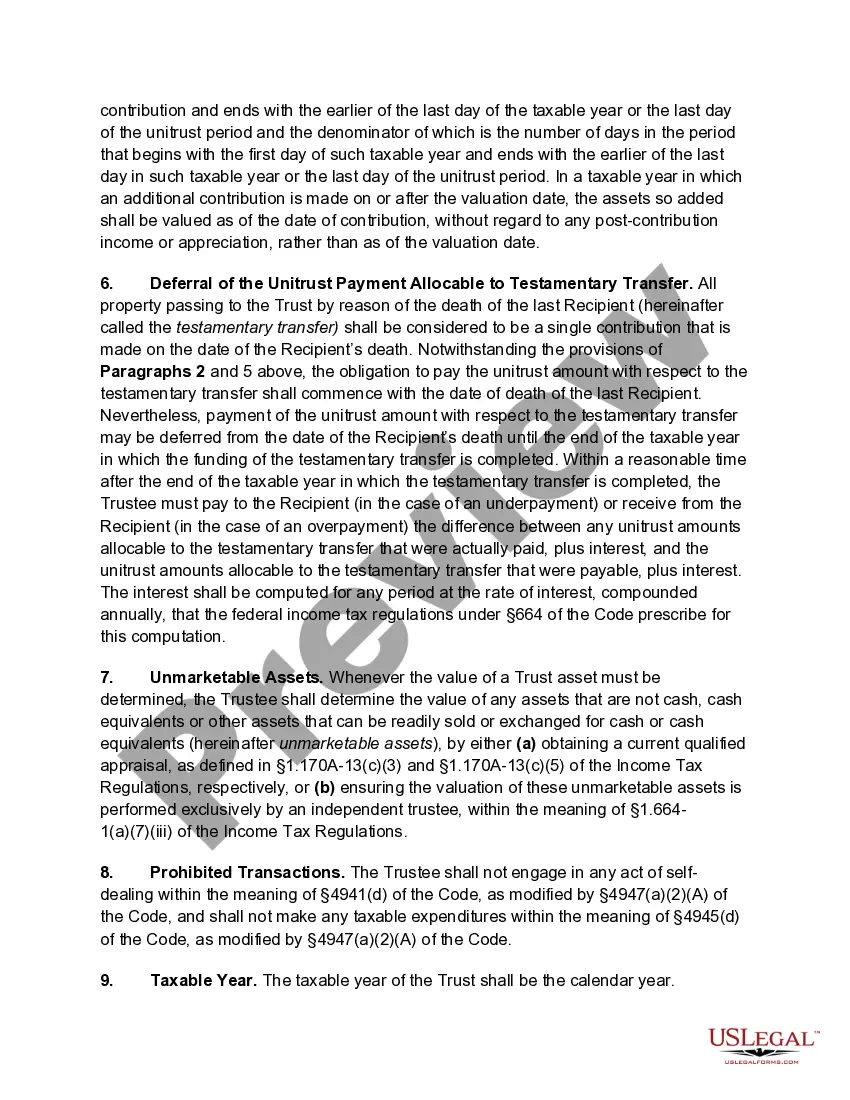
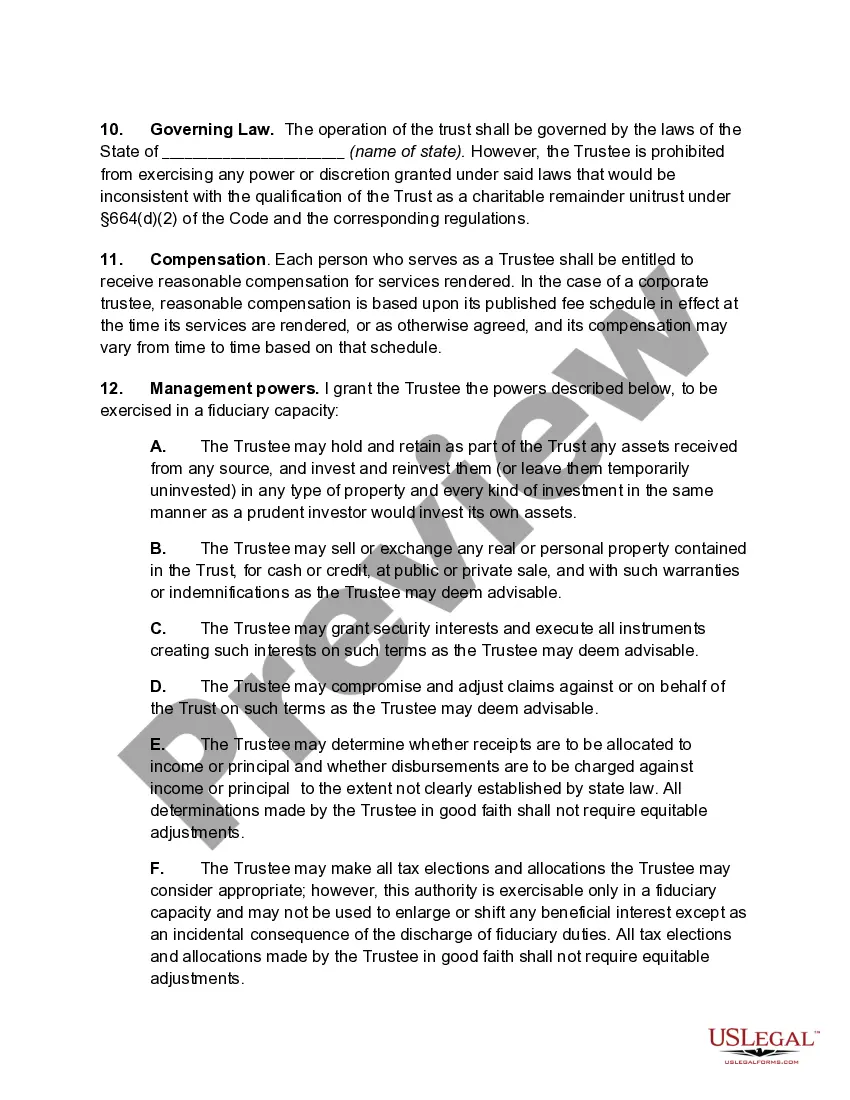
How to fill out Charitable Remainder Unitrust?
Managing legal documentation and processes can be a lengthy addition to your day.
Charitable Remainder Trust With Life Estate and similar forms frequently necessitate you to search for them and comprehend how to fill them out properly.
Thus, whether you are handling financial, legal, or personal issues, having a comprehensive and accessible online directory of forms readily available will be very beneficial.
US Legal Forms is the premier online platform for legal templates, providing over 85,000 state-specific documents and various resources to help you complete your paperwork effortlessly.
Is this your first time using US Legal Forms? Register and create your account in just a few minutes, and you'll gain access to the form catalog and Charitable Remainder Trust With Life Estate. Next, follow the instructions outlined below to fill out your form.
- Browse the collection of pertinent documents available with a single click.
- US Legal Forms provides you with state- and county-specific forms available at any time for download.
- Protect your document management processes by utilizing a high-quality service that enables you to create any form within minutes without any additional or concealed fees.
- Simply Log In to your account, locate Charitable Remainder Trust With Life Estate, and retrieve it directly from the My documents section.
- You can also access previously downloaded documents.
Form popularity
FAQ
The 10% rule for a charitable remainder trust with life estate stipulates that the present value of the charitable remainder must be at least 10% of the property’s value at the time of the trust's funding. This rule ensures that a significant portion of the trust's assets benefits charitable organizations. By adhering to this rule, you can maximize both your tax deduction and your charitable impact. Understanding these regulations is crucial for effective estate planning.
The Sixth Circuit Court of Appeals now allows citation of all unpublished opinions. See Sixth Circuit Rule 32.1. This was in response to a change in the Federal Rules of Appellate Procedure, mandating that for cases decided on and after Jan. 1, 2007, appellate courts may not restrict the citation of unpublished cases.
If no attorney is listed, mail it directly to the plaintiff. Mail it on the date you indicated in your answer document. Take your original answer and an extra copy to the court address listed on the summons. The clerk will timestamp your copy and give it back to you to keep like a receipt.
Rule 41(A) Continuances; granting of. The requirement that the motion be signed by the party may be waived by the trial judge, for good cause. If a continuance is granted, the court shall, at that time, reset the trial or hearing for a definite date.
As used in sections 2329.021 to 2329.027 of the Revised Code, "foreign judgment" means any judgment, decree, or order of a court of the United States, or of any court of another state, that is entitled to full faith and credit in this state.
A party may waive the right to a foreign language interpreter under division (A) of this rule or sign language interpreter under division (B) of this rule, unless the court has determined the interpreter is required for the protection of the party's rights and the integrity of the case or court function.
These rules shall be known as the Rules of Superintendence for the Courts of Ohio and shall be cited as "Sup. R. _."
Decided, the volume and page number of the official reporter where the case appears, and the page number in the case that specifically supports the proposition of law you are stating. For example, a California Supreme Court case would be cited as follows: Intel Corp. v. Hamidi (2003) 30 Cal.
(E) Restricting public access to a case document (1) Any party to a judicial action or proceeding or other person who is the subject of information in a case document may, by written motion to the court, request that the court restrict public access to the information or, if necessary, the entire document.