Special Needs Trust Taxation Withdrawals
Description
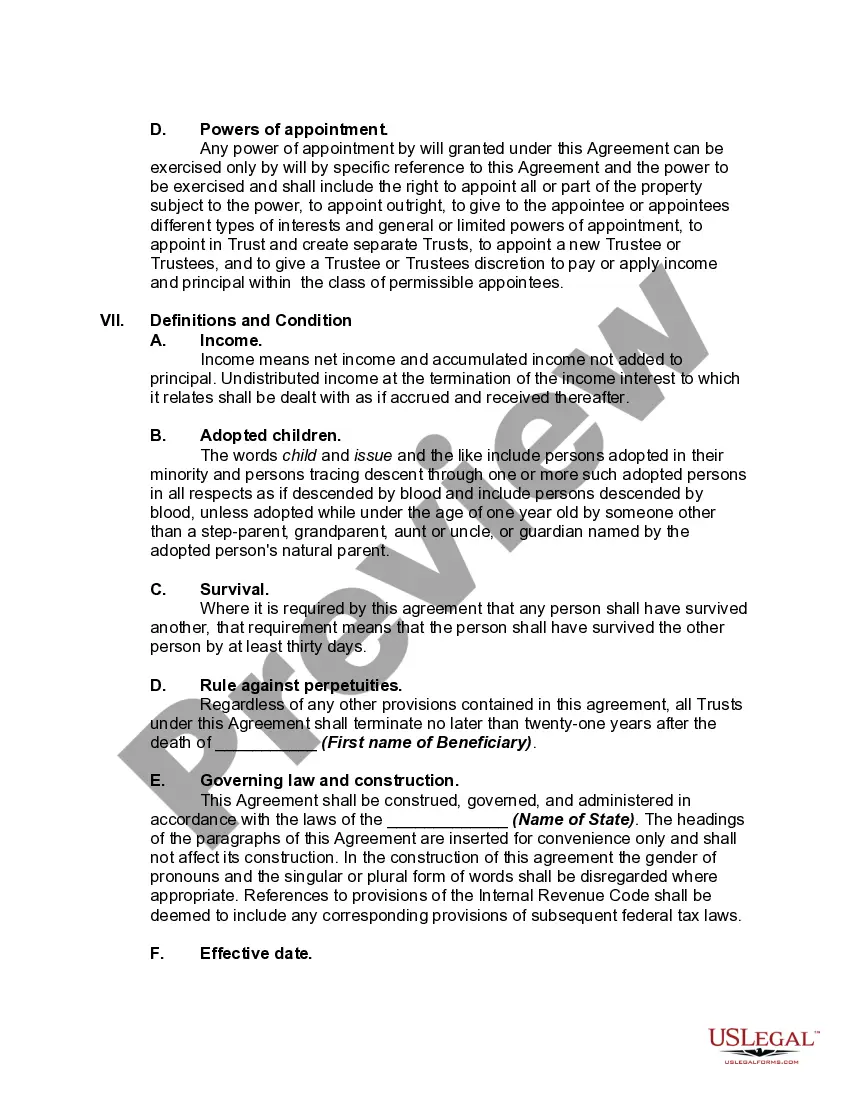
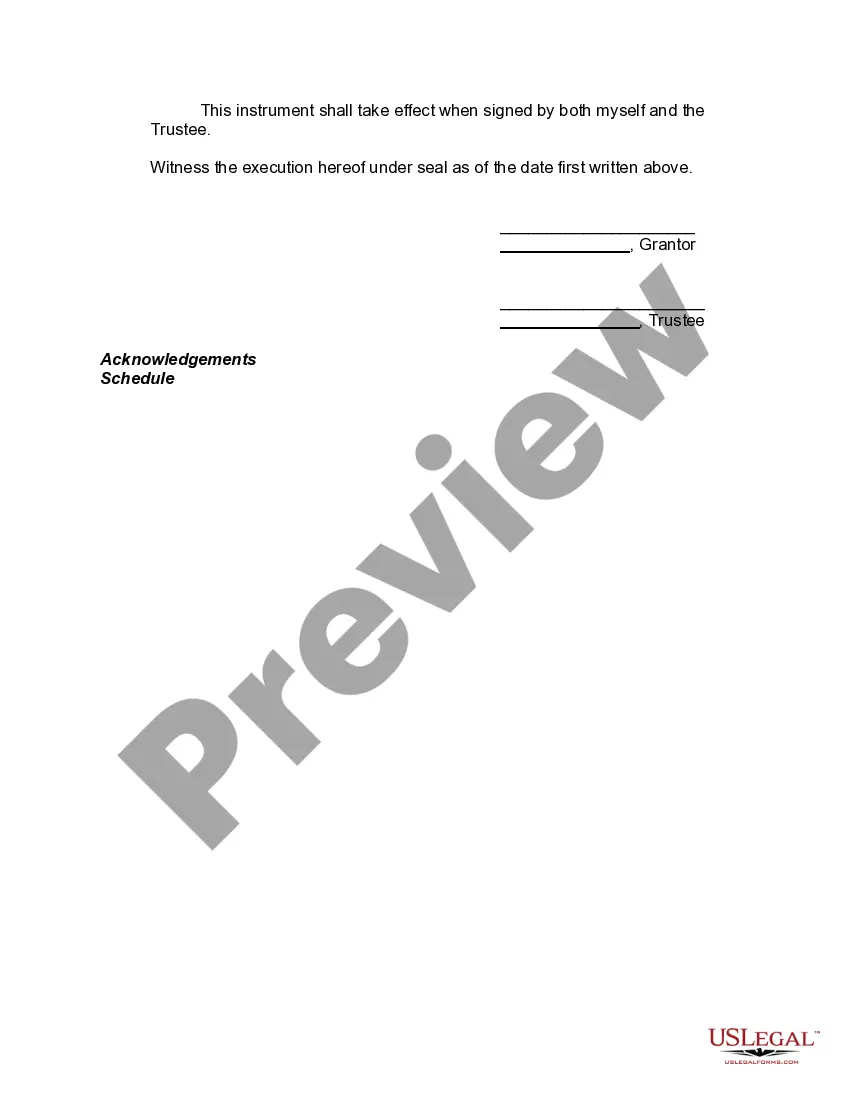

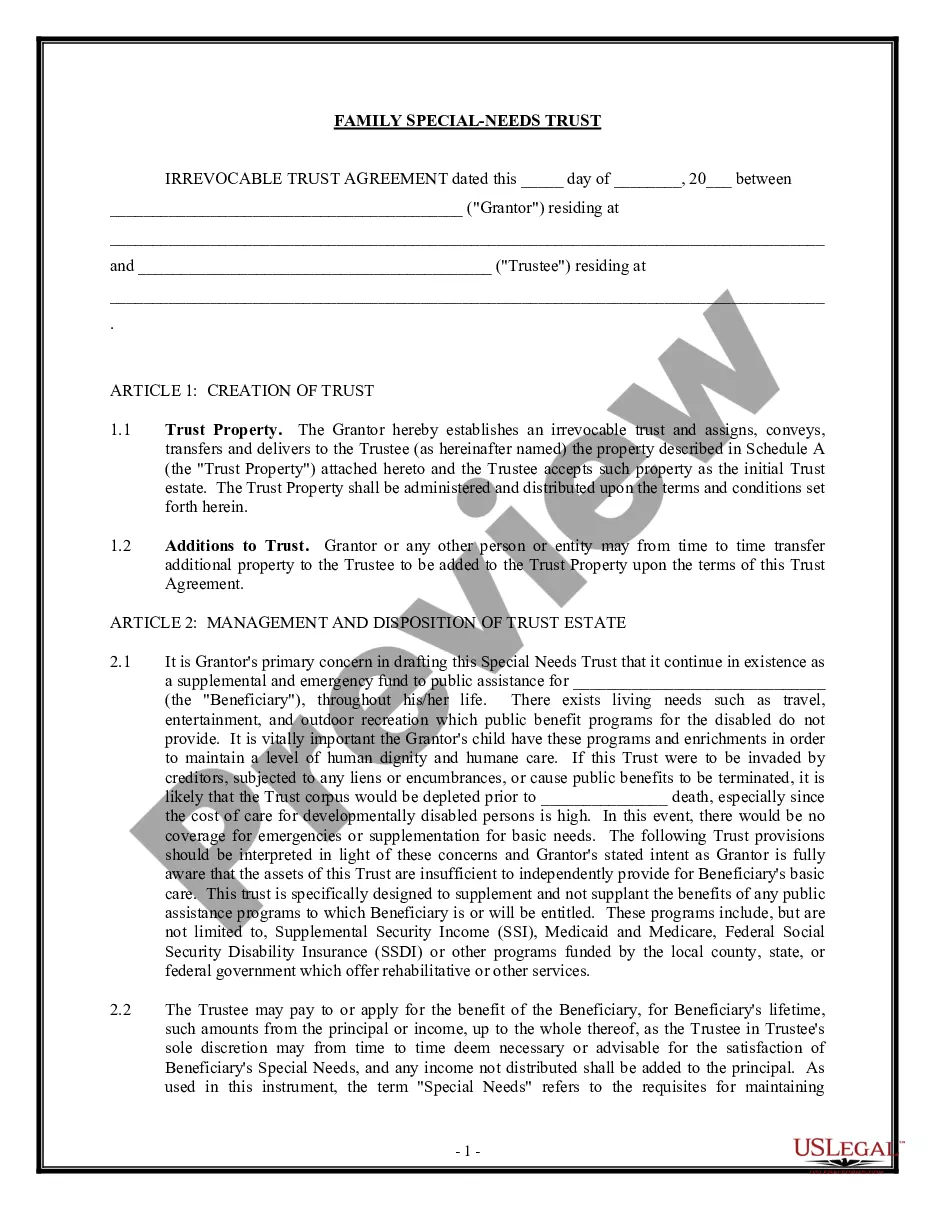

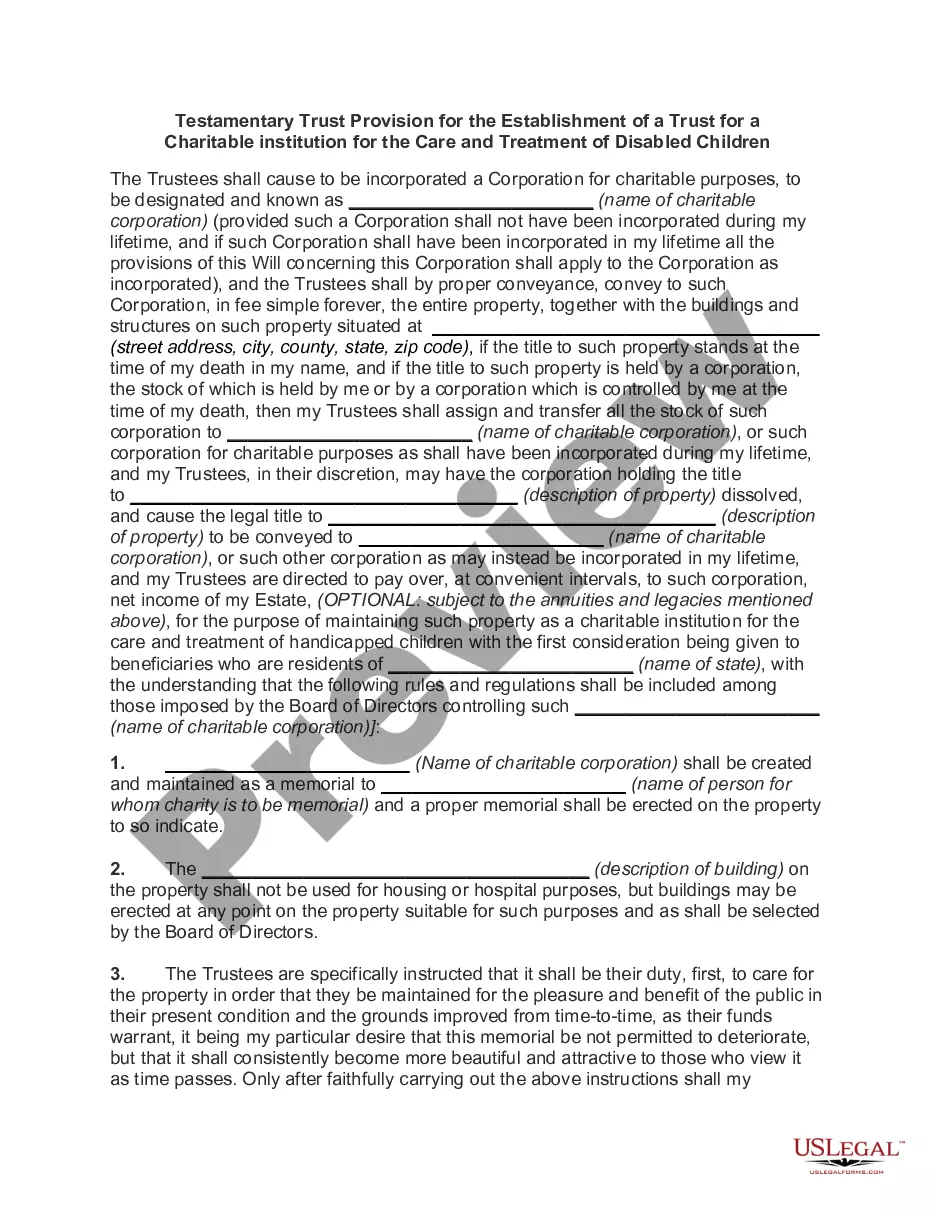
Get your form ready online
Our built-in tools help you complete, sign, share, and store your documents in one place.
Make edits, fill in missing information, and update formatting in US Legal Forms—just like you would in MS Word.
Download a copy, print it, send it by email, or mail it via USPS—whatever works best for your next step.
Sign and collect signatures with our SignNow integration. Send to multiple recipients, set reminders, and more. Go Premium to unlock E-Sign.
If this form requires notarization, complete it online through a secure video call—no need to meet a notary in person or wait for an appointment.
We protect your documents and personal data by following strict security and privacy standards.

Make edits, fill in missing information, and update formatting in US Legal Forms—just like you would in MS Word.

Download a copy, print it, send it by email, or mail it via USPS—whatever works best for your next step.

Sign and collect signatures with our SignNow integration. Send to multiple recipients, set reminders, and more. Go Premium to unlock E-Sign.

If this form requires notarization, complete it online through a secure video call—no need to meet a notary in person or wait for an appointment.

We protect your documents and personal data by following strict security and privacy standards.
Looking for another form?






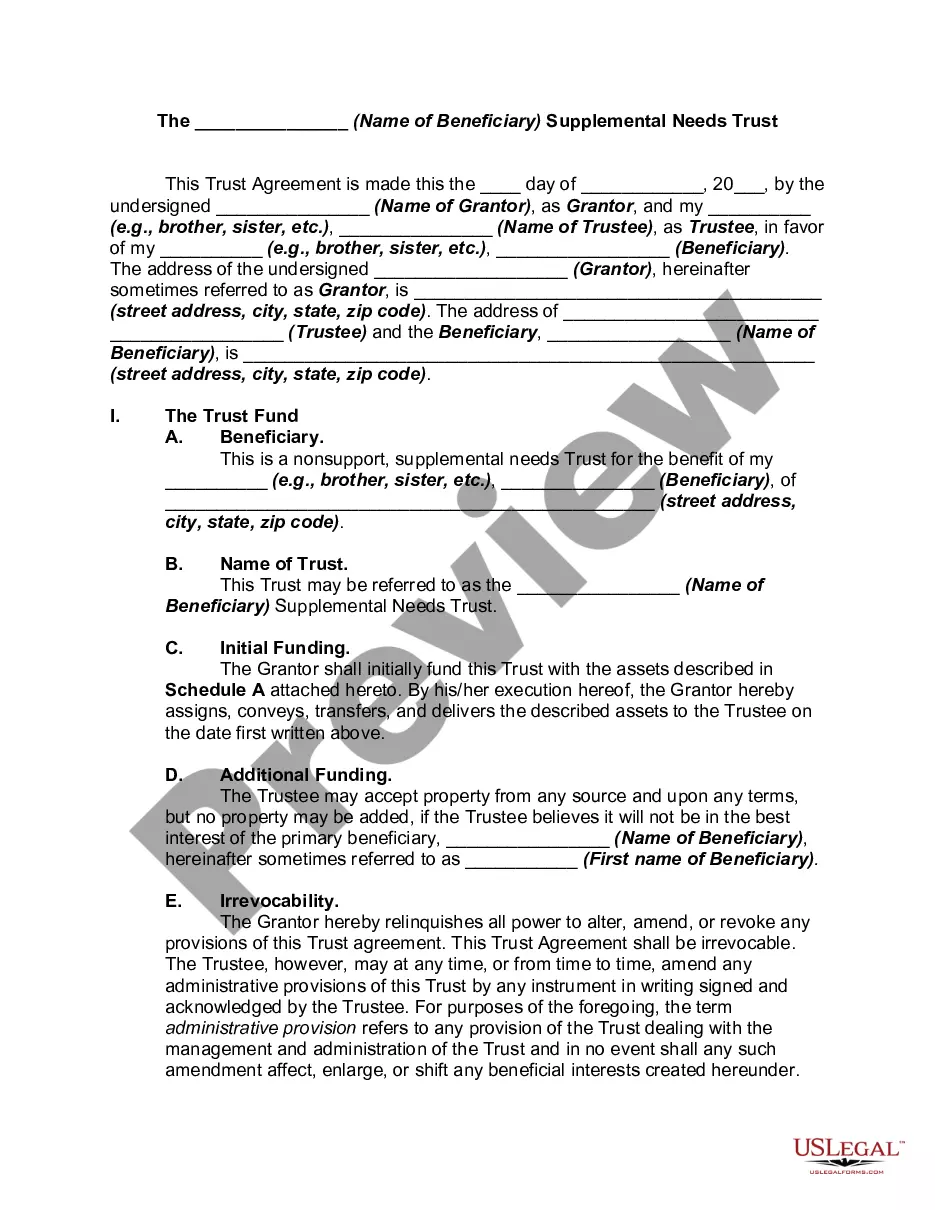
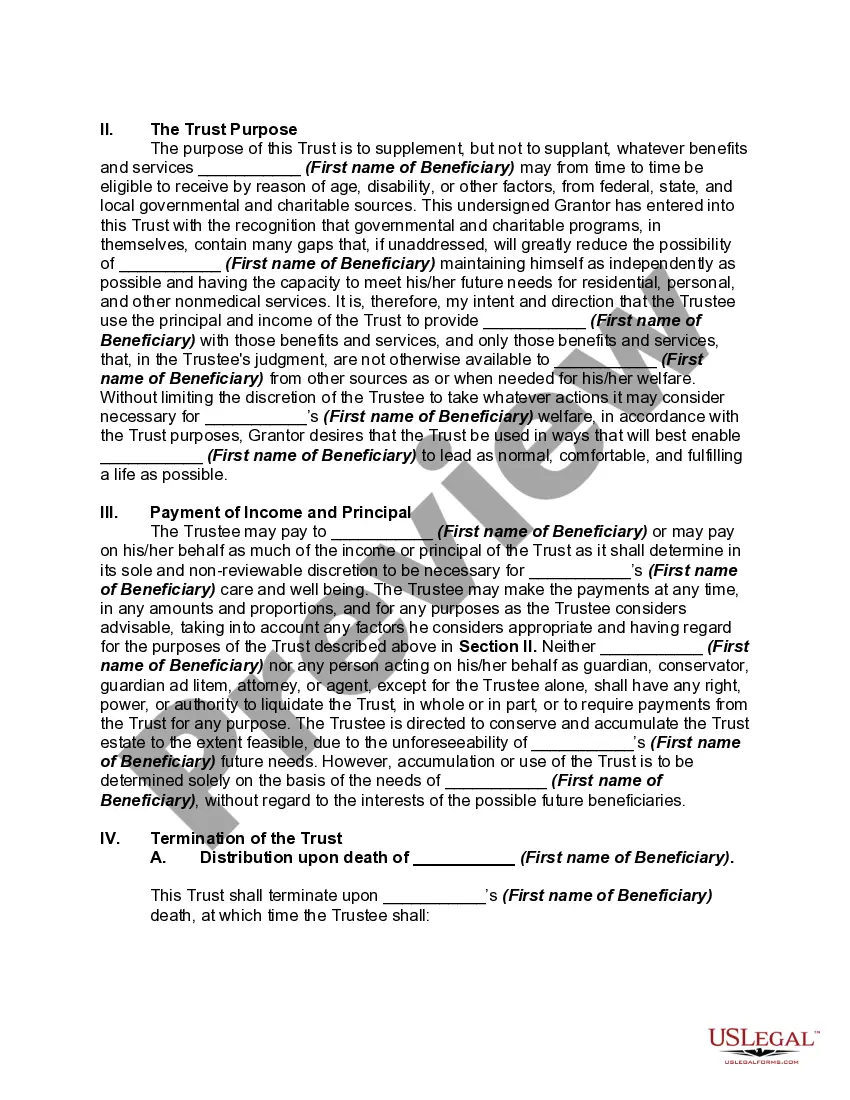
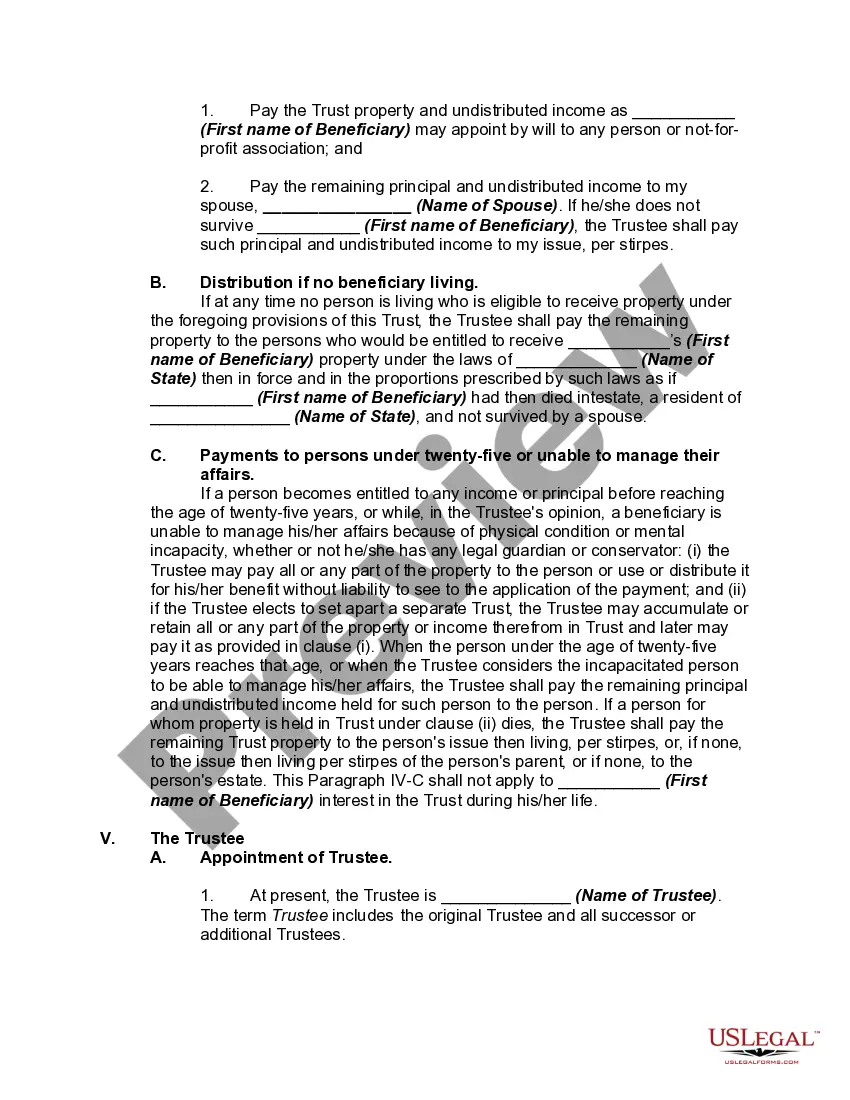
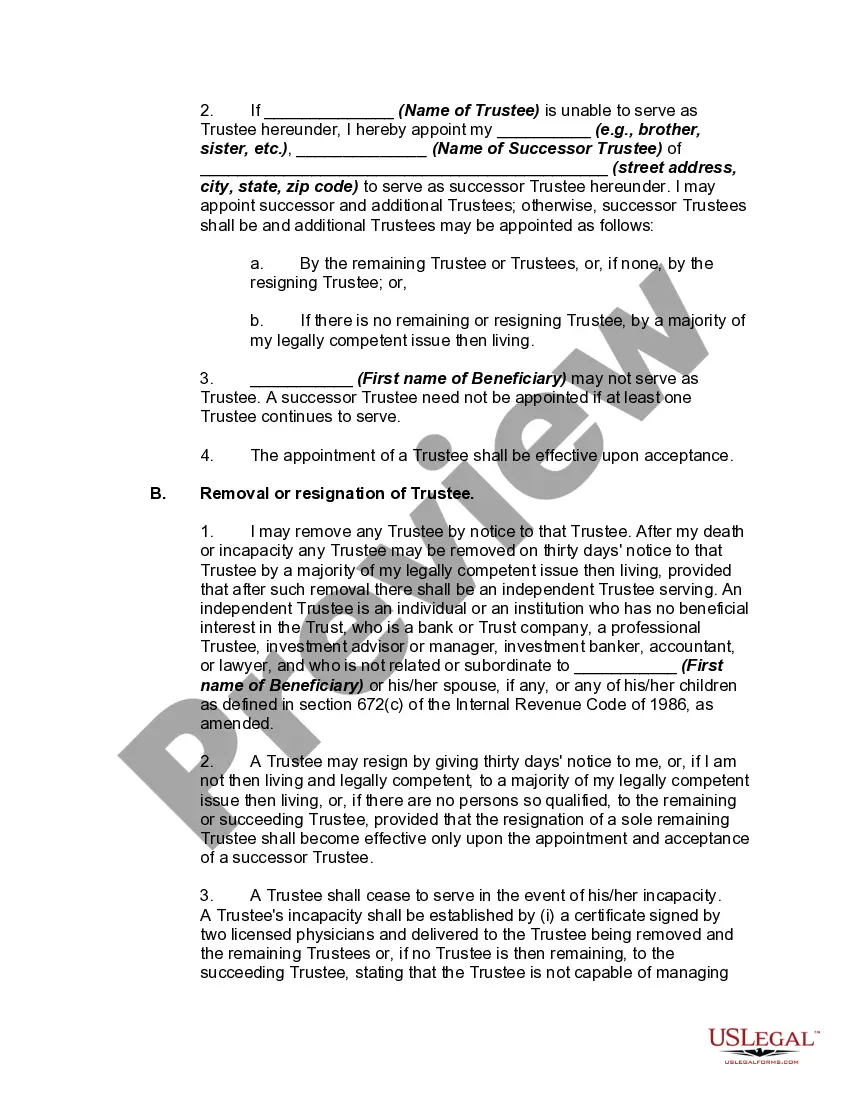
How to fill out Supplemental Needs Trust For Third Party - Disabled Beneficiary?
Handling legal documentation and procedures can be a labor-intensive addition to your schedule.
Special Needs Trust Taxation Withdrawals and similar forms generally necessitate you to seek them out and comprehend how to fill them out correctly.
Thus, whether you are managing financial, legal, or personal affairs, having a detailed and effective online directory of forms accessible to you will significantly help.
US Legal Forms is the premier online service for legal templates, showcasing over 85,000 state-specific documents and a range of resources that will assist you in completing your paperwork with ease.
Simply Log In to your account, find Special Needs Trust Taxation Withdrawals and download it immediately from the My documents section. You can also access previously downloaded documents.
- Browse the directory of suitable documents available to you with just one click.
- US Legal Forms provides you with state- and county-specific documents ready for download at any time.
- Protect your document management processes by utilizing a top-notch service that allows you to prepare any document in moments without extra or hidden charges.
Form popularity
FAQ
If assets are taken out of a trust The trustees usually have to pay the tax if they sell or transfer assets on behalf of the beneficiary. There's no tax to pay in bare trusts if the assets are transferred to the beneficiary.
Thus, if the trust does not distribute any income to beneficiaries, the trust will still be required to pay taxes on that income. This is an important difference as the tax rates and tax brackets for trusts are generally much higher than for individuals.
Some other examples of common trust purchases are a new TV for the Beneficiary's room, a hotel room rental on vacation, a class at a local community college, or non-government funded medical expenses such as massage therapy. Things may get a little bit more confusing when it comes to paying for food and shelter.
Get advice If you put things into a trust, provided certain conditions are met, they no longer belong to you. This means that when you die their value normally won't be counted when your Inheritance Tax bill is worked out. Instead, the cash, investments or property belong to the trust.
If you're the beneficiary of a bare trust you are responsible for declaring and paying tax on its income.