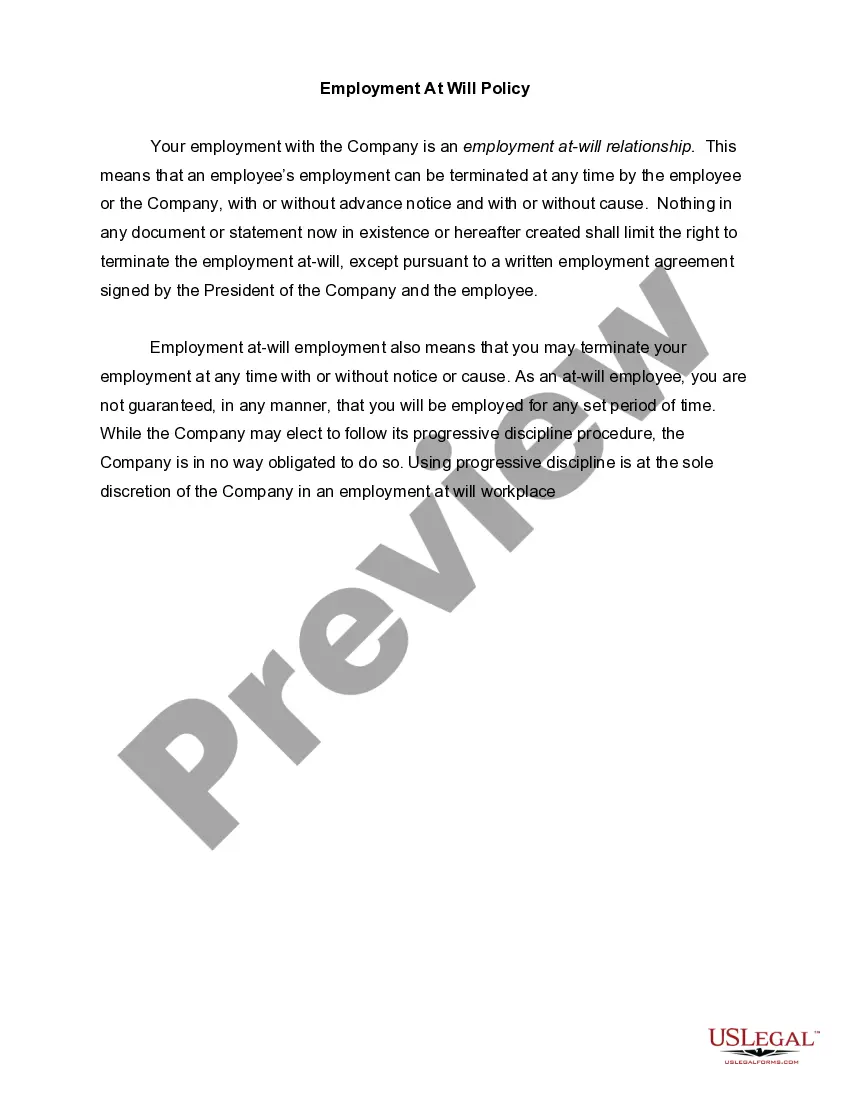
Employment Will Policy Statement For 202
Description
Get your form ready online
Our built-in tools help you complete, sign, share, and store your documents in one place.
Make edits, fill in missing information, and update formatting in US Legal Forms—just like you would in MS Word.
Download a copy, print it, send it by email, or mail it via USPS—whatever works best for your next step.
Sign and collect signatures with our SignNow integration. Send to multiple recipients, set reminders, and more. Go Premium to unlock E-Sign.
If this form requires notarization, complete it online through a secure video call—no need to meet a notary in person or wait for an appointment.
We protect your documents and personal data by following strict security and privacy standards.

Make edits, fill in missing information, and update formatting in US Legal Forms—just like you would in MS Word.

Download a copy, print it, send it by email, or mail it via USPS—whatever works best for your next step.

Sign and collect signatures with our SignNow integration. Send to multiple recipients, set reminders, and more. Go Premium to unlock E-Sign.

If this form requires notarization, complete it online through a secure video call—no need to meet a notary in person or wait for an appointment.

We protect your documents and personal data by following strict security and privacy standards.
Looking for another form?



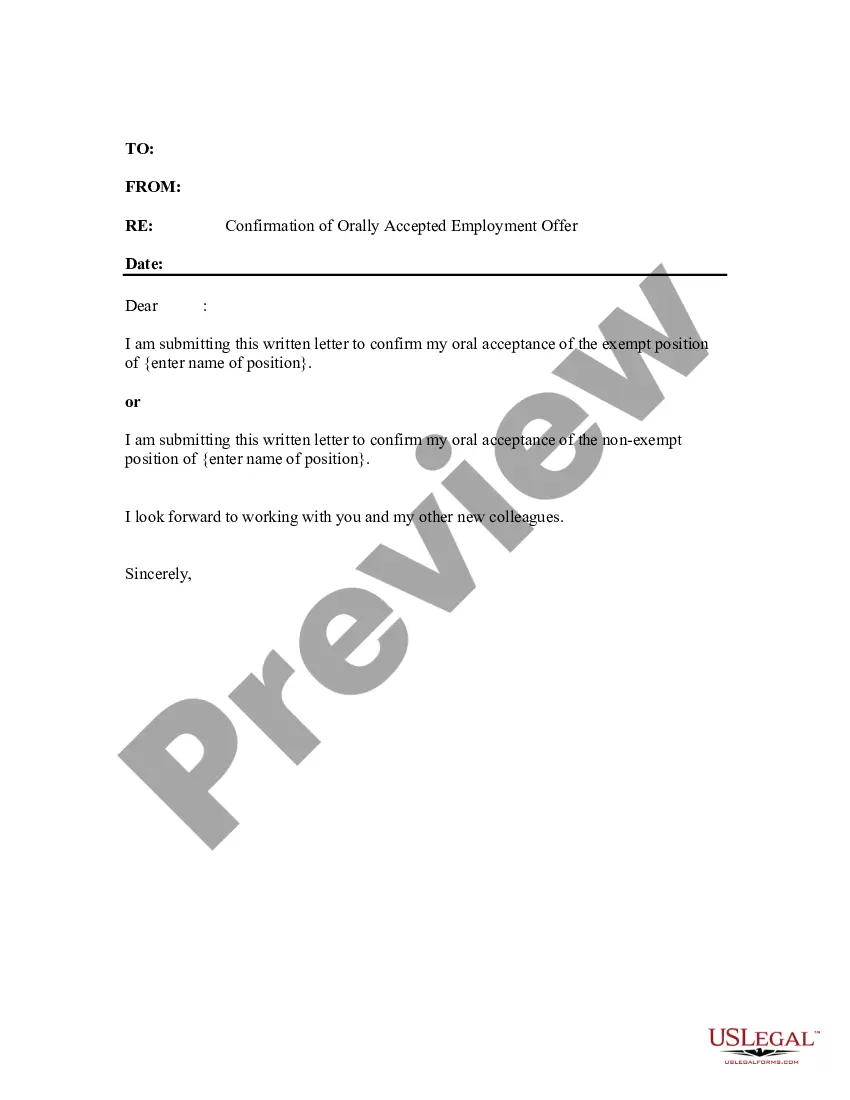


How to fill out Employment At Will Policy?
- If you are a returning user, log in to your US Legal Forms account and download the desired template by clicking the Download button, ensuring your subscription is active.
- For first-time users, begin by reviewing the Preview mode and form description to verify that the chosen template aligns with your requirements and local laws.
- If adjustments are needed, utilize the Search tab to locate other templates that may better fit your needs.
- Purchase the selected document by clicking on the Buy Now button and selecting your preferred subscription plan. You must create an account for full access.
- Complete your purchase using your credit card or PayPal account and finalize the subscription.
- Download your form for immediate use. It will also be available in the My Forms section of your profile for future reference.
US Legal Forms stands out with its extensive library, featuring over 85,000 editable and fillable legal templates, ensuring you find exactly what you need quickly.
With expert assistance available and a vast collection, securing your employment will policy statement has never been easier. Start your journey to compliance today!
Form popularity
FAQ
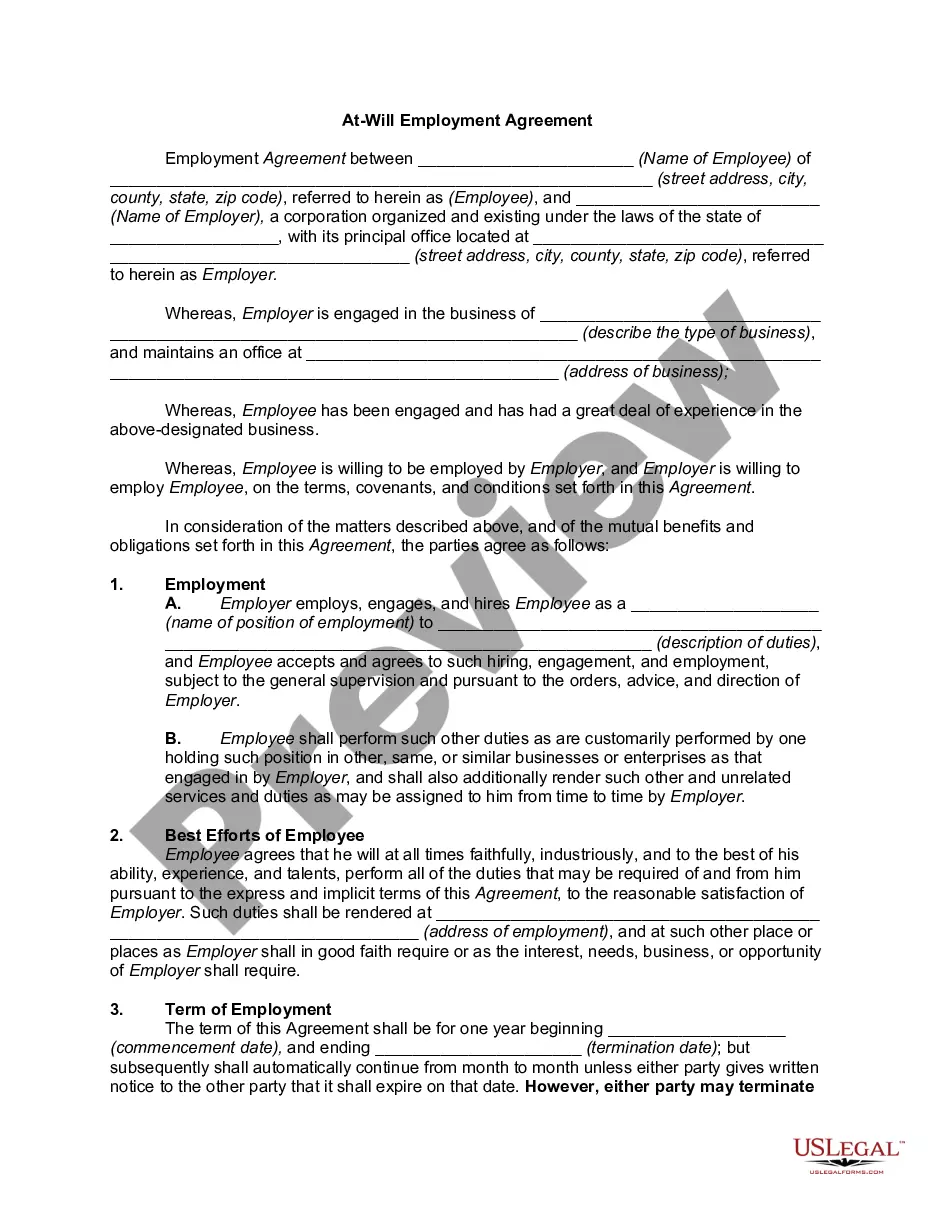
An at-will employment policy might state, 'Employees are hired at will and may be terminated for any reason or no reason, as long as it does not violate applicable laws.' This clear guideline helps both employers and employees understand their rights. Such policies are essential in outlining the employment relationship. When creating your Employment will policy statement for 202, ensure that this concept is clearly articulated.
An example of a discrimination statement could be, 'Our organization does not engage in discrimination in any form based on race, age, gender, or disability.' This statement reinforces your company's commitment to a safe and inclusive environment. Including such a statement in your Employment will policy statement for 202 demonstrates to employees your serious approach to equality. It also sets the tone for workplace behavior.
To write an effective EEO statement, start with a clear and concise declaration of non-discrimination principles. Ensure it addresses various aspects like hiring, promotions, and workplace conduct. Be positive and emphasize your commitment to a diverse and inclusive environment. For a comprehensive Employment will policy statement for 202, ensure that your EEO statement aligns with the overall mission of equality and fairness.
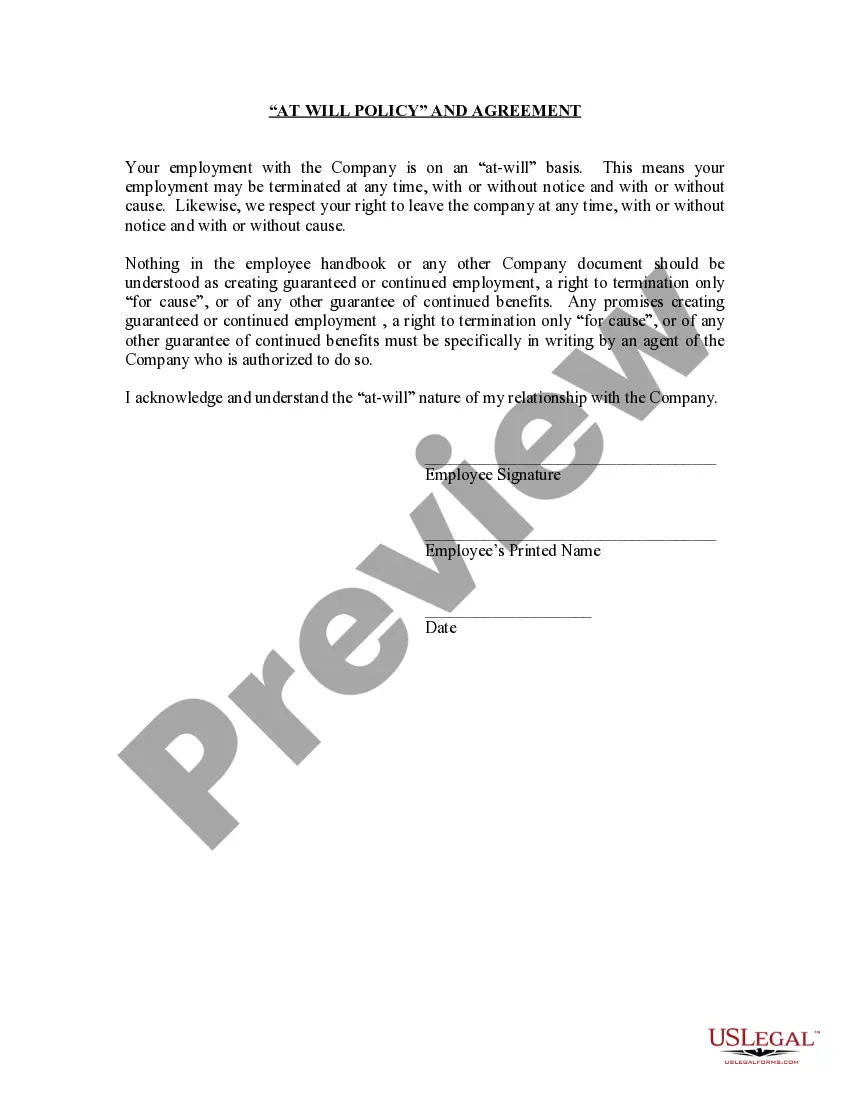
Including an employment-at-will statement in a personnel policy indicates that the job can be terminated by either party at any time. This means that employees do not have guarantees of job security unless otherwise specified. It provides a level of transparency regarding employment terms. Therefore, when drafting your Employment will policy statement for 202, it’s crucial to state this situation clearly.
An EEO policy statement might say, 'Our company is committed to ensuring equal employment opportunities for all individuals. Discrimination of any kind, including race, gender, and age, is strictly prohibited.' This clear language promotes a culture of diversity and inclusivity within the workplace. For those looking to develop an Employment will policy statement for 202, incorporating such an EEO statement is vital.
A typical at-will employment clause states that either the employee or the employer can terminate the employment relationship at any time, with or without cause or prior notice. This type of clause simplifies the end of employment and ensures both parties have flexibility. Including this in your Employment will policy statement for 202 helps clarify the terms of employment. It's a straightforward way to inform employees about their rights.
The three main exceptions to employment at-will include the public policy exception, implied contract exception, and the implied covenant of good faith and fair dealing. These exceptions collectively provide a framework to protect employees from wrongful termination. By acknowledging these exceptions, individuals gain insight into their rights and responsibilities, ensuring they align with the employment will policy statement for 202.
The public policy exception to employment at will is a legal doctrine that safeguards employees from unjust dismissal when they act in accordance with legal or ethical obligations. This means an employee cannot be fired for refusing to commit a crime, for example. Familiarizing yourself with this exception can help you understand the protections afforded under your employment will policy statement for 202.
The public policy exception to at-will employment protects employees from being terminated for actions that align with public interest, such as filing a complaint or participating in an investigation. This exception ensures that employees can advocate for their rights and adhere to the law without fear of retaliation. It is crucial for both employees and employers to recognize this exception within the context of the employment will policy statement for 202.
The public policy exception serves as a significant limitation to the employment at-will doctrine, preventing employers from terminating employees for actions that uphold public interest. For example, dismissing an employee for reporting unsafe practices or refusing to engage in illegal activities is a violation of this exception. Knowing about this exception helps employees understand their rights under their employment will policy statement for 202.