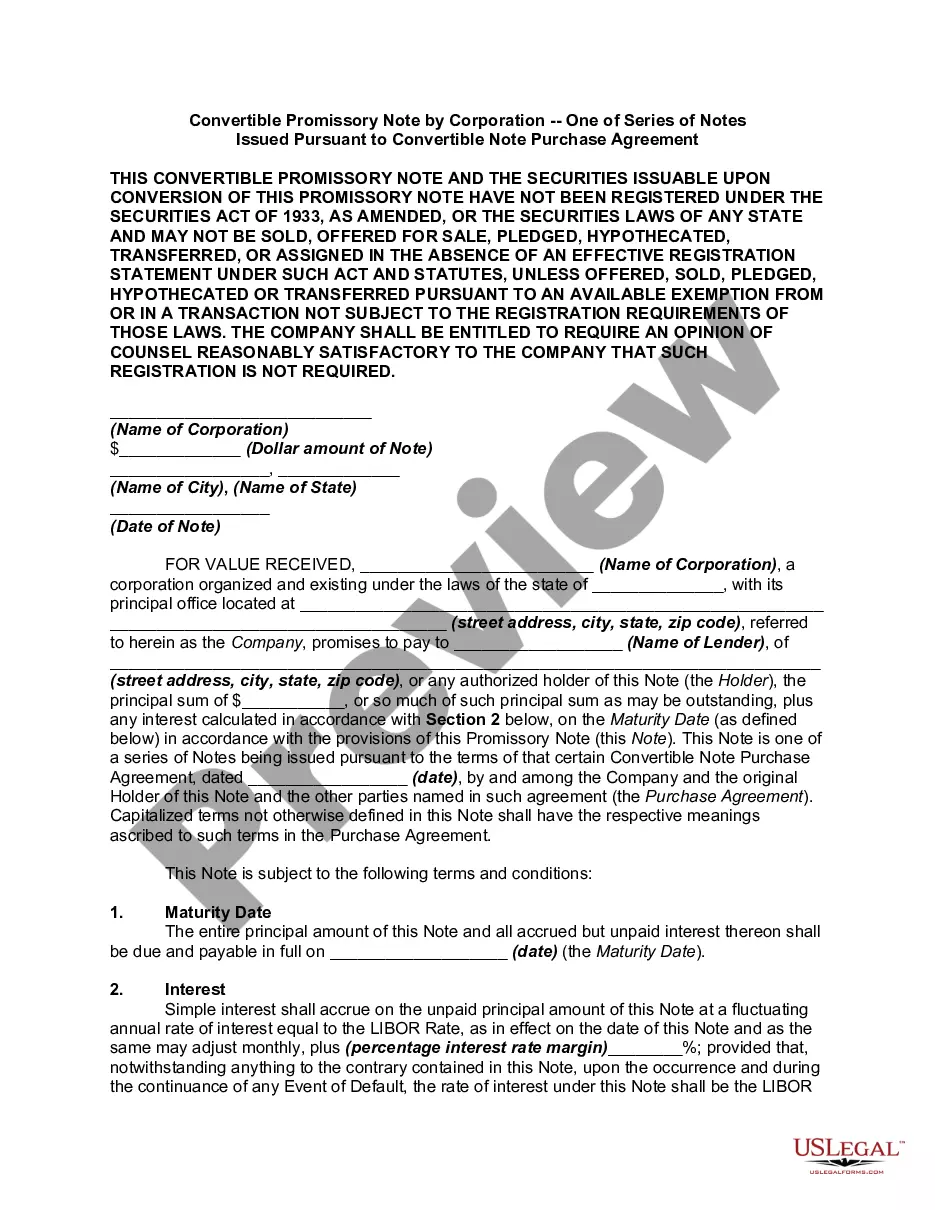
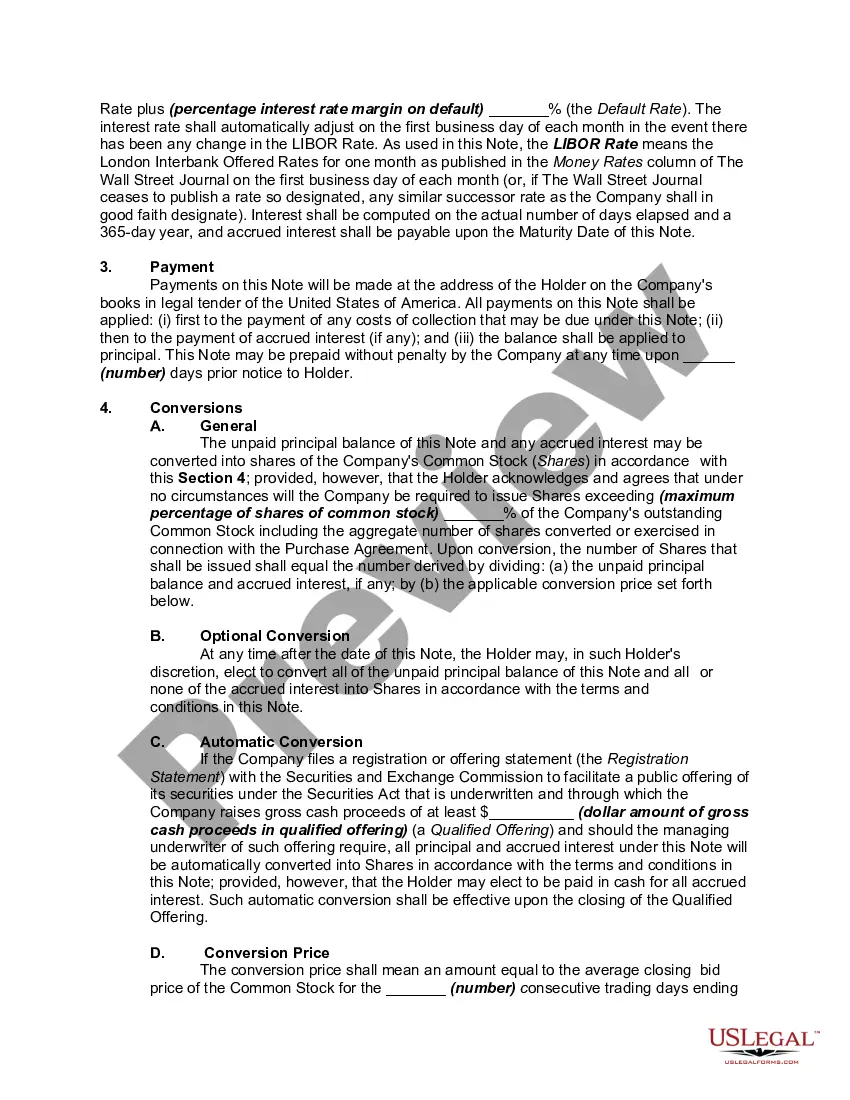
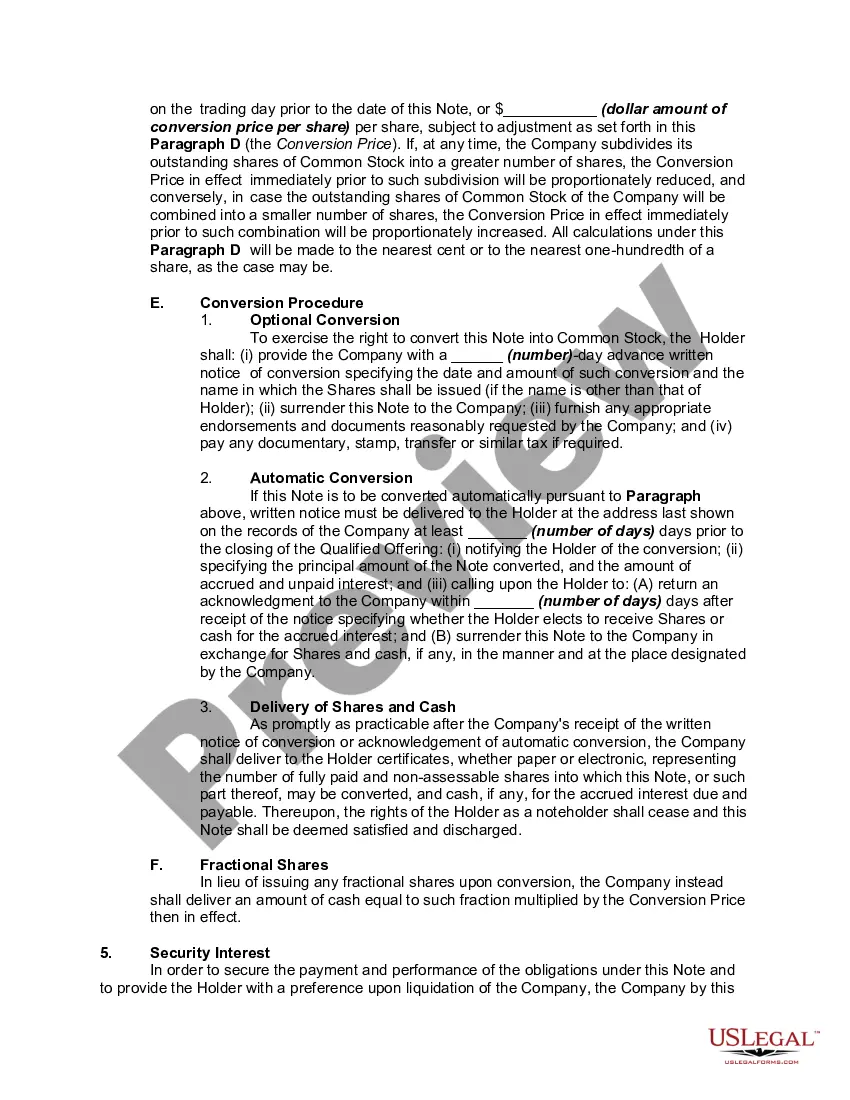
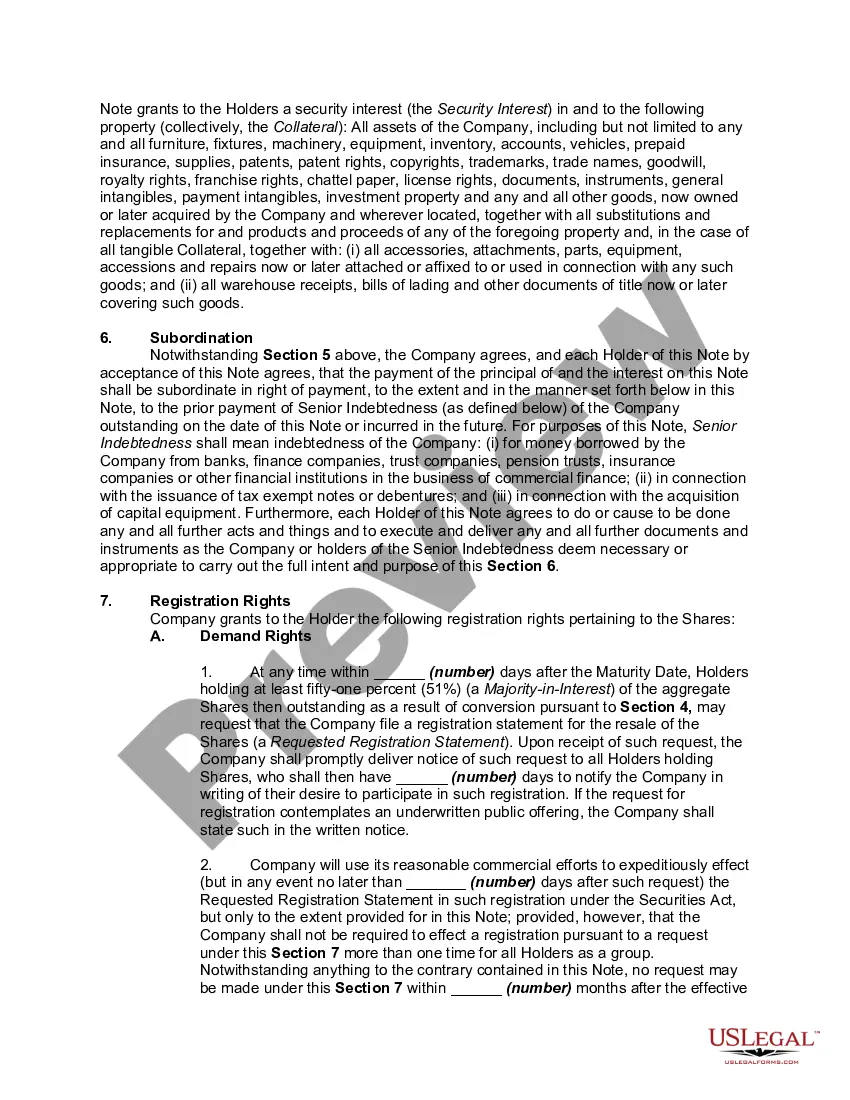
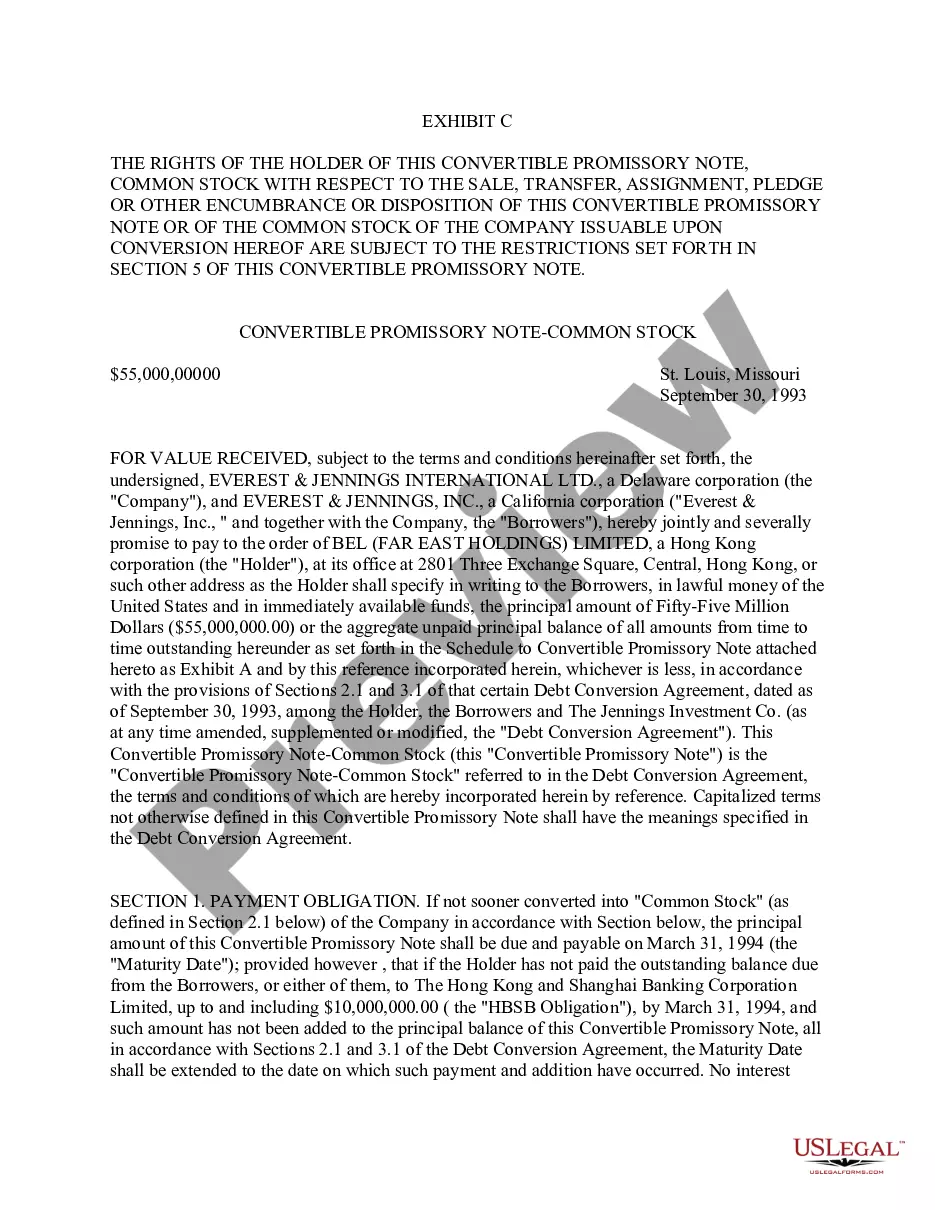
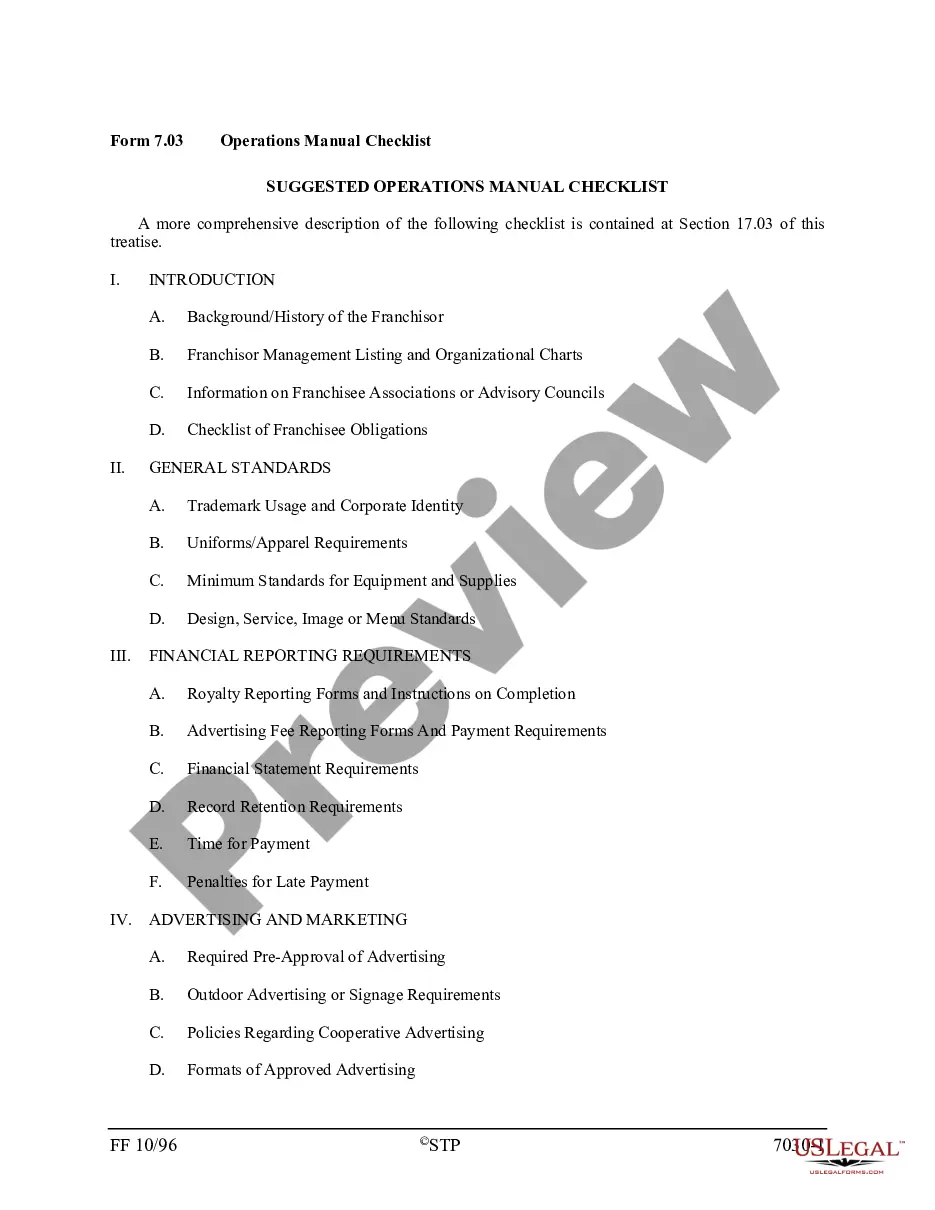
Convertible Promissory Note With
Description
Get your form ready online
Our built-in tools help you complete, sign, share, and store your documents in one place.
Make edits, fill in missing information, and update formatting in US Legal Forms—just like you would in MS Word.
Download a copy, print it, send it by email, or mail it via USPS—whatever works best for your next step.
Sign and collect signatures with our SignNow integration. Send to multiple recipients, set reminders, and more. Go Premium to unlock E-Sign.
If this form requires notarization, complete it online through a secure video call—no need to meet a notary in person or wait for an appointment.
We protect your documents and personal data by following strict security and privacy standards.

Make edits, fill in missing information, and update formatting in US Legal Forms—just like you would in MS Word.

Download a copy, print it, send it by email, or mail it via USPS—whatever works best for your next step.

Sign and collect signatures with our SignNow integration. Send to multiple recipients, set reminders, and more. Go Premium to unlock E-Sign.

If this form requires notarization, complete it online through a secure video call—no need to meet a notary in person or wait for an appointment.

We protect your documents and personal data by following strict security and privacy standards.
Looking for another form?





How to fill out Convertible Promissory Note By Corporation - One Of Series Of Notes Issued Pursuant To Convertible Note Purchase Agreement?
Accessing legal documents that adhere to federal and local statutes is crucial, and the web provides numerous choices to select from.
However, what’s the value in squandering time searching for the accurately composed Convertible Promissory Note With example online if the US Legal Forms digital library already has such documents assembled in one location.
US Legal Forms is the largest online legal directory featuring over 85,000 customizable documents created by attorneys for any business and personal requirement.
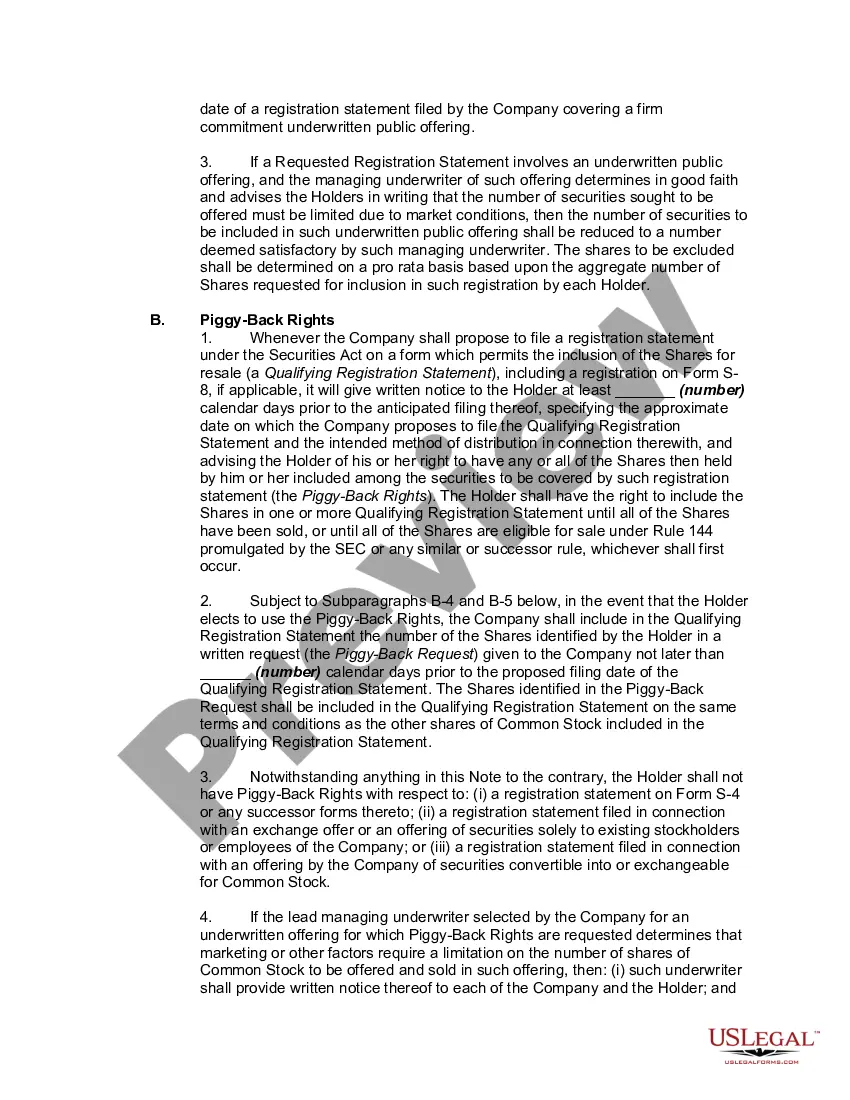
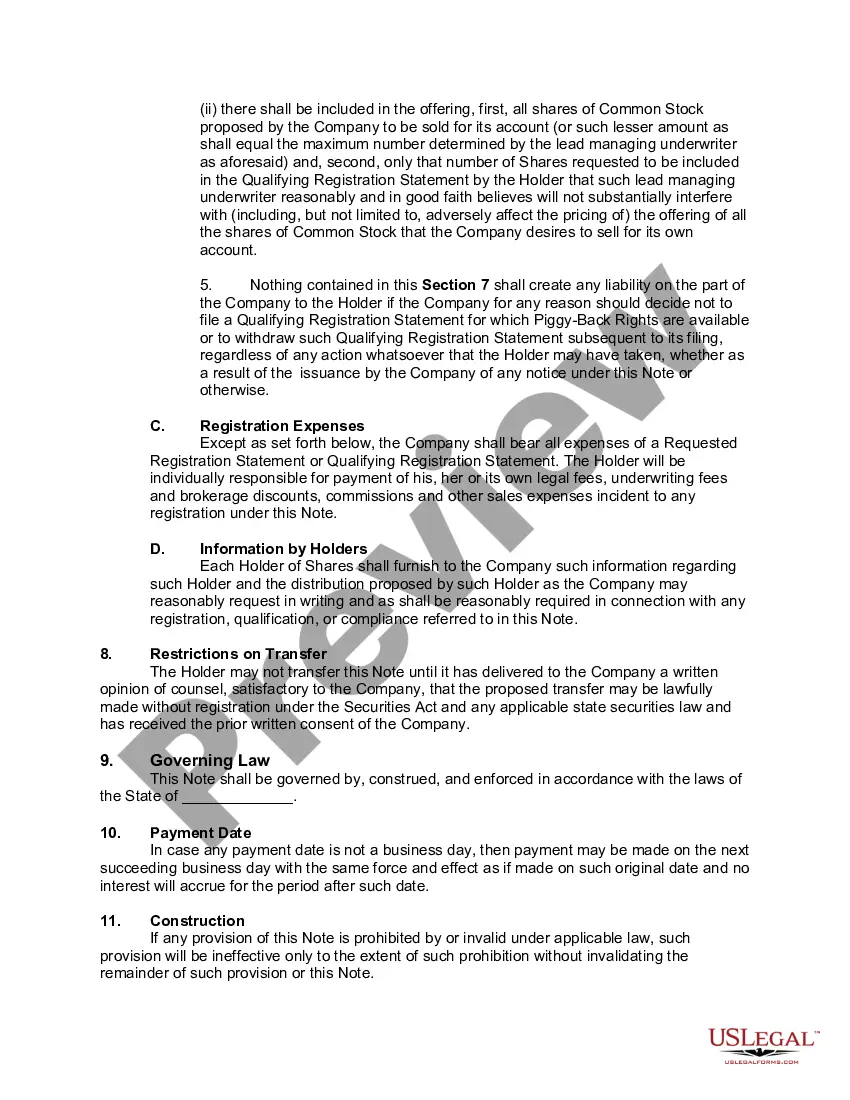
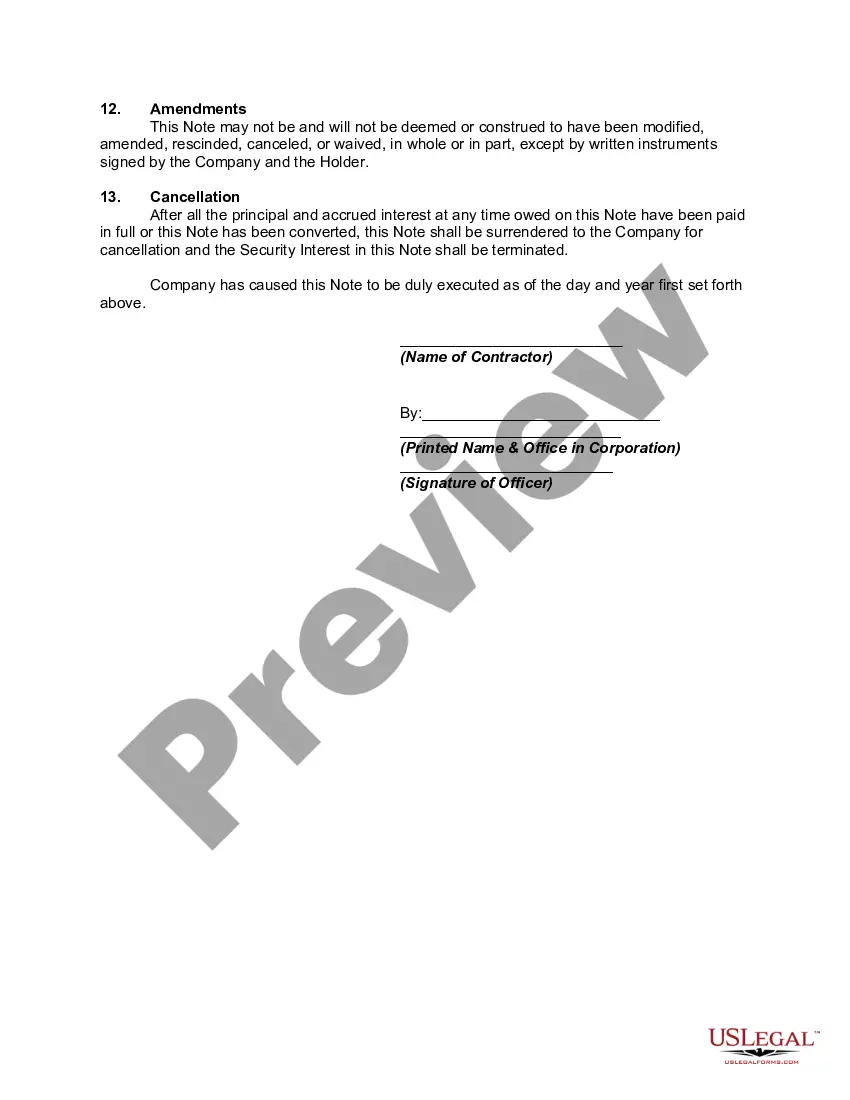
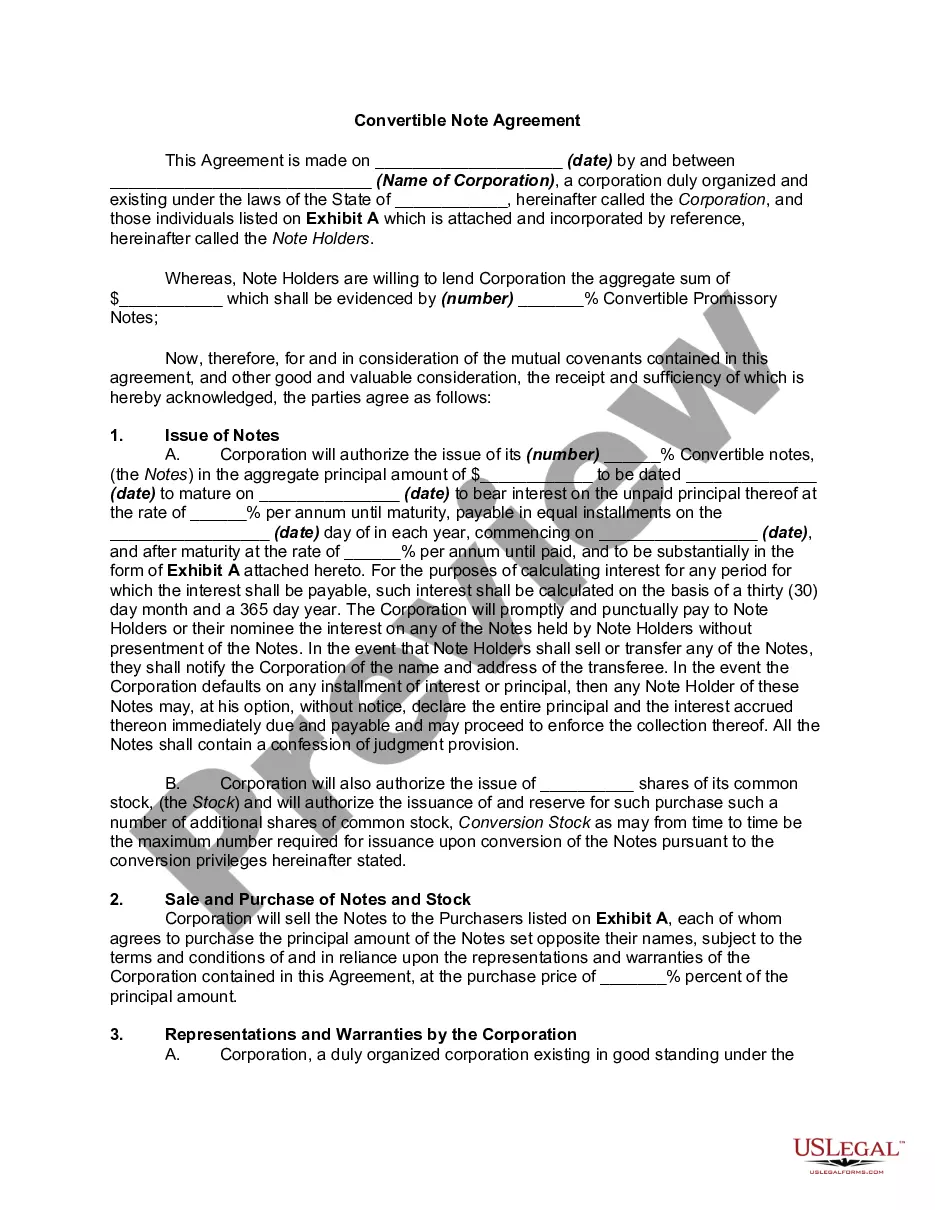
Review the template using the Preview feature or through the text outline to ensure it aligns with your requirements.
- They are easy to navigate with all files organized by state and intended use.
- Our professionals keep current with legal modifications, so you can always feel secure that your forms are up to date and compliant when obtaining a Convertible Promissory Note With from our site.
- Acquiring a Convertible Promissory Note With is quick and straightforward for both existing and new users.
- If you already possess an account with an active subscription, Log In and save the document sample you require in the appropriate format.
- If you're new to our site, follow the steps below.
Form popularity
FAQ
On a balance sheet, a promissory note is usually recorded under liabilities, specifically as a current or long-term liability. A current liability includes notes due within a year, while long-term liabilities include those that extend beyond a year. Placing the convertible promissory note with correct categorization helps in assessing the company’s financial health accurately.
A convertible promissory note typically includes specific terms that govern its conversion to equity. Key rules include the interest rate, maturity date, and conversion terms. Additional provisions may involve discounts and caps on valuation. Understanding these rules ensures that both parties know their rights and responsibilities when engaging in a convertible promissory note.
A convertible promissory note is a debt instrument that converts into equity of the issuing company upon certain events. Typically, a note would convert into equity in a subsequent equity financing round and perhaps upon the note's maturity or a sale of the company.
So the cash coming in from your convertible note will generally equate to the liability that you add to the balance sheet. And, if your accounting is doing a good job, the accrued interest is a non-cash expense that flows through your income statement and impacts your accumulated net income in the equity section.
Convertible loan notes should be listed on the company's cap table as the amount of the loan with accrued interest and the maximum number of shares it is likely to convert into.
A convertible note should be classified as a Long Term Liability that then converts to Equity as stipulated from the contract (usually a new fundraising round).
Convertible notes are promissory notes that serve an additional business purpose other than merely representing debt. Convertible notes include all of the terms of a vanilla promissory note, such as an interest rate and the pledge of underlying security (if applicable).