Discrimination Laws In India
Description
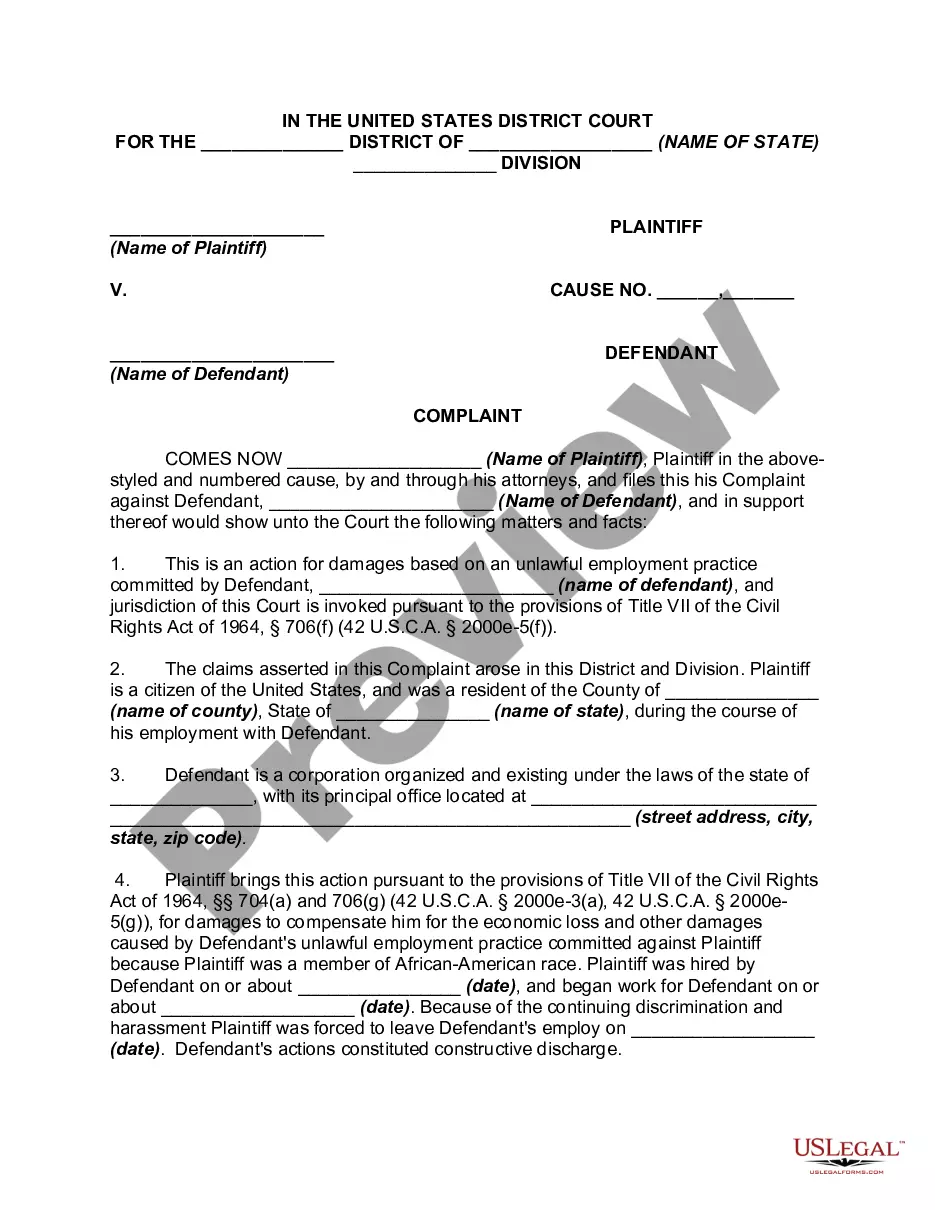











How to fill out Complaint For Racial Discrimination In Employment, Constructive Discharge And For Damages For Discrimination In Promotion By Employer - Equal Employment?
Creating legal documents from the ground up can frequently be daunting.
Certain situations may require numerous hours of investigation and substantial financial investment.
If you're looking for a more straightforward and economical method of preparing Discrimination Laws In India or any other documents without having to navigate unnecessary hurdles, US Legal Forms is always readily available.
Our online collection of over 85,000 current legal templates encompasses nearly every aspect of your financial, legal, and personal matters.
However, before diving straight into downloading Discrimination Laws In India, please follow these suggestions: Review the document preview and descriptions to ensure you're selecting the correct form. Verify that the form you choose complies with your state and county regulations. Choose the most appropriate subscription plan to purchase the Discrimination Laws In India. Download the document, then complete, validate, and print it. US Legal Forms boasts an excellent reputation and over 25 years of experience. Join us today and make document preparation a simple and efficient process!
- With just a few clicks, you can swiftly access state- and county-specific forms meticulously crafted by our legal experts.
- Utilize our platform whenever you require a dependable and trustworthy service to quickly locate and download the Discrimination Laws In India.
- If you're already familiar with our services and have previously established an account with us, simply Log In to your account, choose the template, and download it or re-download it at any time from the My documents section.
- Don't have an account? No worries. Setting it up and browsing the catalog takes only a few minutes.
Form popularity
FAQ
Yes, discrimination is a crime in India. The country's discrimination laws protect individuals from various forms of unfair treatment based on caste, religion, gender, age, and other characteristics. These laws aim to promote equality and ensure justice for all citizens. At USLegalForms, we provide resources and information to help you navigate the complexities of discrimination laws in India, ensuring you understand your rights and the legal remedies available.
The anti-discrimination Act in India, such as the Scheduled Castes and Scheduled Tribes (Prevention of Atrocities) Act, lays down strict provisions to combat discrimination against scheduled castes and tribes. This Act supports the broader framework of discrimination laws in India, promoting equality and justice for all individuals. It provides mechanisms for victims to seek redress and strengthens the legal framework against discrimination.
An example of positive discrimination in India is the reservation system, where specific quotas are set aside for marginalized groups in education and government jobs. This practice aims to uplift historically disadvantaged communities and aligns with the principles of discrimination laws in India. By ensuring representation and opportunities for these groups, positive discrimination seeks to create a more equitable society.
The anti-discriminatory policy in India encompasses a set of laws and regulations aimed at preventing discrimination in multiple aspects of life, including social, economic, and political spheres. These policies are part of the broader discrimination laws in India, which help protect individuals against unfair treatment. Emphasizing equality, these policies ensure that everyone receives equal opportunities, regardless of their background.
India's anti-discrimination policy focuses on eliminating discrimination in various sectors such as employment, education, and public services. This policy aligns with the broader framework of India's discrimination laws, which protect marginalized communities and promote equality. These laws work to eradicate all forms of discrimination, laying the foundation for a fair and just society.
The Indian policy against racial discrimination is grounded in its Constitution, which emphasizes equality and prohibits discrimination on various grounds, including race. This policy promotes the idea of social justice and aims to protect individuals from discrimination based on their racial identity. Under the discrimination laws in India, various measures ensure that all citizens have equal rights and opportunities, fostering an inclusive society.
The Equal Remuneration Act and the Rights of Persons with Disabilities Act are key pieces of legislation that ensure individuals have the right to work without facing discrimination in India. These laws aim to create a fair work environment for all, regardless of gender, disability, or any other factor. They promote equality and empower individuals to pursue their careers without obstacles. Familiarizing yourself with discrimination laws in India can help you understand your rights in the workplace.
Punishment for discrimination in India can vary depending on the severity and nature of the offense. Under various laws, including the Scheduled Castes and the Scheduled Tribes (Prevention of Atrocities) Act, offenders may face imprisonment and fines. Implementing discrimination laws in India reflects the nation's commitment to justice and equality. Such measures ensure that individuals responsible for discriminatory practices are held accountable for their actions.
In India, discrimination laws seek to promote equality and prevent discrimination based on caste, gender, religion, and other factors. The Constitution guarantees the right to equality, ensuring that every citizen can enjoy their freedom without facing discrimination. These laws provide a framework to protect individuals and promote social justice. Understanding discrimination laws in India is essential for upholding the rights of every individual in society.
The discrimination policy in India is primarily driven by the Constitution, which guarantees equality and prohibits discriminatory practices. In addition, various legislative measures and guidelines aim to promote inclusivity, particularly in employment and education sectors. Understanding these policies can help citizens navigate the protections offered by discrimination laws in India.