Motion Release Evidence Without Consent
Description
Get your form ready online
Our built-in tools help you complete, sign, share, and store your documents in one place.
Make edits, fill in missing information, and update formatting in US Legal Forms—just like you would in MS Word.
Download a copy, print it, send it by email, or mail it via USPS—whatever works best for your next step.
Sign and collect signatures with our SignNow integration. Send to multiple recipients, set reminders, and more. Go Premium to unlock E-Sign.
If this form requires notarization, complete it online through a secure video call—no need to meet a notary in person or wait for an appointment.
We protect your documents and personal data by following strict security and privacy standards.

Make edits, fill in missing information, and update formatting in US Legal Forms—just like you would in MS Word.

Download a copy, print it, send it by email, or mail it via USPS—whatever works best for your next step.

Sign and collect signatures with our SignNow integration. Send to multiple recipients, set reminders, and more. Go Premium to unlock E-Sign.

If this form requires notarization, complete it online through a secure video call—no need to meet a notary in person or wait for an appointment.

We protect your documents and personal data by following strict security and privacy standards.
Looking for another form?




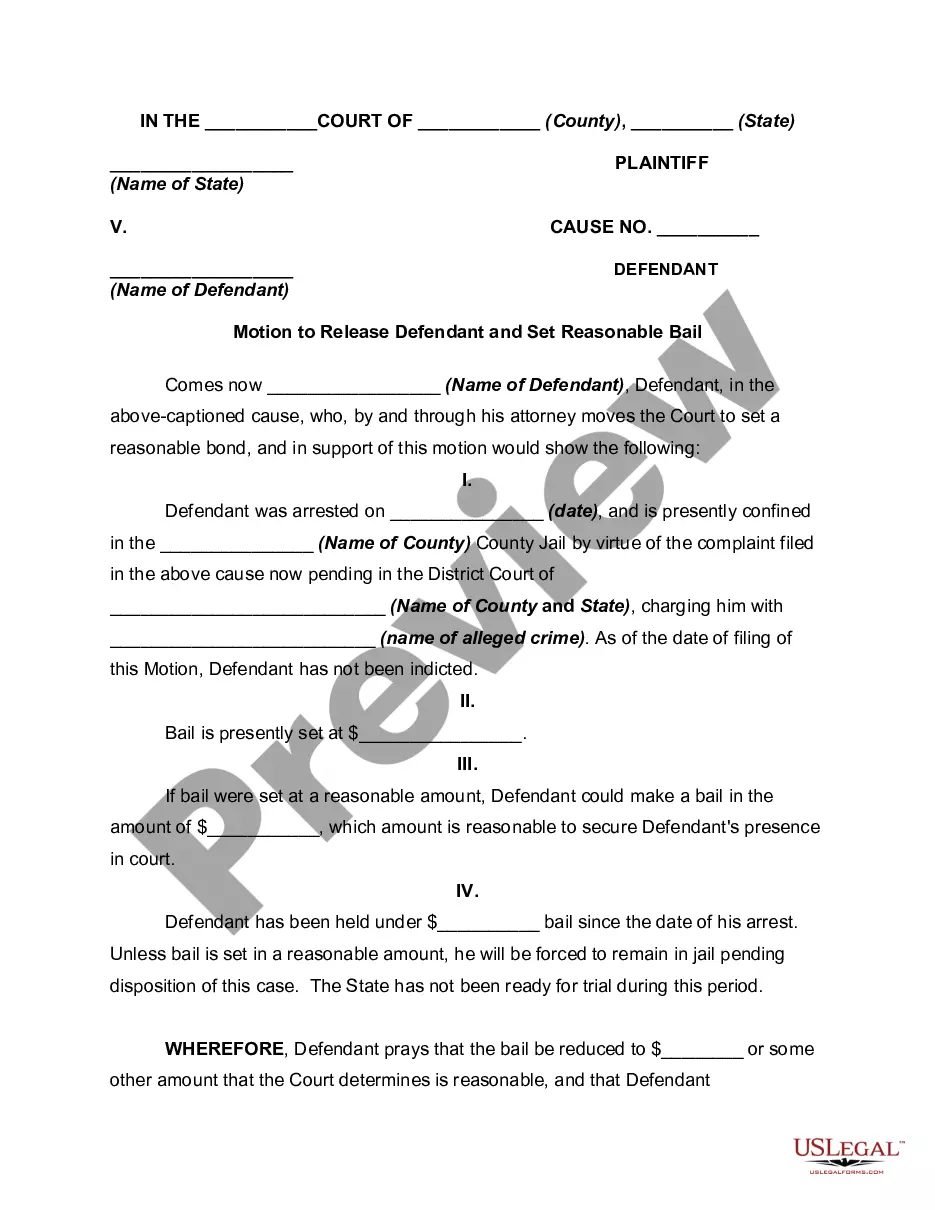
How to fill out Motion To Release Defendant And Set Reasonable Bail?
Managing legal documents can be overwhelming, even for the most experienced professionals.
When you are looking for a Motion Release Evidence Without Consent and lack the time to invest in searching for the correct and updated version, the process can be anxiety-inducing.
With US Legal Forms, you can.
Utilize cutting-edge tools to complete and manage your Motion Release Evidence Without Consent.
Below are the steps to follow after finding the form you require: Verify it is the right form by previewing it and reading its description.
- Access a valuable resource pool of articles, guides, and manuals pertinent to your situation and requirements.
- Save time and effort in finding the documents you need, and leverage US Legal Forms’ advanced search and Review feature to discover Motion Release Evidence Without Consent and obtain it.
- If you have a subscription, Log In to your US Legal Forms account, search for the form, and retrieve it.
- Check the My documents tab to view the documents you have previously saved and manage your folders as desired.
- If it’s your first time using US Legal Forms, create an account for unlimited access to all benefits of the library.
- A robust online form catalog could be a game-changer for anyone aiming to handle these matters efficiently.
- US Legal Forms is a frontrunner in online legal templates, with over 85,000 state-specific legal documents available to you at any time.
Form popularity
FAQ
Rule 404 of the Texas Rules of Evidence specifically addresses the admissibility of character evidence, stating that such evidence is not allowed to suggest a person acted in a certain way. This rule emphasizes that evidence of a person's character cannot be used to infer their conduct during an incident. Knowing this rule can help when you file a motion to release evidence without consent, ensuring you stay aligned with legal guidelines. Utilizing platforms like US Legal Forms can further streamline your understanding of these rules.
The most common reason for evidence to be excluded from trial is often related to how that evidence was obtained. If evidence was gathered in violation of legal procedures, such as without a warrant or through unconstitutional means, it may be deemed inadmissible. In scenarios involving a motion to release evidence without consent, this principle plays a significant role in ensuring that all evidence used in court adheres to legal standards. Understanding these rules helps you navigate your case effectively.
A motion to suppress is a motion that revolves around the exclusion of evidence from trial. In the United States, a motion to suppress is a request made by a criminal defendant in advance of a criminal trial asking the court to exclude certain evidence from the trial.
Any evidence that was obtained in a way that violated your constitutional rights should be considered inadmissible and suppressed by the judge. Your defense attorney will identify evidence that was obtained in violation of those rights and make a motion to the judge to have that evidence suppressed.
Be as persuasive as possible as you write your motion in a sequential, logical format. Express your ideas clearly, and make sure you outline what steps are necessary and how they will help your case. Use facts of the case whenever you can to avoid baseless emotional appeals.
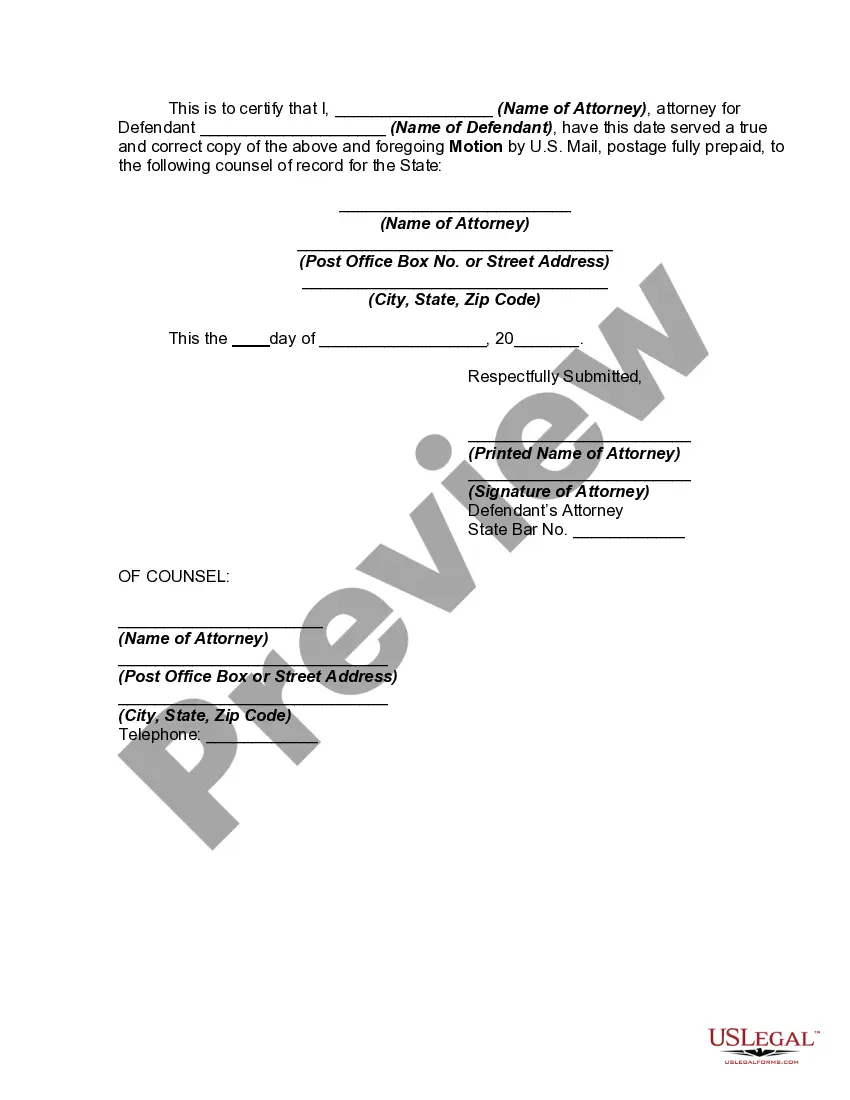
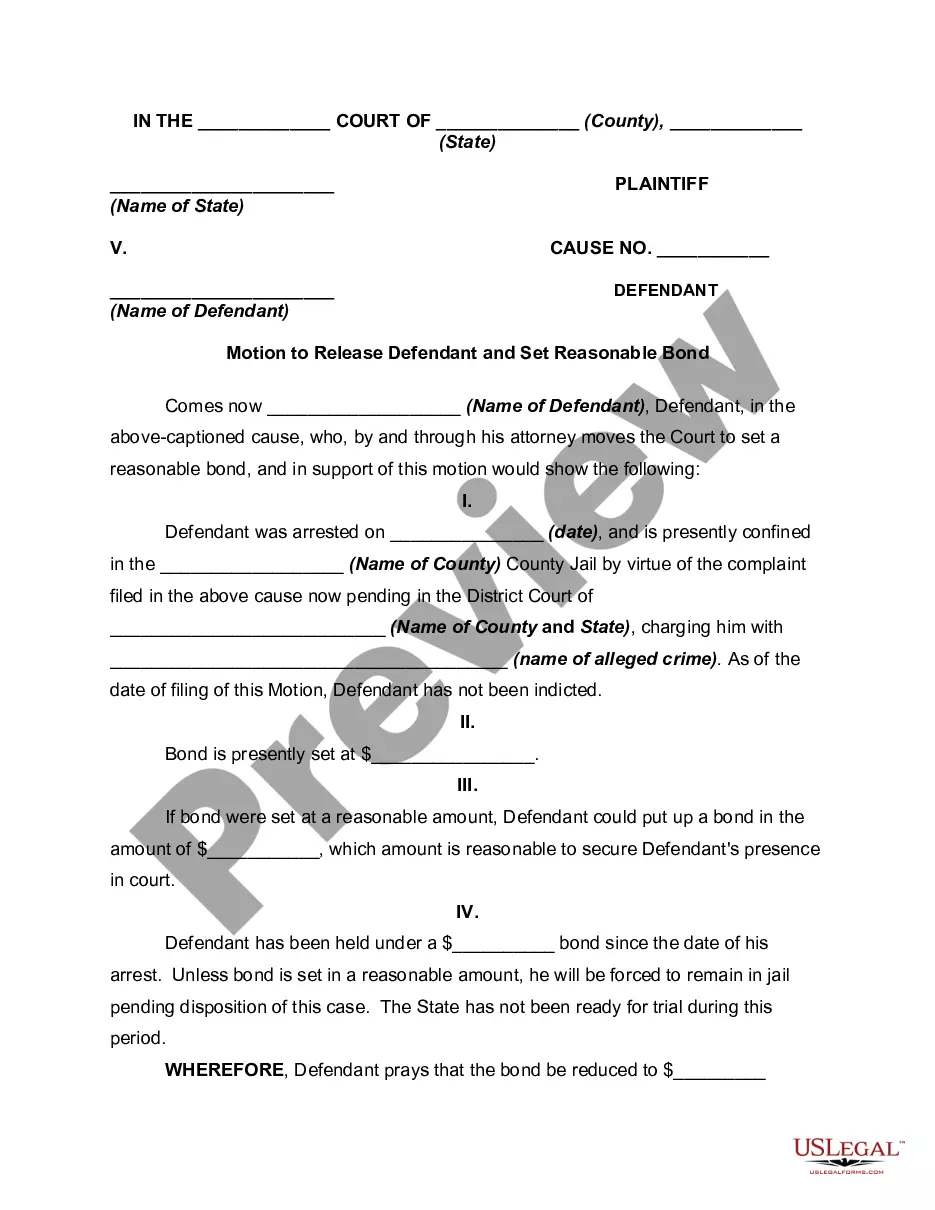
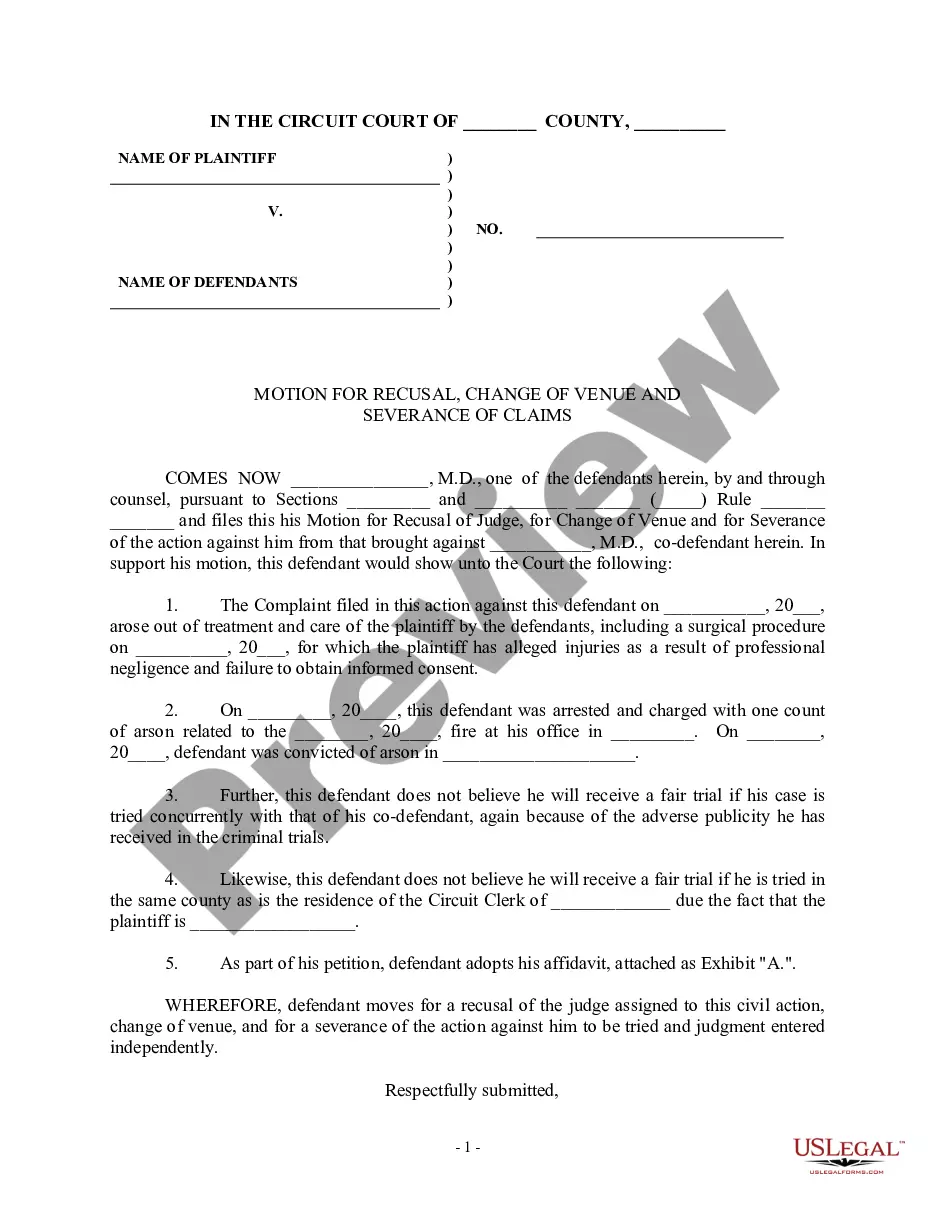
General format - each motion generally consists of a case caption, a title that briefly identifies the relief sought, a series of numbered paragraphs that explains -- in a logical way -- why you are entitled to that relief, a prayer for relief, a signature block, a certification that a copy of the motion was sent to ...
Forensic evidence primarily refers to genetic information, such as DNA and fingerprints. It also may include evidence proven by physics and other forms of science, such as ballistics. Its reliability makes it an important factor in whether juries decide to convict or exonerate a defendant in criminal cases.