Title Quiet Complaint With The Law
Description
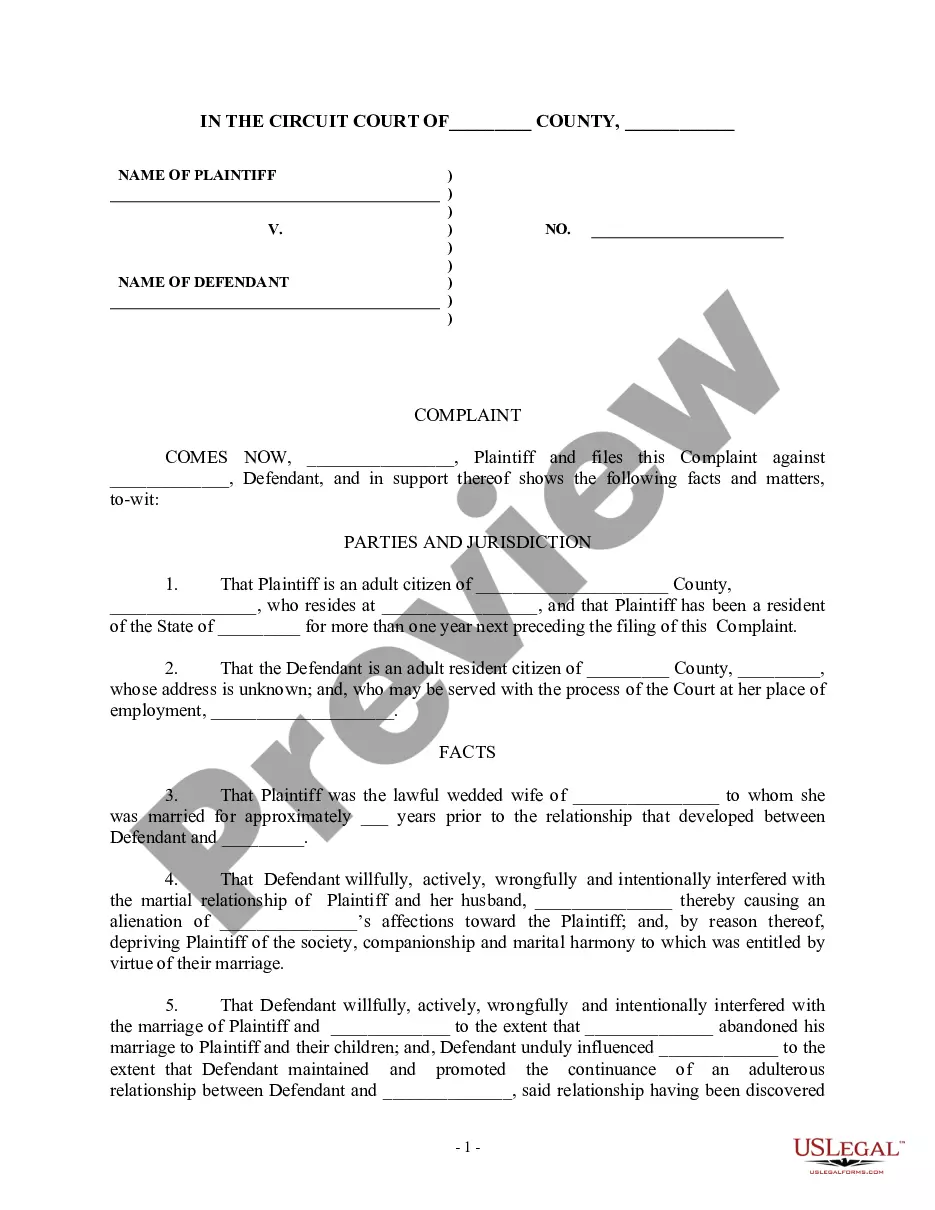
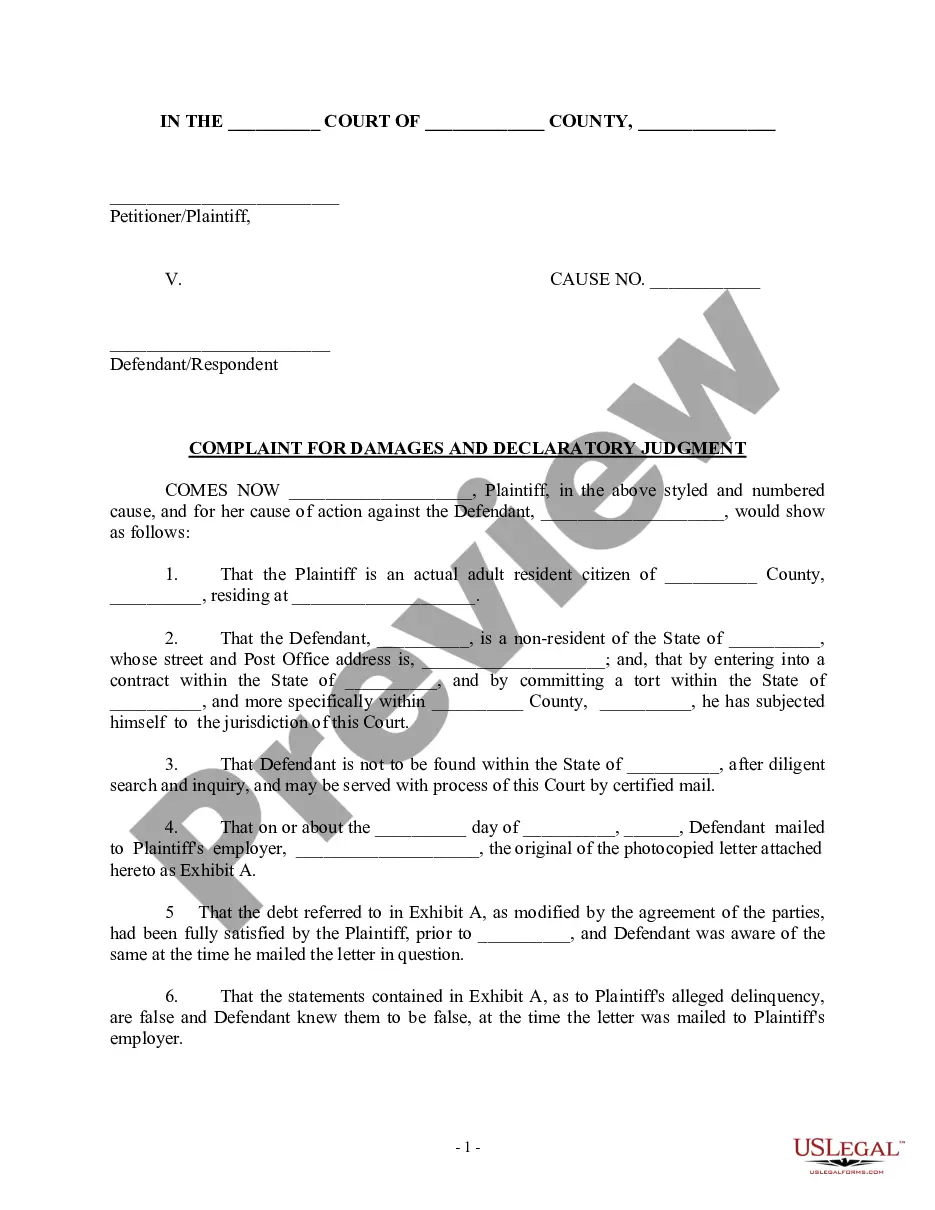
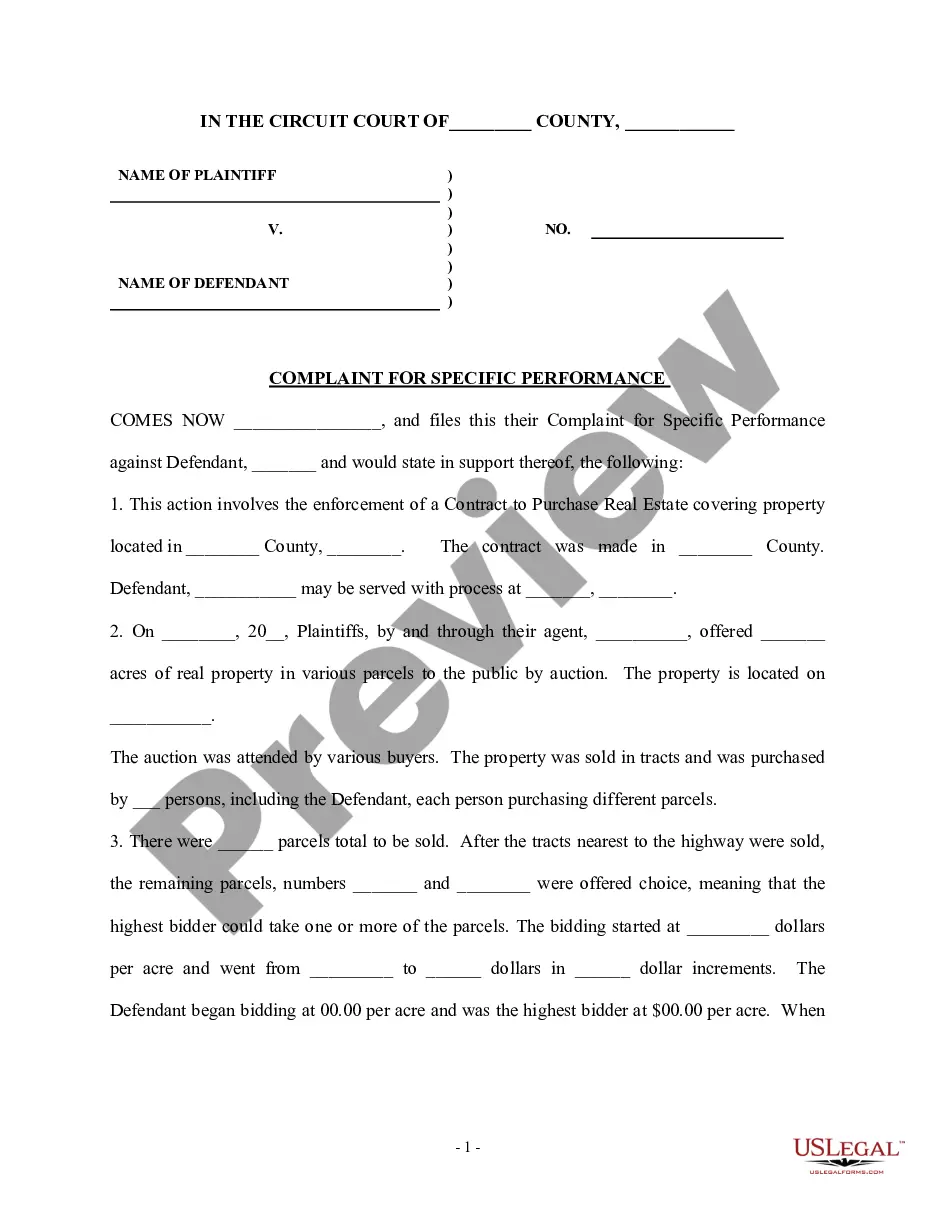
Get your form ready online
Our built-in tools help you complete, sign, share, and store your documents in one place.
Make edits, fill in missing information, and update formatting in US Legal Forms—just like you would in MS Word.
Download a copy, print it, send it by email, or mail it via USPS—whatever works best for your next step.
Sign and collect signatures with our SignNow integration. Send to multiple recipients, set reminders, and more. Go Premium to unlock E-Sign.
If this form requires notarization, complete it online through a secure video call—no need to meet a notary in person or wait for an appointment.
We protect your documents and personal data by following strict security and privacy standards.

Make edits, fill in missing information, and update formatting in US Legal Forms—just like you would in MS Word.

Download a copy, print it, send it by email, or mail it via USPS—whatever works best for your next step.

Sign and collect signatures with our SignNow integration. Send to multiple recipients, set reminders, and more. Go Premium to unlock E-Sign.

If this form requires notarization, complete it online through a secure video call—no need to meet a notary in person or wait for an appointment.

We protect your documents and personal data by following strict security and privacy standards.
Looking for another form?

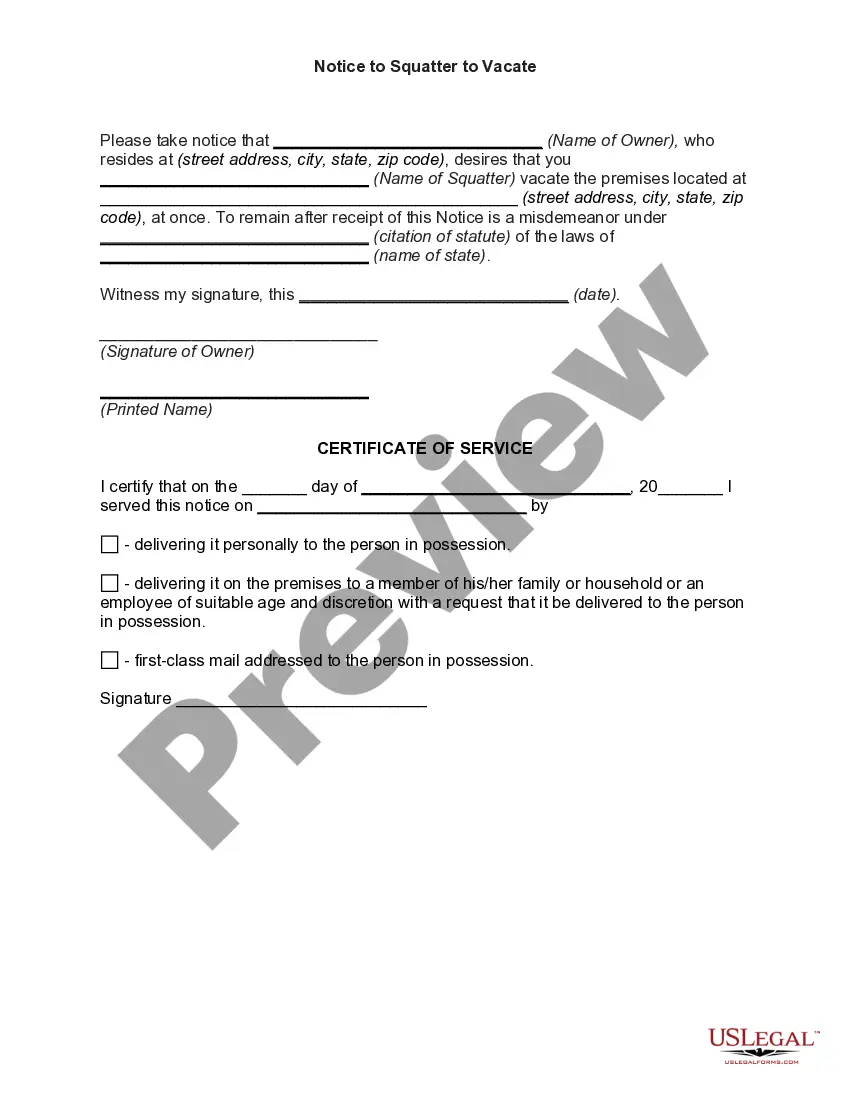
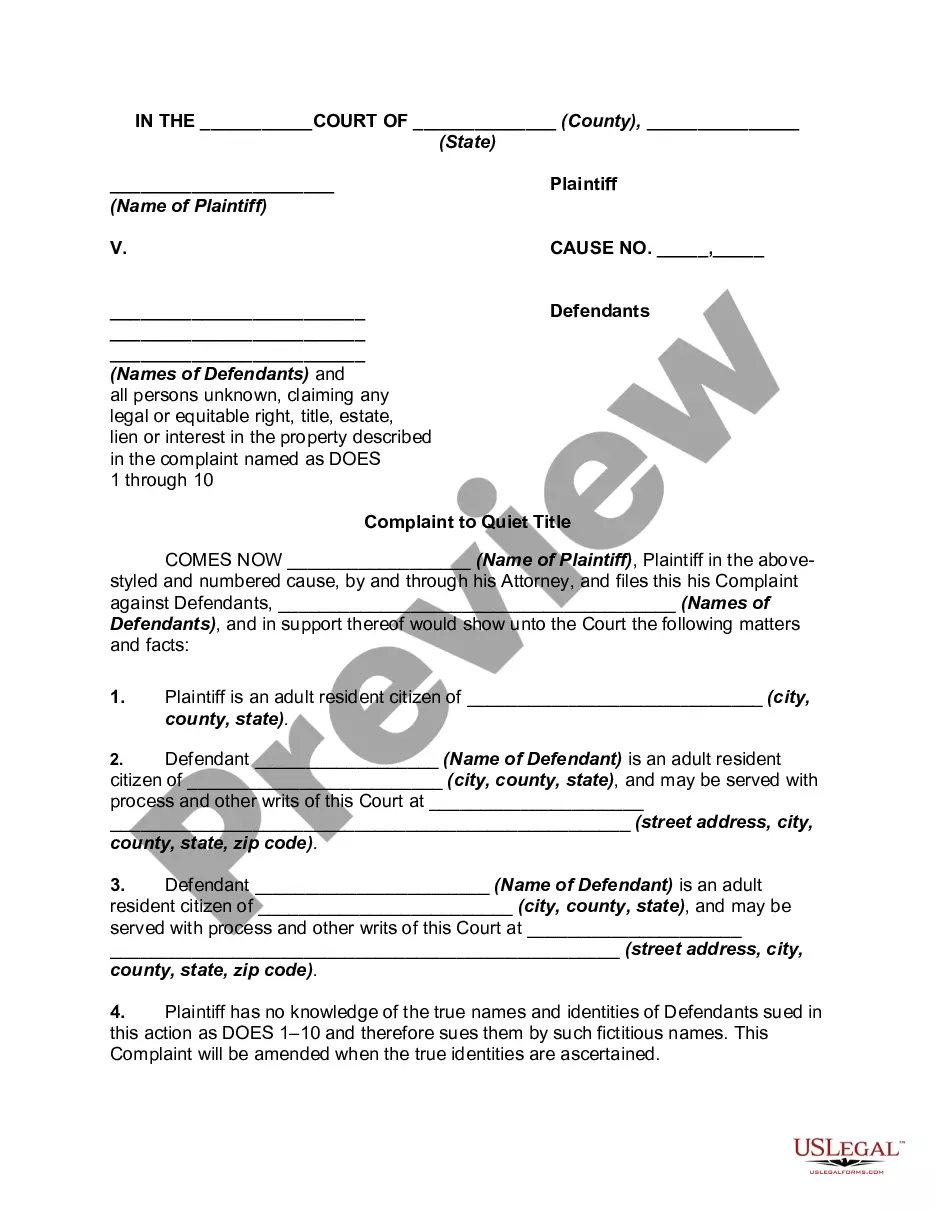
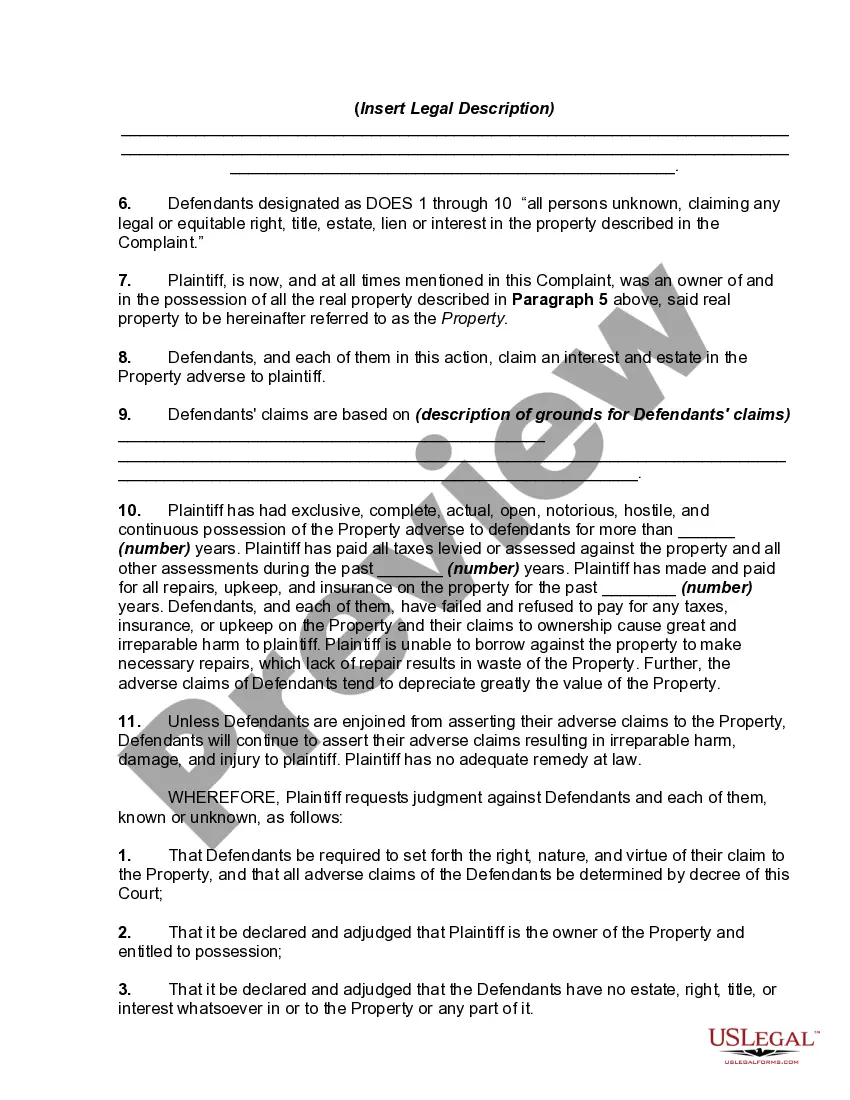
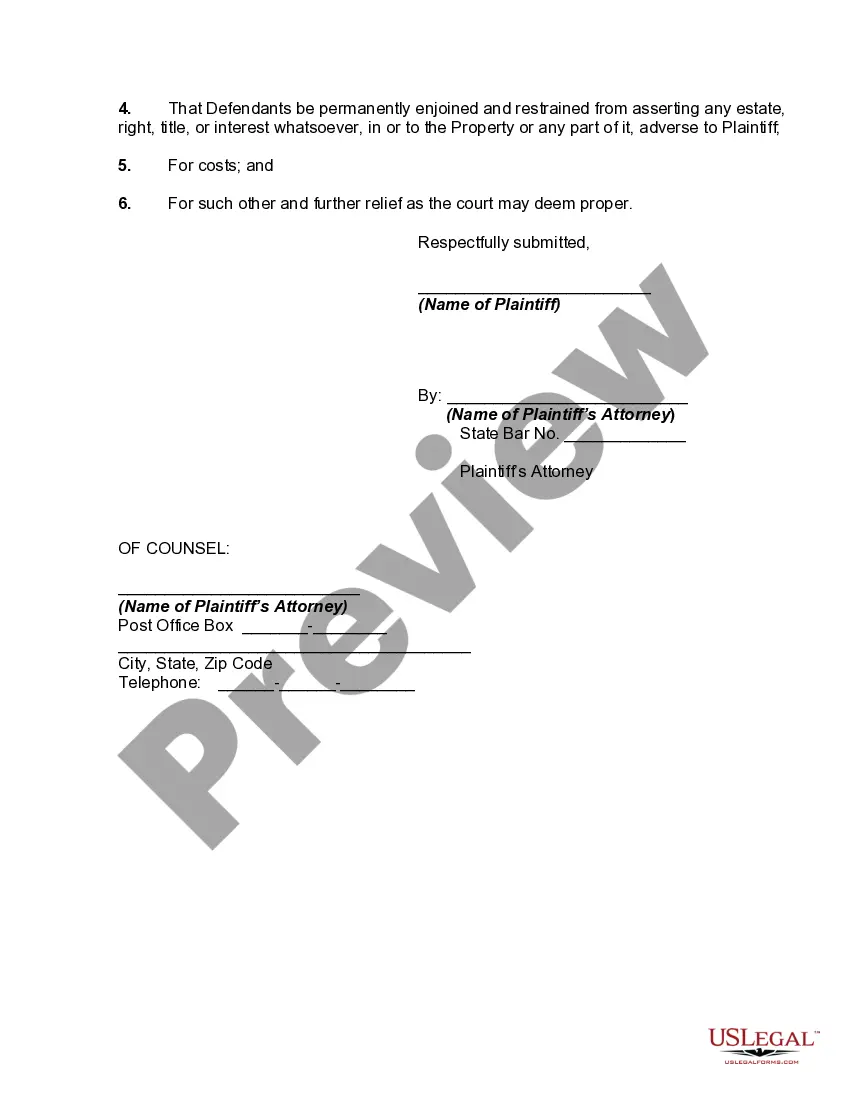
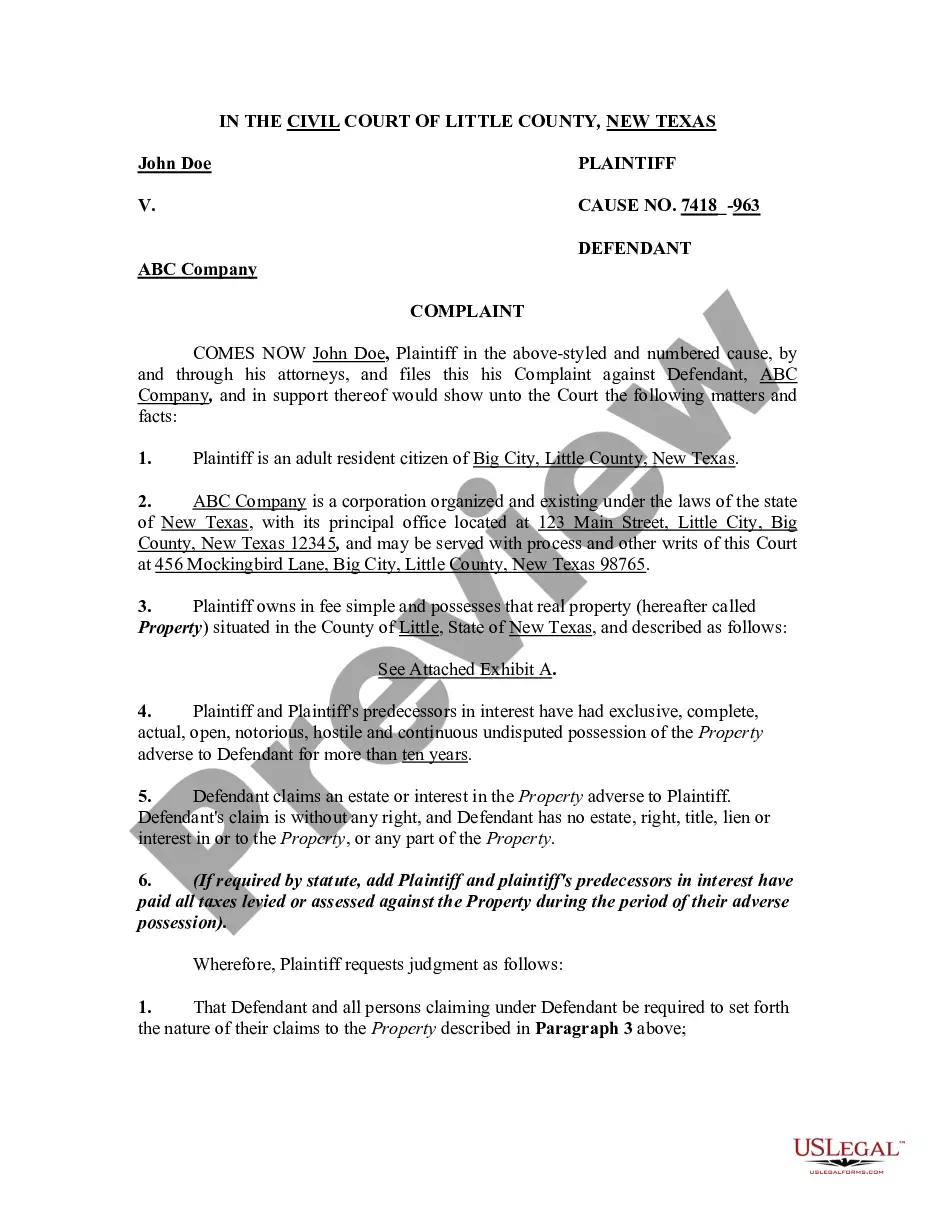
How to fill out Complaint To Quiet Title By Adverse Possessor With Unknown Defendants?
- If you're an existing user, log in to your account and locate the desired form. Confirm your subscription is active; otherwise, renew it.
- If you're new to US Legal Forms, start by checking the form's preview and description to confirm it meets your specific needs.
- If you need a different template, utilize the Search feature to find the perfect match for your requirements.
- Select the form and click on the Buy Now button to choose a suitable subscription plan, creating an account for full access.
- Enter your payment details either through a credit card or PayPal to finalize your purchase.
- Download the completed form to your device and store it securely. You can also access it later through the My Forms section.
By leveraging US Legal Forms, you ensure not only speed but also accuracy in submitting your legal documents. Their extensive resource library, combined with expert assistance, empowers users to tackle legal challenges confidently.
Start your journey today and take control of your legal matters by accessing US Legal Forms for all your documentation needs.
Form popularity
FAQ
For success in a quiet title action, start by gathering comprehensive documentation related to your property, such as prior deeds, surveys, and any relevant communications. Filing a well-prepared title quiet complaint with the law sets the foundation for your case. Make sure to understand the timeline and legal requirements in your jurisdiction. Additionally, consulting with professionals from platforms like uslegalforms can provide insights and resources to help you navigate the process smoothly.
A quiet title action could occur when siblings inherit a property but one sibling continues to live there while others raise claims to ownership. The sibling residing in the house could file a title quiet complaint with the law to determine who has the rightful ownership. This legal action then addresses any claims and helps to clarify the ownership status of the property. It efficiently resolves disputes, allowing the siblings to move forward.
The burden of proof for a quiet title action rests on the plaintiff, meaning the party filing the lawsuit must demonstrate their ownership claims. This includes presenting reliable evidence that supports their assertions over other claims against the property. Generally, the court requires clear and convincing evidence to resolve the dispute. Successfully meeting this burden is vital for the effectiveness of the title quiet complaint with the law.
An example of a quiet title situation might be when a homeowner discovers a lien on their property that was placed there in error. The homeowner can file a title quiet complaint with the law to address the dispute, seeking to remove the lien and clarify their ownership. This process helps restore peace of mind and ensures that no conflicting claims remain on the property. In effect, it protects the homeowner's investment and future interests.
To win a quiet title lawsuit, you must gather sufficient evidence that proves your ownership rights and discredits any claims against your title. It starts with filing a title quiet complaint with the law, detailing all property details and disputes. Having clear documentation, such as deeds and surveys, can significantly strengthen your case. You may also need to hire an attorney experienced in real estate disputes to navigate the legal process effectively.
To respond to a petition to quiet title, you must first understand the claims made against your property. You should prepare a written answer that addresses each allegation in the petition. By asserting your right through a title quiet complaint with the law, you can offer evidence that supports your ownership. It’s advisable to consult with legal professionals or utilize resources like US Legal Forms for guidance in crafting an effective response.
A quiet title action is a legal process used to resolve disputes over property ownership. It helps clear up any claims or doubts surrounding the title to real estate. By filing a title quiet complaint with the law, property owners can ensure their rights are protected and reaffirm their ownership. This action provides peace of mind and legal clarity for future transactions.
The duration of a quiet title suit can vary based on several factors, including the complexity of the case and the court’s schedule. Generally, the process may take anywhere from a few months to over a year. In cases where disputes arise, the resolution may extend further. To gain a better understanding of timelines and procedures, consulting resources like US Legal Forms can provide valuable insights regarding title quiet complaint with the law.
To effectively fight a quiet title action, you need to gather all relevant documents related to your ownership. Present clear evidence that supports your claim to the property, such as title deeds or previous agreements. Additionally, hiring a legal professional familiar with the title quiet complaint with the law can significantly enhance your chances of success. They can guide you through the complexities of this legal process and help you construct a strong defense.
Success in a quiet title action often hinges on having a robust legal strategy and clear documentation of your ownership. Engaging a knowledgeable attorney can provide insights and support throughout your legal journey. Ultimately, understanding the principles of title quiet complaint with the law will enhance your chances of a favorable outcome and secure your property rights.