Reasons To Ask For More Severance Pay
Description
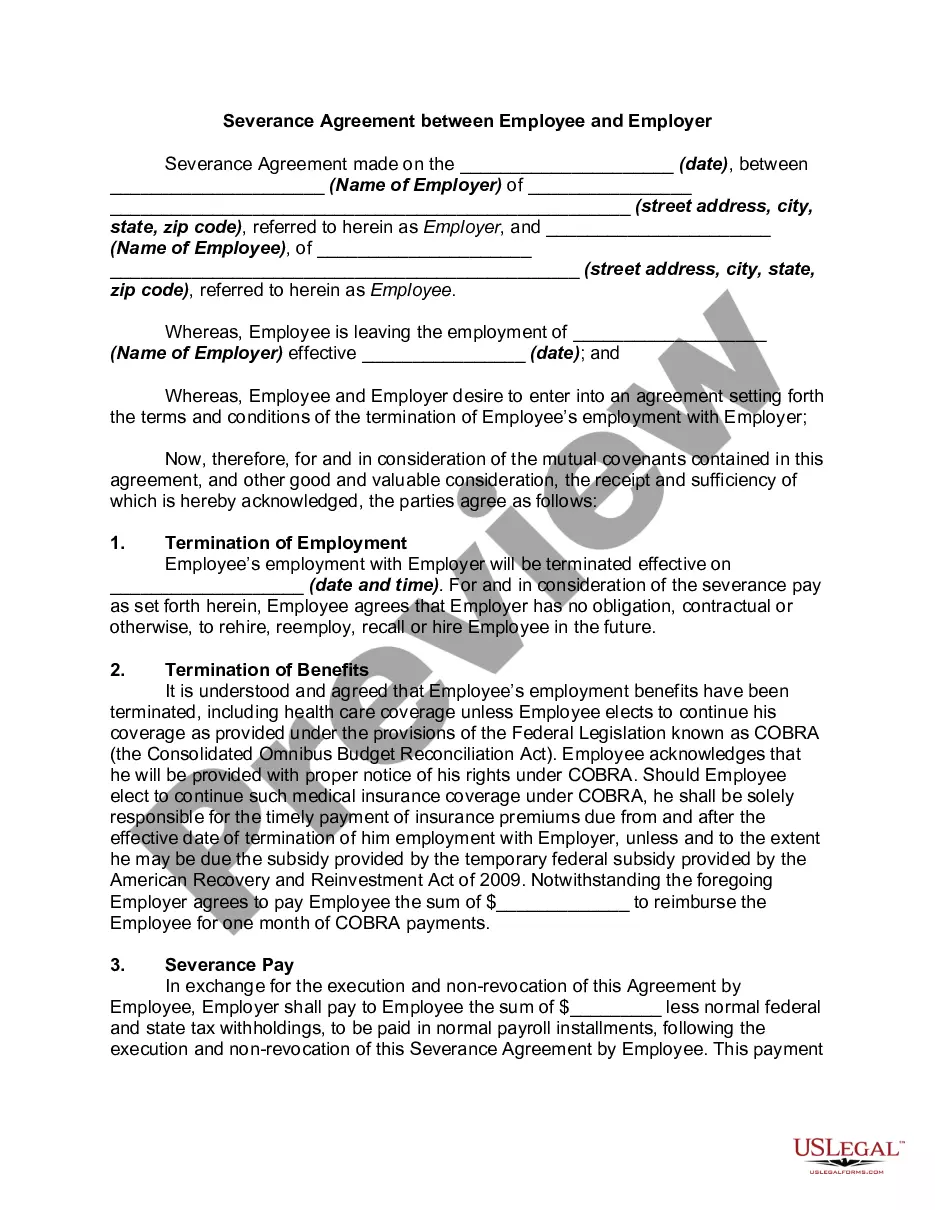
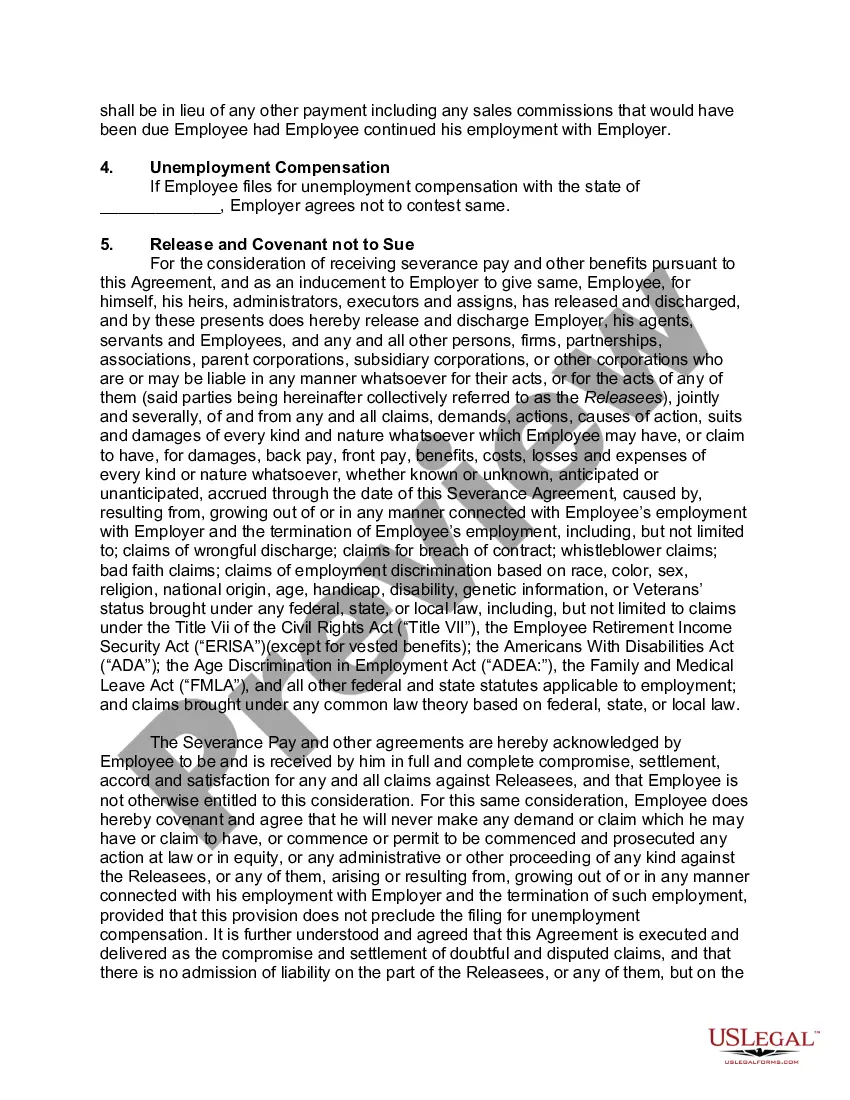
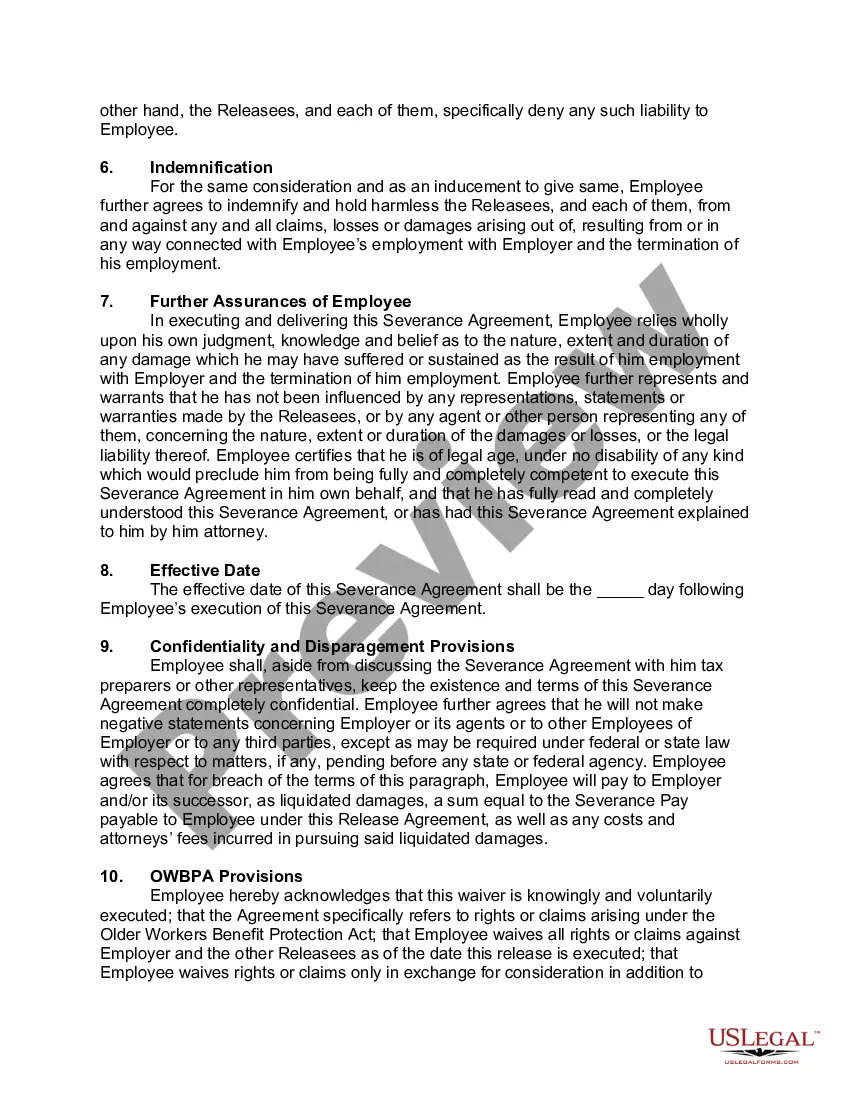
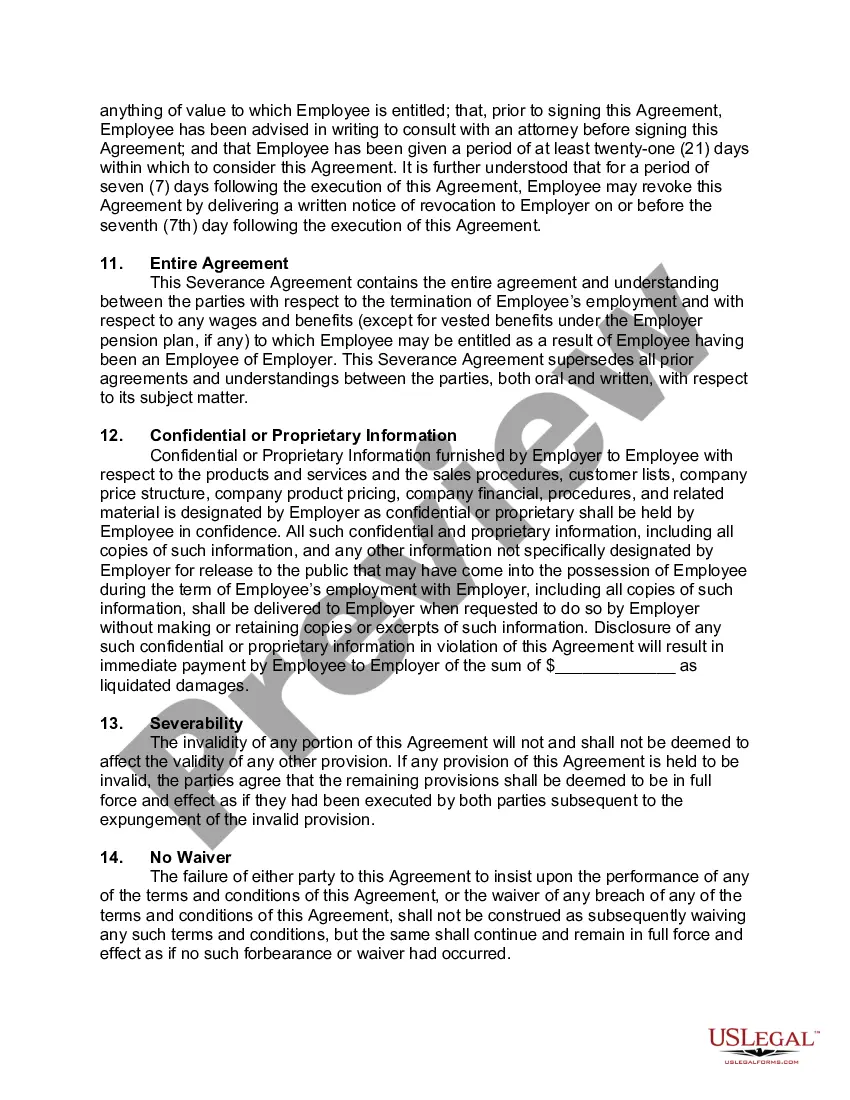
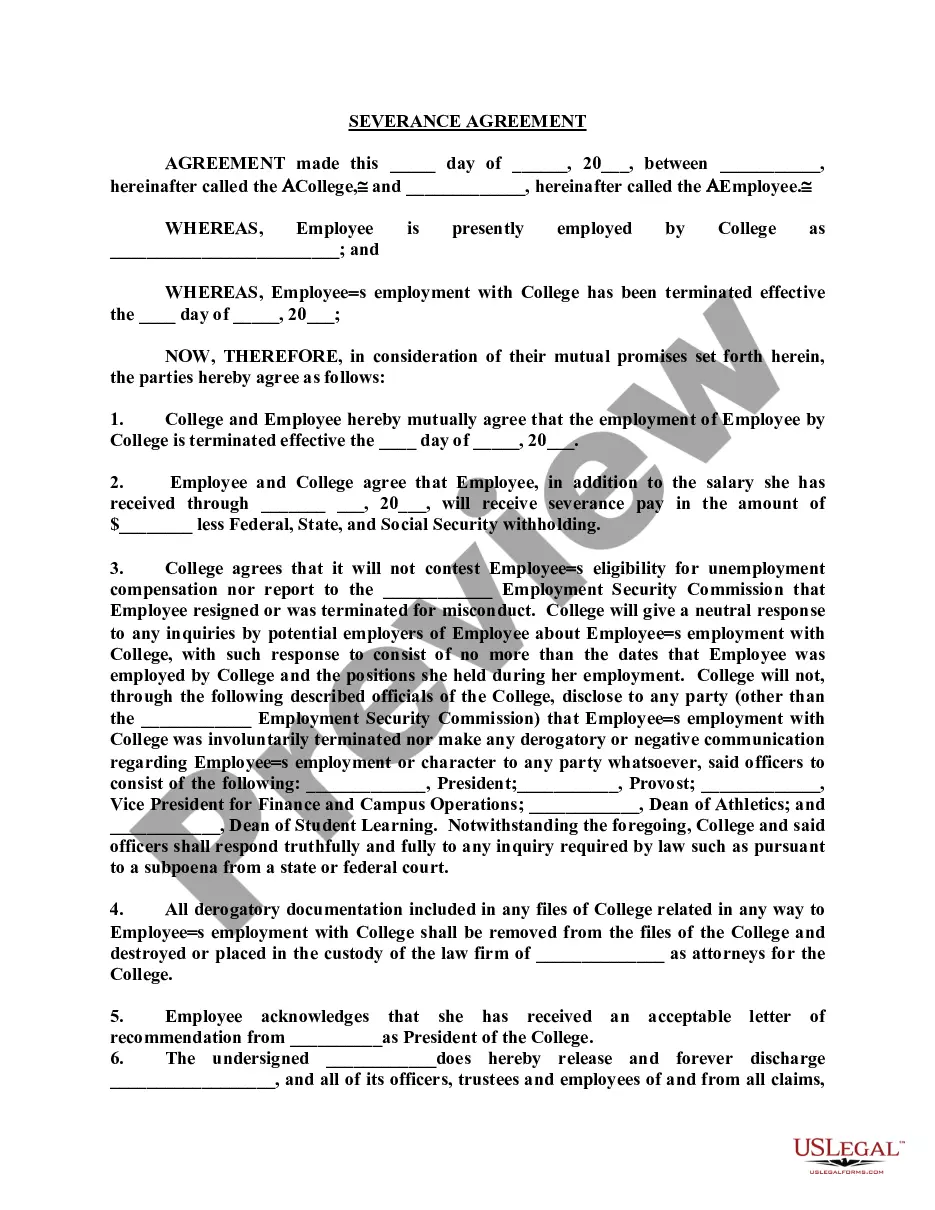
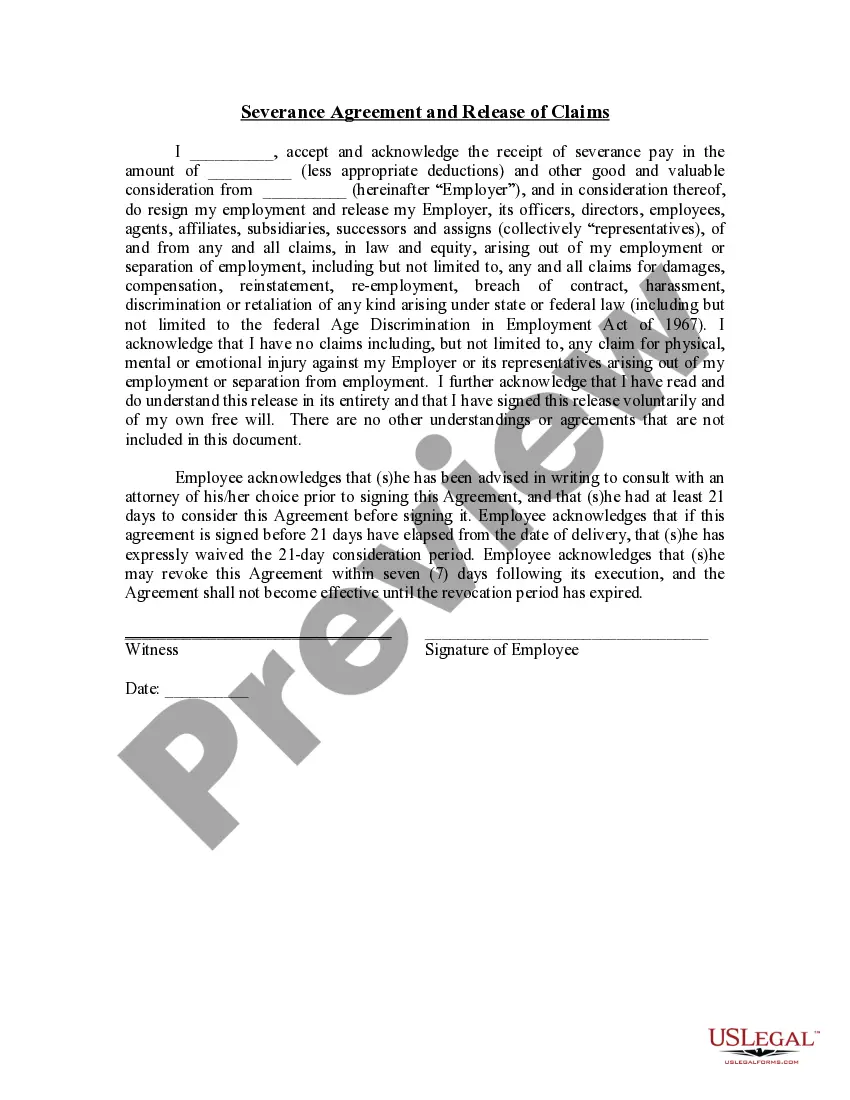
Get your form ready online
Our built-in tools help you complete, sign, share, and store your documents in one place.
Make edits, fill in missing information, and update formatting in US Legal Forms—just like you would in MS Word.
Download a copy, print it, send it by email, or mail it via USPS—whatever works best for your next step.
Sign and collect signatures with our SignNow integration. Send to multiple recipients, set reminders, and more. Go Premium to unlock E-Sign.
If this form requires notarization, complete it online through a secure video call—no need to meet a notary in person or wait for an appointment.
We protect your documents and personal data by following strict security and privacy standards.

Make edits, fill in missing information, and update formatting in US Legal Forms—just like you would in MS Word.

Download a copy, print it, send it by email, or mail it via USPS—whatever works best for your next step.

Sign and collect signatures with our SignNow integration. Send to multiple recipients, set reminders, and more. Go Premium to unlock E-Sign.

If this form requires notarization, complete it online through a secure video call—no need to meet a notary in person or wait for an appointment.

We protect your documents and personal data by following strict security and privacy standards.
Looking for another form?
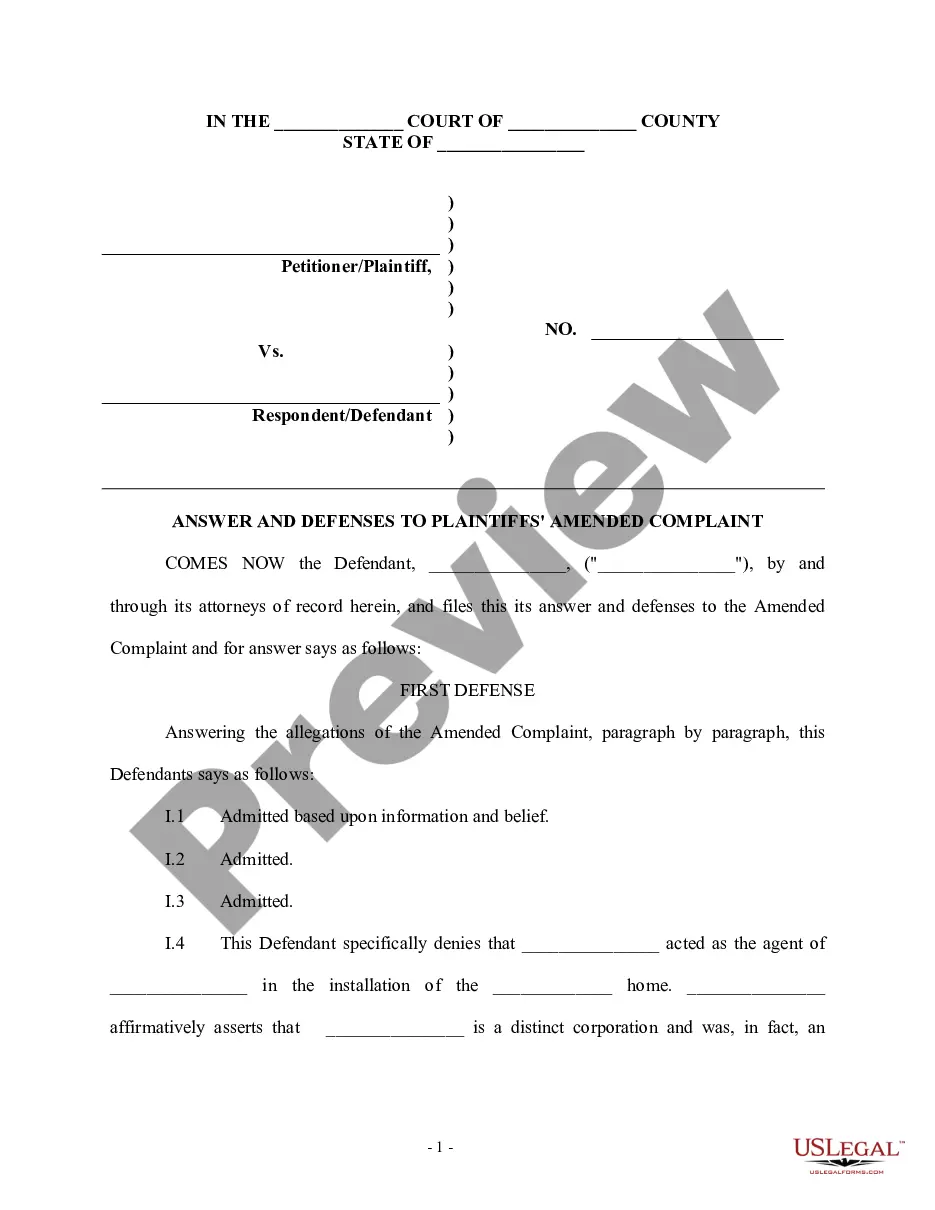





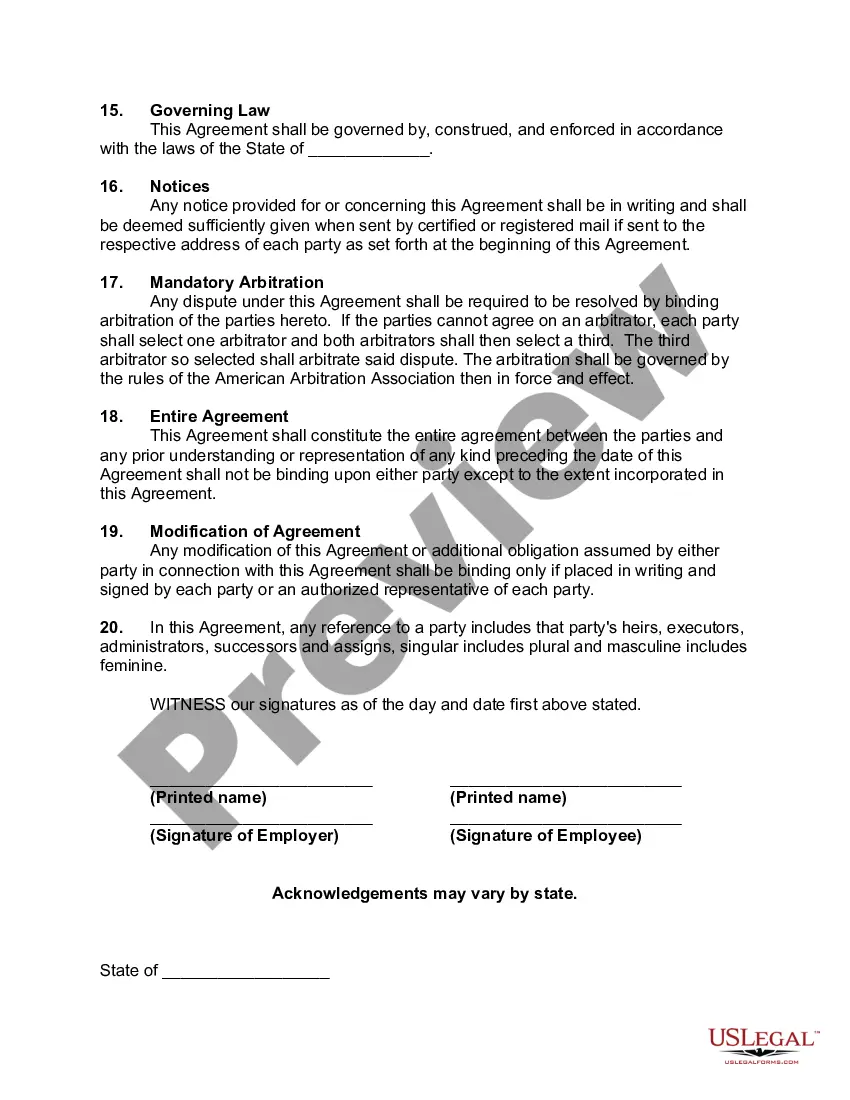
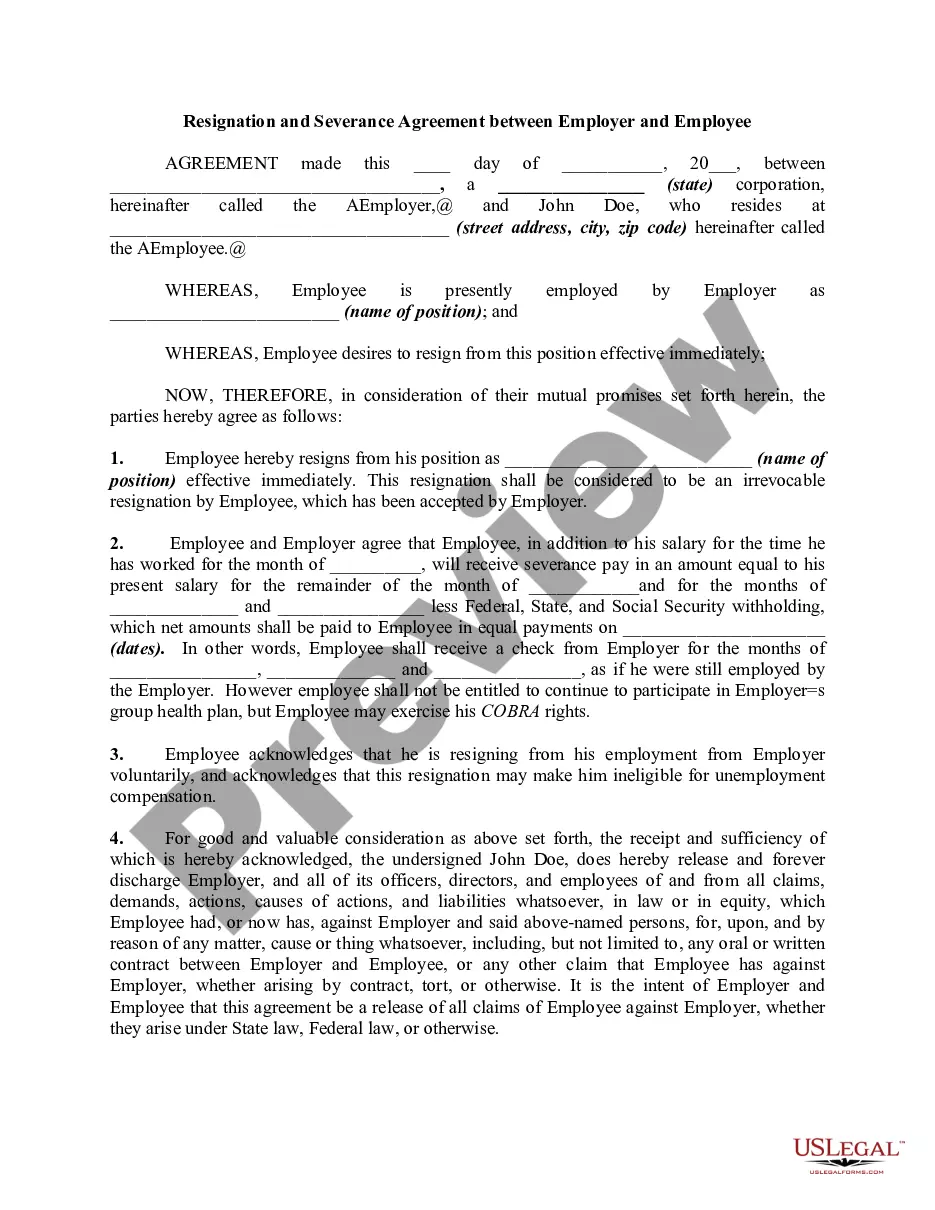
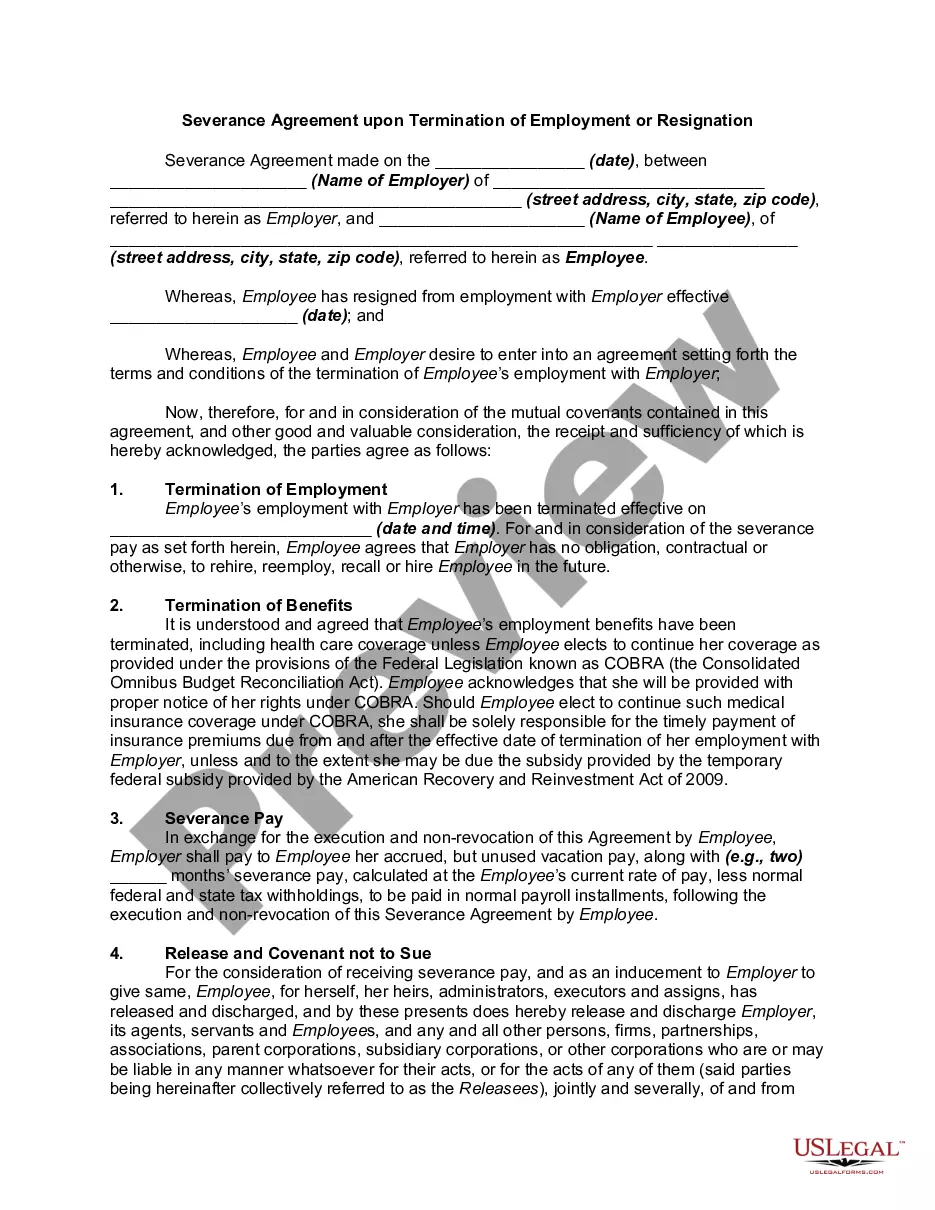
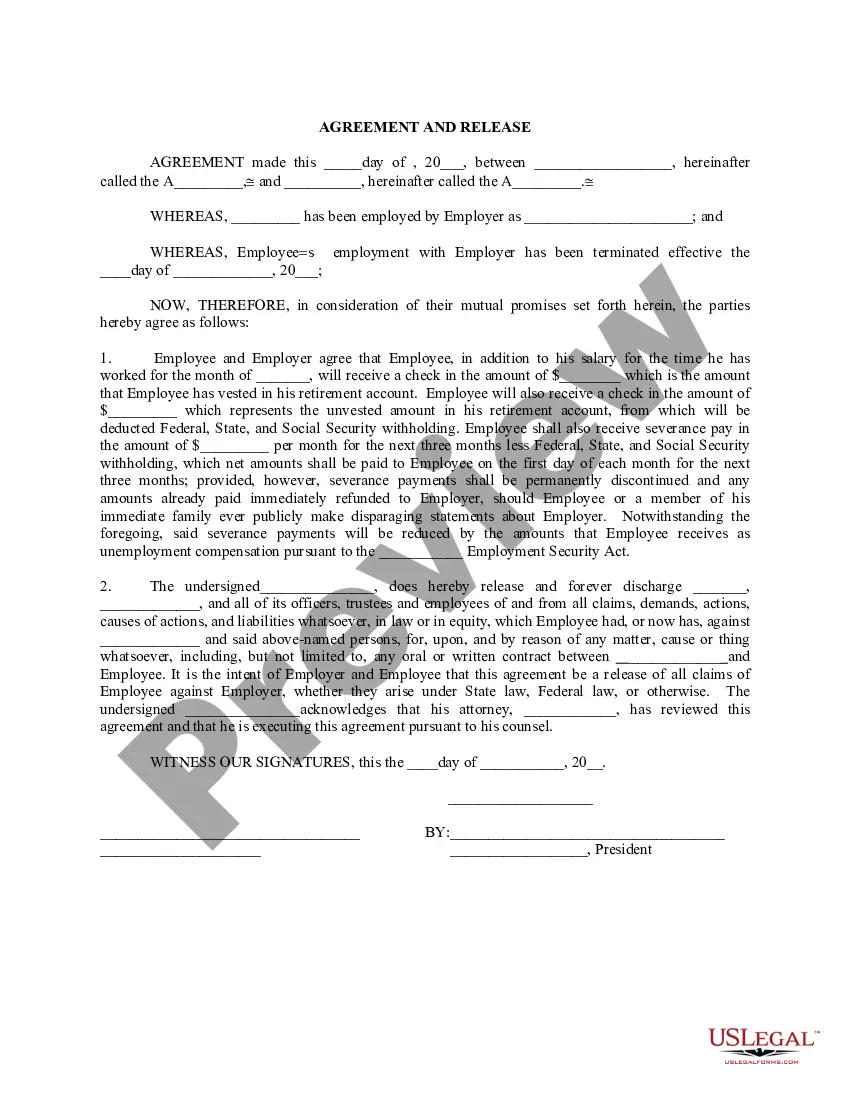
How to fill out Severance Agreement Between Employee And Employer?
Identifying a reliable venue to obtain the latest and suitable legal templates is a significant part of navigating bureaucracy.
Finding the appropriate legal documents requires accuracy and diligence, which is why it is essential to collect examples of Reasons To Request Additional Severance Pay exclusively from credible sources, such as US Legal Forms. An incorrect template will consume your time and delay your situation. With US Legal Forms, your concerns are minimal. You can access and review all the information related to the document’s applicability and significance to your circumstances and in your jurisdiction.
Eliminate the hassle associated with your legal documentation. Explore the comprehensive US Legal Forms catalog where you can find legal templates, evaluate their applicability to your needs, and download them promptly.
- Utilize the directory navigation or search box to locate your template.
- Examine the form’s details to determine if it meets the stipulations of your jurisdiction.
- View the form preview, if available, to confirm the template aligns with your needs.
- Return to the search and find the appropriate template if the Reasons To Request Additional Severance Pay does not suit your requirements.
- When you are confident about the form’s applicability, download it.
- If you are a registered user, click Log in to verify your identity and access your selected templates in My documents.
- If you do not yet have an account, click Buy now to acquire the form.
- Select the pricing option that meets your needs.
- Go through the registration to complete your transaction.
- Finalize your purchase by selecting a payment method (credit card or PayPal).
- Choose the file format for downloading Reasons To Request Additional Severance Pay.
- Once you have the form saved on your device, you can modify it using the editor or print it out and fill it in by hand.
Form popularity
FAQ
What should be in a personal loan contract? Names and addresses of the lender and the borrower. Information about the loan co-borrower or cosigner, if it's a joint personal loan. Loan amount and the method for disbursement (lump sum, installments, etc.) Date the loan was provided. Expected repayment date.
Loan agreements typically include covenants, value of collateral involved, guarantees, interest rate terms and the duration over which it must be repaid. Default terms should be clearly detailed to avoid confusion or potential legal court action.
What conditions must be met by law before giving money to friends? The borrower's approval is required before the loan may be made. The borrower must be able to pay back the loan. If the loan is not repaid within a reasonable amount of time, often one year, the lender must be able to collect on it.
A loan agreement is a written agreement between a lender that lends money to a borrower in exchange for repayment plus interest. The borrower will be required to pay back the loan in ance with a payment schedule (unless there is a balloon payment).
Consider including: Names and addresses of the parties to the agreement. Loan amount (principal). Interest rate. Repayment terms, including dates, and any late fees or penalties. Signature lines.
There are 10 basic provisions that should be in a loan agreement. Identity of the parties. The names of the lender and borrower need to be stated. ... Date of the agreement. ... Interest rate. ... Repayment terms. ... Default provisions. ... Signatures. ... Choice of law. ... Severability.
What should be in a personal loan contract? Names and addresses of the lender and the borrower. Information about the loan co-borrower or cosigner, if it's a joint personal loan. Loan amount and the method for disbursement (lump sum, installments, etc.) Date the loan was provided. Expected repayment date.
All different types of contracts of loan become legally valid and enforceable after following these steps: Drafting it per the Indian Contracts Act, of 1872; Both parties review the agreement; Print it on a non-judicial stamp paper of appropriate value; and. Signing by both parties on each page of the agreement.