Answer Court Motion For Sanctions
Description
Get your form ready online
Our built-in tools help you complete, sign, share, and store your documents in one place.
Make edits, fill in missing information, and update formatting in US Legal Forms—just like you would in MS Word.
Download a copy, print it, send it by email, or mail it via USPS—whatever works best for your next step.
Sign and collect signatures with our SignNow integration. Send to multiple recipients, set reminders, and more. Go Premium to unlock E-Sign.
If this form requires notarization, complete it online through a secure video call—no need to meet a notary in person or wait for an appointment.
We protect your documents and personal data by following strict security and privacy standards.

Make edits, fill in missing information, and update formatting in US Legal Forms—just like you would in MS Word.

Download a copy, print it, send it by email, or mail it via USPS—whatever works best for your next step.

Sign and collect signatures with our SignNow integration. Send to multiple recipients, set reminders, and more. Go Premium to unlock E-Sign.

If this form requires notarization, complete it online through a secure video call—no need to meet a notary in person or wait for an appointment.

We protect your documents and personal data by following strict security and privacy standards.
Looking for another form?









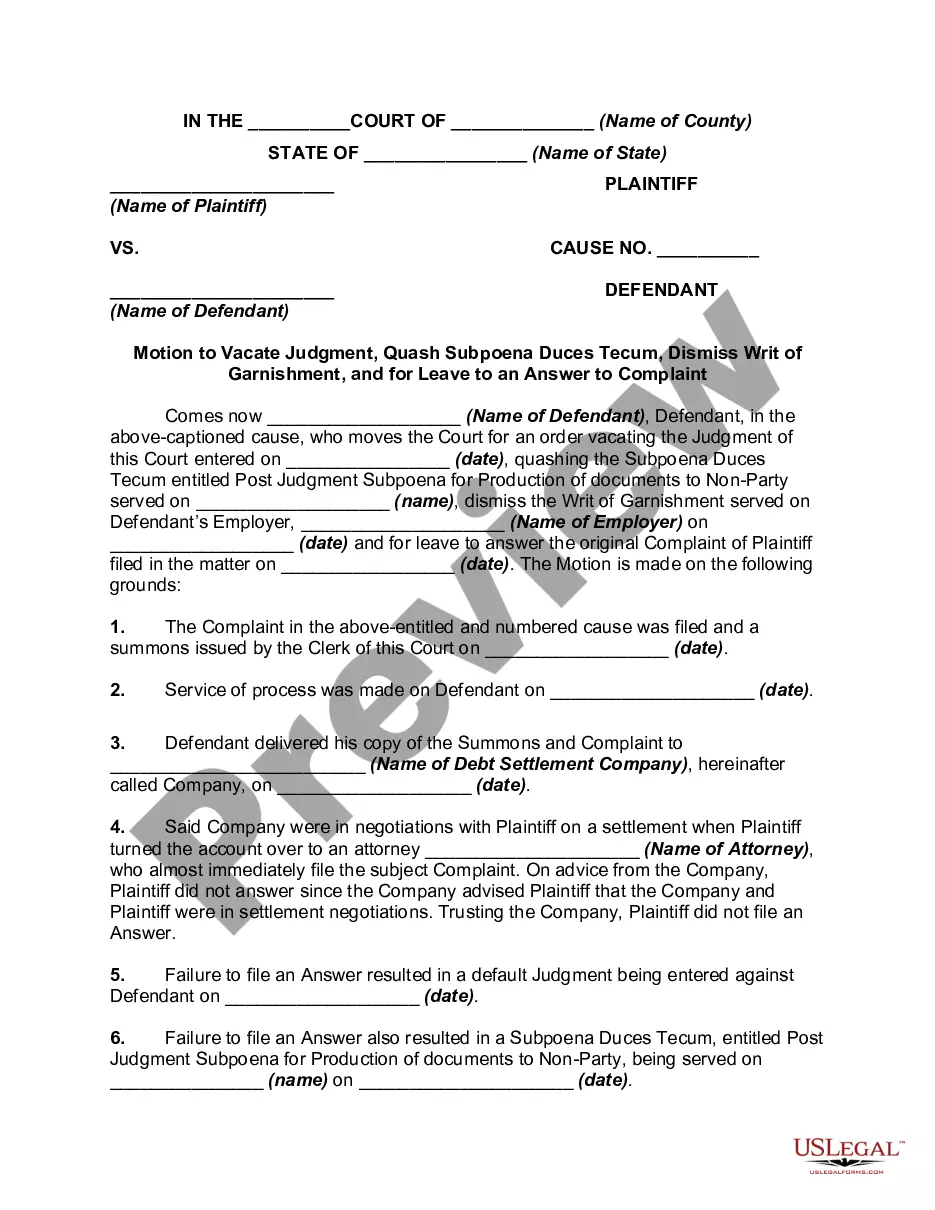
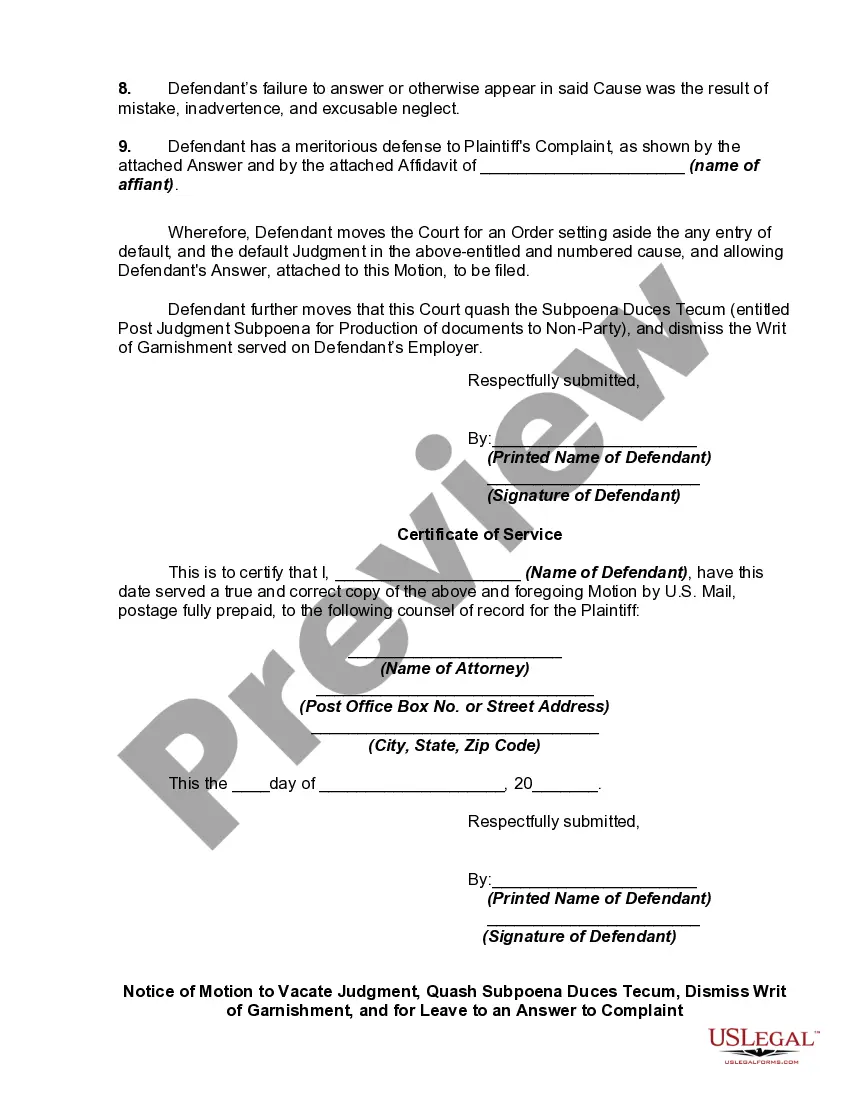
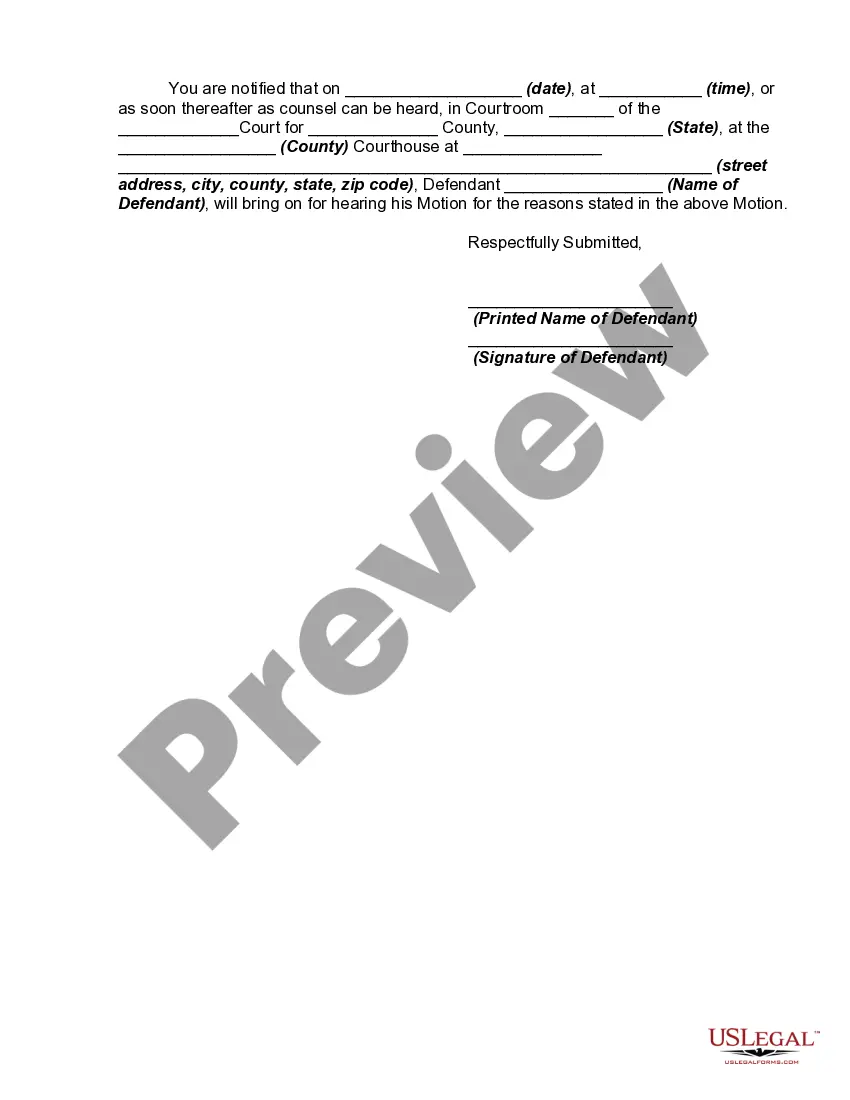
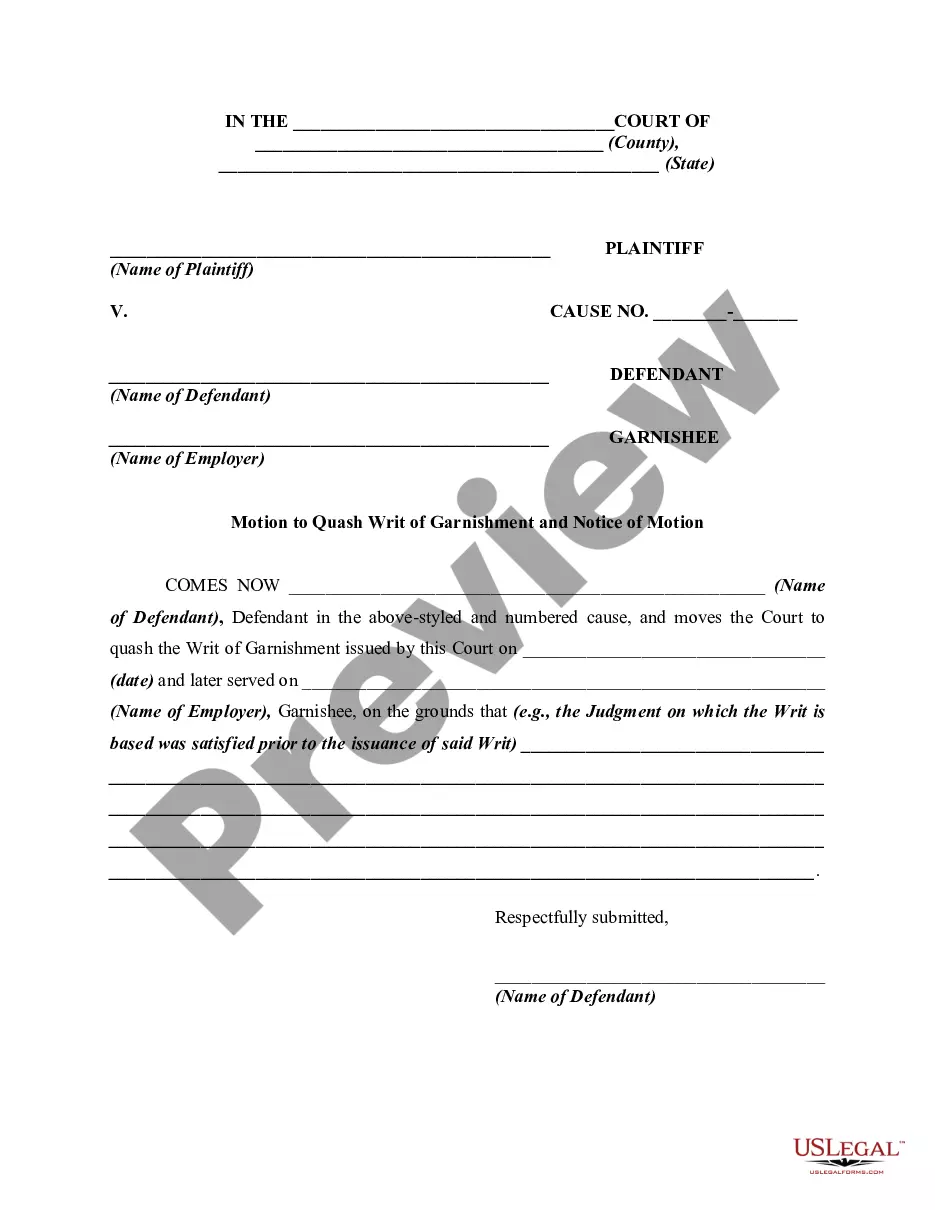
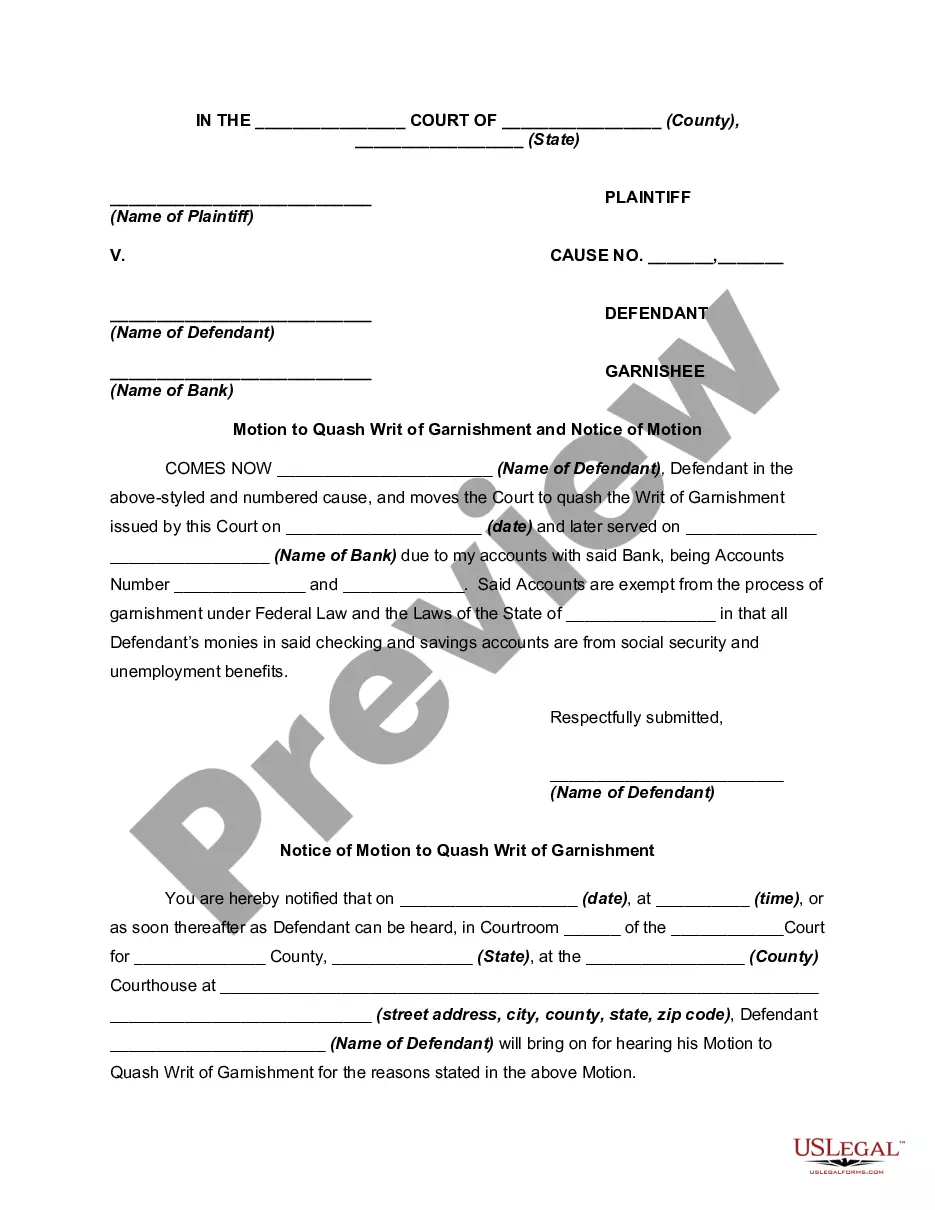
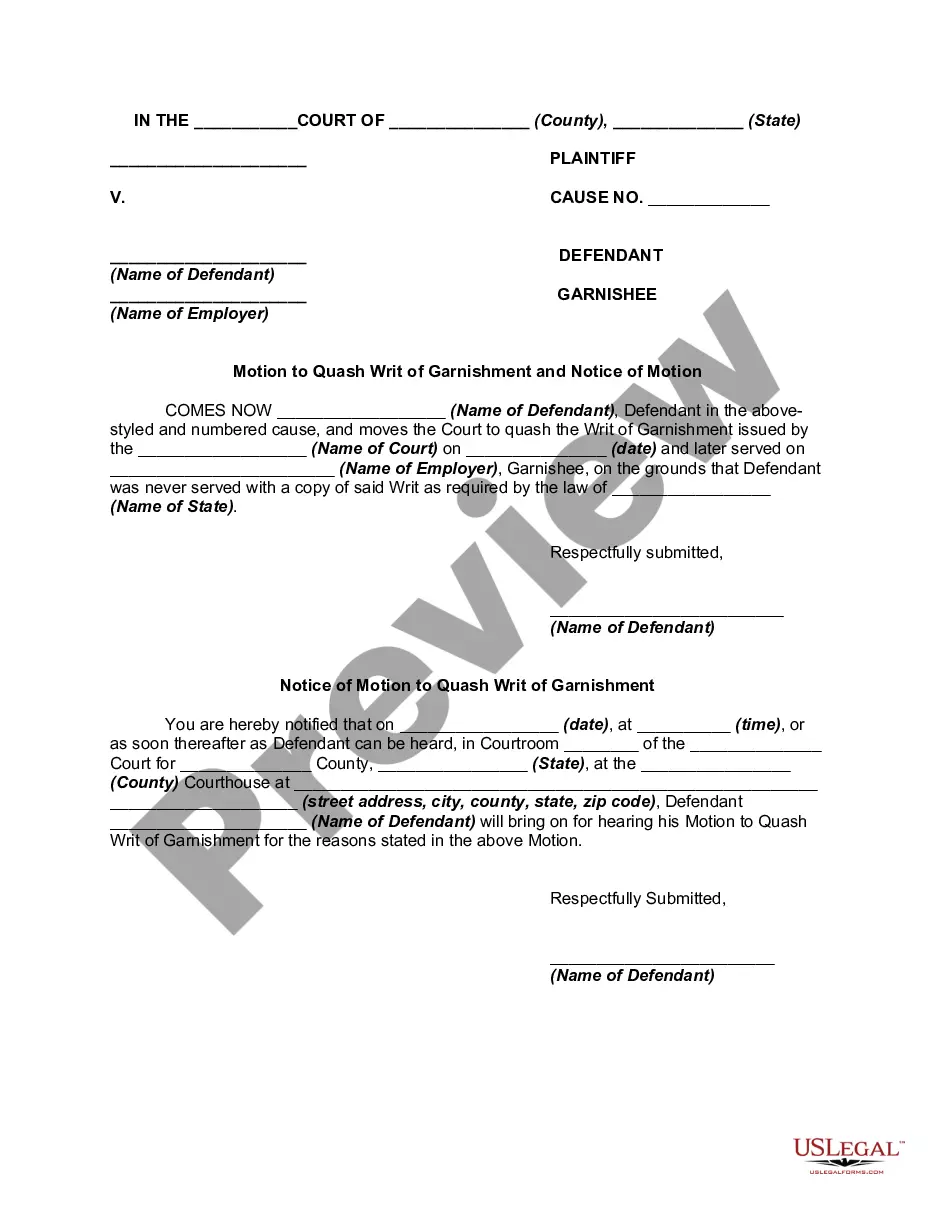
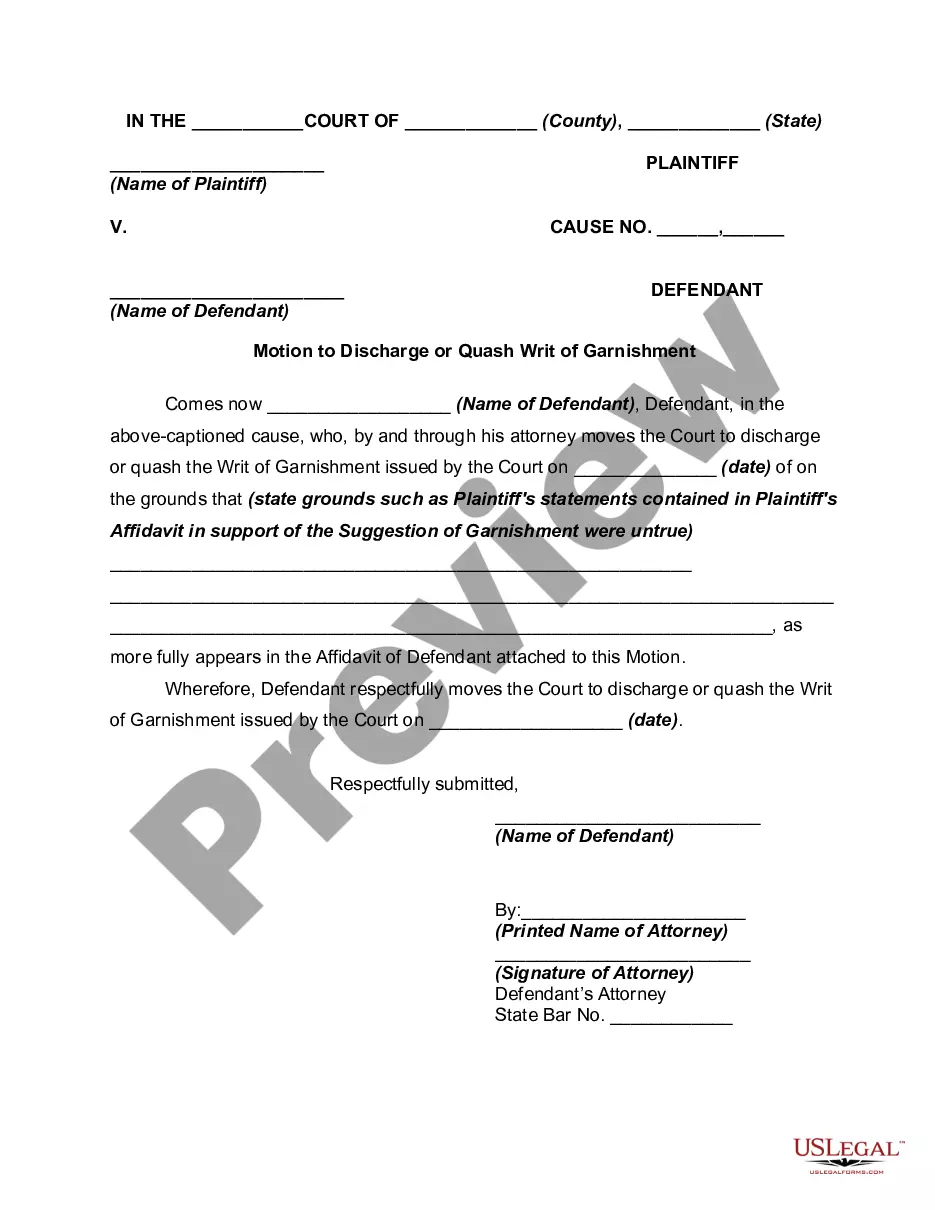
How to fill out Motion To Vacate Judgment, Quash Subpoena Duces Tecum, Dismiss Writ Of Garnishment, And For Leave To File An Answer To Complaint?
Securing a reliable source to obtain the latest and suitable legal templates is a significant part of navigating bureaucracy. Locating the appropriate legal documents requires accuracy and meticulousness, which highlights the importance of sourcing Answer Court Motion For Sanctions only from trustworthy providers, such as US Legal Forms. Utilizing an incorrect template could squander your time and delay the issue at hand. With US Legal Forms, you have minimal concerns. You can access and review all the details concerning the document’s application and significance for your circumstance and within your jurisdiction.
Consider the outlined steps to complete your Answer Court Motion For Sanctions.
Eliminate the hassle associated with your legal documentation. Browse the extensive US Legal Forms collection to discover legal templates, verify their appropriateness for your situation, and download them without delay.
- Use the catalog browsing or query field to locate your template.
- Open the form’s details to verify if it meets the prerequisites of your jurisdiction.
- Access the form preview, if available, to confirm it is the document you need.
- Continue searching and find the correct document if the Answer Court Motion For Sanctions does not conform to your specifications.
- Once you are certain of the form’s significance, download it.
- If you are a registered user, click Log in to authenticate and retrieve your selected forms in My documents.
- If you do not possess an account yet, click Buy now to purchase the form.
- Choose the pricing plan that suits your needs.
- Proceed to registration to finalize your transaction.
- Complete your transaction by selecting a payment option (credit card or PayPal).
- Choose the document format for downloading Answer Court Motion For Sanctions.
- After you have the form on your device, you may edit it using the editor or print it and fill it out by hand.
Form popularity
FAQ
R. 3.1348. The court may award sanctions under the Discovery Act in favor of a party who files a motion to compel discovery, even though no opposition to the motion was filed, or opposition to the motion was withdrawn, or the requested discovery was provided to the moving party after the motion was filed.
The motion to compel is used to ask the court to order the non-complying party to produce the documentation or information requested, and/or to sanction the non-complying party for their failure to comply with the discovery requests.
The enforcement of a sanctions order by execution is the best method as many judges prefer that the execution procedures be used, and will not allow contempt proceedings for collection purposes at least until after other methods such as execution have been attempted.
To ensure that people follow the rules, judges have the power to punish disobedience. Sometimes they do this on their own initiative, but sometimes other litigants ask the judge to punish someone else. These sanctions motions identify litigation misconduct and ask a judge to impose a penalty.
At the conclusion of the judicial process, a judge may sentence an individual convicted of a crime to some type of penalty or sanction, such as a decree of imprisonment, a fine, or other punishments.