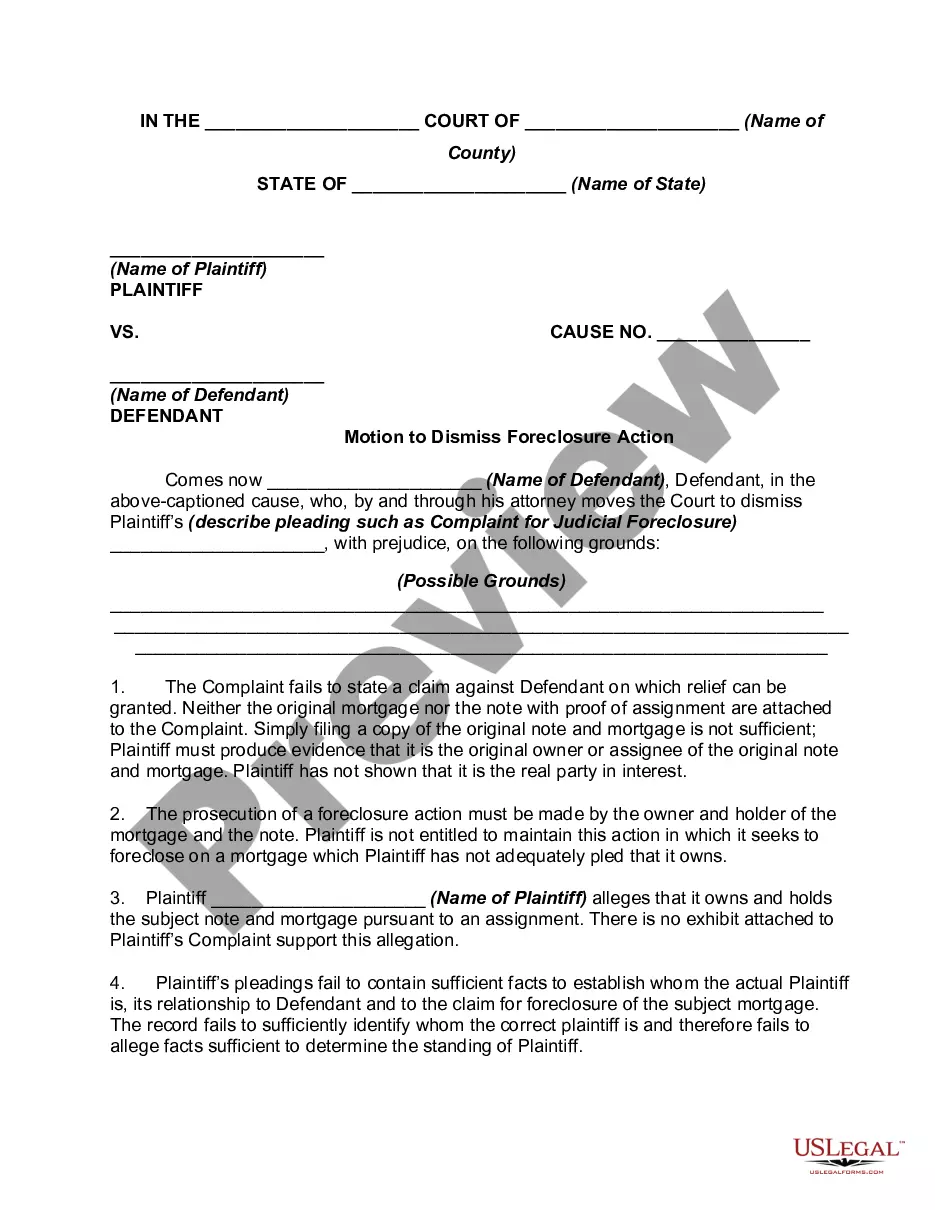
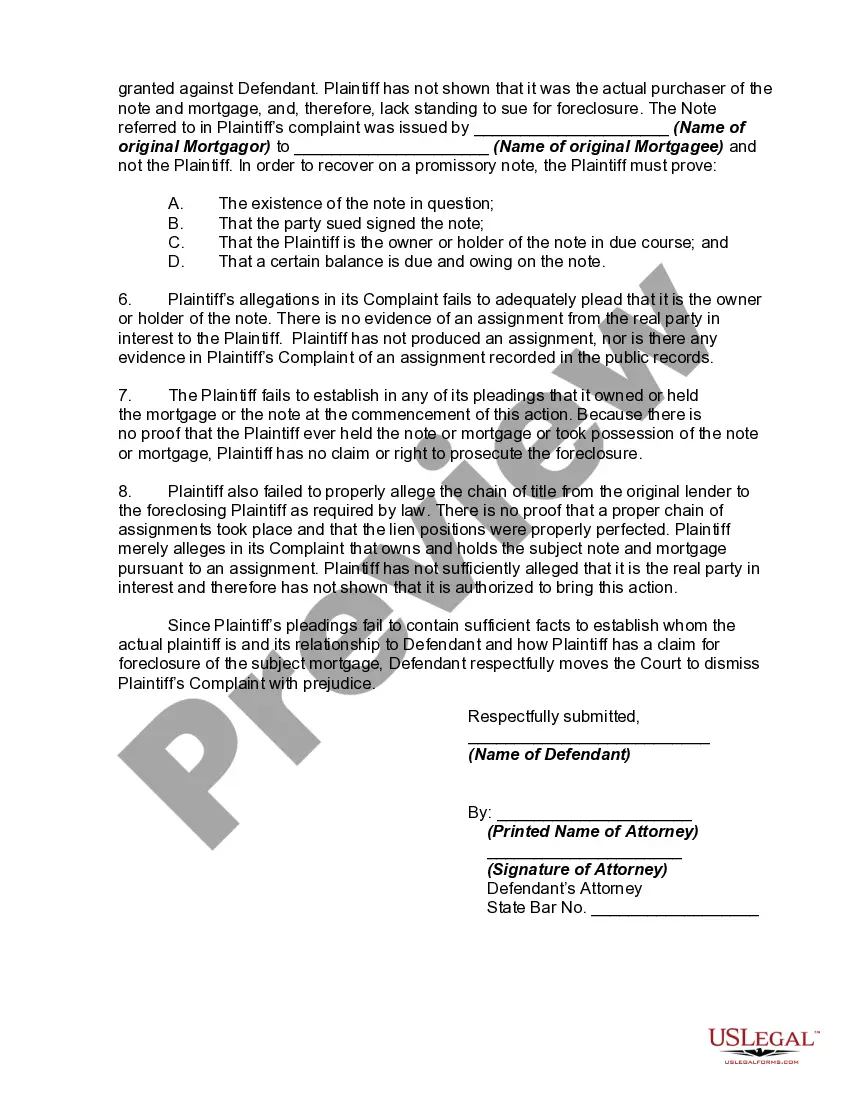
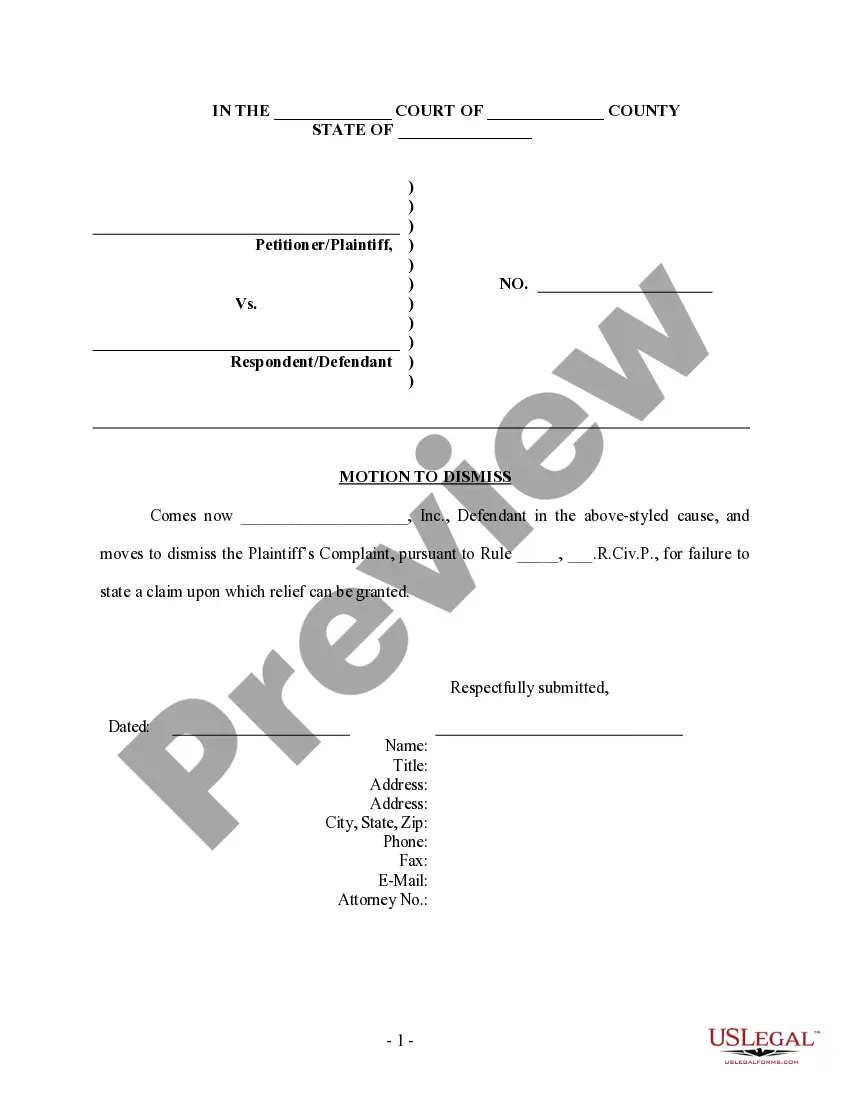
Motion To Dismiss For Failure To State A Claim Sample
Description
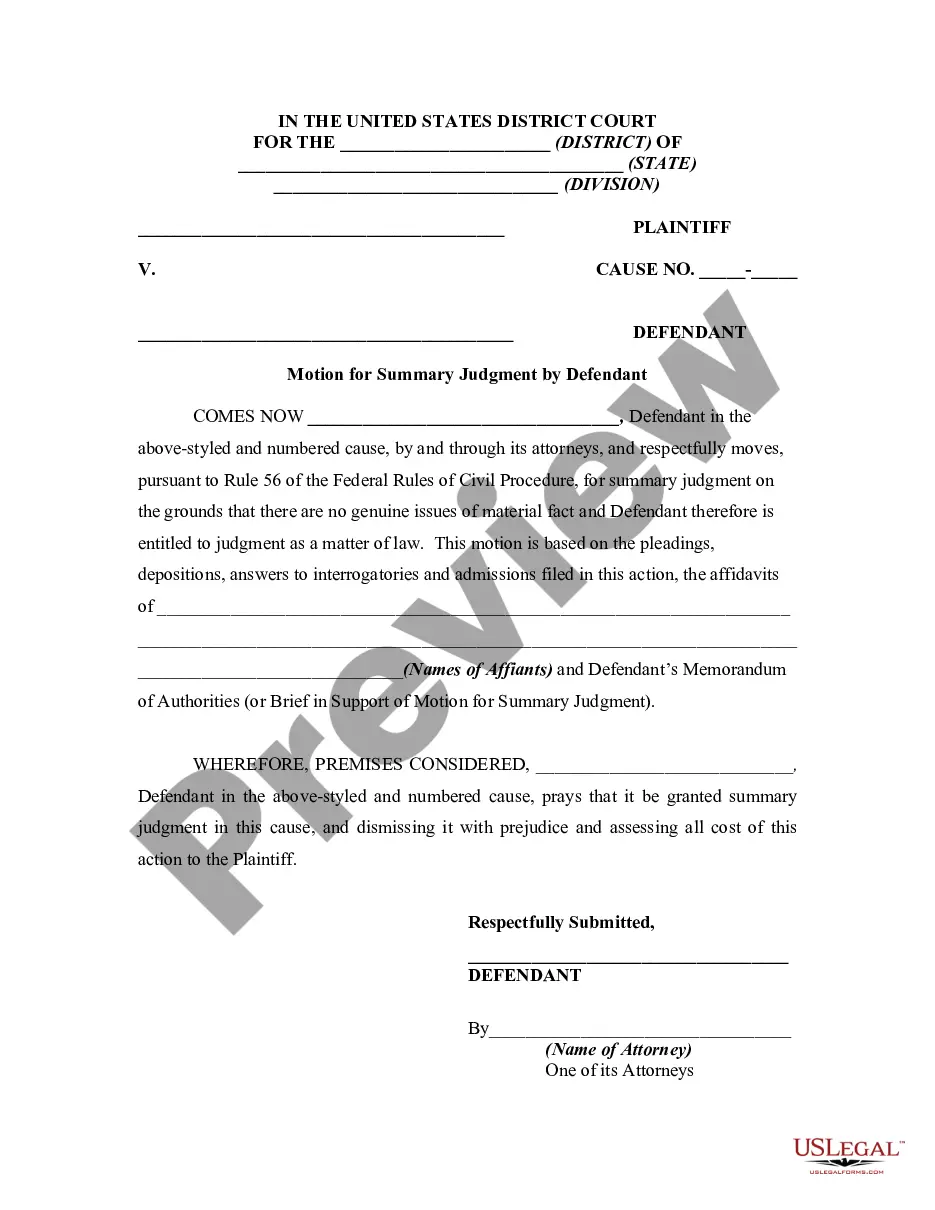
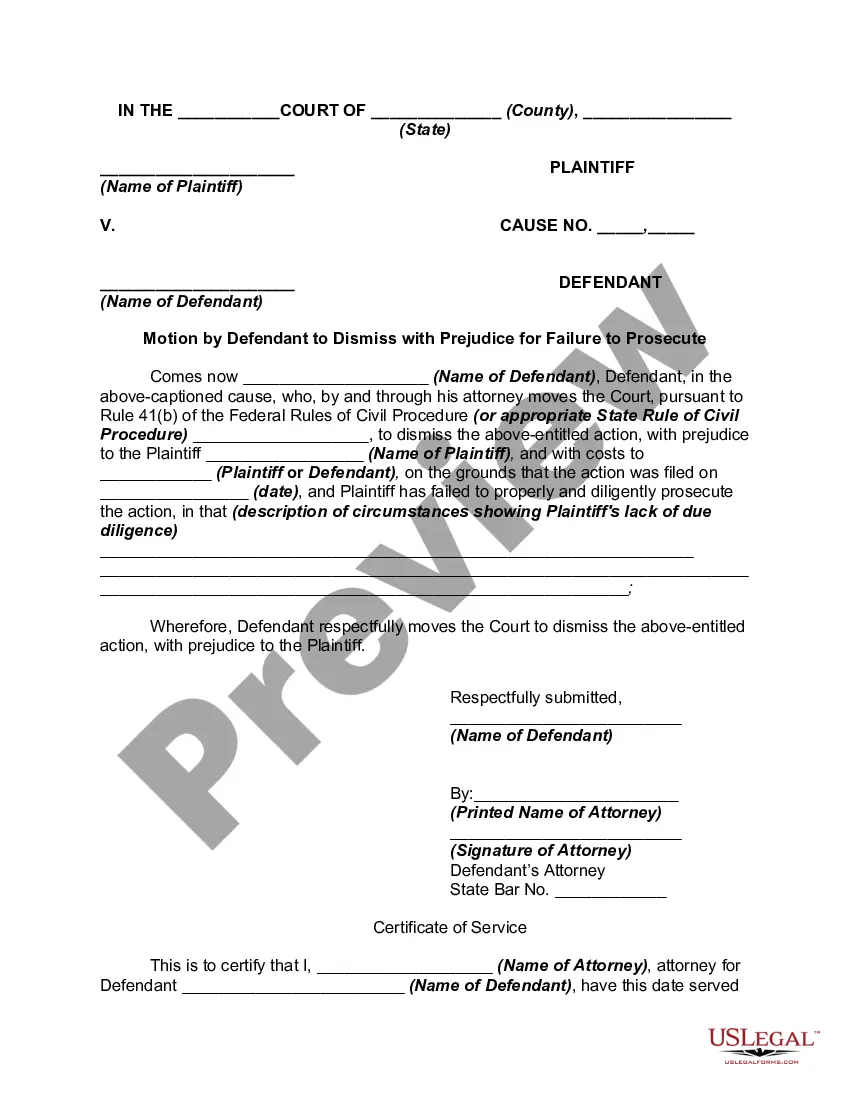
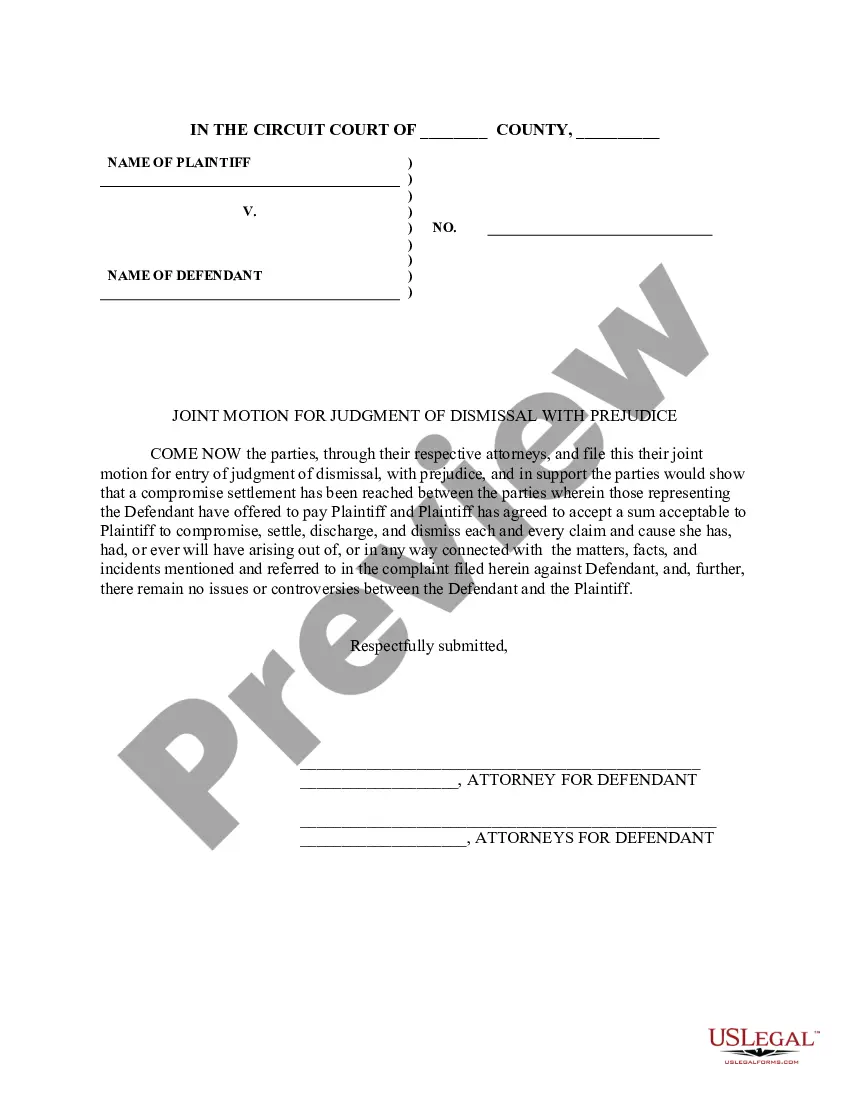
Get your form ready online
Our built-in tools help you complete, sign, share, and store your documents in one place.
Make edits, fill in missing information, and update formatting in US Legal Forms—just like you would in MS Word.
Download a copy, print it, send it by email, or mail it via USPS—whatever works best for your next step.
Sign and collect signatures with our SignNow integration. Send to multiple recipients, set reminders, and more. Go Premium to unlock E-Sign.
If this form requires notarization, complete it online through a secure video call—no need to meet a notary in person or wait for an appointment.
We protect your documents and personal data by following strict security and privacy standards.

Make edits, fill in missing information, and update formatting in US Legal Forms—just like you would in MS Word.

Download a copy, print it, send it by email, or mail it via USPS—whatever works best for your next step.

Sign and collect signatures with our SignNow integration. Send to multiple recipients, set reminders, and more. Go Premium to unlock E-Sign.

If this form requires notarization, complete it online through a secure video call—no need to meet a notary in person or wait for an appointment.

We protect your documents and personal data by following strict security and privacy standards.
Looking for another form?





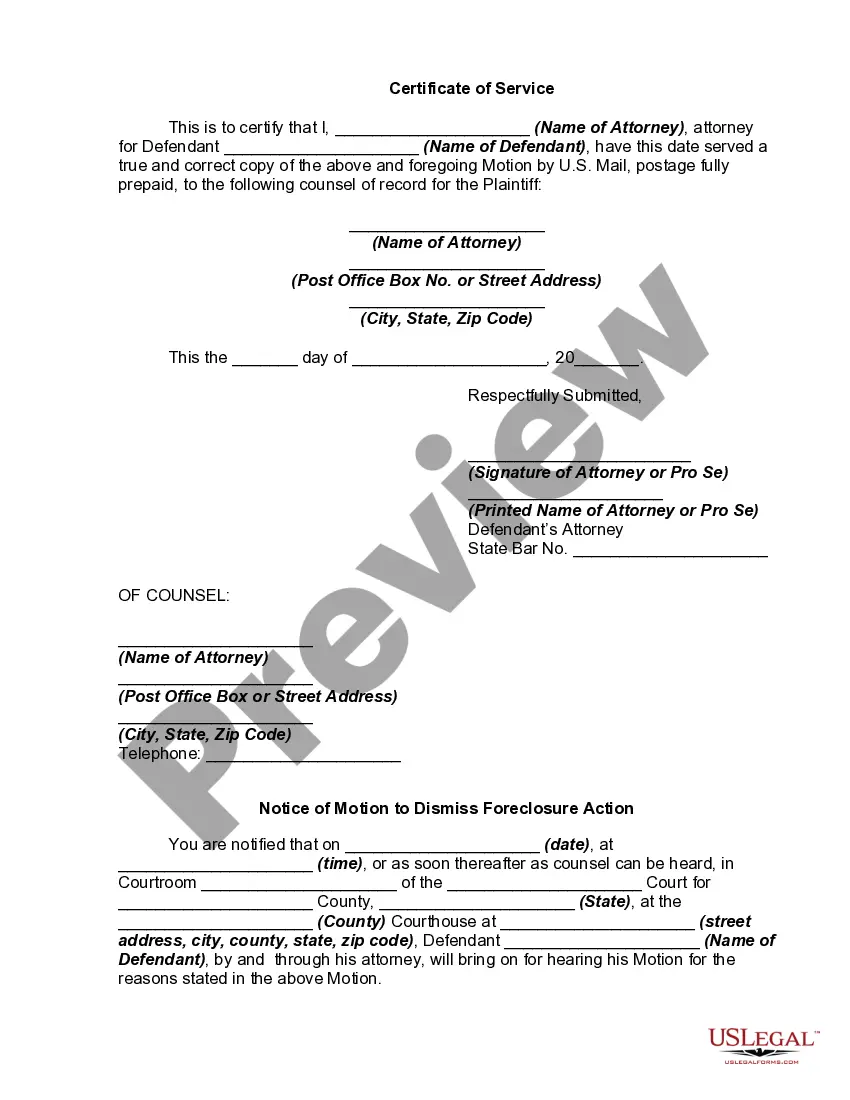
How to fill out Motion To Dismiss Foreclosure Action And Notice Of Motion?
The Motion To Dismiss For Inability To Present A Case Sample you see on this site is a versatile official template composed by skilled attorneys following federal and local laws and guidelines.
For over 25 years, US Legal Forms has offered individuals, enterprises, and legal practitioners with more than 85,000 validated, state-specific documents for any business and personal situation. It’s the quickest, simplest, and most dependable way to access the forms you require, as the service ensures the utmost level of data safety and anti-virus protection.
Opt for the format you desire for your Motion To Dismiss For Inability To Present A Case Sample (PDF, DOCX, RTF) and save the sample on your device.
- Search for the document you require and examine it.
- Browse through the sample you searched and preview it or review the form description to make sure it meets your requirements. If it doesn’t, use the search bar to locate the correct one. Click Buy Now when you have found the template you need.
- Register and Log In.
- Choose the subscription plan that fits you and create an account. Use PayPal or a credit card to make a swift payment. If you already possess an account, Log In and verify your subscription to proceed.
- Obtain the editable template.
Form popularity
FAQ
One example of a failure to state a claim is when one party files a personal injury claim based on negligence. Negligence requires that the defendant breached their duty of care to the plaintiff.
A more thorough explanation: For example, if someone sues their neighbor for being annoying, but there is no law against being annoying, the defendant could argue that the plaintiff has failed to state a valid legal claim.
For example, a party can make a motion to ask to allow him or her not to give the other side the discovery that was asked for. If a party thinks that a subpoena asks for documents that have nothing to do with the case, or asks for too much information, the party can make a motion to quash the subpoena.
Failure to state a claim is a defense asserting that even if all the factual allegations in a complaint are true, they are insufficient to establish a cause of action and the case should therefore be dismissed.
Failure to state a claim is a defense asserting that even if all the factual allegations in a complaint are true, they are insufficient to establish a cause of action and the case should therefore be dismissed.