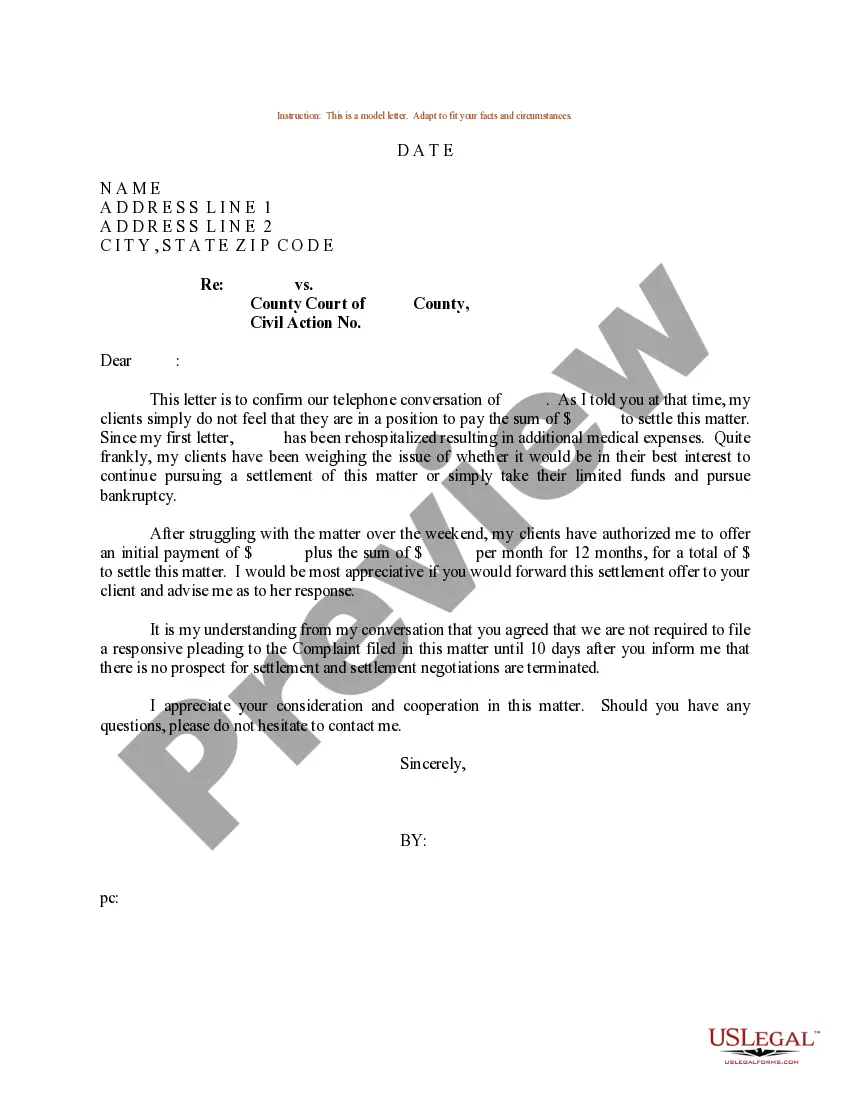
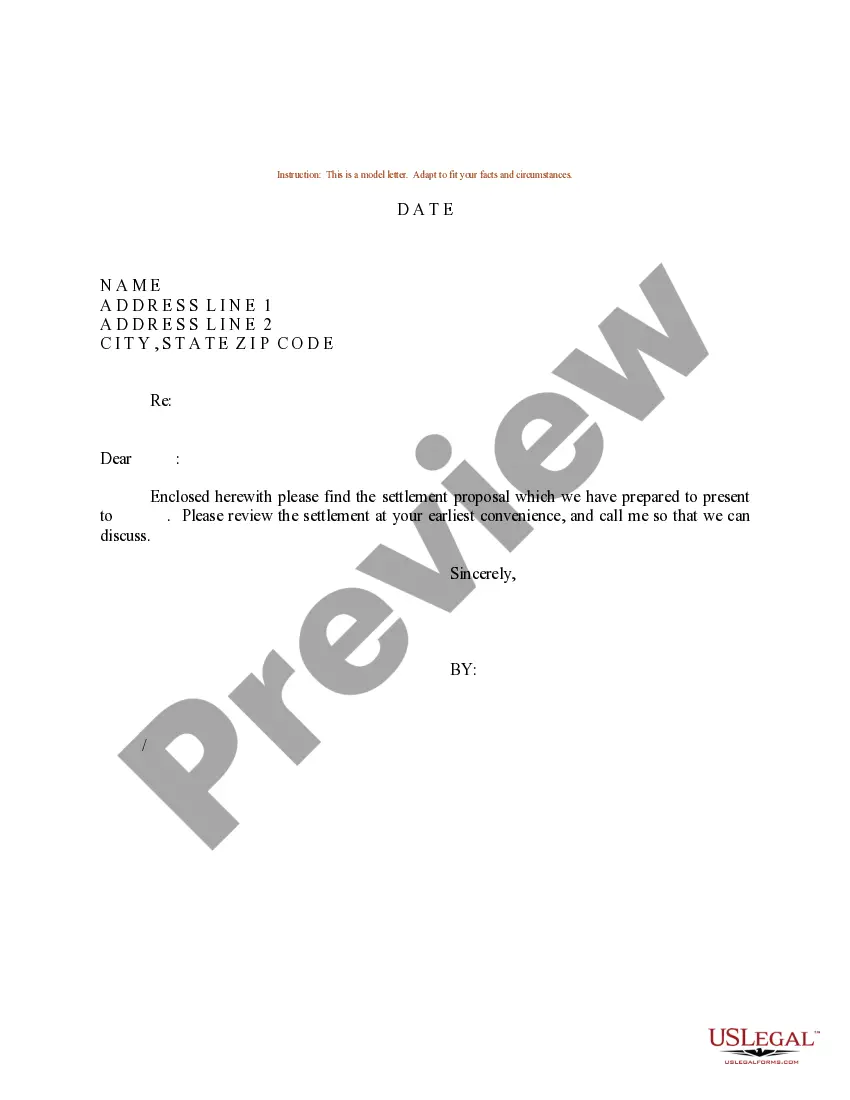
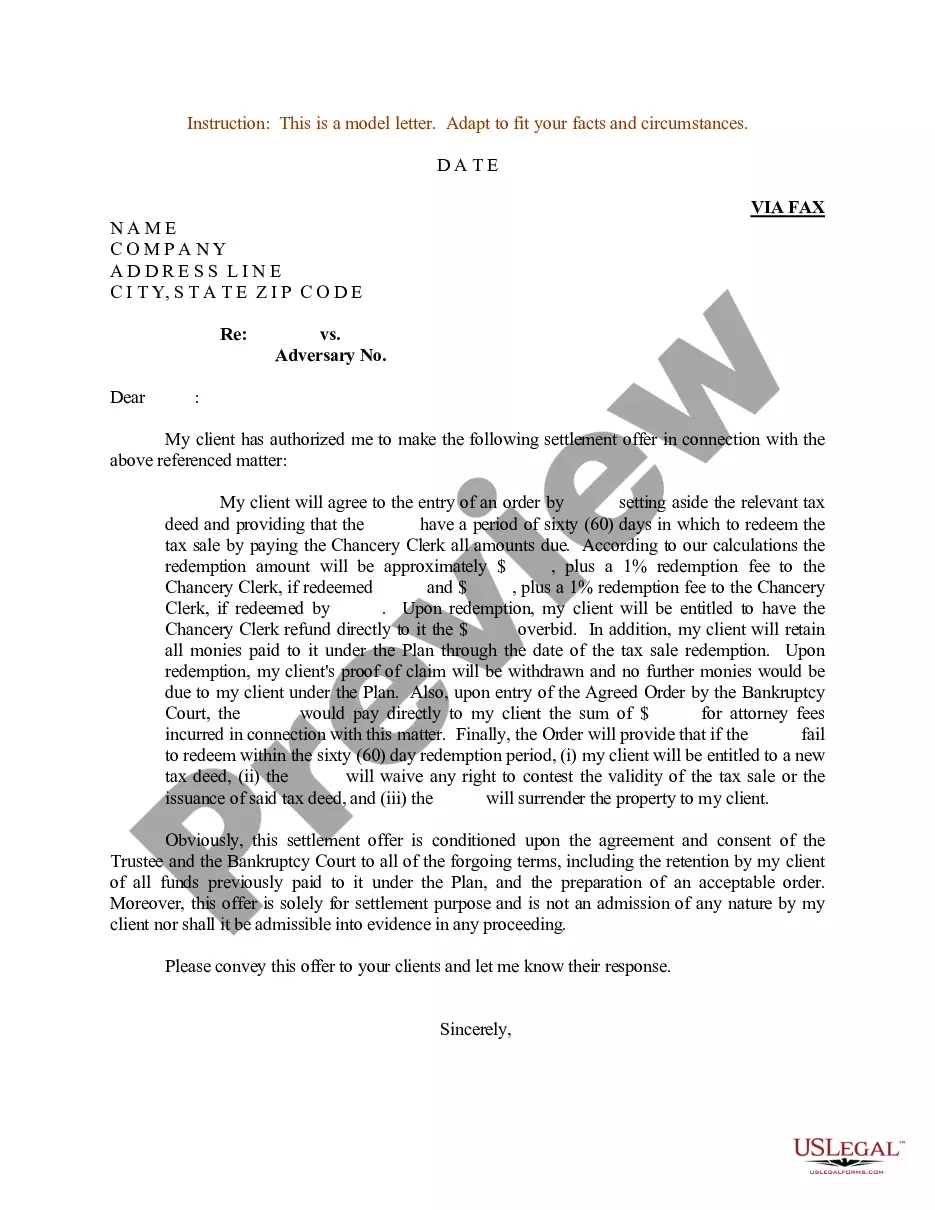
Sample Settlement Letter Without Prejudice
Description


Get your form ready online
Our built-in tools help you complete, sign, share, and store your documents in one place.
Make edits, fill in missing information, and update formatting in US Legal Forms—just like you would in MS Word.
Download a copy, print it, send it by email, or mail it via USPS—whatever works best for your next step.
Sign and collect signatures with our SignNow integration. Send to multiple recipients, set reminders, and more. Go Premium to unlock E-Sign.
If this form requires notarization, complete it online through a secure video call—no need to meet a notary in person or wait for an appointment.
We protect your documents and personal data by following strict security and privacy standards.
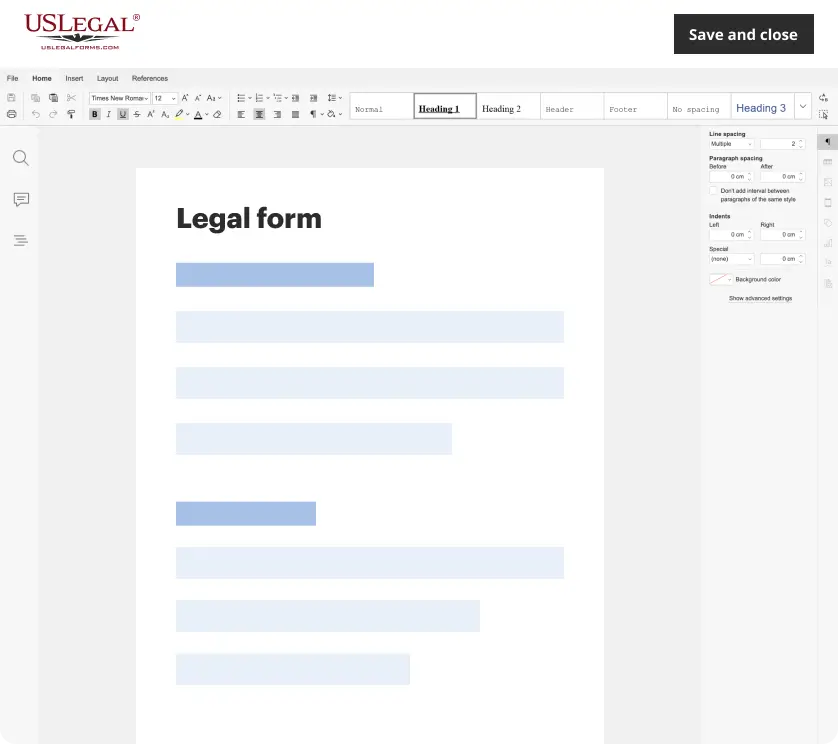
Make edits, fill in missing information, and update formatting in US Legal Forms—just like you would in MS Word.
Download a copy, print it, send it by email, or mail it via USPS—whatever works best for your next step.
Sign and collect signatures with our SignNow integration. Send to multiple recipients, set reminders, and more. Go Premium to unlock E-Sign.
If this form requires notarization, complete it online through a secure video call—no need to meet a notary in person or wait for an appointment.
We protect your documents and personal data by following strict security and privacy standards.
Looking for another form?

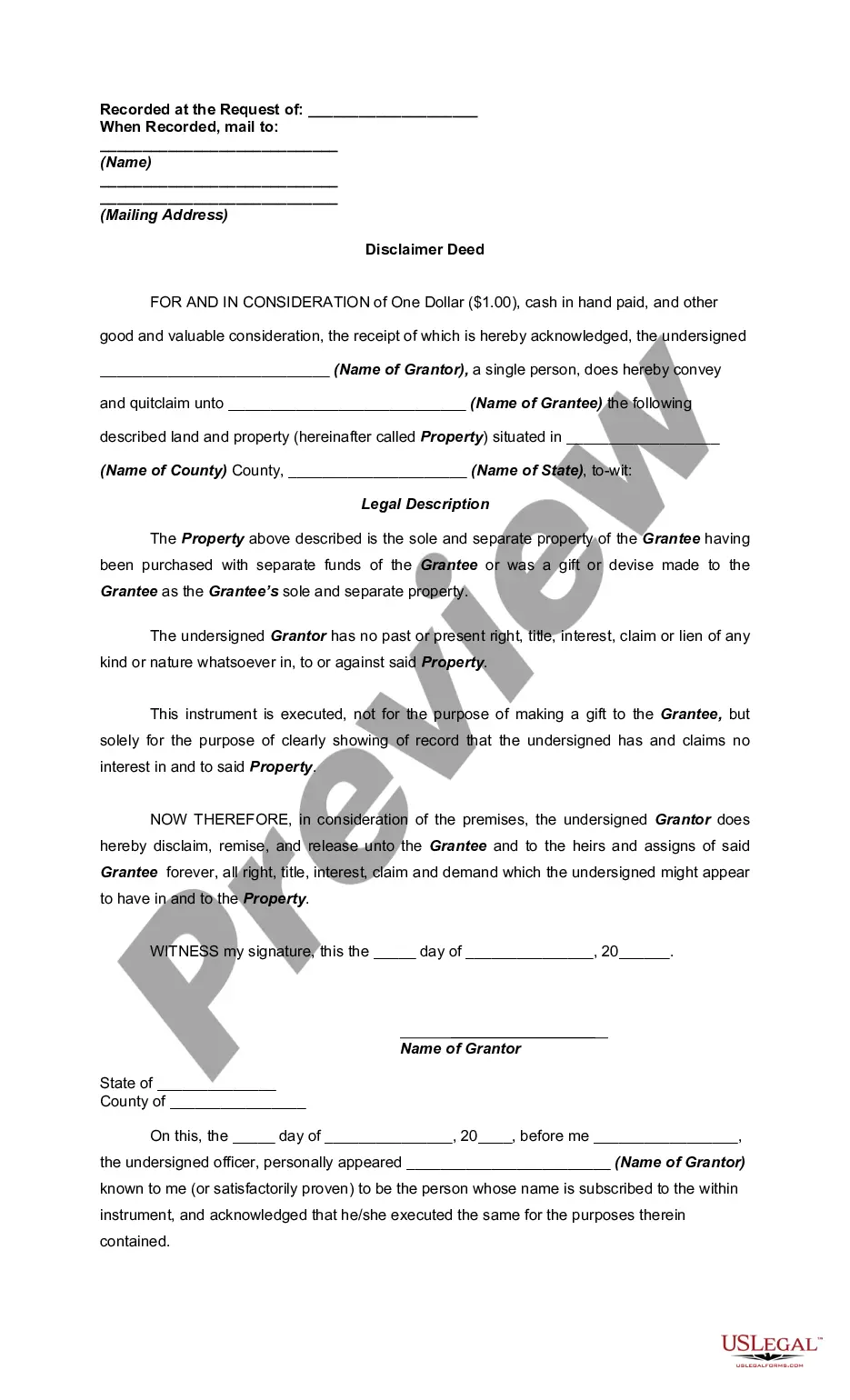
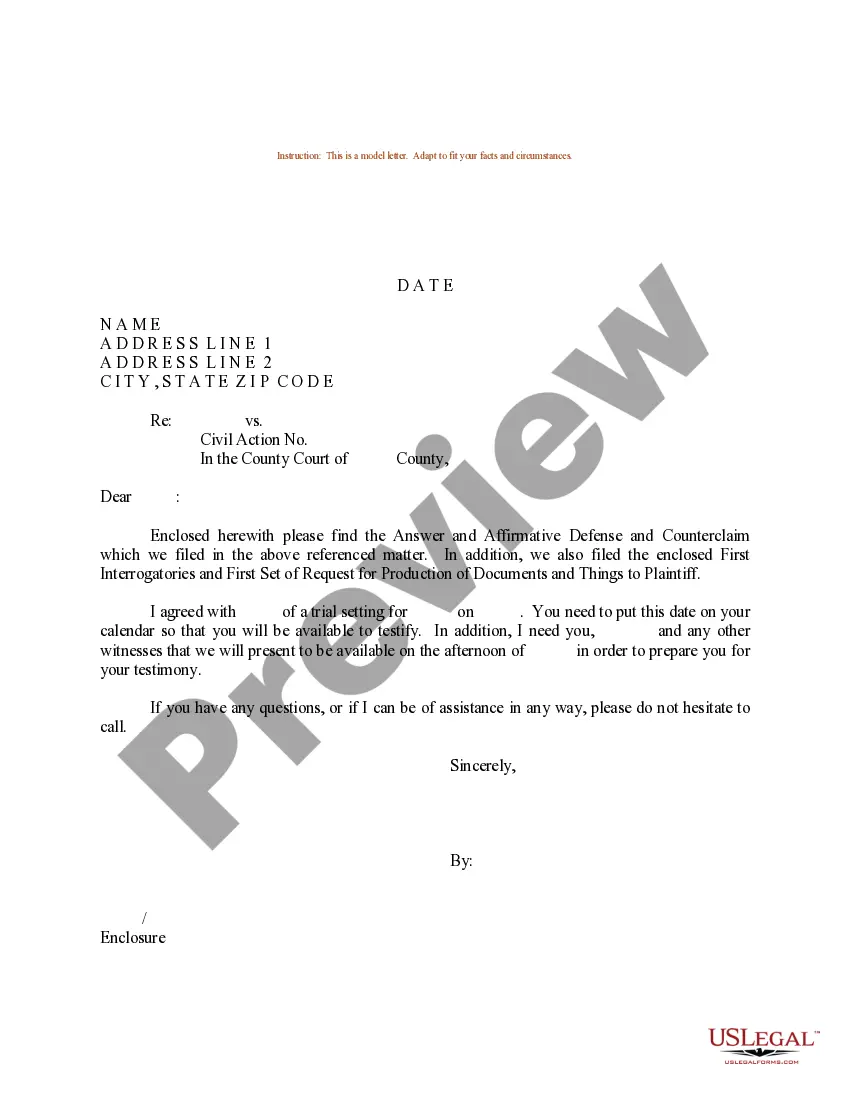
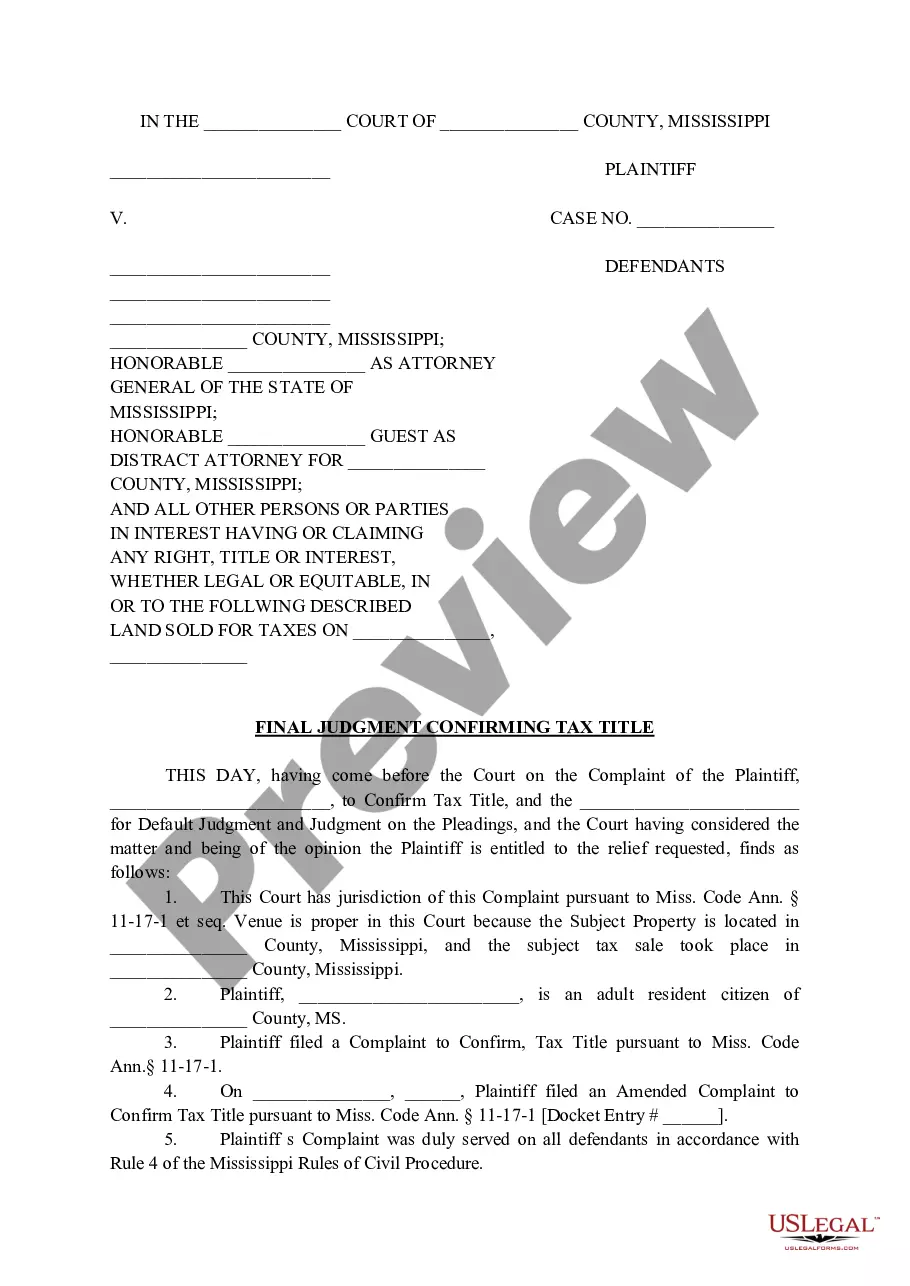
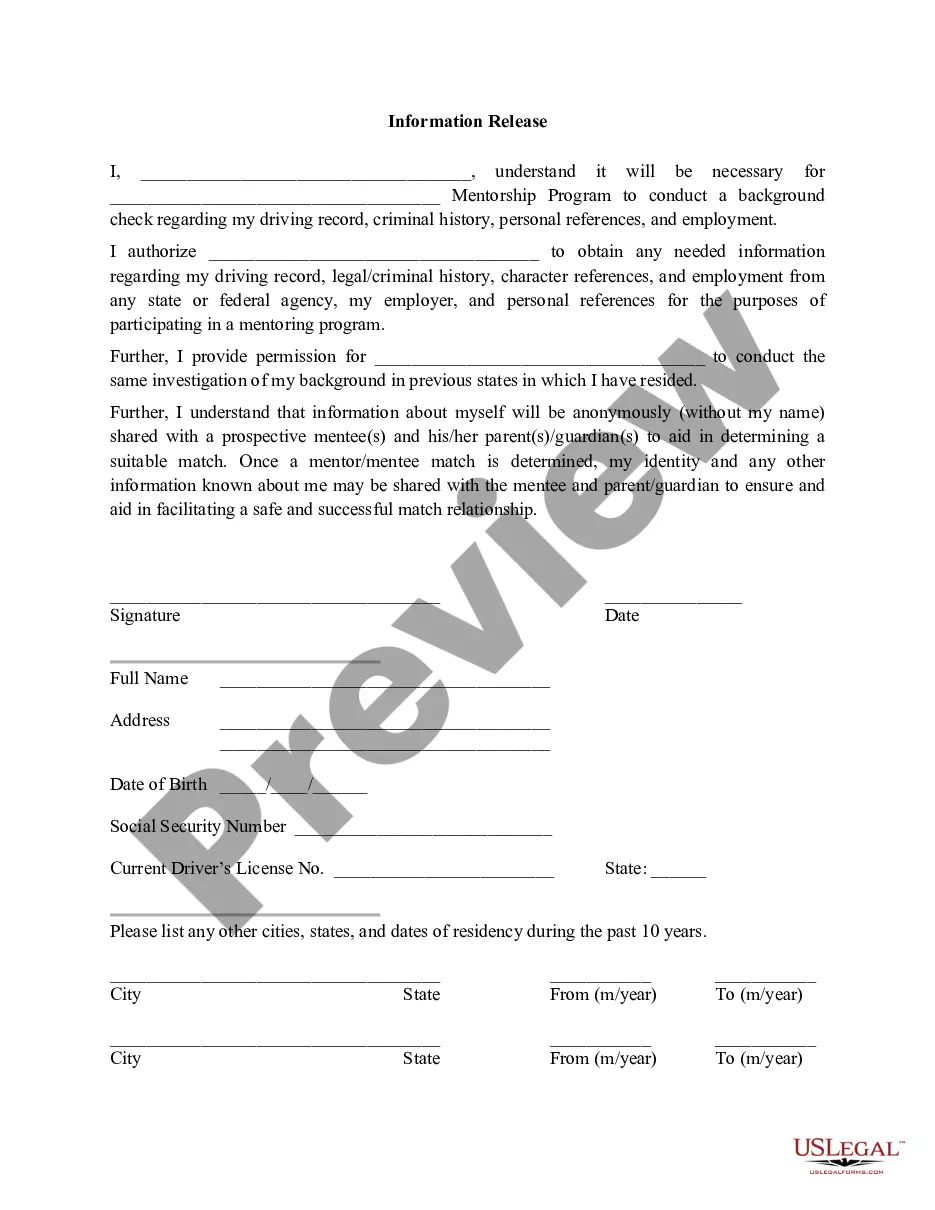
How to fill out Sample Letter For Settlement - Counter Offer?
It’s clear that achieving expertise in law cannot happen instantly, nor can one master the swift creation of Sample Settlement Letter Without Prejudice without a particular background in the subject. Assembling legal documents is an elaborate process that demands specific education and skills.
So why not entrust the drafting of the Sample Settlement Letter Without Prejudice to the experts.
With US Legal Forms, which boasts one of the broadest libraries of legal templates, you can find everything from court papers to formats for internal corporate communication. We recognize the importance of compliance and adherence to both federal and state laws and regulations. That’s why all forms on our site are tailored to specific locations and are current.
You can regain access to your documents anytime from the My documents section. If you're a returning client, you can easily Log In and find and download the template from the same section.
Regardless of the purpose of your forms—whether financial, legal, or personal—our site has you covered. Experience US Legal Forms today!
- Find the form you need by utilizing the search bar located at the top of the page.
- Examine it (if this option is available) and read the accompanying description to determine if Sample Settlement Letter Without Prejudice meets your needs.
- Begin a new search if you require any additional template.
- Create a free account and select a subscription plan to acquire the template.
- Click Buy now. Once your payment is processed, you will be able to obtain the Sample Settlement Letter Without Prejudice, complete it, print it, and send or mail it to the relevant individuals or organizations.
Form popularity
FAQ
However, what does the term ?Without Prejudice Save at to Costs? mean? Marking a communication with the words ?without prejudice save as to costs? means that this correspondence cannot be shown to the Court until after the main issue is resolved.
Whereas a case that is dismissed ?with prejudice? is dismissed permanently, a case that is dismissed ?without prejudice? is only dismissed temporarily. This temporary dismissal means that the plaintiff is allowed to re-file charges, alter the claim, or bring the case to another court.
The purpose of marking a letter ?without prejudice? is to protect the writer so that any concessions made by him in that letter (e.g. an admission) cannot be relied on by the other party in any court proceedings, i.e. the letter is written without prejudice to the writer's position.
?With prejudice? means the decision is final. ?Without prejudice? means it's not final and subject to future inquiry. If the judge announces a case is dismissed with prejudice, that means it's permanently dismissed and can't be retried.
Dismissal without prejudice means that the judge dismissed the plaintiff's or prosecutor's case without damaging their right to have their matter heard in court later. A prosecutor may ask to withdraw the case against a person to have more time to make a case stronger, find more evidence or question other witnesses.