Legal Forms For Business
Description
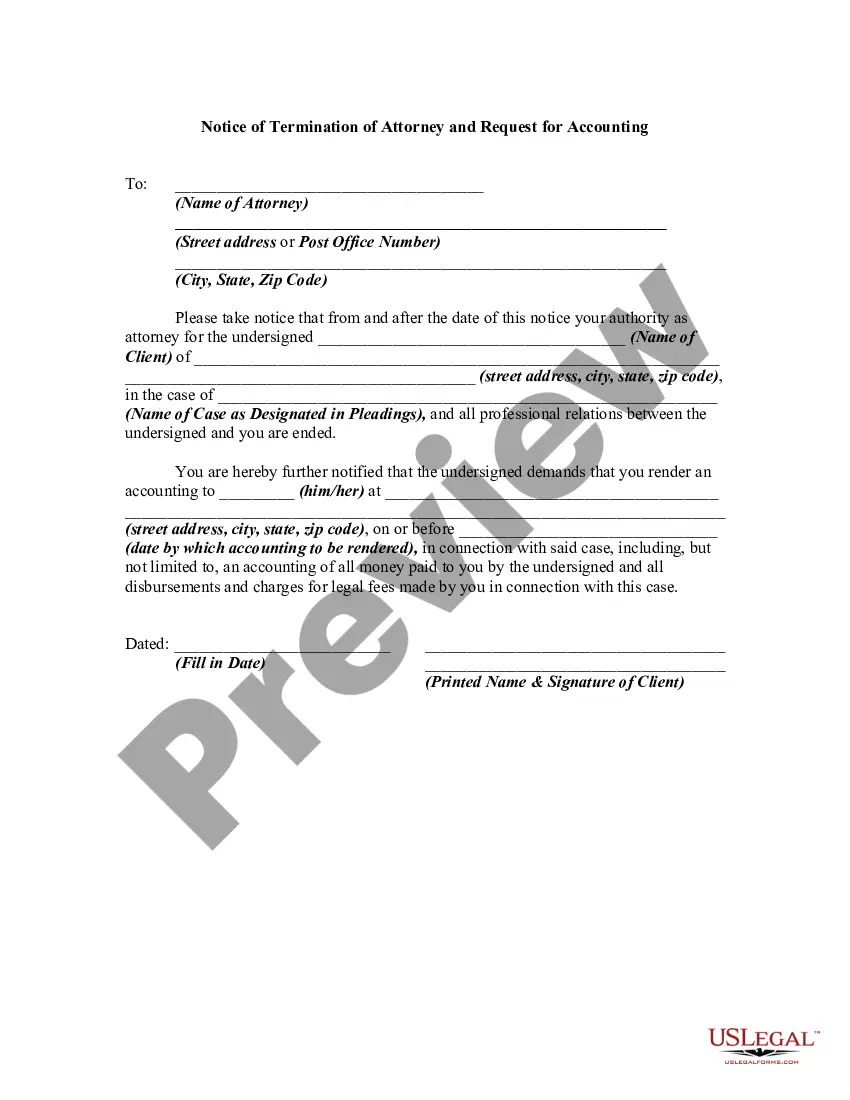
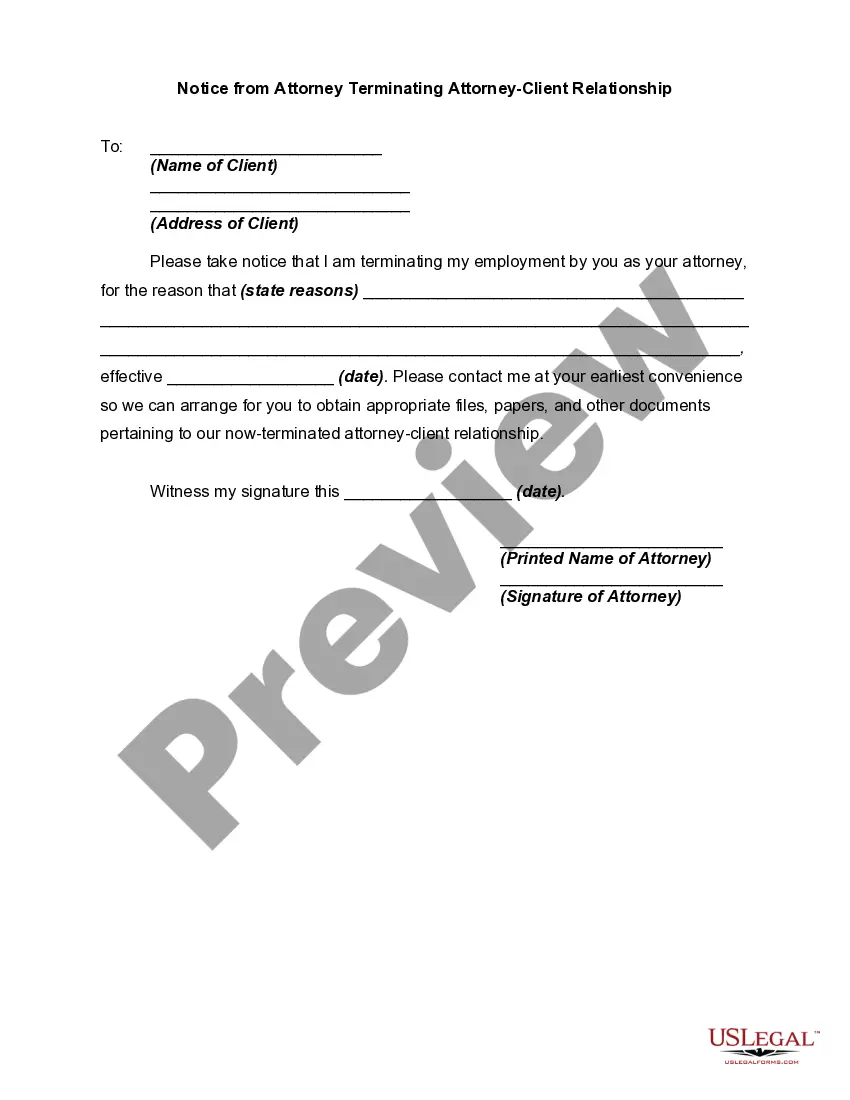
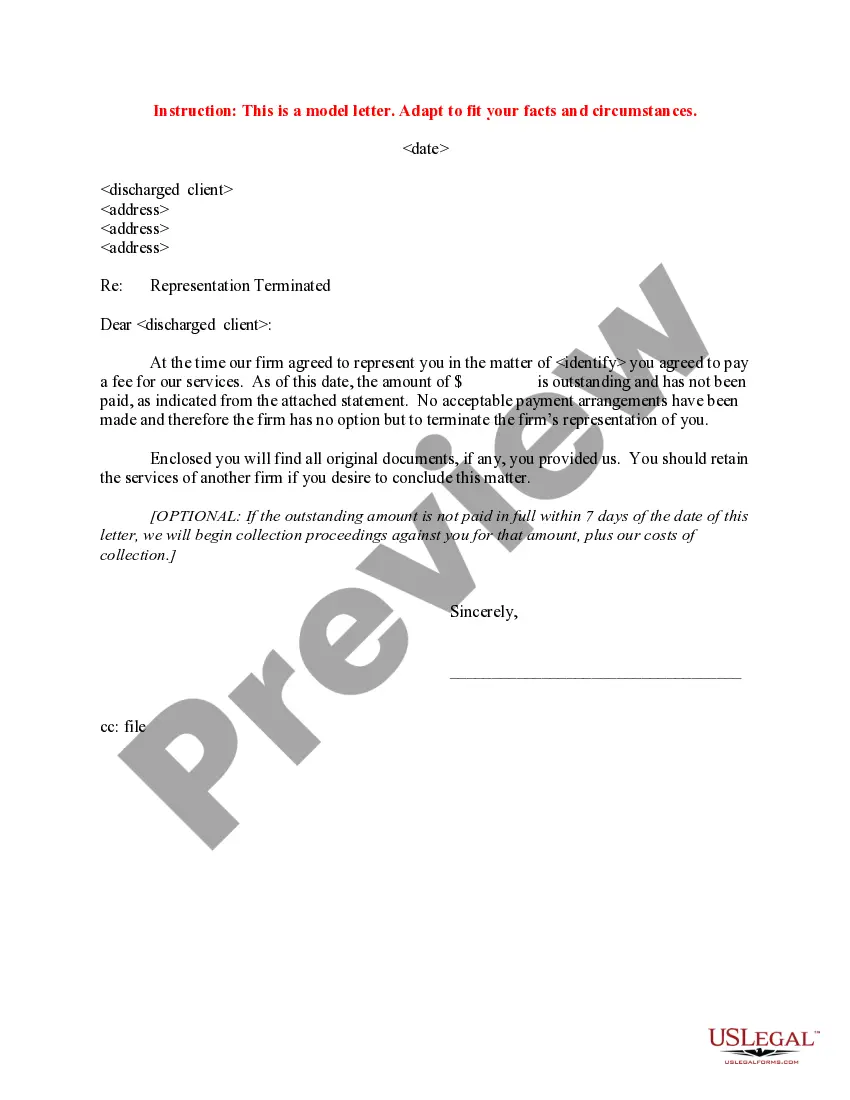
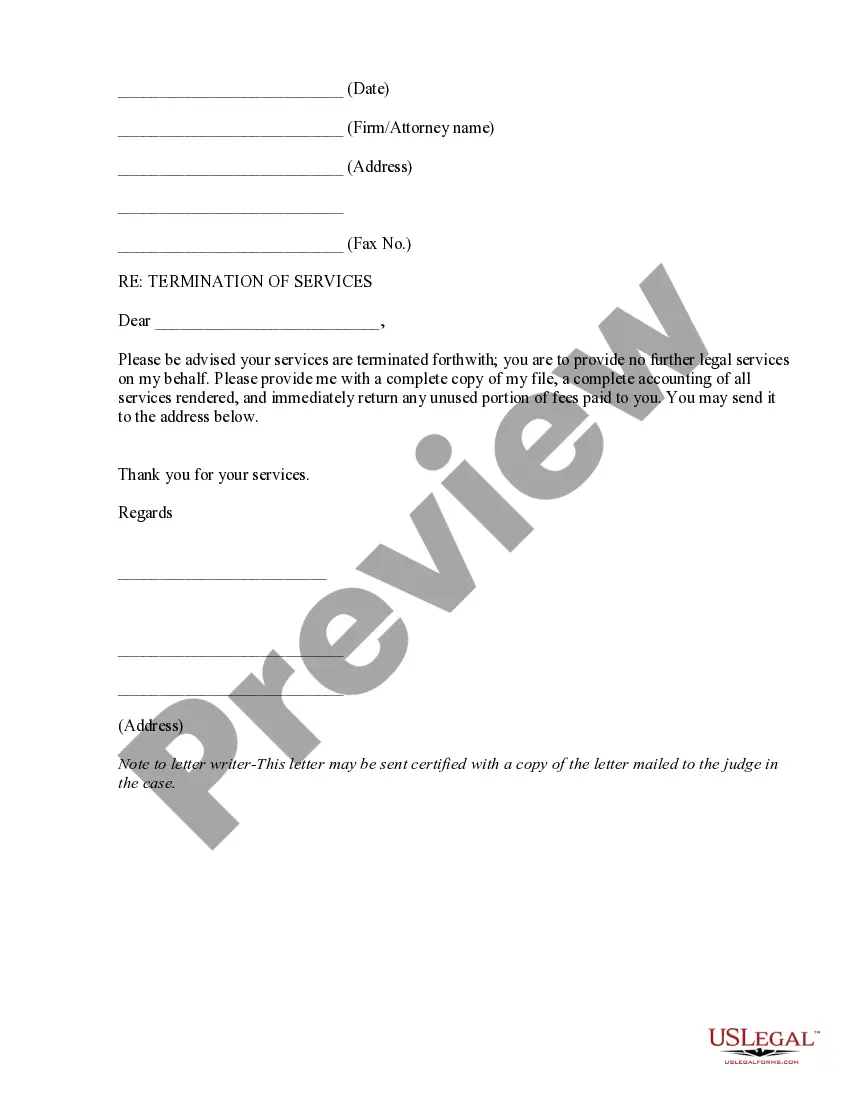

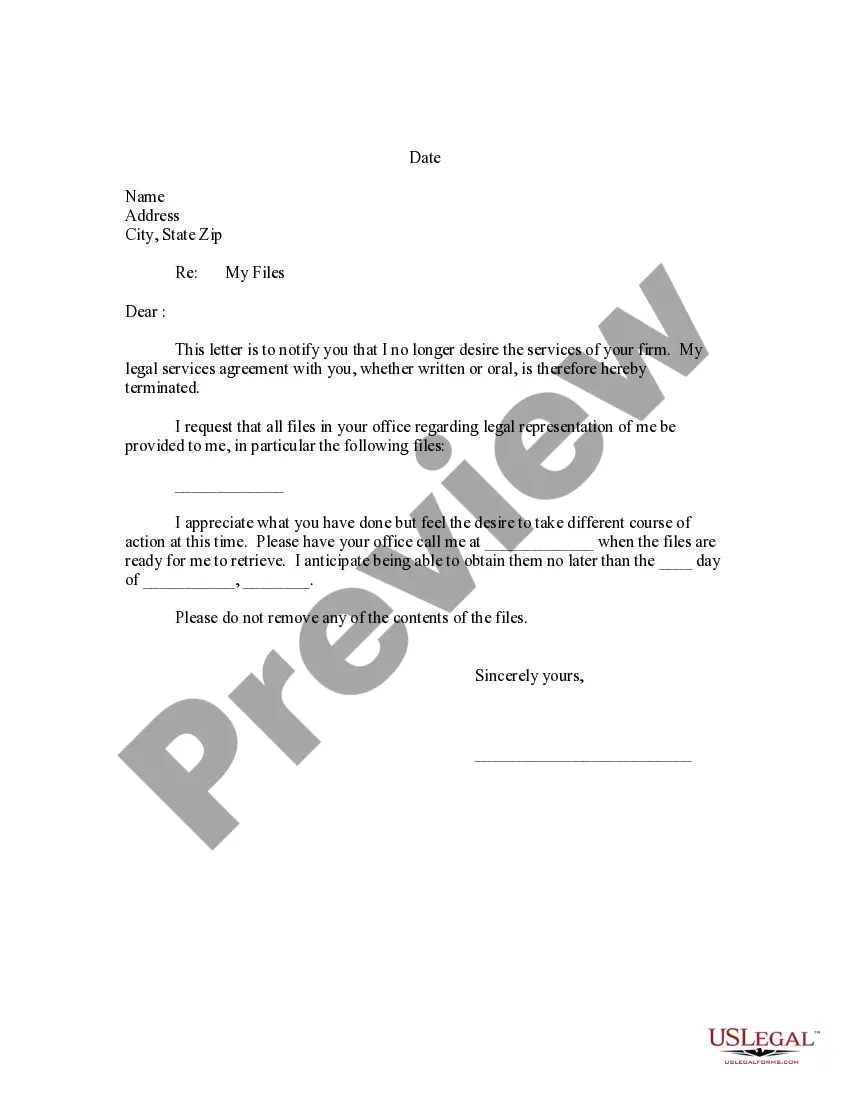
How to fill out Notice To Terminate Legal Services Agreement And Return File?
- Log into your US Legal Forms account if you're already a member. Ensure your subscription is active to access the document library.
- If it's your first time using US Legal Forms, start by browsing the library. Utilize the Preview mode to review form descriptions carefully, ensuring compatibility with your local jurisdiction.
- If you can't find the appropriate form, utilize the Search function to explore additional options that may better suit your needs.
- Select the document you need and click 'Buy Now' to choose your preferred subscription plan. You’ll need to create an account for full access.
- Complete your purchase by providing your payment details via credit card or PayPal.
- Download the completed form directly to your device for immediate use. You can always find it later in the 'My Forms' section of your account.
By following these steps, you'll be equipped with the legal documentation necessary for your business efforts. US Legal Forms eliminates the hassle of searching for templates elsewhere and guarantees the quality and precision of your documents.
Get started today with US Legal Forms and enjoy a seamless experience in managing your business's legal needs.
Form popularity
FAQ
Completing a legal document effectively involves several key steps. Start by gathering all necessary information and supporting documents to provide accurate details. Carefully read through the form to ensure you fill in all required fields, then review your completed document for any errors. Uslegalforms provides templates to guide you through this process, helping you navigate complexities and ensuring your legal documents are thorough and compliant.
The sole proprietorship is often considered the most basic legal form of business. It allows an individual to operate a business without formally registering a separate entity, making it straightforward to manage. However, it is important to understand the legal implications, as you assume full liability for any debts or obligations. If you're looking to establish this structure, look for legal forms for business that can help formalize your operations.
Filling out legal forms for business requires careful attention to detail. Begin by reading the instructions provided for the form to understand what information is needed. Clearly write your responses in the designated spaces, using accurate data to avoid any issues. If you encounter challenges, uslegalforms offers resources and templates that simplify the process, making it easier to complete your forms correctly.
When creating legal forms for business, start with a clear title that reflects the document's purpose. Use headings and subheadings to separate sections, ensuring each part is easy to identify. Maintain consistent font size and style throughout the document, and include spaces for signatures where necessary. Proper formatting enhances readability and helps ensure your legal document meets all necessary standards.
Choosing between an LLC and an S Corp can impact your business significantly. An LLC offers simplicity and fewer formalities, which is great for many small business owners. Conversely, an S Corp may provide tax benefits, allowing profits to pass through to shareholders without facing corporate tax. Analyze your current needs and future goals to select the most suitable legal forms for business.
The best legal form for your small business hinges on your specific circumstances and ambitions. If you want flexibility and protection from personal liability, an LLC often stands out as a top choice. However, if you plan to raise capital or expand significantly, a corporation may offer the advantages you need. Always review your business strategy before making a decision.
To start your own business, you will need various forms of paperwork, including a business license, registration forms for your chosen legal structure, and possibly tax identification documents. Depending on your industry, permits and licenses may also apply. Utilizing platforms like US Legal Forms can simplify this process by providing the specific legal forms for business you need.
The four primary legal forms of business are sole proprietorships, partnerships, LLCs, and corporations. Each form has distinct characteristics regarding ownership, liability, and tax treatment. Sole proprietorships offer simplicity, while LLCs provide liability protection. Partnerships allow for shared responsibility, whereas corporations can attract investors through stock offerings.
The best form for your small business largely depends on your goals and business model. Common legal forms for small businesses include sole proprietorships, partnerships, LLCs, and corporations. Each option has its unique advantages, such as liability protection or tax benefits. It's essential to choose a structure that aligns with your business objectives.
When deciding between an LLC and a C Corp, consider the structure and needs of your business. An LLC provides flexibility in management and pass-through taxation, which can be beneficial for small businesses. On the other hand, a C Corp may better suit a company planning to seek venture capital or go public. Both are valid legal forms for business, so evaluate your goals before choosing.