Estate Deceased Claims For The State
Description
Get your form ready online
Our built-in tools help you complete, sign, share, and store your documents in one place.
Make edits, fill in missing information, and update formatting in US Legal Forms—just like you would in MS Word.
Download a copy, print it, send it by email, or mail it via USPS—whatever works best for your next step.
Sign and collect signatures with our SignNow integration. Send to multiple recipients, set reminders, and more. Go Premium to unlock E-Sign.
If this form requires notarization, complete it online through a secure video call—no need to meet a notary in person or wait for an appointment.
We protect your documents and personal data by following strict security and privacy standards.
Make edits, fill in missing information, and update formatting in US Legal Forms—just like you would in MS Word.
Download a copy, print it, send it by email, or mail it via USPS—whatever works best for your next step.
Sign and collect signatures with our SignNow integration. Send to multiple recipients, set reminders, and more. Go Premium to unlock E-Sign.

If this form requires notarization, complete it online through a secure video call—no need to meet a notary in person or wait for an appointment.
We protect your documents and personal data by following strict security and privacy standards.
Looking for another form?



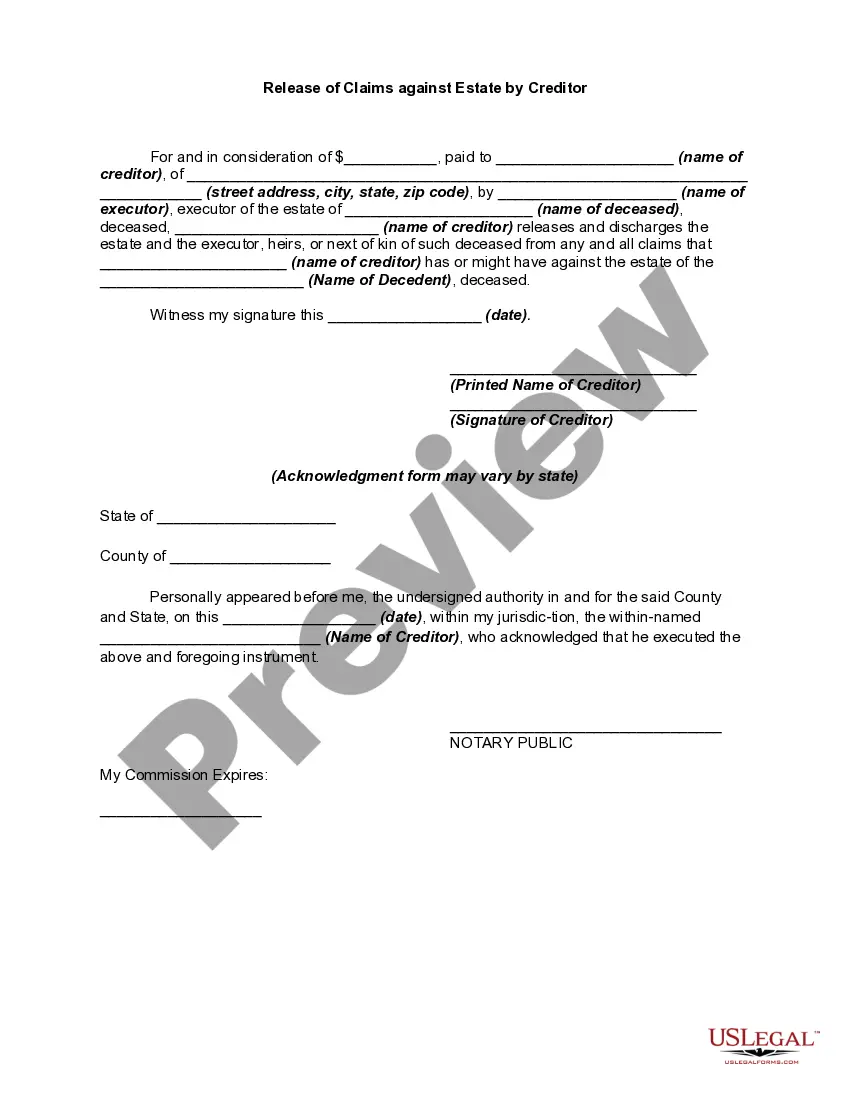
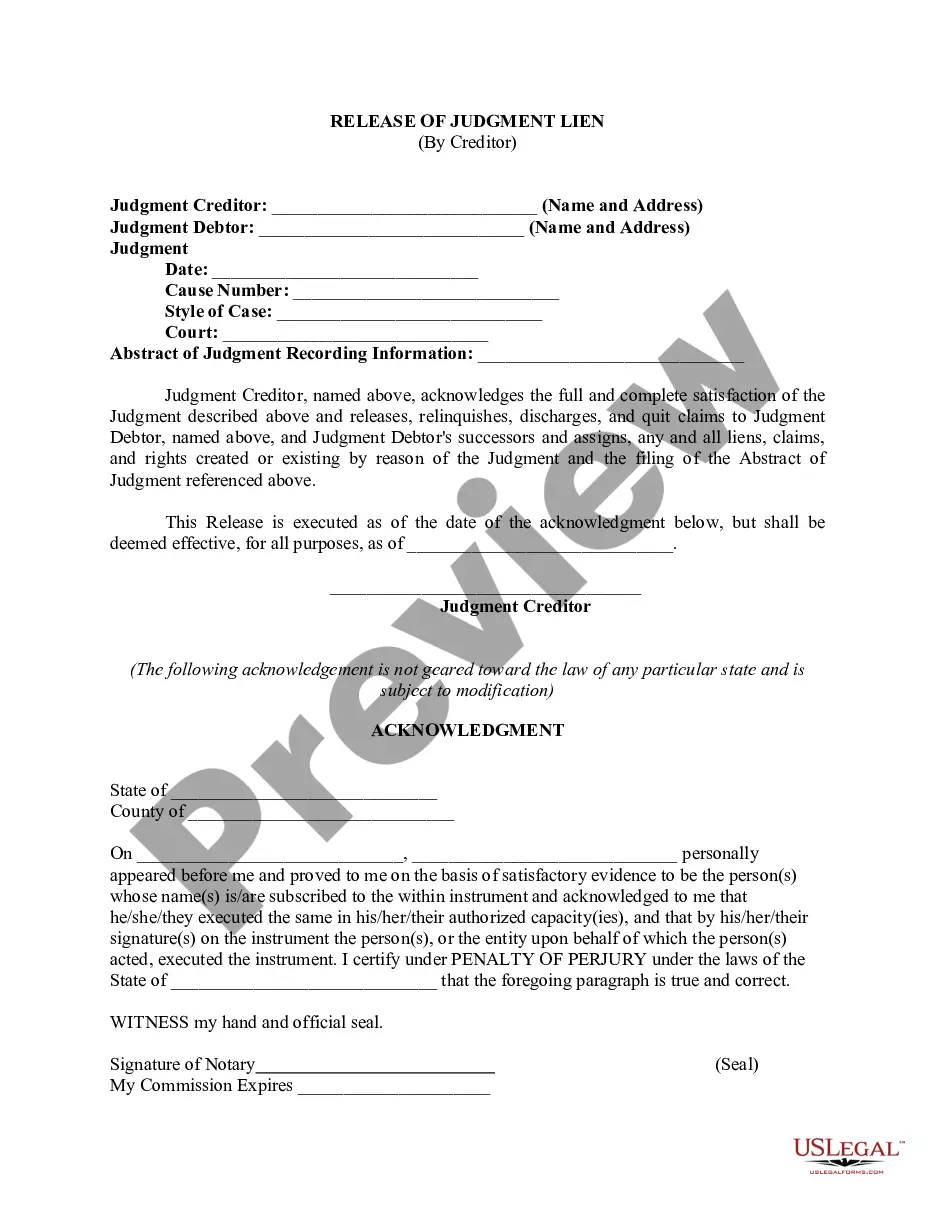
How to fill out Release Of Claims Against Estate By Creditor?
- Log in to your US Legal Forms account if you're a returning user. Ensure your subscription is active or renew it as necessary.
- For new users, browse the extensive online library. Use the Preview mode to review form descriptions, confirming they meet your jurisdiction's requirements.
- Utilize the Search feature if you can’t find the specific template you need.
- Select your desired document and click 'Buy Now.' Choose your preferred subscription plan and create an account for full access.
- Complete your purchase using credit card details or your PayPal account.
- Download the form to your device to start filling it out. You can access it anytime via the 'My Forms' section of your profile.
Using US Legal Forms not only saves time but also ensures that your documents are accurate and legally sound. With expert assistance available, you can feel confident completing your estate deceased claims.
Start your legal process today and explore the extensive resources available at US Legal Forms to ensure your estate claims are executed seamlessly.
Form popularity
FAQ
The timeframe to claim an estate after death varies by state, but it typically ranges from several months to a few years. In most cases, beneficiaries must file a claim within a specific period to ensure their inheritance rights are protected. It is important to initiate the process quickly to avoid complications. Using US Legal Forms can simplify your efforts in pursuing estate deceased claims for the state within the required timeframes.
Filing taxes for a deceased estate requires you to complete IRS Form 1041, the income tax return for estates and trusts. You will need to report any income generated by the estate’s assets and may be responsible for paying taxes on that income. The estate itself must file this return, separate from the final personal tax return of the deceased. If you're unsure about the process, US Legal Forms can provide essential tools for managing these estate deceased claims for the state effectively.
To claim the estate of a deceased person, you typically need to file a petition in the probate court. This process validates the will, if one exists, and allows you to act as the executor or administrator. Gathering documentation such as death certificates and any existing wills is crucial. US Legal Forms provides guidance and templates to help you navigate estate deceased claims for the state smoothly.
Filing taxes on behalf of a deceased person involves completing the deceased’s final tax return. You must gather the necessary documents, including W-2s and 1099s, to accurately report income. The estate may also need to file an estate tax return if its value exceeds a certain threshold. For assistance with these processes, consider using US Legal Forms, which offers resources for estate deceased claims for the state.
In most states, you can file a claim against an estate within a specific time limit after the death of the individual. This time frame, often known as the statute of limitations, typically ranges from six months to three years. It's essential to understand that estate deceased claims for the state require timely action to ensure your rights are protected. To navigate this process smoothly, consider using USLegalForms, which provides valuable resources and tools to help you file your claim effectively.
Filing probate years after someone has died is generally possible, but it can lead to significant challenges. Sometimes, delays may result in additional scrutiny from the courts and may complicate the settling of estate deceased claims for the state. It's advisable to consult a legal professional to understand your options clearly. Resources from uslegalforms can also facilitate addressing any overdue claims.
The duration to file probate after death generally falls within several days to a few months, depending on local laws. If probate isn't filed timely, the estate may face delays and complications that hinder asset distribution. Therefore, acting swiftly on estate deceased claims for the state is crucial. Consider seeking support from uslegalforms to navigate this effectively.
You typically have a limited time frame to file an estate after a person passes away, which usually ranges from a few months to a year. This timeframe can vary based on the state laws and the complexities involved. Promptly addressing estate deceased claims for the state can expedite the distribution of assets to beneficiaries. Using platforms like uslegalforms can simplify this process.
An estate can exist for an indefinite period after death, depending on the specific circumstances of the case. Generally, the estate remains open until all debts, taxes, and claims are settled. It's essential to manage these estate deceased claims for the state promptly, as unresolved issues can lead to complications. Legal guidance may help ensure a smooth process.
Filing taxes for the estate of a deceased individual involves completing specific forms related to estate income and determining if estate taxes are necessary. You must report any income earned by the estate during the administration period. Understanding the intricacies of estate deceased claims for the state can feel overwhelming, so reaching out to tax professionals or utilizing US Legal Forms can provide much-needed clarity and support.