Why Would A Judge Issue A Gag Order
Description
Get your form ready online
Our built-in tools help you complete, sign, share, and store your documents in one place.
Make edits, fill in missing information, and update formatting in US Legal Forms—just like you would in MS Word.
Download a copy, print it, send it by email, or mail it via USPS—whatever works best for your next step.
Sign and collect signatures with our SignNow integration. Send to multiple recipients, set reminders, and more. Go Premium to unlock E-Sign.
If this form requires notarization, complete it online through a secure video call—no need to meet a notary in person or wait for an appointment.
We protect your documents and personal data by following strict security and privacy standards.

Make edits, fill in missing information, and update formatting in US Legal Forms—just like you would in MS Word.

Download a copy, print it, send it by email, or mail it via USPS—whatever works best for your next step.

Sign and collect signatures with our SignNow integration. Send to multiple recipients, set reminders, and more. Go Premium to unlock E-Sign.

If this form requires notarization, complete it online through a secure video call—no need to meet a notary in person or wait for an appointment.

We protect your documents and personal data by following strict security and privacy standards.
Looking for another form?

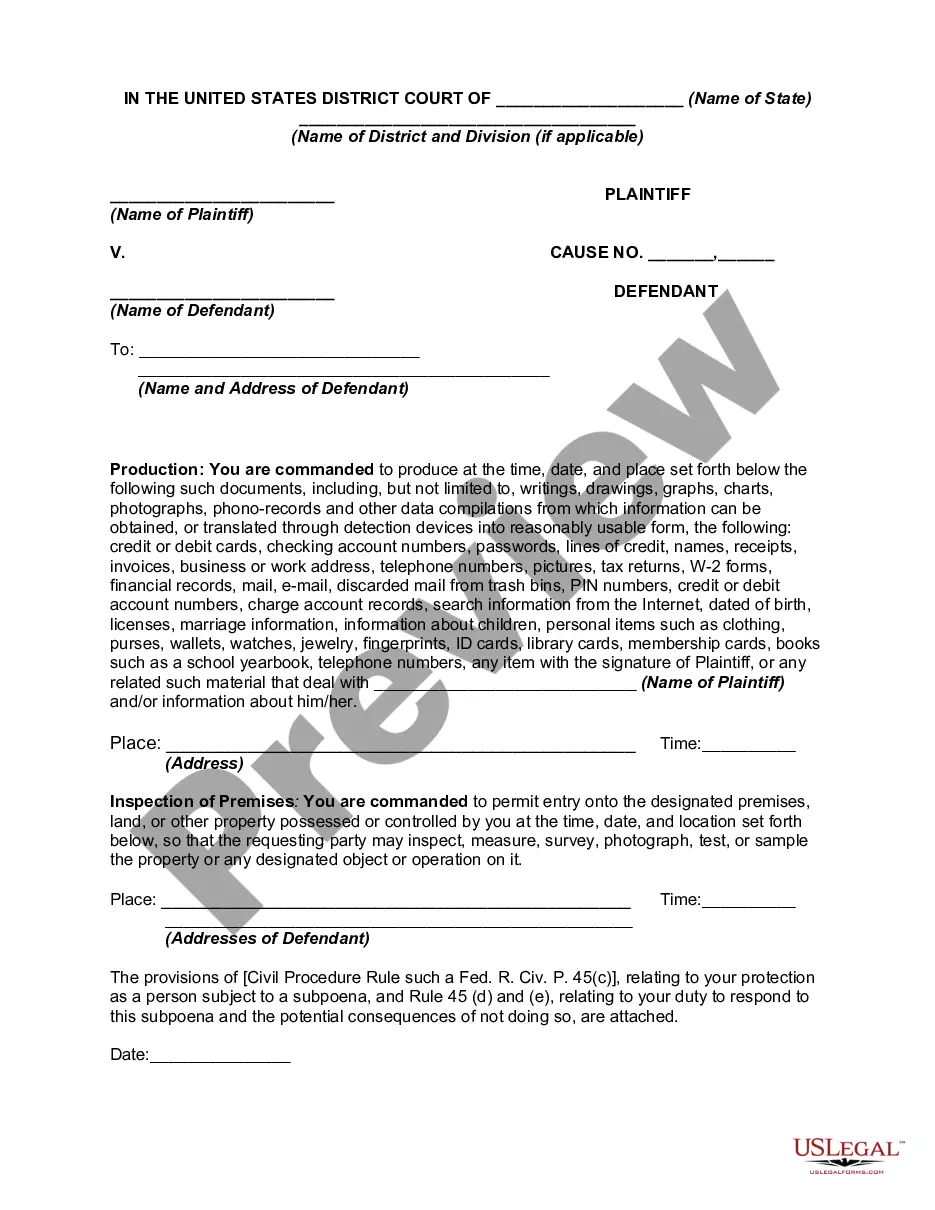
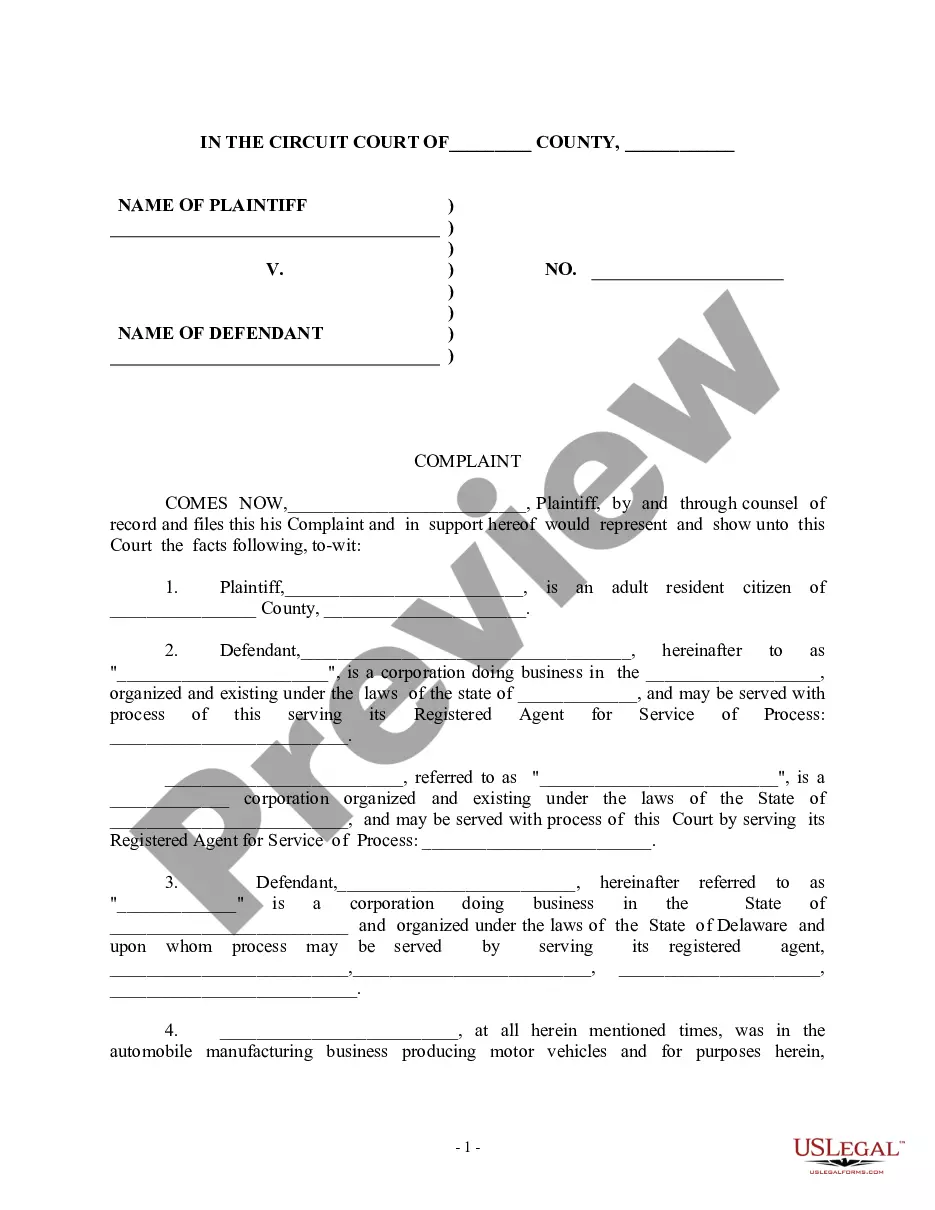



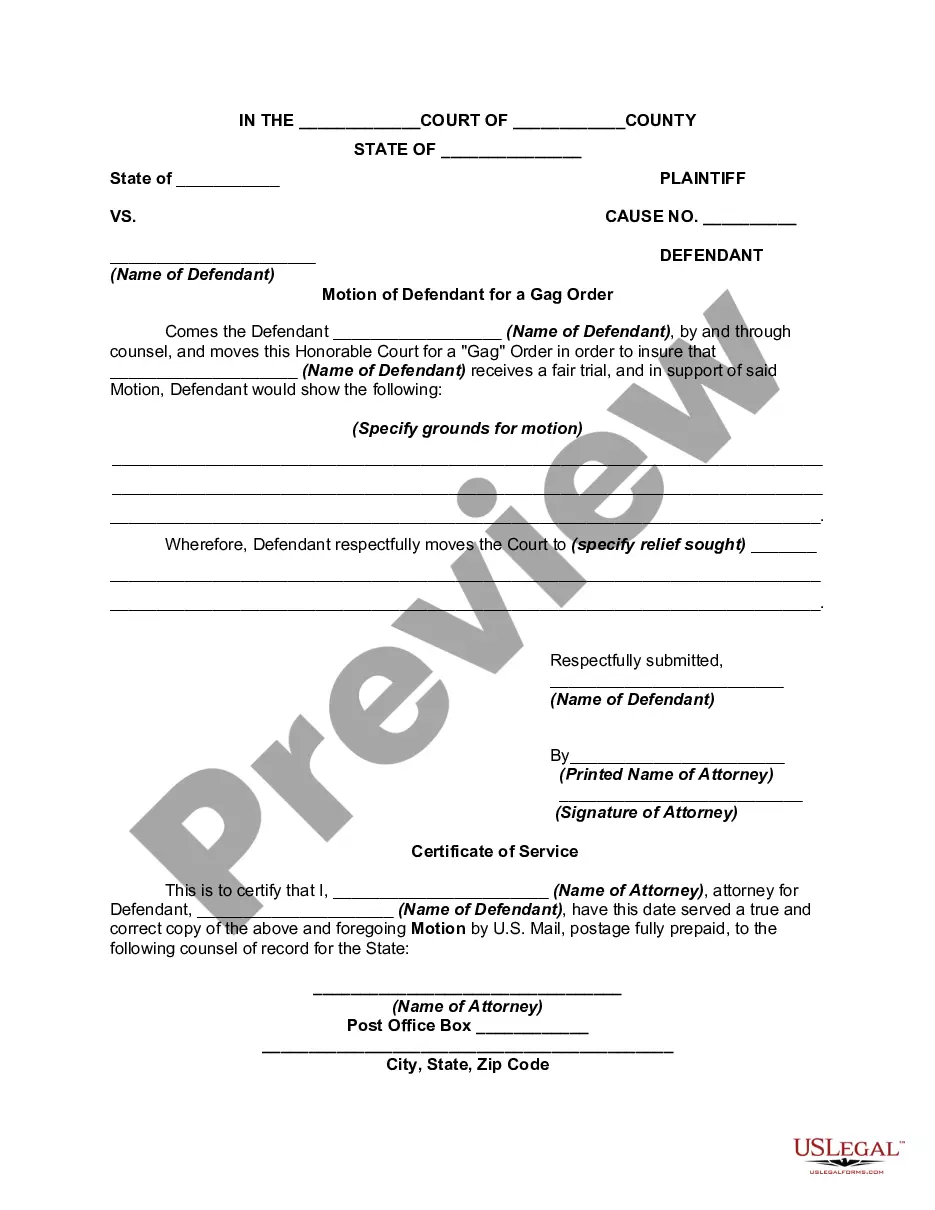
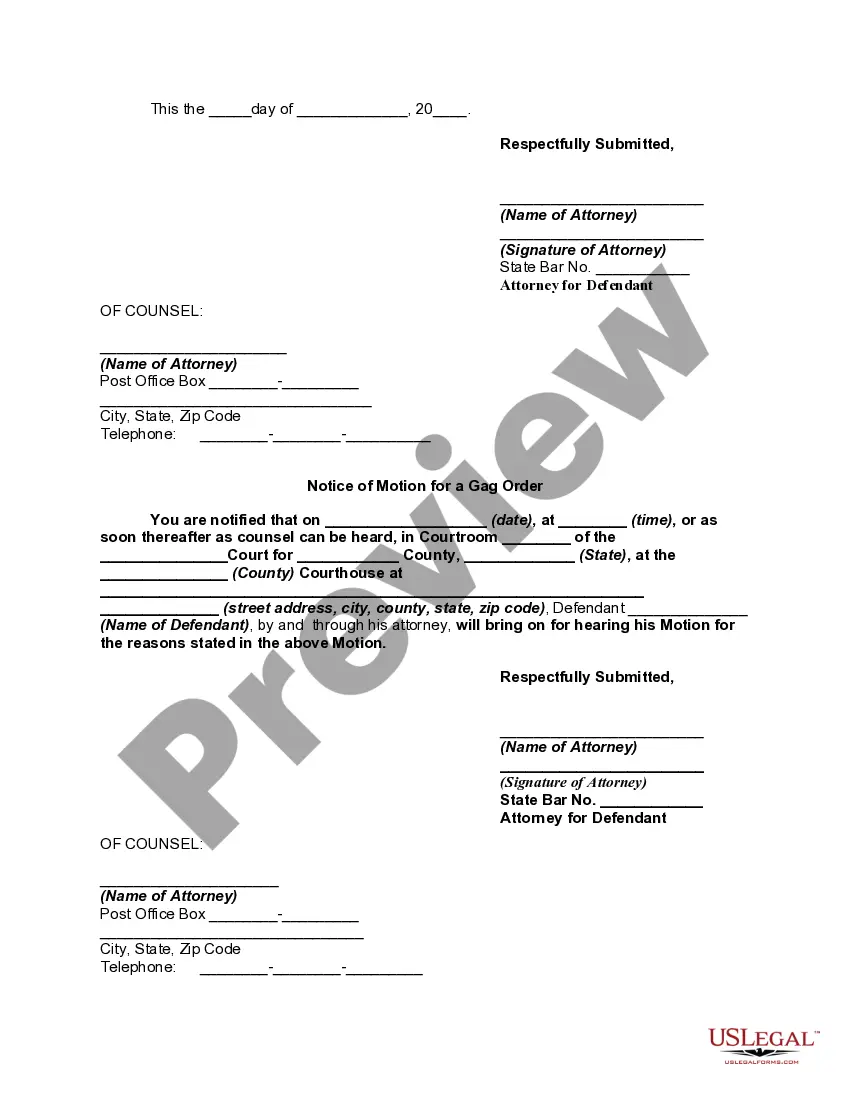
How to fill out Motion Of Defendant For A Gag Order?
- If you're an existing user, begin by logging in to download your required form template after verifying that your subscription is active. If your subscription has expired, consider renewing it based on your chosen plan.
- For first-time users, start by exploring the Preview mode and form description to ensure you've selected the appropriate document tailored to your jurisdiction's requirements.
- If the current template doesn’t meet your criteria, utilize the Search tab above to find the correct one that aligns with your needs.
- Once you have the right form, click the Buy Now button and select your preferred subscription plan. You'll need to create an account to access the document library.
- Proceed with the payment by entering your credit card information or linking your PayPal account to complete the subscription process.
- Finally, download your completed form to your device and access it anytime through the My Forms section on your profile.
By choosing US Legal Forms, you gain access to a larger form collection compared to competitors, featuring over 85,000 easily fillable legal documents. This extensive library and premium expert support ensure that your legal papers are accurate and meet all necessary requirements.
In conclusion, utilizing US Legal Forms can simplify your legal processes effectively. Don’t hesitate—visit US Legal Forms today to gain the peace of mind you deserve in your legal endeavors!
Form popularity
FAQ
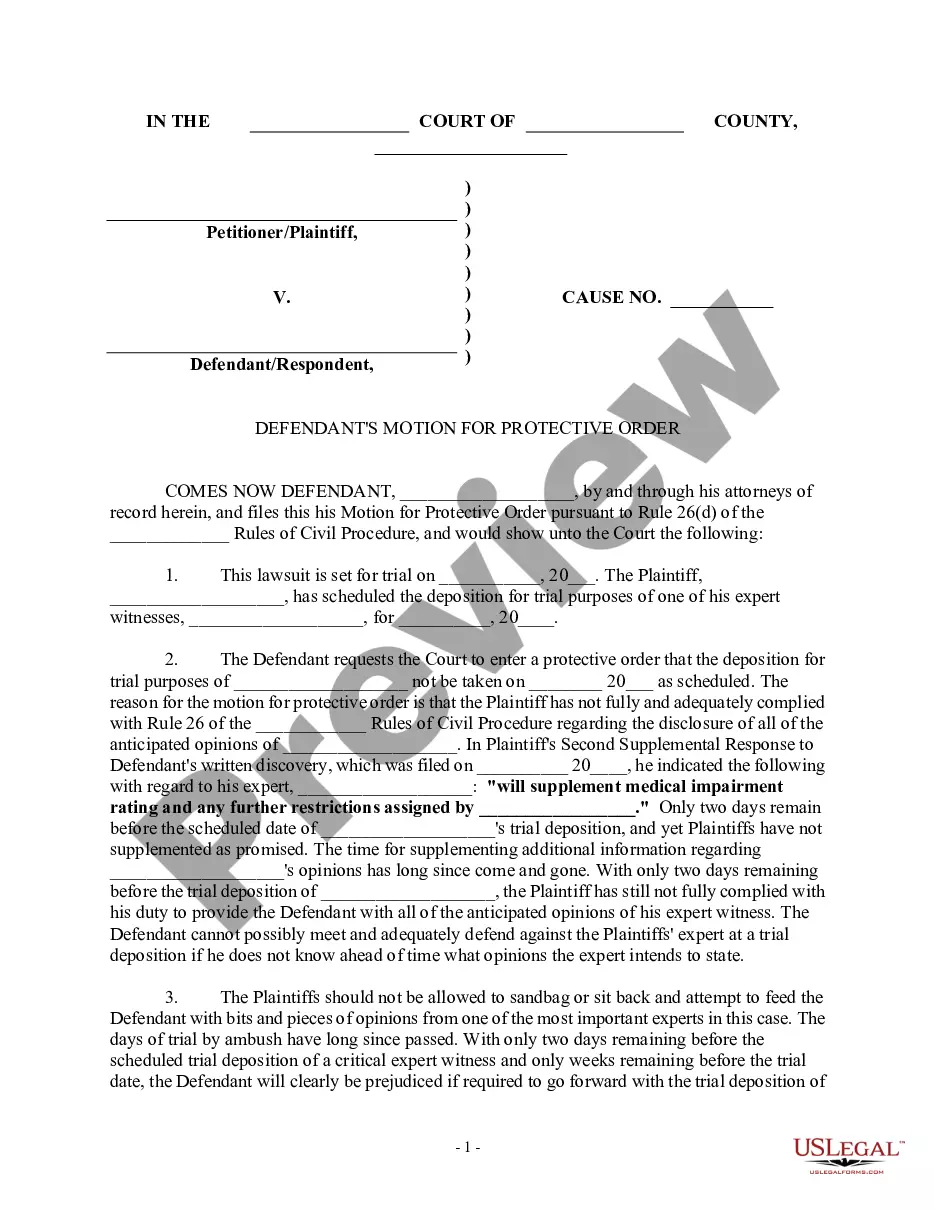
A court gag order is a legal directive that restricts individuals, typically involving parties in a legal case, from discussing specific details publicly. Judges may issue such orders to protect the integrity of a trial and ensure that media coverage does not influence public opinion or jury decisions. This leads us to wonder, why would a judge issue a gag order? The primary reason often revolves around maintaining a fair trial and preventing prejudicial information from emerging. For those navigating these complex issues, US Legal Forms provides a variety of resources that can help clarify the process and implications of court orders.
At a Gagnon hearing in Pennsylvania, a judge evaluates evidence to determine whether an individual has violated terms of their probation. The hearing consists of presenting testimony and evidence from both sides—usually the prosecution and the defense. The judge then decides if the violation is valid and what consequences may follow. This process highlights crucial aspects of how a judge might consider issuing a gag order to prevent potential public interference.
In the context of Blake Lively, a gag order would likely be a legal restriction preventing her or others from discussing specific aspects of a court case publicly. Judges may issue a gag order to protect the integrity of the legal proceedings and to ensure a fair trial. Such orders emphasize why a judge would issue a gag order, focusing on minimizing pre-trial publicity that could bias jurors. If navigating celebrity legal issues interests you, consider exploring platforms like uslegalforms for useful legal documents.
Gagnon sentencing refers to a process used in some states, particularly Pennsylvania, to determine whether a probation violation has occurred. Judges conduct Gagnon hearings to decide if an individual should face additional penalties, which may include extended probation or incarceration. Understanding this process is crucial for anyone involved in the legal system, especially if they are at risk of facing a gag order. Therefore, it’s important to seek reliable resources when dealing with such legal matters.
An example of a legal gag order could be in high-profile criminal cases where media coverage is intense. A judge might issue an order prohibiting attorneys, witnesses, or even jurors from sharing case details with the press. This action helps prevent public opinion from interfering with the trial. Ultimately, you may wonder why a judge would issue a gag order, and the answer lies in protecting the rights of all parties involved.
In court, you must avoid discussing ongoing cases in a way that could affect the outcome. This includes making public statements about evidence, witness credibility, or verdicts. Agendas are kept in check by gag orders, ensuring that all parties can have a fair trial. In this context, it’s crucial to understand why a judge would issue a gag order to uphold the judicial process.
Yes, individuals can be subjected to gag orders during court proceedings. A judge may decide to implement such an order to prevent participants from discussing specific details of a case publicly. This action aims to ensure that the trial remains fair and unbiased. So, why would a judge issue a gag order? It's all about maintaining the integrity of the judicial system.
A gag hearing is a legal proceeding where a judge evaluates the necessity of imposing a gag order. This type of hearing often occurs when there's a concern that public statements could influence a trial. The judge considers factors like the nature of the case and the parties involved. Ultimately, the question becomes, why would a judge issue a gag order to protect the fairness of the legal process?
You can use the term 'gag order' in a sentence like this: 'The judge issued a gag order to prevent the lawyers from discussing the details of the case with the media.' This illustrates how the term is applied in legal discussions. Understanding why would a judge issue a gag order can help you further articulate its usage in various contexts.
The gag rule historically referred to policies that restricted discussion or debate on certain topics, particularly in legislative contexts. These limitations aimed to prevent diversion from the central issues of a debate. By considering why would a judge issue a gag order, you can see parallels in how both concepts aim to keep discussions focused and fair.