Court Officer For
Description
Get your form ready online
Our built-in tools help you complete, sign, share, and store your documents in one place.
Make edits, fill in missing information, and update formatting in US Legal Forms—just like you would in MS Word.
Download a copy, print it, send it by email, or mail it via USPS—whatever works best for your next step.
Sign and collect signatures with our SignNow integration. Send to multiple recipients, set reminders, and more. Go Premium to unlock E-Sign.
If this form requires notarization, complete it online through a secure video call—no need to meet a notary in person or wait for an appointment.
We protect your documents and personal data by following strict security and privacy standards.

Make edits, fill in missing information, and update formatting in US Legal Forms—just like you would in MS Word.

Download a copy, print it, send it by email, or mail it via USPS—whatever works best for your next step.

Sign and collect signatures with our SignNow integration. Send to multiple recipients, set reminders, and more. Go Premium to unlock E-Sign.

If this form requires notarization, complete it online through a secure video call—no need to meet a notary in person or wait for an appointment.

We protect your documents and personal data by following strict security and privacy standards.
Looking for another form?








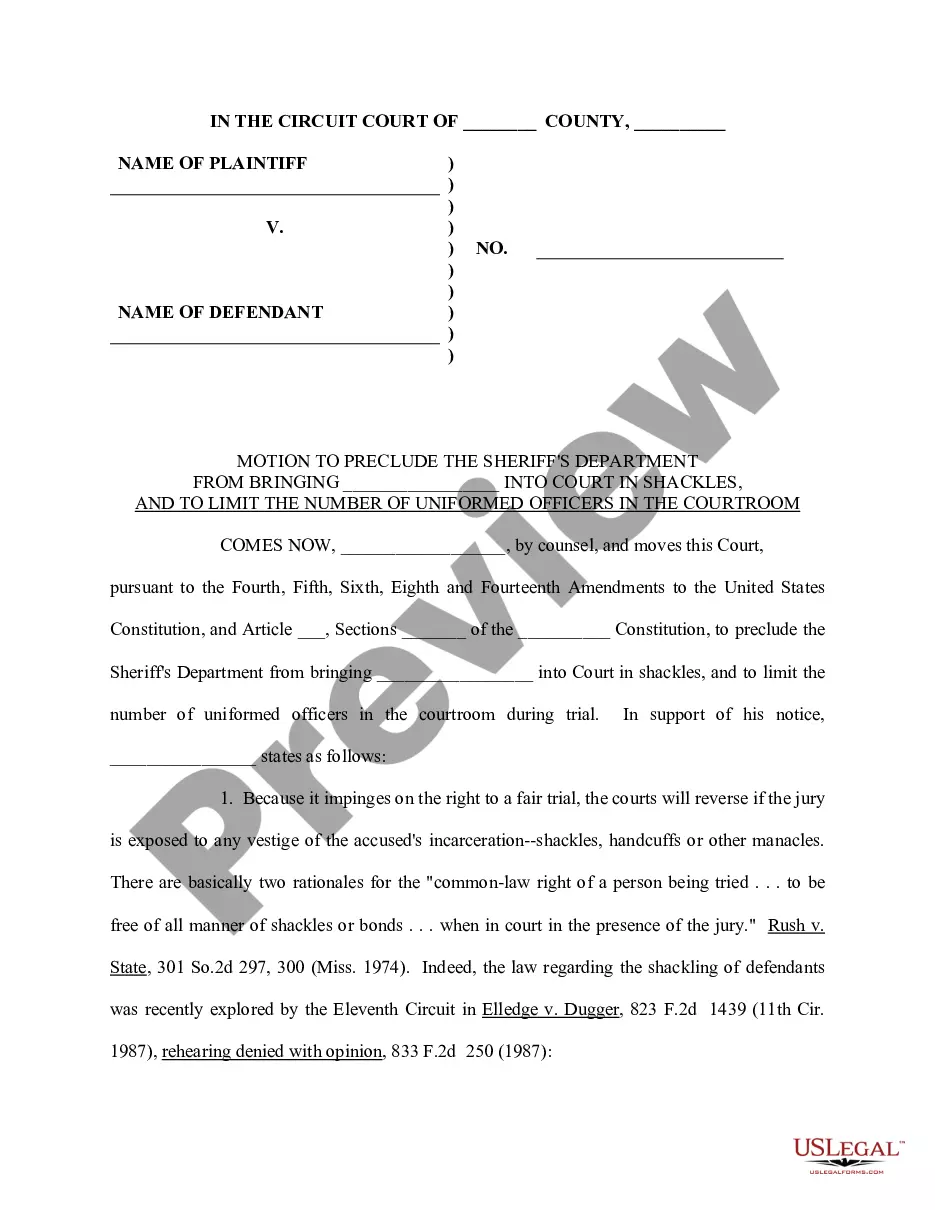
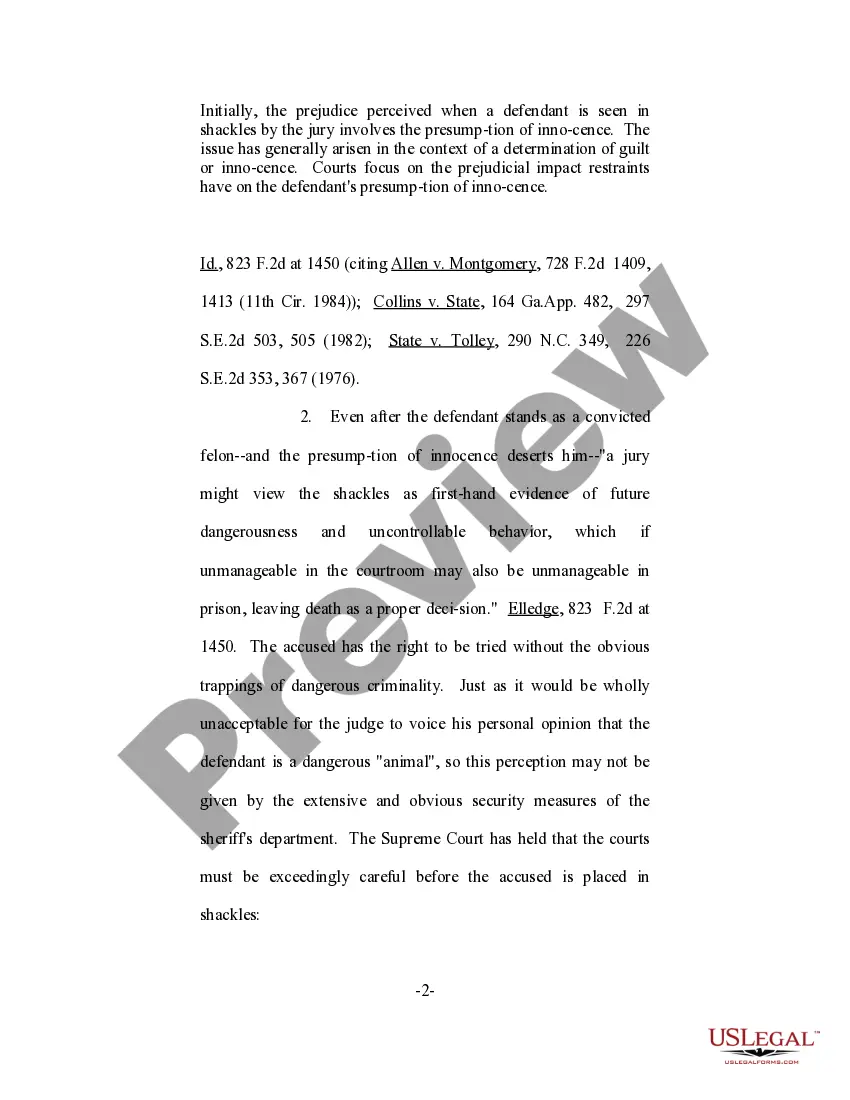
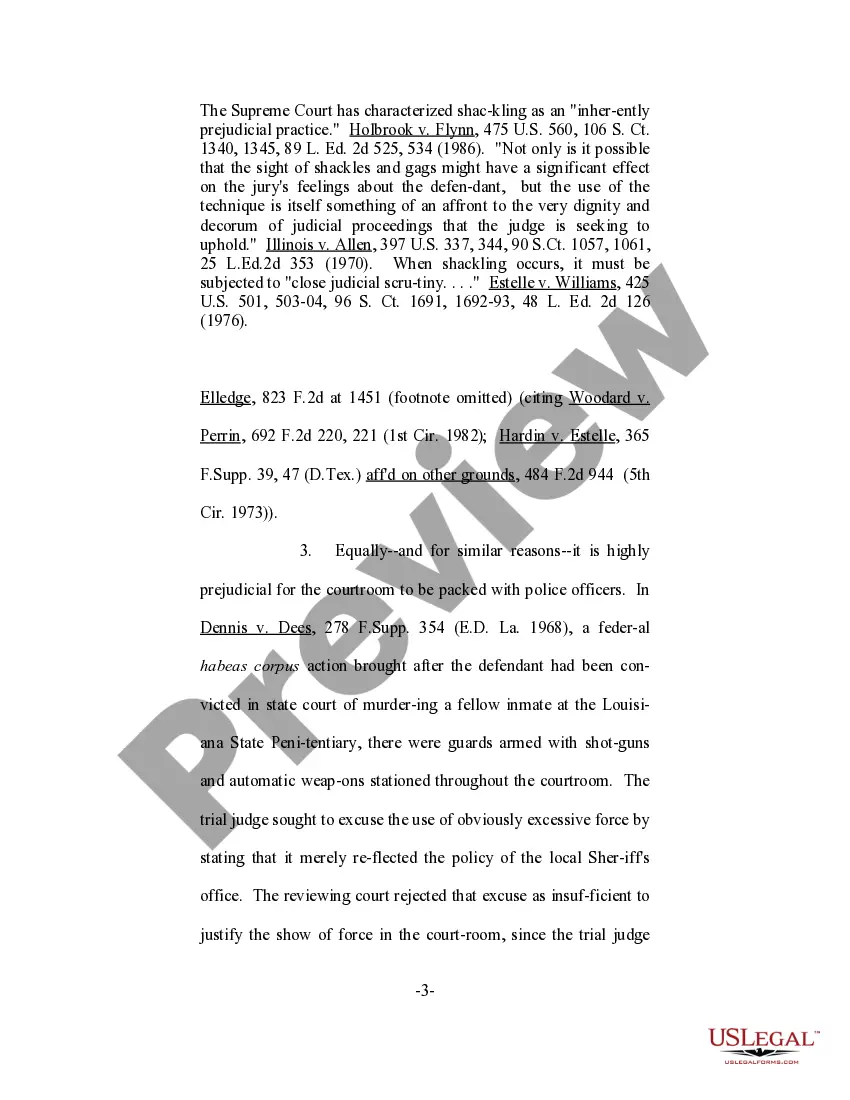
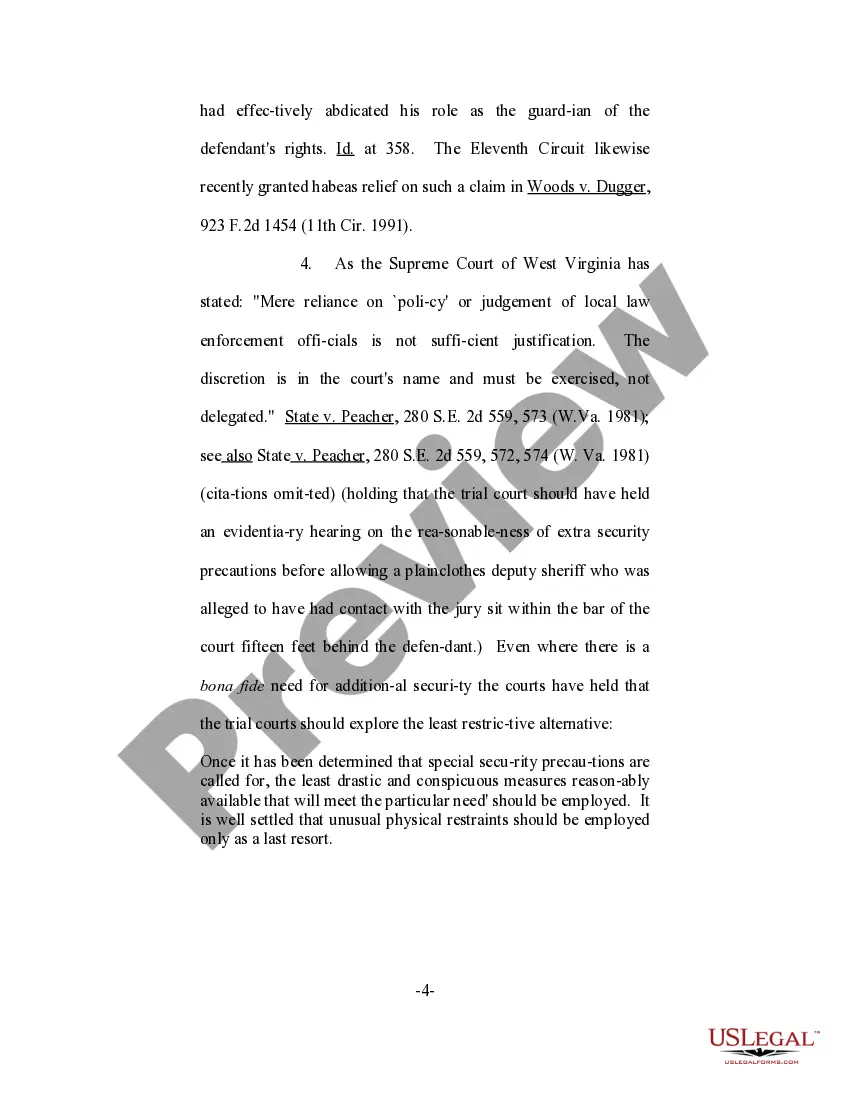
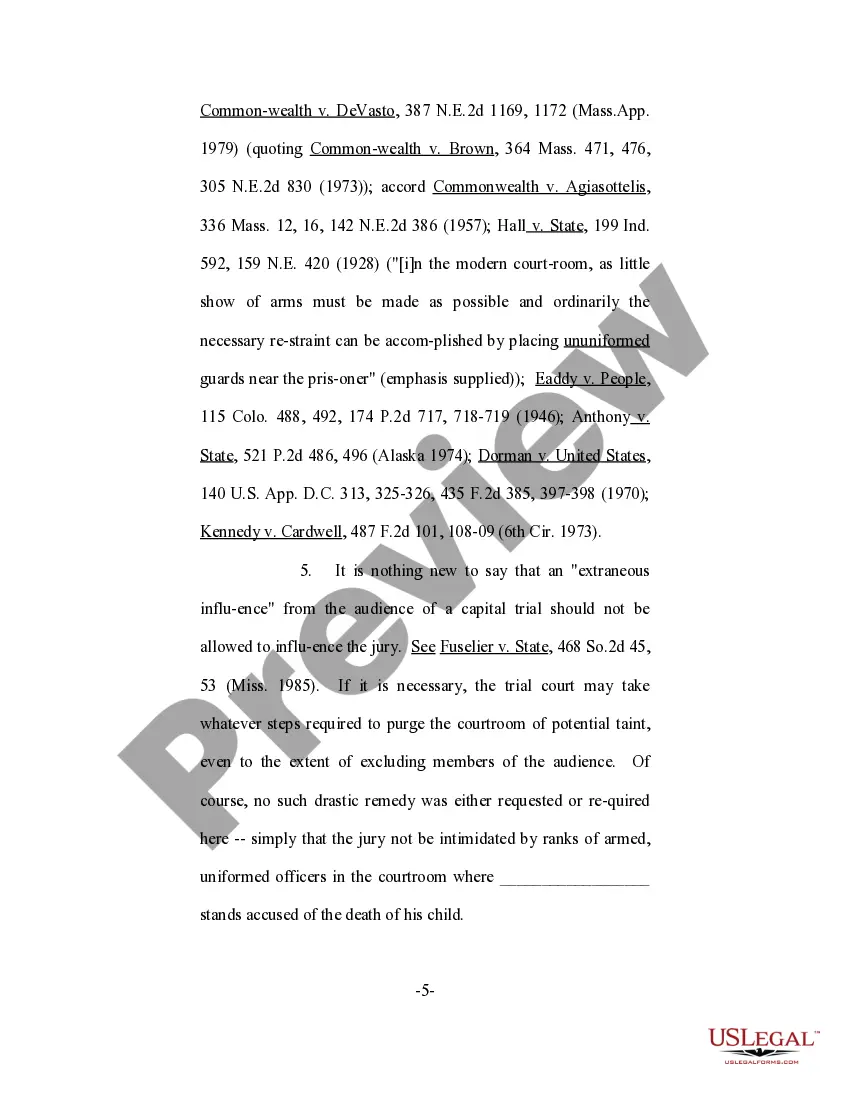
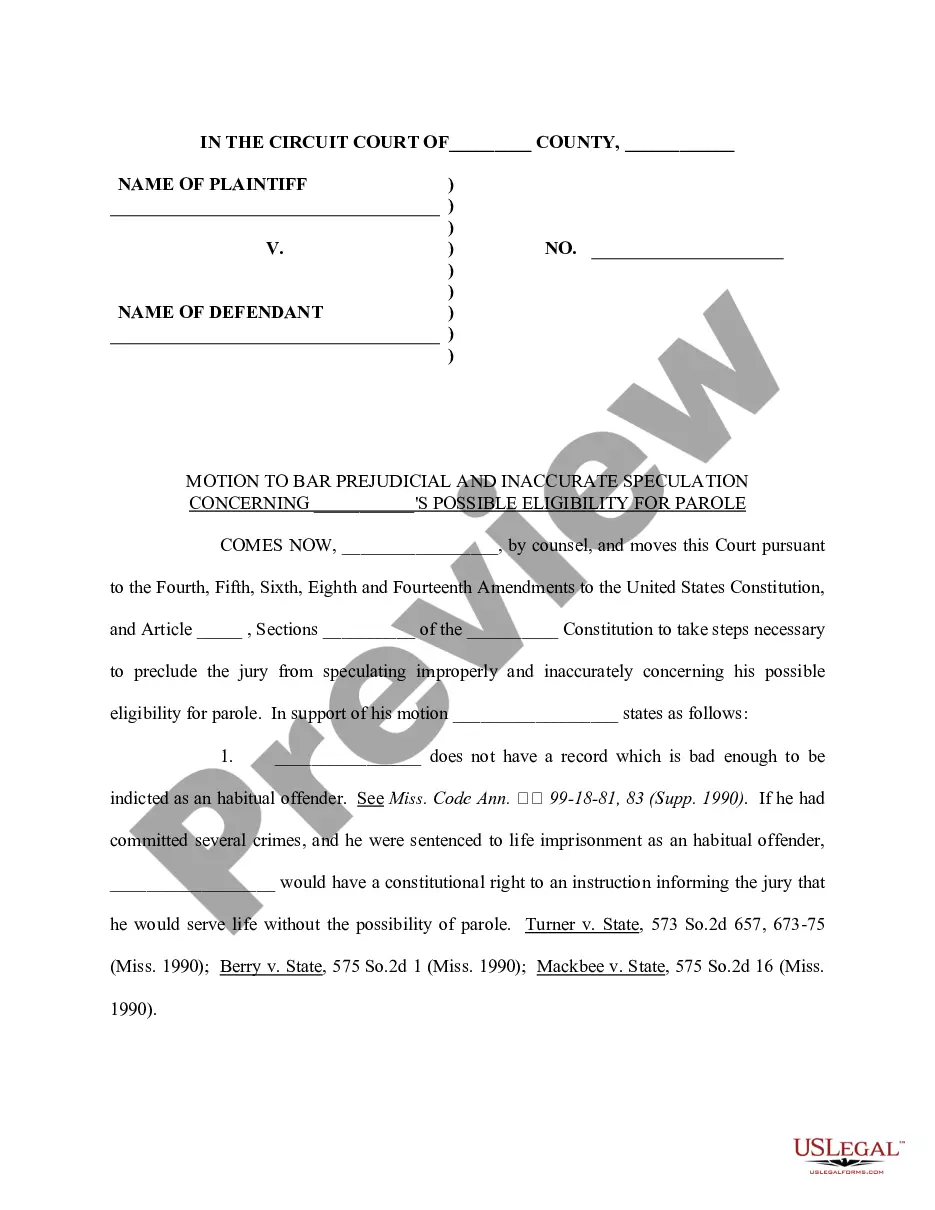
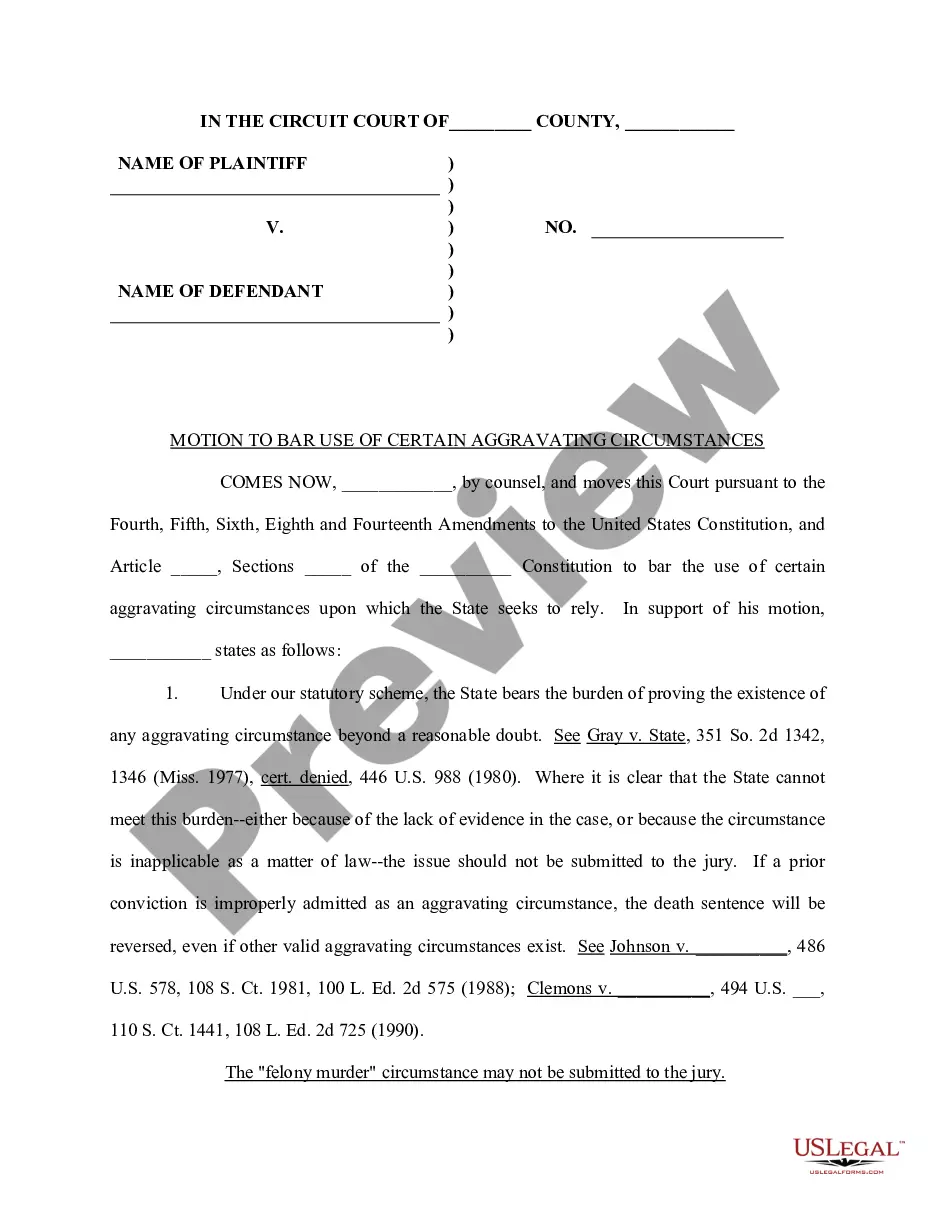
How to fill out Motion To Preclude The Sheriff's Department From Bringing Defendant Into Court In Shackles, And To Limit Number Of Uniformed Officers In Courtroom?
The Tribunal Officer displayed on this page is a versatile legal template crafted by experienced attorneys in compliance with federal and state regulations.
For over 25 years, US Legal Forms has supplied individuals, businesses, and lawyers with more than 85,000 confirmed, state-specific forms suitable for any corporate and personal situation.
Subscribe to US Legal Forms to access verified legal templates for every aspect of your life.
- Search for the document you require and verify it.
- Browse through the sample you found and preview it or assess the form description to make sure it meets your requirements. If it doesn’t, use the search function to find the correct one. Click 'Purchase Now' when you have located the template you need.
- Register and Log In.
- Choose the pricing option that works best for you and create an account. Use PayPal or a debit/credit card to complete a fast payment. If you already possess an account, Log In and check your subscription status to move ahead.
- Obtain the editable template.
- Pick the format you desire for your Tribunal Officer (PDF, DOCX, RTF) and save the template to your device.
- Fill out and sign the documents.
- Print the template to complete it manually. Alternatively, utilize an online multifunctional PDF editor to swiftly and accurately fill out and sign your document with a legally-binding electronic signature.
- Re-download your documents one more time.
- Utilize the same document again whenever necessary. Open the 'My documents' section in your profile to redownload any forms you’ve purchased previously.
Form popularity
FAQ
A court officer for plays a vital role in maintaining order and security within the courtroom. Their responsibilities include overseeing courtroom activities, managing jury members, and ensuring that court rules are followed. Additionally, court officers assist judges and legal staff, transport prisoners when necessary, and handle any disturbances that may arise during proceedings. This position is crucial for upholding the integrity of the judicial process.
To become a court officer for in New York, you must fulfill several requirements. First, you should prepare for and pass the civil service examination designated for court officers. Furthermore, you must complete a thorough background investigation and meet physical fitness standards. Having a solid understanding of court procedures and law enforcement principles will also benefit you in this role.
To become a court officer for in New York, candidates must meet specific eligibility requirements. Generally, you need to be a U.S. citizen or a permanent resident, at least 21 years old, and possess a high school diploma or equivalent. Additionally, candidates must pass a civil service exam and undergo a background check. If you meet these criteria, you can pursue a career as a court officer for in New York.
To become a court officer, start by researching the specific requirements in your jurisdiction. Next, complete any necessary education or training programs and apply for open positions within the court system. Some jurisdictions may require you to pass a civil service exam or background check. Once you secure a position, on-the-job training will help you develop the skills needed for your new role.
Becoming a court officer requires a combination of education, training, and personal attributes. You need to have a clear understanding of legal procedures and court protocols. Strong interpersonal skills are essential for interacting with judges, attorneys, and the public. Additionally, maintaining a calm demeanor in stressful situations is crucial for success in this role.
The salary of a court officer can vary based on location, experience, and responsibilities. On average, court officers earn between $40,000 and $70,000 annually in the United States. Factors such as additional certifications and advanced roles can lead to higher earnings. For a clearer understanding of potential salaries, refer to local job postings and salary surveys.
To become a court officer, candidates typically need a high school diploma or equivalent, although some jurisdictions may prefer an associate or bachelor's degree. Additionally, aspiring court officers should possess strong communication and organizational skills. Training programs or certifications related to law enforcement may also enhance your qualifications. Always check local requirements to ensure you meet the necessary criteria.
When a court officer comes to your house, it typically means that they are delivering important legal documents or enforcing a court order. This visit indicates that there is a legal matter requiring your attention. To handle this situation properly, consider utilizing resources like US Legal Forms, which can help you understand your rights and responsibilities.
Someone from the court may come to your house to serve documents related to a legal matter. This could include notices about court dates, summons, or even enforcement actions like eviction. Knowing the reasons behind such visits helps you take appropriate steps in managing your legal affairs.
Another common name for a court officer is a court deputy. This title reflects the officer's duties in supporting the court's functions, such as serving documents and enforcing legal orders. Understanding these terms can help you navigate legal situations more effectively.