Permission Use Photos Without Copyright
Description
Get your form ready online
Our built-in tools help you complete, sign, share, and store your documents in one place.
Make edits, fill in missing information, and update formatting in US Legal Forms—just like you would in MS Word.
Download a copy, print it, send it by email, or mail it via USPS—whatever works best for your next step.
Sign and collect signatures with our SignNow integration. Send to multiple recipients, set reminders, and more. Go Premium to unlock E-Sign.
If this form requires notarization, complete it online through a secure video call—no need to meet a notary in person or wait for an appointment.
We protect your documents and personal data by following strict security and privacy standards.

Make edits, fill in missing information, and update formatting in US Legal Forms—just like you would in MS Word.

Download a copy, print it, send it by email, or mail it via USPS—whatever works best for your next step.

Sign and collect signatures with our SignNow integration. Send to multiple recipients, set reminders, and more. Go Premium to unlock E-Sign.

If this form requires notarization, complete it online through a secure video call—no need to meet a notary in person or wait for an appointment.

We protect your documents and personal data by following strict security and privacy standards.
Looking for another form?





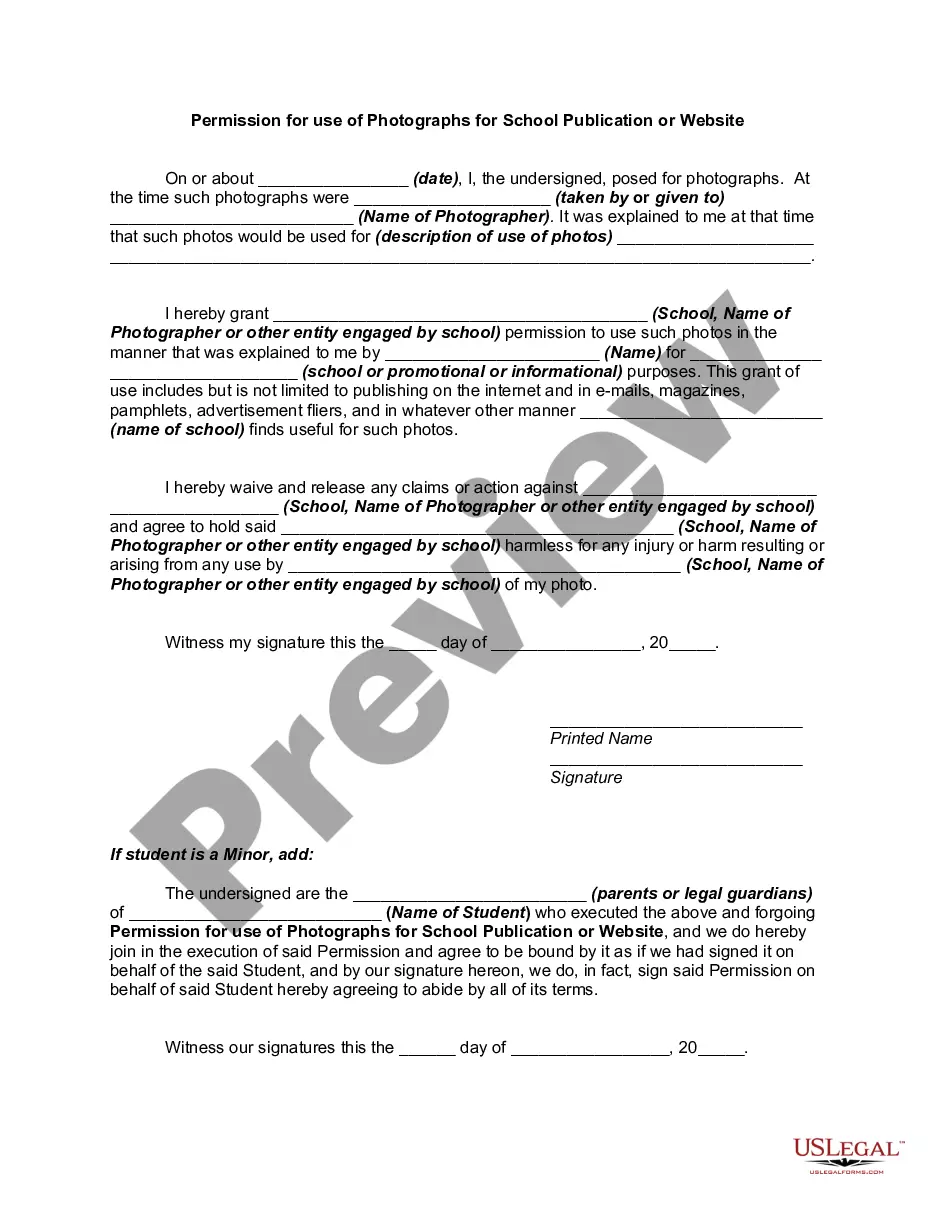
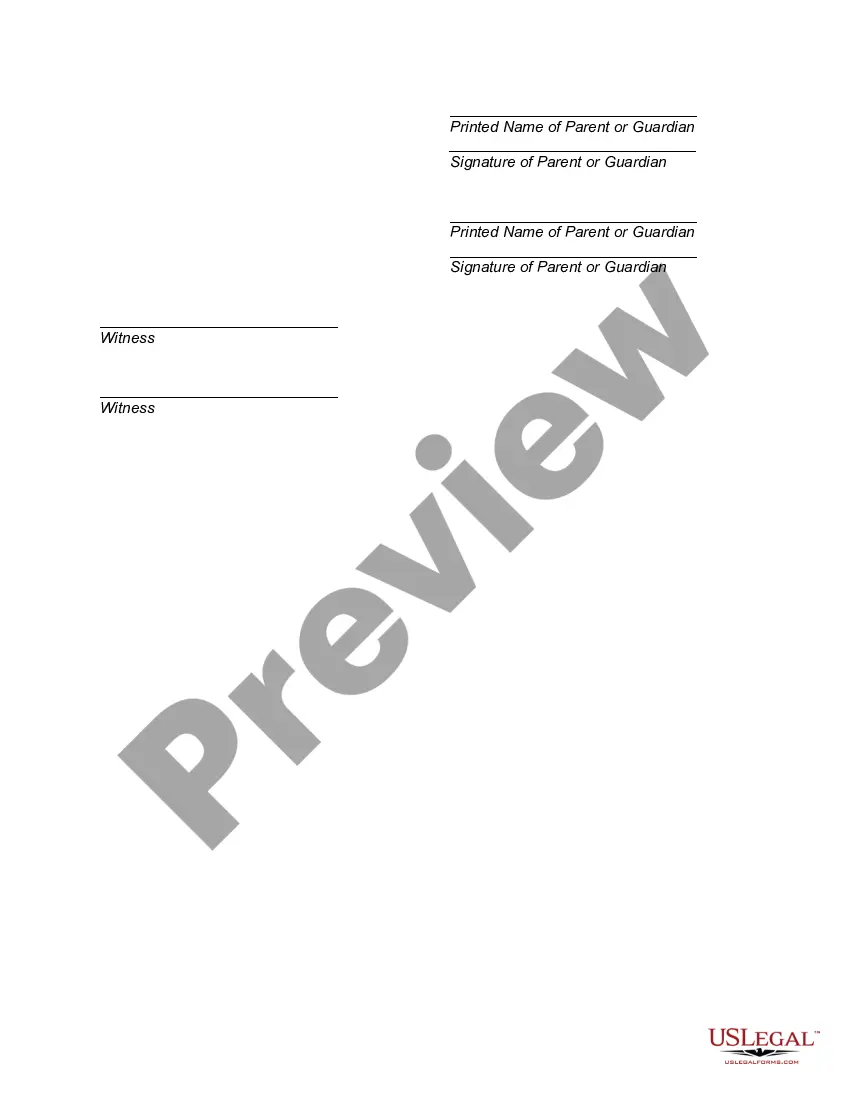
How to fill out Permission For Use Of Photographs For School Publication Or Website?
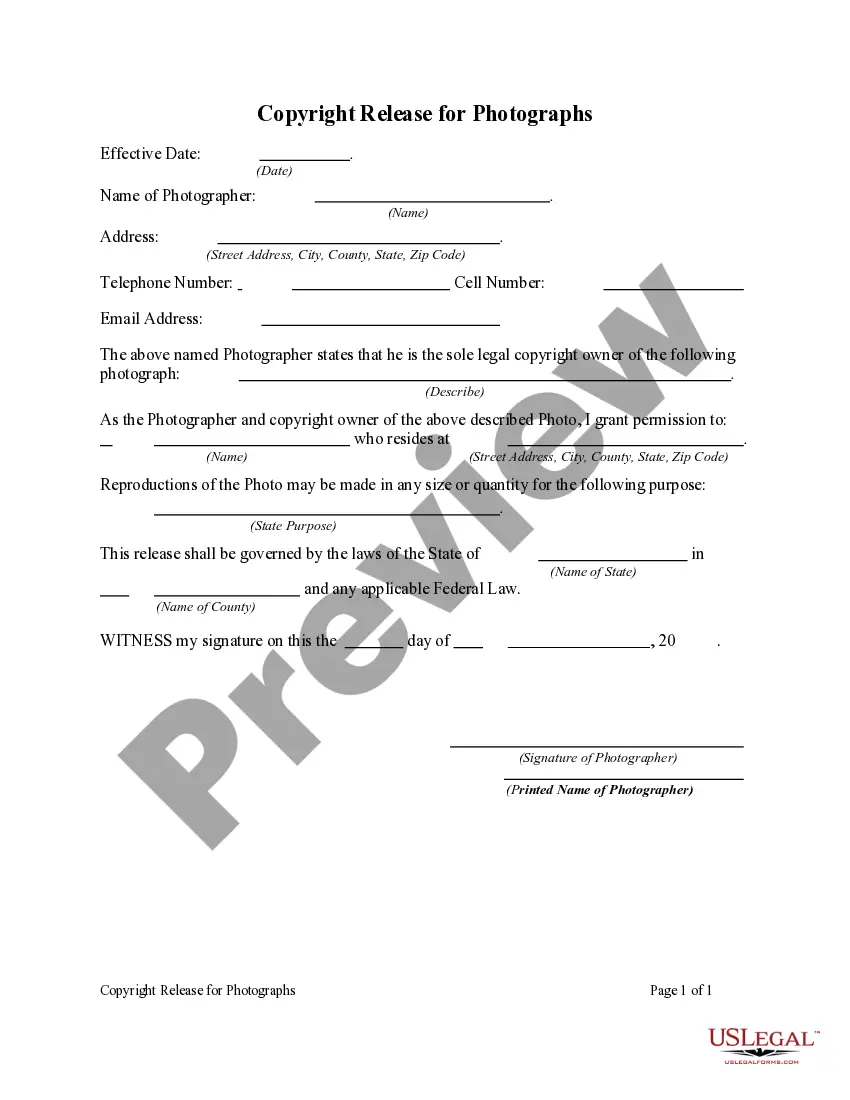
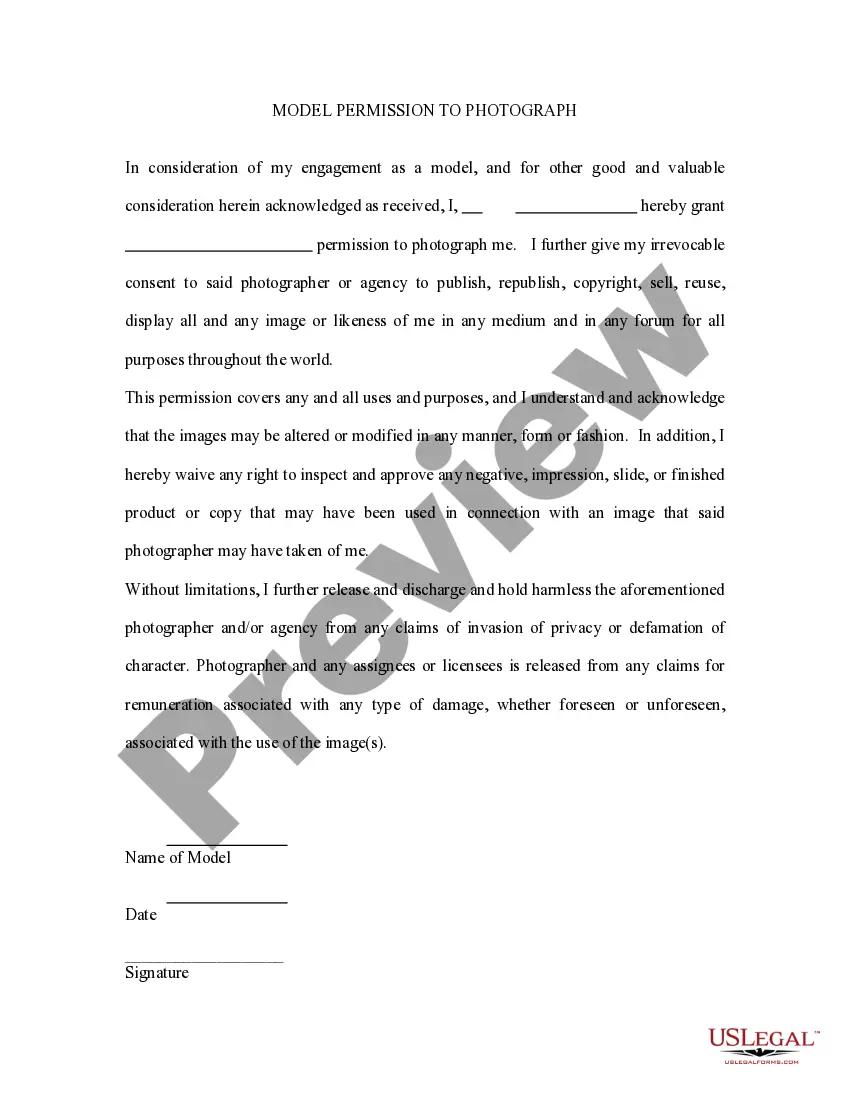
The Authorization to Utilize Images Without Copyright you observe on this page is a versatile legal framework created by experienced attorneys in compliance with federal and local statutes. For over 25 years, US Legal Forms has supplied individuals, enterprises, and legal professionals with more than 85,000 verified, state-specific documents for any professional and personal occasion.
It’s the fastest, simplest, and most reliable method to secure the paperwork you require, as the service guarantees the utmost level of data protection and anti-malware safeguards.
Register for US Legal Forms to have verified legal templates available for all of life's situations.
- Search for the document you require and examine it.
- Browse through the sample you looked for and preview it or read the form description to ensure it meets your requirements. If it doesn’t, use the search bar to find the appropriate one. Click Buy Now when you have identified the template you want.
- Register and Log In.
- Choose the pricing package that fits you and sign up for an account. Use PayPal or a credit card for a swift transaction. If you already possess an account, Log In and verify your subscription to proceed.
- Acquire the editable template.
- Select the format you prefer for your Authorization to Utilize Images Without Copyright (PDF, Word, RTF) and store the sample on your device.
- Fill out and sign the document.
- Print the template to complete it manually. Alternatively, use an online multifunctional PDF editor to swiftly and precisely fill out and sign your form with validity.
- Download your documents again.
- Utilize the same document again whenever required. Access the My documents tab in your profile to redownload any previously purchased documents.
Form popularity
FAQ
You can use an image without asking for permission if it is in the public domain or you have a valid license that allows such use. Additionally, certain educational and non-profit projects may qualify for fair use under specific conditions. To navigate these complexities, consider utilizing resources that clarify the permission to use photos without copyright.
It's important to know that giving credit on its own does not entitle you to use an image. For instance, an image published under an ?All Rights Reserved? license (the default copyright grant, unless stated otherwise), means no rights are granted for any use.
If you reproduce, publish or distribute a copyrighted work (or a work derived from a copyrighted work) without permission or a valid license ? that's copyright infringement. If you want to use an image that's copyright protected, first get a license or permission to use it from the creator.
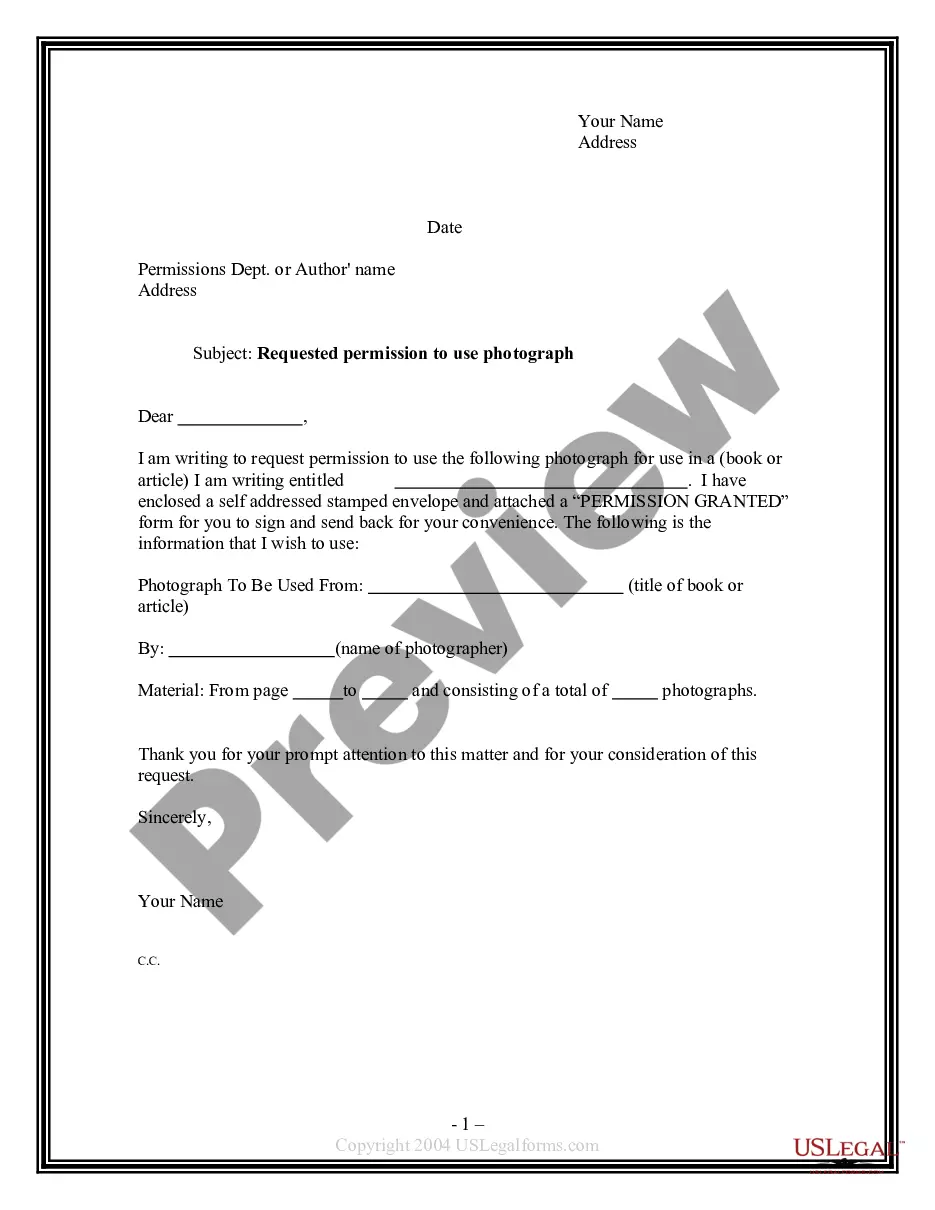
You send a letter to the holder asking for permission and stating how you intend to use the image. The holder sends a letter back granting you permission. Your request should be as specific as possible in describing the intended use of the image.
In general, the permissions process involves a simple five-step procedure: Determine if permission is needed. Identify the owner. Identify the rights needed. Contact the owner and negotiate whether payment is required. Get your permission agreement in writing.
If you edit an image that you didn't create, copyright law still applies. The only way to avoid copyright infringement with images is to create unique works, purchase a license to use an image or find a free-to-use image.