Will R Probate Formal
Description
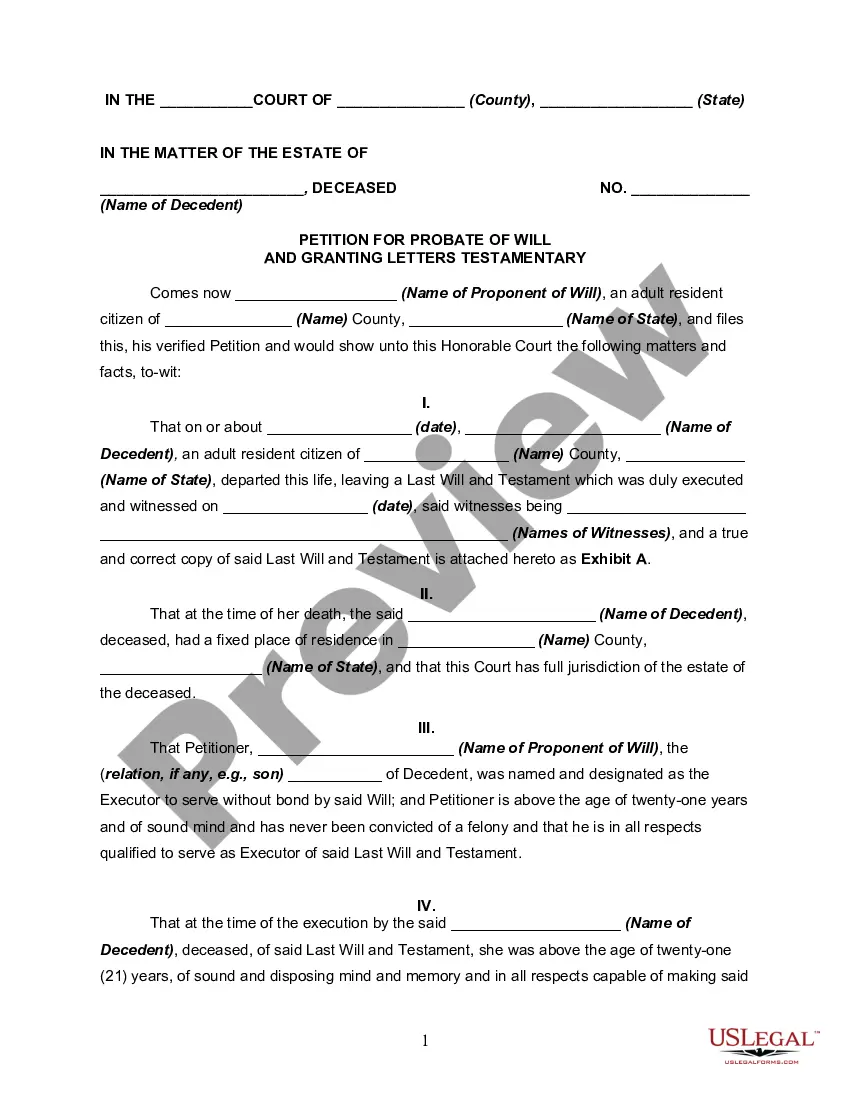
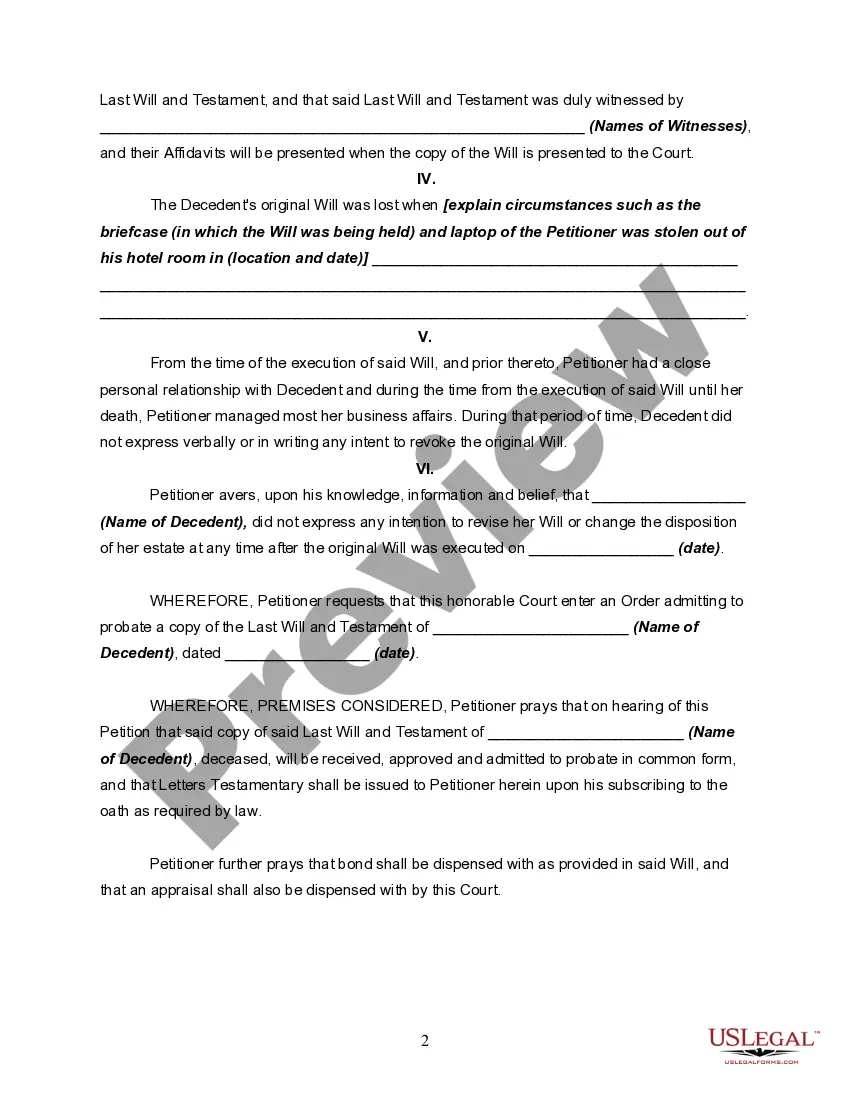
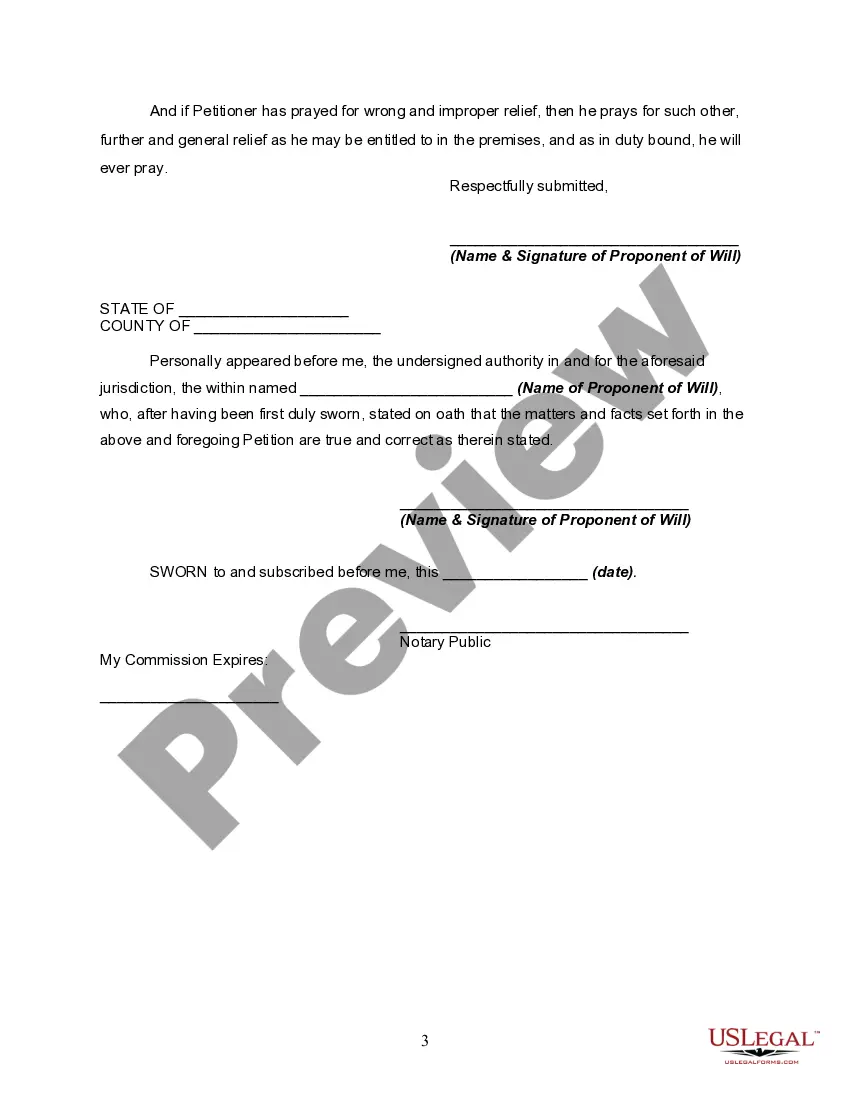
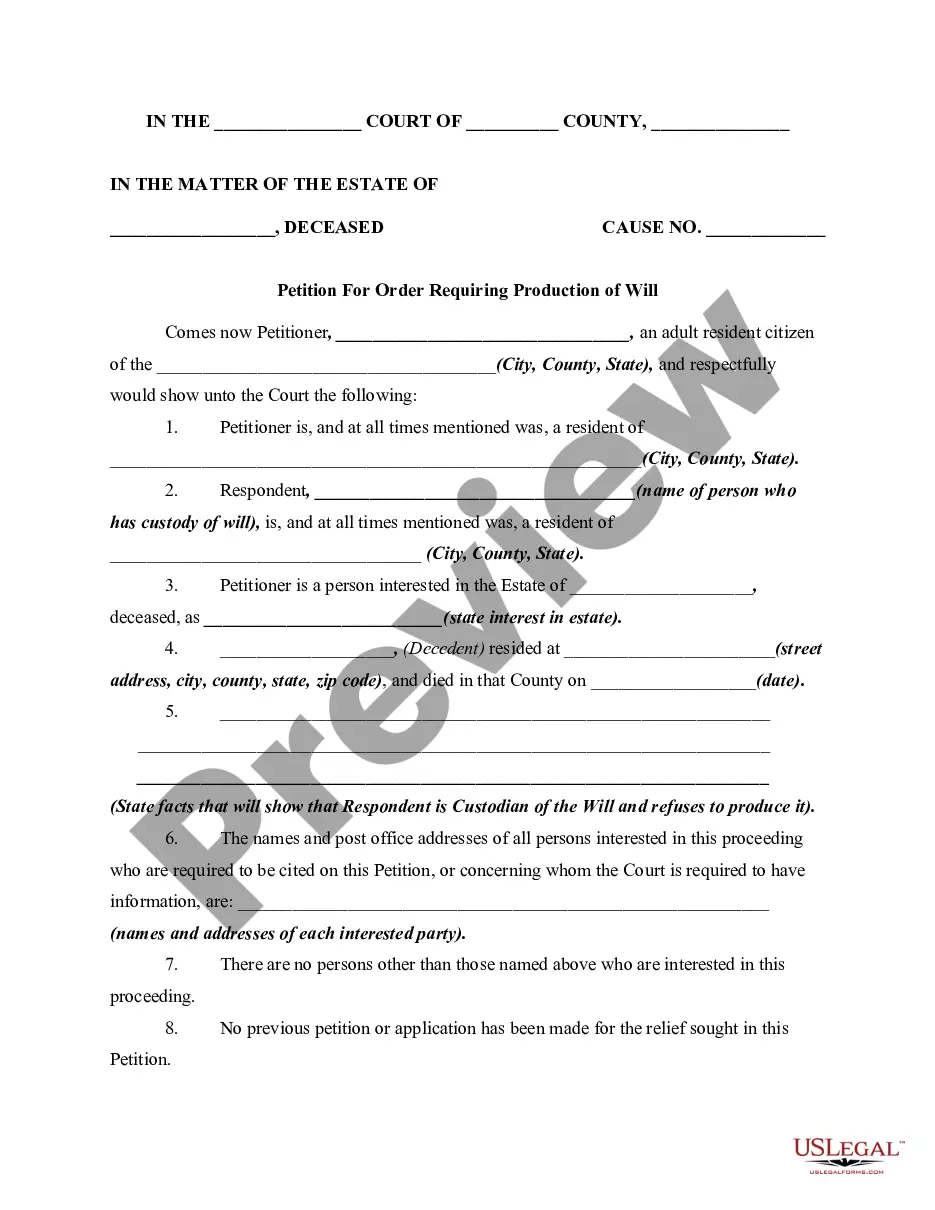

Get your form ready online
Our built-in tools help you complete, sign, share, and store your documents in one place.
Make edits, fill in missing information, and update formatting in US Legal Forms—just like you would in MS Word.
Download a copy, print it, send it by email, or mail it via USPS—whatever works best for your next step.
Sign and collect signatures with our SignNow integration. Send to multiple recipients, set reminders, and more. Go Premium to unlock E-Sign.
If this form requires notarization, complete it online through a secure video call—no need to meet a notary in person or wait for an appointment.
We protect your documents and personal data by following strict security and privacy standards.

Make edits, fill in missing information, and update formatting in US Legal Forms—just like you would in MS Word.

Download a copy, print it, send it by email, or mail it via USPS—whatever works best for your next step.

Sign and collect signatures with our SignNow integration. Send to multiple recipients, set reminders, and more. Go Premium to unlock E-Sign.

If this form requires notarization, complete it online through a secure video call—no need to meet a notary in person or wait for an appointment.

We protect your documents and personal data by following strict security and privacy standards.
Looking for another form?







How to fill out Petition To Probate Lost Will?
Regardless of whether it is for corporate reasons or individual issues, every person inevitably encounters legal circumstances at some stage in their life.
Filling out legal documentation requires meticulous attention, starting with the choice of the correct form template.
With an extensive US Legal Forms catalog available, you no longer need to waste time searching for the appropriate template online. Utilize the library’s user-friendly navigation to find the correct form for any circumstance.
- Search for the document you need by using the search box or catalog browsing.
- Review the form’s details to confirm it aligns with your case, jurisdiction, and county.
- Click on the form’s preview to examine it.
- If it is the incorrect document, return to the search feature to find the Will R Probate Formal template you require.
- Obtain the file if it fulfills your needs.
- If you already possess a US Legal Forms account, simply click Log in to access previously saved templates in My documents.
- If you do not have an account yet, you may acquire the form by clicking Buy now.
- Choose the suitable pricing option.
- Fill out the profile registration form.
- Select your payment method: utilize a credit card or PayPal account.
- Choose the file format you desire and download the Will R Probate Formal.
- Once downloaded, you can fill out the form using editing software or print it and complete it by hand.
Form popularity
FAQ
Not all wills need to go through probate, but many do. Whether a will must be probated often depends on the value of the estate and state laws. When a will is probated, it ensures that the deceased's wishes are honored and assets are properly transferred. For tailored solutions regarding the Will r probate formal process, you can rely on the resources provided by US Legal Forms.
Probate and a will are related but not the same. A will is a legal document that outlines how a person's assets should be distributed after their death. Probate, on the other hand, is the legal process that validates a will and oversees the distribution of assets. Understanding the difference is important, especially when considering how the Will r probate formal process impacts your estate.
Probate means the Will is admitted as valid under South Carolina law. Informal probate admits the will as valid. Formal probate requires a hearing to confirm the validity of the will. If the will has erasures, white-out, or other markings, the Court may require a formal probate proceeding.
Just find a simple template or format online and print it. Then prepare a list of all your self-owned assets and clearly state who gets what in your absence. Specify the executor or the person who will make sure your wishes are carried out. Lastly, sign and date the will and ask two witnesses to sign as well.
Essential Information Write a title. ... Name the executor of your will. ... Name a guardian for any minors. ... Organize and inventory assets. ... Name the beneficiaries. ... Write your residuary clause. ... Sign your will with witnesses. ... Store your will someplace safe and update it when necessary.
Put simply, and in order, the executor's job and the process of dealing with probate involves: Gathering any assets, for example, money left in bank accounts. Paying any bills. Distributing what's left ing to the will.
This Will is made by me without any persuasion or coercion and out of my own independent decision only. I appoint Shri???????.. Son/daughter of ?????, resident of ????. to be the executor of this Will. In the event Shri????? were to predecease me, then Shri?????., will be the executor of this Will.