Qualified Trust Caps Complete With The Following
Description

Get your form ready online
Our built-in tools help you complete, sign, share, and store your documents in one place.
Make edits, fill in missing information, and update formatting in US Legal Forms—just like you would in MS Word.
Download a copy, print it, send it by email, or mail it via USPS—whatever works best for your next step.
Sign and collect signatures with our SignNow integration. Send to multiple recipients, set reminders, and more. Go Premium to unlock E-Sign.
If this form requires notarization, complete it online through a secure video call—no need to meet a notary in person or wait for an appointment.
We protect your documents and personal data by following strict security and privacy standards.

Make edits, fill in missing information, and update formatting in US Legal Forms—just like you would in MS Word.

Download a copy, print it, send it by email, or mail it via USPS—whatever works best for your next step.

Sign and collect signatures with our SignNow integration. Send to multiple recipients, set reminders, and more. Go Premium to unlock E-Sign.

If this form requires notarization, complete it online through a secure video call—no need to meet a notary in person or wait for an appointment.

We protect your documents and personal data by following strict security and privacy standards.
Looking for another form?


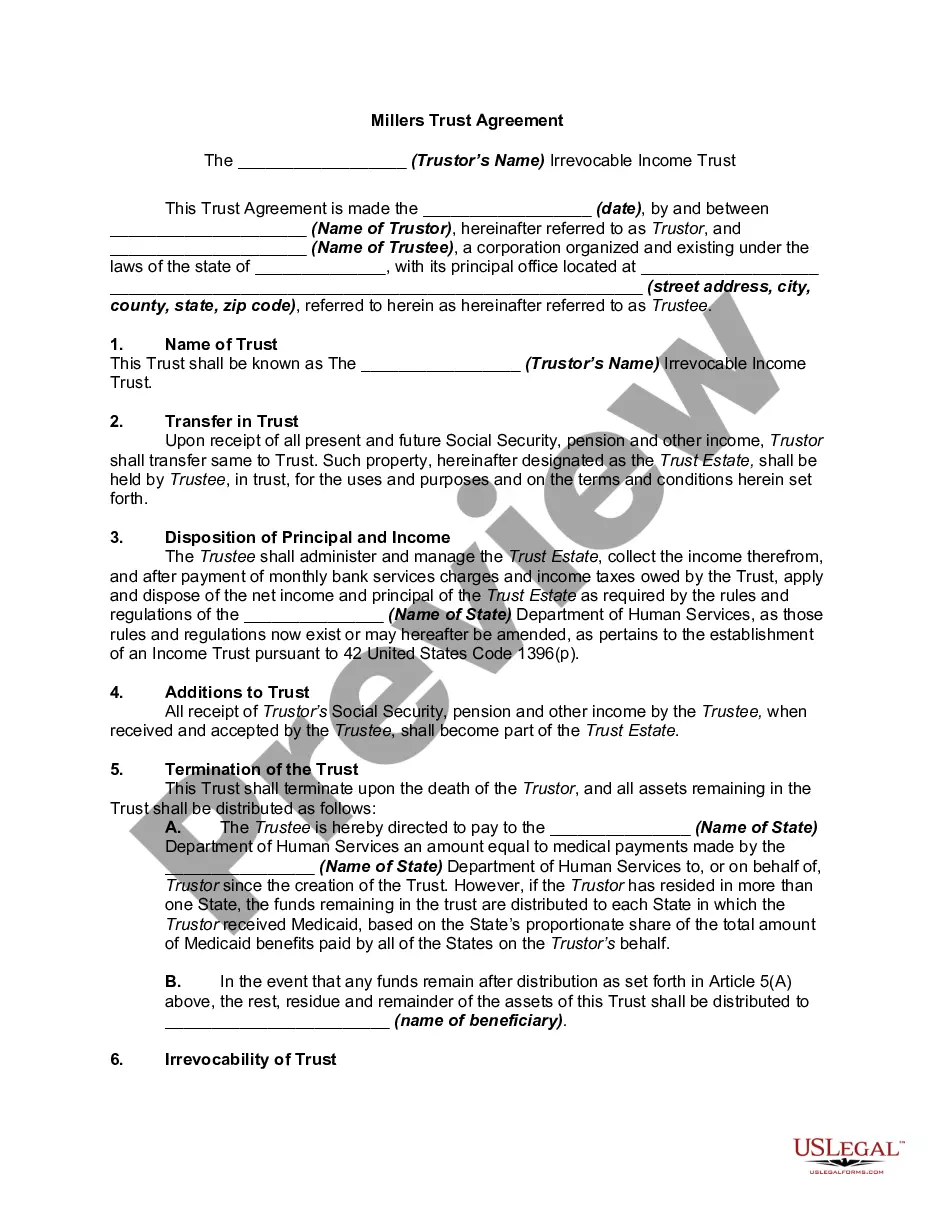
How to fill out Qualified Income Miller Trust?
- If you are an existing user, log into your account and click the Download button to retrieve your desired template. Ensure your subscription is current; if it's not, renew according to your chosen plan.
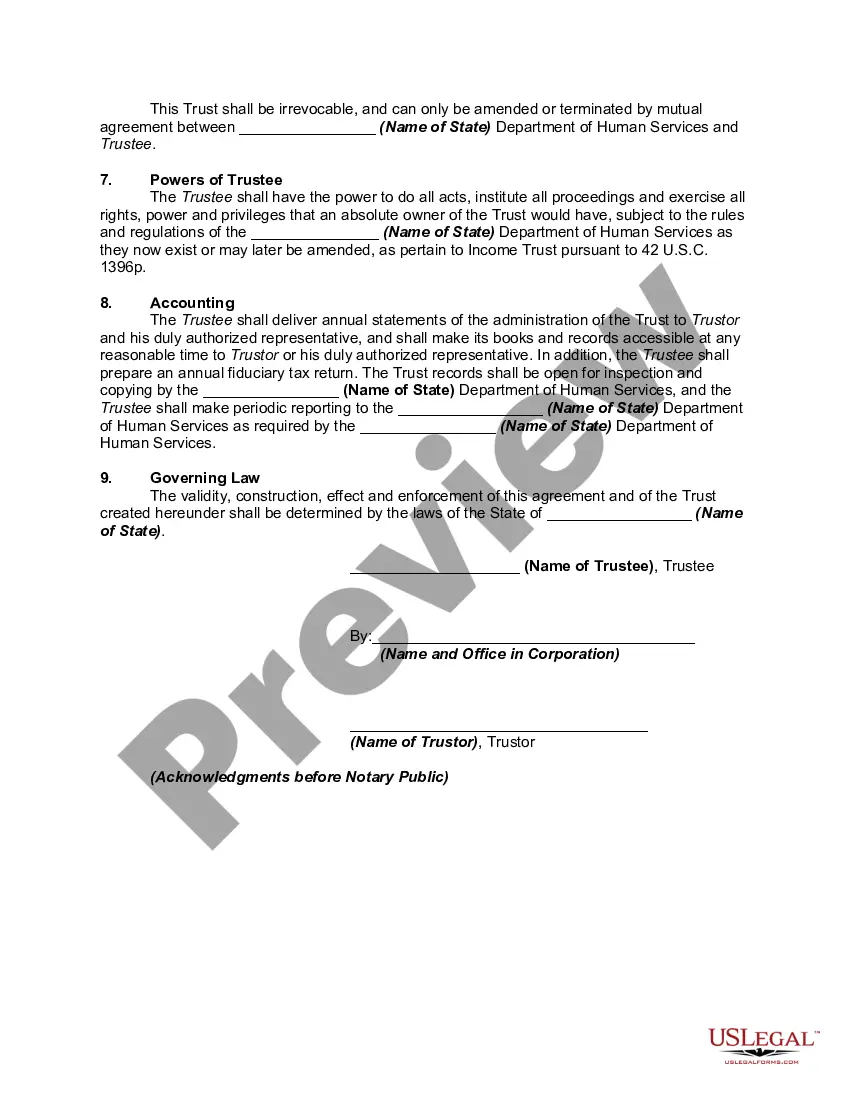
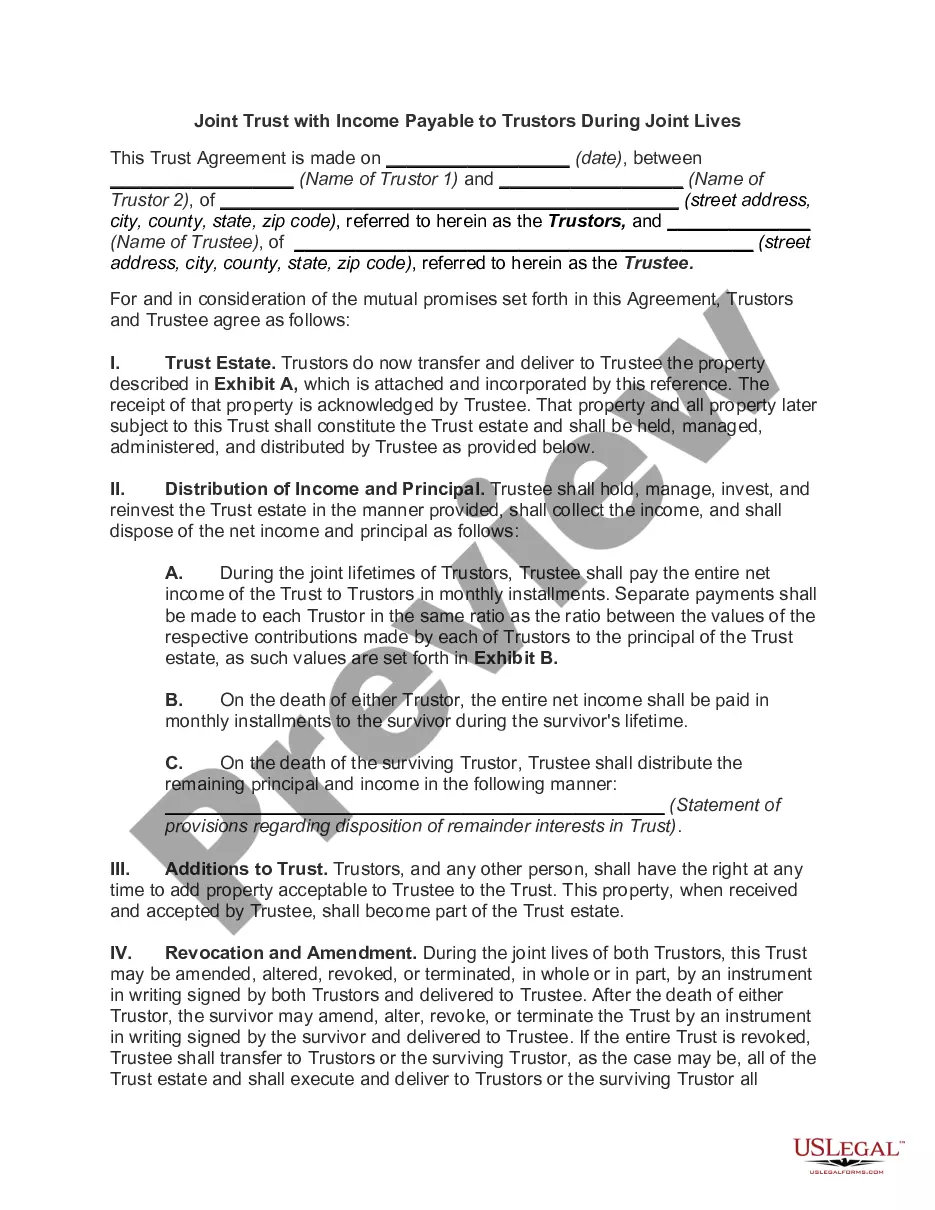
- For first-time users, start by checking the Preview mode and form description to confirm you’ve selected the right document that aligns with your local jurisdiction's requirements.
- If you’re not satisfied with your choice, utilize the Search tab to browse for alternative templates. Once you find a suitable match, move forward.
- To proceed with your chosen document, click on the Buy Now button and select your preferred subscription plan. Remember to create an account for access.
- Complete your purchase by providing your credit card information or opting for PayPal. This secures your subscription.
- Finally, download the form to your device for completion and access it anytime through the My Forms section of your profile.
In conclusion, US Legal Forms combines an extensive library and user-friendly experience, ensuring that whether you're a seasoned user or a newcomer, obtaining legal documents is straightforward and efficient.
Start your journey today with US Legal Forms and experience the ease of having legal documents at your fingertips!
Form popularity
FAQ
Funds in a Qualified Income Trust can be used for various essential expenses, including medical costs, housing, and related personal needs. However, it's crucial to adhere to the rules governing such trusts to ensure you maintain your eligibility for certain benefits. Be sure to keep detailed records of all expenditures to avoid issues down the road. Consulting an expert for proper guidance here will further secure your financial strategy.
Obtaining a qualified income trust involves drafting the trust document to comply with state regulations and federal guidelines. You can create this trust on your own, but working with a legal professional is advisable for accuracy and compliance. Additionally, platforms like US Legal Forms provide resources and templates to help you establish a qualified income trust effectively. Once established, you can fund the trust according to applicable laws.
To determine if a trust is qualified, you should review its terms and conditions closely. A qualified trust must meet specific criteria set by federal and state laws, which often involve income limits and distributions to beneficiaries. Nonqualified trusts, on the other hand, do not meet these requirements and may have more restrictions. If you're unsure, consider consulting with a legal expert for clarity.
In New Jersey, a QIT operates as a specific type of trust designed to help individuals qualify for Medicaid benefits while preserving a certain level of income. The income placed in the QIT does not count against Medicaid eligibility, allowing beneficiaries to receive necessary care. It's essential to follow strict guidelines to ensure the QIT remains compliant with state laws. Utilizing platforms like US Legal Forms can help you navigate these requirements effectively.
To set up a QIT account, start by selecting a financial institution that offers trust accounts. You will need to provide the trust's legal documentation, including the trust agreement and IRS identification number. It's important to have a clear plan on how the QIT will receive and manage income. Remember, working with professionals can simplify this process and ensure compliance with all regulations.
One of the biggest mistakes parents often make when setting up a trust fund is failing to clearly communicate their intentions with their children. This lack of transparency can lead to misunderstandings and conflicts later on. Additionally, not periodically reviewing the trust may result in outdated provisions that do not reflect changing family dynamics or financial circumstances. To avoid these issues, consider using resources like US Legal Forms to guide you through proper trust formation.
Setting up a Qualified Income Trust (QIT) involves several straightforward steps. First, you need to draft a trust document that complies with state laws, naming the trustee and beneficiaries clearly. Next, fund the trust with the necessary income and ensure it meets the guidelines specified for QITs. Lastly, make sure to maintain accurate records of all transactions related to the trust.
To document trust income, you should keep a detailed record of all income generated by the trust assets. This includes interest, dividends, and rental income. Using accounting software or spreadsheets can help you track these amounts effectively. Additionally, ensure you retain any relevant statements or documentation from financial institutions regarding the income.
A qualified income trust, often referred to as a QIT, allows individuals to set aside income so they can qualify for government assistance programs. The trust holds income above a specified limit, ensuring individuals do not exceed eligibility thresholds for benefits. By utilizing a qualified income trust, individuals can effectively manage their finances while receiving necessary aid. To get started, check out US Legal Forms for simple templates and resources tailored to your needs.
To establish a qualified trust, you generally need to meet specific criteria set by the state. A qualified trust must have a designated trustee who manages the assets within the trust effectively. Additionally, the trust often requires that it provides a certain level of income to the beneficiaries in compliance with applicable laws. For personalized guidance, consider using the US Legal Forms platform to navigate these requirements easily.