Accounting For Insurance Proceeds
Description

Get your form ready online
Our built-in tools help you complete, sign, share, and store your documents in one place.
Make edits, fill in missing information, and update formatting in US Legal Forms—just like you would in MS Word.
Download a copy, print it, send it by email, or mail it via USPS—whatever works best for your next step.
Sign and collect signatures with our SignNow integration. Send to multiple recipients, set reminders, and more. Go Premium to unlock E-Sign.
If this form requires notarization, complete it online through a secure video call—no need to meet a notary in person or wait for an appointment.
We protect your documents and personal data by following strict security and privacy standards.

Make edits, fill in missing information, and update formatting in US Legal Forms—just like you would in MS Word.

Download a copy, print it, send it by email, or mail it via USPS—whatever works best for your next step.

Sign and collect signatures with our SignNow integration. Send to multiple recipients, set reminders, and more. Go Premium to unlock E-Sign.

If this form requires notarization, complete it online through a secure video call—no need to meet a notary in person or wait for an appointment.

We protect your documents and personal data by following strict security and privacy standards.
Looking for another form?


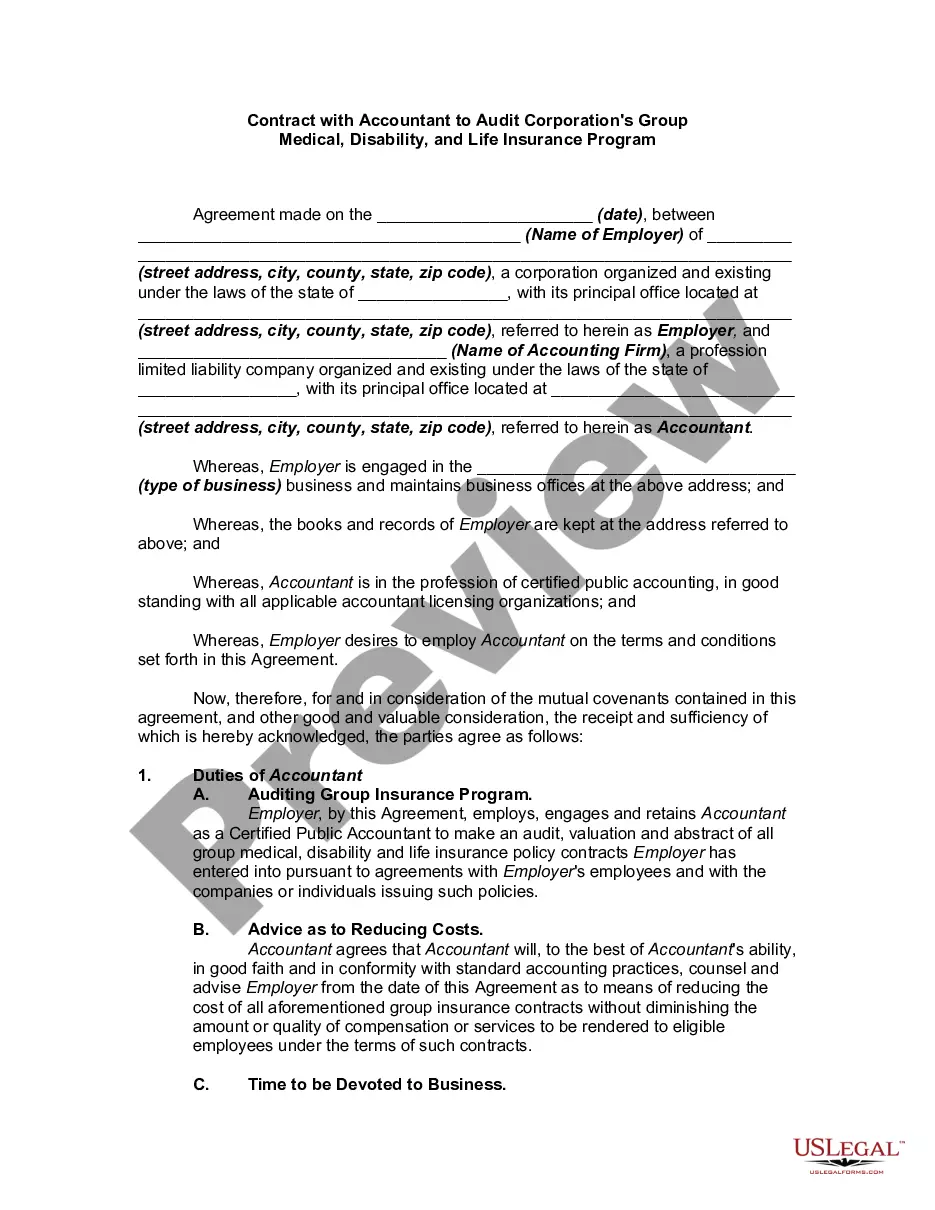
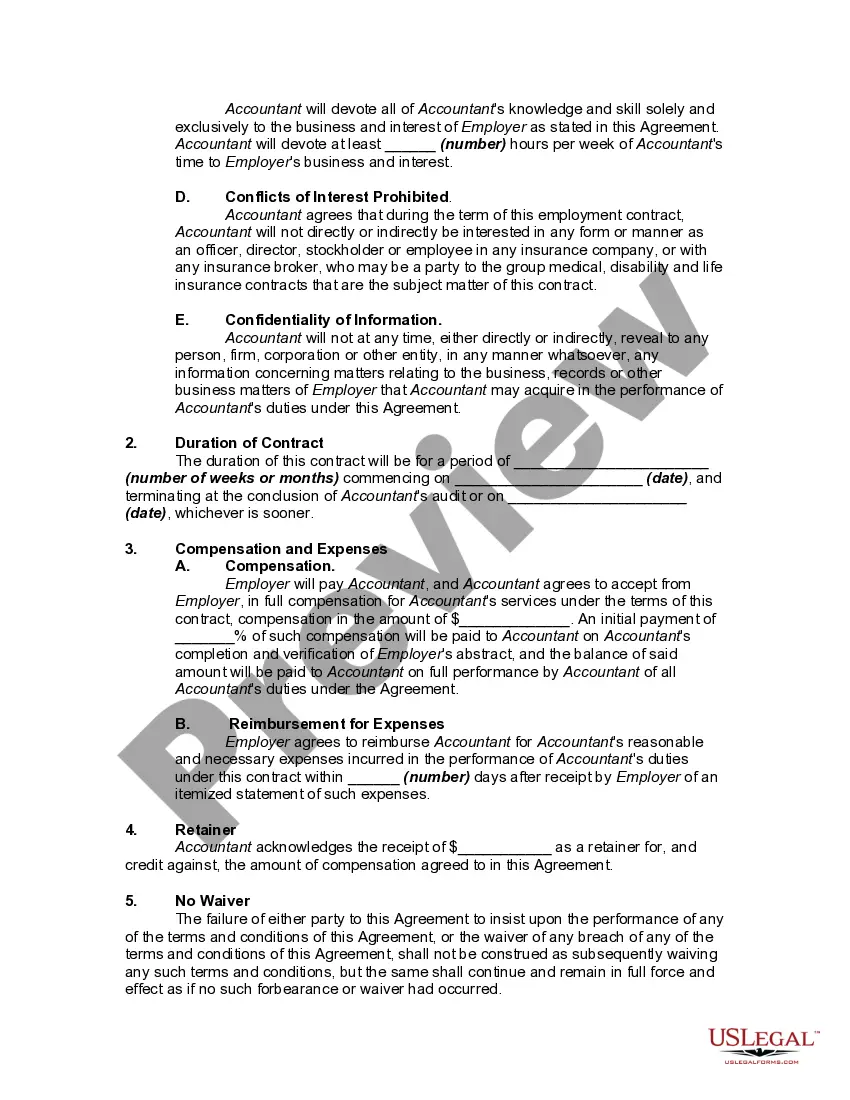
How to fill out Contract With Accountant To Audit Corporation's Group Medical, Disability, And Life Insurance Program?
The Financial Accounting For Insurance Earnings you observe on this site is a highly adaptable official template crafted by expert attorneys in compliance with national and local laws and regulations.
For over 25 years, US Legal Forms has been supplying individuals, companies, and legal representatives with more than 85,000 validated, region-specific documents for any commercial and personal situation. It’s the quickest, simplest, and most reliable method to acquire the paperwork you require, as the service assures the utmost level of data protection and anti-malware safeguards.
Register for US Legal Forms to access validated legal templates for all of life’s circumstances at your fingertips.
- Search for the document you require and review it.
- Browse through the sample you queried and preview it or read the form description to ensure it meets your needs. If it doesn’t, utilize the search function to find the correct one. Click Buy Now once you've located the template you want.
- Register and Log In.
- Select the payment plan that fits you and create an account. Use PayPal or a credit card for a quick transaction. If you already possess an account, Log In and verify your subscription to proceed.
- Obtain the editable template.
- Choose the format you prefer for your Financial Accounting For Insurance Earnings (PDF, Word, RTF) and store the sample on your device.
- Complete and sign the document.
- Print the template to fill it out manually. Alternatively, use an online versatile PDF editor to swiftly and accurately fill out and sign your form with an electronic signature.
- Download your paperwork again as needed.
- Use the same document again whenever required. Access the My documents tab in your profile to redownload any previously acquired forms.
Form popularity
FAQ
A primary beneficiary is a person or organization that will receive the proceeds from your life insurance after you die.
Determine the accounting treatment: The accounting treatment for insurance proceeds depends on the nature of the event and the type of insurance coverage. In general, insurance proceeds are recognized as income or as a reduction of an expense or loss, depending on the circumstances.
Key Takeaways. An insurance claim is a formal request by a policyholder to an insurance company for coverage or compensation for a covered loss or policy event. The insurance company validates the claim and, once approved, issues payment to the insured or an approved interested party on behalf of the insured.
You received a life insurance benefit: 8 ways to use it wisely First move: Wait. Option 1: Pay off debt. Option 2: Create an emergency fund. Option 3: Purchase an annuity. Option 4: Collect installments. Option 5: Invest for growth. Option 6: Children's education. Option 7: A combination approach.
Generally, a brief letter to the insurance company, or ?notice of assignment,? will suffice. The notice should include the contractor's name and contact information, as well as instructions for the insurance company to pay the contractor directly.