Injunction Order Preliminary With Injunction
Description
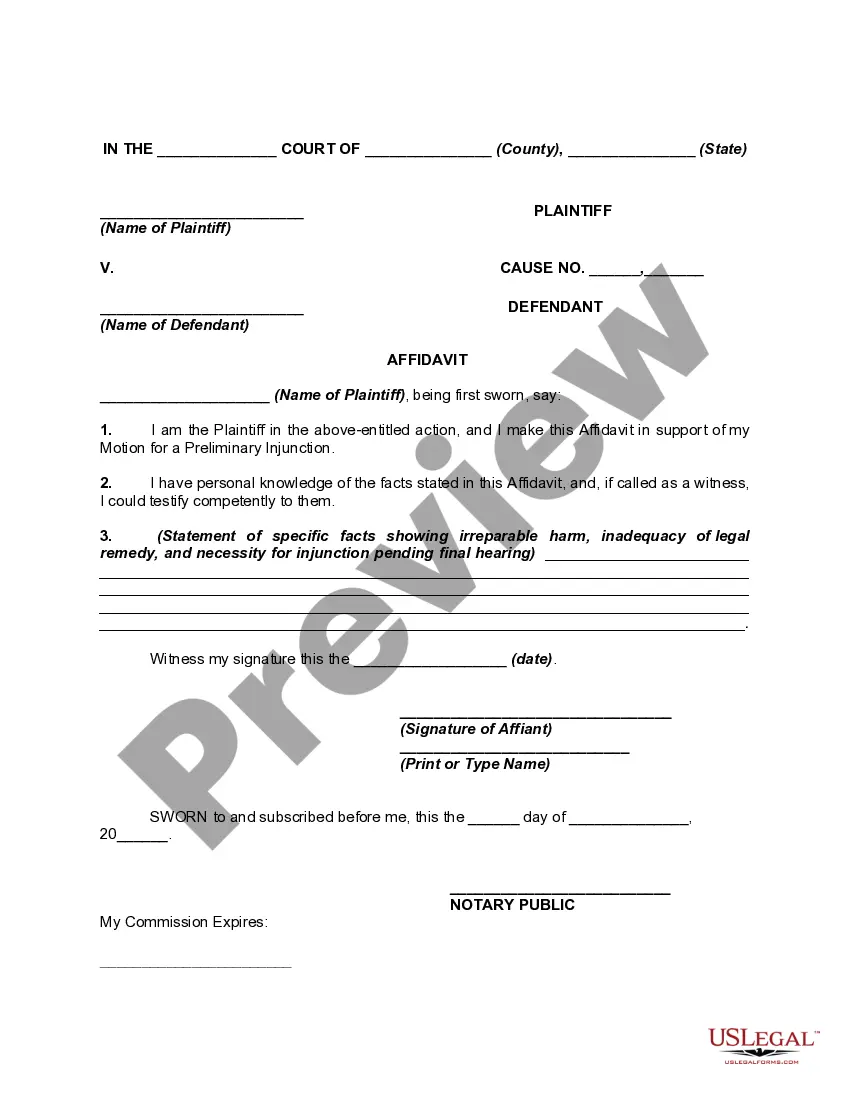

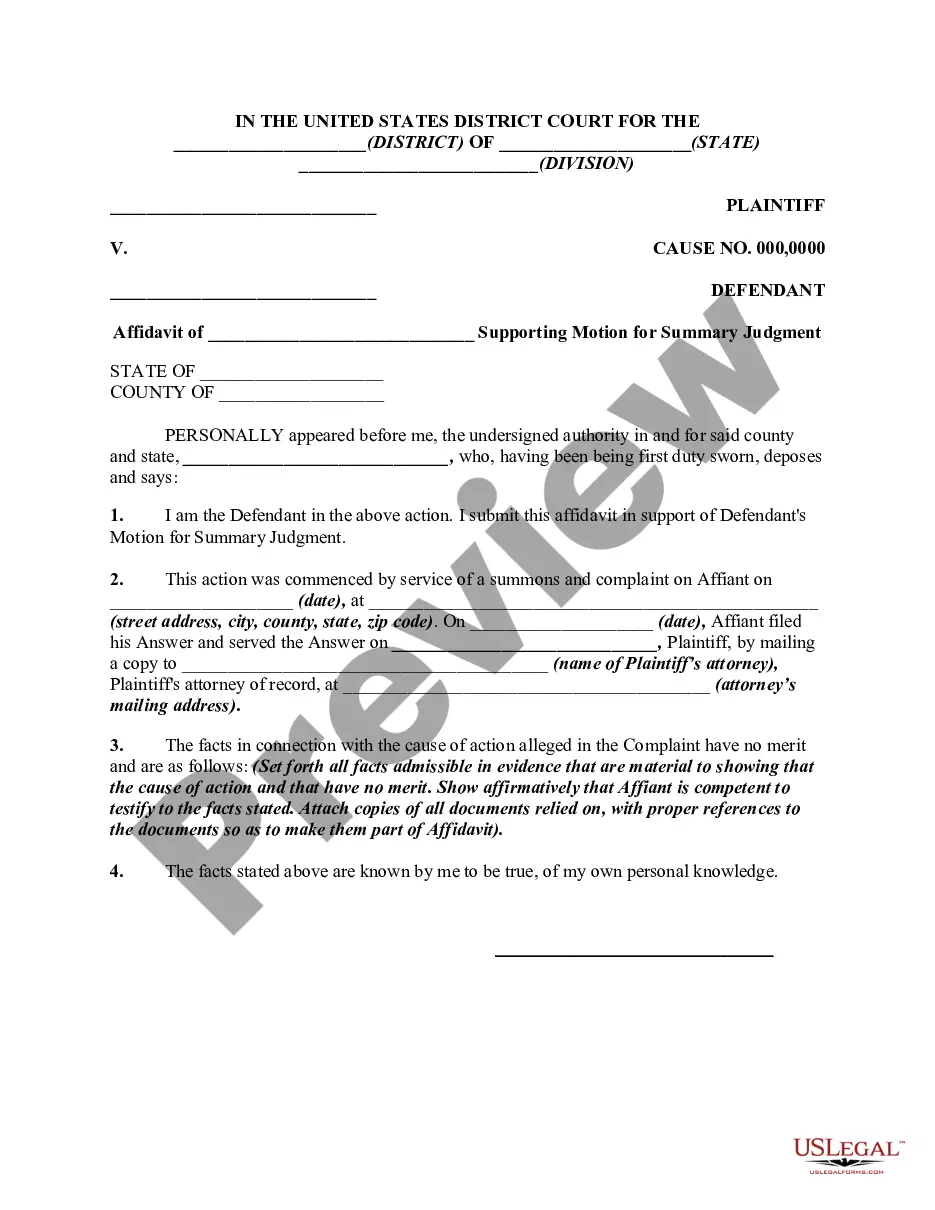
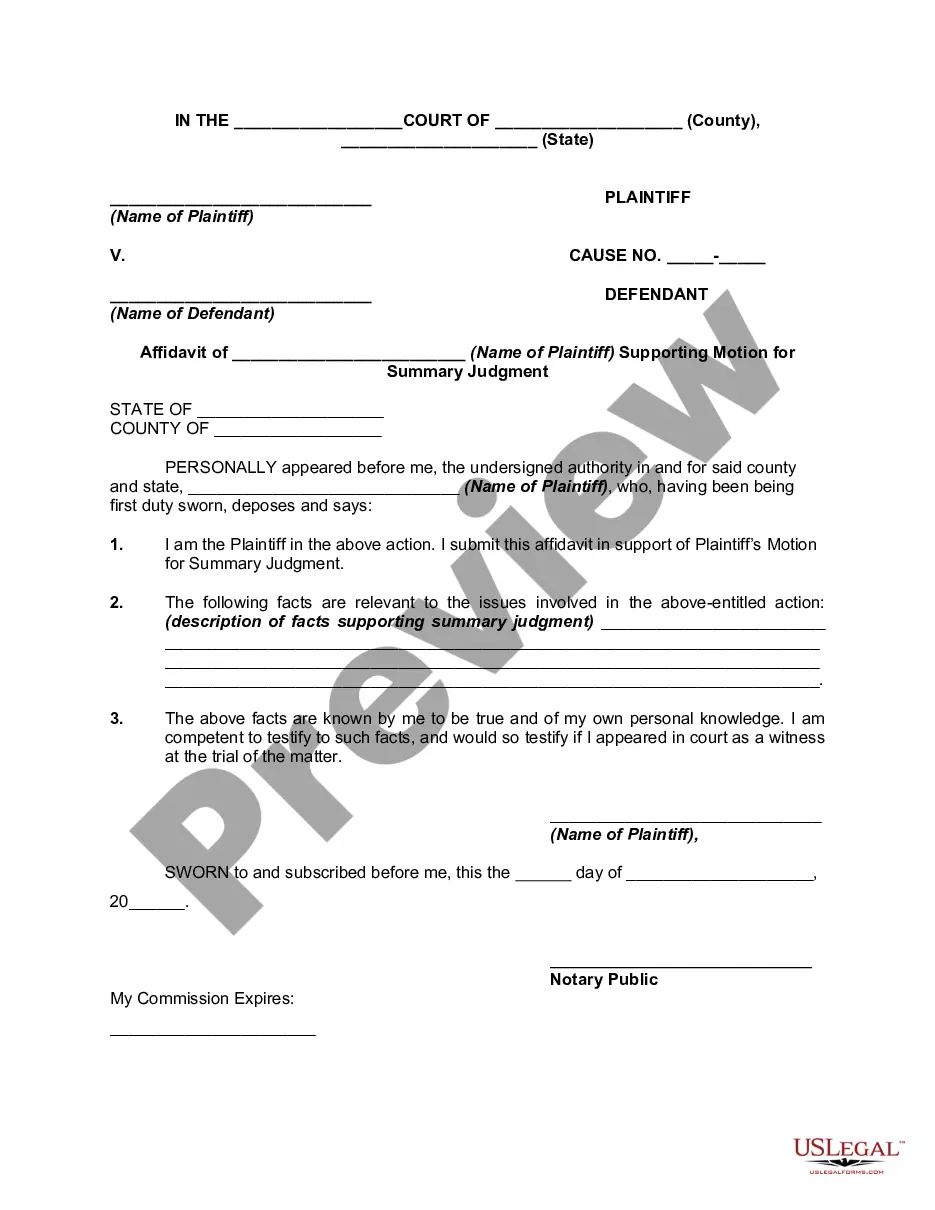
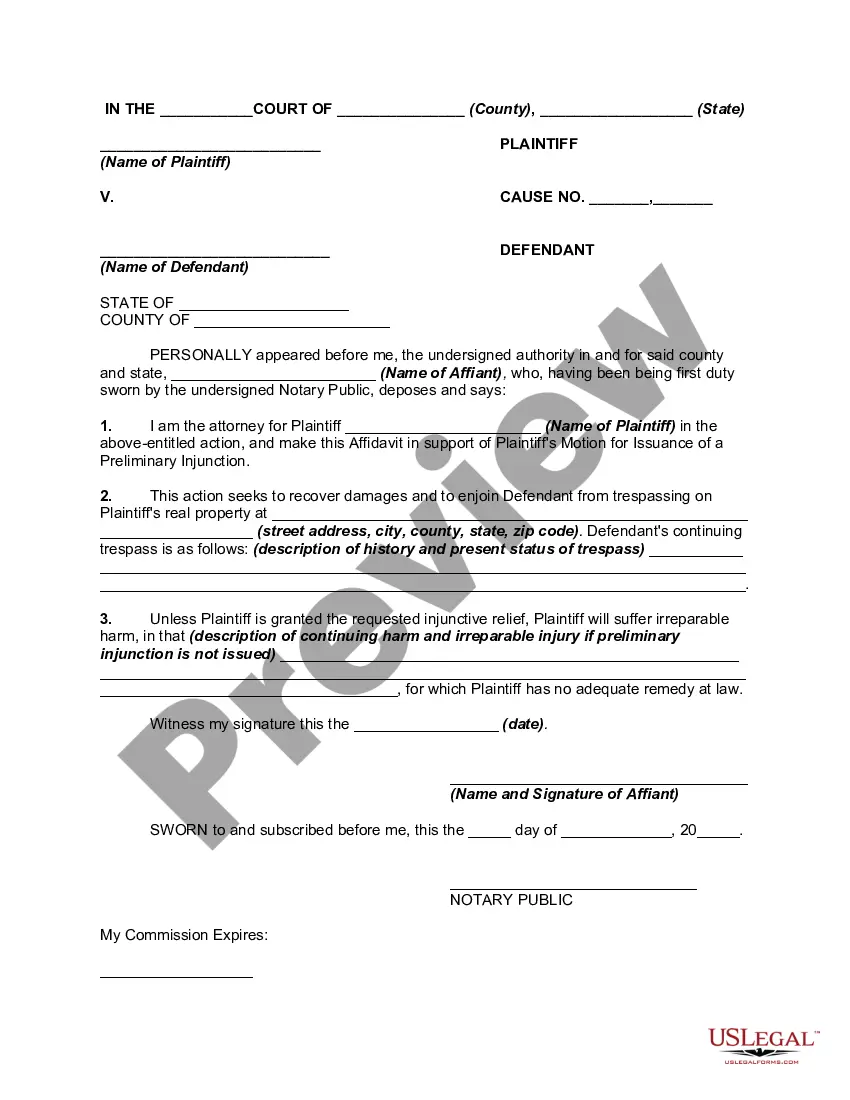





How to fill out Affidavit In Support Of Motion For Preliminary Injunction?
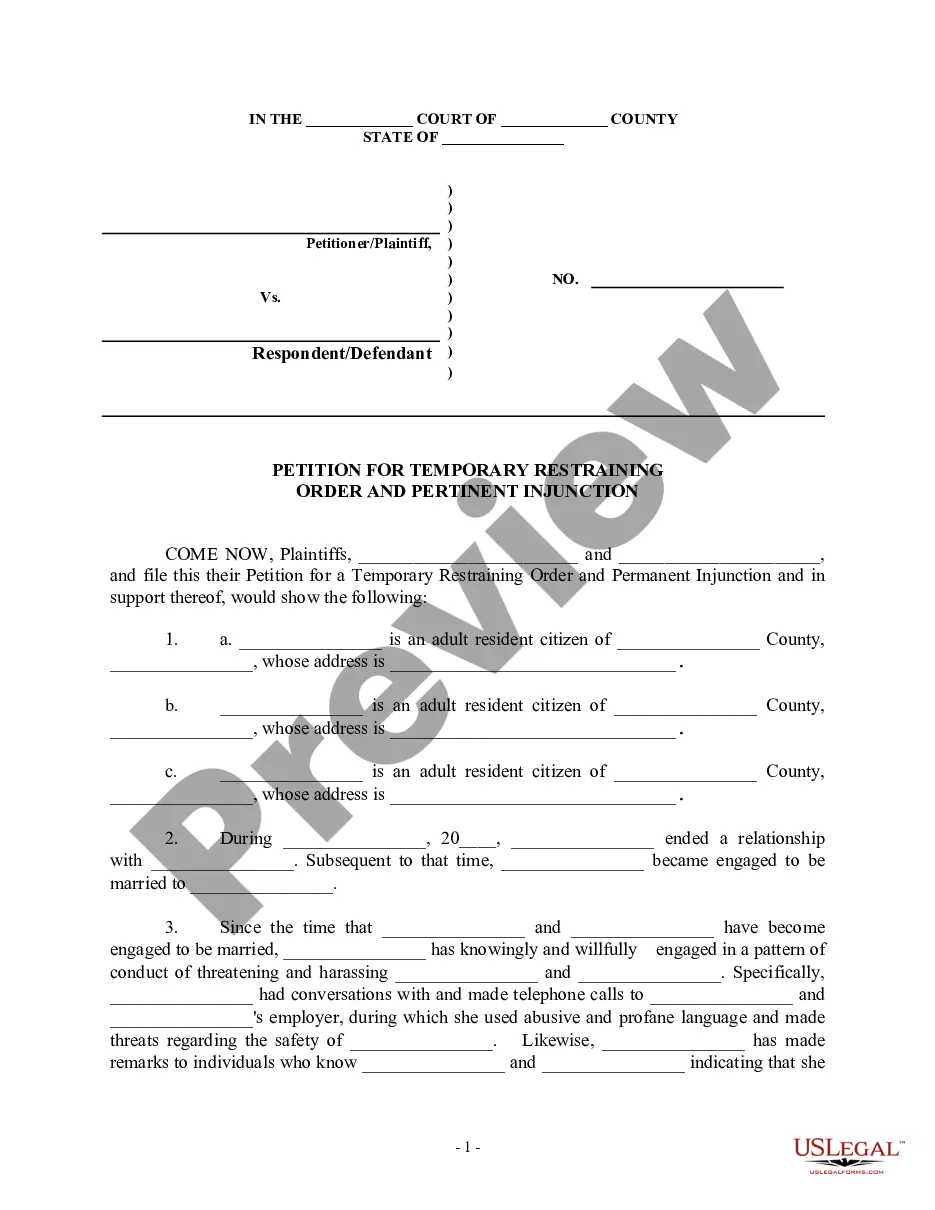
The Injunction Order Preliminary With Injunction displayed on this page is a versatile legal template created by expert attorneys in accordance with federal and local regulations.
For over 25 years, US Legal Forms has supplied individuals, businesses, and legal practitioners with more than 85,000 authenticated, state-specific documents for any commercial and personal needs. It’s the fastest, easiest, and most dependable method to secure the papers you require, as the service guarantees bank-level data protection and anti-malware safeguards.
Fill out and sign the document. Print the template to complete it manually. Alternatively, use an online multi-functional PDF editor to quickly and accurately fill out and sign your form with a legally-binding electronic signature. Download your documents again. Use the same document repeatedly as needed. Access the My documents tab in your profile to redownload any previously acquired forms. Register for US Legal Forms to have verified legal templates for all of life’s situations available to you.
- Search for the document you need and review it.
- Browse through the file you searched and preview it or verify the form description to ensure it meets your requirements. If it doesn’t, use the search function to locate the correct one. Click Buy Now once you have identified the template you require.
- Choose and Log In.
- Select the pricing plan that works for you and create an account. Utilize PayPal or a credit card for a swift payment. If you already have an account, Log In and verify your subscription to continue.
- Obtain the editable template.
- Select the format you desire for your Injunction Order Preliminary With Injunction (PDF, Word, RTF) and download the sample to your device.
Form popularity
FAQ
A preliminary injunction is granted at any stage of an action or proceeding prior to the judgment or final order. It persists until it is dissolved or until the termination of the action without the court issuing a final injunction.
It is well established that, to determine whether an injunction is ?just and proper,? courts apply the ?familiar set of four equitable factors: the movant's likelihood of success on the merits; the possibility of irreparable injury to the moving party; the extent to which the balance of hardships favors each party; and ...
State to the court that you would like a restraining order and what you would like the court to order. Be as specific as possible. Examples: ?I am asking the court to grant me a _____ month/year injunction.? ?I want no contact in person, at home, by phone, at work, by mail or through third parties.?
A preliminary injunction is temporary relief that preserves the status quo until the courts decide on the merits of the case. The relief sought often involves asking a court to prevent an opposing party from taking specific action or continuing a current course of action.