Vacation After Termination Withholding Pay
Description
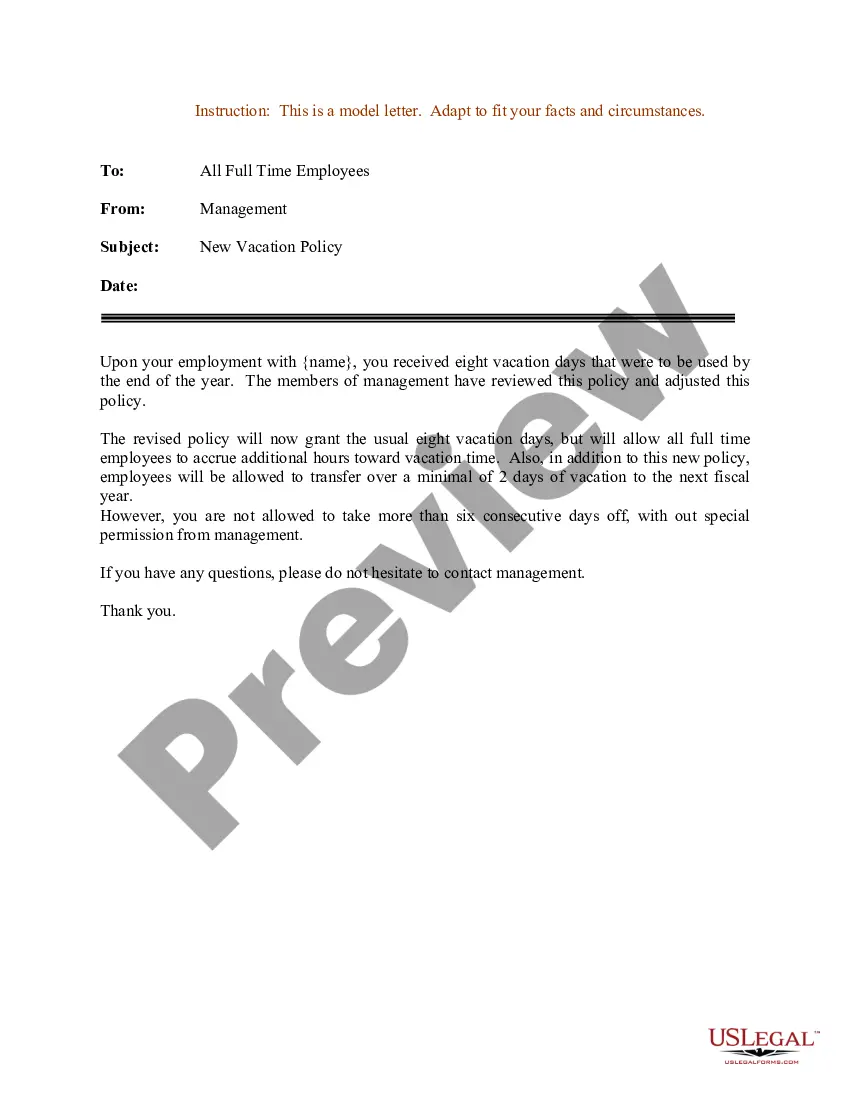
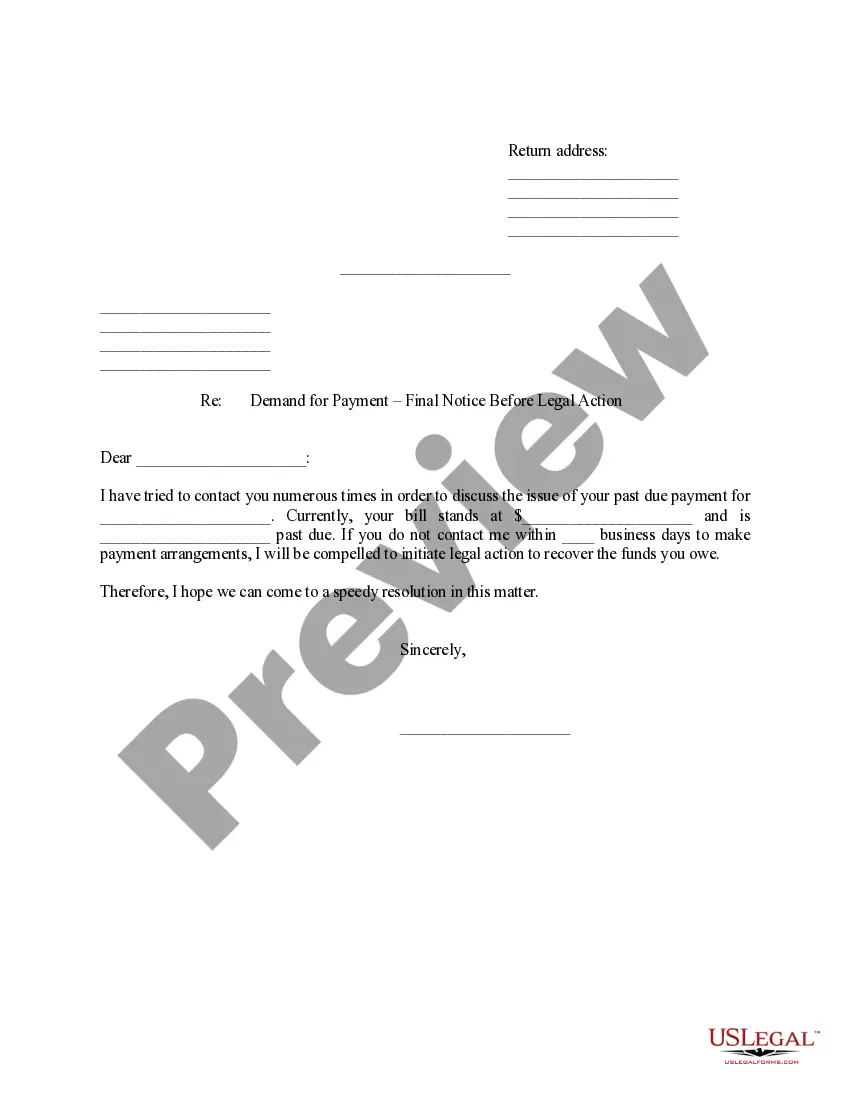
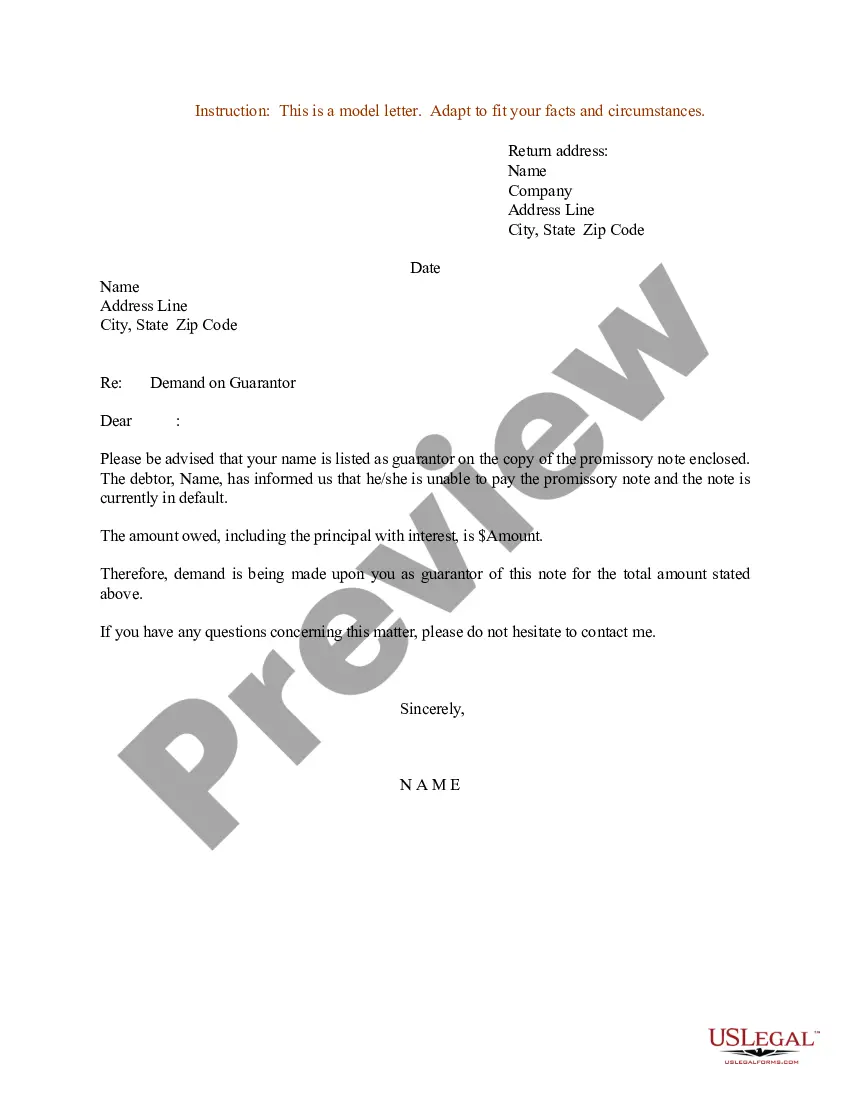
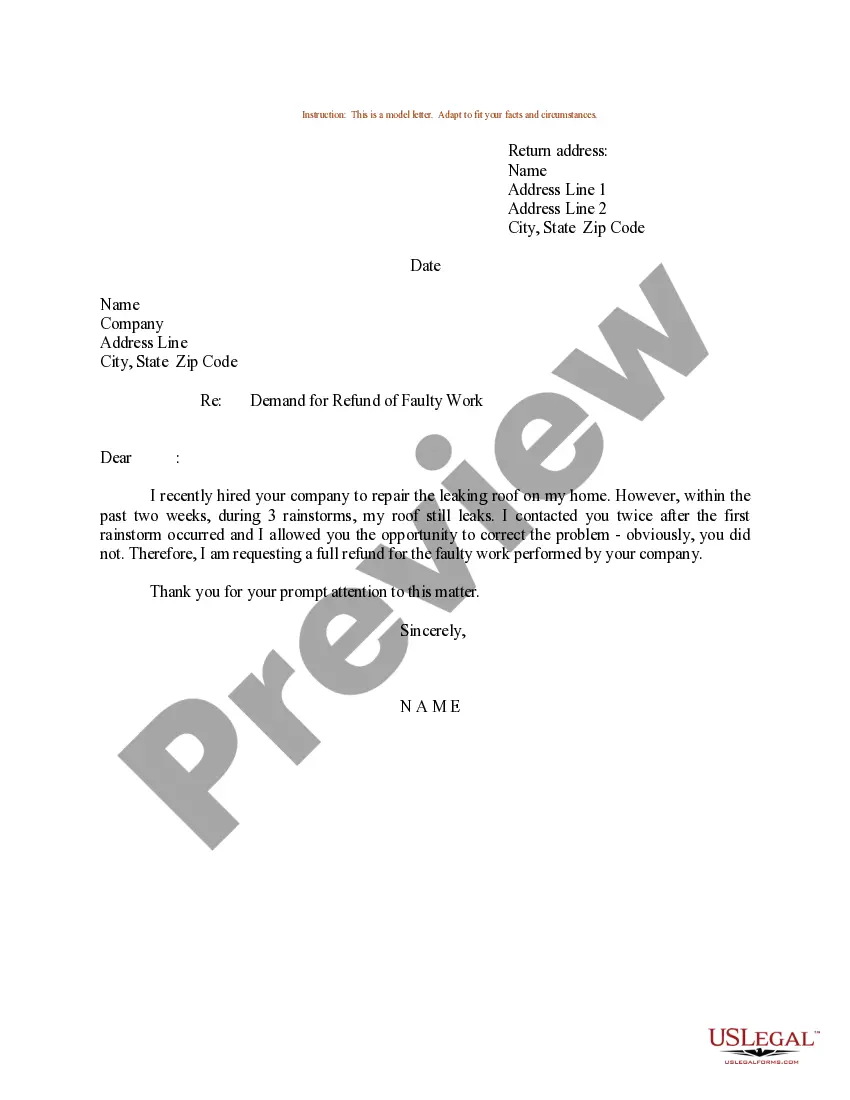






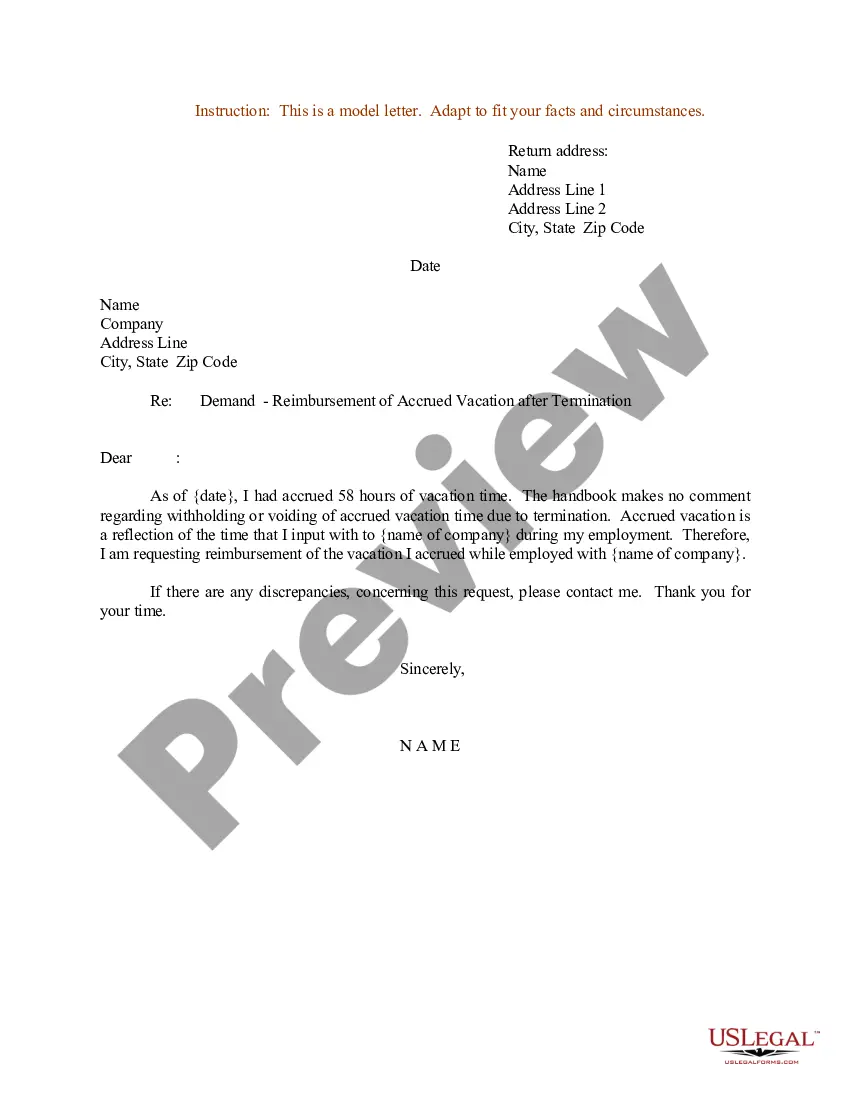
How to fill out Sample Letter For Demand - Reimbursement Of Accrued Vacation After Termination?
Managing legal documents can be daunting, even for experienced individuals.
When you are looking for a Vacation After Termination Withholding Pay and don’t have the time to search for the correct and current version, the procedures can be stressful.
Gain access to a valuable resource library of articles, guides, and materials pertinent to your situation and needs.
Save time and effort looking for the documents you require, and utilize US Legal Forms’ enhanced search and Preview feature to find Vacation After Termination Withholding Pay and obtain it.
Take advantage of the US Legal Forms online library, supported by 25 years of expertise and reliability. Turn your everyday document management into a seamless and user-friendly experience today.
- If you have a monthly subscription, Log In to your US Legal Forms account, search for the form, and get it.
- Check the My documents tab to see the documents you've previously downloaded and to manage your folders as you wish.
- If this is your first time using US Legal Forms, create an account for unlimited access to all the benefits of the library.
- Verify that it is the right form by previewing it and reviewing its details.
- Make sure that the template is authorized in your state or region.
- Click Buy Now when you are prepared.
- Choose a monthly subscription plan, select the file format you prefer, and Download, fill in, eSign, print, and send your documents.
- Access state- or region-specific legal and organizational documents.
- US Legal Forms caters to any needs you may have, from personal to business forms, all in one place.
- Use advanced tools to complete and manage your Vacation After Termination Withholding Pay.
Form popularity
FAQ
In Florida, vacation pay laws do not mandate payout of accrued vacation time upon termination unless company policy states otherwise. Employers have the discretion to create their own vacation payout policies. If your employer's policy does mandate this payout, it is crucial to ensure that it is clearly outlined in your employment contract or employee handbook. Understanding your rights concerning vacation after termination withholding pay can help you navigate this process more effectively.
Severance typically refers to compensation offered to employees upon termination, covering various components like pay for unused vacation days, wages, and benefits. In cases of vacation after termination withholding pay, it's critical to clarify what the severance includes with your employer. This can involve consulting your severance agreement or company policy. If you're unsure, platforms like US Legal Forms can help you navigate these agreements and protect your interests.
A severance package often includes payment for unused vacation time, health insurance, and sometimes outplacement services. Companies want to support you as you transition, and these packages may vary significantly. If you experience vacation after termination withholding pay, ensure that any severance agreement precisely outlines your entitlements, including unused vacation days. Understanding your rights can help you negotiate better terms.
When you don't use your vacation days, you risk losing them, depending on your employer's policy. Many companies have a 'use it or lose it' rule, meaning unused days expire by a certain date. In the case of vacation after termination withholding pay, employers might not compensate you for those unused days if you didn't take them before leaving. It's important to understand your company's vacation policy to avoid losing earned time off.
Can a company deduct a negative leave balance from an exiting employee's final paycheck? An employer is permitted under federal law to make a deduction from a nonexempt employee's final pay to recover a negative paid-leave balance.
Termination Vacation Pay means, at the time of a termination of the Executive's employment hereunder, the payment due to the Executive at the rate of the Annual Salary in effect at that time, on a daily basis, multiplied by the number of earned and unused vacation days up until the Termination Date.
If an employee is terminated or quits with a negative paid time off balance, you might be able to deduct the salary that was advanced from the employee's final paycheck.
As an employee, you can submit a PTO request after giving your two weeks' notice. But keep in mind that your employer may very well say ?no.? Using paid time off during your last two weeks of employment makes it much trickier for your employer to find the right replacement.
Taxation of PTO Payout In most states, earned PTO (vacation, sick time, or both) is considered to be a form of wages. The IRS taxes payout of accrued vacation and other PTO at the supplemental income tax rate of 22%.