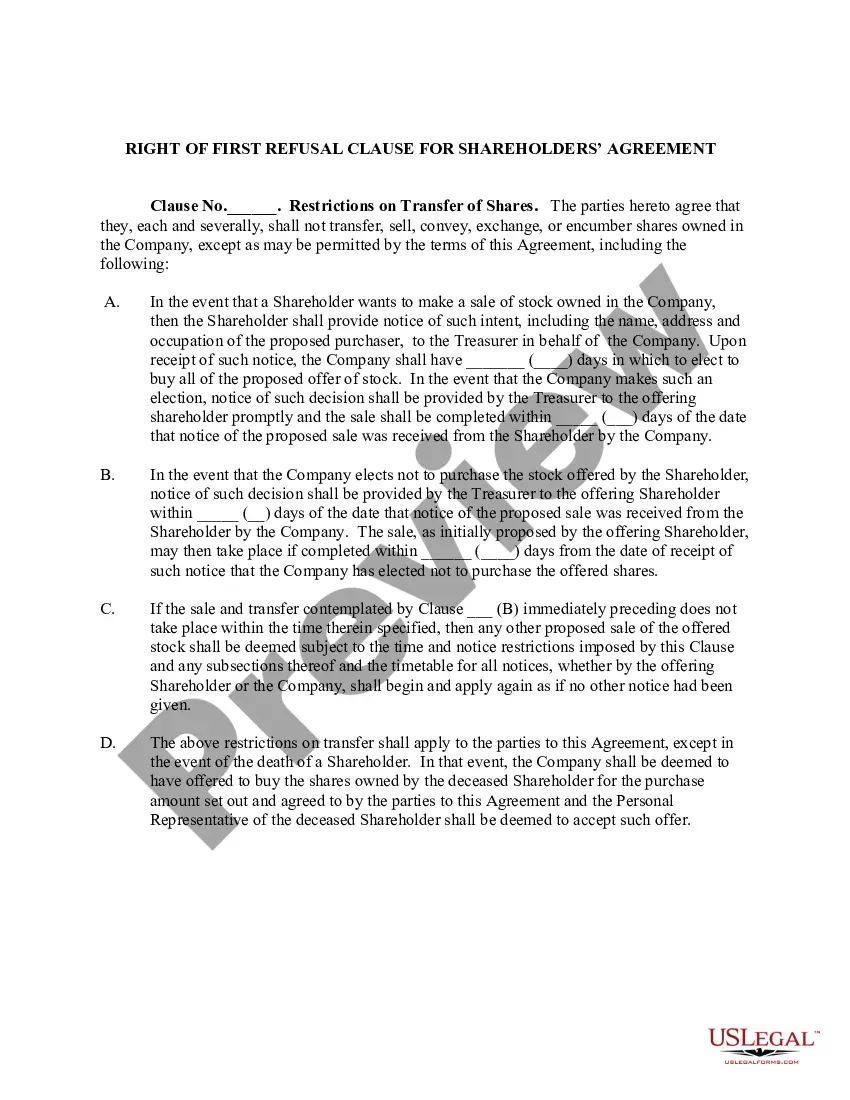
Right Of Refusal Clause
Description
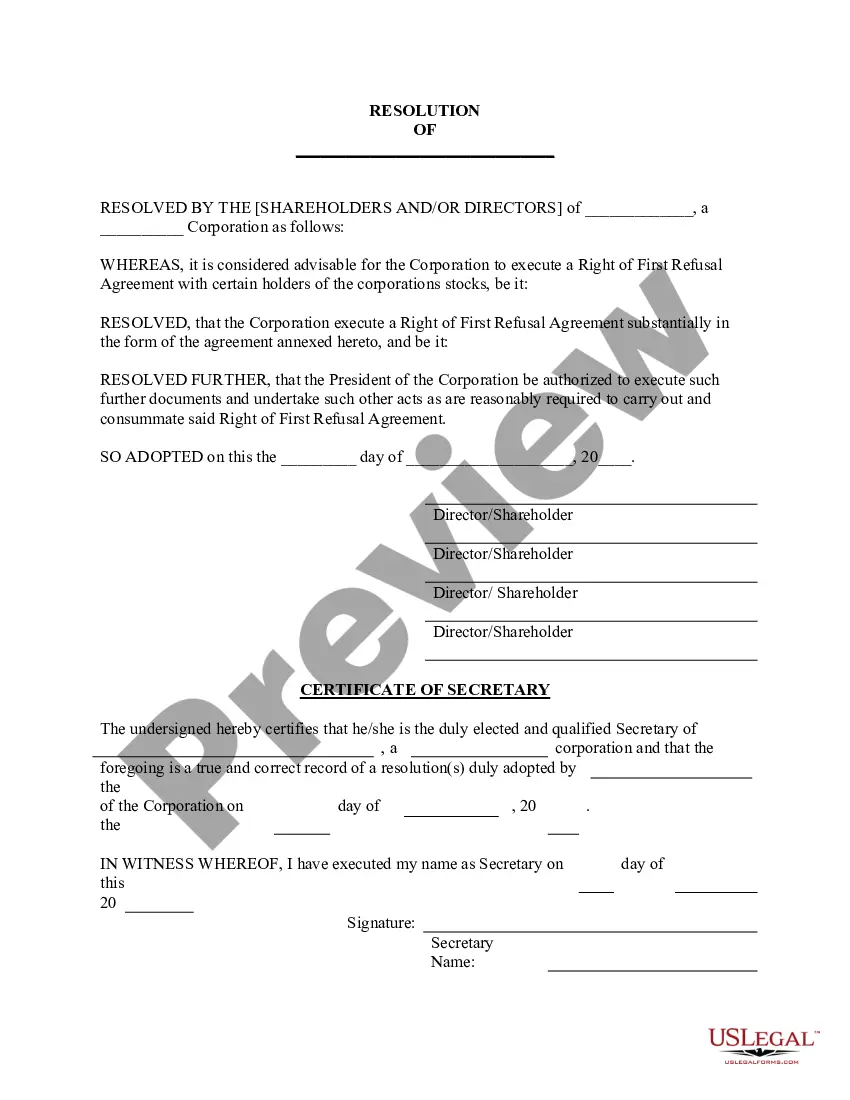
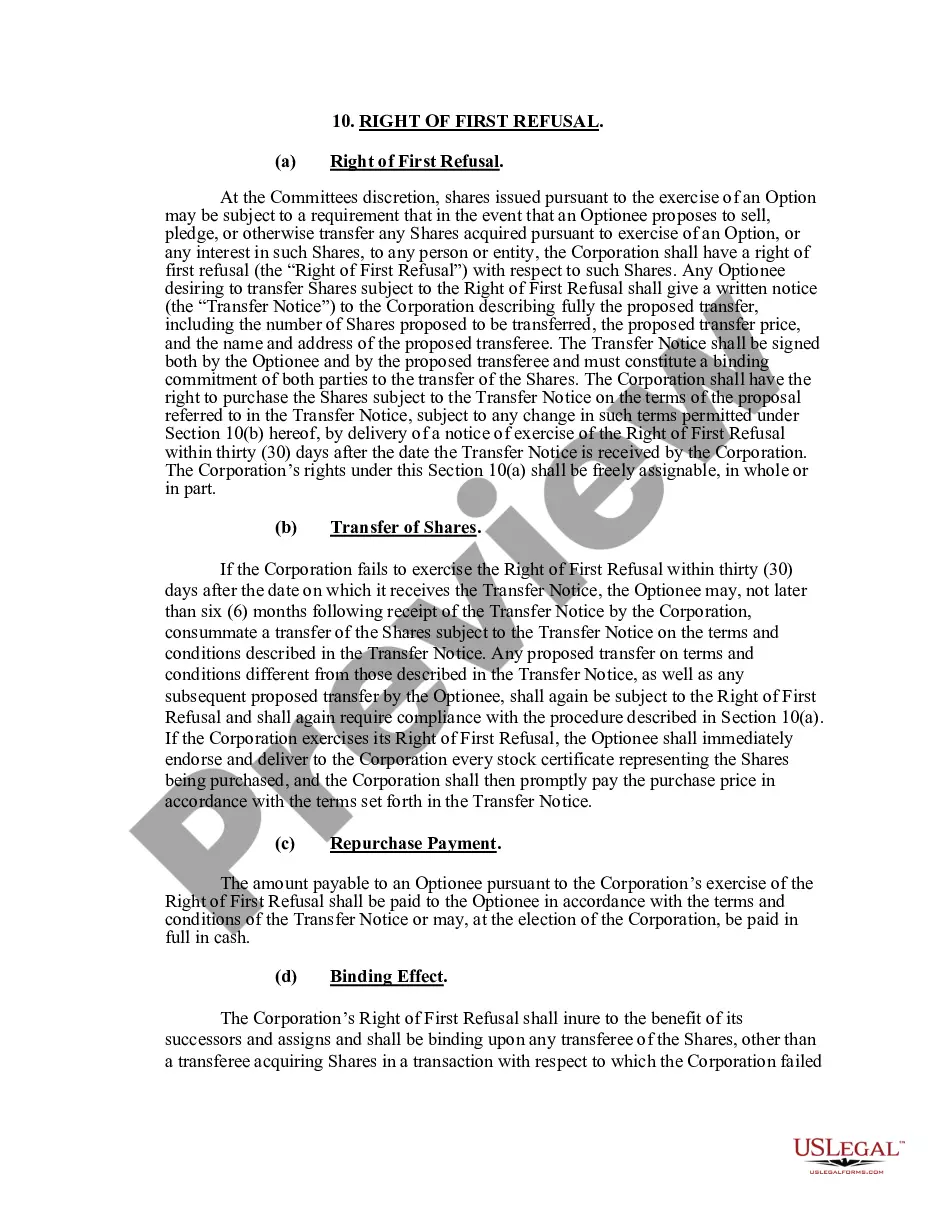
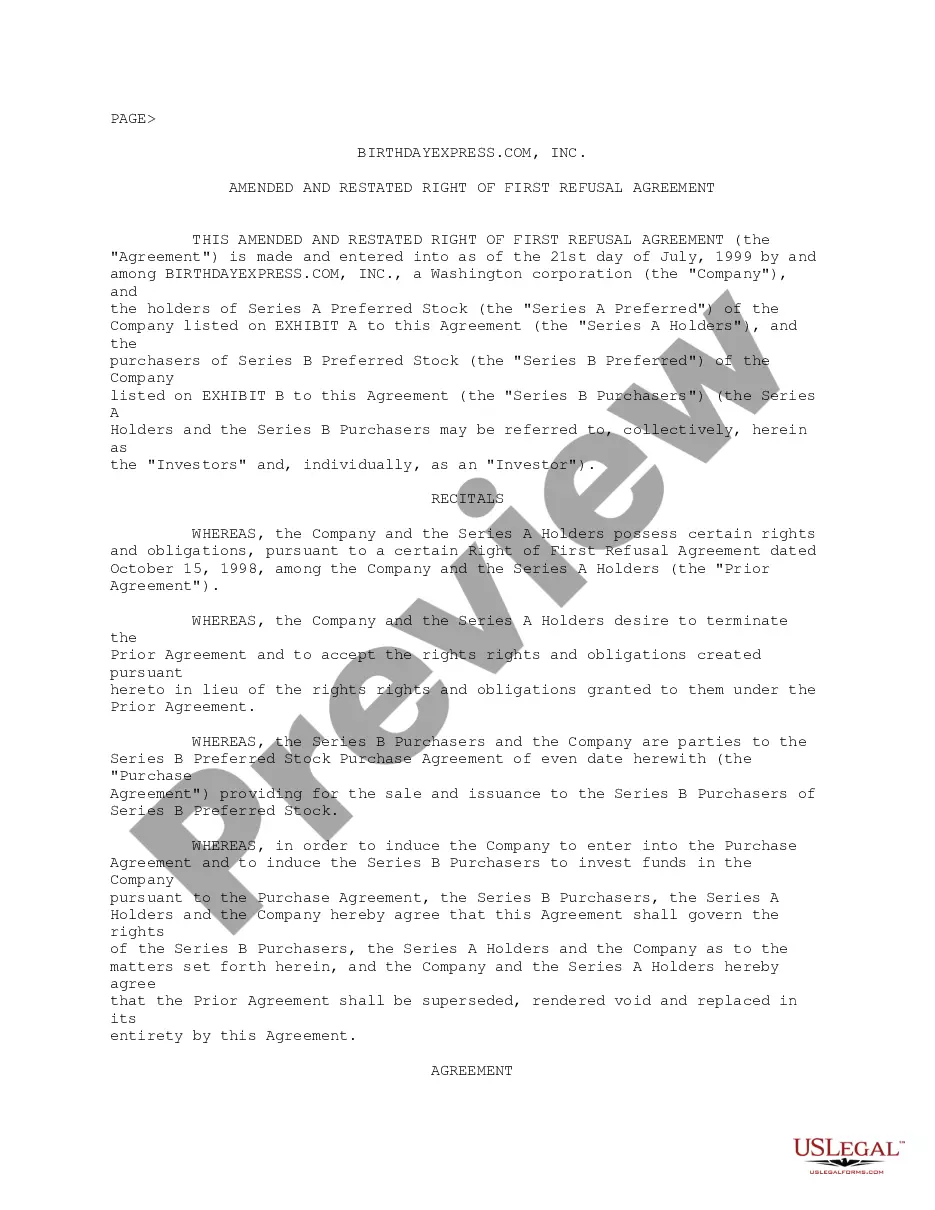
Get your form ready online
Our built-in tools help you complete, sign, share, and store your documents in one place.
Make edits, fill in missing information, and update formatting in US Legal Forms—just like you would in MS Word.
Download a copy, print it, send it by email, or mail it via USPS—whatever works best for your next step.
Sign and collect signatures with our SignNow integration. Send to multiple recipients, set reminders, and more. Go Premium to unlock E-Sign.
If this form requires notarization, complete it online through a secure video call—no need to meet a notary in person or wait for an appointment.
We protect your documents and personal data by following strict security and privacy standards.

Make edits, fill in missing information, and update formatting in US Legal Forms—just like you would in MS Word.

Download a copy, print it, send it by email, or mail it via USPS—whatever works best for your next step.

Sign and collect signatures with our SignNow integration. Send to multiple recipients, set reminders, and more. Go Premium to unlock E-Sign.

If this form requires notarization, complete it online through a secure video call—no need to meet a notary in person or wait for an appointment.

We protect your documents and personal data by following strict security and privacy standards.
Looking for another form?

How to fill out Right Of First Refusal Clause For Shareholders' Agreement?
Managing legal documents can be exasperating, even for adept professionals.
When you seek a Right Of Refusal Clause but lack the opportunity to devote time to find the accurate and updated edition, the processes may be arduous.
Access legal and business forms specific to your state or county. US Legal Forms accommodates any requirements you have, from personal to corporate paperwork, all in one location.
Utilize advanced functionalities to complete and manage your Right Of Refusal Clause.
Here are the steps to follow after locating the required form: Confirm that this is the right document by previewing it and reviewing its details. Verify that the template is sanctioned in your state or county. Click Buy Now when you're ready. Select a subscription plan. Choose your desired file format, and Download, complete, sign, print, and send your documents. Take advantage of the US Legal Forms online catalog, supported by 25 years of expertise and trustworthiness. Transform your daily document management into a seamless and user-friendly experience today.
- Gain entry to a valuable resource library filled with articles, tutorials, handbooks, and materials relevant to your situation and needs.
- Save time and effort searching for the documents you require, and leverage US Legal Forms’ sophisticated search and Review feature to locate the Right Of Refusal Clause and download it.
- If you hold a subscription, Log In to your US Legal Forms account, locate the form, and download it.
- Check the My documents tab to explore the documents you have previously saved and organize your folders as desired.
- If it's your first experience with US Legal Forms, create an account and obtain unlimited access to all library benefits.
- A comprehensive online form repository can be a transformative solution for anyone aiming to navigate these scenarios proficiently.
- US Legal Forms is a leading entity in digital legal forms, offering over 85,000 specific legal documents tailored to your state's laws, accessible at any time.
- With US Legal Forms, you can.
Form popularity
FAQ
The downsides of a right of first refusal clause include potential delays in property transactions. Property owners may also feel restricted in negotiating with other buyers if a right is active. Additionally, if the terms are vague, it could lead to disputes, complicating the sale or lease process.
In most cases, a right of first refusal does not have to be recorded; however, it is advisable to do so. Documenting the right helps clarify ownership and ensures that it remains enforceable against future purchasers. This proactive step can mitigate potential issues in real estate transactions.
Generally, a right of first refusal clause does not need to be recorded to be enforceable, but recording can provide additional protection. By recording the right, you establish a public record that future buyers must respect. This can prevent misunderstandings or disputes over the right’s validity.
The right of refusal clause can offer several benefits to both buyers and sellers. For instance, it provides buyers with assurance that they will have the opportunity to acquire the property before it is offered to others. Sellers can attract more interested parties, knowing there’s a built-in incentive for buyers to commit. This can lead to smoother negotiations and potentially higher sale prices.
The right of first refusal clause can create challenges for property owners. It may limit their ability to sell or lease their property to other buyers or renters. Owners might find themselves in a difficult position when they need to respond quickly to market opportunities, as they must first offer the property to the party holding the right. This can lead to frustration and missed chances in a competitive market.
To get out of a right of first refusal, you should examine the contract for any built-in termination clauses or negotiation options. You might also consider approaching the other party to discuss potential modifications or waivers. Legal assistance can be beneficial, as an expert can guide you in effectively communicating your intentions regarding the right of refusal clause.
Exceptions to the right of first refusal clause can vary based on the specific language in the contract. Common exceptions include situations where the property is transferred by gift or inheritance, or when the property is sold to specific parties not covered by the clause. Understanding these exceptions can be intricate, so reviewing your agreement with a legal advisor can provide clarity on your rights.
Exiting a right of first refusal clause usually requires negotiation with the other party involved. If the agreement has conditions that allow for termination or modification, you can leverage those. Alternatively, consulting a legal professional for guidance can help you navigate the process and ensure that it aligns with your goals regarding the right of refusal clause.
If someone breaches a right of first refusal clause, the primary remedy often includes specific performance, which means the party who breached must fulfill their part of the agreement. In some cases, monetary damages may apply, reflecting the value lost due to the breach. It's vital to consult with a legal expert to explore your options fully, as remedies can vary depending on jurisdiction and the specific terms of the right of refusal clause.
To remove yourself from a right of first refusal, you may need to negotiate the terms with the other party involved. This process often requires mutual consent and can entail formal amendments to the original agreement. Ensuring that the right of refusal clause specifies how to exit such agreements can simplify this process. Using templates from platforms like uslegalforms can help structure your modifications.