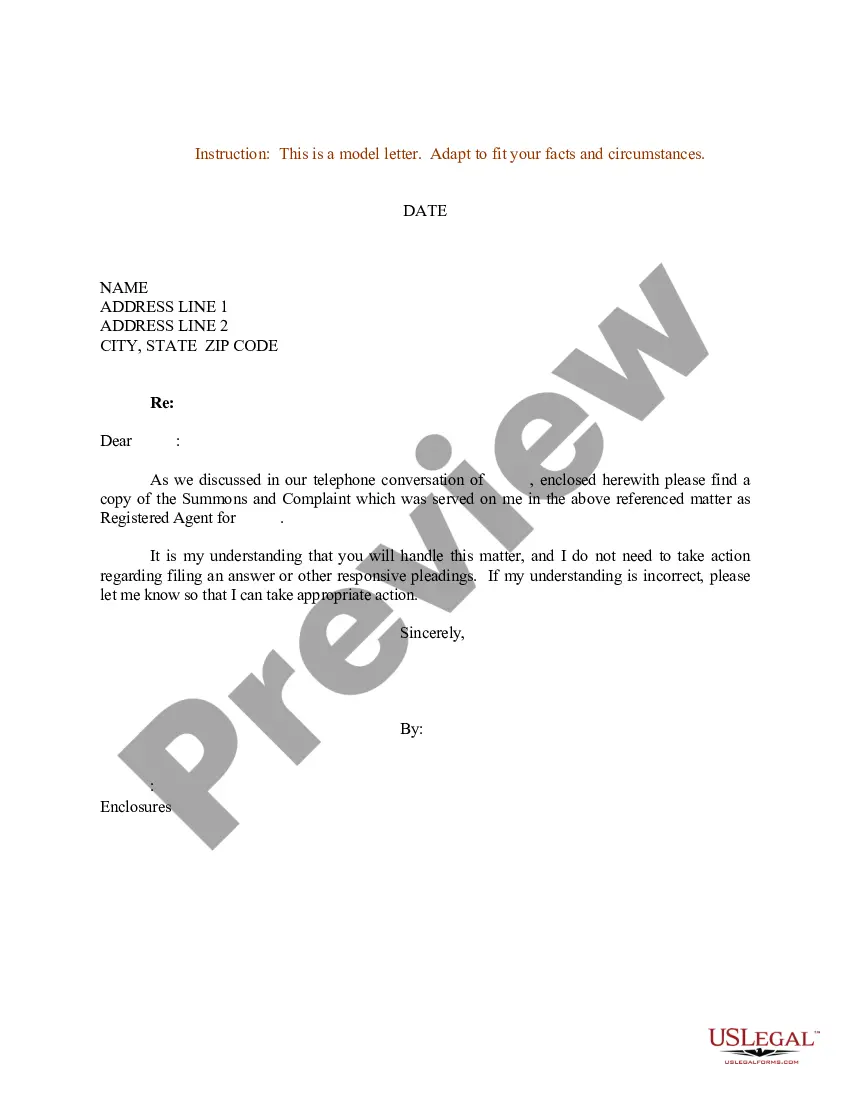
Summons For Jury Duty
Description
Get your form ready online
Our built-in tools help you complete, sign, share, and store your documents in one place.
Make edits, fill in missing information, and update formatting in US Legal Forms—just like you would in MS Word.
Download a copy, print it, send it by email, or mail it via USPS—whatever works best for your next step.
Sign and collect signatures with our SignNow integration. Send to multiple recipients, set reminders, and more. Go Premium to unlock E-Sign.
If this form requires notarization, complete it online through a secure video call—no need to meet a notary in person or wait for an appointment.
We protect your documents and personal data by following strict security and privacy standards.

Make edits, fill in missing information, and update formatting in US Legal Forms—just like you would in MS Word.

Download a copy, print it, send it by email, or mail it via USPS—whatever works best for your next step.

Sign and collect signatures with our SignNow integration. Send to multiple recipients, set reminders, and more. Go Premium to unlock E-Sign.

If this form requires notarization, complete it online through a secure video call—no need to meet a notary in person or wait for an appointment.

We protect your documents and personal data by following strict security and privacy standards.
Looking for another form?
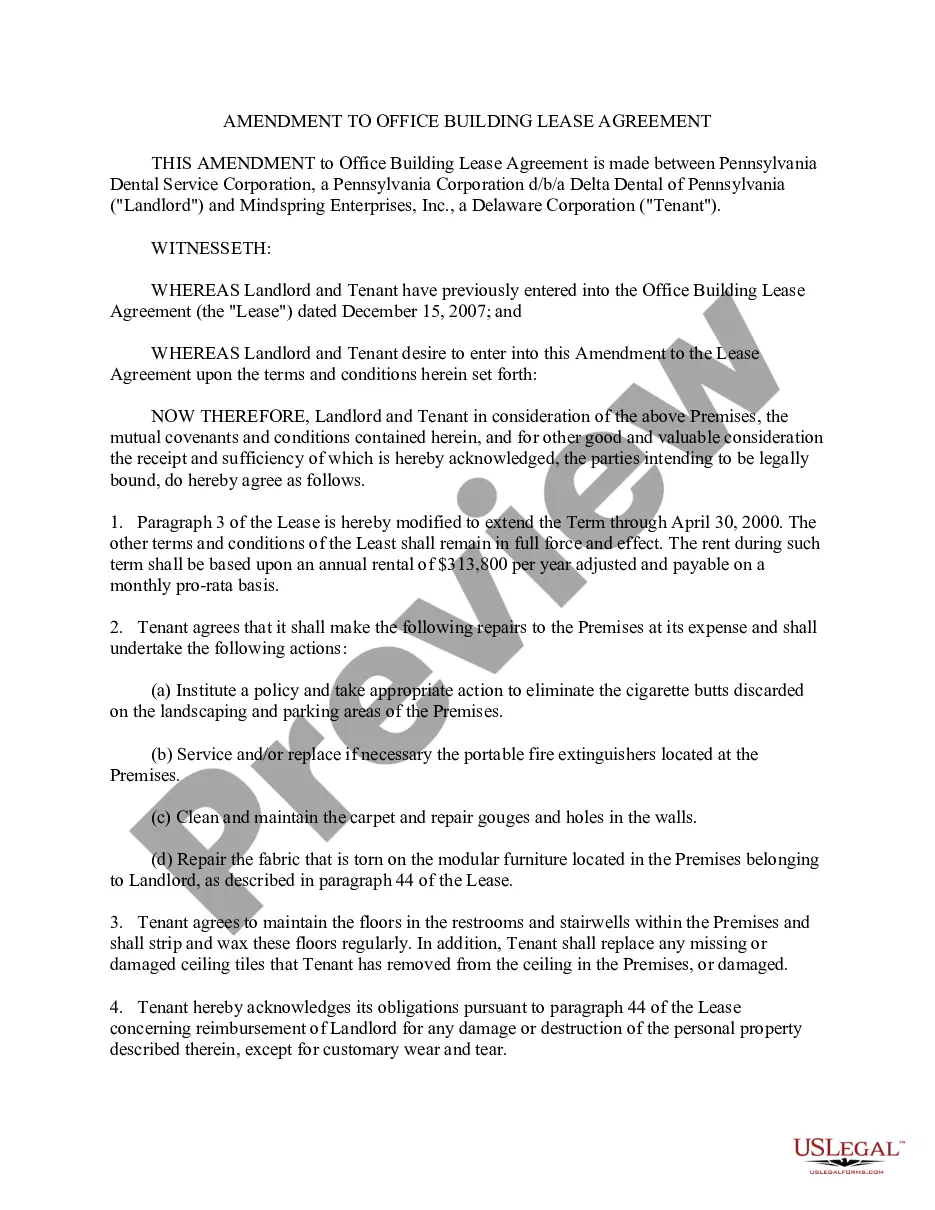

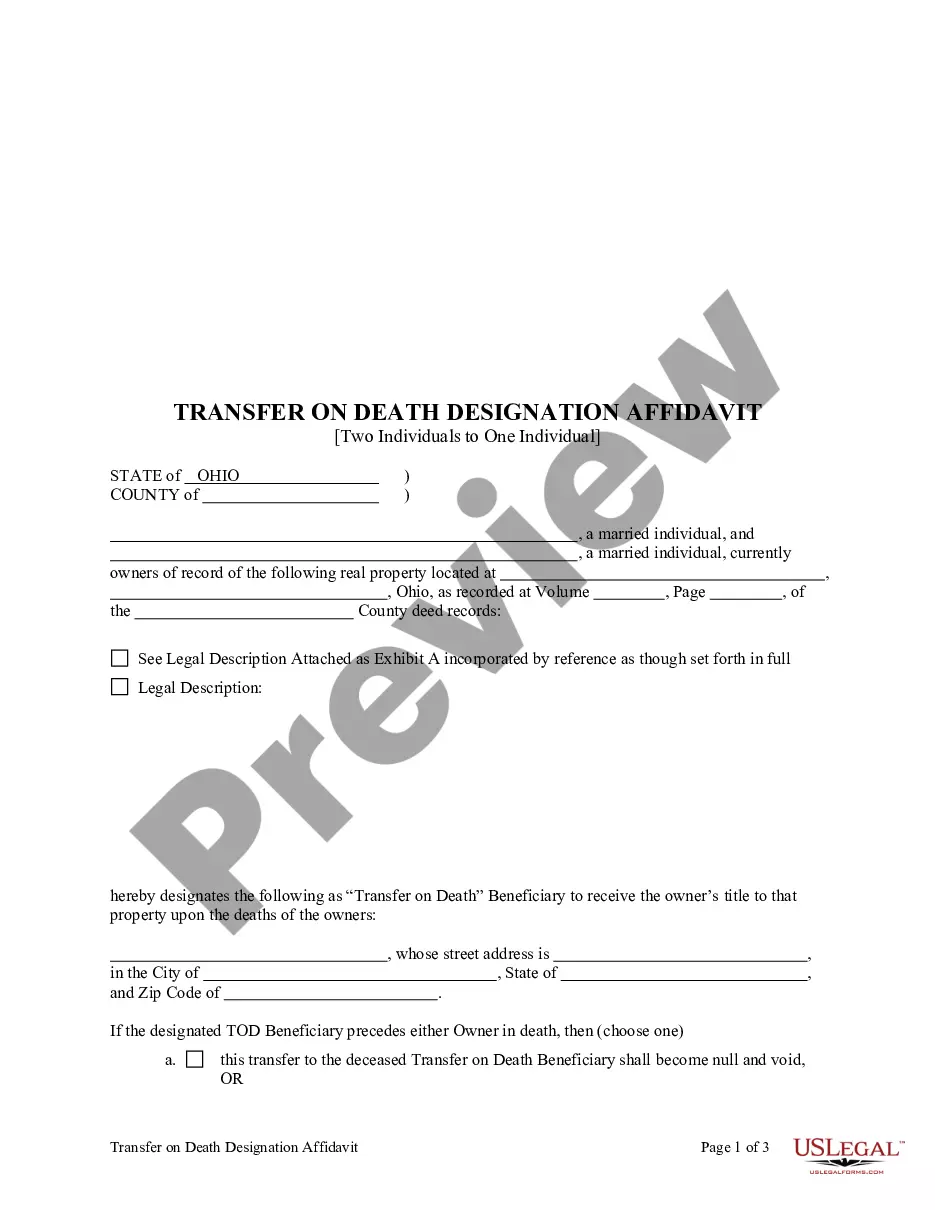
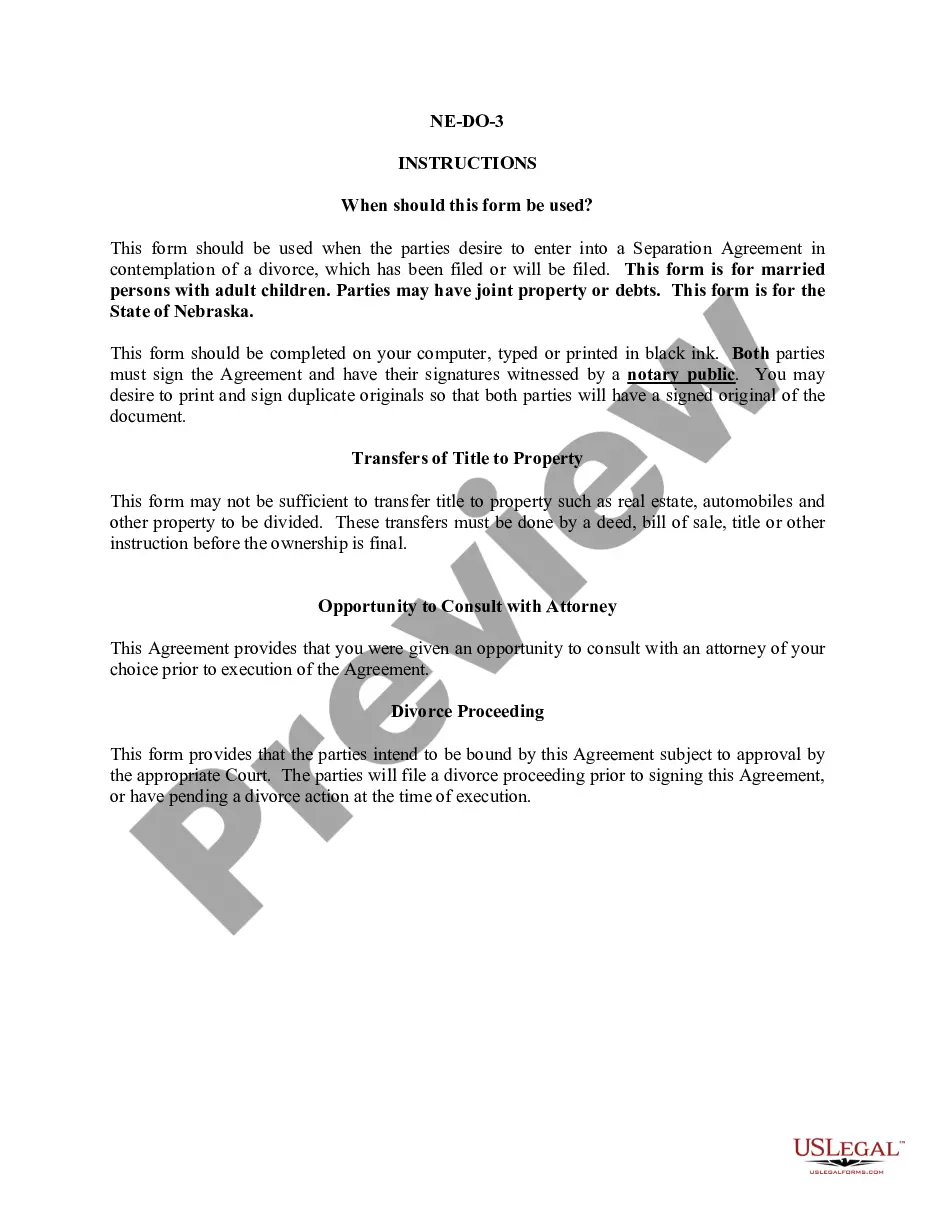






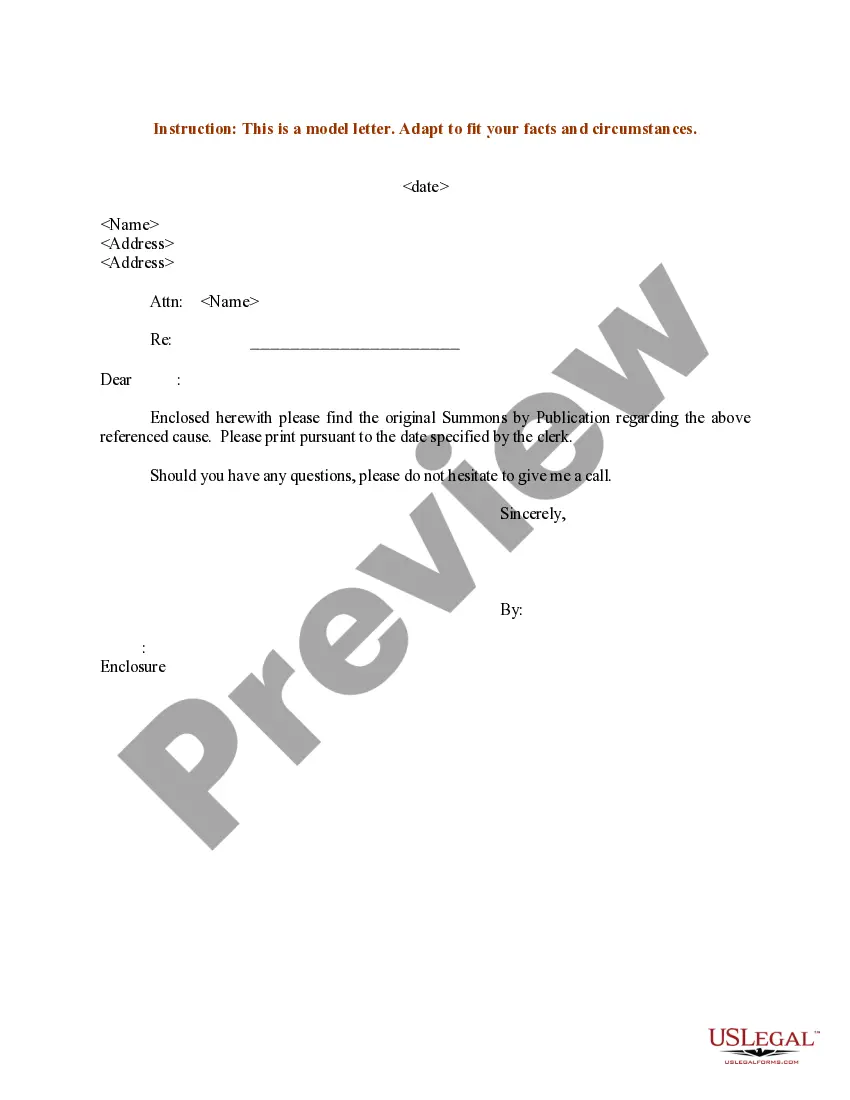
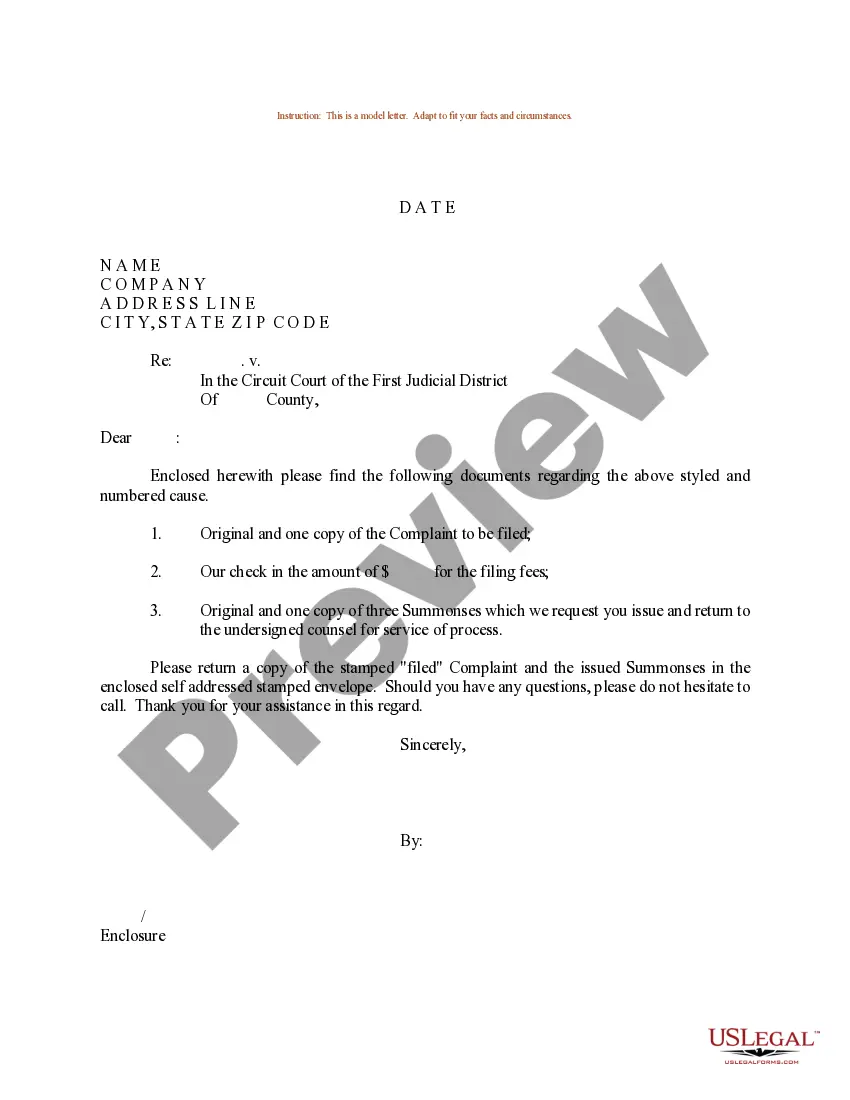
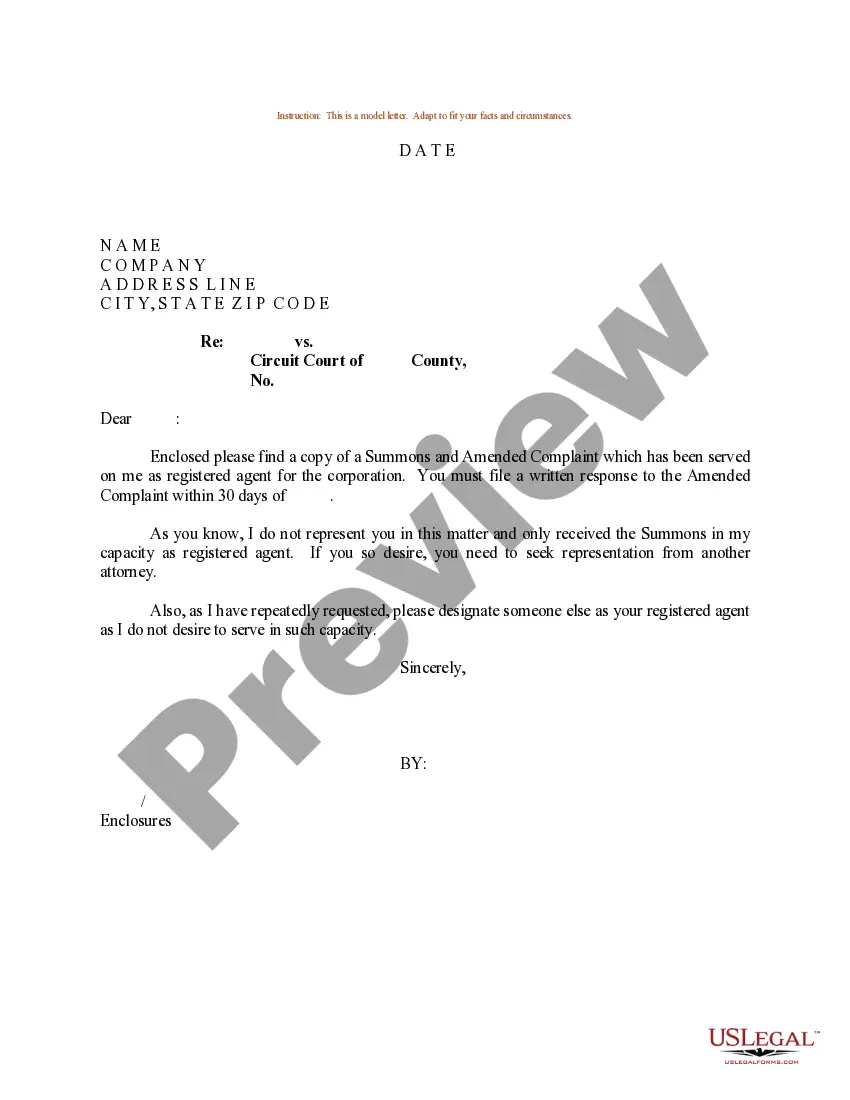
How to fill out Sample Letter For Summons And Complaint?
- If you're a returning user, log in to your account and download the required form by clicking the Download button. Ensure your subscription is current; renew it if necessary.
- For first-time users, explore the Preview mode and form descriptions to choose the correct summons template that meets your needs and local jurisdiction regulations.
- If you need a different template, utilize the Search tab to find the appropriate form. Once done, proceed to the next step.
- Complete your purchase by clicking the Buy Now button and selecting your preferred subscription plan. You will need to create an account for full access.
- Finalize your transaction using your credit card or PayPal account to complete the subscription.
- Download your summons form and save it on your device. You can access it anytime via the My Forms section in your account.
US Legal Forms stands out by offering a robust library of over 85,000 legal documents that are easily fillable and editable. With continued access to premium expert assistance, users can ensure their documents are precise and legally sound.
In conclusion, accessing a summons for jury duty is efficient and straightforward with US Legal Forms. Take advantage of their extensive resources and streamline your legal processes today!
Form popularity
FAQ
Certain individuals are more likely to be dismissed from jury duty, including those who can demonstrate significant hardships, like caring for dependents or medical concerns. Attorneys may also dismiss potential jurors based on their background and responses during the selection process. If you have experiences that may bias your judgment, you may find yourself dismissed as well. It is essential to be honest during this process, as that helps maintain the integrity of the jury.
While it may be challenging to completely avoid being selected for jury duty, there are some ways to minimize your chances. You may defer service if you have valid reasons, such as medical issues or personal hardships. Additionally, understanding the eligibility criteria may help. However, remember that serving on a jury is a civic duty, and you can rely on resources, like USLegalForms, should you seek more information on this topic.
In West Virginia, being picked for jury duty relies on a random selection process established by the courts. Typically, the process pulls names from a list of registered voters or those with active driver's licenses. If you are fortunate enough to be selected, you will receive a summons for jury duty with further instructions. This approach serves to engage citizens in the legal system.
Receiving a summons for jury duty depends on random selection from a list maintained by the state. Factors like being a registered voter or having a driver's license often determine eligibility. If your name is drawn, the court will send you a summons for jury duty detailing the date and location. This system ensures community participation in the judicial process.
In West Virginia, the selection for jury duty occurs through a lottery system. Your name may come from a list of registered voters or state residents with valid identification. If chosen, you will receive a summons for jury duty, which provides details about your obligations and necessary actions. This random selection aims to maintain an unbiased jury.
Selecting individuals for jury duty involves the court system using a random process. Typically, names are drawn from a pool of registered voters or driver's license holders. Once selected, you will receive a summons for jury duty, instructing you on the next steps. This process is meant to ensure a fair representation of the community.
In Texas, certain conditions can disqualify you from jury duty, such as felony convictions or unsatisfactory mental health. If you have received a summons for jury duty and fall into one of these categories, it is essential to communicate this with the court. The court may require documentation to support your disqualification request.
Claiming anxiety to get out of jury duty can be a legitimate concern if you genuinely feel that you cannot serve. Courts may consider mental health issues when reviewing requests for exemptions. If anxiety significantly affects your daily life, you should document this and explain your situation clearly when responding to your summons for jury duty.
When you receive a summons for jury duty, it's important to answer the questions honestly and thoroughly. You should provide accurate information about your background and any potential biases. If you have concerns about how your answers might impact your ability to serve, consulting a legal expert can be beneficial.
The best excuse to miss jury duty often involves financial hardship or personal circumstances that prevent you from serving. If you receive a summons for jury duty and have a valid reason, it’s essential to communicate this to the court promptly. Some courts may accept problems like medical issues or caregiving responsibilities as legitimate excuses.