Court Cases With The 6th Amendment
Description
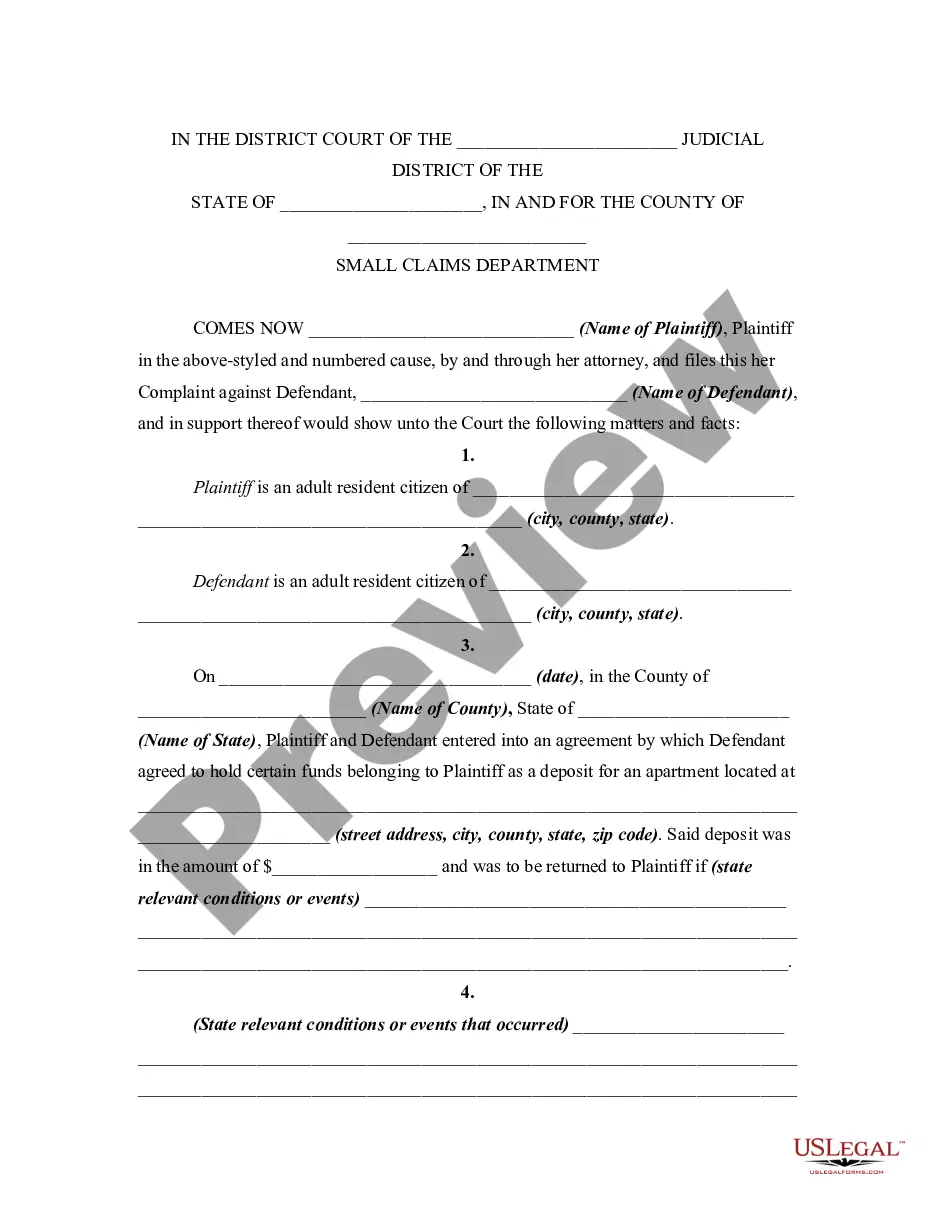
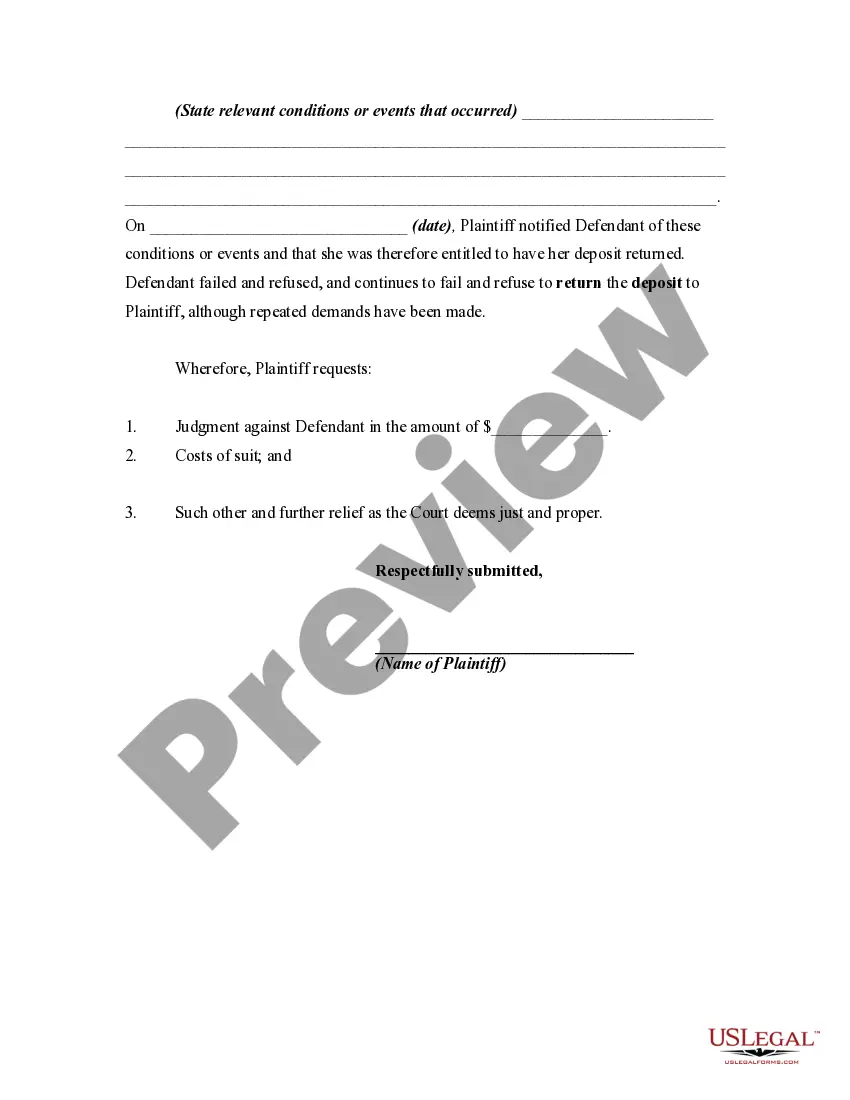
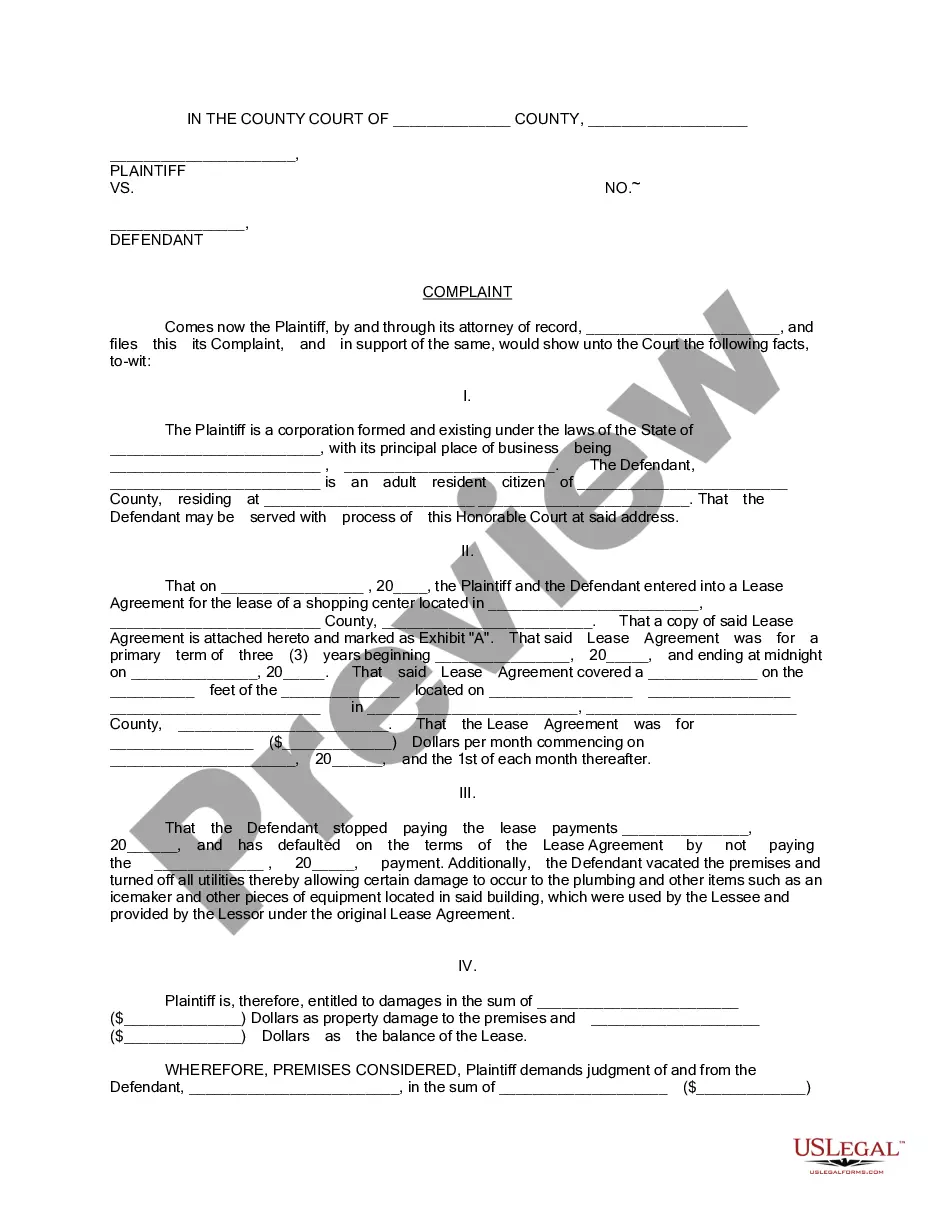
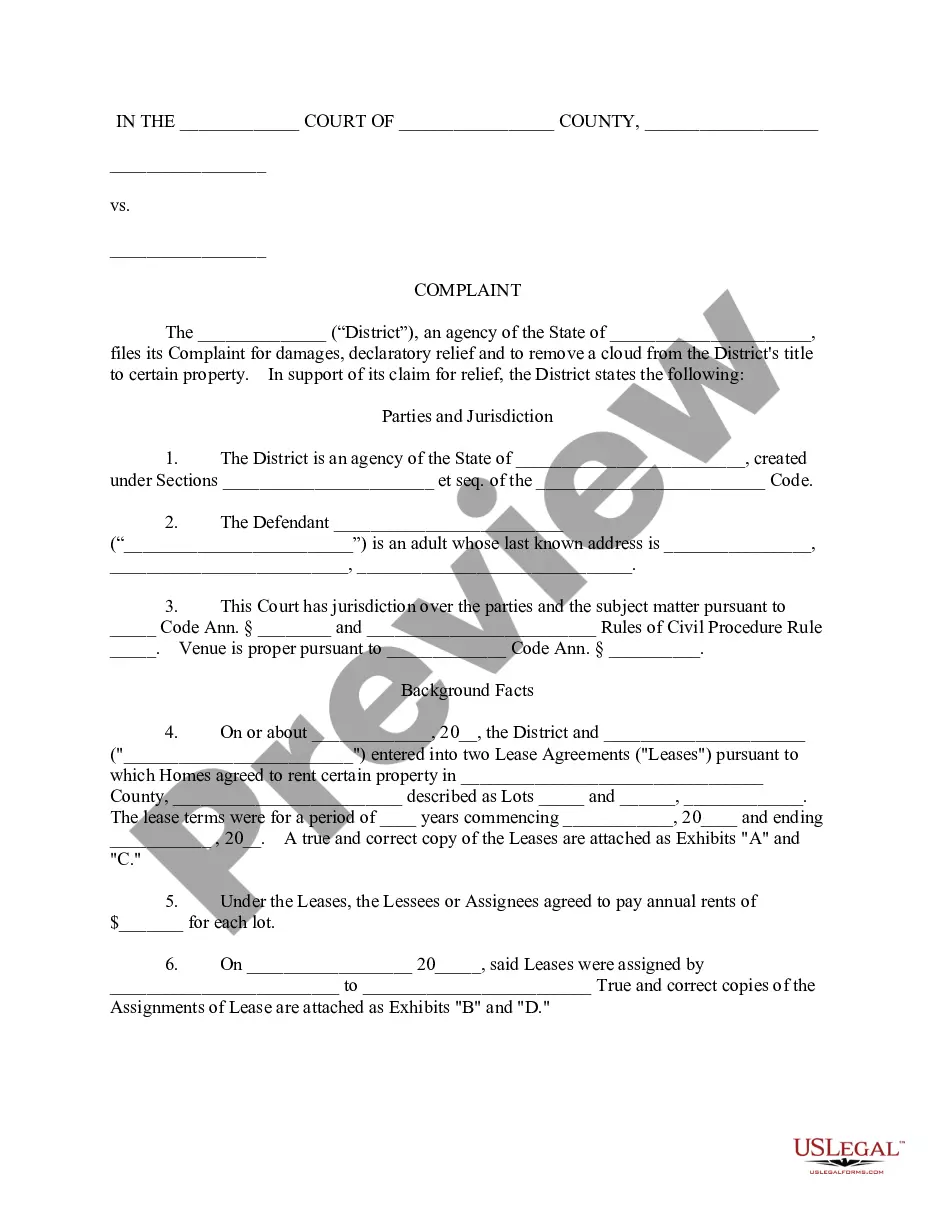

How to fill out Complaint In Small Claims Court For Failure Or Refusal To Return Money Deposited For Apartment?
Managing legal paperwork can be exasperating, even for experienced experts.
When you're interested in Court Cases With The 6th Amendment and lack the opportunity to search for the correct and current version, the process can become overwhelming.
Gain access to a valuable repository of articles, tutorials, and materials pertinent to your circumstances and necessities.
Save time and effort searching for the forms you require and take advantage of US Legal Forms’ advanced search and Review feature to locate Court Cases With The 6th Amendment and obtain it.
Select a subscription plan, find the format you prefer, and Download, fill it out, eSign, print, and submit your document. Take advantage of the US Legal Forms online library, supported by 25 years of knowledge and trustworthiness. Improve your everyday document management with a smooth and intuitive process today.
- If you have a monthly subscription, Log In to your US Legal Forms account, search for the form, and acquire it.
- Check the My documents section to view the documents you've previously downloaded and manage your folders accordingly.
- If it’s your first experience with US Legal Forms, create a free account and gain unlimited access to all features of the library.
- After obtaining the desired form, confirm it's the correct document by previewing and reviewing its description.
- Verify that the sample is acceptable in your state or county.
- Click Buy Now when you're prepared.
- Access state- or county-specific legal and business documents.
- US Legal Forms addresses every need you might have, from personal to commercial paperwork, in one location.
- Utilize advanced tools to complete and manage your Court Cases With The 6th Amendment.
Form popularity
FAQ
The 6th Amendment does not include protections for civil matters, meaning its provisions apply strictly to criminal prosecutions. Additionally, the amendment does not address matters such as bail or sentencing guidelines. This limitation underscores the importance of knowing what rights are specifically protected under the 6th Amendment when navigating court cases.
The Sixth Amendment guarantees several key rights, including the right to a speedy trial, the right to an impartial jury, the right to be informed of the charges, the right to confront witnesses, the right to compulsory process for obtaining witnesses, and the right to have legal counsel. Each of these rights is designed to protect defendants during criminal prosecutions and enhance the fairness of the judicial process. Understanding these guarantees is essential for individuals engaged in court cases with the 6th amendment.
The 6th Amendment is applied in court by ensuring defendants have the rights to counsel, a speedy trial, and an impartial jury. Its usage is vital in promoting fair trials and upholding justice within the legal system. Attorneys often emphasize these rights when representing clients, especially in court cases with the 6th amendment.
To clarify, protections not covered by the 6th Amendment include the right to a private trial or the requirement for all evidence to be admissible. Thus, specific procedural aspects of trials, like certain pretrial motions or the methods of discovery, fall outside the amendment's direct protections. Understanding these limitations is crucial for anyone involved in court cases with the 6th amendment.
If a violation of the 6th Amendment occurs, the remedy typically involves the potential for a new trial. Courts may rule to exclude evidence obtained improperly or to dismiss charges if a fundamental right was denied during the original process. Legal professionals often utilize resources like USLegalForms to navigate these complex issues effectively.
The 6th Amendment has specific limits regarding the rights it ensures. For example, it does not guarantee that defendants will be provided with an attorney in all situations. Moreover, the amendment focuses mainly on the rights of those actively being prosecuted, thus not extending its protections to witnesses or others involved in the judicial process.
The 6th Amendment primarily guarantees rights related to criminal prosecutions. It does not protect individuals from civil actions or actions not related to criminal charges. Furthermore, it does not cover all trial processes, such as pre-trial hearings, which can occur without the same protections.
Gideon vs. Wainwright centered on the issue of whether states are required to provide counsel to defendants who cannot afford an attorney. The Supreme Court ruled that the 6th Amendment's guarantee of counsel applies to state courts, not just federal ones. This case transformed the landscape of court cases with the 6th Amendment and solidified the principle of fair legal representation for all. It is fundamental for understanding defendants' rights in the judicial system.
Gideon's Trumpet is a book that details the journey of Clarence Earl Gideon as he fought for his right to a fair trial under the 6th Amendment. The narrative follows his struggles, from being denied counsel to ultimately appealing to the U.S. Supreme Court. This inspiring story sheds light on the importance of legal representation in court cases with the 6th Amendment. It emphasizes how one individual's perseverance can affect broader legal rights.
Gideon v. Wainwright is crucial for juveniles as it extends the right to counsel, established by the 6th Amendment, to young defendants. This ruling ensures that all minors facing criminal charges receive proper legal representation, which is vital for fair trials. By protecting the rights of youth in the justice system, this case has a lasting impact on court cases with the 6th Amendment. It serves as a safeguard against potential injustices.