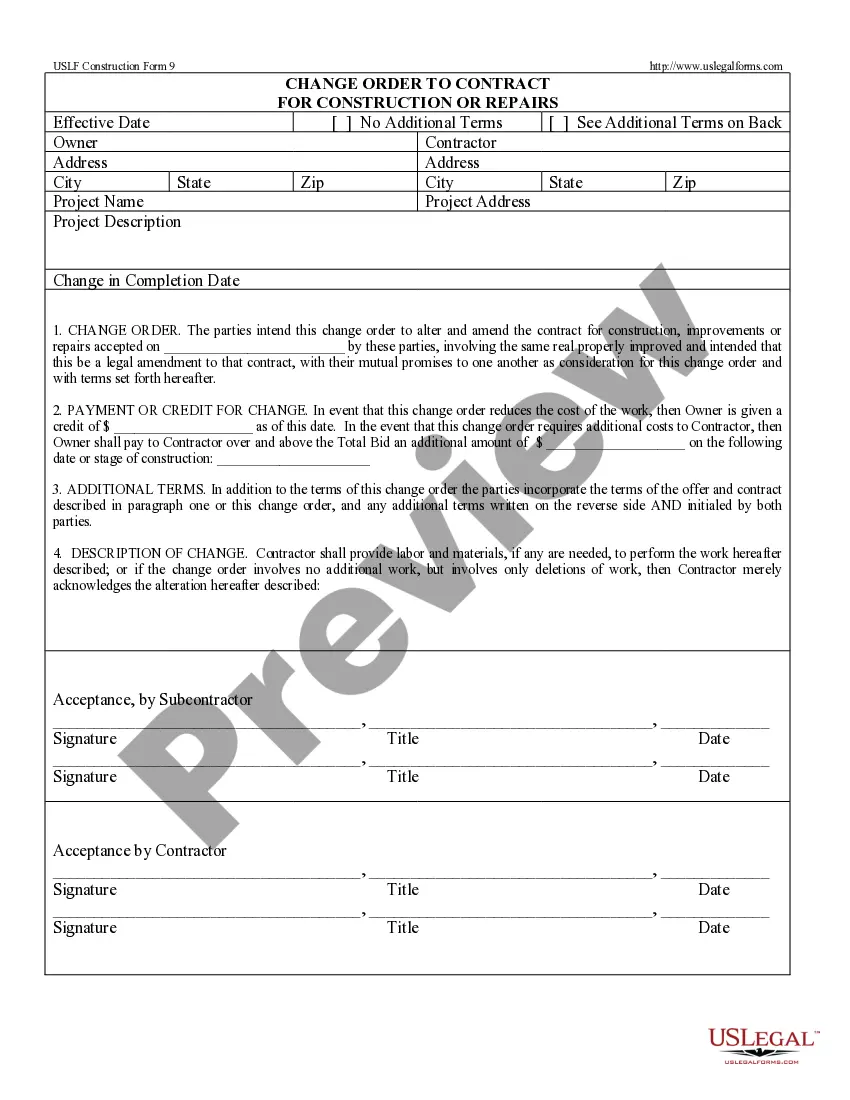
Change Order Language In Contract
Description
Get your form ready online
Our built-in tools help you complete, sign, share, and store your documents in one place.
Make edits, fill in missing information, and update formatting in US Legal Forms—just like you would in MS Word.
Download a copy, print it, send it by email, or mail it via USPS—whatever works best for your next step.
Sign and collect signatures with our SignNow integration. Send to multiple recipients, set reminders, and more. Go Premium to unlock E-Sign.
If this form requires notarization, complete it online through a secure video call—no need to meet a notary in person or wait for an appointment.
We protect your documents and personal data by following strict security and privacy standards.

Make edits, fill in missing information, and update formatting in US Legal Forms—just like you would in MS Word.

Download a copy, print it, send it by email, or mail it via USPS—whatever works best for your next step.

Sign and collect signatures with our SignNow integration. Send to multiple recipients, set reminders, and more. Go Premium to unlock E-Sign.

If this form requires notarization, complete it online through a secure video call—no need to meet a notary in person or wait for an appointment.

We protect your documents and personal data by following strict security and privacy standards.
Looking for another form?

How to fill out Change Order For Construction Or Repairs By Contractor?
The Change Order Language In Contract you find on this page is a reusable legal template crafted by professional attorneys in accordance with federal and local laws.
For over 25 years, US Legal Forms has offered individuals, businesses, and lawyers more than 85,000 validated, state-specific documents for any business and personal event. It’s the quickest, easiest, and most dependable way to acquire the forms you require, as the service ensures the utmost level of data security and anti-malware measures.
Subscribe to US Legal Forms to have authenticated legal templates for all of life’s situations at your fingertips.
- Browse for the document you require and examine it.
- Select the pricing plan that best fits your needs and create an account.
- Choose the format you prefer for your Change Order Language In Contract (PDF, DOCX, RTF) and store the document on your device.
- Print the template to fill it out by hand. Alternatively, use an online multifunctional PDF editor to swiftly and accurately complete and sign your document with an electronic signature.
- Utilize the same document again whenever necessary. Access the My documents tab in your profile to redownload any previously downloaded forms.
Form popularity
FAQ
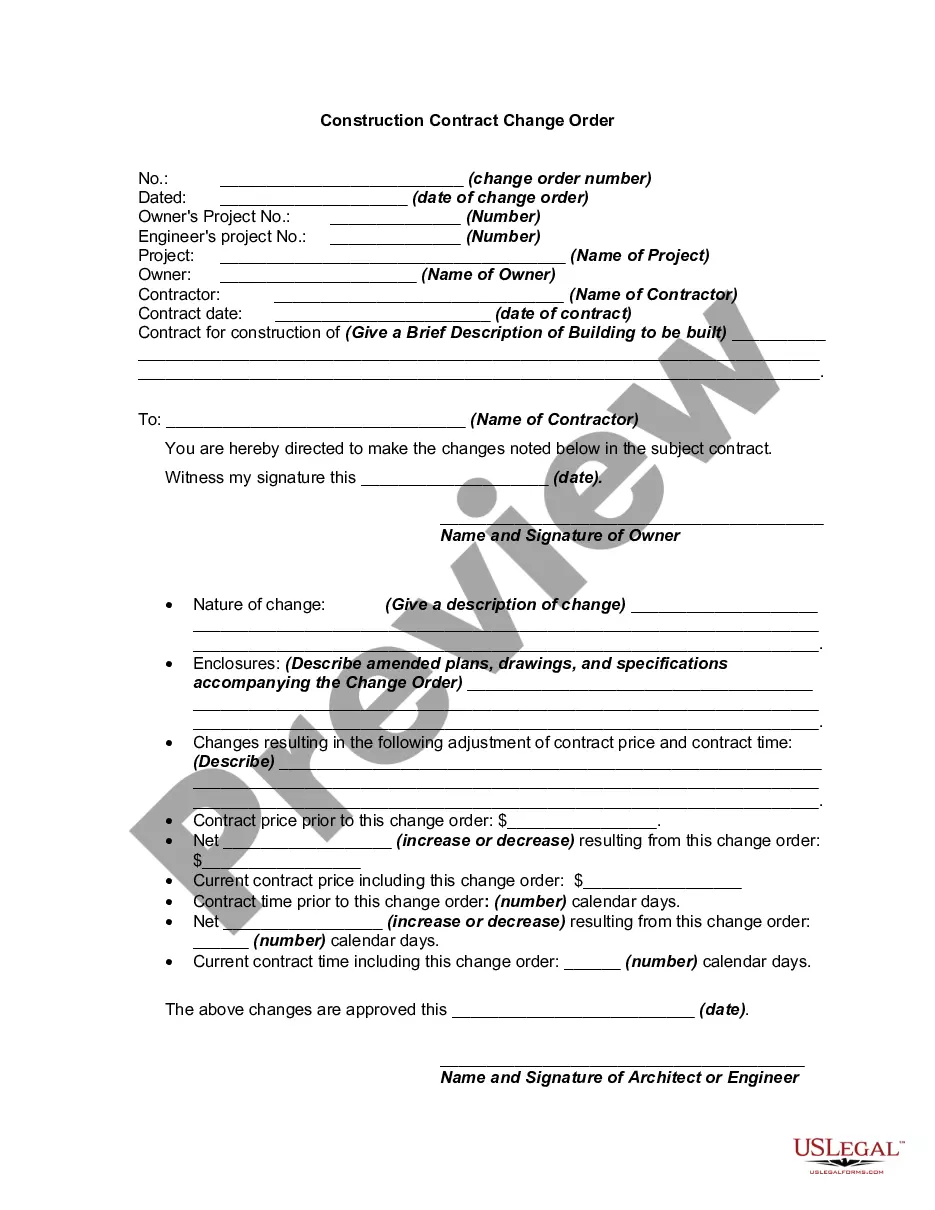
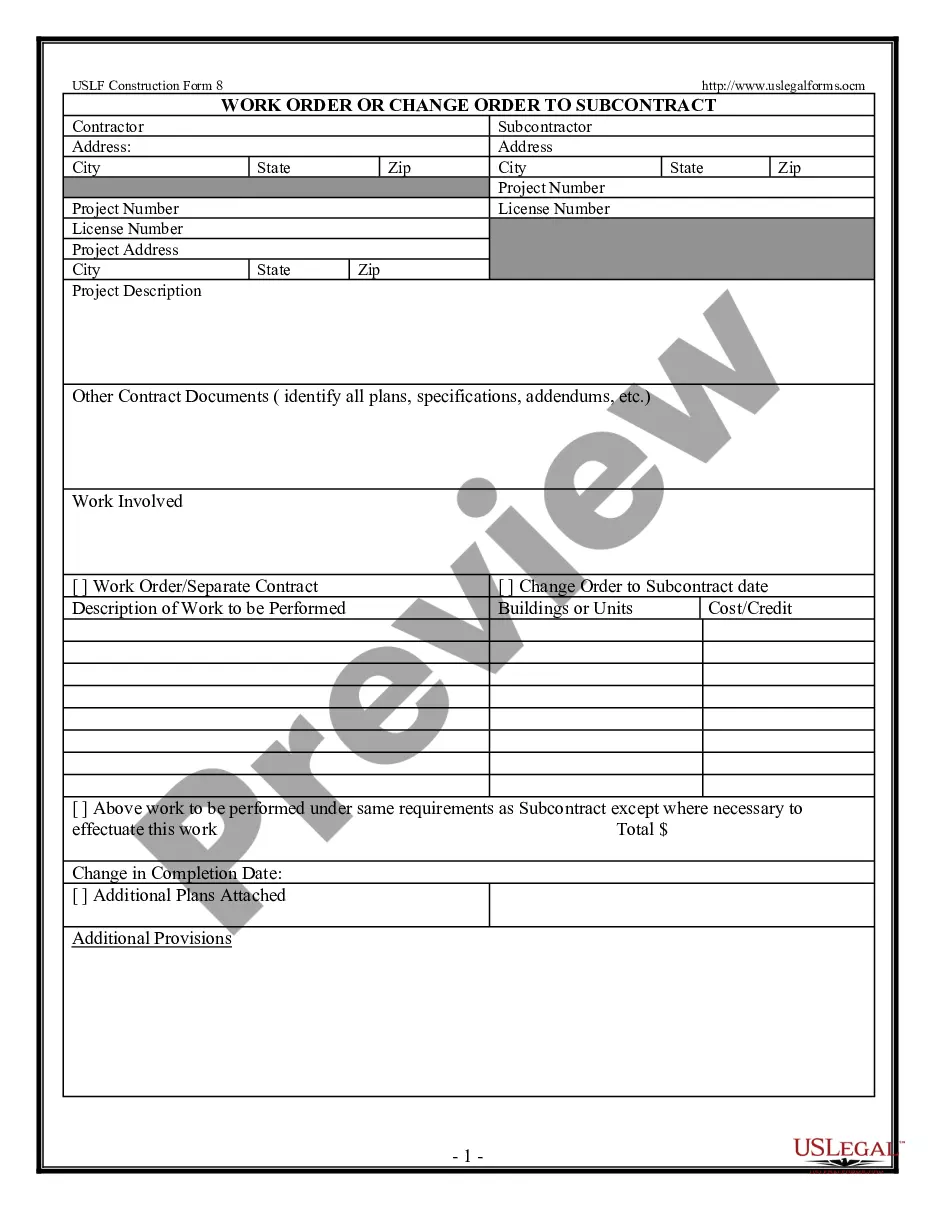
What is included in a change order form? Project details: The name of the project, the client, the contractor, and any other relevant information about the project. Description of change: A detailed description of the modifications to the original agreement, such as changes to the project scope, budget, or timeline.
Generally, there are four types of change orders. These are Time and Material, Lump Sum, Zero Cost, and Unitary Cost change orders. A lump sum change order is used when the defined change in the work scope is quantifiable, and a definite price developed.
At a minimum, all change order forms should identify the following: The name and address of the project. The owner's name. The name and phone number of the person requesting the change. A complete description of the planned work. The price of the change (including a breakdown of the costs as well as the total)
Construction change order example The client discovers obstacles or opportunities to deviate from the original plan. The project was simply incorrectly estimated and must be amended. During the course of the project, the client, architect or contractor propose new features or changes.
6 things every change order should include Project and contact information. Dates of the change. Details of the work. Updated schedule. Cost of the change. Updated contract value. Match the payment application. Get it in writing ? and save it.