Malicious Prosecution In California
Description
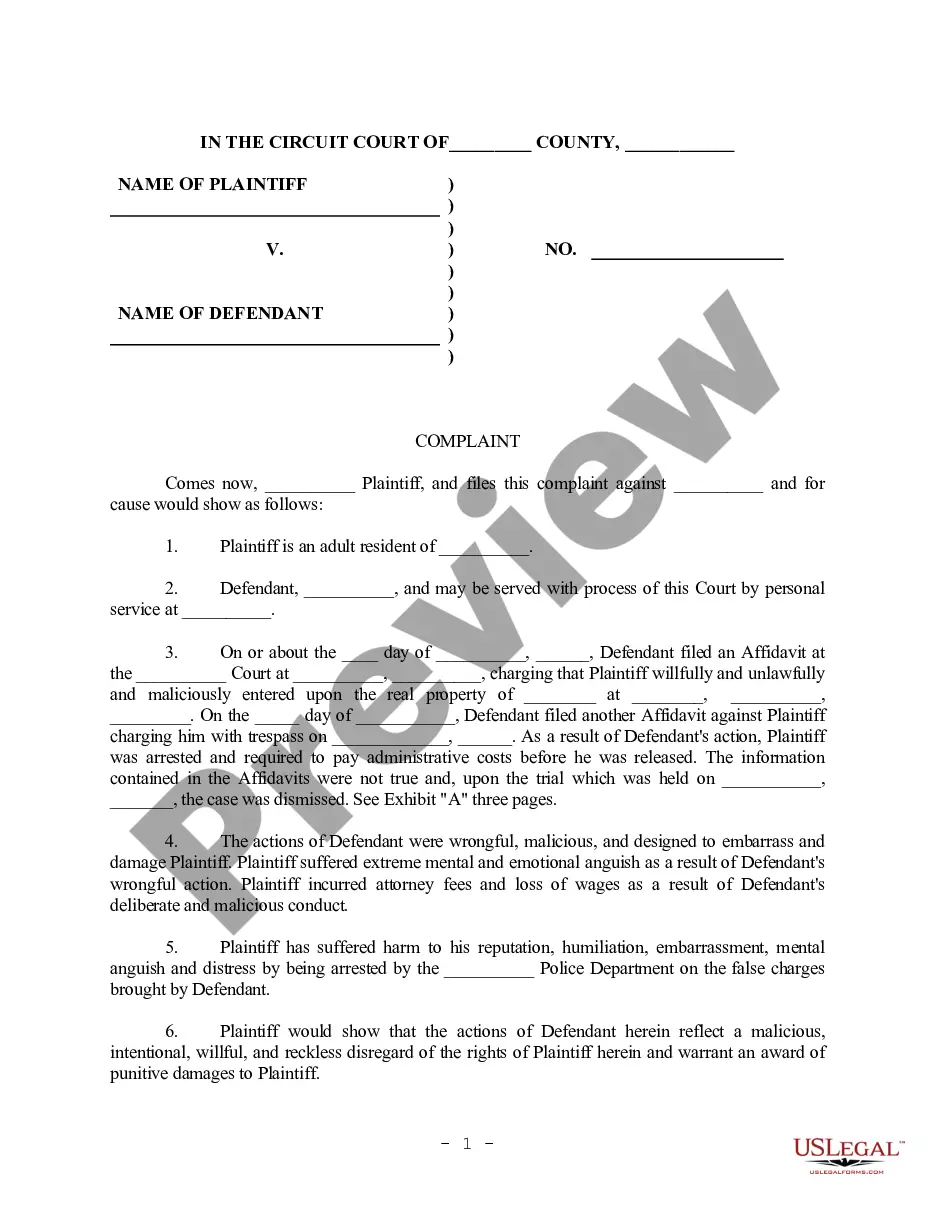
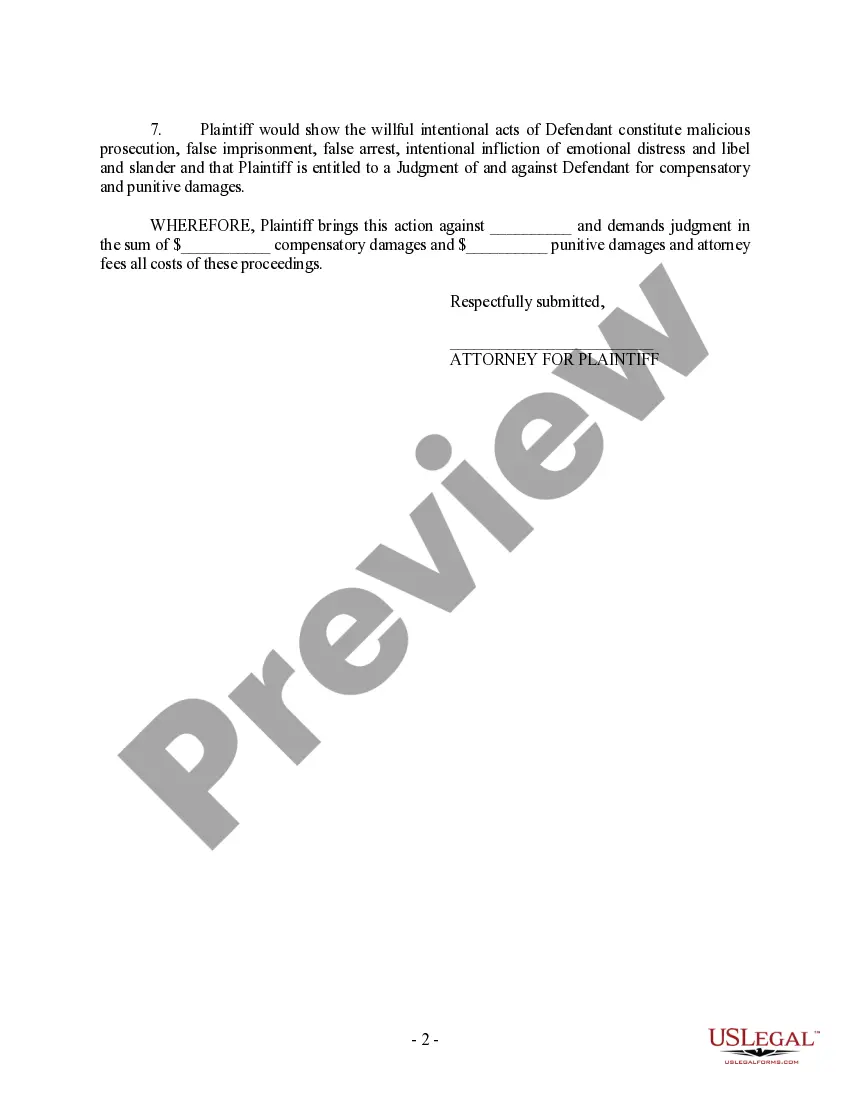
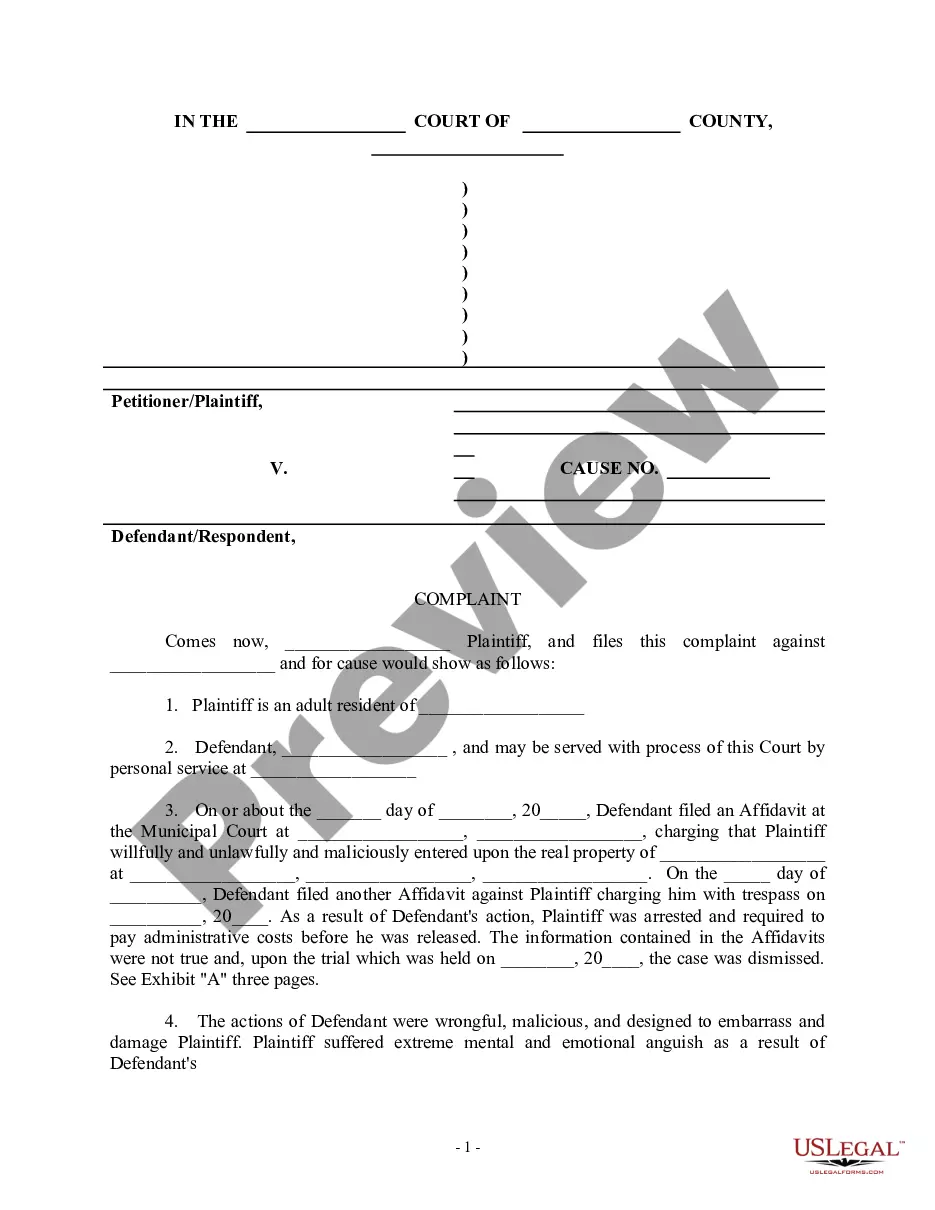
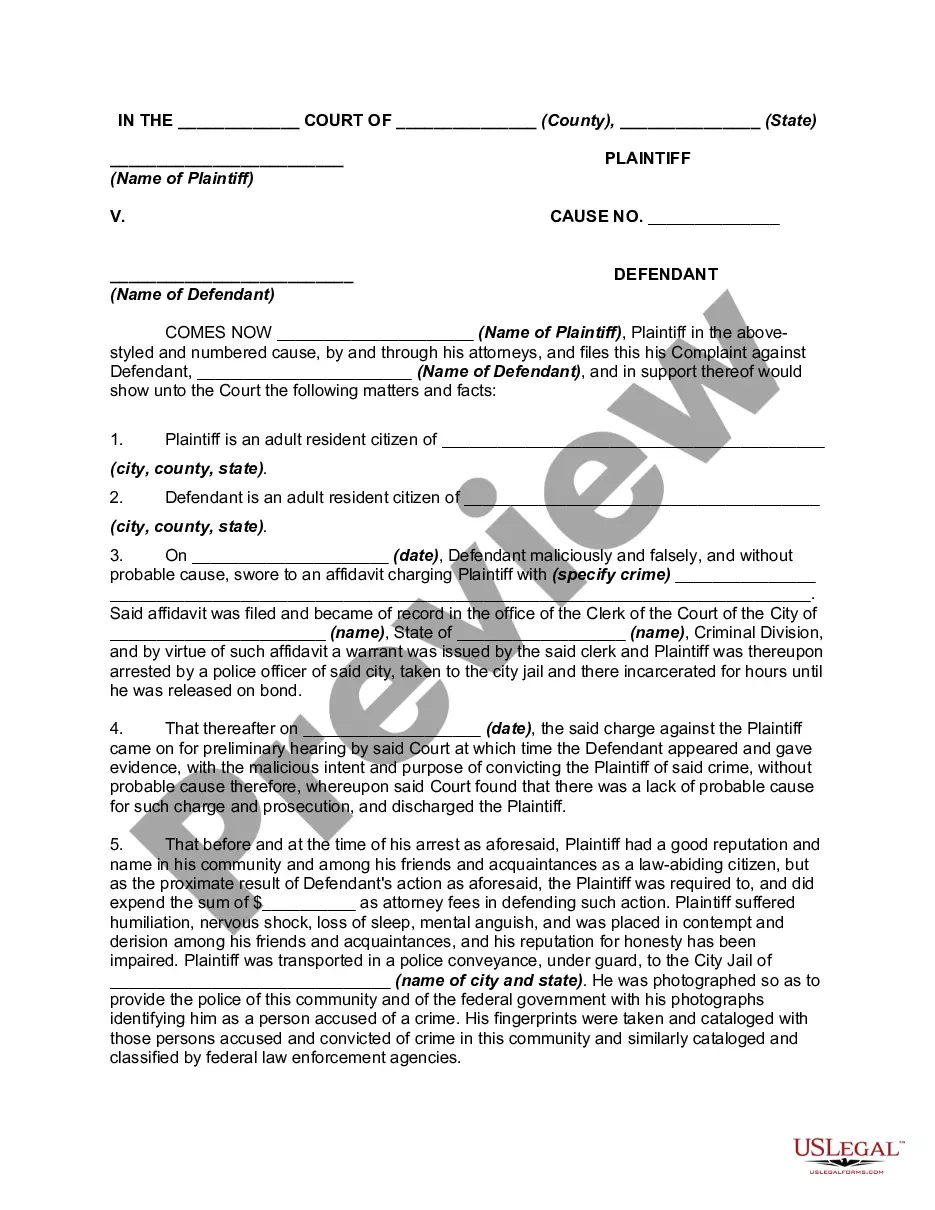
Get your form ready online
Our built-in tools help you complete, sign, share, and store your documents in one place.
Make edits, fill in missing information, and update formatting in US Legal Forms—just like you would in MS Word.
Download a copy, print it, send it by email, or mail it via USPS—whatever works best for your next step.
Sign and collect signatures with our SignNow integration. Send to multiple recipients, set reminders, and more. Go Premium to unlock E-Sign.
If this form requires notarization, complete it online through a secure video call—no need to meet a notary in person or wait for an appointment.
We protect your documents and personal data by following strict security and privacy standards.

Make edits, fill in missing information, and update formatting in US Legal Forms—just like you would in MS Word.

Download a copy, print it, send it by email, or mail it via USPS—whatever works best for your next step.

Sign and collect signatures with our SignNow integration. Send to multiple recipients, set reminders, and more. Go Premium to unlock E-Sign.

If this form requires notarization, complete it online through a secure video call—no need to meet a notary in person or wait for an appointment.

We protect your documents and personal data by following strict security and privacy standards.
Looking for another form?

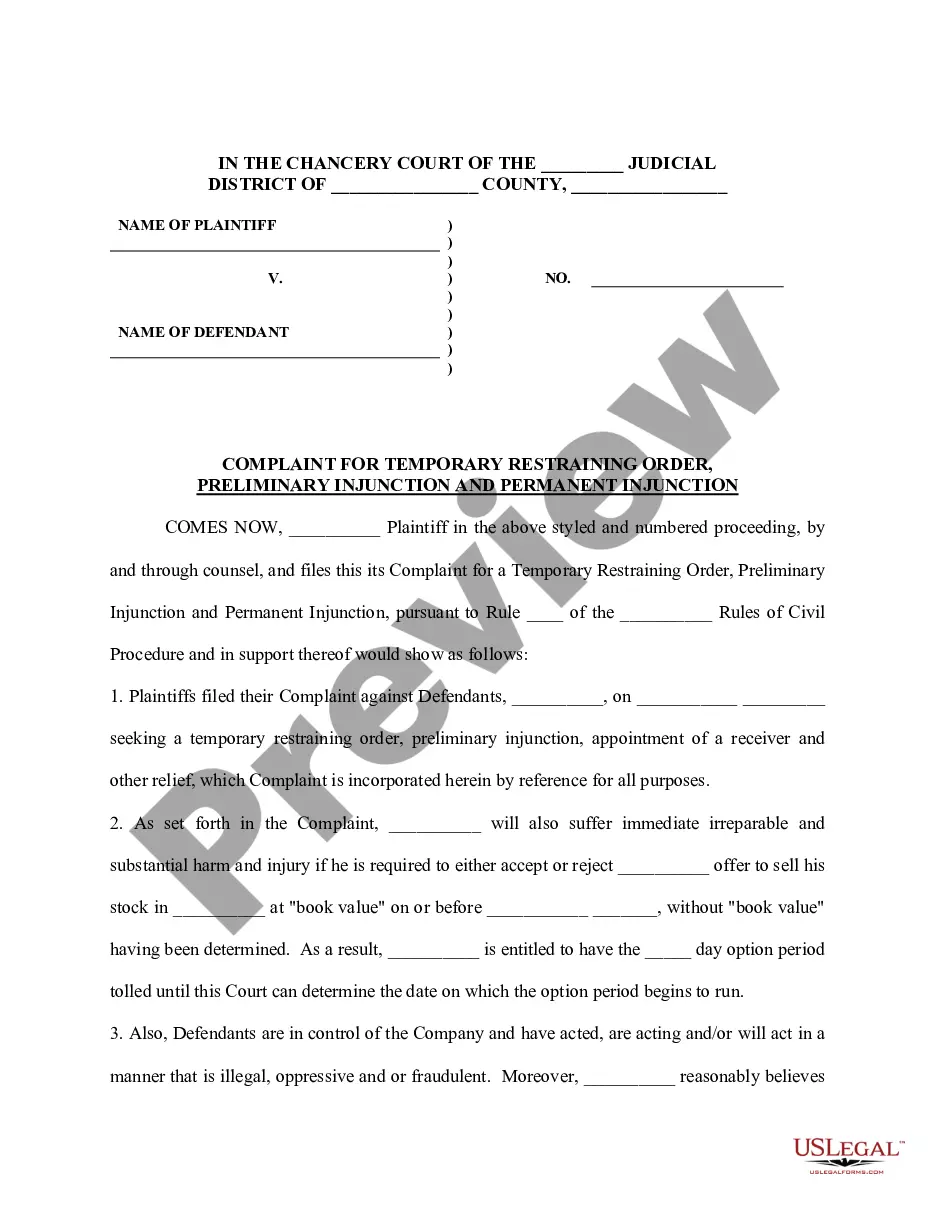
How to fill out Complaint For Malicious Prosecution?
Identifying a preferred location to acquire the most up-to-date and suitable legal documents is a significant part of dealing with bureaucracy. Selecting the appropriate legal forms requires accuracy and careful attention, which is why it is crucial to obtain Malicious Prosecution In California samples solely from trusted sources, like US Legal Forms. An incorrect template will squander your time and delay your situation. With US Legal Forms, you have minimal concerns. You can access and verify all the information about the document’s application and significance for your situation and in your state or locality.
Consider the outlined steps to complete your Malicious Prosecution In California.
Eliminate the hassle associated with your legal documentation. Explore the comprehensive US Legal Forms collection to discover legal templates, assess their relevance to your situation, and download them instantly.
- Utilize the library navigation or search bar to find your template.
- Examine the form’s details to ensure it meets the criteria of your state and county.
- Check the form preview, if available, to confirm that the template is indeed the one you seek.
- Return to the search and locate the appropriate document if the Malicious Prosecution In California does not match your needs.
- When you are confident about the form’s applicability, download it.
- If you are a registered user, click Log in to verify and access your selected forms in My documents.
- If you do not have an account yet, click Buy now to acquire the template.
- Select the pricing option that suits your needs.
- Proceed with the registration to complete your transaction.
- Finalize your purchase by choosing a payment method (credit card or PayPal).
- Select the file format for downloading Malicious Prosecution In California.
- Once you have the form on your device, you can modify it using the editor or print it and fill it out manually.
Form popularity
FAQ
To successfully prove malicious prosecution in California, you need to gather comprehensive evidence that supports your allegations. This includes the outcome of the prior case, proof of lack of probable cause, and evidence of malicious intent. Using resources like USLegalForms can help you navigate the complexities of legal documentation and strengthen your claim.
To prove malice in a malicious prosecution case in California, you must present evidence of the defendant's intentions. This could include communication that reveals ill will or hostility, or actions taken without legitimate justification. Demonstrating a pattern of behavior that suggests vindictiveness can also be effective in establishing malice.
Proving malicious prosecution in California involves presenting evidence that supports your claim. You need to show that the previous legal action was resolved in your favor, that it lacked probable cause, and that the opposing party acted with malicious intent. Gathering documents, witness statements, and legal records can significantly strengthen your case.
To establish a tort of malicious prosecution in California, you must demonstrate several key factors. First, there must have been a prior legal action that ended in your favor. Additionally, the original case must have been initiated without probable cause, and it should have been motivated by malice. These elements are crucial in proving your claim.
The Tort of Malicious Prosecution. A successful malicious prosecution action requires proof that the prior litigation was (1) commenced by or at the defendant's direction, (2) pursued to a termination in the plaintiff's favor, (3) brought without probable cause, and (4) initiated with malice.
A malicious prosecution case can be difficult to prove, but with a few key elements it can be won in court. First, it must be clear that the defendant did not have probable cause to bring the action.
?To establish a cause of action for the malicious prosecution of a civil proceeding, a plaintiff must plead and prove that the prior action (1) was commenced by or at the direction of the defendant and was pursued to a legal termination in his, plaintiff's, favor; (2) was brought without probable cause; and (3) was ...
The malicious prosecution tort requires proof that the defendant acted with malice and without probable cause. (Sullivan, supra, 12 Cal. 3d at p. 720; see also, e.g., Brennan v.