Transfer Trust Asset To Beneficiary
Description

Get your form ready online
Our built-in tools help you complete, sign, share, and store your documents in one place.
Make edits, fill in missing information, and update formatting in US Legal Forms—just like you would in MS Word.
Download a copy, print it, send it by email, or mail it via USPS—whatever works best for your next step.
Sign and collect signatures with our SignNow integration. Send to multiple recipients, set reminders, and more. Go Premium to unlock E-Sign.
If this form requires notarization, complete it online through a secure video call—no need to meet a notary in person or wait for an appointment.
We protect your documents and personal data by following strict security and privacy standards.

Make edits, fill in missing information, and update formatting in US Legal Forms—just like you would in MS Word.

Download a copy, print it, send it by email, or mail it via USPS—whatever works best for your next step.

Sign and collect signatures with our SignNow integration. Send to multiple recipients, set reminders, and more. Go Premium to unlock E-Sign.

If this form requires notarization, complete it online through a secure video call—no need to meet a notary in person or wait for an appointment.

We protect your documents and personal data by following strict security and privacy standards.
Looking for another form?






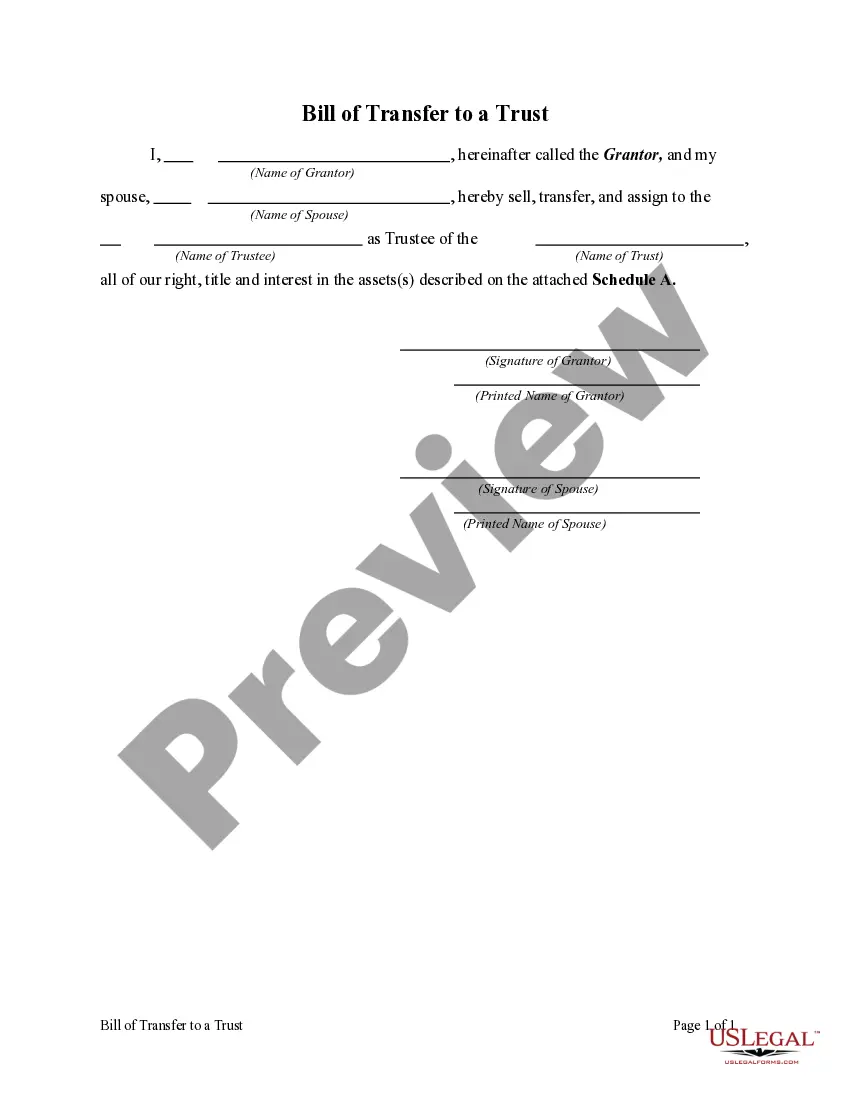
How to fill out Bill Of Transfer To A Trust?
- Log in to your US Legal Forms account if you’re a returning user and ensure your subscription is active. If it needs renewal, follow your plan's instructions.
- For first-time users, start by exploring the extensive collection of templates. Use the Preview mode to find a form that suits your needs, while ensuring compliance with local laws.
- If necessary, utilize the Search tab to locate an alternative template that fits your requirements.
- Once you select the appropriate document, click 'Buy Now' to review and choose your desired subscription plan. You’ll need to create an account for access.
- Proceed to payment by entering your credit card information or using your PayPal account to complete the subscription purchase.
- After completing your transaction, download the document to your device. Access it anytime through the 'My Forms' section in your profile.
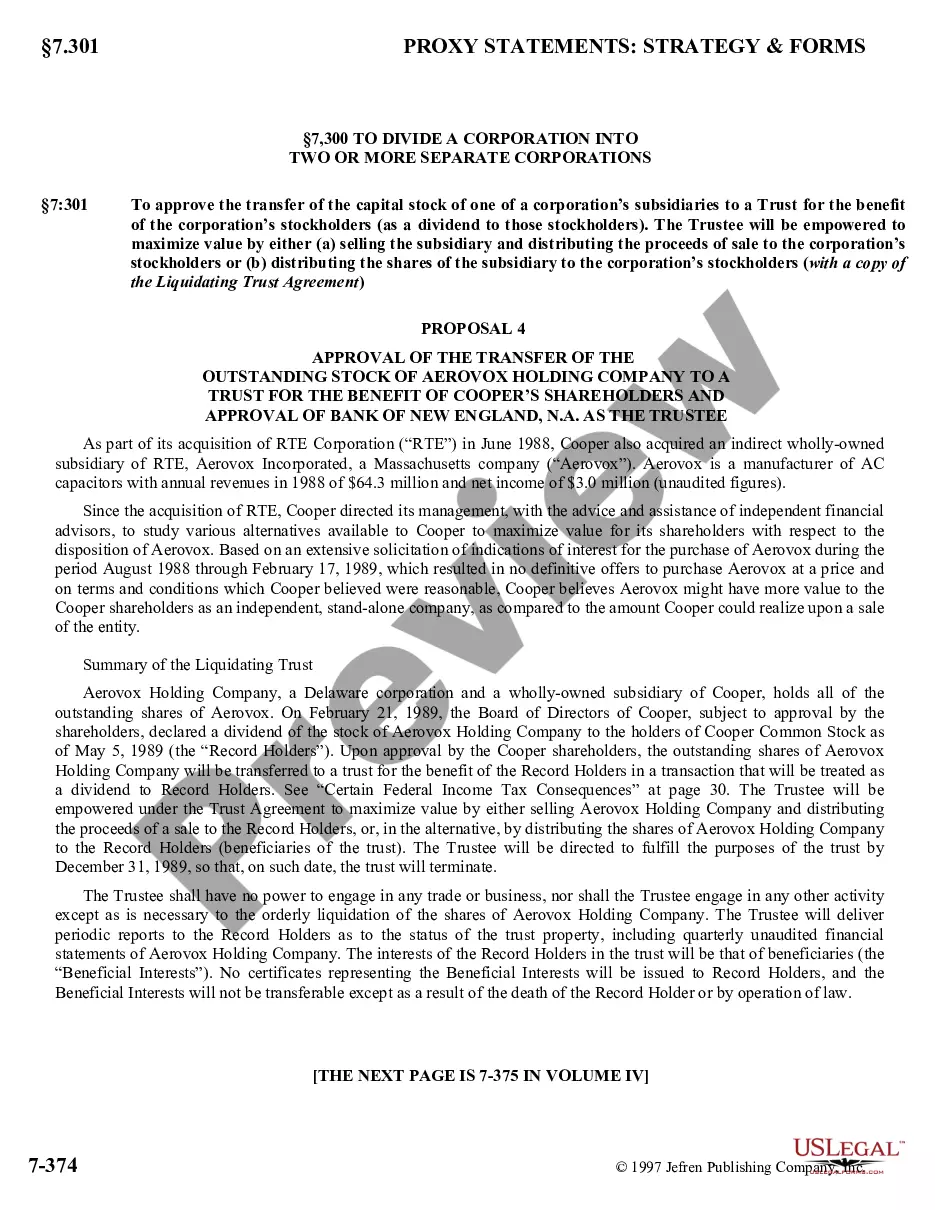
Using US Legal Forms not only provides you with an extensive library of over 85,000 fillable legal documents but also connects you with premium experts who can assist in ensuring your forms are completed accurately. This is crucial for maintaining legal integrity in your transactions.
In conclusion, transferring a trust asset to a beneficiary can be straightforward with the right resources. Start your journey with US Legal Forms today and empower yourself to handle legal documentation efficiently.
Form popularity
FAQ
One disadvantage of a trust to a beneficiary is that it can limit access to assets until specific conditions are met. For instance, if you want to transfer trust assets to a beneficiary, they may need to wait until a certain age or milestone is achieved. Additionally, some trusts may impose restrictions on how beneficiaries can use the assets, potentially leading to frustration. It's essential to consider these factors when setting up a trust, as they may affect the beneficiary's financial flexibility.
Transferring assets from a trust to a beneficiary involves clearly identifying the assets designated for transfer. You should follow the guidelines in the trust document and complete any required forms or documentation. By following these steps to transfer trust asset to beneficiary, you can ensure a smooth and legally sound distribution process.
A common mistake parents make when setting up a trust fund is failing to properly fund the trust. If assets are not transferred into the trust, beneficiaries may miss out on the intended benefits. Therefore, transferring the trust asset to beneficiary must be done thoughtfully to ensure that all desired assets are included and that the trust serves its purpose effectively.
Yes, you can transfer assets from a trust to a beneficiary following the terms laid out in the trust document. Ensure compliance with legal and procedural requirements to facilitate a smooth transfer trust asset to beneficiary. It may be helpful to engage a legal expert who can guide you through the necessary steps and help you avoid common pitfalls.
Transferring assets to a trust is generally not a taxable event, as the transfer does not create a gain or loss. However, certain activities related to the trust and its assets can have tax implications. It's advisable to consult with a tax professional for clarity on how the transfer might affect your taxes, especially when planning to transfer trust asset to beneficiary.
Distributing trust assets to beneficiaries involves several steps. First, locate the assets within the trust and determine their value. Next, execute the transfer trust asset to beneficiary as outlined in the trust agreement, while consulting with an attorney if necessary to ensure you comply with legal requirements and avoid future issues.
To distribute funds from a trust to beneficiaries, start by reviewing the trust document to understand its terms. Then, you can follow the specified instructions to transfer the trust asset to the beneficiary. If you manage the trust, ensure you maintain clear records of these distributions, as proper documentation helps avoid any potential disputes.