Counter Offer In Indian Contract Act
Description
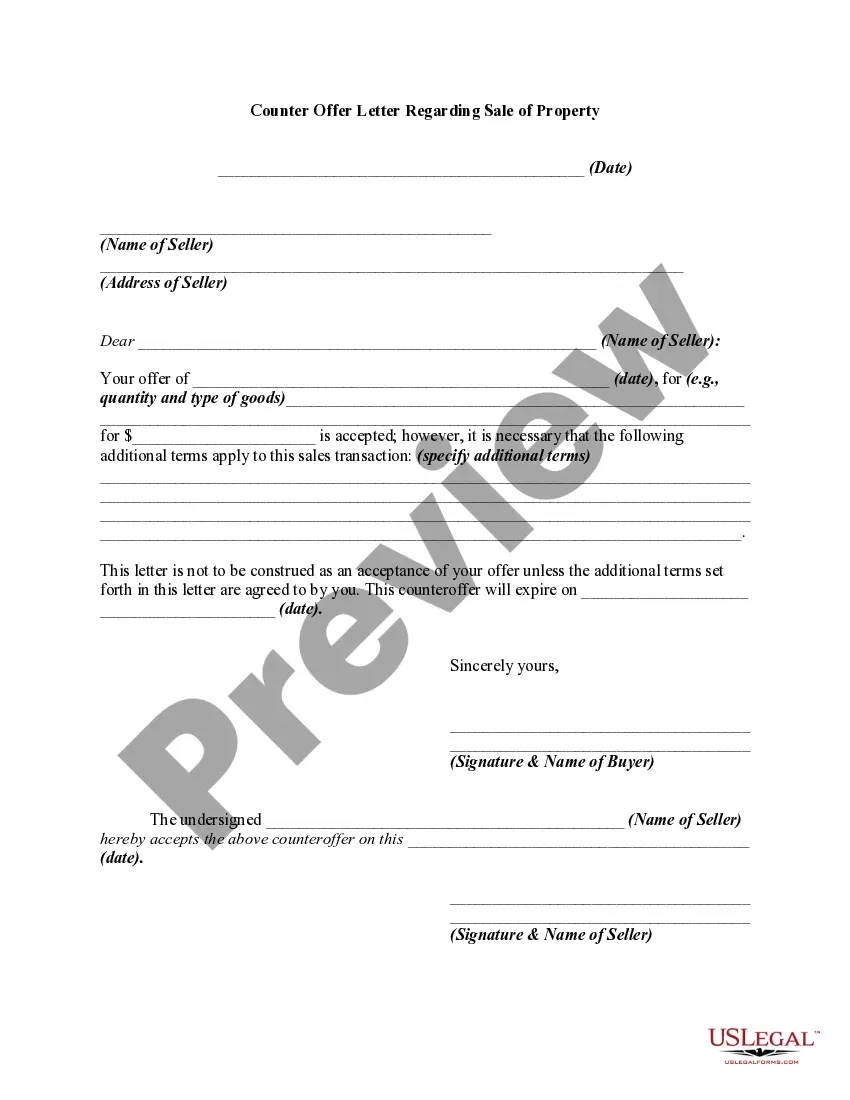
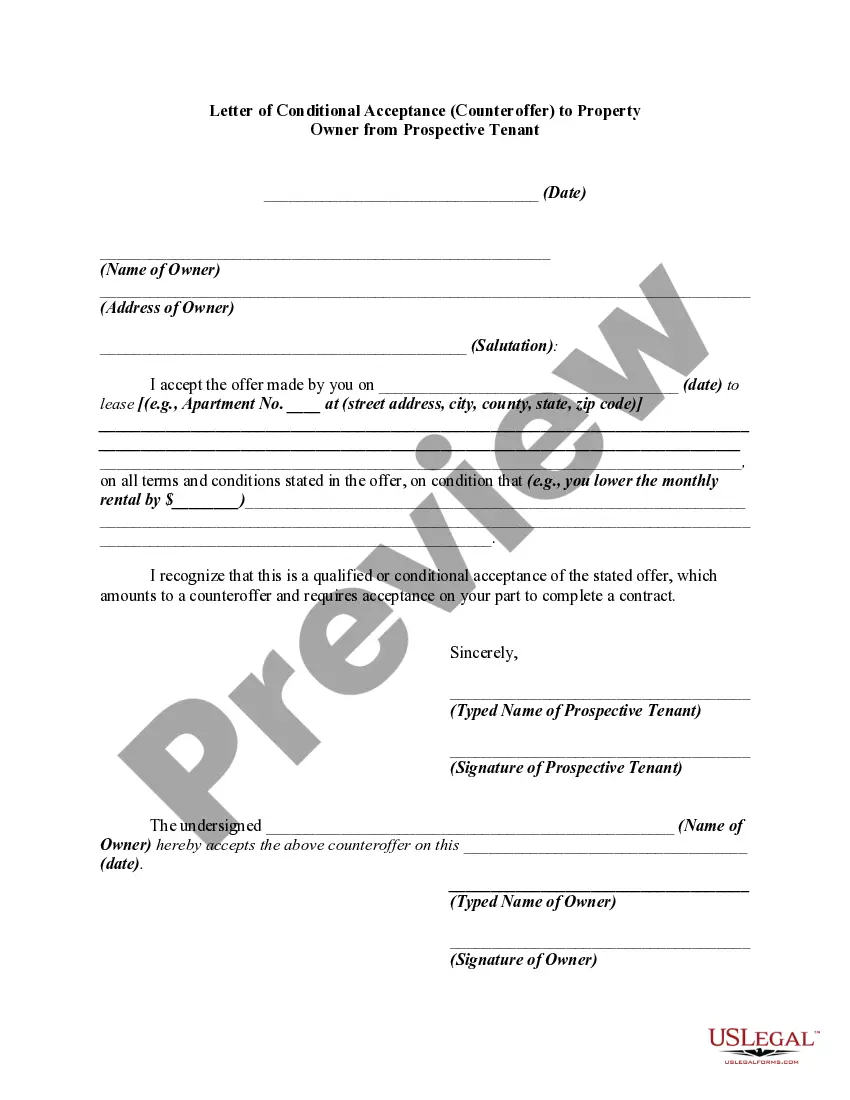
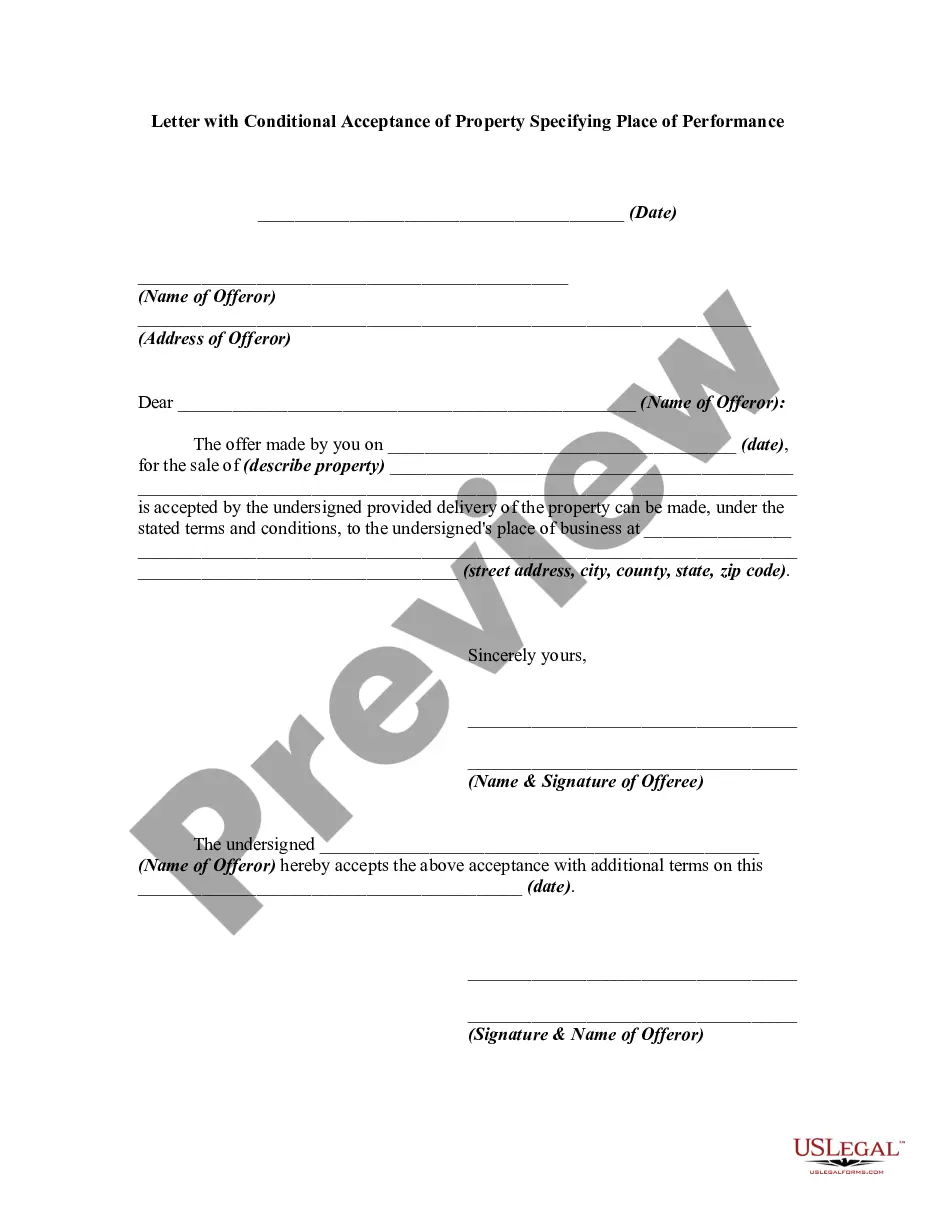
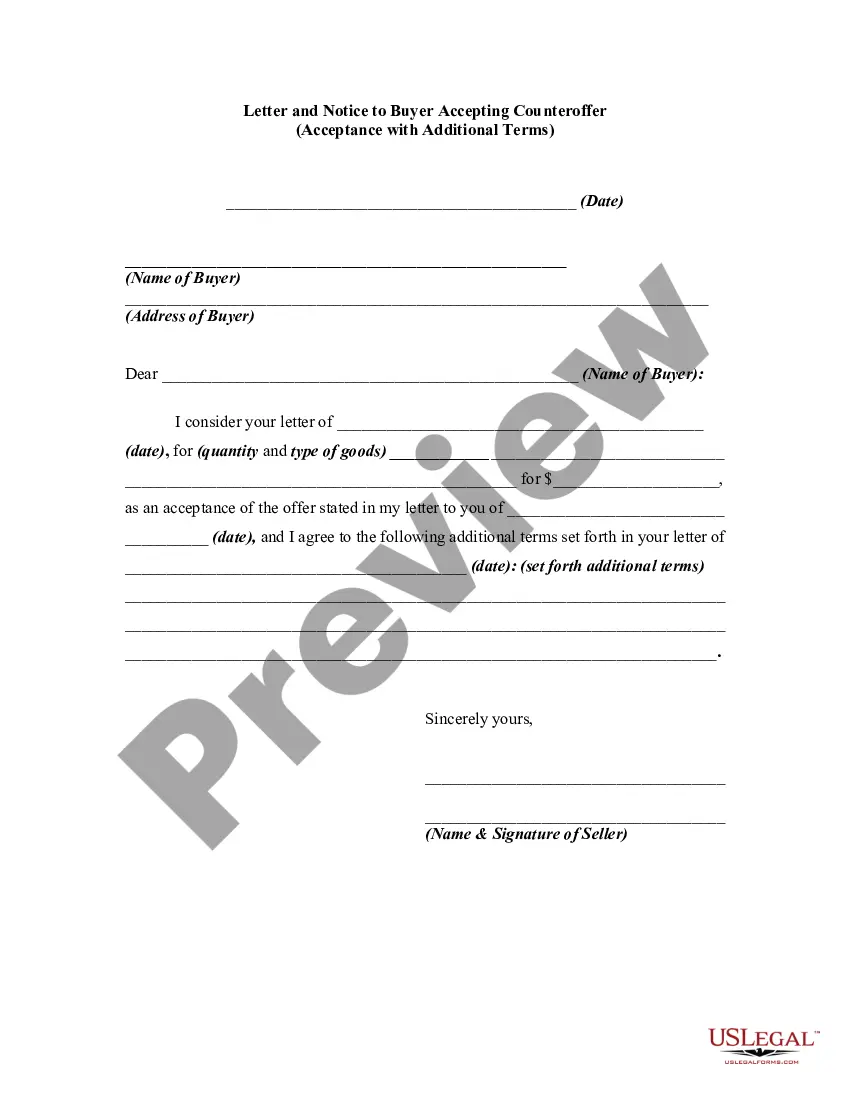
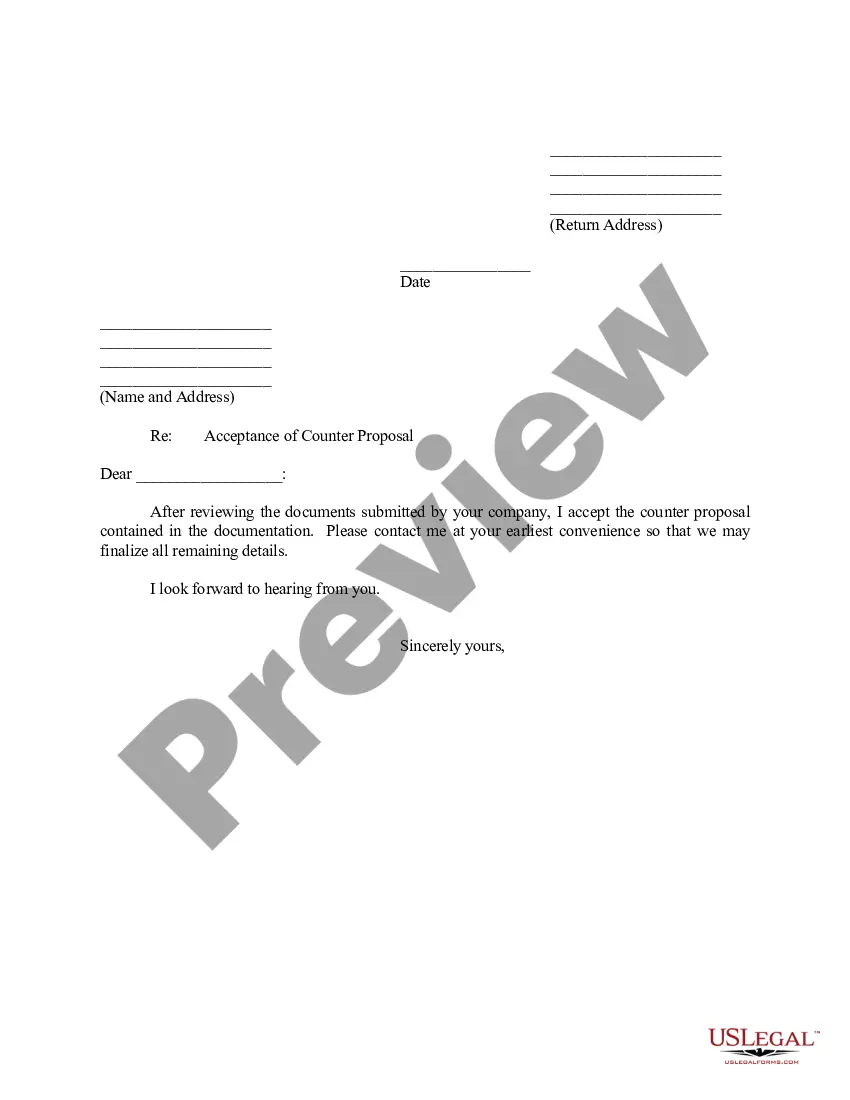
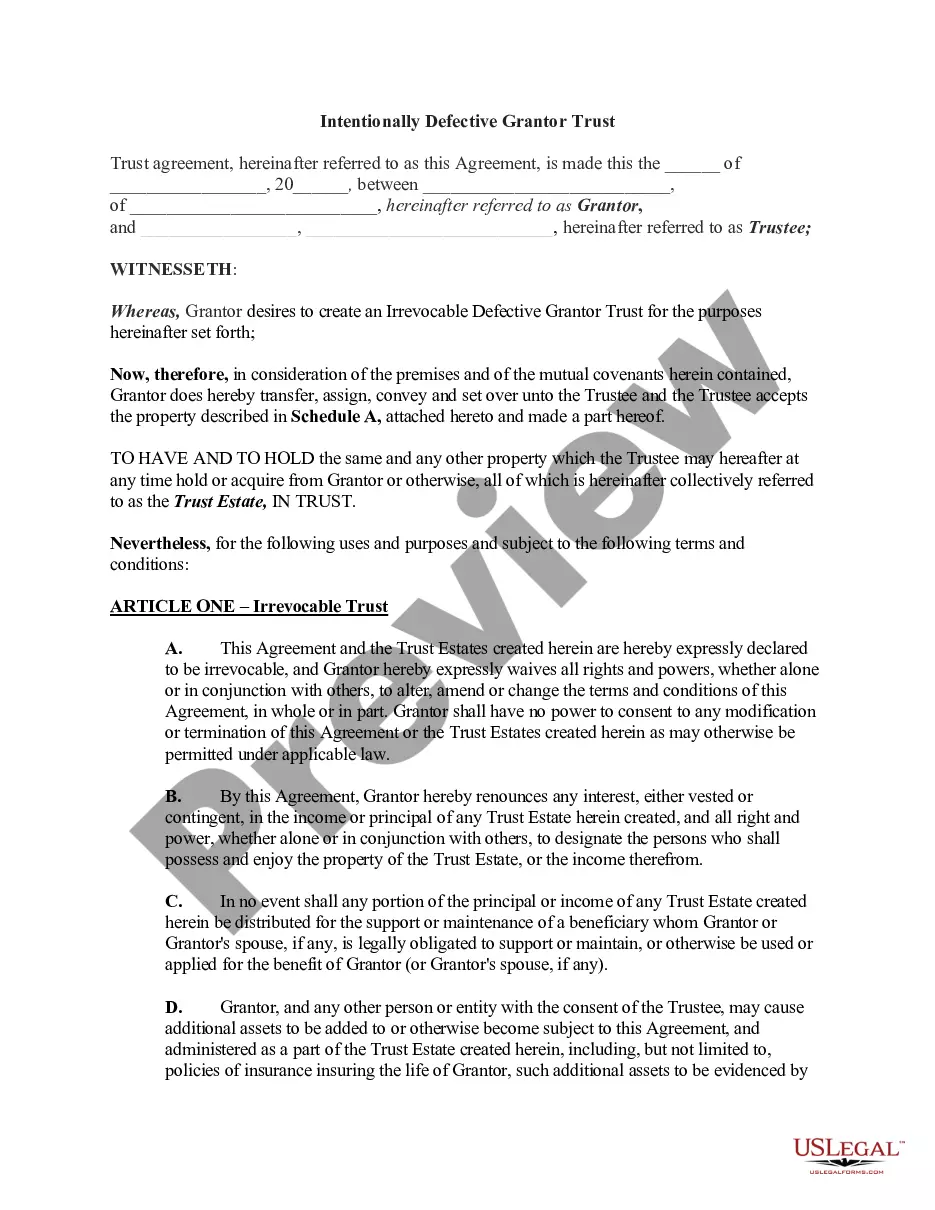

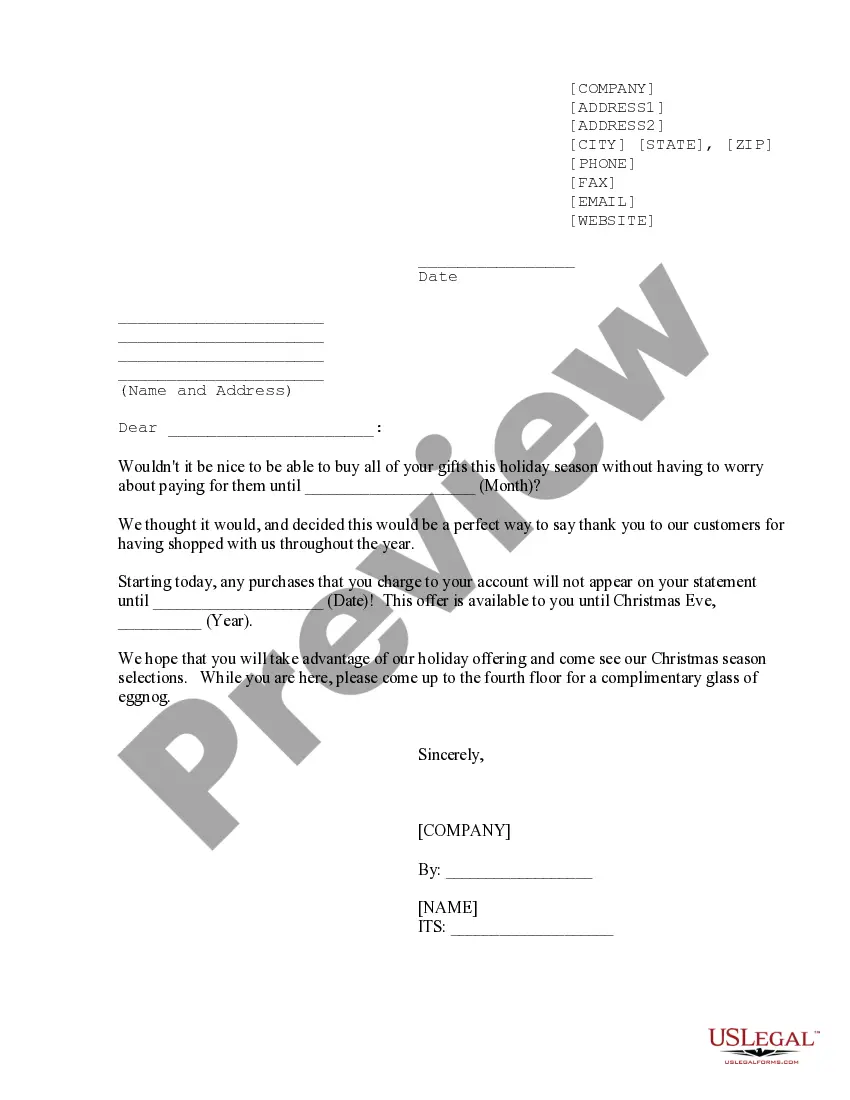
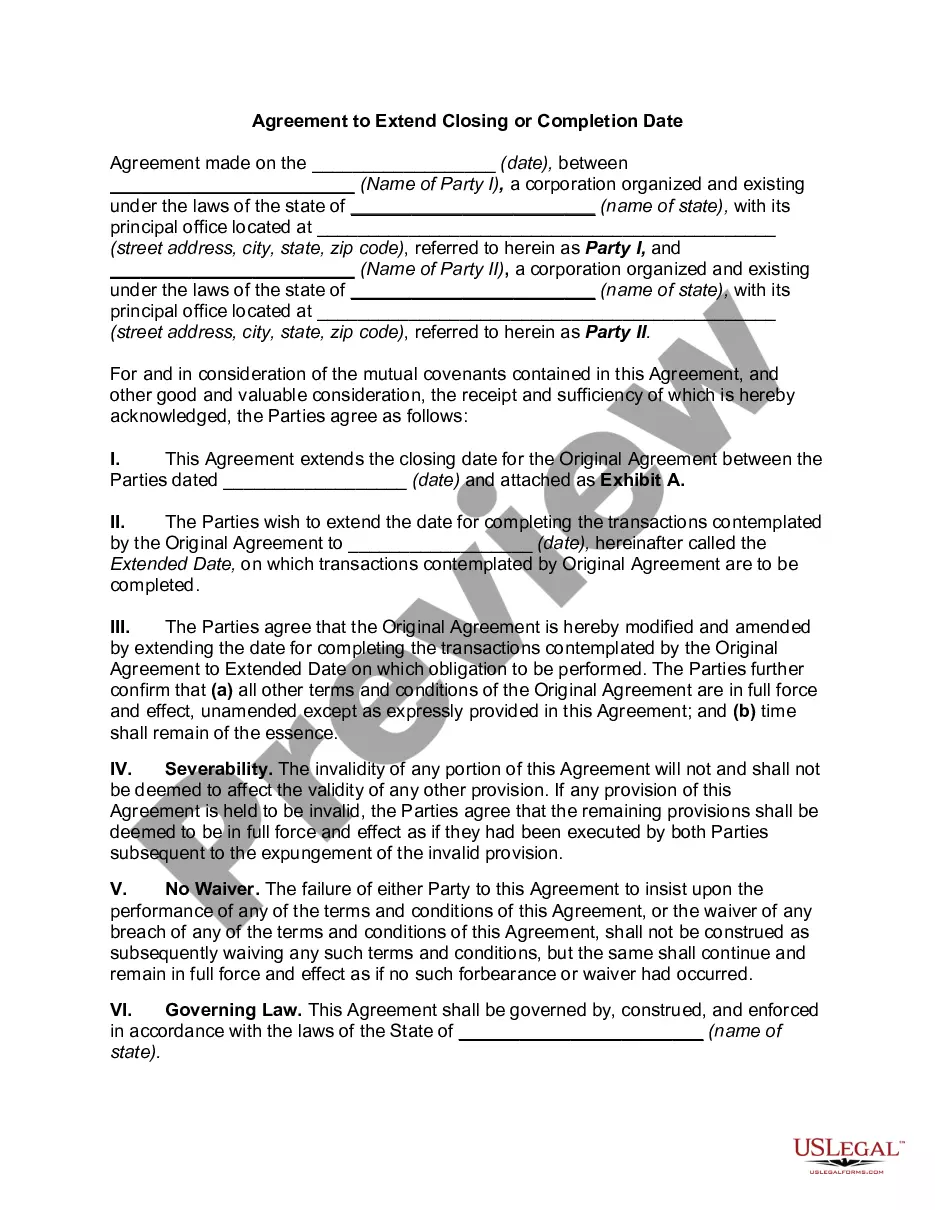
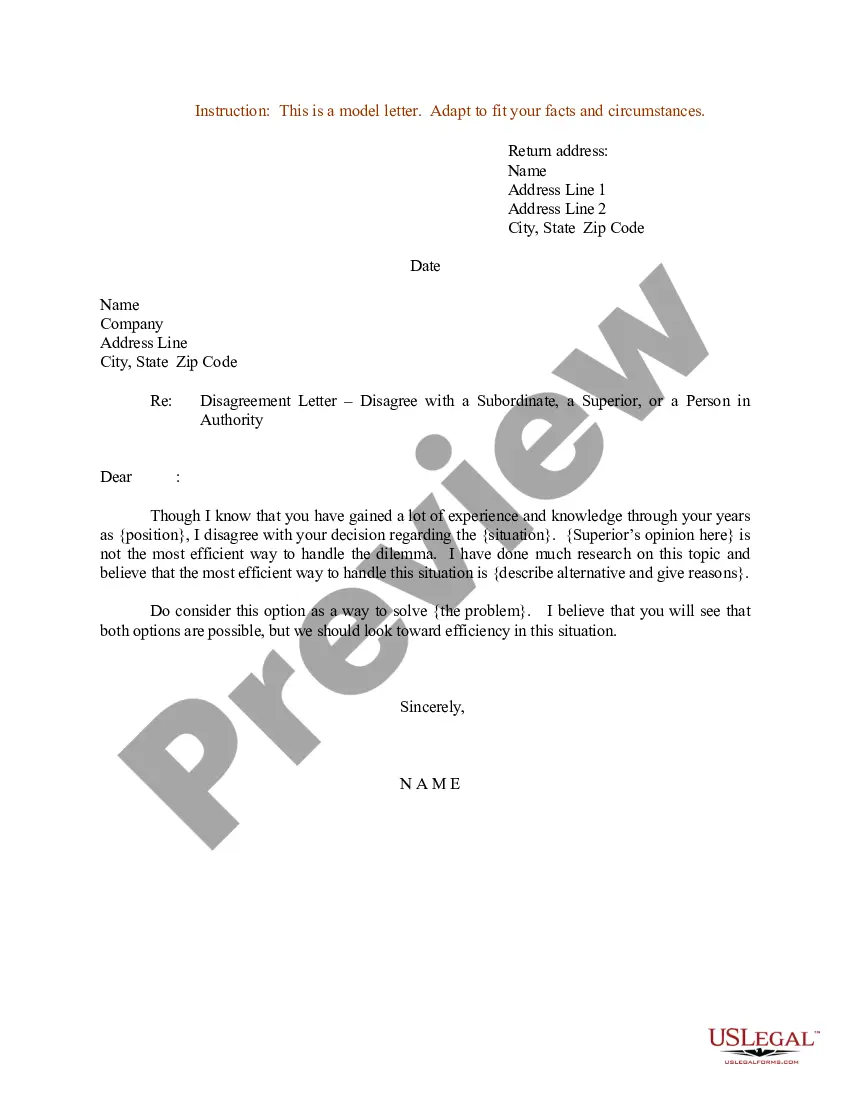
How to fill out Counter Offer Letter - Conditional Acceptance Where Subject Matter Does Not Involve The Sale Of Goods?
Managing legal documents can be exasperating, even for experienced practitioners.
When you are interested in a Counter Offer in the Indian Contract Act and do not get the opportunity to spend time searching for the correct and updated version, the process can become overwhelming.
US Legal Forms accommodates any needs you might have, ranging from personal to business documentation, all in one place.
Utilize advanced tools to complete and manage your Counter Offer in the Indian Contract Act.
Below are the steps to follow after finding the form you need: Confirm that this is the correct form by previewing it and reviewing its details.
- Gain access to a wealth of articles, guides, and resources pertinent to your situation and needs.
- Save time and effort searching for the documents you require, and use US Legal Forms' sophisticated search and Preview tool to find the Counter Offer in the Indian Contract Act and download it.
- If you hold a membership, Log In to your US Legal Forms account, search for the form, and download it.
- Check your My documents tab to see the documents you have previously saved and manage your folders as you wish.
- If it is your first experience with US Legal Forms, create a complimentary account and enjoy unlimited access to the benefits of the library.
- A comprehensive online form repository could be transformative for anyone aiming to navigate these situations effectively.
- US Legal Forms is a leading provider of online legal forms, offering over 85,000 state-specific legal documents at your convenience.
- With US Legal Forms, you can access legal and organizational forms that are specific to your state or county.
Form popularity
FAQ
To structure a counter offer effectively, start by clearly outlining the specific terms you wish to change, and maintain an open line of communication with the original offeror. Be sure to articulate your intention to negotiate, while not dismissing the original offer outright. Craft your counter offer by acknowledging the initial proposal and presenting your new terms concisely. Using platforms like uslegalforms can streamline this process by providing templates and guidance.
A counter offer in the Indian Contract Act refers to a response made by an offeree that alters the terms of the original offer. This act of countering indicates a rejection of the initial proposal and introduces new conditions for consideration. It serves to further negotiations, allowing parties to refine terms to reach a mutually beneficial arrangement. Understanding this concept is essential for anyone involved in contractual negotiations.
An example of a counter offer could be if a buyer responds to a seller's offer of $10,000 for a car by proposing $9,000 instead. This response acts as a counter offer and modifies the original terms while indicating the buyer's interest in the sale. In this way, both parties have the opportunity to negotiate until a satisfactory agreement is reached. Recognizing examples like this helps to clarify the concept of counter offers.
The essential element of a counter offer is the introduction of new terms that deviate from the original offer while maintaining the intent to negotiate. This signifies a willingness to engage in further discussions, marking a departure from the previous offer. In this context, understanding the role of this element can play a crucial role in contracts under the Indian Contract Act.
Key features of a counter offer in the Indian Contract Act include the fact that it voids the original offer, represents a new proposal, and requires acceptance for a contract to be formed. The terms offered in a counter offer can vary significantly from the original, allowing for negotiation flexibility. These features empower parties to engage in fruitful discussions and reach an agreement that benefits both sides.
The primary elements of a counter offer in the Indian Contract Act include the intention to create a binding agreement, a clear and specific proposal, and communication of the counter offer to the original offeror. Additionally, it must reflect terms that diverge from the original offer but retain the essential purpose of the agreement. Recognizing these elements aids in negotiating successfully.
An example of an offer in the Indian Contract Act could be when a person offers to sell a car for $10,000. This represents an intent to enter into a contractual relationship pending acceptance by another party. In this scenario, the offeror waits for a response from the offeree, who can accept or reject the offer. The clarity of the offer sets the foundation for further negotiations.
The rules of a counter offer in the Indian Contract Act state that a counter offer constitutes a rejection of the original offer and presents a new offer back to the original offeror. This means that once a counter offer is made, the original offer is no longer valid. The counter offer must include terms that are clear, specific, and mutually agreeable. Understanding these rules helps parties navigate negotiations effectively.
No, a counter offer effectively ends the original offer under the Indian Contract Act. Until both parties agree to the counter offer, no contract exists. This underscores the importance of negotiating terms and reaching consensus to create a valid agreement.
Certainly, you can counter offer a contract. This process is vital for reaching a mutually acceptable agreement. By making a counter offer in line with the Indian Contract Act, you communicate your desired terms while keeping the negotiation dynamic and productive.