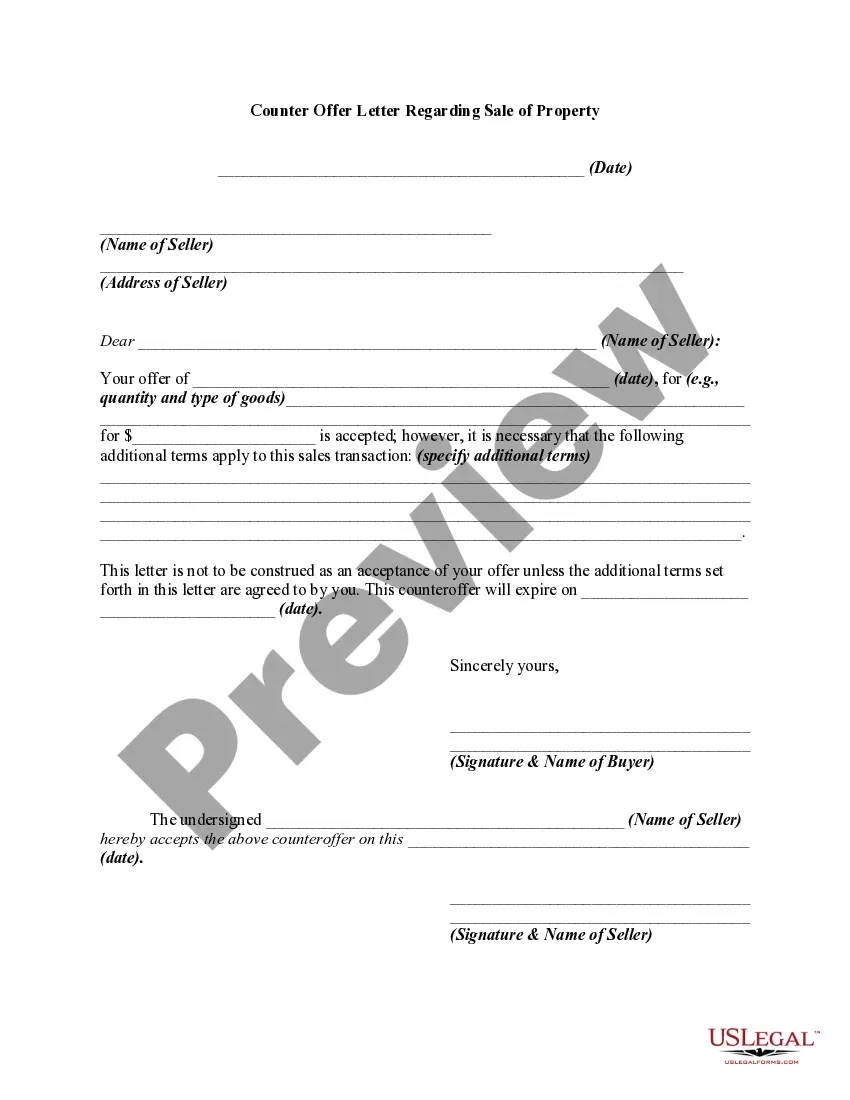
Form Counter Offer Without Prejudice
Description
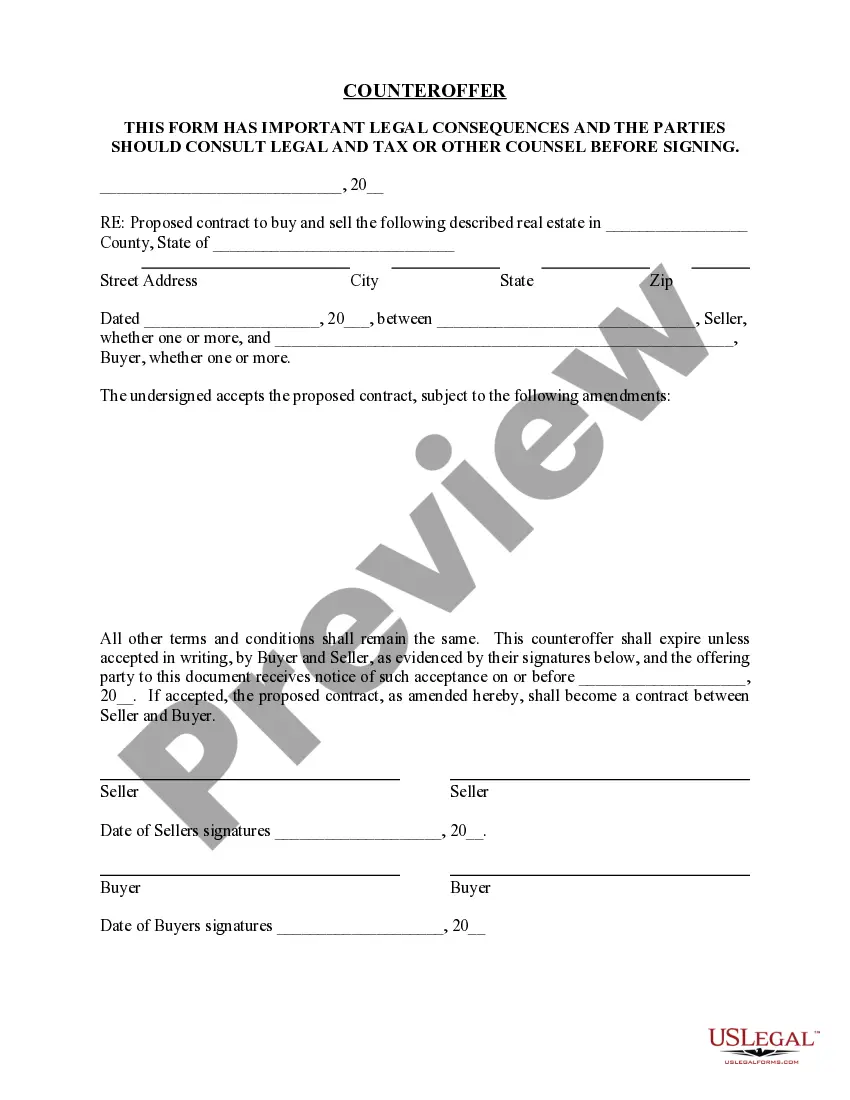
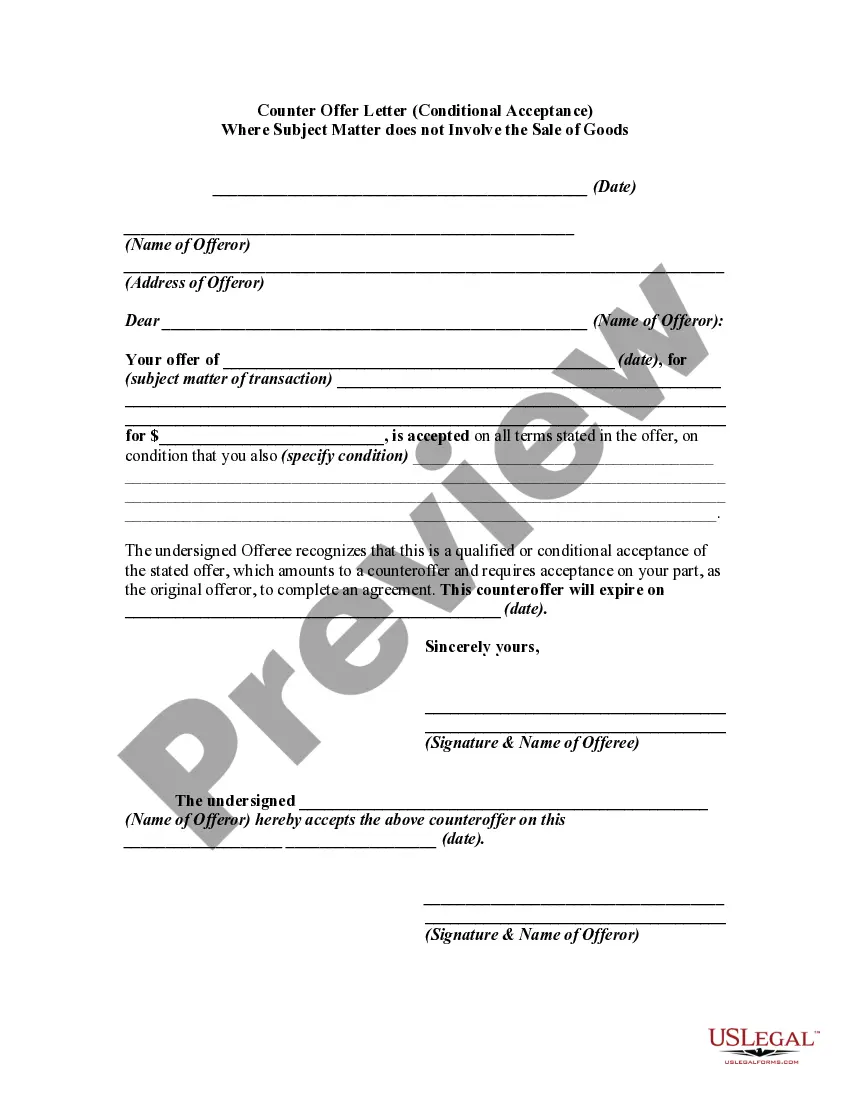
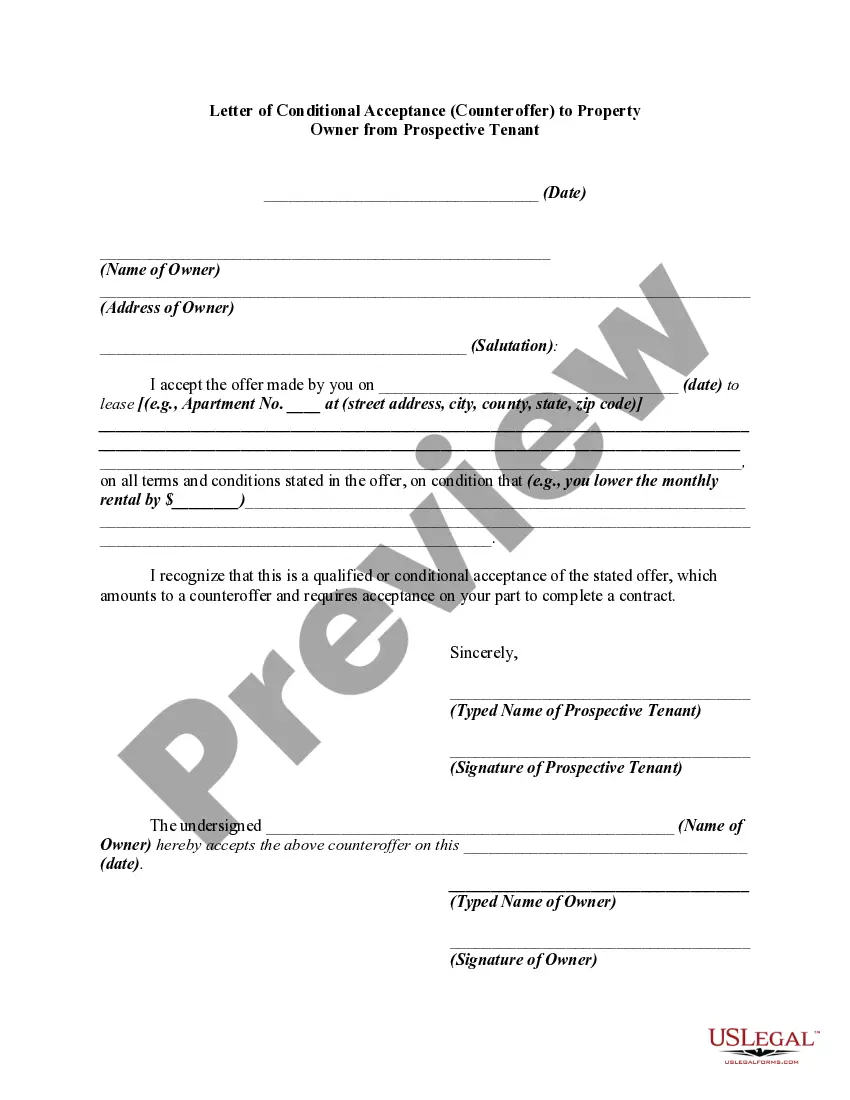
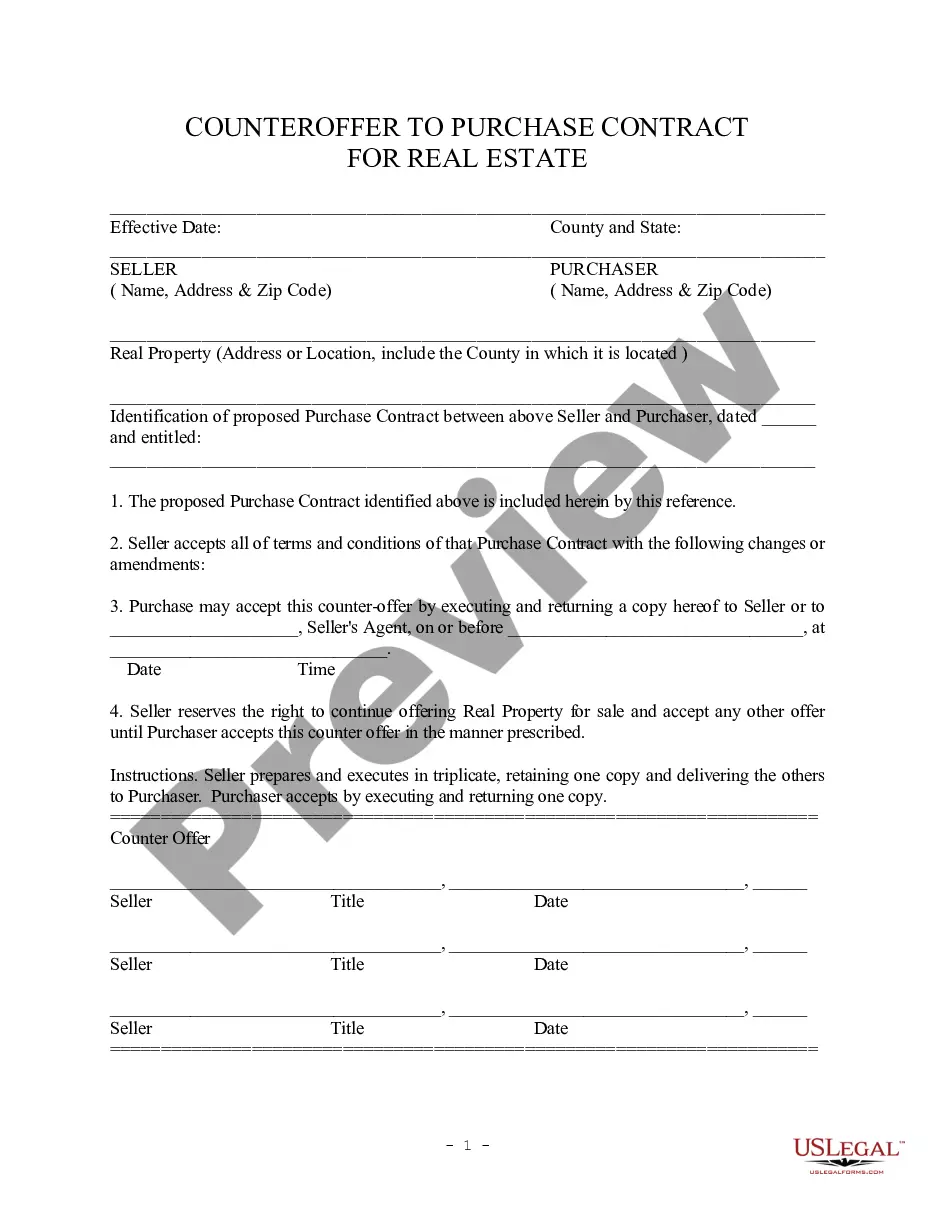


How to fill out Counter Offer Letter Regarding Sale Of Property?
Regardless of whether for corporate objectives or personal matters, everyone must handle legal circumstances at some stage in their life.
Filling out legal paperwork requires meticulous focus, starting with choosing the correct form template.
With an extensive catalog from US Legal Forms available, there’s no need to waste time searching for the suitable template online. Utilize the library's straightforward navigation to find the appropriate template for any circumstance.
- Obtain the template you require by using the search bar or browsing the catalog.
- Examine the details of the form to ensure it corresponds with your situation, state, and area.
- Click on the preview of the form to view it.
- If it is the incorrect form, go back to the search feature to find the Form Counter Offer Without Prejudice template you need.
- Download the file when it aligns with your requirements.
- If you possess a US Legal Forms account, click Log in to retrieve previously saved templates in My documents.
- If you do not have an account yet, you can download the form by clicking Buy now.
- Select the appropriate pricing option.
- Complete the account registration form.
- Choose your payment method: you can opt for a credit card or a PayPal account.
- Select the file format you desire and download the Form Counter Offer Without Prejudice.
- Once it is saved, you can fill out the form using editing software or print it and complete it manually.
Form popularity
FAQ
You can use 'without prejudice' in a sentence like this: 'I am making a form counter offer without prejudice to my right to pursue further legal action.' This indicates your desire to negotiate while keeping your options open. It's a clear and effective way to communicate your intent during negotiations.
You would use 'without prejudice' in situations involving negotiations to settle disputes, as it allows parties to discuss their differences without fear of legal repercussions. For example, if you send a form counter offer without prejudice, it encourages open communication, increasing the chance of reaching an agreement. This is particularly useful in contentious negotiations.
When should we use the term ?without prejudice?? The phrase can and should be used when you wish to communicate or respond to a settlement offer, indicate your willingness to negotiate or reconsider your position, and if you wish to make counter offer or proposal.
If an employer makes a ?without prejudice? settlement offer to an employee, evidence about the offer cannot be used against the employer or the employee in legal proceedings if settlement is not reached. However, an offer will only be treated as ?without prejudice? if, at the time the offer is made, there is a dispute.
A: A judge can dismiss a case without prejudice if they detect legal errors that prevent the case from going forward. However, dismissing the case without prejudice allows the two sides to correct those errors and re-file the case.
The "without prejudice" rule allows parties to conduct negotiations to settle an action without having statements made in those negotiations used against them in that action, or any subsequent related action.
Workplace discrimination disputes require intense and comprehensive negotiations. Detailed evidence needs to be presented persuasively to achieve justice. Witnesses may be involved. Both monetary and non-monetary aspects are considered when relevant in a settlement agreement.