Unjustly
Description
Get your form ready online
Our built-in tools help you complete, sign, share, and store your documents in one place.
Make edits, fill in missing information, and update formatting in US Legal Forms—just like you would in MS Word.
Download a copy, print it, send it by email, or mail it via USPS—whatever works best for your next step.
Sign and collect signatures with our SignNow integration. Send to multiple recipients, set reminders, and more. Go Premium to unlock E-Sign.
If this form requires notarization, complete it online through a secure video call—no need to meet a notary in person or wait for an appointment.
We protect your documents and personal data by following strict security and privacy standards.

Make edits, fill in missing information, and update formatting in US Legal Forms—just like you would in MS Word.

Download a copy, print it, send it by email, or mail it via USPS—whatever works best for your next step.

Sign and collect signatures with our SignNow integration. Send to multiple recipients, set reminders, and more. Go Premium to unlock E-Sign.

If this form requires notarization, complete it online through a secure video call—no need to meet a notary in person or wait for an appointment.

We protect your documents and personal data by following strict security and privacy standards.
Looking for another form?

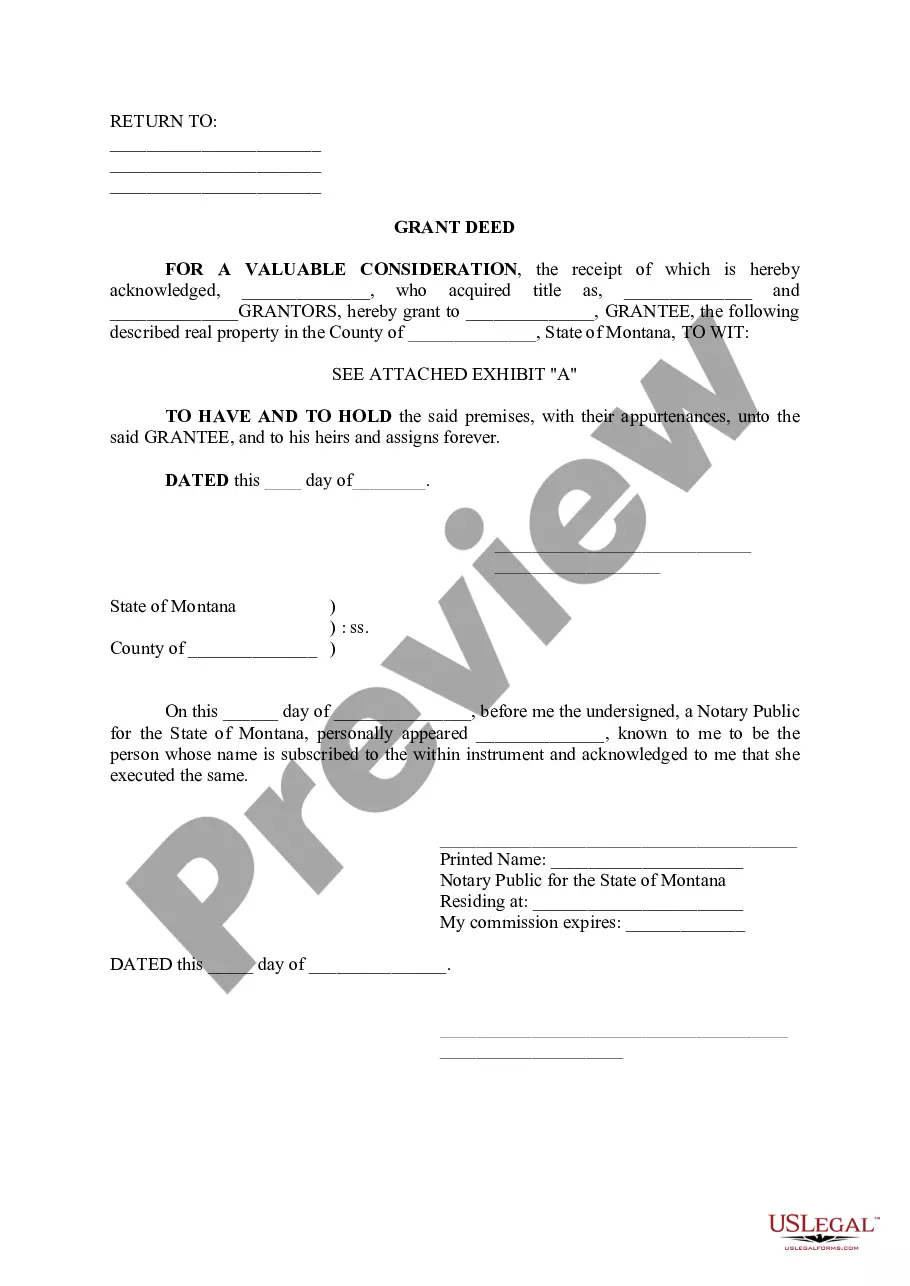

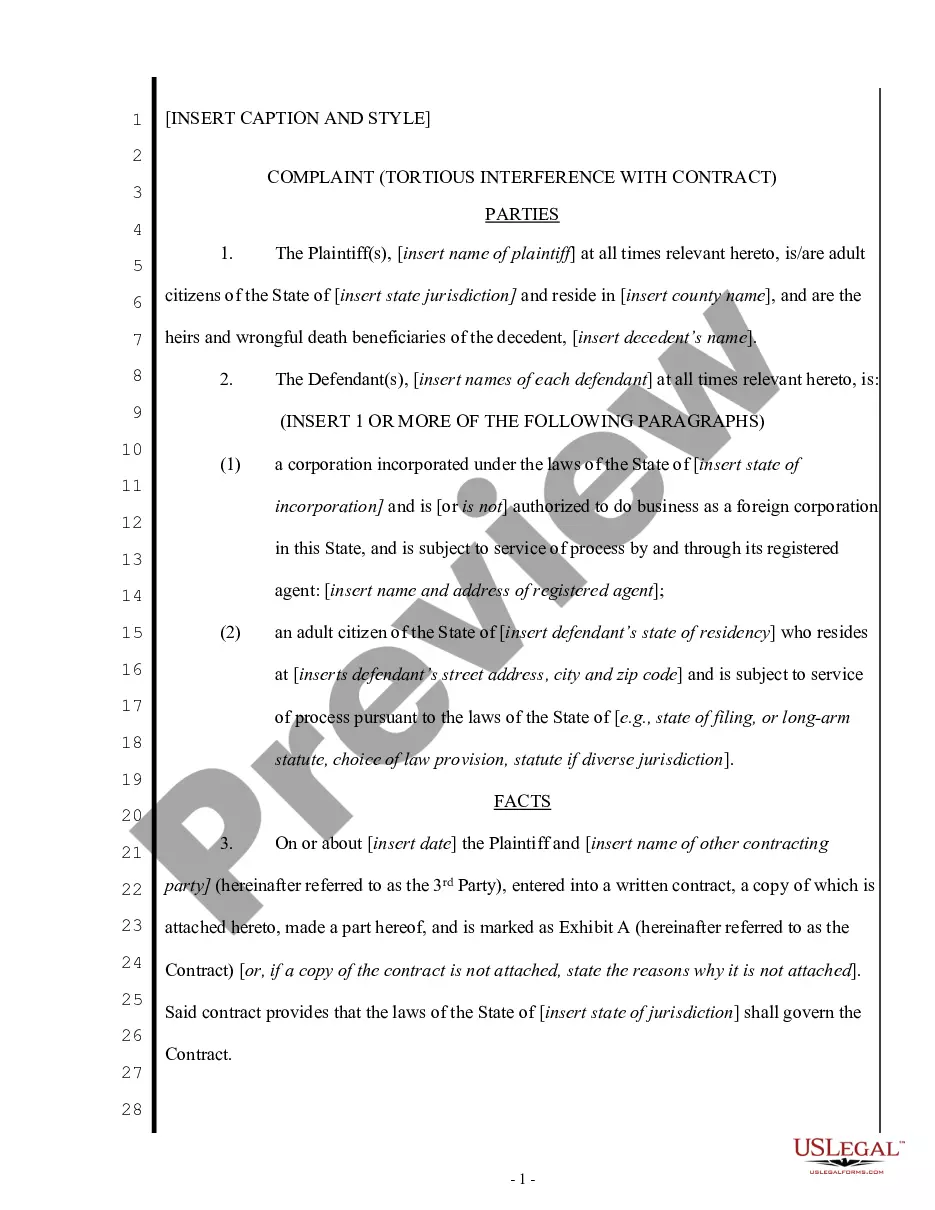
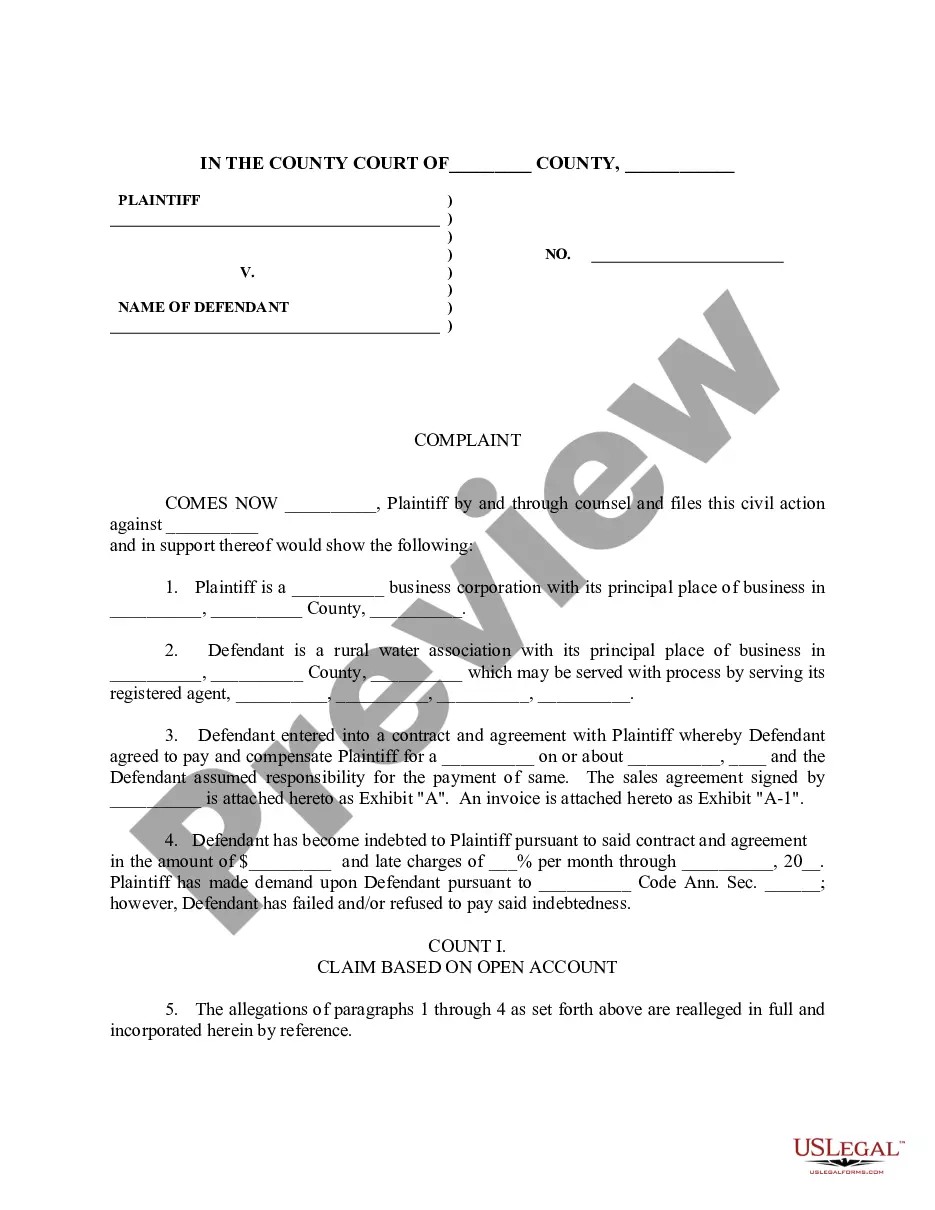
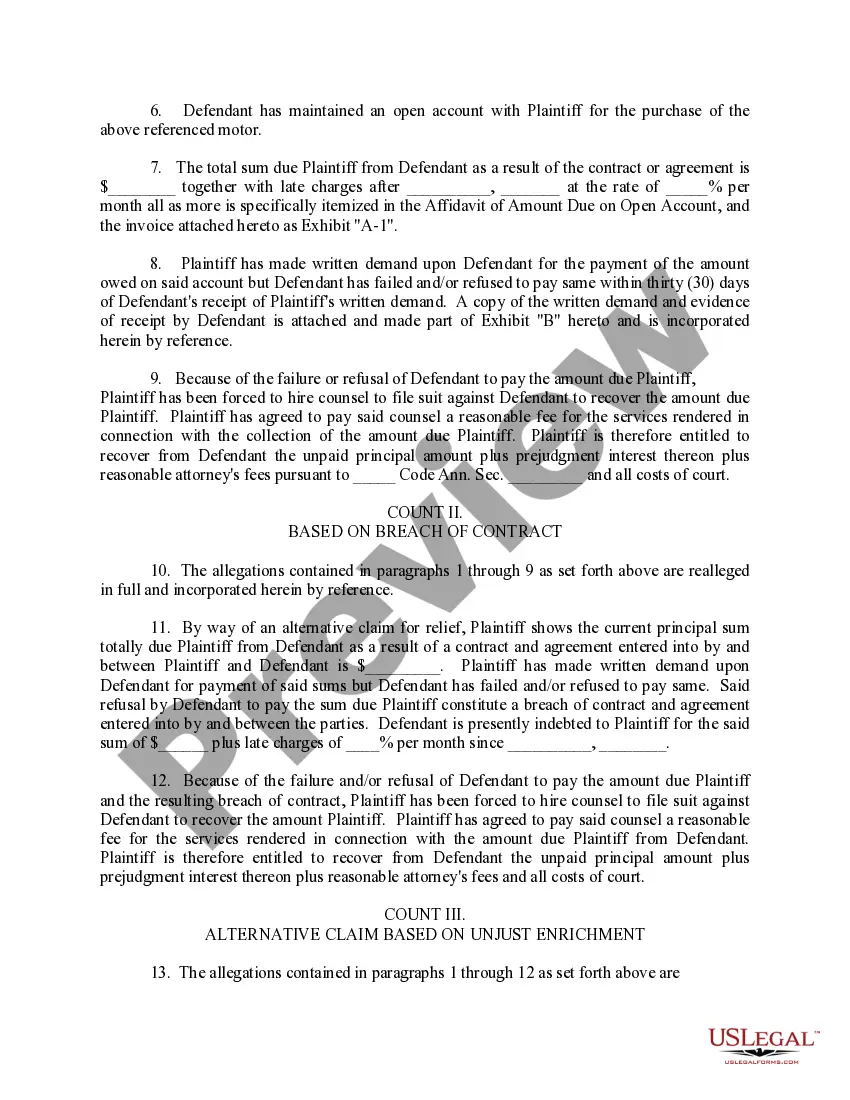
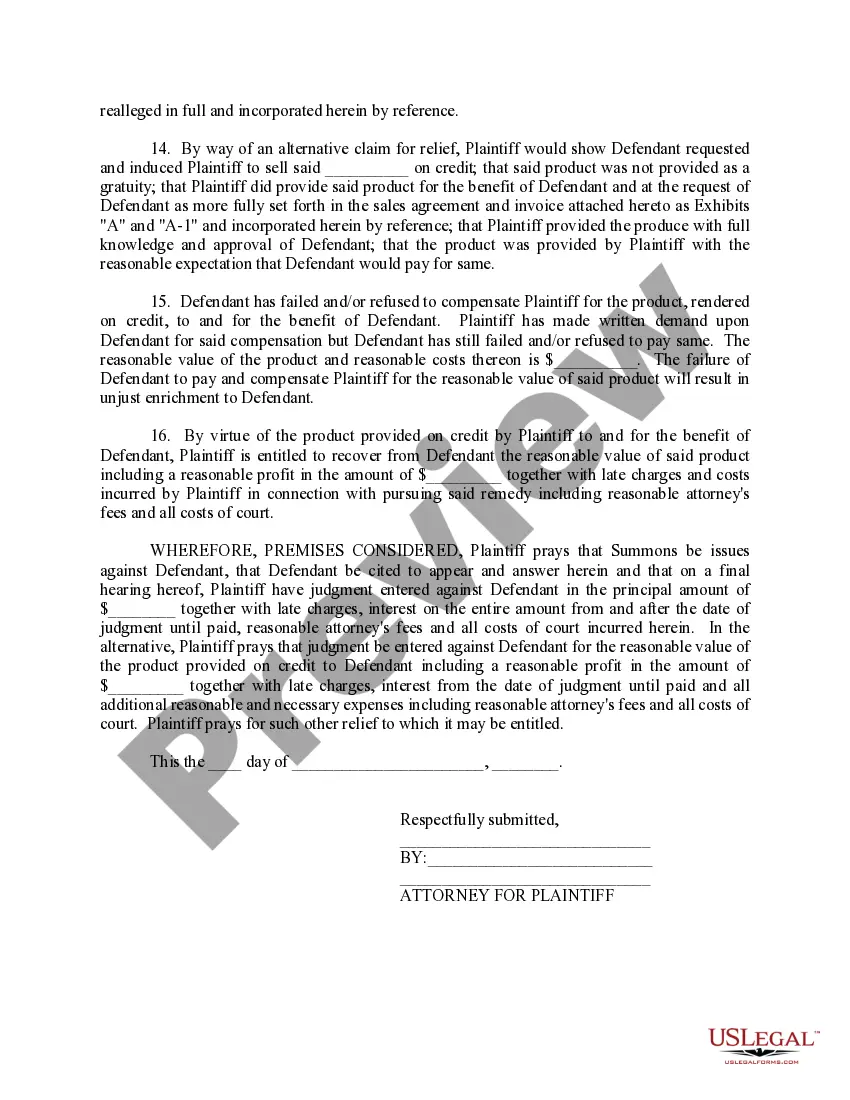
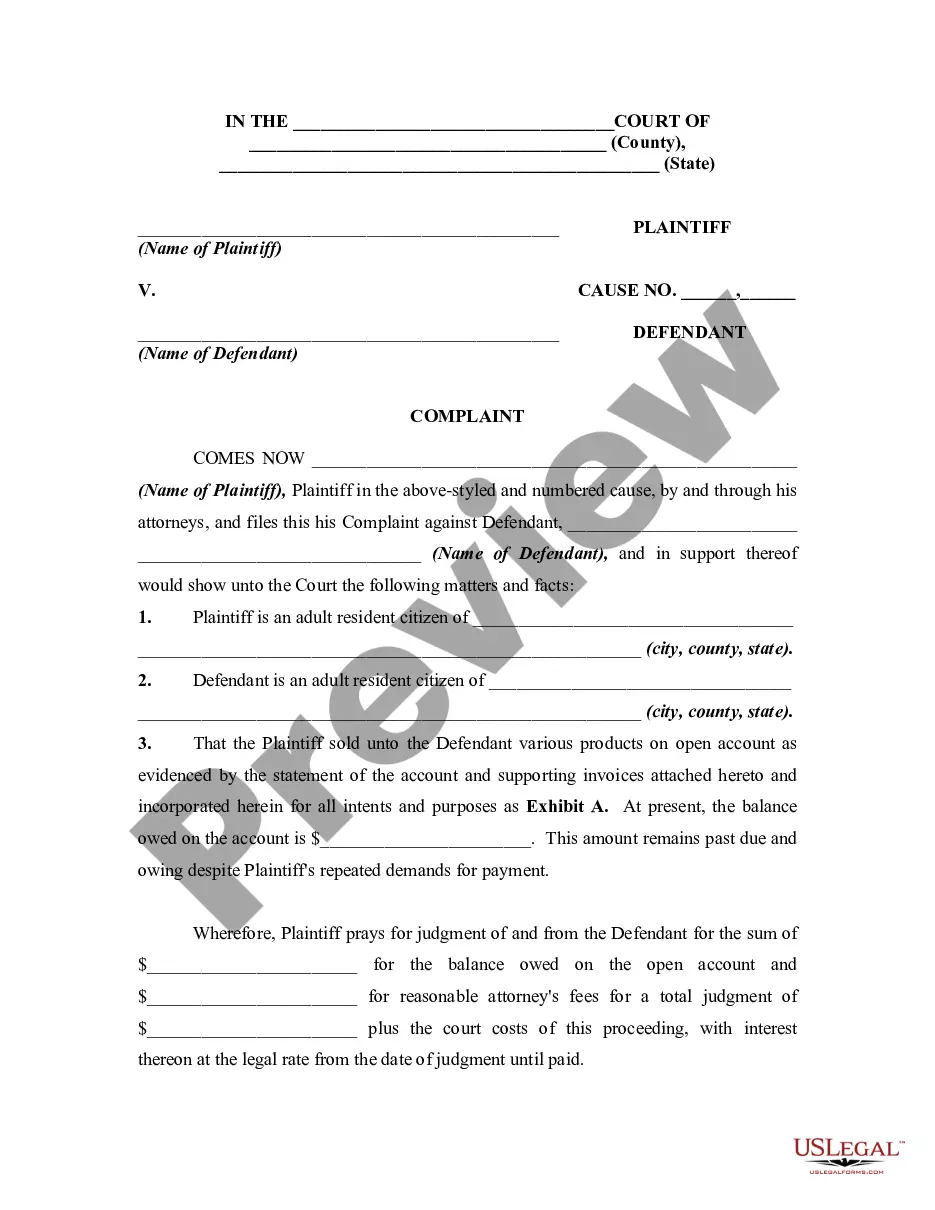
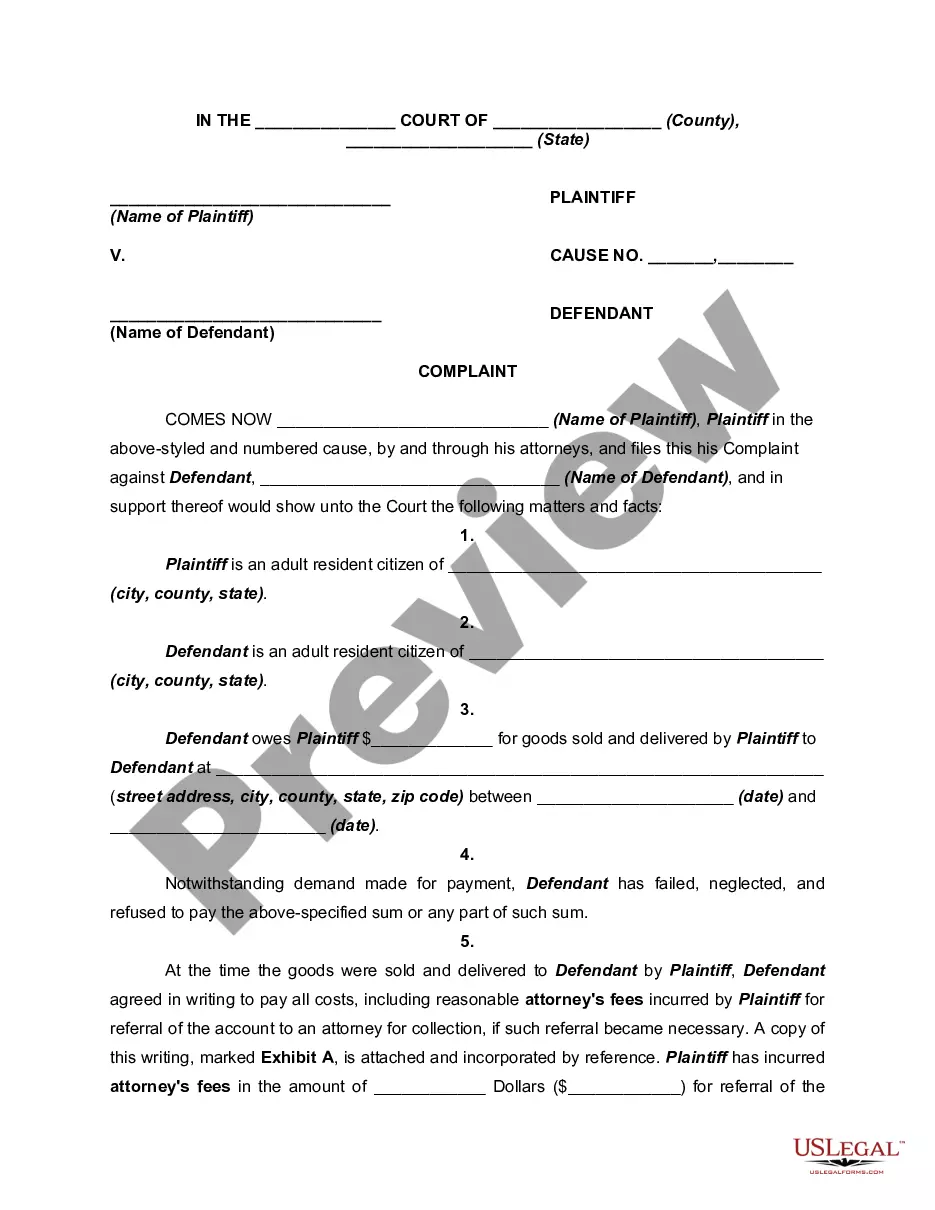
How to fill out Complaint Based On Open Account, Breach Of Contract, Unjust Enrichment?
- If you already have an account, log in to access your documents and click 'Download' for the needed template. Ensure your subscription is active, or renew it as necessary.
- For first-time users, start by exploring the Preview mode and form descriptions to confirm that you select a template that meets your local jurisdiction's requirements.
- If you find discrepancies, utilize the Search bar above to locate the correct form tailored to your needs.
- Purchase your document by clicking 'Buy Now' and selecting an appropriate subscription plan. You will need to register for an account to unlock the full library.
- Complete your purchase by providing payment details, either through credit card or PayPal.
- Download the completed form to your device, so you can finalize it as needed. Access it anytime via the My Forms section in your profile.
Using US Legal Forms means you can have more than just a vast collection of forms at your fingertips; it also connects you with premium experts who can assist in completing your legal documents accurately.
Don't let the legal process feel unjustly intimidating. Start taking control of your legal needs today with US Legal Forms!
Form popularity
FAQ
Another word for unfair is inequitable, which refers to treatment or decisions that lack equity or justice. The term suggests that someone is being treated differently or unjustly without a reasonable basis. When you encounter unfair situations, it's vital to know that you are not alone, and resources such as US Legal Forms can provide assistance and clarity.
A synonym for unjustified is unwarranted, indicating that an action lacks appropriate reasoning or evidence. It highlights an action taken without sufficient justification or legal grounds. Understanding the implications of unjustified actions can help you identify scenarios where it's essential to advocate for your rights, and tools like US Legal Forms can guide you in this process.
A commonly accepted synonym for unjustly is wrongfully. This term also conveys the sense of being treated in a manner that lacks fairness and equity. When you encounter situations where you believe your rights have been violated, recognizing these synonyms can help articulate your frustrations more precisely. Legal platforms like US Legal Forms can support you in navigating these feelings effectively.
Another word for unjustly is unfairly, as both reflect a deviation from what is right or fair. However, unfairly may suggest a broader context, while unjustly implies a more specific breach of legal or moral rights. Using these terms correctly can enhance your understanding of legal issues, particularly in matters where you feel wronged.
When we speak of acting unjustly, we refer to actions that lack fairness or legal foundation. For instance, a person may be unjustly dismissed from a job without valid reasons or processes. It is crucial to recognize unjustly applied actions to seek appropriate recourse and uphold your rights. Engaging with legal resources can provide clarity and support in these situations.
While unjustly and unfairly are often used interchangeably, they hold distinct meanings. Unjustly focuses on a lack of justice, indicating an action that violates established rights or principles. On the other hand, unfairly emphasizes inequality or bias in treatment, which may not always equate to a legal injustice. Knowing this difference can help you articulate your concerns better.
A synonym for wrongfully is unjustly. Both terms indicate a situation where an action does not conform to what is fair or right. When a person feels they have been treated without justice, they might describe that treatment as unjustly applied. Understanding the nuances of these terms can help clarify your rights in various situations.
To explain being fired without cause, emphasize the lack of justification and the suddenness of the decision. It's important to communicate that such a dismissal feels unjust and could point to potential underlying issues. Make sure to stress your commitment to the organization prior to the termination. For additional support in articulating your experience, you can refer to the guidance available on the US Legal platform.
If you were fired for not being a good fit, explain that the decision may stem from misaligned expectations or management styles. Clarify that this situation feels unjust, especially if you demonstrated competency and dedication. Communicating your professional intentions during the transition can help others see your perspective. Utilizing US Legal’s resources can ensure you're prepared for future conversations.
When explaining wrongful termination, focus on the facts surrounding your dismissal. List any actions that lead to your termination that you believe were unjust, and use concrete examples to illustrate your point. It’s essential to present your case clearly to enhance understanding. If needed, resources on the US Legal platform can support you in framing your explanation effectively.