Montana Grant Deed
What this document covers
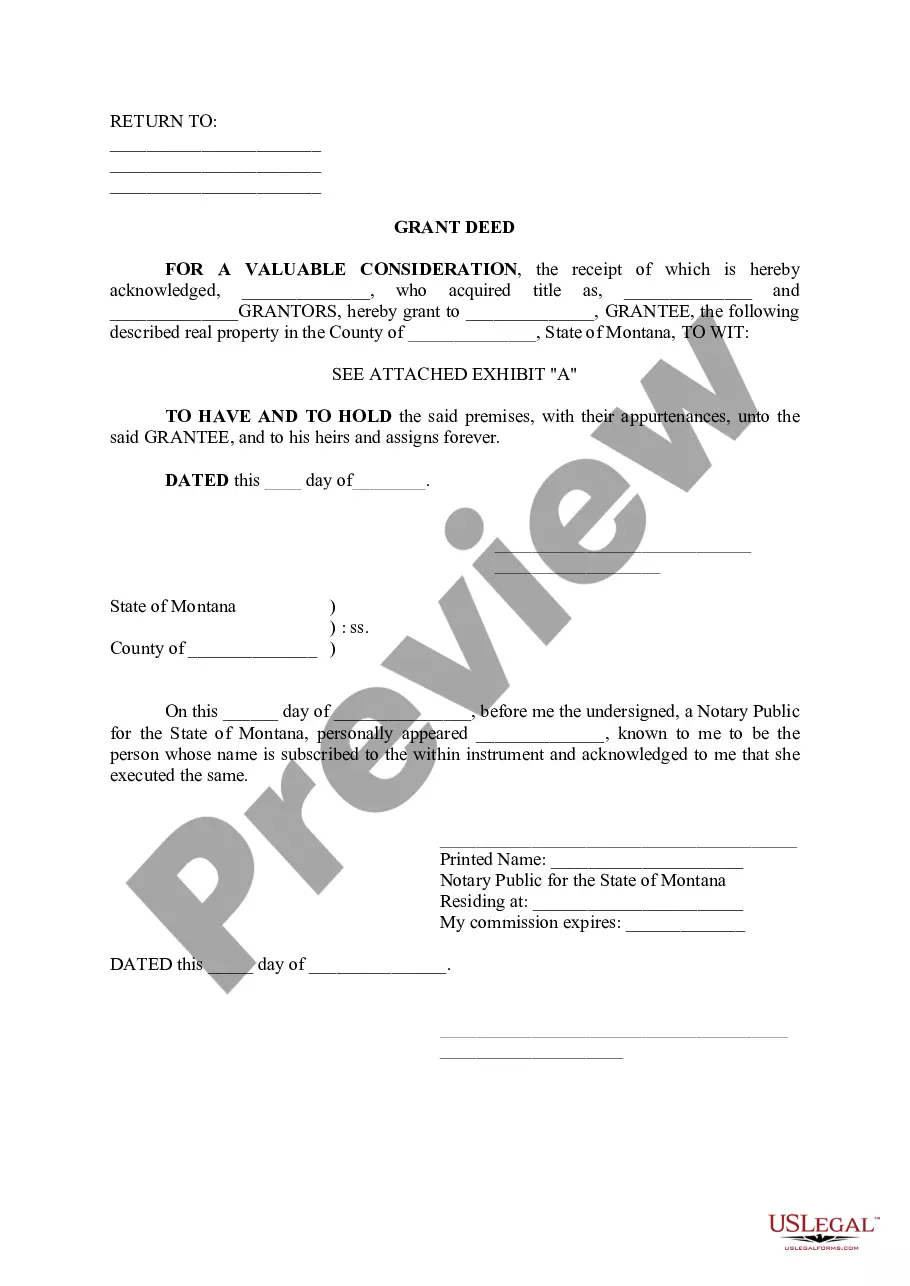
A Grant Deed is a legal document used to transfer ownership of real property from one party (the grantor) to another (the grantee). Unlike other deeds, it guarantees that the grantor holds clear title to the property and has the right to transfer it. No payment is required for the deed to be effective, making it useful for transferring property as a gift. This form is essential for legally executing a property transfer, ensuring that the title passes smoothly and without disputes.
Form components explained
- Parties involved: Identifies the grantor and the grantee.
- Property description: Specifies the property being transferred.
- Consideration statement: Acknowledges that consideration is not required.
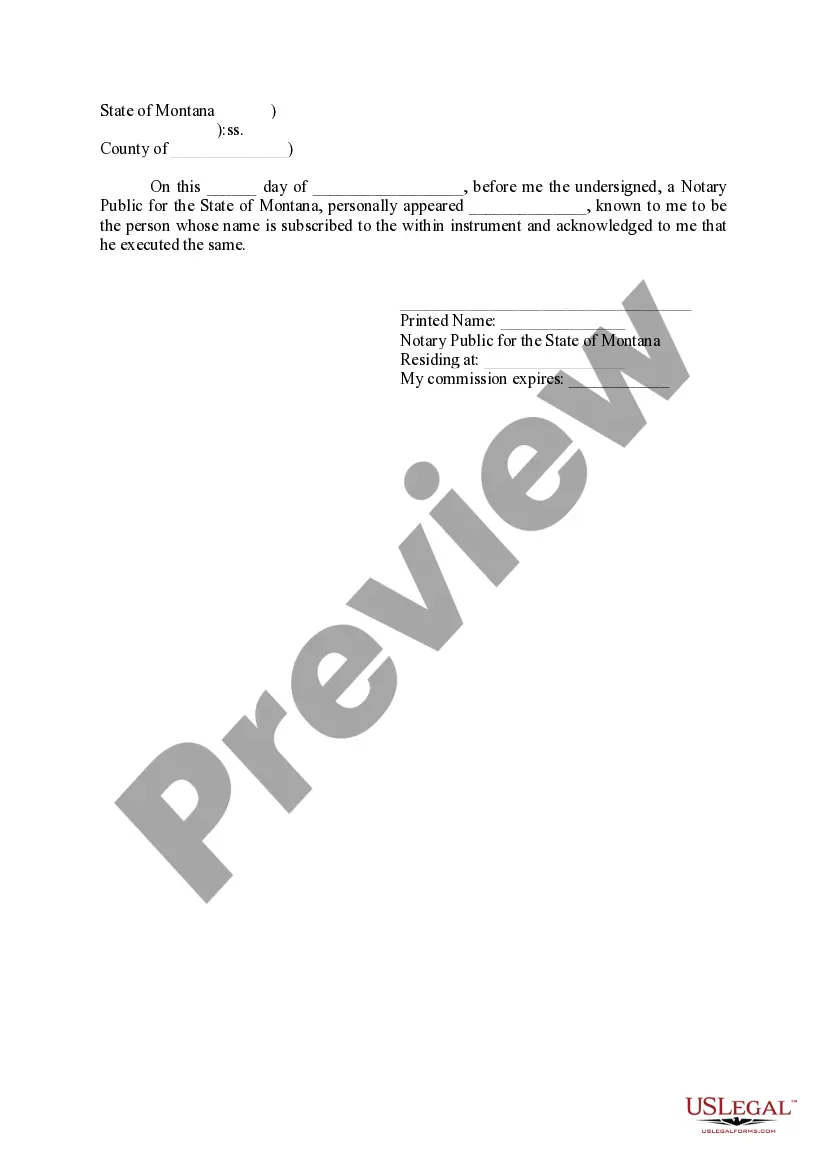
- Notarization section: Requires signatures from a Notary Public to validate the document.
- Date of transfer: Indicates when the transfer of property takes place.
When this form is needed
This form should be used when you want to transfer ownership of real property, such as land or a house, to another individual. It is particularly applicable when the property is being given as a gift or when title needs to be officially documented for a sale or other purposes. Use this form to ensure legal compliance and protection of both parties' interests in the transaction.
Who needs this form
Individuals and entities who should consider using a Grant Deed include:
- Property owners wishing to transfer property to a family member or friend.
- Grantees who are receiving property as part of an estate or gift.
- Real estate developers transferring property to other entities.
Completing this form step by step
- Identify the parties: Enter the names of the grantor(s) and grantee(s).
- Specify the property: Provide a detailed description of the property, referenced in Exhibit A.
- Enter the date: Fill in the date when the transfer is executed.
- Sign the document: Ensure that all parties sign the form in the presence of a Notary Public.
- Complete notarization: The notary will facilitate the signing and acknowledgment of the grantor's identity.
Notarization requirements for this form
Yes, this form must be notarized to be legally valid. The presence of a Notary Public is required to confirm the identities of the grantor(s) and to witness the signing of the document. US Legal Forms offers integrated online notarization, providing secure video calls with licensed notaries who can assist at any time, making the process even easier.
Get your form ready online
Our built-in tools help you complete, sign, share, and store your documents in one place.
Make edits, fill in missing information, and update formatting in US Legal Forms—just like you would in MS Word.
Download a copy, print it, send it by email, or mail it via USPS—whatever works best for your next step.
Sign and collect signatures with our SignNow integration. Send to multiple recipients, set reminders, and more. Go Premium to unlock E-Sign.
If this form requires notarization, complete it online through a secure video call—no need to meet a notary in person or wait for an appointment.
We protect your documents and personal data by following strict security and privacy standards.

Make edits, fill in missing information, and update formatting in US Legal Forms—just like you would in MS Word.

Download a copy, print it, send it by email, or mail it via USPS—whatever works best for your next step.

Sign and collect signatures with our SignNow integration. Send to multiple recipients, set reminders, and more. Go Premium to unlock E-Sign.

If this form requires notarization, complete it online through a secure video call—no need to meet a notary in person or wait for an appointment.

We protect your documents and personal data by following strict security and privacy standards.
Mistakes to watch out for
- Failing to properly describe the property, which may lead to legal disputes.
- Not obtaining a notarization, which is crucial for the validity of the document.
- Leaving out the consideration statement when it is needed for clarity.
- Failing to date the document, which may cause issues with the transfer timeline.
Why use this form online
- Convenient access: Download and complete the form from anywhere at any time.
- Editability: Easily modify the document to fit your specific needs before printing.
- Reliability: Forms provided by licensed attorneys ensure compliance with legal standards.
Looking for another form?
Form popularity
FAQ
Quitclaim Deed. Deed of Trust. Warranty Deed. Grant Deed. Bargain and Sale Deed. Mortgage Deed.
A grant deed (also known as a special warranty deed) is a property deed that makes two guarantees: The property has not been sold to anyone else. The house is not under any liens or restrictions that have not already been disclosed to the buyer.
When you own a home, you own both the deed and title for that property. In real estate, title means you have ownership and a right to use the property.The deed is the physical legal document that transfers ownership. It shows who you bought your house from, and when you sell it, it shows who you sold it to.
A deed of sale is also called a property title. It is an authentic deed drafted and signed by a public officer, generally a notary, which makes mention of the legal situation of the building and its nature. For more definitions, consult the real estate glossary of leshypotheques.com.
The seller or the seller's broker will hire an attorney to prepare the real estate deed to ensure that all of the requirements in the creation of a valid deed are met before the seller conveys title to the property. All real estate deeds must be in writing.
Contrary to normal expectations, the Deed DOES NOT have to be recorded to be effective or to show delivery, and because of that, the Deed DOES NOT have to be signed in front of a Notary Public. However, if you plan to record it, then it does have to be notarized as that is a County Recorder requirement.
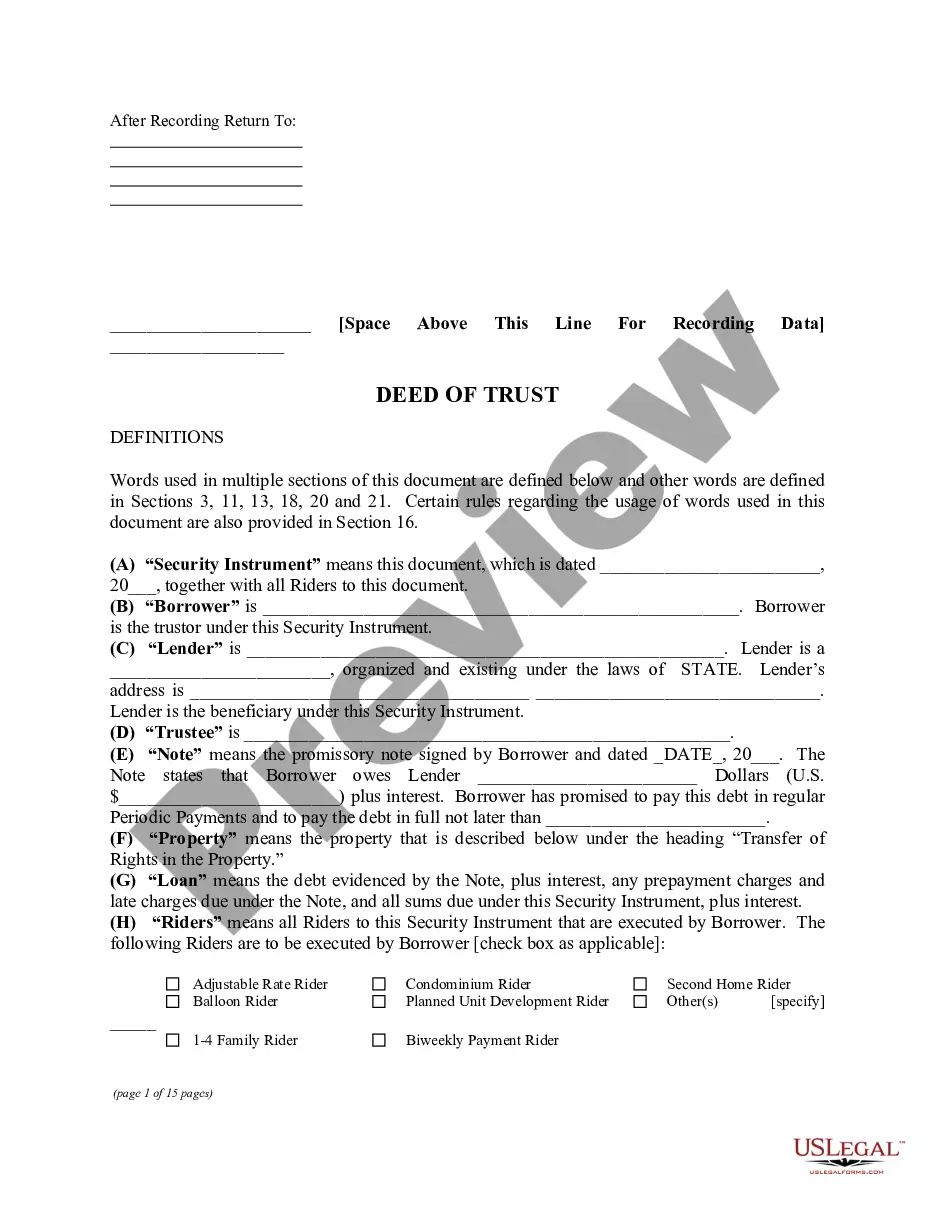
A grant deed is the instrument used to transfer title to an interest in real property from one owner to someone else.A deed of trust is the security instrument given to a lender to secure a loan or other obligation. Bare naked title is deeded to the trustee, who holds the power of sale or the power to re-convey.
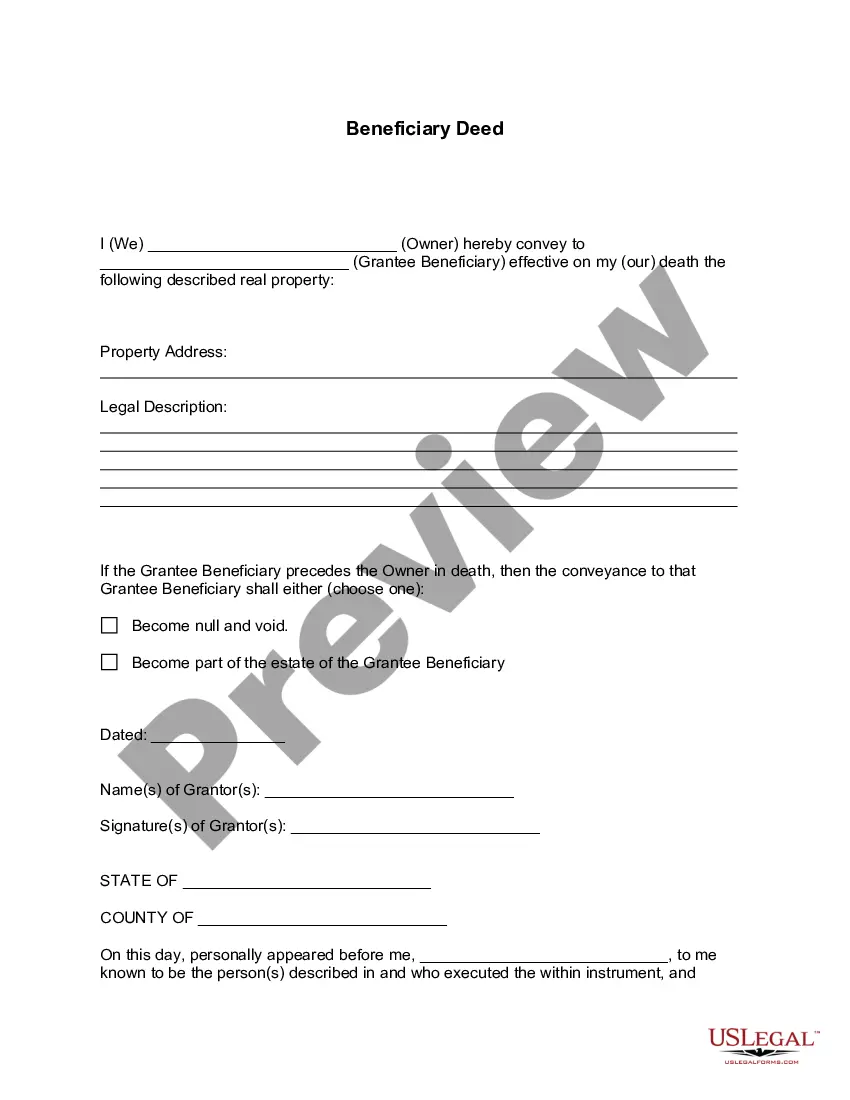
A beneficiary deed is one in which an owner conveys an interest in Montana real property to a grantee beneficiary effective upon the owner's death. In other words, real property is transferred from the deceased person to the person(s) listed on the deed.
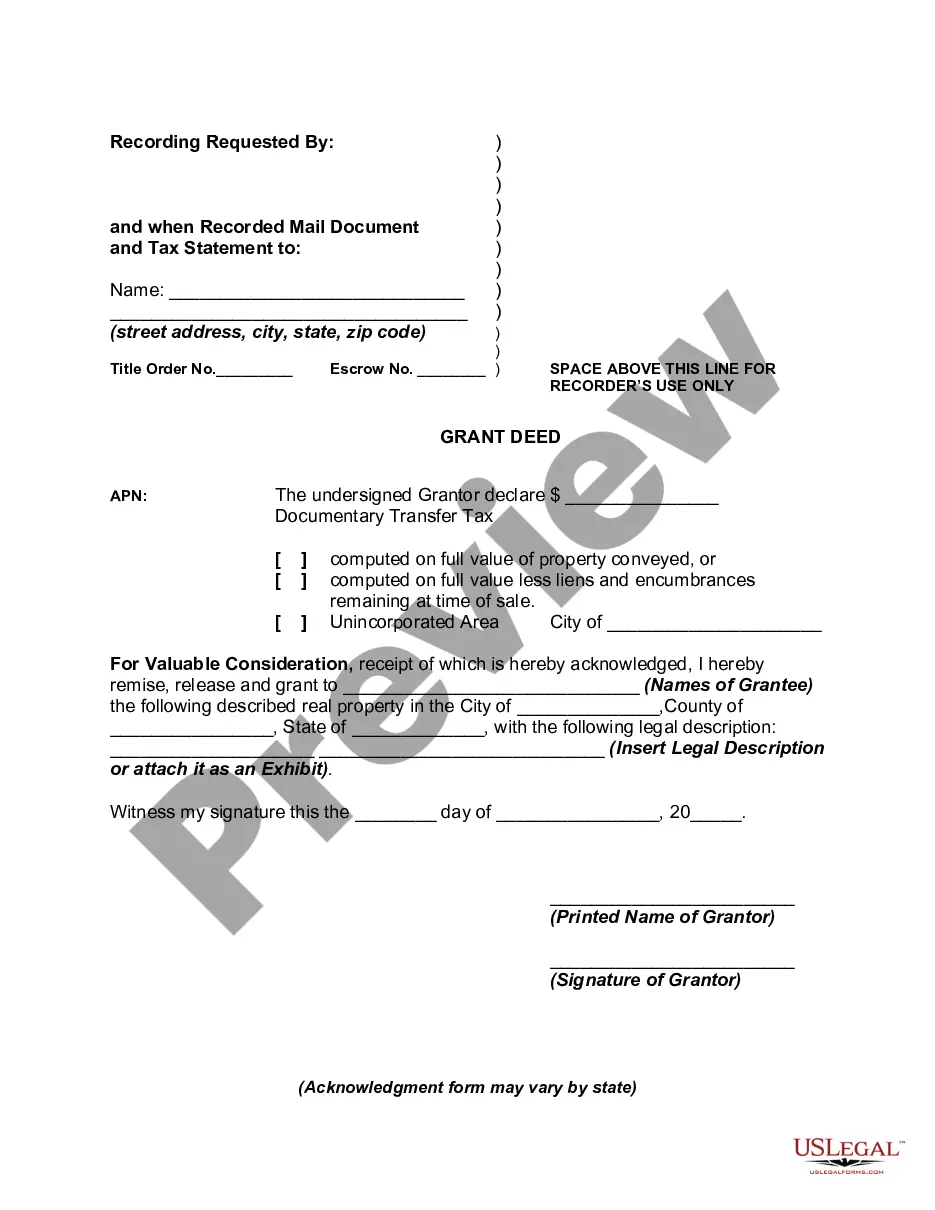
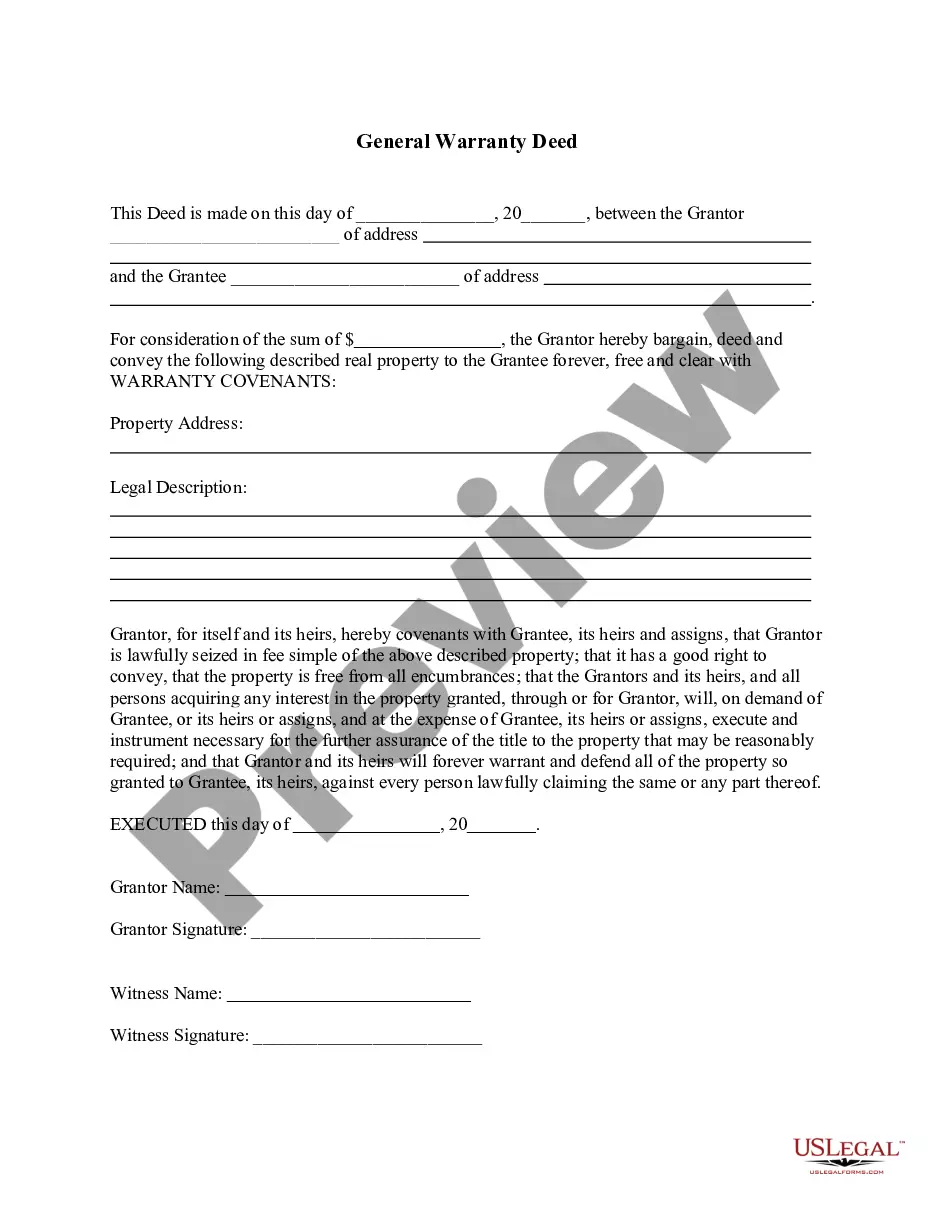
Three basic types of deeds commonly used are the grant deed, the quitclaim deed, and the warranty deed. A sample grant deed. the property he or she is transferring is implied from such language.