Garnishment Notice Sample For Wage
Description
Get your form ready online
Our built-in tools help you complete, sign, share, and store your documents in one place.
Make edits, fill in missing information, and update formatting in US Legal Forms—just like you would in MS Word.
Download a copy, print it, send it by email, or mail it via USPS—whatever works best for your next step.
Sign and collect signatures with our SignNow integration. Send to multiple recipients, set reminders, and more. Go Premium to unlock E-Sign.
If this form requires notarization, complete it online through a secure video call—no need to meet a notary in person or wait for an appointment.
We protect your documents and personal data by following strict security and privacy standards.

Make edits, fill in missing information, and update formatting in US Legal Forms—just like you would in MS Word.

Download a copy, print it, send it by email, or mail it via USPS—whatever works best for your next step.

Sign and collect signatures with our SignNow integration. Send to multiple recipients, set reminders, and more. Go Premium to unlock E-Sign.

If this form requires notarization, complete it online through a secure video call—no need to meet a notary in person or wait for an appointment.

We protect your documents and personal data by following strict security and privacy standards.
Looking for another form?






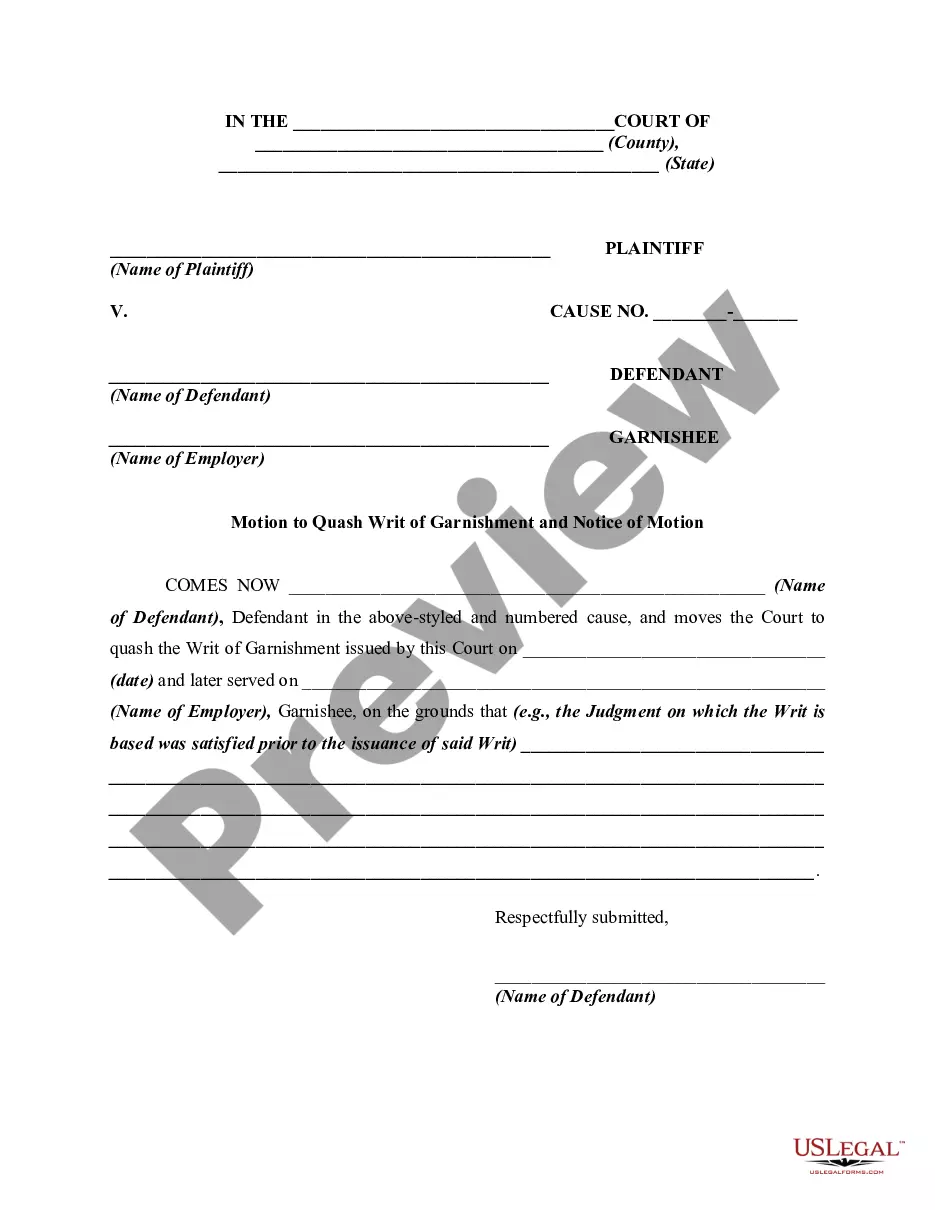
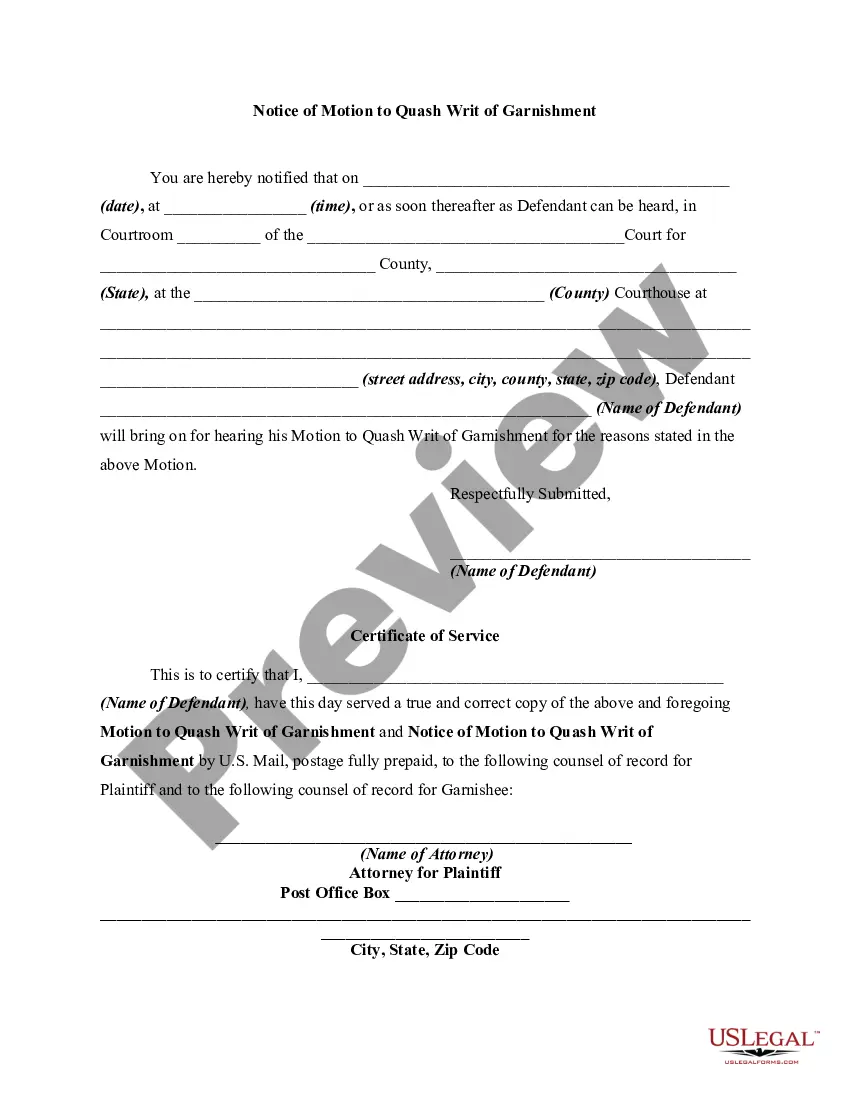
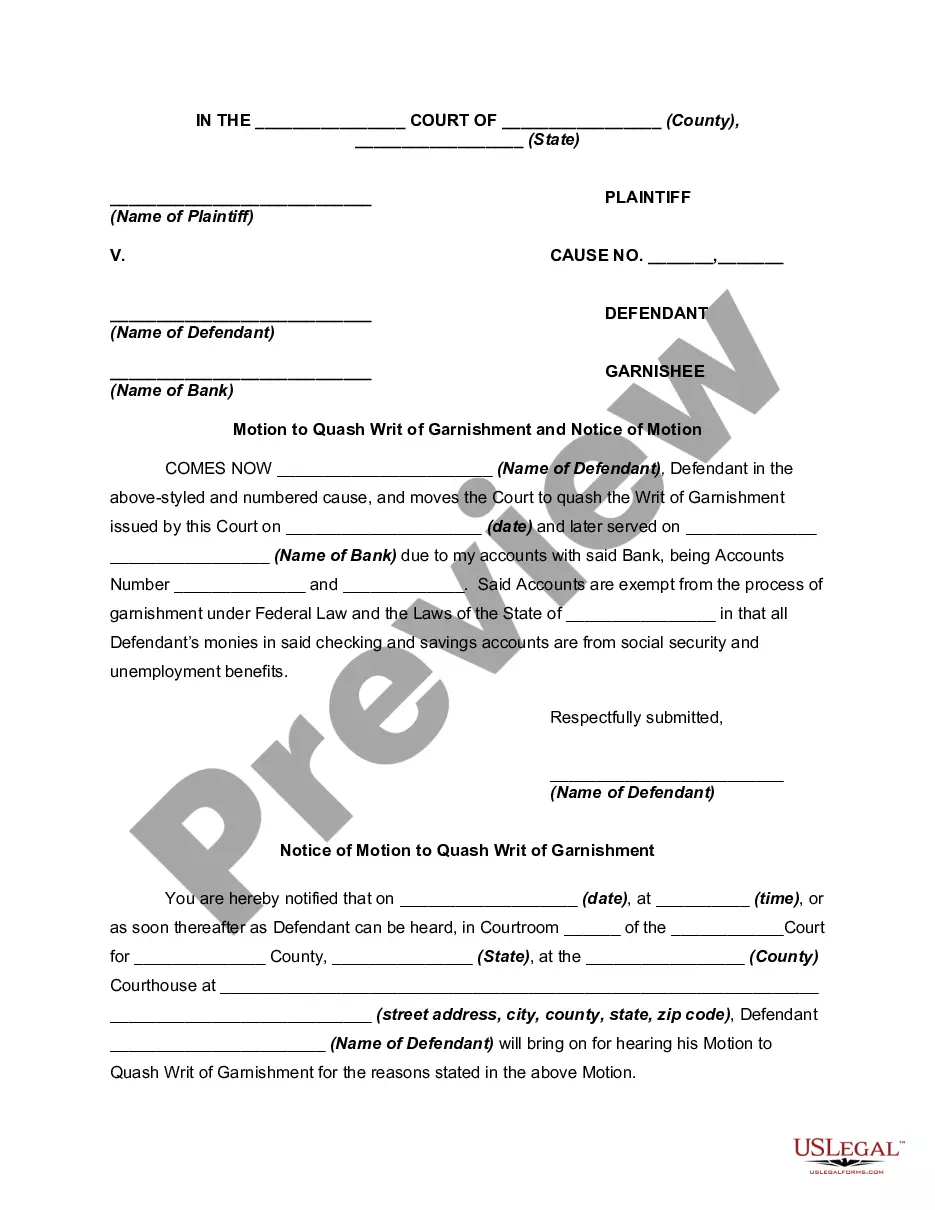
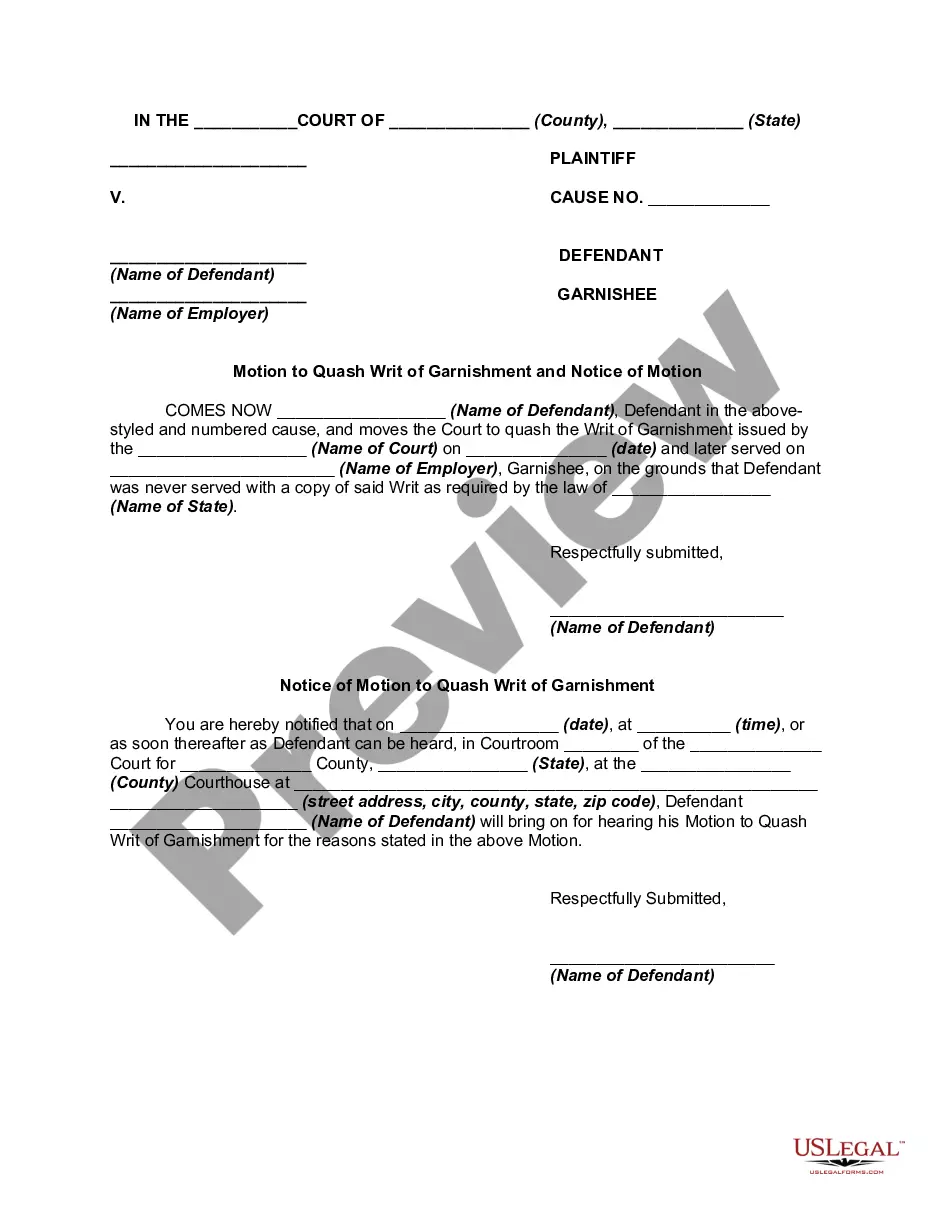
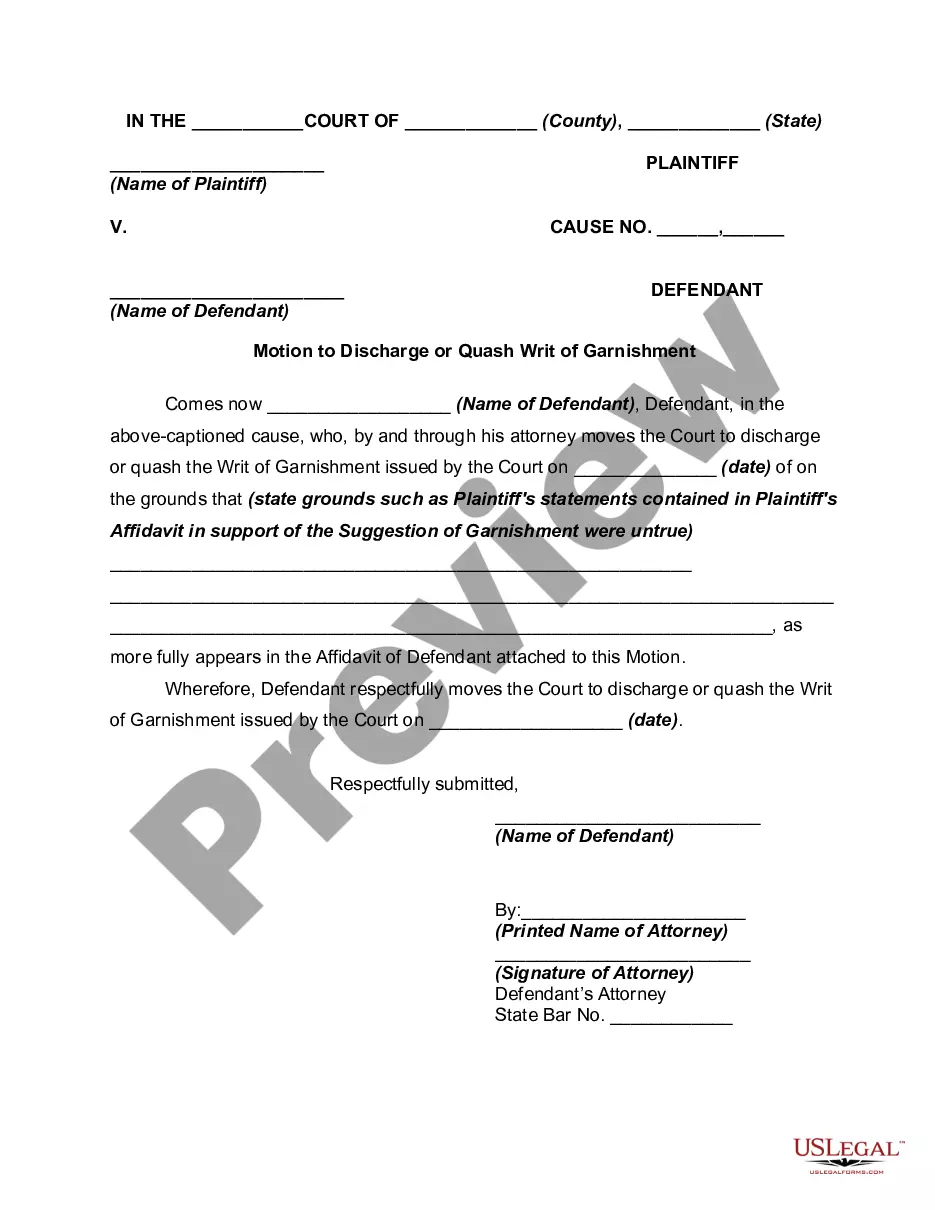
How to fill out Motion Of Defendant To Discharge Or Quash Writ Of Garnishment And Notice Of Motion?
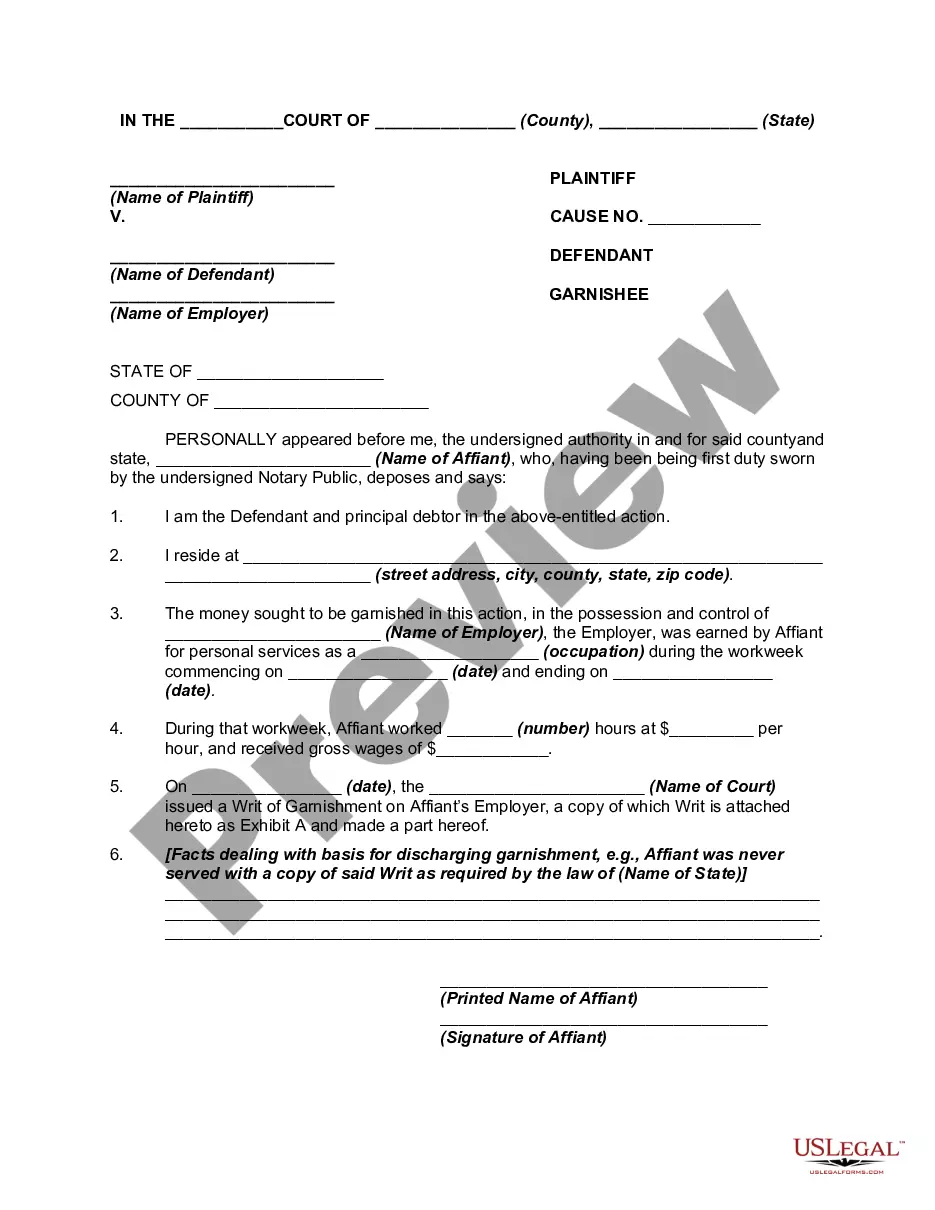
The Garnishment Notice Example For Wage you view on this page is a versatile formal template created by expert attorneys in accordance with federal and local regulations.
For over 25 years, US Legal Forms has supplied individuals, businesses, and lawyers with more than 85,000 validated, state-specific documents for any business and personal circumstances. It’s the quickest, most direct, and most reliable method to acquire the paperwork you require, as the service ensures the utmost level of data security and anti-malware safeguards.
Subscribe to US Legal Forms to have validated legal templates for all of life's situations at your fingertips.
- Search for the document you require and review it.
- Register and Log In.
- Download the editable template.
- Complete and sign the documentation.
- Download your documents again as needed.
Form popularity
FAQ
? You must prepare and file the Notice of Garnishment (Form 60E) with the court. The filing fee is $50. You must then serve the Notice of Garnishment on the garnishee (for example, the judgment debtor's employer, bank, or credit union) by personal service or registered mail.
You file the affidavit and notice of garnishment with the court or file each document online using the Small Claims Court Submissions Online portal at .ontario.ca/page/file-small-claims-online. There is a fee for filing the notice of garnishment.
The Notice of Garnishment is served on both the garnishee and debtor. You may serve the debtor, by mail or personal delivery. The garnishee should be served at the business address either personally or by mail.
Step 1: COMPLETE and FILE a Notice of Garnishment form and an Affidavit for Enforcement Request (Form 20P) with the court office. The clerk will stamp the notice. There is a fee. Step 2: SERVE.
To garnish a bank account, you need the name and address of the branch where the debtor banks. You can get this information at an examination hearing.