Garnish Writ Definition
Description
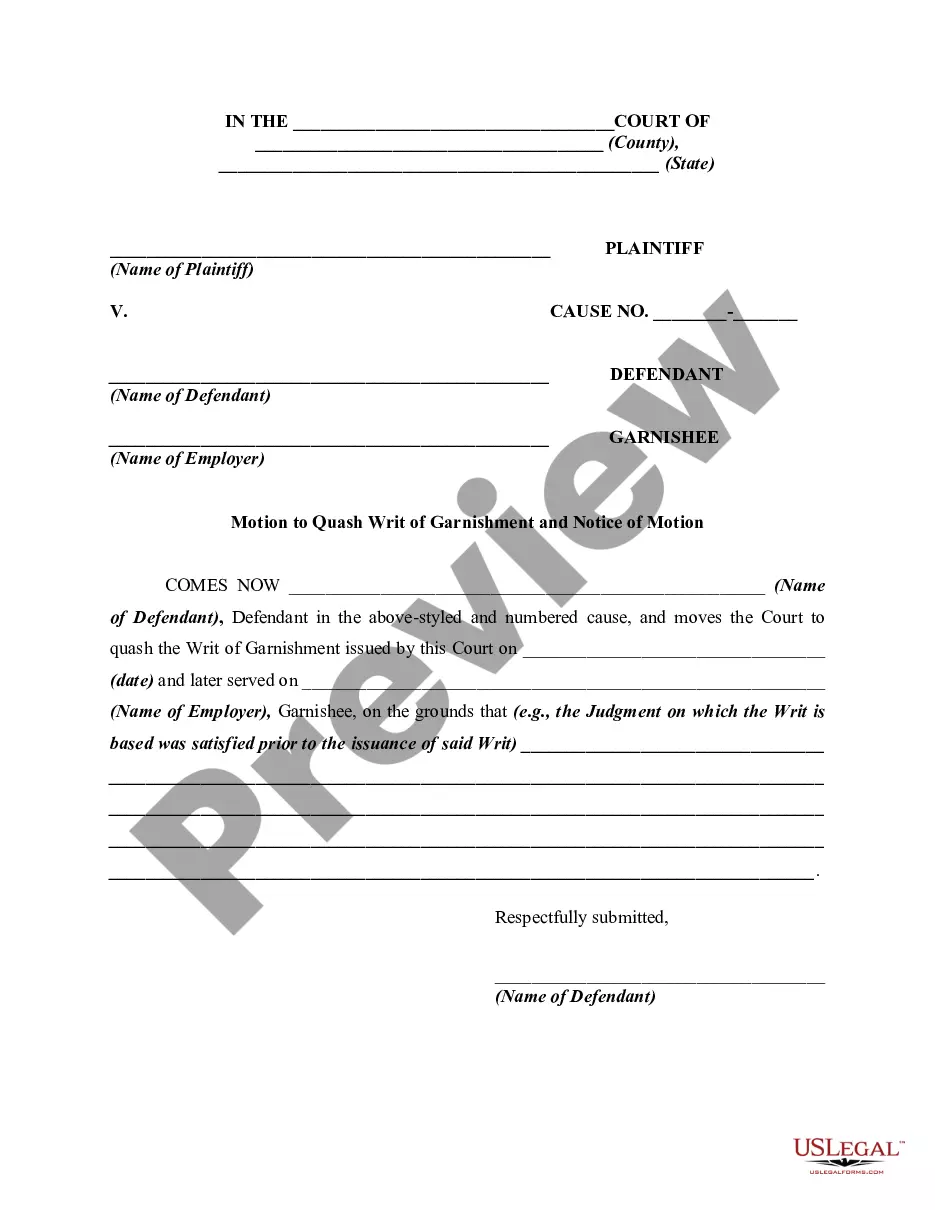
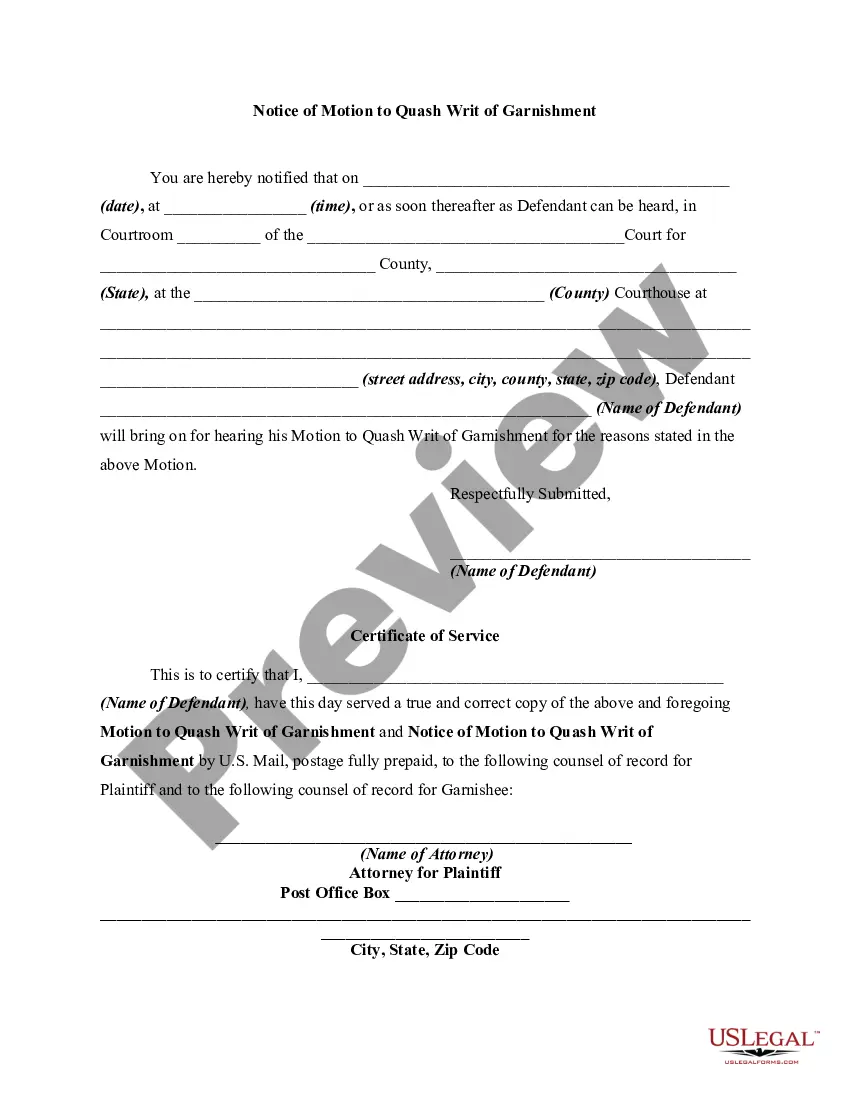
Get your form ready online
Our built-in tools help you complete, sign, share, and store your documents in one place.
Make edits, fill in missing information, and update formatting in US Legal Forms—just like you would in MS Word.
Download a copy, print it, send it by email, or mail it via USPS—whatever works best for your next step.
Sign and collect signatures with our SignNow integration. Send to multiple recipients, set reminders, and more. Go Premium to unlock E-Sign.
If this form requires notarization, complete it online through a secure video call—no need to meet a notary in person or wait for an appointment.
We protect your documents and personal data by following strict security and privacy standards.

Make edits, fill in missing information, and update formatting in US Legal Forms—just like you would in MS Word.

Download a copy, print it, send it by email, or mail it via USPS—whatever works best for your next step.

Sign and collect signatures with our SignNow integration. Send to multiple recipients, set reminders, and more. Go Premium to unlock E-Sign.

If this form requires notarization, complete it online through a secure video call—no need to meet a notary in person or wait for an appointment.

We protect your documents and personal data by following strict security and privacy standards.
Looking for another form?





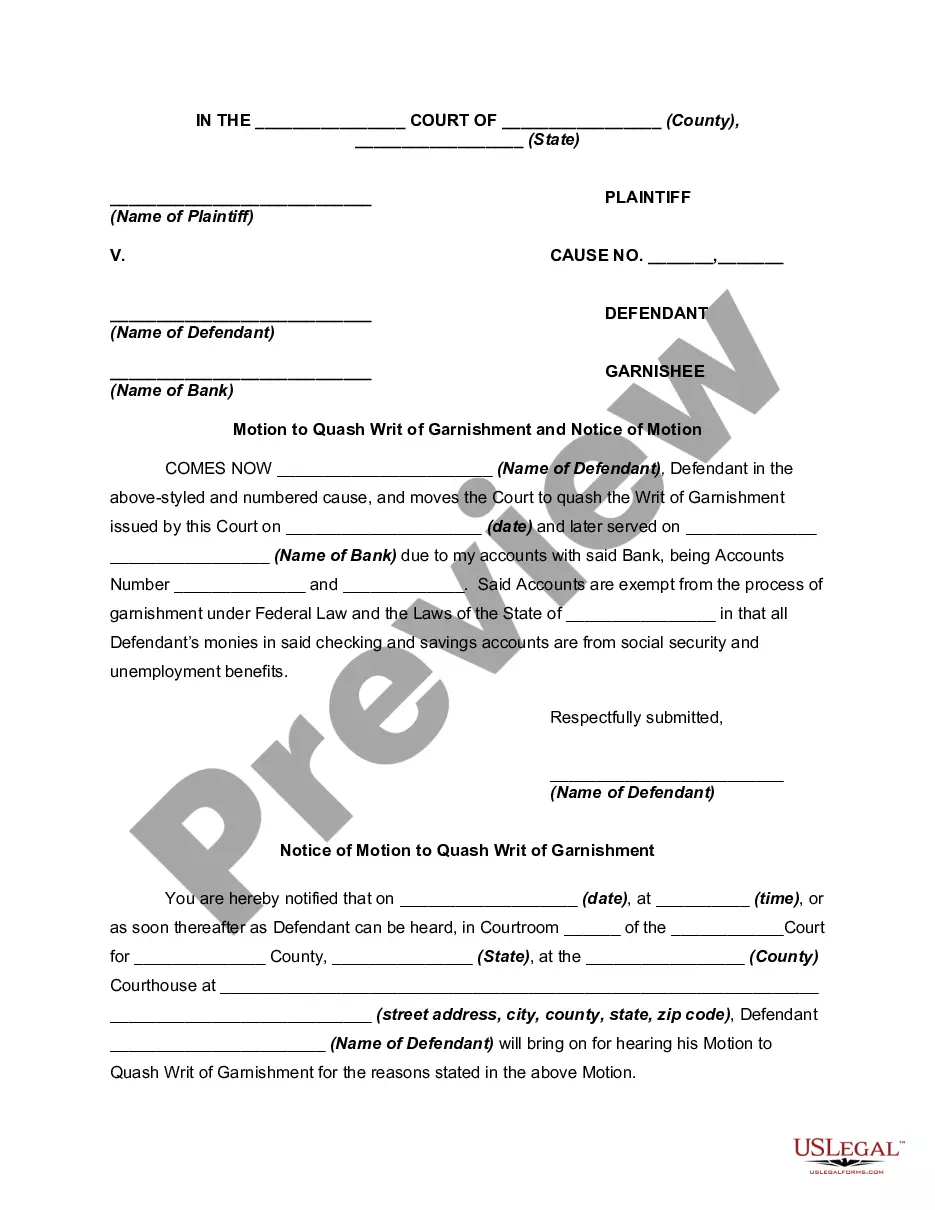
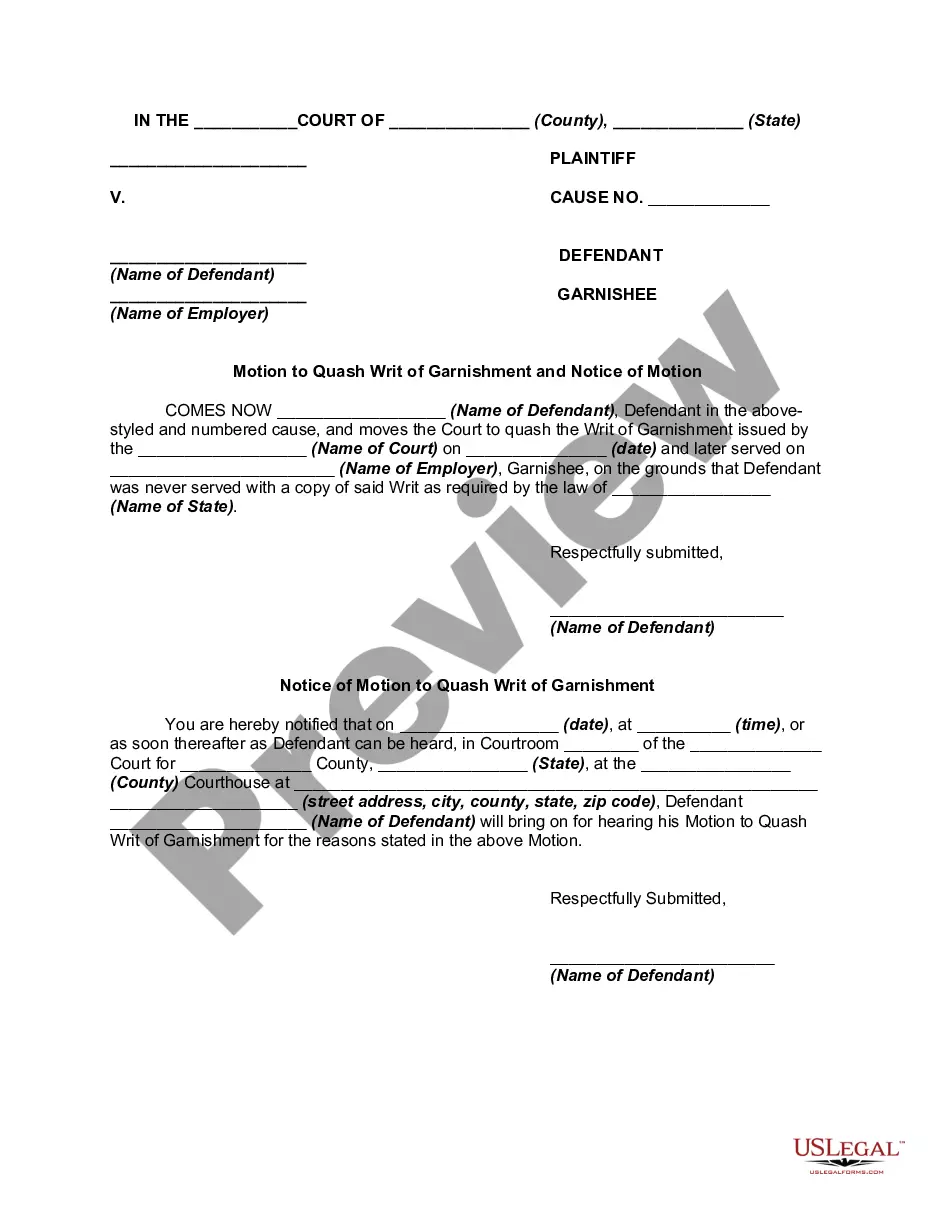
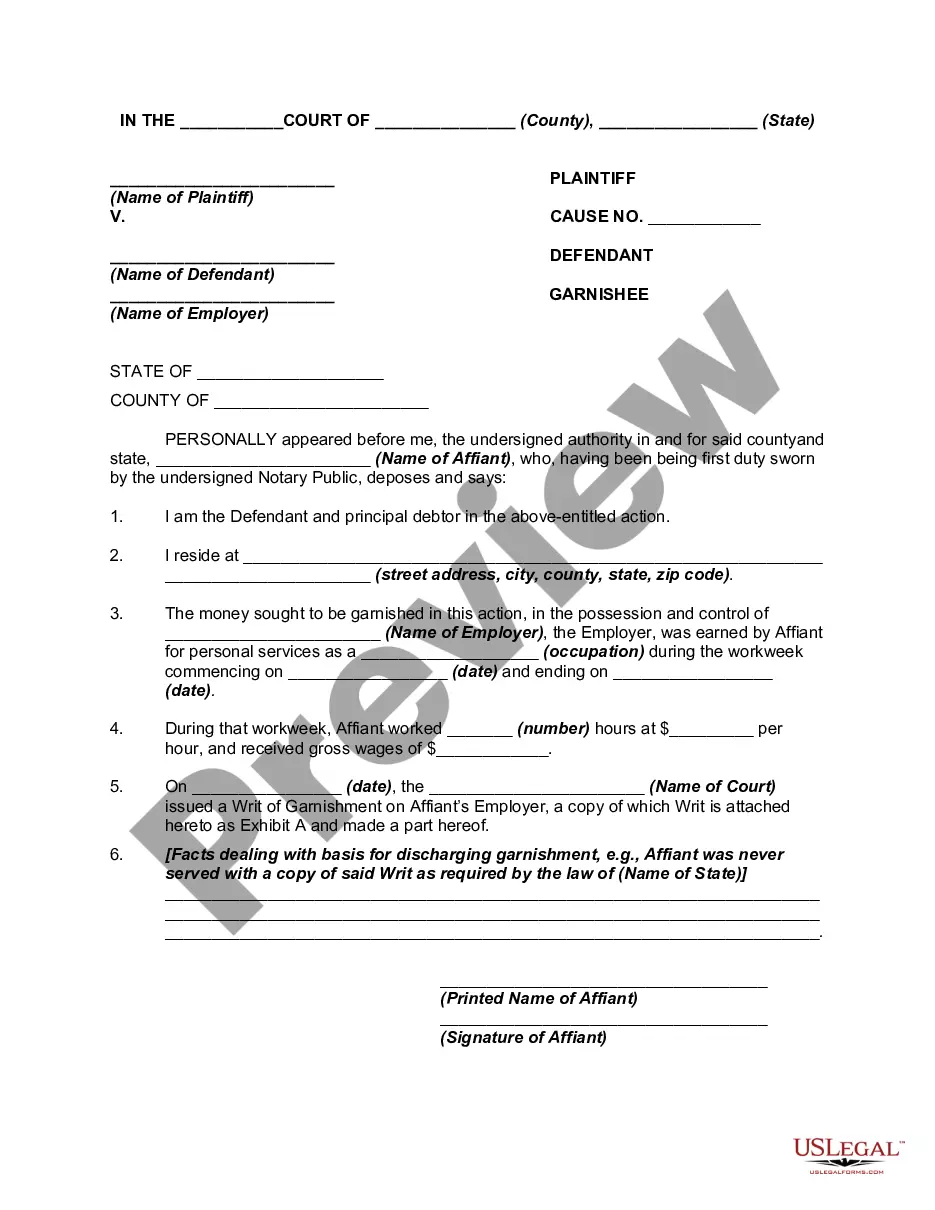
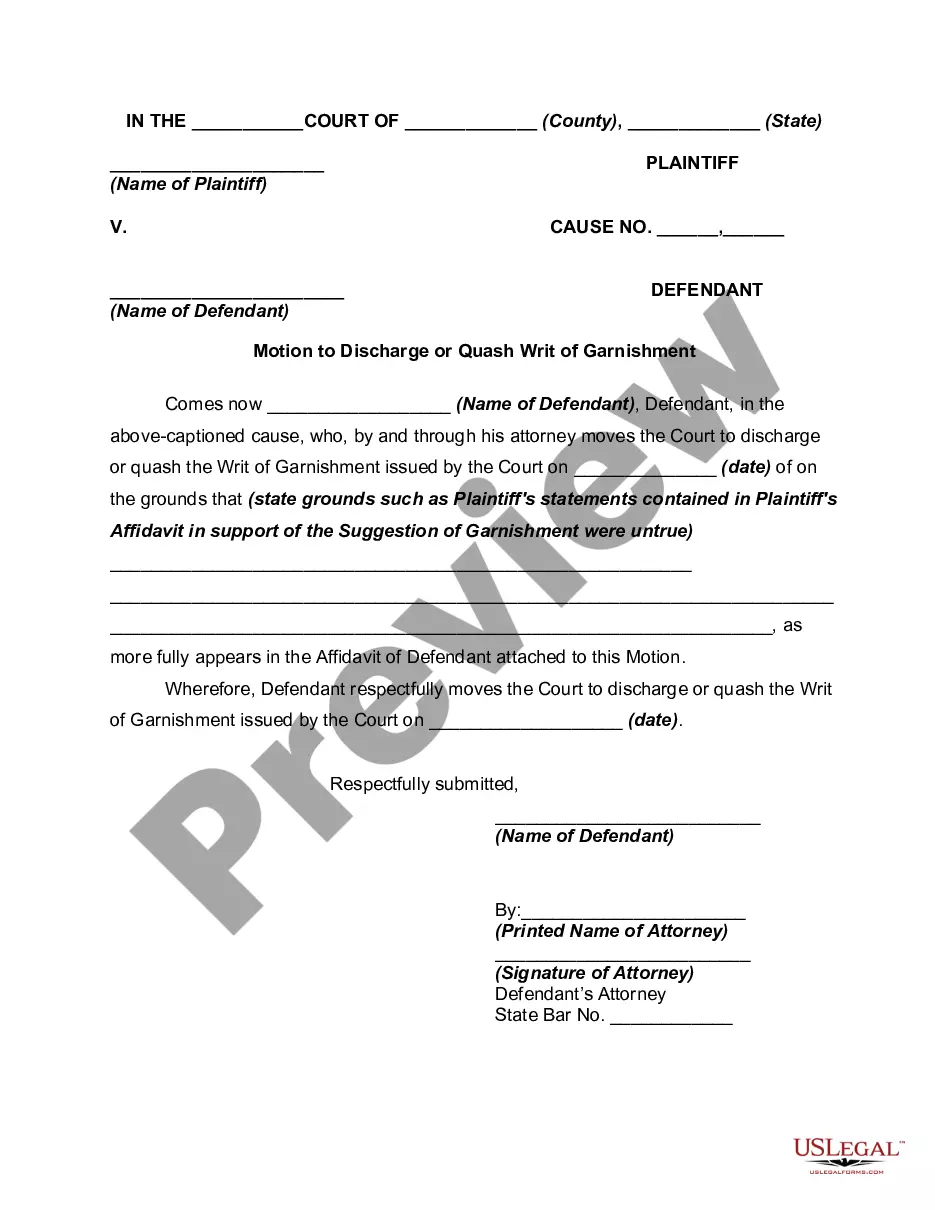
How to fill out Motion Of Defendant To Discharge Or Quash Writ Of Garnishment And Notice Of Motion?
Handling legal documents and procedures can be a lengthy addition to your entire day.
Garnish Writ Definition and similar forms generally require you to locate them and comprehend how to fill them out efficiently.
For that reason, whether you are managing financial, legal, or personal affairs, utilizing a thorough and accessible online catalog of forms when needed will be immensely helpful.
US Legal Forms is the premier online platform for legal templates, providing over 85,000 state-specific forms and various tools to facilitate the swift completion of your documents.
Simply Log In to your account, search for Garnish Writ Definition, and obtain it instantly from the My documents section. You can also access previously stored forms.
- Explore the catalog of relevant documents available to you with just one click.
- US Legal Forms offers you state- and county-specific forms ready for download at any time.
- Protect your document management processes by utilizing a top-tier service that allows you to assemble any form in minutes without additional or concealed fees.
Form popularity
FAQ
A writ of garnishment allows a creditor to collect a debt directly from a third party, typically an employer or bank. Essentially, it enables the creditor to freeze a portion of your wages or funds in your account until the debt is settled. To initiate this process, the creditor files a legal request, and if granted, the court issues the garnishment order. Understanding the garnish writ definition helps you navigate this complex process, and platforms like US Legal Forms can provide essential resources and guidance to protect your rights.
Missouri has its own set of garnishment rules that dictate how much of a debtor's income can be garnished. Typically, the maximum amount that can be garnished is 25% of disposable earnings. Additionally, Missouri law protects certain exempt income sources, such as social security benefits. Understanding these rules is crucial, and US Legal Forms can assist you in navigating the specific requirements for garnishment in Missouri.
In Georgia, the garnishment process is governed by specific rules that protect debtors and creditors. Generally, a creditor can garnish up to 25% of the debtor's disposable income, but certain exemptions apply, such as for child support or public benefits. Debtors also have the right to contest the garnishment if they believe it violates state laws. For detailed guidance on Georgia's regulations, consider consulting US Legal Forms.
To get a writ of garnishment, you must first file a lawsuit and win a judgment against the debtor. After obtaining the judgment, you can request a garnishment order from the court. It's important to include specific information about the debtor's income or assets in your request. For help with the necessary forms and procedures, US Legal Forms offers a range of templates that simplify this process.
The time it takes to obtain a writ of garnishment can vary based on several factors, including the court's schedule and the complexity of the case. Generally, after securing a judgment, it may take a few days to weeks to file the necessary paperwork and receive the court's approval. Utilizing resources like US Legal Forms can streamline this process by providing the required legal documents and guidance.
The writ of garnishment is a legal tool that allows creditors to collect debts directly from a debtor's wages or bank accounts. To initiate this process, a creditor must file a lawsuit and obtain a judgment against the debtor. Once the judgment is secured, the creditor can request a garnishment order from the court. This order instructs the third party, such as an employer or bank, to withhold funds and send them to the creditor.
When you go to court for a garnishment hearing, you will have the opportunity to present your case regarding the debt and the garnishment order. The court will review the evidence and determine whether the garnishment should proceed. Being prepared for this meeting can make a significant difference in the outcome, so consider utilizing resources from platforms like uslegalforms to gather the necessary information.
When a writ is served, the third party, such as your employer or bank, is legally required to comply with the order. They will then begin withholding the specified amount from your earnings or account. Awareness of this process is vital, as it can significantly impact your budgeting and financial stability.
After receiving a writ of garnishment, it is essential to review your financial situation immediately. You may want to contact the creditor to discuss possible payment arrangements or negotiate the debt. Additionally, seeking advice from legal professionals can help you understand your options and rights under the garnishment writ definition.
After a writ of garnishment is issued, the designated third party must comply by withholding the specified amount from the debtor's wages or account. The withheld funds then get sent to the creditor to satisfy the debt. It's important to stay informed about your financial status during this period to avoid unforeseen complications.