Court State Garnishment Without
Description
Get your form ready online
Our built-in tools help you complete, sign, share, and store your documents in one place.
Make edits, fill in missing information, and update formatting in US Legal Forms—just like you would in MS Word.
Download a copy, print it, send it by email, or mail it via USPS—whatever works best for your next step.
Sign and collect signatures with our SignNow integration. Send to multiple recipients, set reminders, and more. Go Premium to unlock E-Sign.
If this form requires notarization, complete it online through a secure video call—no need to meet a notary in person or wait for an appointment.
We protect your documents and personal data by following strict security and privacy standards.

Make edits, fill in missing information, and update formatting in US Legal Forms—just like you would in MS Word.

Download a copy, print it, send it by email, or mail it via USPS—whatever works best for your next step.

Sign and collect signatures with our SignNow integration. Send to multiple recipients, set reminders, and more. Go Premium to unlock E-Sign.

If this form requires notarization, complete it online through a secure video call—no need to meet a notary in person or wait for an appointment.

We protect your documents and personal data by following strict security and privacy standards.
Looking for another form?







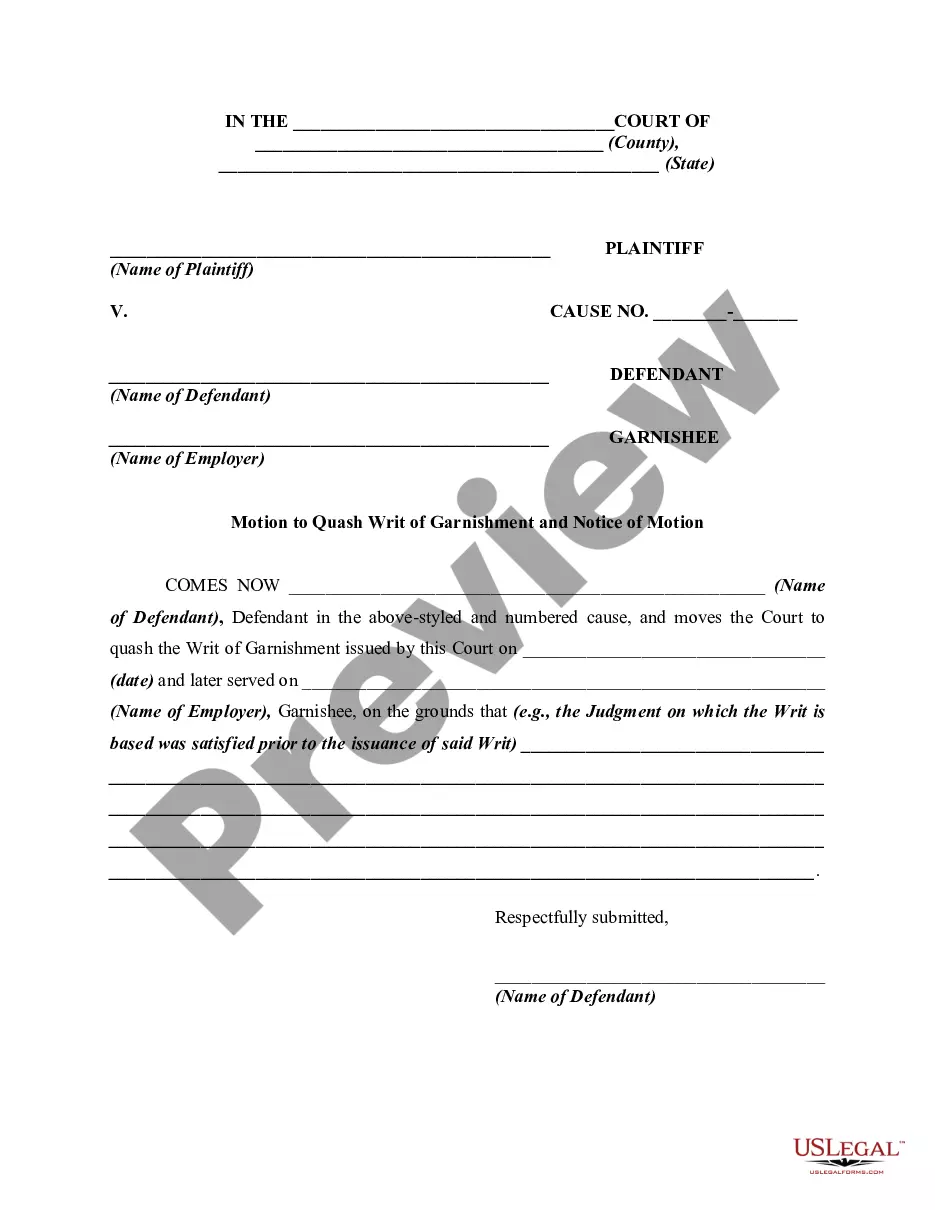
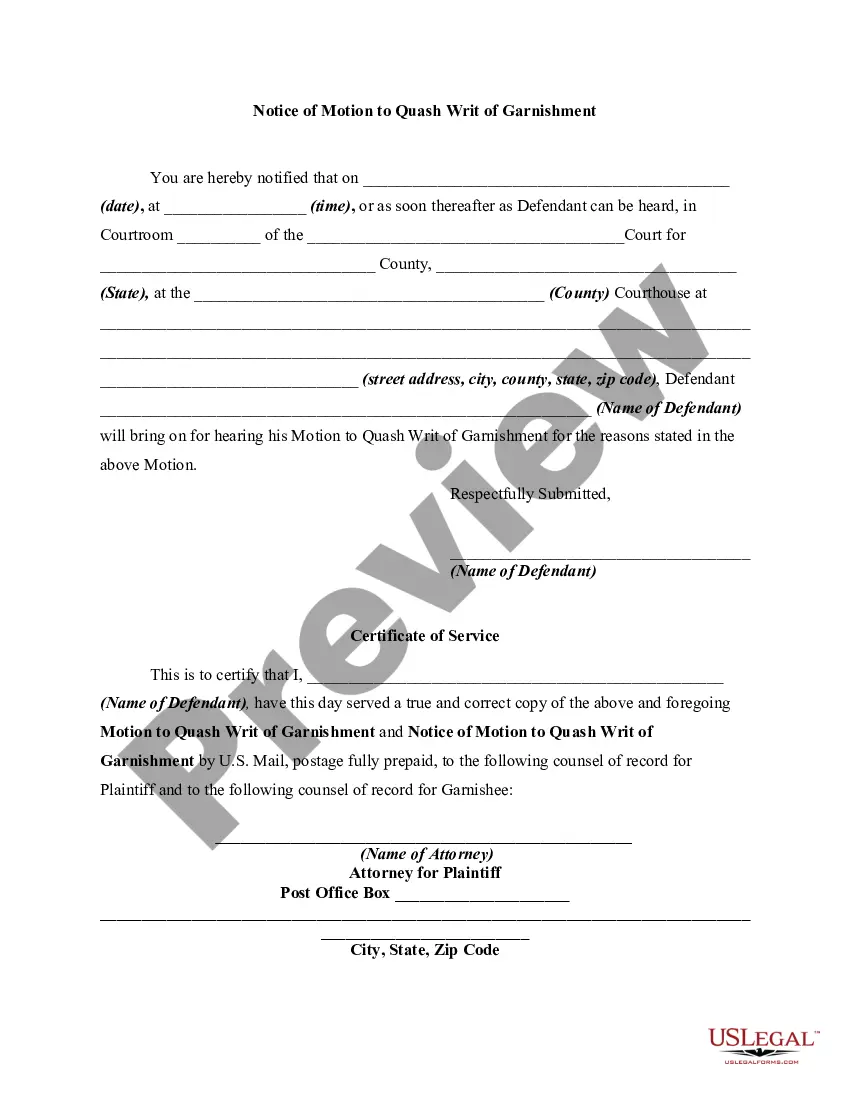
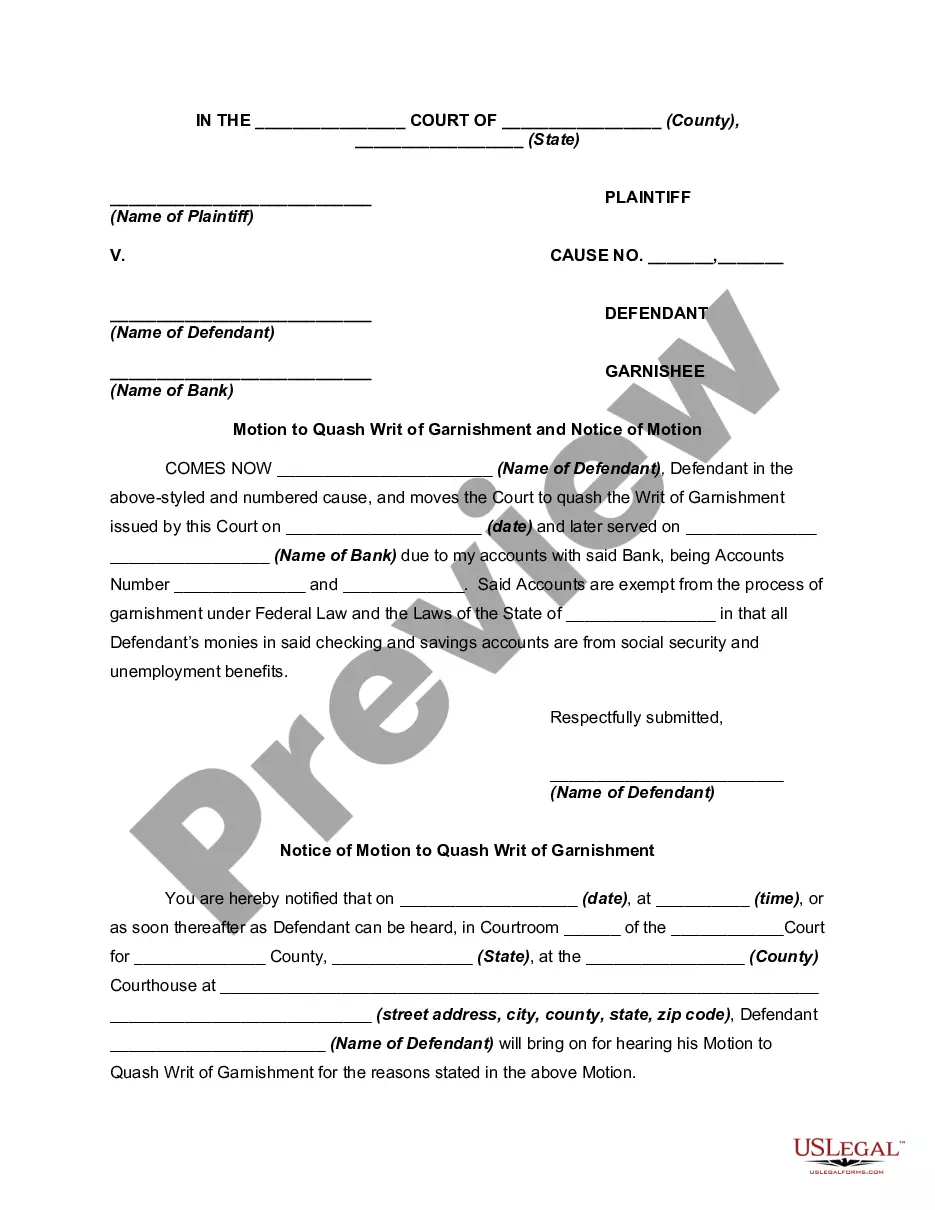
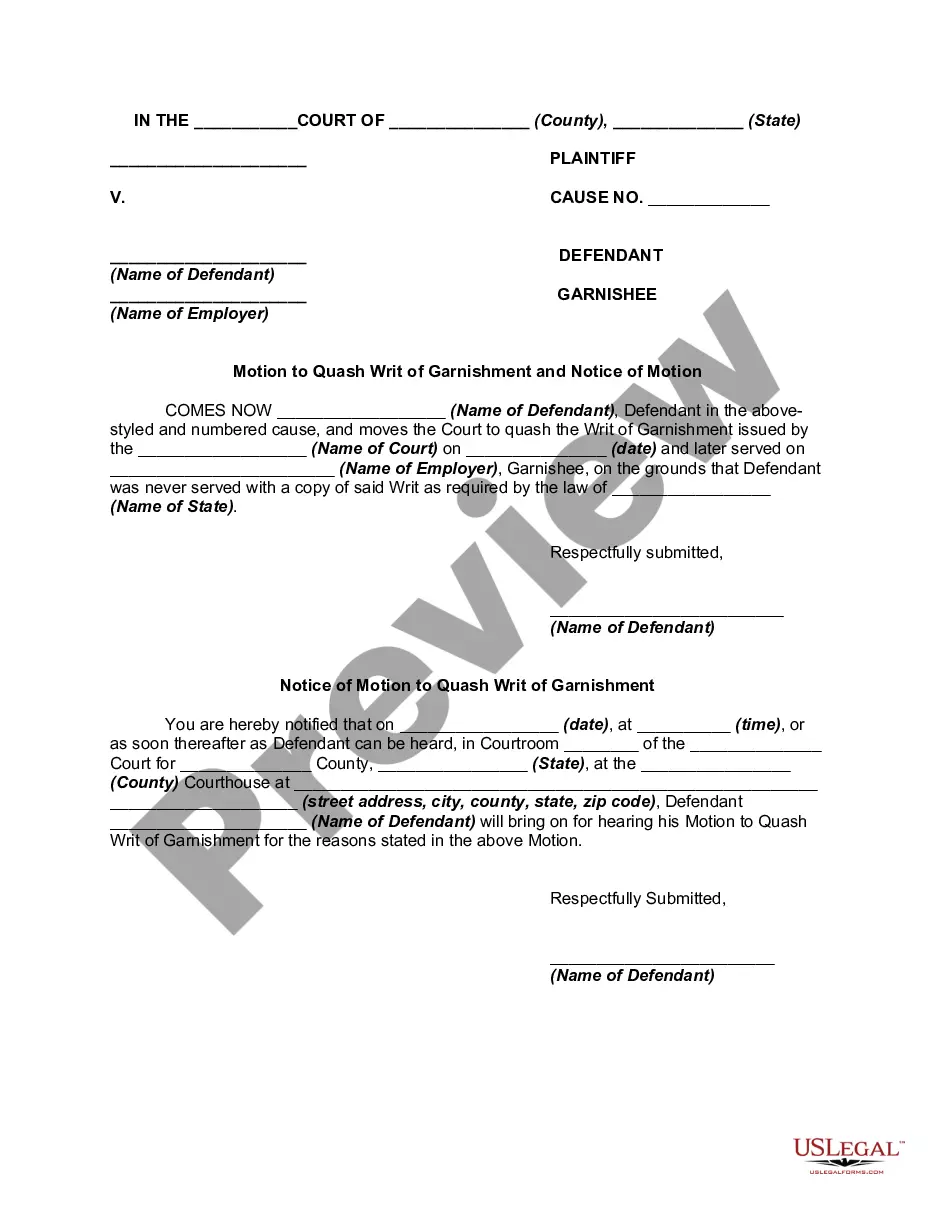
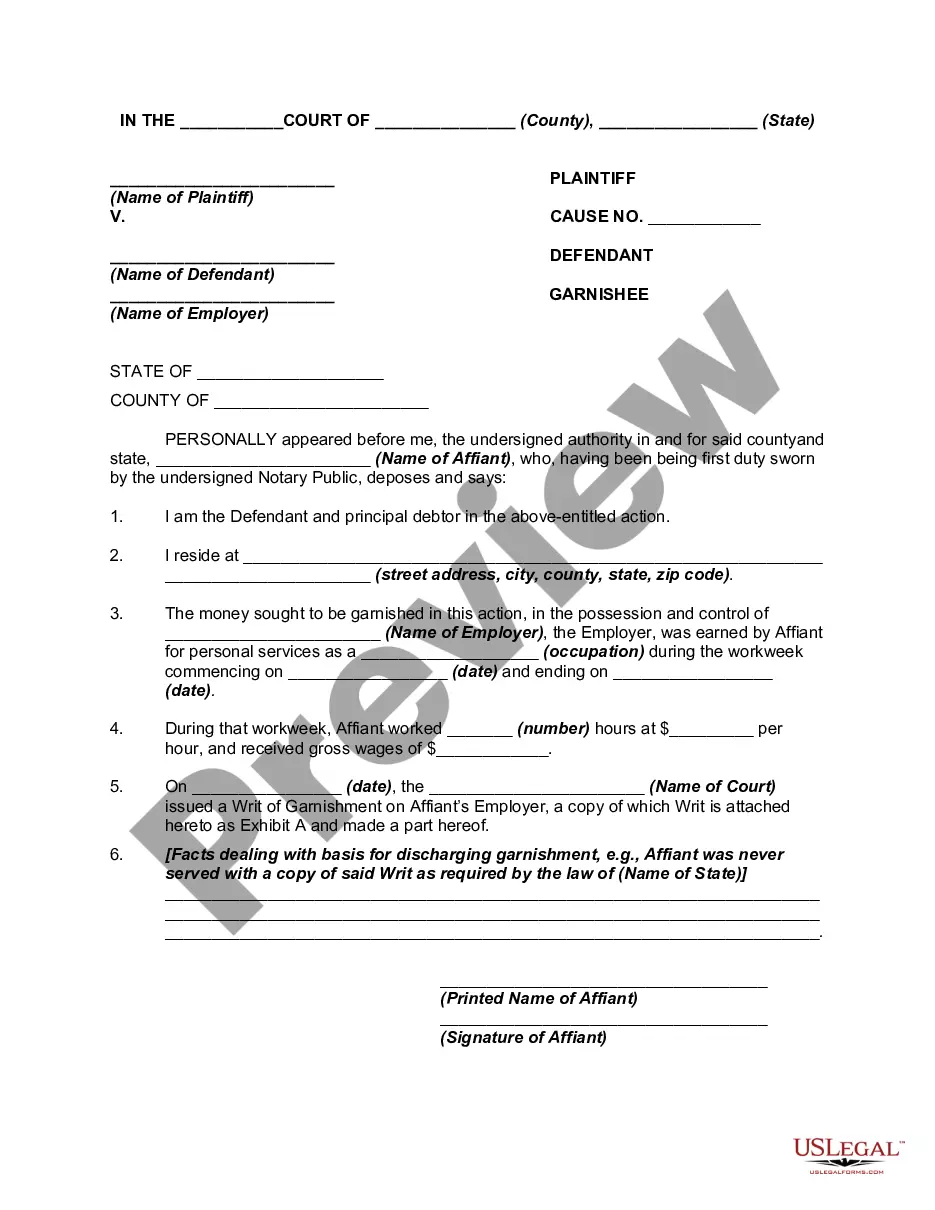
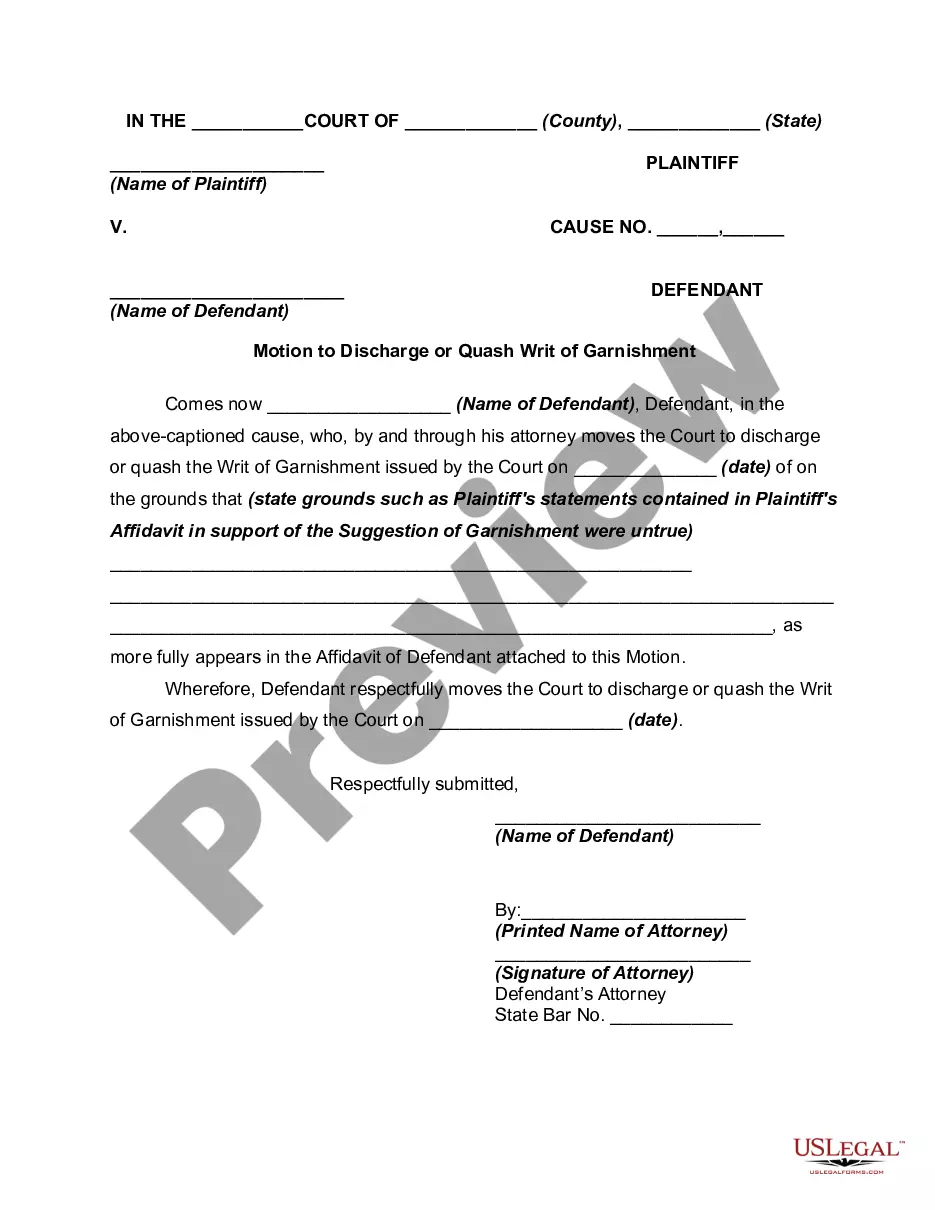
How to fill out Motion Of Defendant To Discharge Or Quash Writ Of Garnishment And Notice Of Motion?
Dealing with legal documents and processes can be a lengthy addition to your daily routine.
Court State Garnishment Without and similar forms frequently necessitate you to search for them and figure out how to fill them out correctly.
For this reason, if you are managing financial, legal, or personal issues, having a comprehensive and accessible online collection of forms readily available will greatly assist.
US Legal Forms is the premier online source of legal templates, featuring over 85,000 state-specific documents and various tools to help you complete your paperwork swiftly.
Is this your first time using US Legal Forms? Sign up and create an account in just a few minutes to gain access to the form library and Court State Garnishment Without. Then, follow the steps below to complete your form: Ensure you have the correct form using the Review option and examining the form details. Select Buy Now when ready, and choose the subscription plan that suits you best. Click Download, then fill out, eSign, and print the form. US Legal Forms has 25 years of experience helping clients manage their legal documents. Obtain the form you need today and streamline any process effortlessly.
- Explore the library of pertinent documents accessible to you with just one click.
- US Legal Forms provides you with state- and county-specific forms available for download at any time.
- Streamline your document management processes by utilizing a high-quality service that enables you to create any form within minutes without extra or hidden charges.
- Simply Log In to your account, search for Court State Garnishment Without, and obtain it immediately from the My documents tab.
- You can also retrieve previously downloaded forms.
Form popularity
FAQ
In Virginia, court state garnishment without a proper legal process is not allowed. Creditors must first obtain a court judgment before garnishment can occur. The law also places a cap on the percentage of wages that can be garnished, protecting a portion of a debtor's income. For assistance with understanding these laws, consider turning to US Legal Forms for comprehensive resources and templates.
To write a letter to a judge regarding garnishment, start by addressing the court correctly. Clearly state your request and the reasons for the garnishment, providing any relevant details about the case. Make sure to include any supporting documentation that can strengthen your position. Utilizing resources from US Legal Forms can help you format and phrase your letter appropriately, ensuring clarity and professionalism.
In Oregon, court state garnishment without due process is prohibited. Creditors must obtain a court order to initiate garnishment. Additionally, the law limits the amount that can be garnished from wages, ensuring that debtors retain enough income to meet their basic needs. For further guidance, consider using US Legal Forms to navigate the garnishment process effectively.
Winning a garnishment case often starts with understanding your rights and the legal process involved. You can challenge the garnishment by proving that it violates state laws, such as showing that it exceeds the allowable amount or targets exempt income. Additionally, you might be able to negotiate directly with the creditor to reach a fair settlement. Utilizing resources like US Legal Forms can help you navigate the complexities of court state garnishment without feeling overwhelmed.
When your wages are garnished in Colorado, typically, the amount taken is limited to 25% of your disposable income. However, this amount may vary based on your specific financial situation and the type of debt. It's crucial to know that certain exemptions exist to protect a portion of your earnings. To better understand how these calculations work, check out the resources provided by USLegalForms, which can assist you in managing garnishment situations.
Garnishment law in Colorado is designed to balance creditor rights with debtor protections. It requires creditors to obtain a court order before garnishing wages or bank accounts. This law also outlines specific procedures for notifying debtors, ensuring transparency throughout the process. For comprehensive guidance on these laws, USLegalForms offers valuable templates and information to help you understand your rights.
In Colorado, garnishment rules allow creditors to collect debts through court orders. Typically, they can garnish a portion of your wages or bank accounts to satisfy unpaid obligations. However, there are limits to how much can be taken, ensuring that you maintain a minimum standard of living. If you want to know more about navigating these rules effectively, consider using USLegalForms for helpful resources.