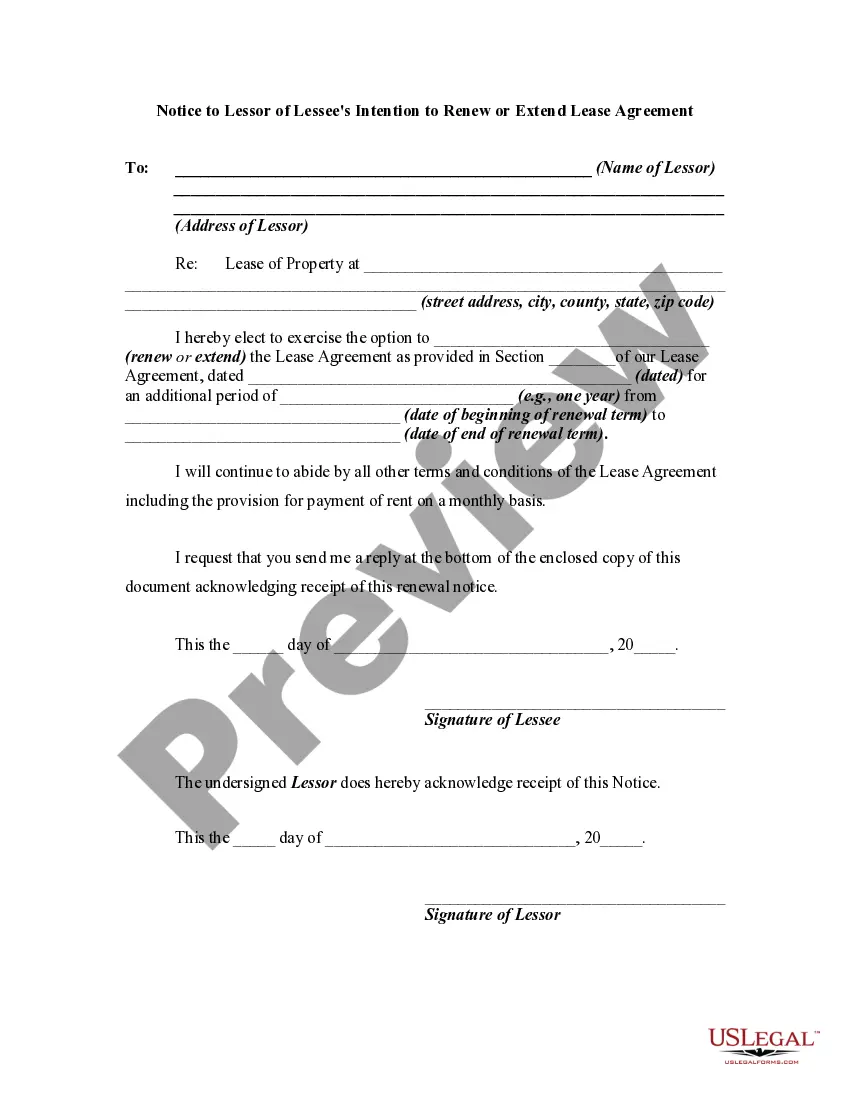
Lessor Lessees For Lease
Description
Get your form ready online
Our built-in tools help you complete, sign, share, and store your documents in one place.
Make edits, fill in missing information, and update formatting in US Legal Forms—just like you would in MS Word.
Download a copy, print it, send it by email, or mail it via USPS—whatever works best for your next step.
Sign and collect signatures with our SignNow integration. Send to multiple recipients, set reminders, and more. Go Premium to unlock E-Sign.
If this form requires notarization, complete it online through a secure video call—no need to meet a notary in person or wait for an appointment.
We protect your documents and personal data by following strict security and privacy standards.

Make edits, fill in missing information, and update formatting in US Legal Forms—just like you would in MS Word.

Download a copy, print it, send it by email, or mail it via USPS—whatever works best for your next step.

Sign and collect signatures with our SignNow integration. Send to multiple recipients, set reminders, and more. Go Premium to unlock E-Sign.

If this form requires notarization, complete it online through a secure video call—no need to meet a notary in person or wait for an appointment.

We protect your documents and personal data by following strict security and privacy standards.
Looking for another form?








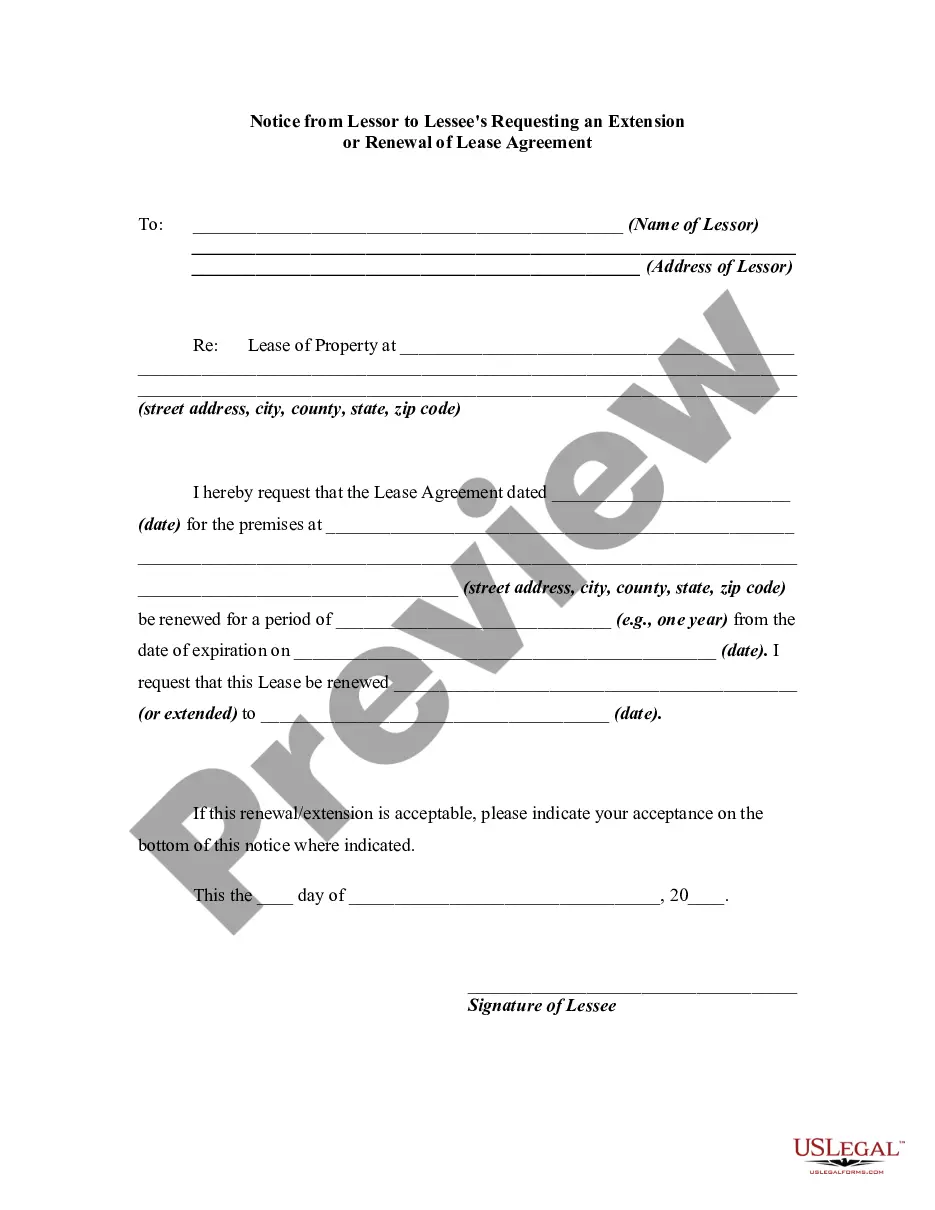
How to fill out Notice To Lessor Of Lessee's Intention To Renew Or Extend Lease Agreement?
Managing legal documents can be perplexing, even for the most proficient professionals.
When searching for a Lessor Lessees For Lease and lacking the time to dedicate to finding the correct and current version, the process can be stressful.
US Legal Forms meets any needs you may have, from personal to corporate documents, all in one centralized location.
Employ sophisticated tools to complete and manage your Lessor Lessees For Lease.
Here are the steps to take after finding the form you need: Verify it is the correct form by previewing it and reviewing its description. Confirm that the sample is valid in your state or county. Click Buy Now when you are ready. Select a subscription plan. Choose the format you desire, and Download, fill out, sign, print, and submit your document. Enjoy the US Legal Forms online catalog, supported by 25 years of expertise and trustworthiness. Streamline your everyday document management into a seamless and user-friendly process today.
- Tap into a collection of articles, guides, and manuals pertinent to your circumstances and requirements.
- Conserve time and effort in locating the documents you require, utilizing US Legal Forms’ enhanced search and Preview feature to find Lessor Lessees For Lease and download it.
- If you hold a membership, Log In to your US Legal Forms account, search for the form, and download it.
- Check your My documents section to review the documents you have previously downloaded as well as manage your folders as needed.
- If this is your first experience with US Legal Forms, create an account to gain unlimited access to all platform benefits.
- A comprehensive online form directory can be transformative for anyone eager to navigate these situations effectively.
- US Legal Forms stands as a frontrunner in digital legal documentation, providing over 85,000 state-specific legal forms accessible at any time.
- With US Legal Forms, you can access legal and organizational forms tailored to specific states or counties.
Form popularity
FAQ
The 90% rule in leasing refers to the concept that a lessor should aim to lease at least 90% of their available property to maximize income. This rule helps maintain profitability and ensures that the lessor can cover expenses. By understanding this principle, lessors can make informed decisions about their leasing strategies. Utilizing resources like USLegalForms can provide valuable insights and templates for effective lease agreements.
Getting approved for a lease typically depends on your financial situation and credit history. Lenders and lessors often evaluate your ability to make payments before finalizing the agreement. By maintaining a good credit score and demonstrating financial stability, you can improve your chances. Understanding the criteria for lessor lessees for lease agreements can also help streamline the process.
Finding individuals to lease your land can be straightforward. Start by advertising your property online and in local community boards. You might also consider using platforms like USLegalForms, which helps connect lessors with lessees for lease opportunities. Engaging with local real estate agents can also expand your reach.
In any leasing agreement, the lessee pays rent to the lessor. The lessor, as the property owner, provides the space or asset for use. This arrangement allows the lessee to enjoy the benefits of the property without purchasing it outright. Understanding the roles of lessor lessees for lease is crucial to ensure a smooth transaction.
Red flags in a lease agreement include vague terms, excessive fees, and unclear responsibilities. Additionally, lack of maintenance clauses or automatic renewal terms can signal potential issues. Identifying these red flags is essential for lessor lessees for lease to avoid pitfalls in leasing arrangements. To protect yourself, consider using resources from platforms like USLegalForms, which provide templates and checklists to help you spot potential concerns.
The lessor in a lease agreement is the party that owns the asset and grants the right to use it to another party, known as the lessee. The lessor receives lease payments in exchange for allowing the lessee to utilize the asset. In the context of lessor lessees for lease, understanding the roles of each party is crucial for drafting clear agreements. USLegalForms can assist you in creating comprehensive lease agreements that define these roles effectively.
A lessor accounts for a capital lease by recognizing the leased asset and the corresponding lease receivable on their balance sheet. The lessor records the asset at its fair value and recognizes income over the lease term. This accounting method impacts financial statements significantly, especially for lessor lessees for lease. Utilizing platforms like USLegalForms can simplify this process by providing templates and guidance tailored for your needs.
The 90% lease rule refers to a guideline for determining whether a lease qualifies as a capital lease. Specifically, if the present value of lease payments equals or exceeds 90% of the fair market value of the leased asset, the lease is classified as a capital lease. This classification affects how lessor lessees for lease report their financials. Understanding this rule can help you make informed decisions in your lease agreements.
A lessor is the property owner who grants permission to another party, known as the lessee, to use the property for a predetermined period in exchange for rent. This relationship is governed by a lease agreement that outlines the rights and responsibilities of both parties. Knowing the dynamics between lessor lessees for lease can empower both landlords and tenants to fulfill their obligations effectively. US Legal Forms offers valuable resources to help both lessors and lessees navigate their agreements with confidence.
In a lease agreement, the lessor is the party that owns the property and permits another party, the lessee, to use it under specific terms. The lessor retains ownership and typically has the right to enforce the lease terms, including receiving rent payments. Understanding the role of lessor lessees for lease is essential to maintain a smooth rental experience. With US Legal Forms, you can find comprehensive lease templates that clarify these roles.