Pasture Rental Contract With Daughters
Description
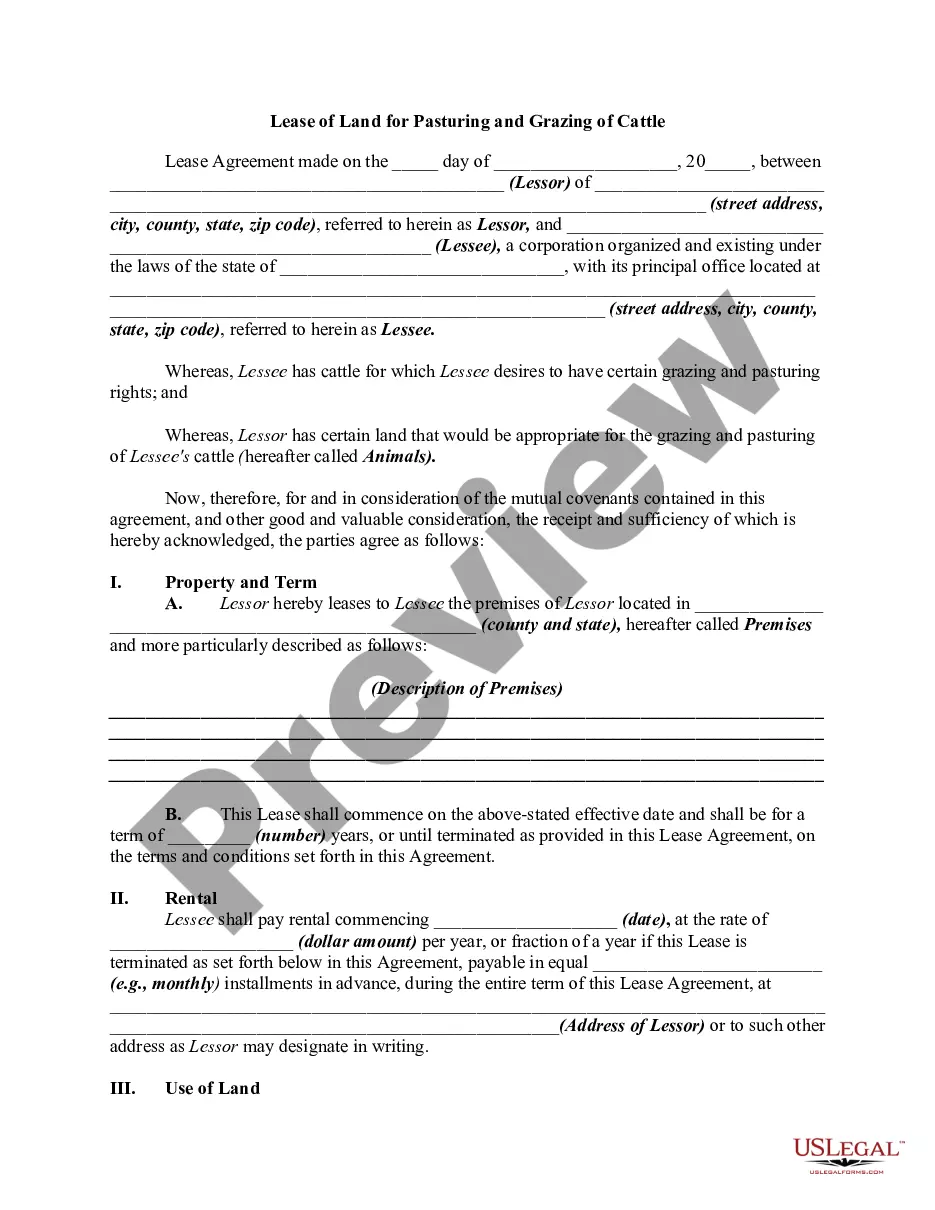
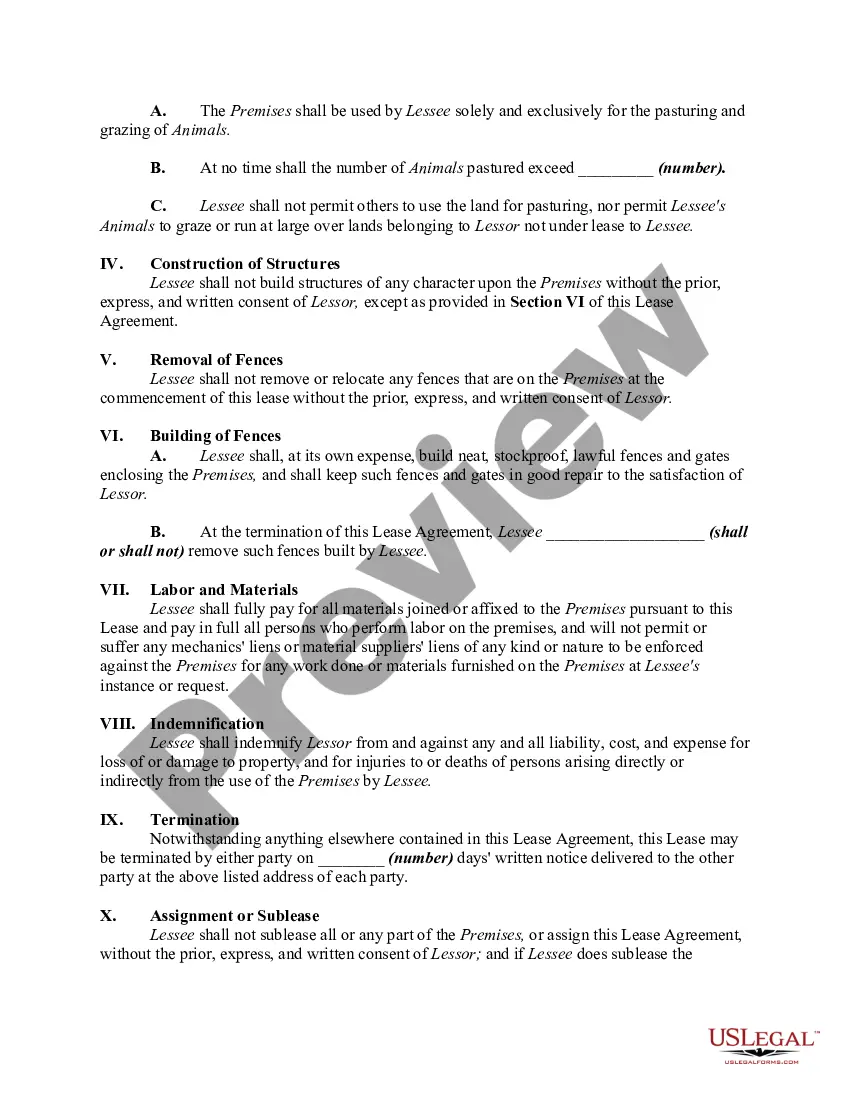
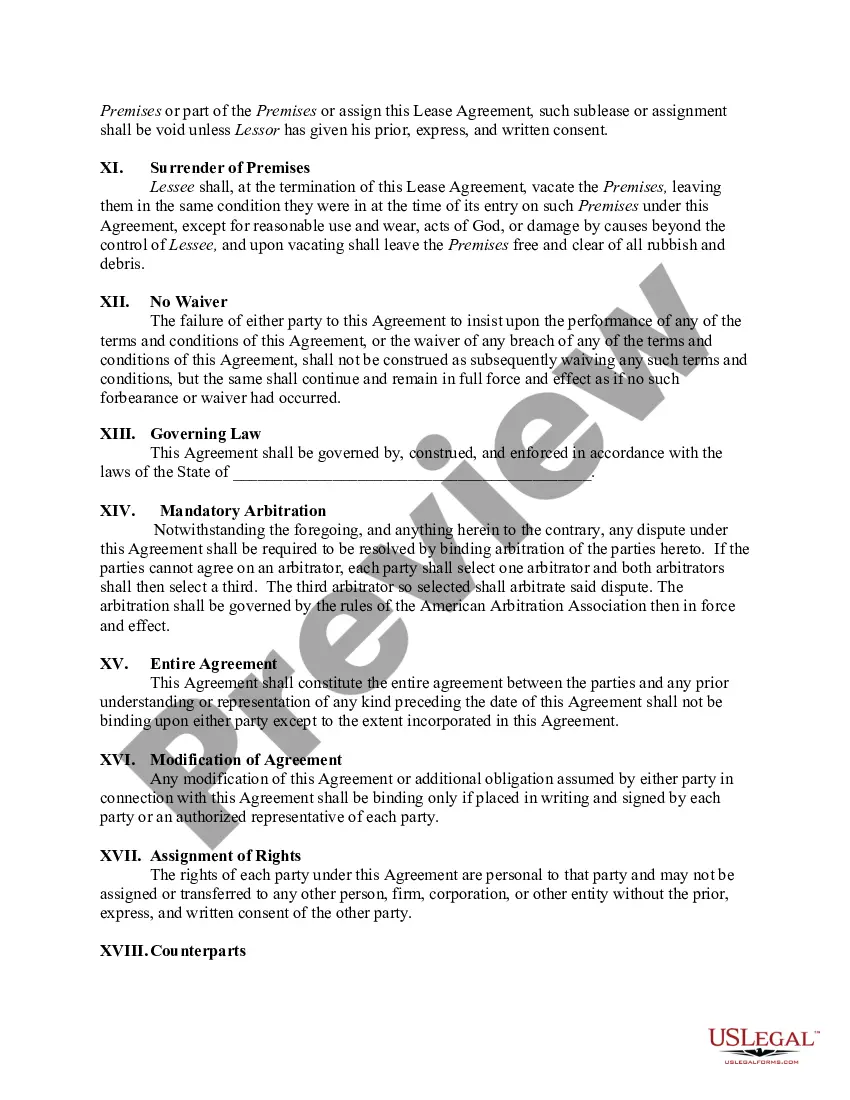
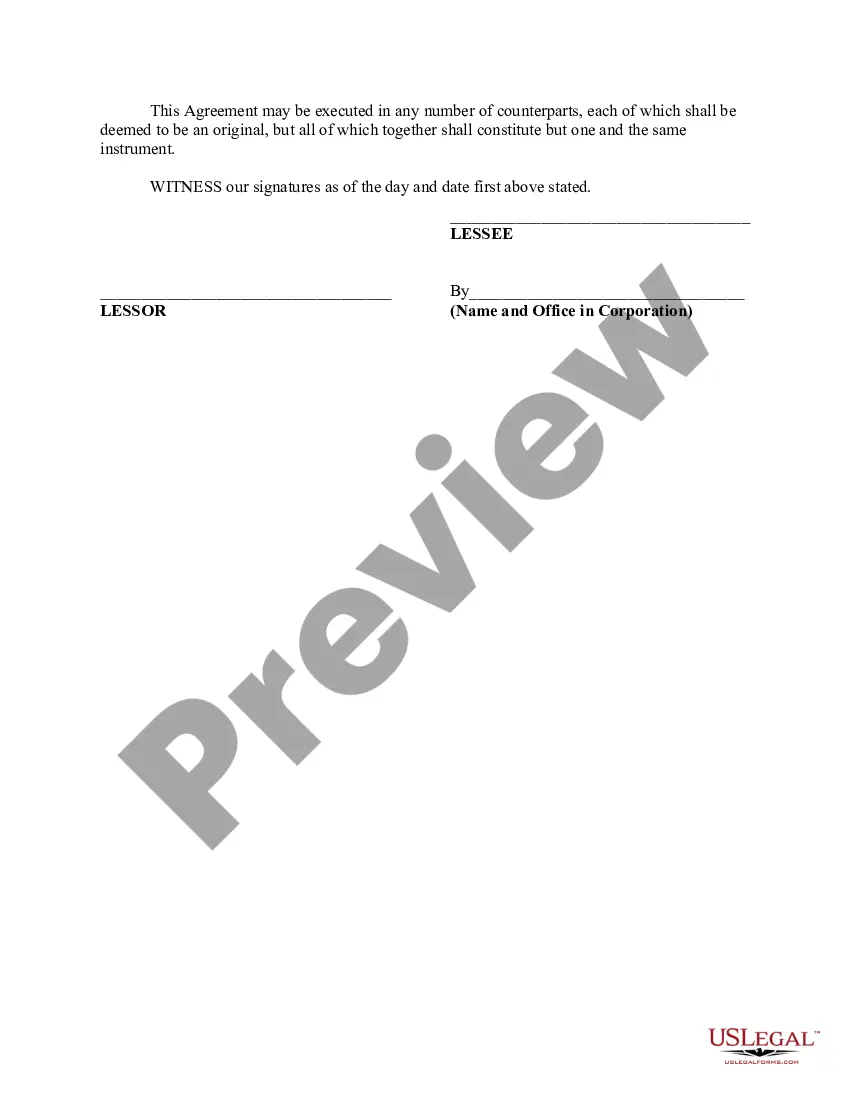

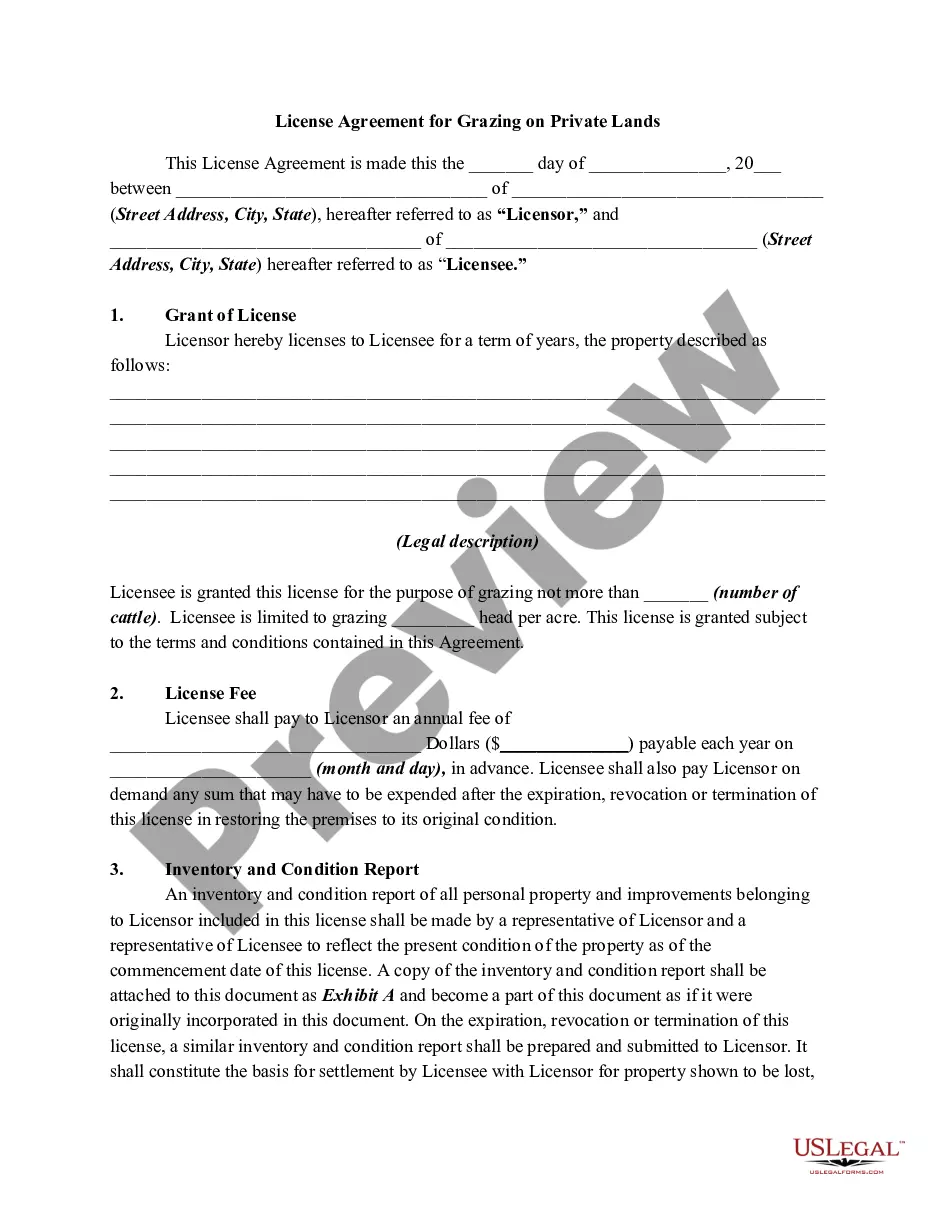
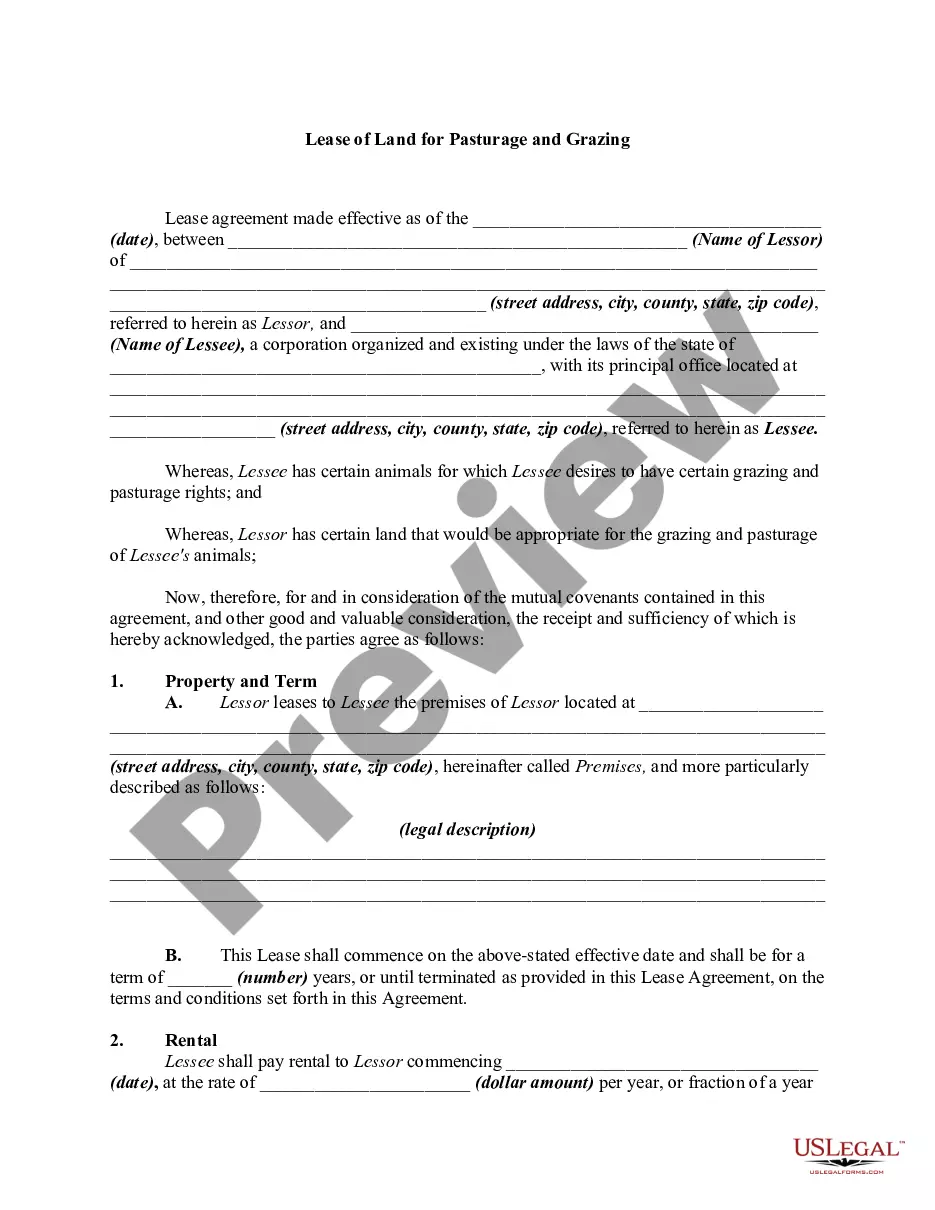
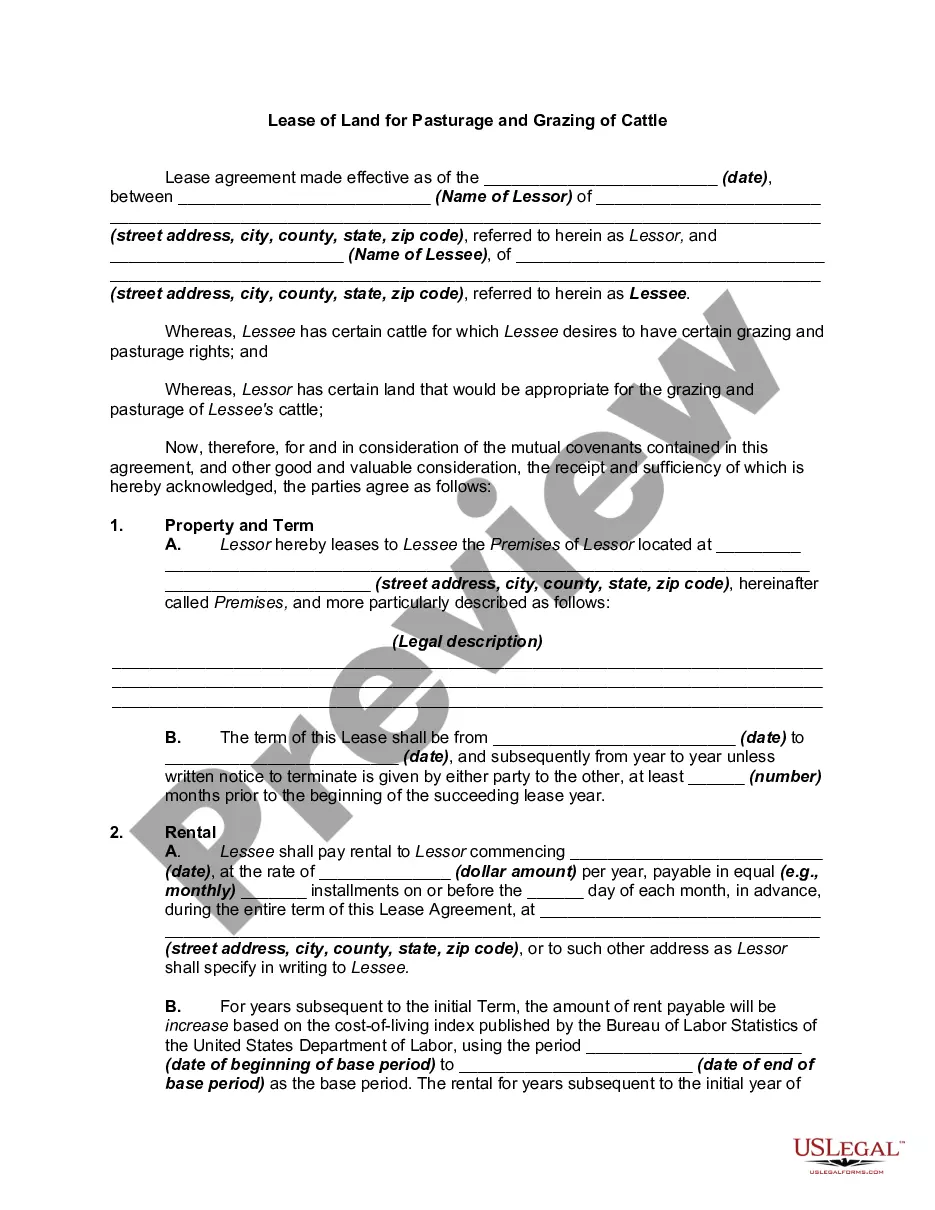
Get your form ready online
Our built-in tools help you complete, sign, share, and store your documents in one place.
Make edits, fill in missing information, and update formatting in US Legal Forms—just like you would in MS Word.
Download a copy, print it, send it by email, or mail it via USPS—whatever works best for your next step.
Sign and collect signatures with our SignNow integration. Send to multiple recipients, set reminders, and more. Go Premium to unlock E-Sign.
If this form requires notarization, complete it online through a secure video call—no need to meet a notary in person or wait for an appointment.
We protect your documents and personal data by following strict security and privacy standards.

Make edits, fill in missing information, and update formatting in US Legal Forms—just like you would in MS Word.

Download a copy, print it, send it by email, or mail it via USPS—whatever works best for your next step.

Sign and collect signatures with our SignNow integration. Send to multiple recipients, set reminders, and more. Go Premium to unlock E-Sign.

If this form requires notarization, complete it online through a secure video call—no need to meet a notary in person or wait for an appointment.

We protect your documents and personal data by following strict security and privacy standards.
Looking for another form?







How to fill out Lease Of Land For Pasturing And Grazing Of Cattle?
The Pasture Leasing Agreement With Daughters you encounter on this page is a reusable legal framework crafted by experienced attorneys in accordance with national and regional laws.
For over 25 years, US Legal Forms has supplied individuals, businesses, and lawyers with more than 85,000 verified, state-specific documents for any commercial and personal circumstances. It’s the quickest, easiest, and most trustworthy method to obtain the documents you require, as the service ensures bank-level data security and protection against malware.
Subscribe to US Legal Forms to have verified legal documents for every situation in life readily available.
- Search for the document you require and examine it.
- Browse through the file you searched and preview it or check the form description to confirm it meets your needs. If it doesn’t, use the search bar to find the correct one. Click Buy Now when you have located the template you want.
- Register and Log In.
- Choose the pricing plan that fits you and create an account. Use PayPal or a credit card for a swift payment. If you already possess an account, Log In and check your subscription to proceed.
- Obtain the fillable template.
- Select the format you desire for your Pasture Leasing Agreement With Daughters (PDF, Word, RTF) and download the document onto your device.
- Complete and sign the documentation.
- Print the template to finish it manually. Alternatively, use an online versatile PDF editor to efficiently and accurately complete and sign your document with a legally-valid electronic signature.
- Download your documents one more time.
- Utilize the same document again whenever necessary. Access the My documents tab in your profile to redownload any previously acquired forms.
Form popularity
FAQ
How do organizations decide whom to send RFPs or RFQs? Before sending the RFP or RFQ it is the duty of the organization to decide whom to send the RFP or RFQ. The organizations must prepare some source selection evaluation Criteria which should be specific and objective.
RFQs often complete the sourcing process by asking suppliers to provide pricing for the items they've proposed in the RFP. But RFQs can also be used as the first step in an RFP process if price is a critical first differentiator.
The CMBL is used by state purchasing entities to develop a mailing list for vendors to receive bid opportunities based on class and items selected for the products or services which can be provided to districts specified for the State of Texas.
The CMBL annual registration fee is $70 and may be paid online by credit, debit card, electronic check (U.S. addresses only) or by paper check at the address below. View a list of CMBL status codes.
The main difference is the purpose. An RFQ is sent when you know exactly what product/service you want, and you really only need to know the price. An RFP is sent when it's more complicated and you want to evaluate many factors besides price before making a decision.
The main difference between RFP and RFQ is that an RFQ is sent when a business already knows what they want to purchase and only needs more information about the price, and an RFP is sent when a business needs more detailed information about the product or service itself.
A Request for Qualifications is used to identify a group of suppliers who meet a set of minimum qualifications in order to submit proposals for a planned solicitation. Only qualified suppliers are then permitted to submit proposals to the solicitation.
Unlike RFQs, where suppliers are chosen mainly based on price estimates, responses to RFPs are evaluated and awarded using several other criteria, such as experience, reputation, skills, and suggested approach.