Contract Grazing Rates
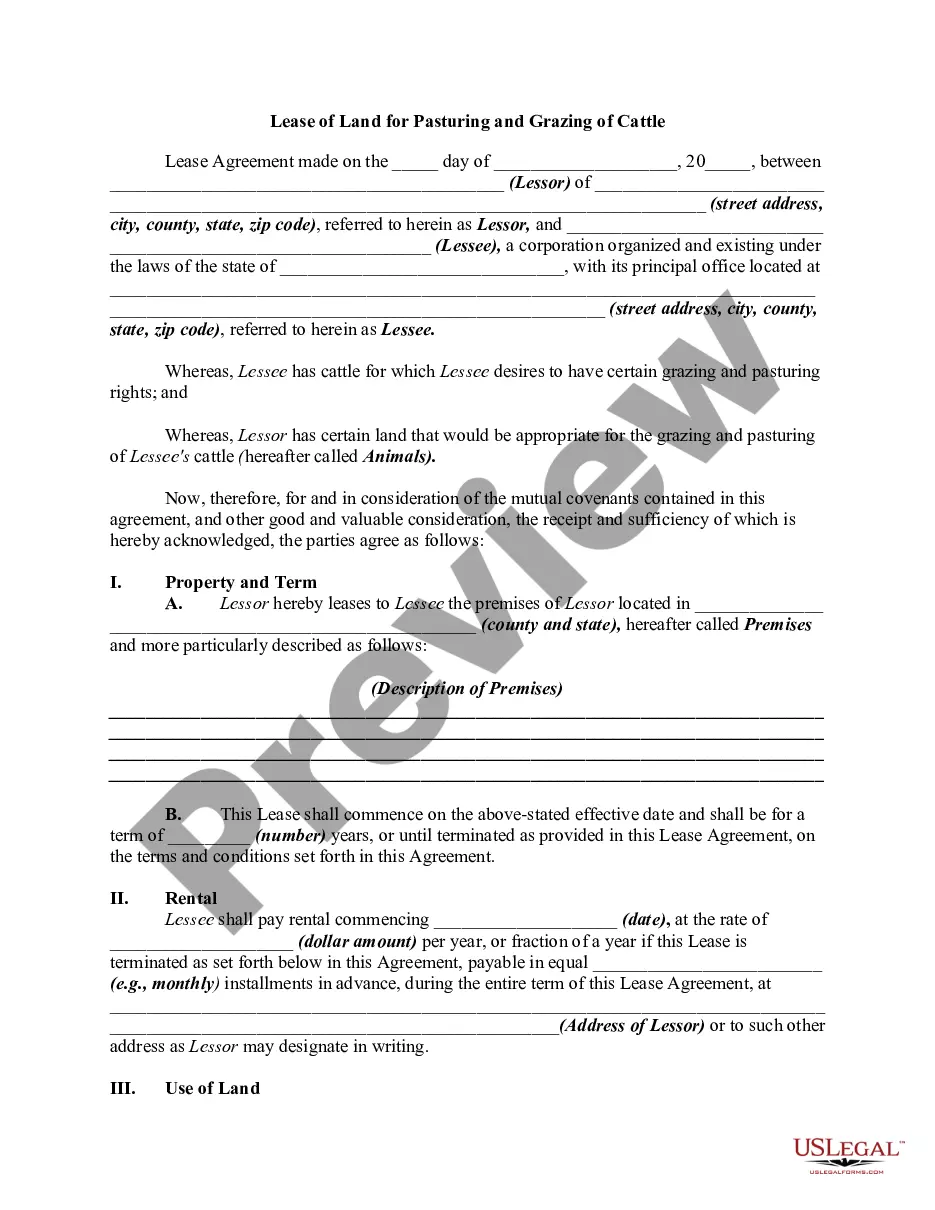
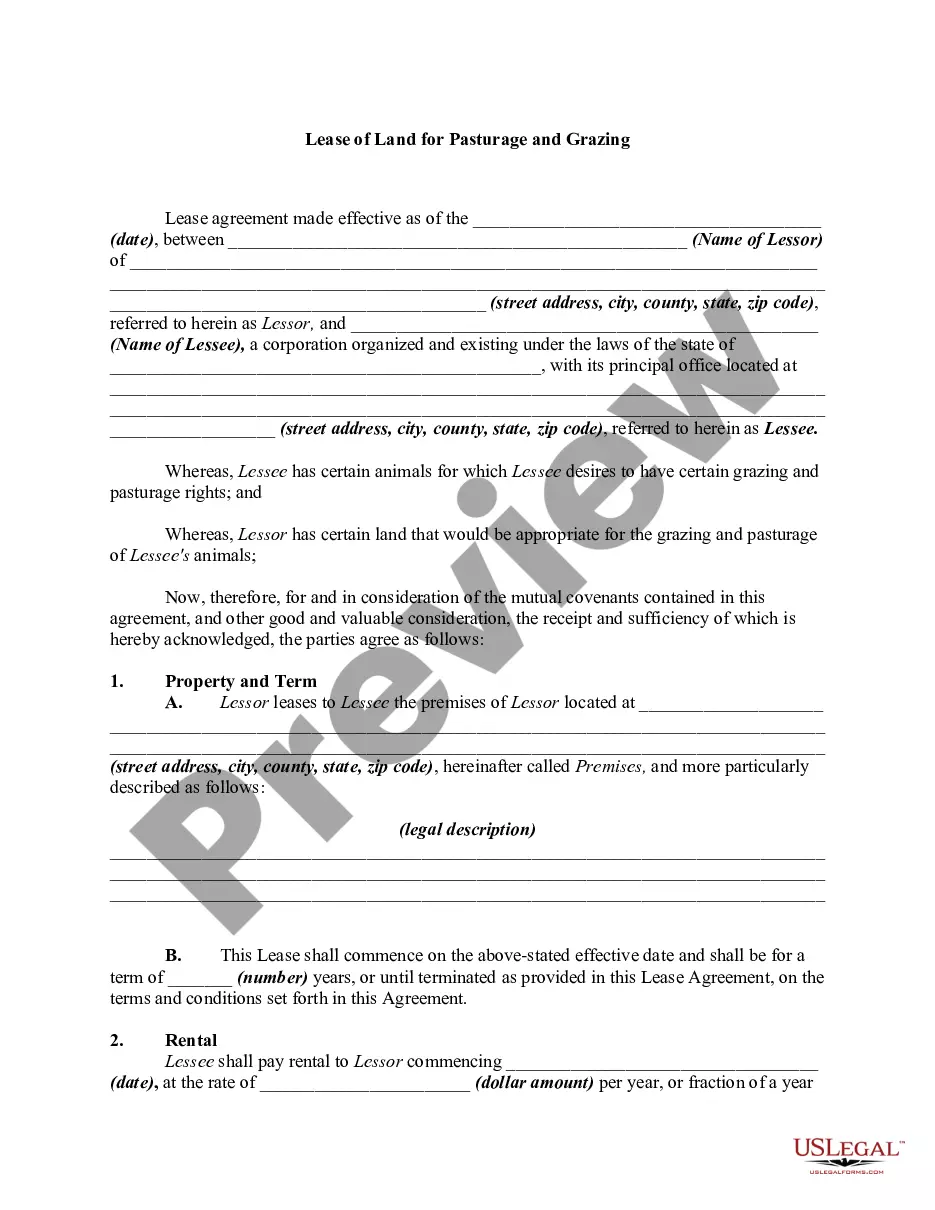
Description


Get your form ready online
Our built-in tools help you complete, sign, share, and store your documents in one place.
Make edits, fill in missing information, and update formatting in US Legal Forms—just like you would in MS Word.
Download a copy, print it, send it by email, or mail it via USPS—whatever works best for your next step.
Sign and collect signatures with our SignNow integration. Send to multiple recipients, set reminders, and more. Go Premium to unlock E-Sign.
If this form requires notarization, complete it online through a secure video call—no need to meet a notary in person or wait for an appointment.
We protect your documents and personal data by following strict security and privacy standards.

Make edits, fill in missing information, and update formatting in US Legal Forms—just like you would in MS Word.

Download a copy, print it, send it by email, or mail it via USPS—whatever works best for your next step.

Sign and collect signatures with our SignNow integration. Send to multiple recipients, set reminders, and more. Go Premium to unlock E-Sign.

If this form requires notarization, complete it online through a secure video call—no need to meet a notary in person or wait for an appointment.

We protect your documents and personal data by following strict security and privacy standards.
Looking for another form?




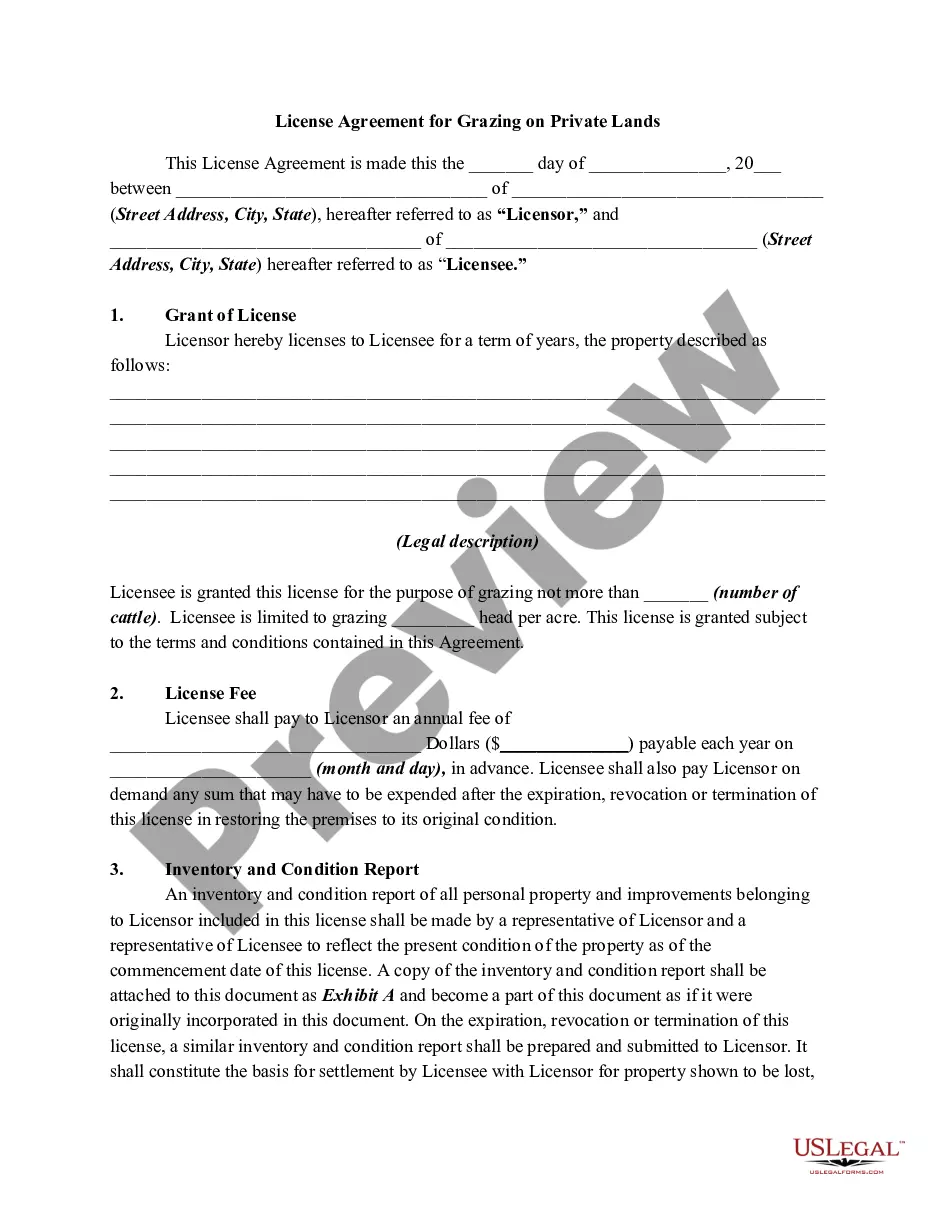
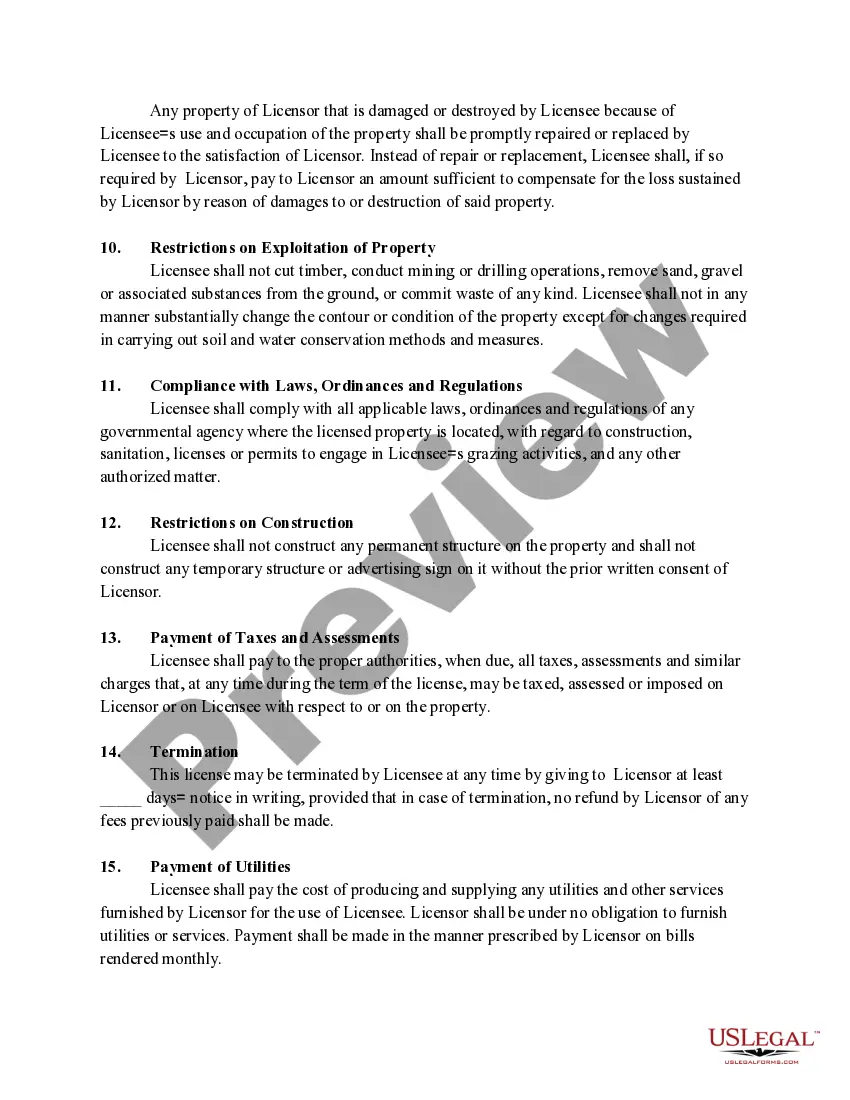
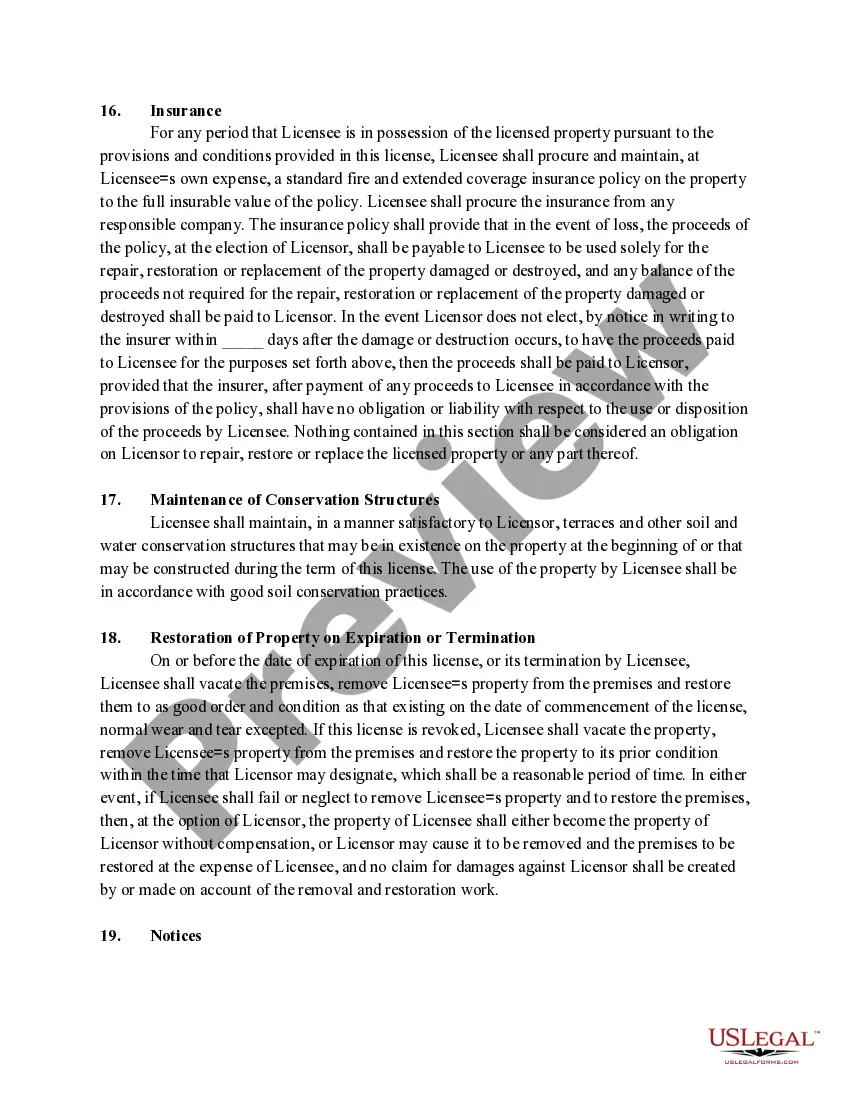
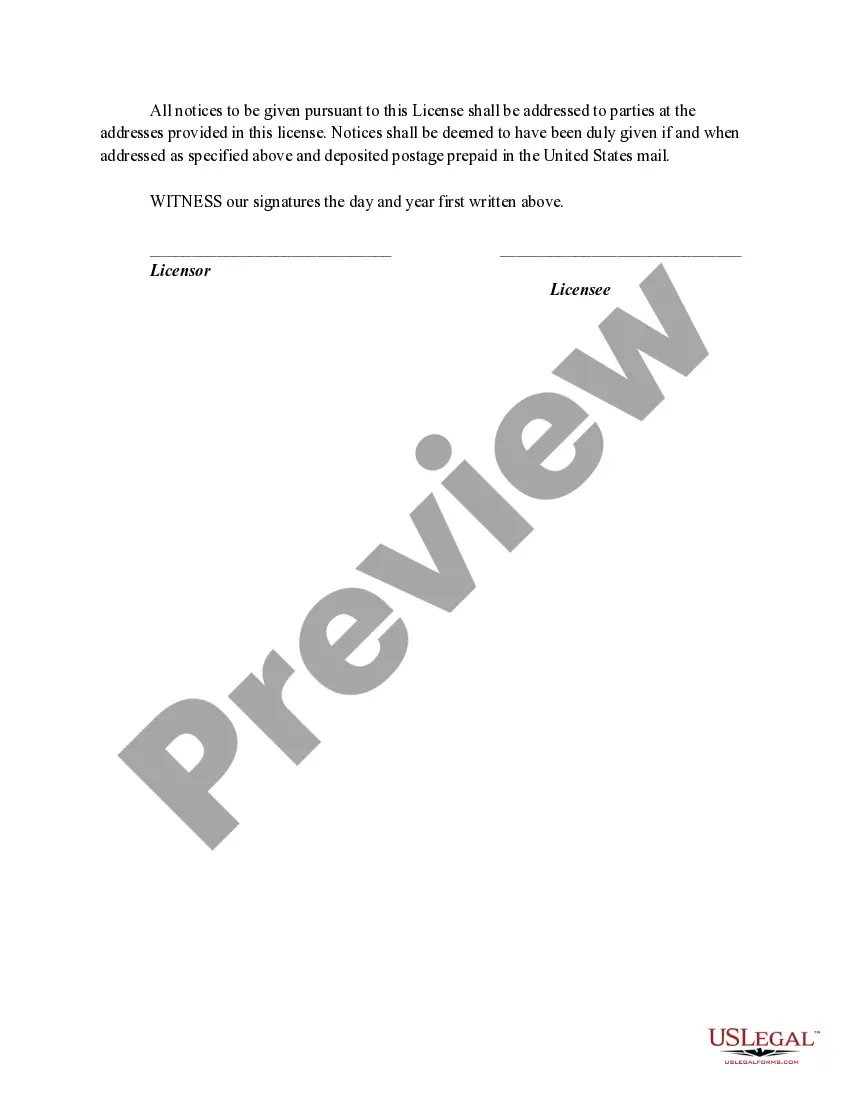
How to fill out License Agreement For Grazing On Private Lands?
Handling legal papers and processes can be a lengthy addition to your entire day.
Contract Grazing Rates and similar documents often necessitate that you look for them and figure out how to fill them out correctly.
As a result, if you are managing financial, legal, or personal issues, having an extensive and user-friendly online library of documents at your disposal will greatly assist.
US Legal Forms is the leading online platform for legal templates, featuring over 85,000 state-specific documents and various tools to help you complete your paperwork effortlessly.
Is it your first experience using US Legal Forms? Register and set up your account in just a few minutes to gain access to the document library and Contract Grazing Rates. Then, follow the steps below to fill out your document: Make sure you have the correct document by using the Review feature and examining the document details. Choose Buy Now when ready, and select the subscription plan that fits your needs. Click Download then complete, sign, and print the document. US Legal Forms has twenty-five years of experience assisting clients with their legal documents. Find the document you need today and simplify any process effortlessly.
- Browse the collection of relevant documents accessible to you with just one click.
- US Legal Forms provides you with state- and county-specific documents available for download at any time.
- Safeguard your document management processes by utilizing a premium service that enables you to create any document in minutes without extra or concealed charges.
- Simply Log In to your account, locate Contract Grazing Rates and download it immediately from the My documents section.
- You can also access forms you have previously downloaded.
Form popularity
FAQ
During the peak of the growing season, livestock are moved rapidly - every three to five days - with slower moves when pasture growth rates slow down. A grazing cycle is completed every 25 to 35 days, depending on forage species and time of season.
Calculating pre-grazing cover Achieving post grazing residuals and good animal performance requires accurate pasture allocation. This allows you to calculate pre-grazing cover. (Stocking rate x pasture intake x rotation length) + optimum residual = pre-grazing cover.
The stock owner and grazier agree that the grazing rate is $9/head/week over a 52 week term. The targeted weight at the end of the grazing term is 400kg, for all the animals that meet or exceed the 400kg threshold there is a bonus payment of $25/head.
?Total grazing? involves moving cattle four times a day, and grazing longer grass than conventional rotational grazing, but shorter than many regenerative approaches. Advocates say this non-selective grazing method lowers costs, improves animal health, and stimulates humus formation through root exudates.
Step 4. Calculate 'grazing days' in this pasture. To calculate the grazing days we have in one pasture, we take the forage allocated divided by the forage demand per day to arrive at the number of grazing days.